“Stuff your eyes with wonder, live as if you’d drop dead in ten seconds. See the world. It’s more fantastic than any dream made or paid for in factories.” – Ray Bradbury
4/22-5/15, 2024
“Ecuadorians are rare and unique beings, they sleep peacefully in the midst of crisp volcanoes, live poor in the midst of incomparable riches and rejoice with sad music”. Alexander Van Humboldt. I was in Ecuador for just over three weeks but it felt much longer as I had such wonderful, diverse experiences. Ecuador has four regions – the Amazon, the Andes, the coast and the Galápagos Islands. I spent time in three of them. Since it’s located on the equator it only has two seasons, rainy and dry, which varies by region.
The Amazon Forest
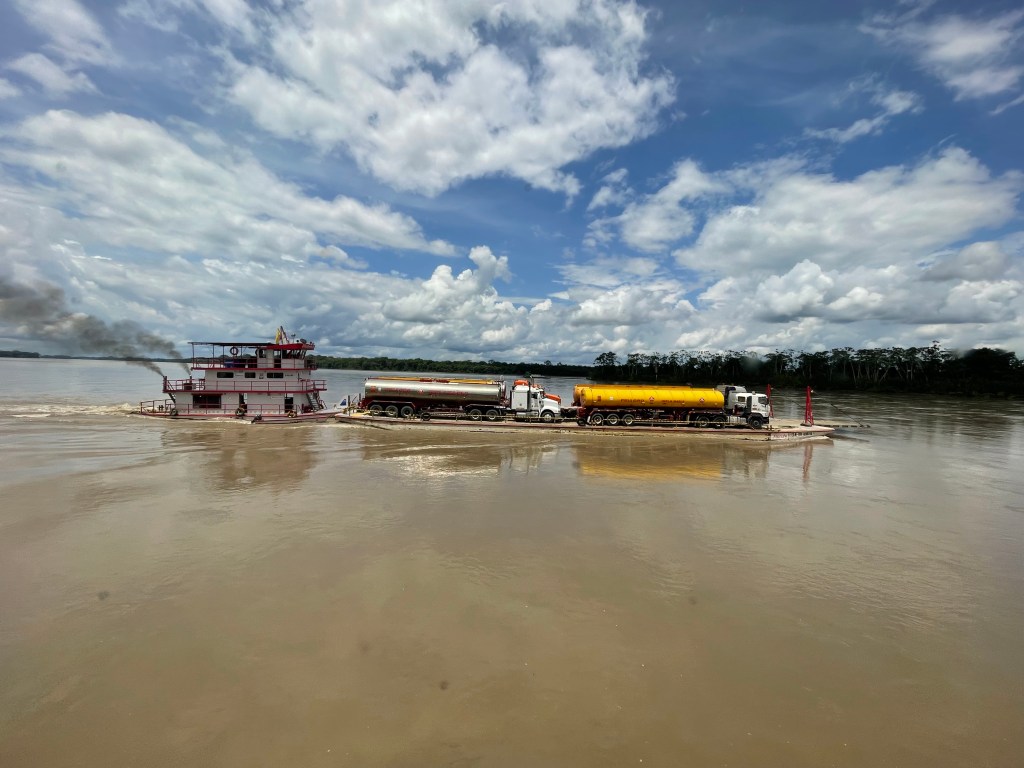
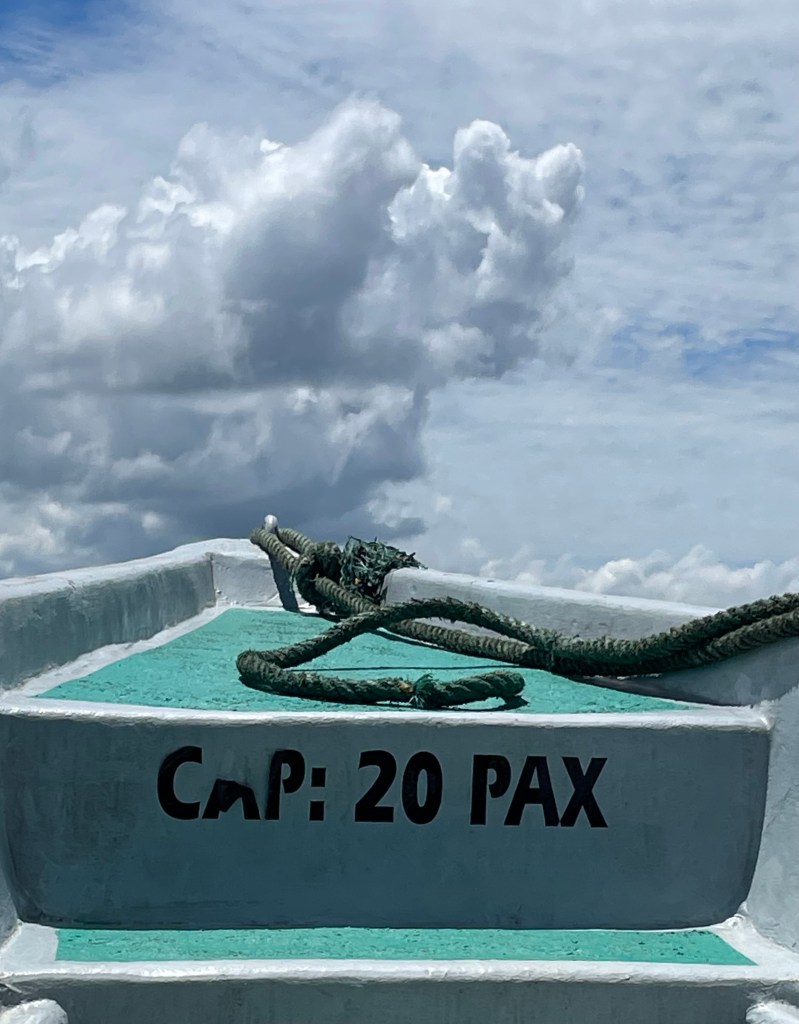
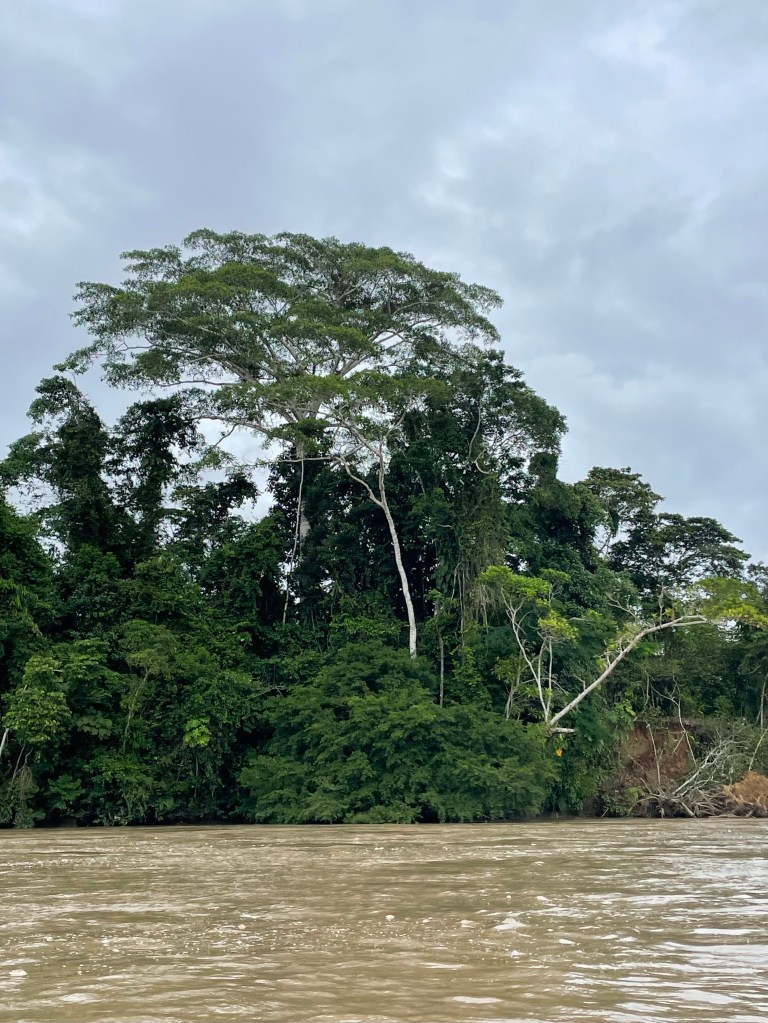
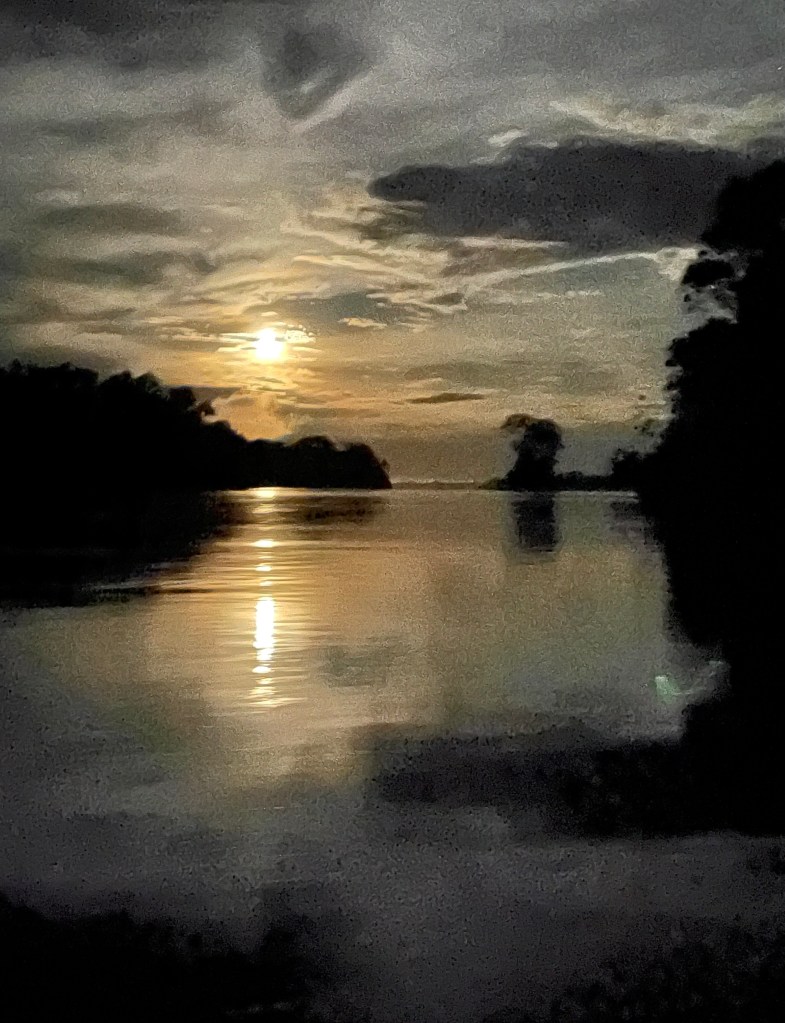
I started out my Ecuador adventure on the Napo River, cruising through the Amazon rainforest. The river appeared to be twice as wide as the Cumberland in Nashville. We navigated by zig zagging the waterway to stay in the deep channels. There was quite a bit of traffic on the river, including barges carrying oil tank trucks. Flying from Quito with an elevation of 9,350 ft to Coca, elevation 984 ft was very uncomfortable, the pressure on my ears lasted almost the whole flight – luckily it was only a 40 minute ride, and took over 30 minutes to clear once we landed. I was collected at the airport and whisked to a 20 passenger canoe that motored us to the vessel I would call home for next 5 days, the Anaconda. I was one of six passengers on the boat that slept 36, so it felt like a private tour. There were 14 staff that catered to our every need – serving delicious meals, creating delightful cocktails, handing out refreshing face cloths and keeping our rooms spotless. We were kept very busy and everyday was filled with a new adventure.

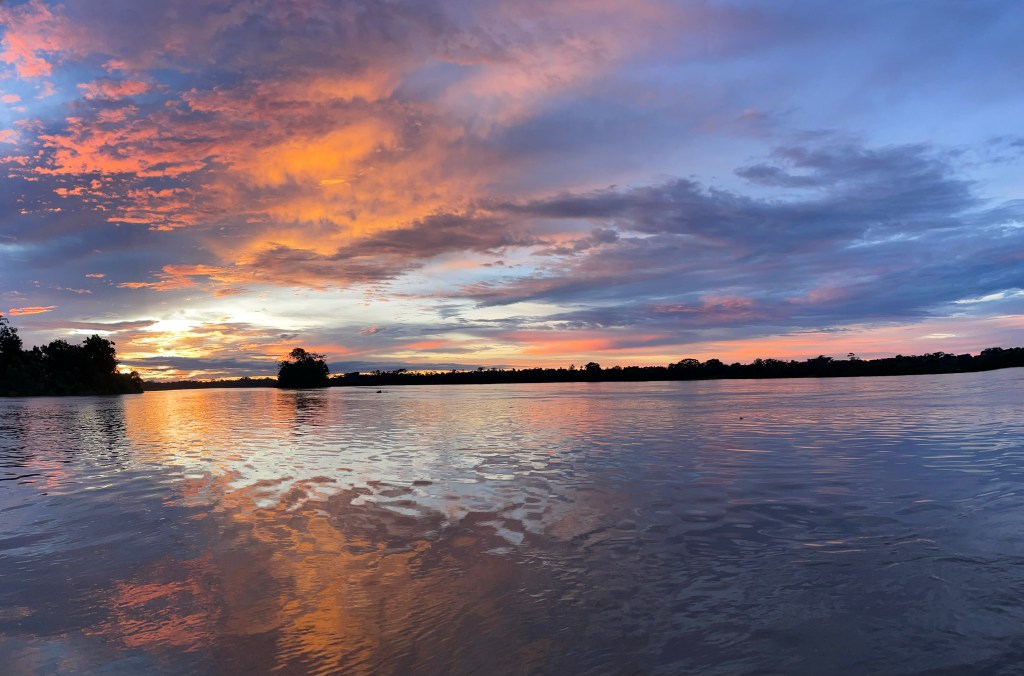
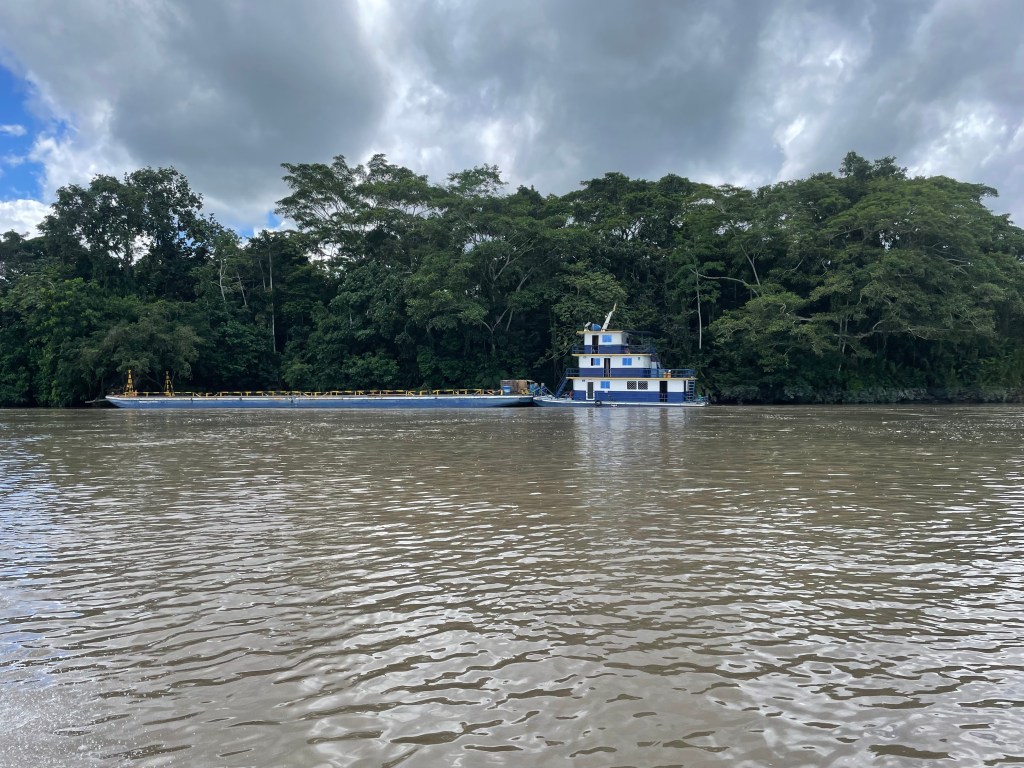
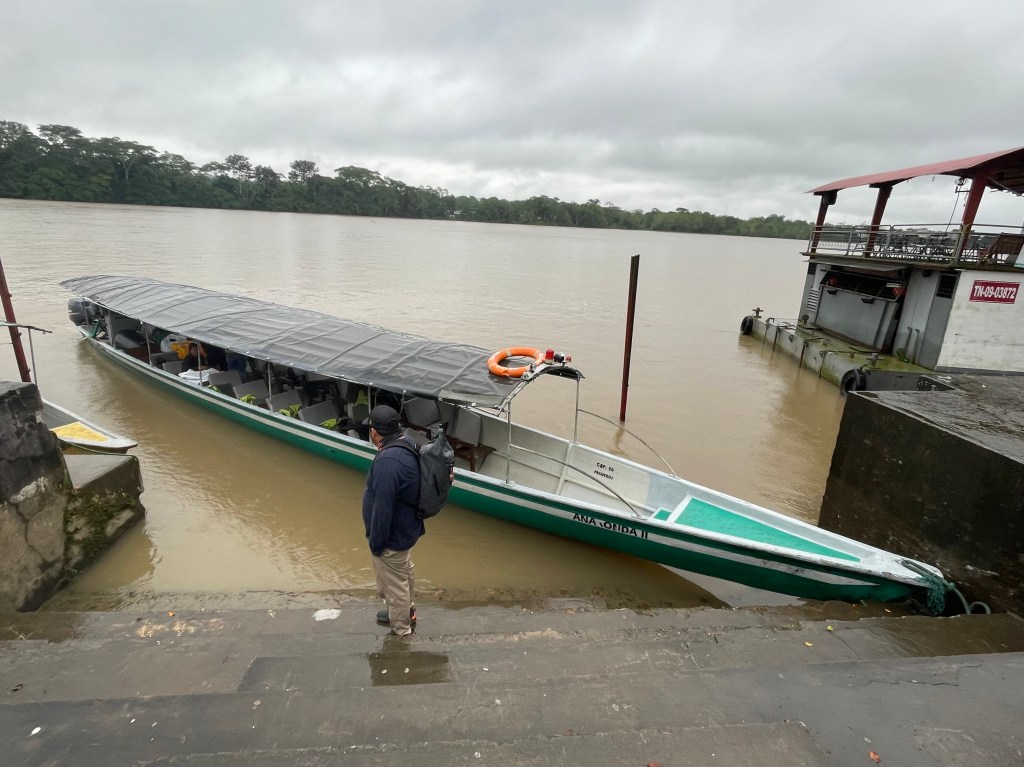
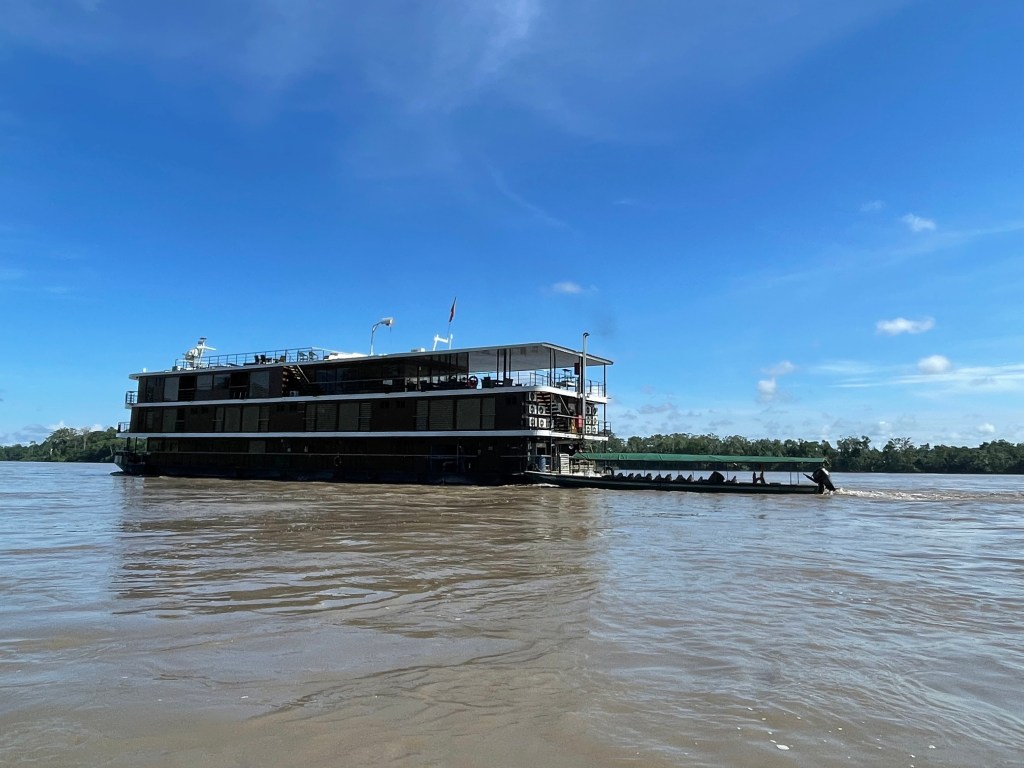
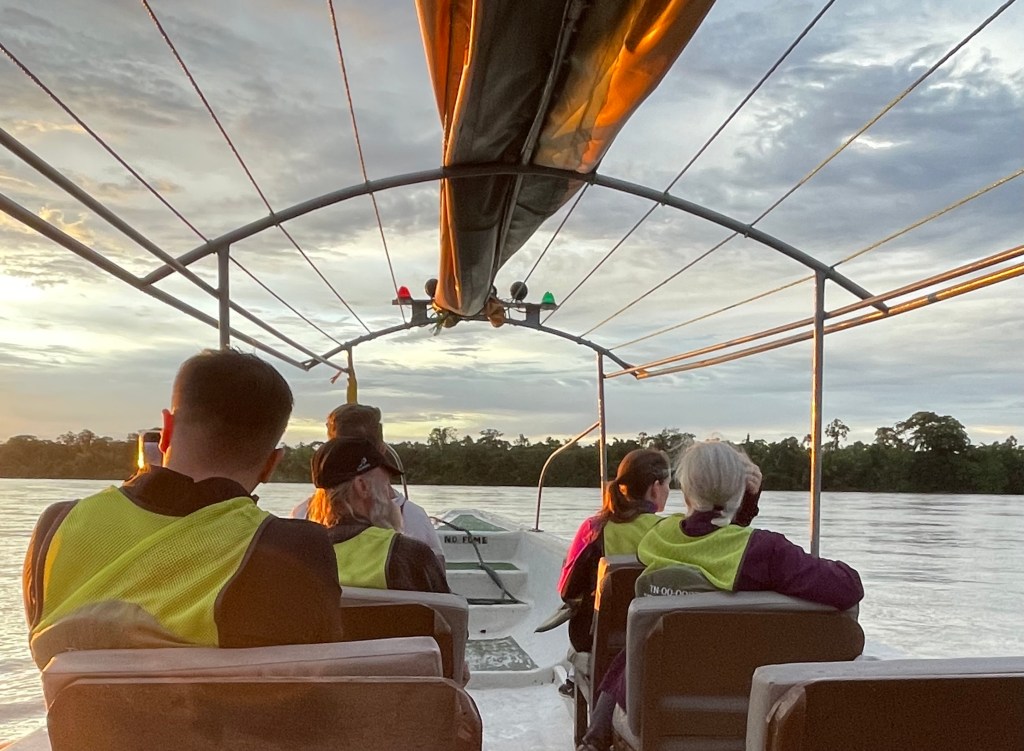
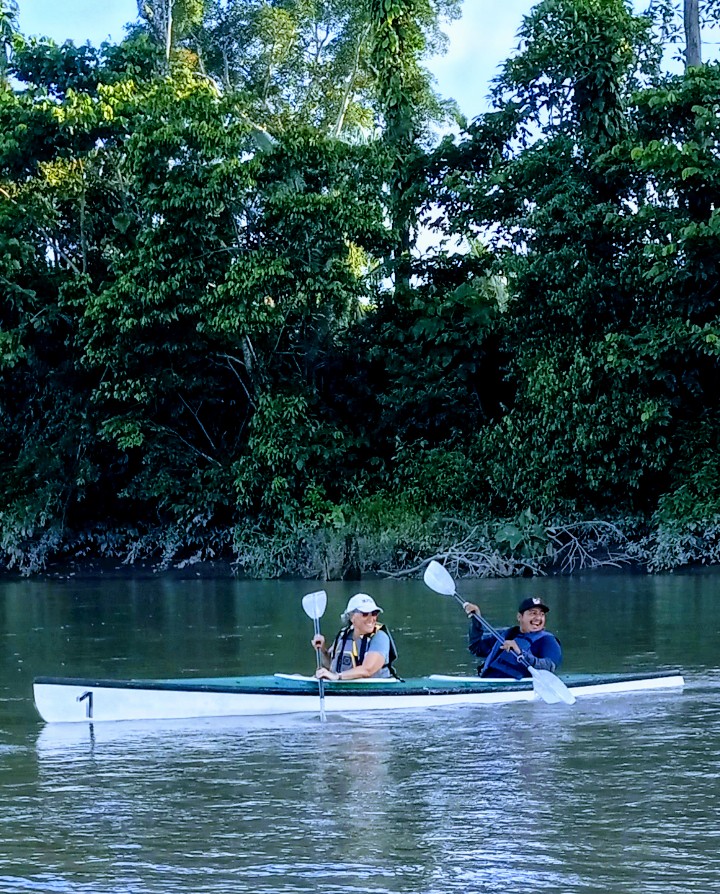
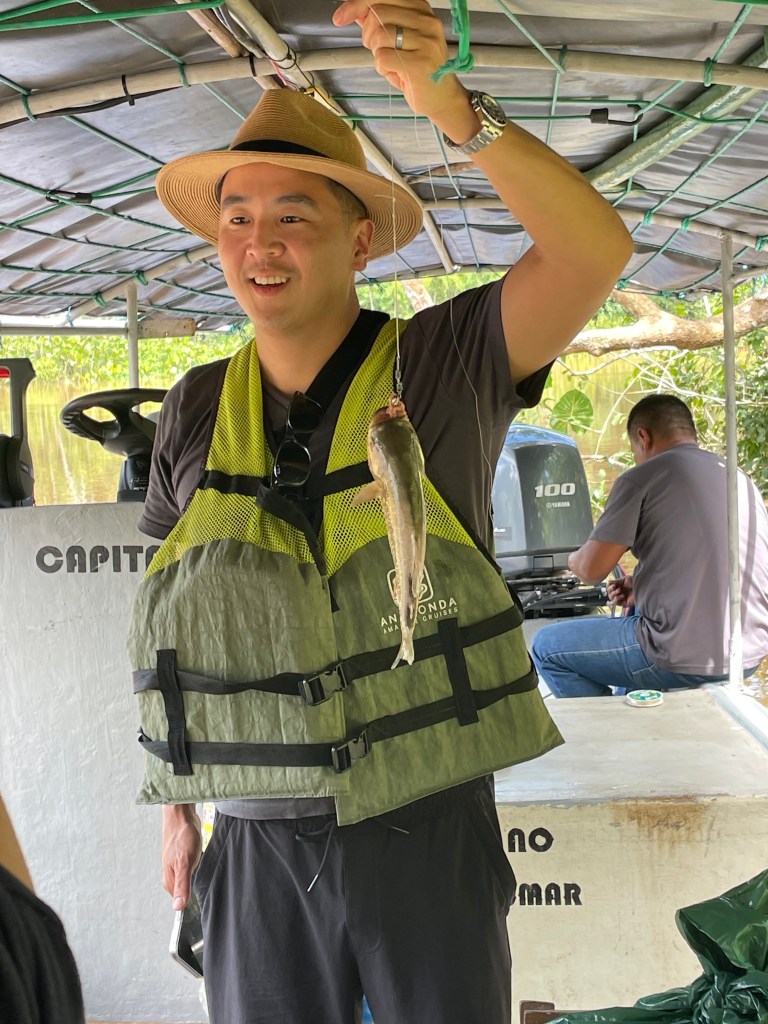
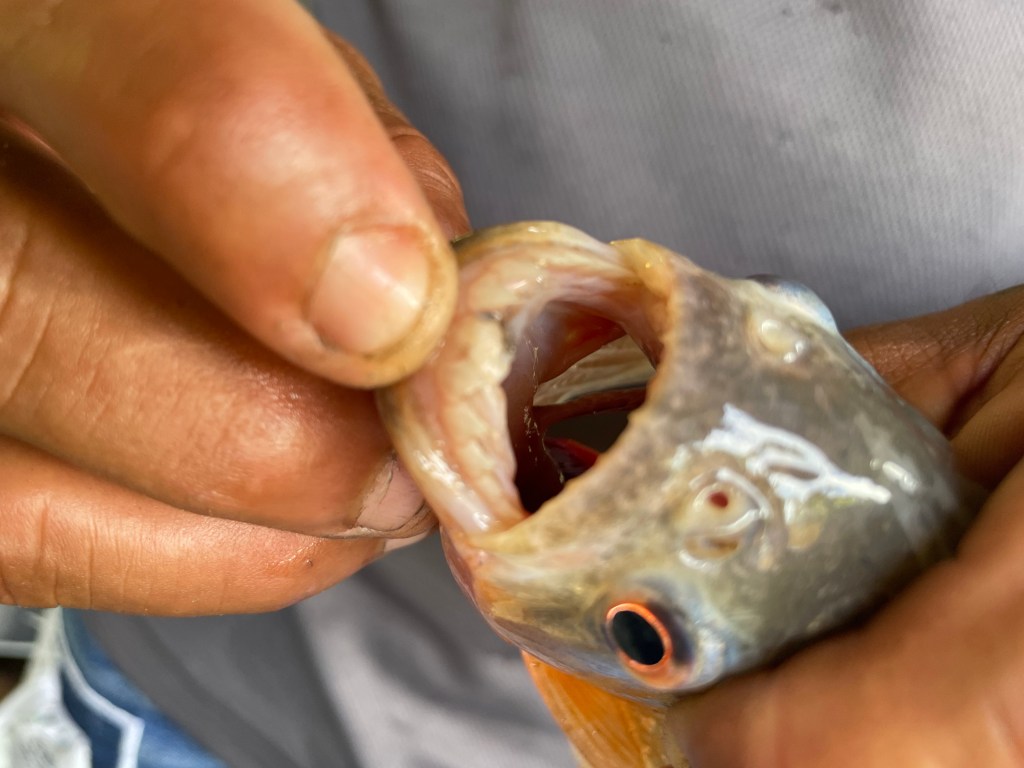
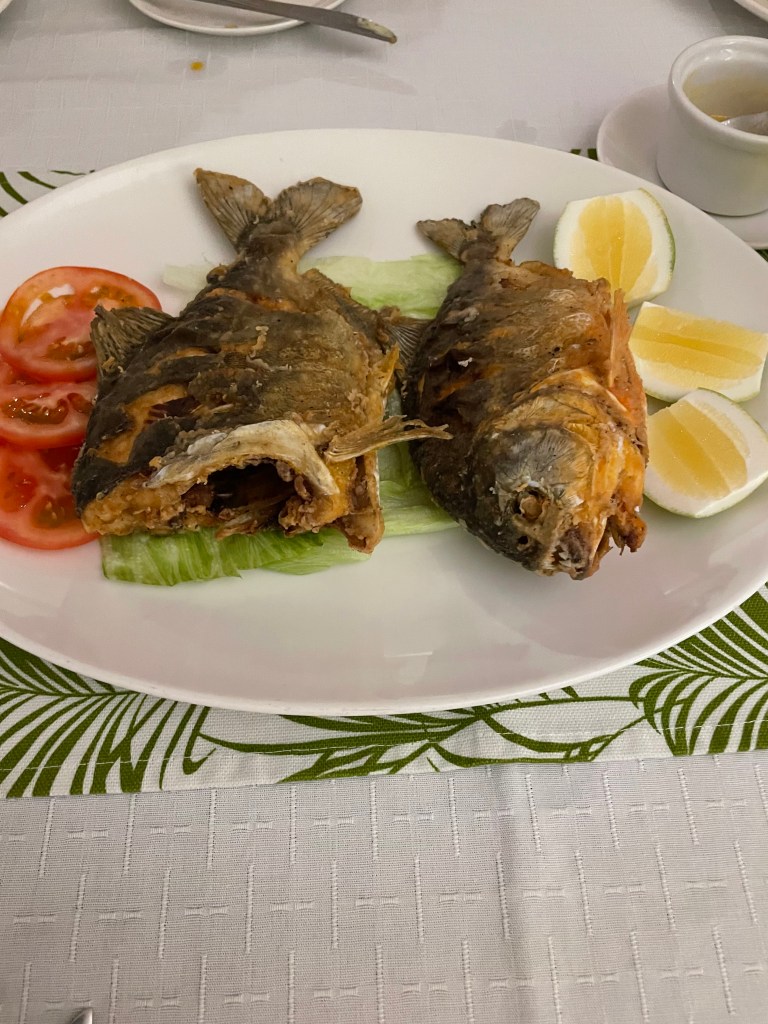
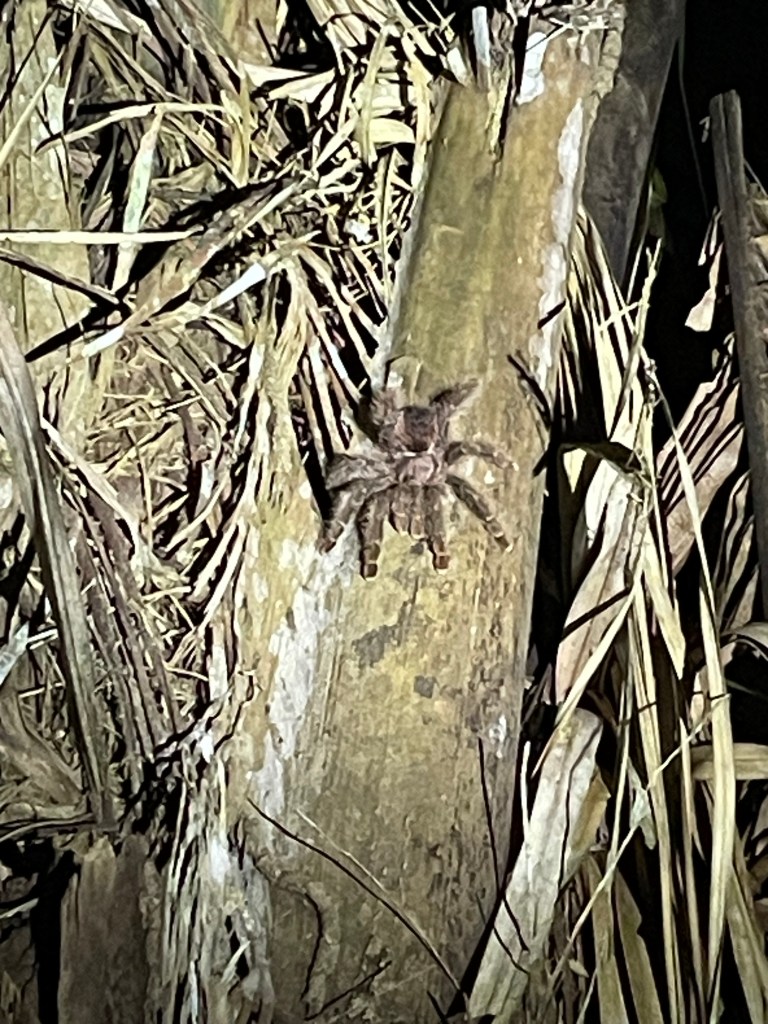
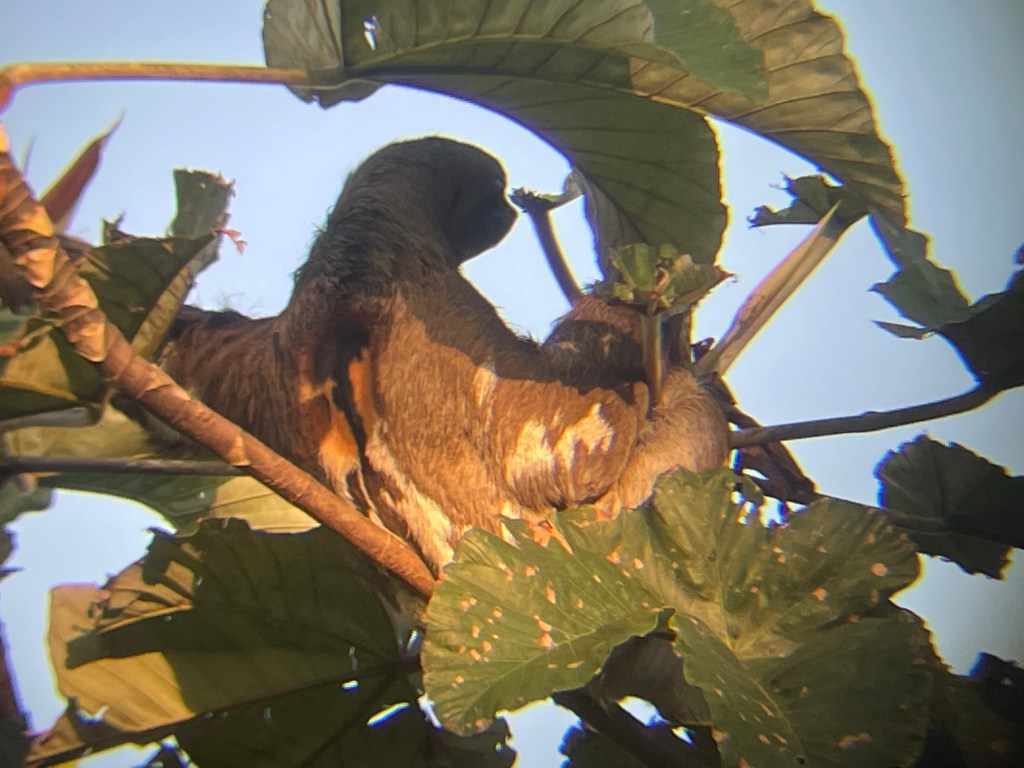
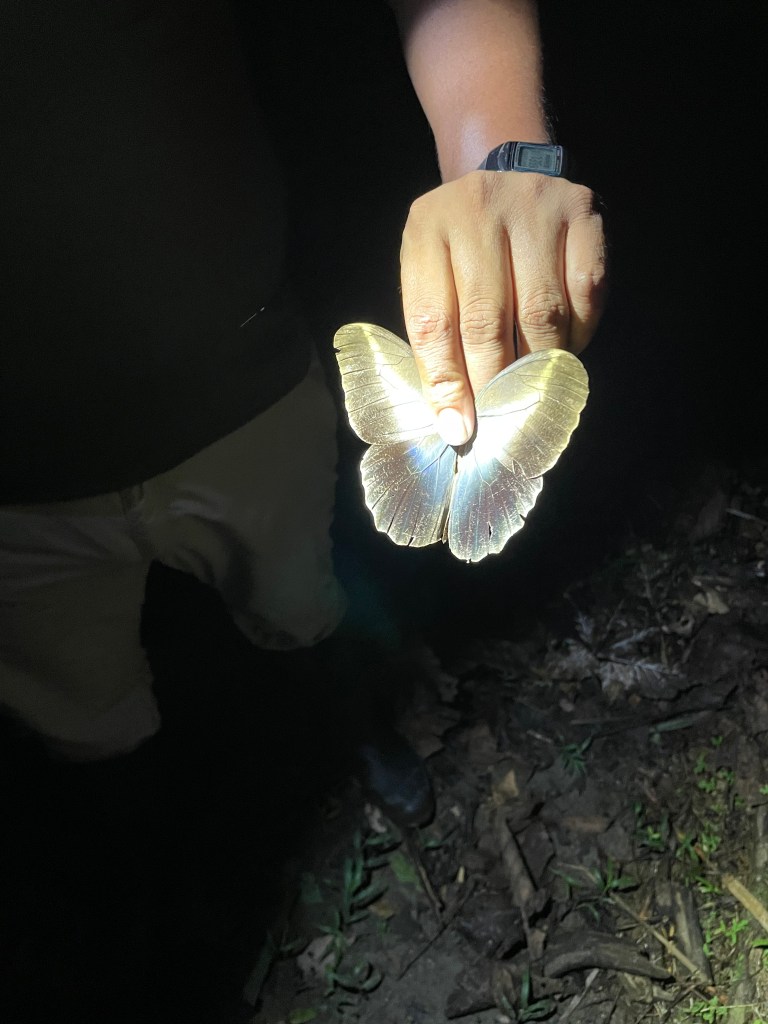
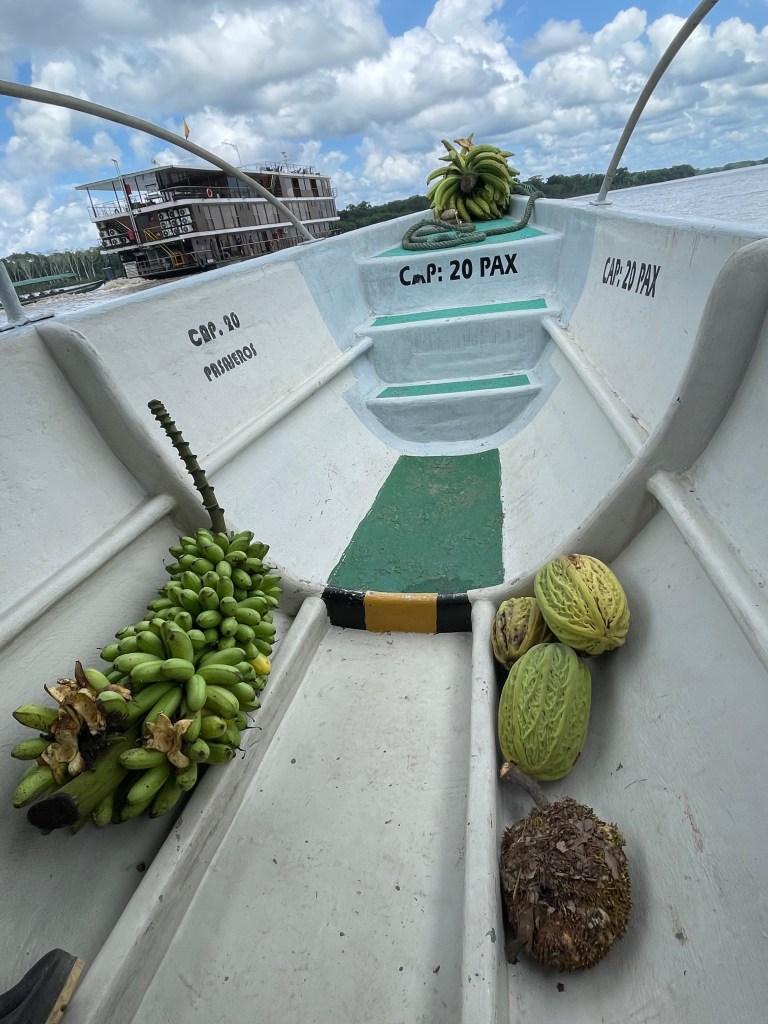
We used that big canoe several times a day, loading and unloading as the pilot hugged the side of the bigger boat, our life jackets strapped on tightly. Kevin, our naturalist guide, accompanied us as we explored tributaries, shoreline, and trails in search of wildlife. Pink river dolphins and kara kara or falcons where the first animals we spotted. High up in the trees, we saw at least four different varieties of monkeys including the white faced capuchin, golden mantle tamarin, wooly and howler. I’m not sure we would have seen them without the sharp eyes of our guide, the monkey’s movement from branch to branch then helped to focus our eyes on their location. We scouted the shore while we kayaked for an anaconda but never saw one – much to everyone’s disappointment. We did however catch piraña one day and had it for dinner. It was very tasty. High up in a tree we spotted a three-toed sloth lazing in the branches. On a night cruise, we startled a capybara as he nibbled on some reeds, it was like spotting for deer with our flashlight sweeping the shore. We also saw a pink-toed tarantula on a night hike, along with a huge owl moth and lots of bugs.
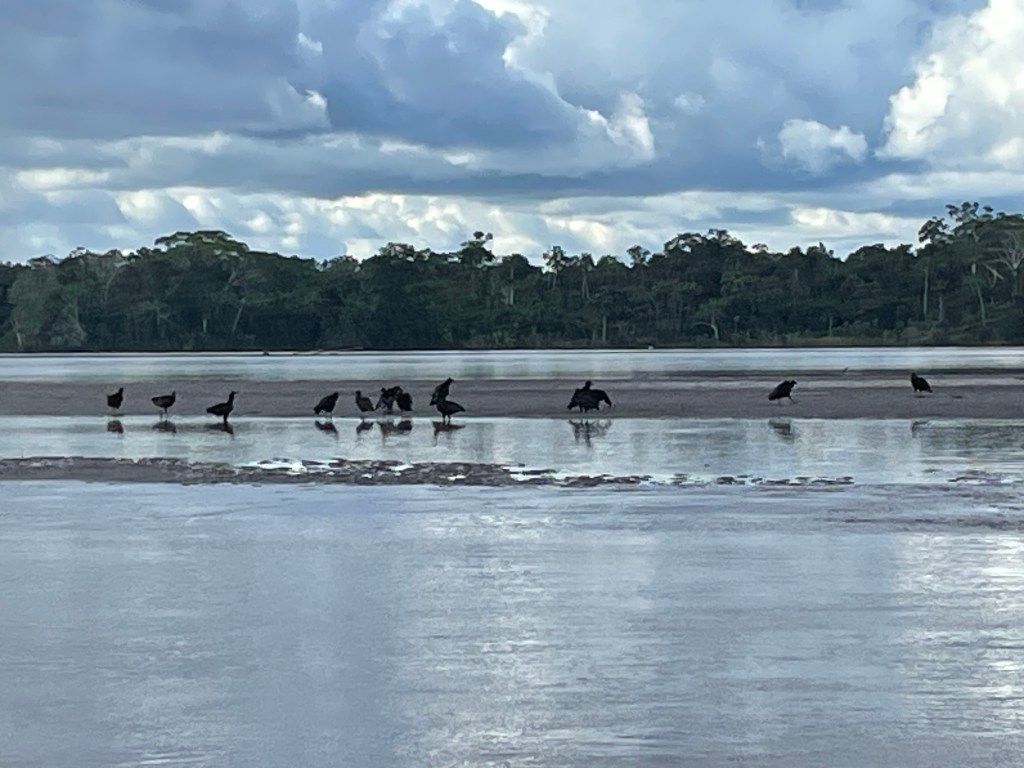
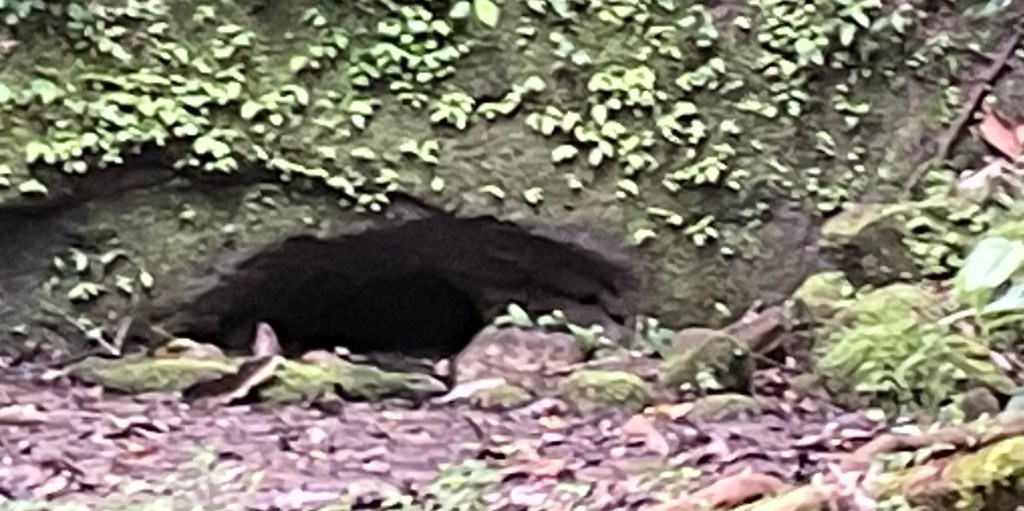
We observed dozens of birds including swallows, plovers, herons, stinky turkeys, red headed cardinals, and woodpeckers. On one excursion we went to a clay lick and sat quietly, soon two Scarlett macaws alit on some high branches above us. They were then joined by a few more, then another pair until almost a dozen were perched over head. Then scores of colbalt parakeets started streaming down through the leaves to the clay, soon there were hundreds of them, tweeting and chirping as they jumped from place to place. It was magical. All of a sudden the macaws squawked a warning, and all of the birds took flight, flying directly at us and then overhead. We never saw what startled them but was told it was probably a monkey. I did spot a toucan but only from a distance. Sorry my bird pictures suck, those are parakeets on the rocks next to the cave.

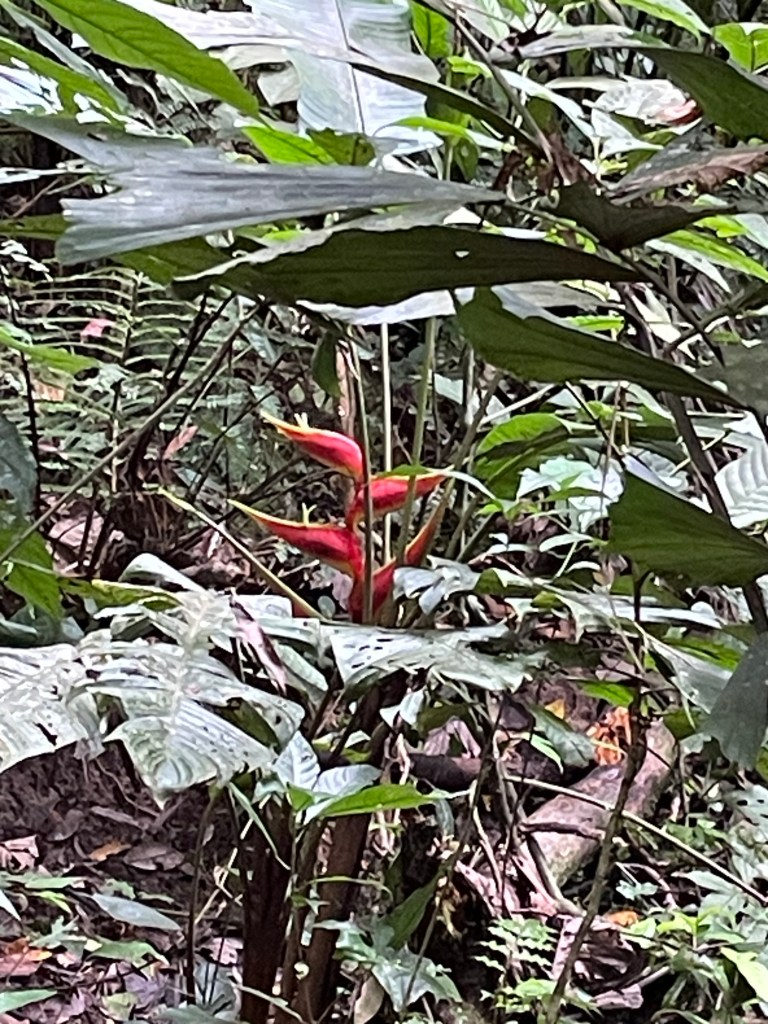
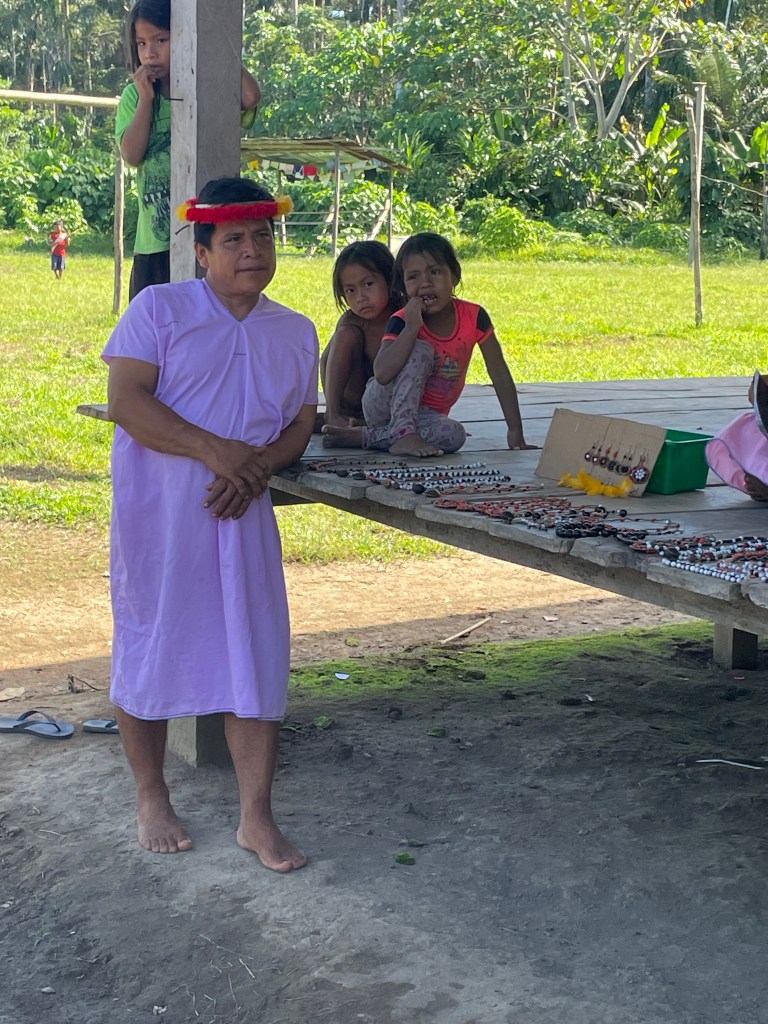
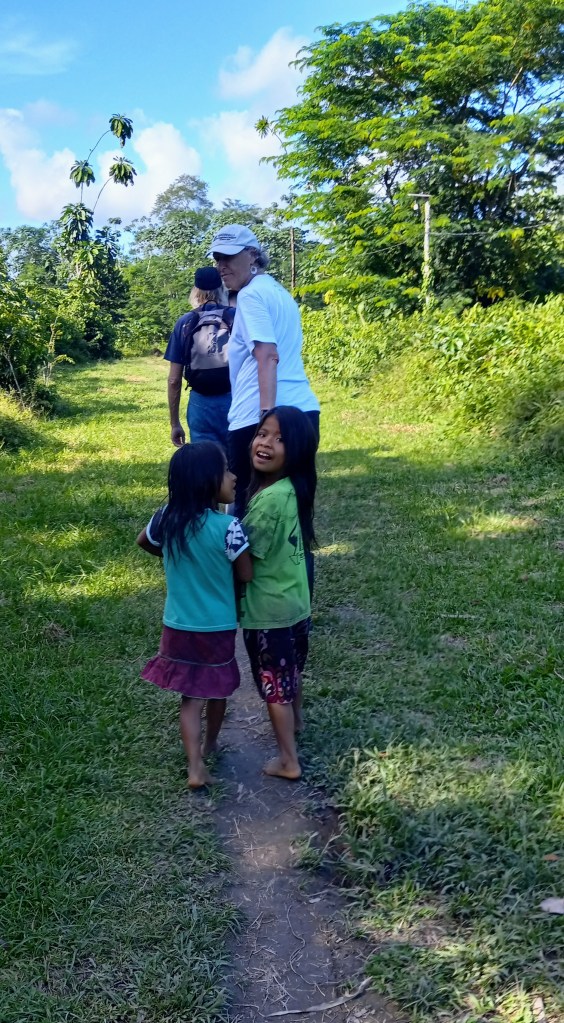
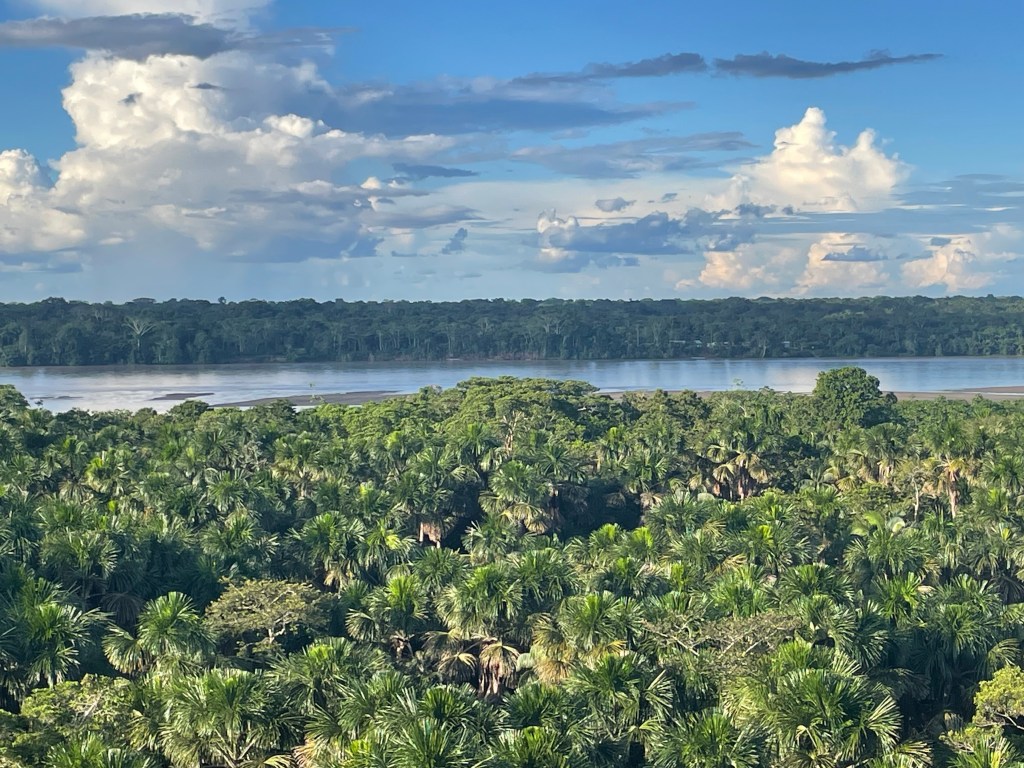
The rainforest was thick and dense, easy to see why 90% of the first explorers perished before reaching their destination. We were there near the end of the rainy season so everything was very green with lots of bright colored blooms sprinkling the landscape. We visited one small town Nuevo Rocafuerte, and several villages of the indigenous tribes – the Secoya and the Kichwa. All of these places are only accessible by water. It was fun to see the children headed to class in a school boat. There are 10 tribes that live in the area. Two, the Tagaeri and Taromenani are almost never seen by the outside world, living deep in the jungle. One, only has 100 members and will soon be extinct as they do not intermarry and none of the woman are of childbearing age. The Kichwa are the largest tribe, making up almost 80% of the population, most have integrated and intermixed, though there are still some who are 100% Kichwa. The tribes are democratic societies and decision are made by consensus.

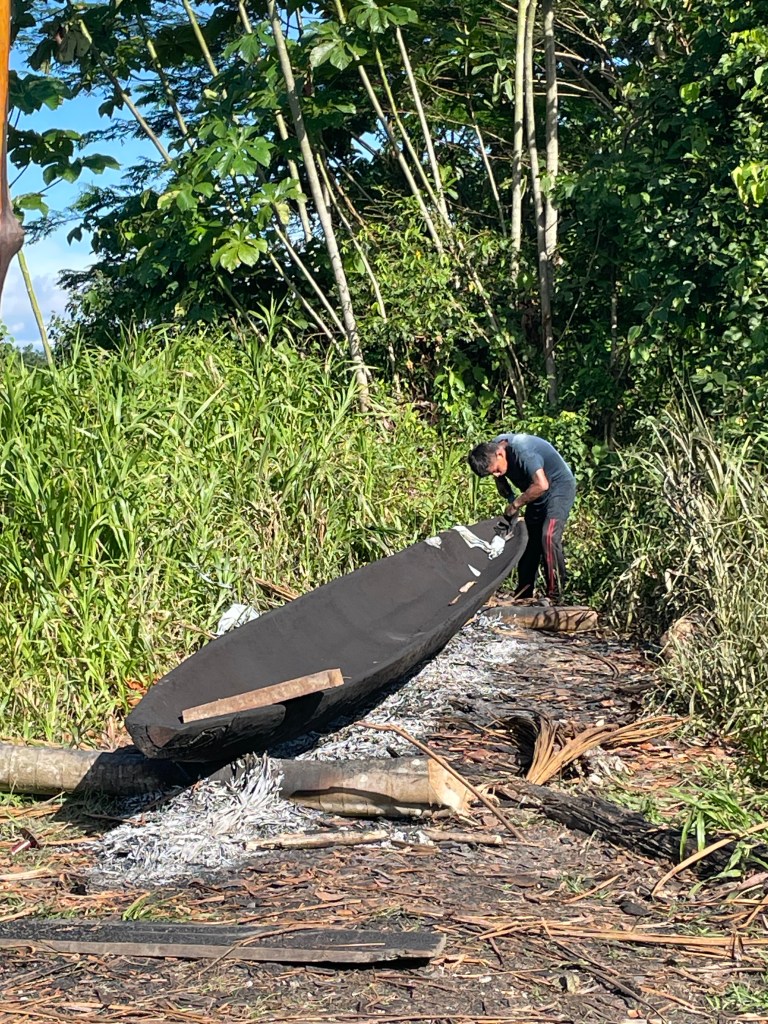
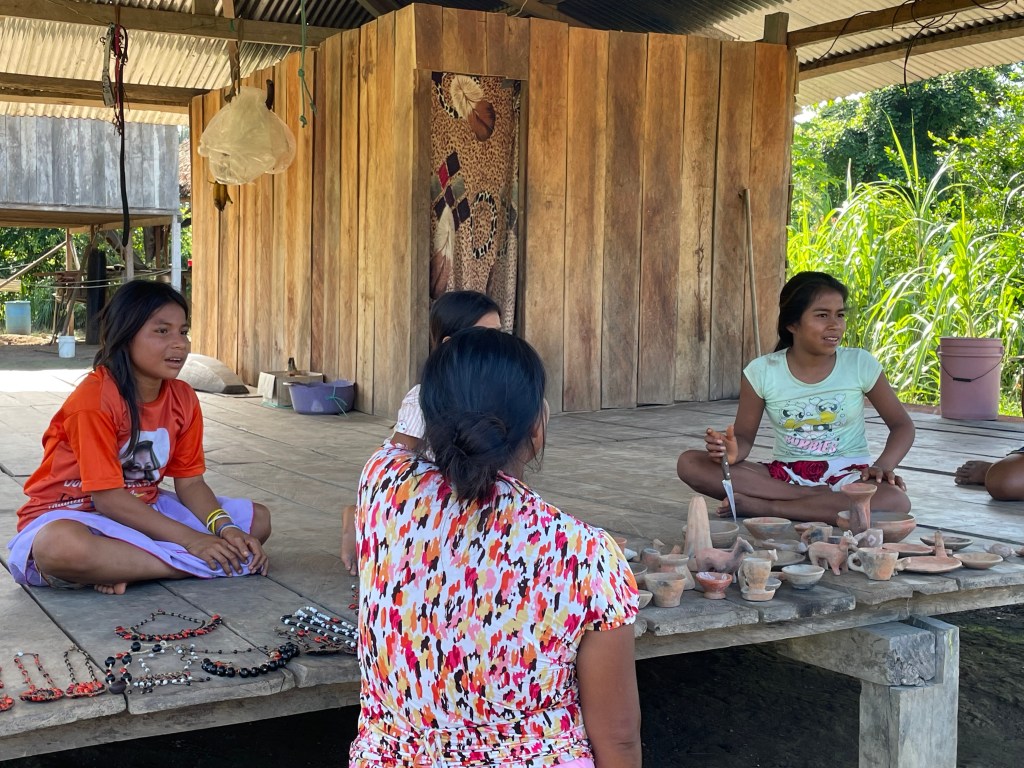
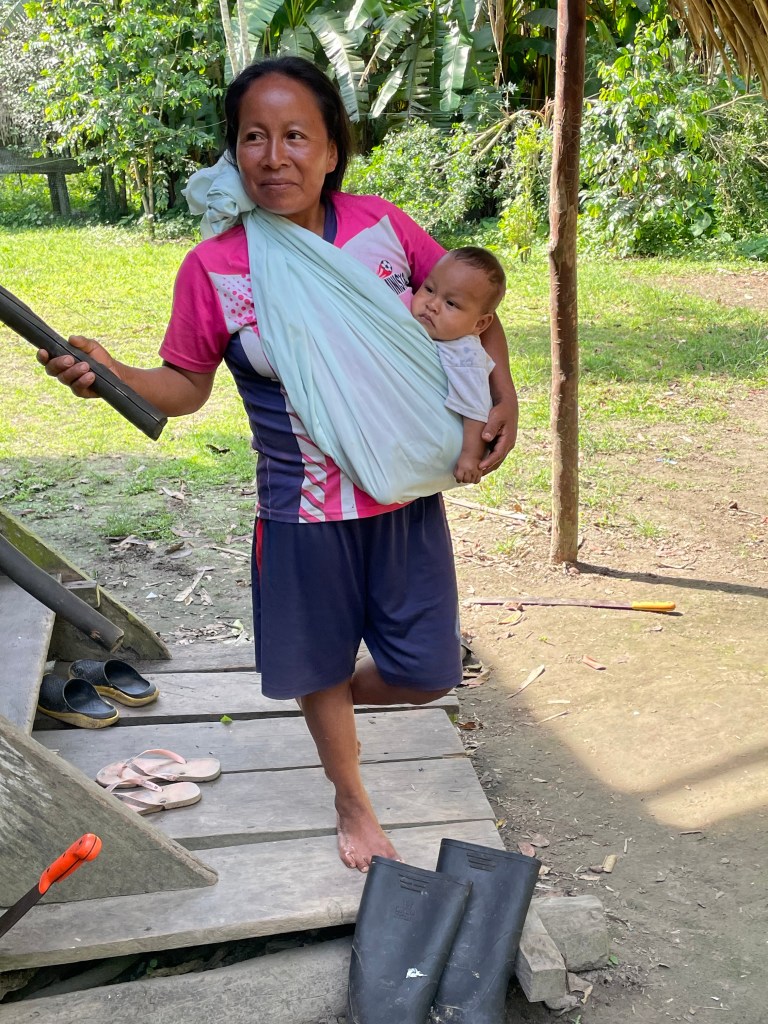
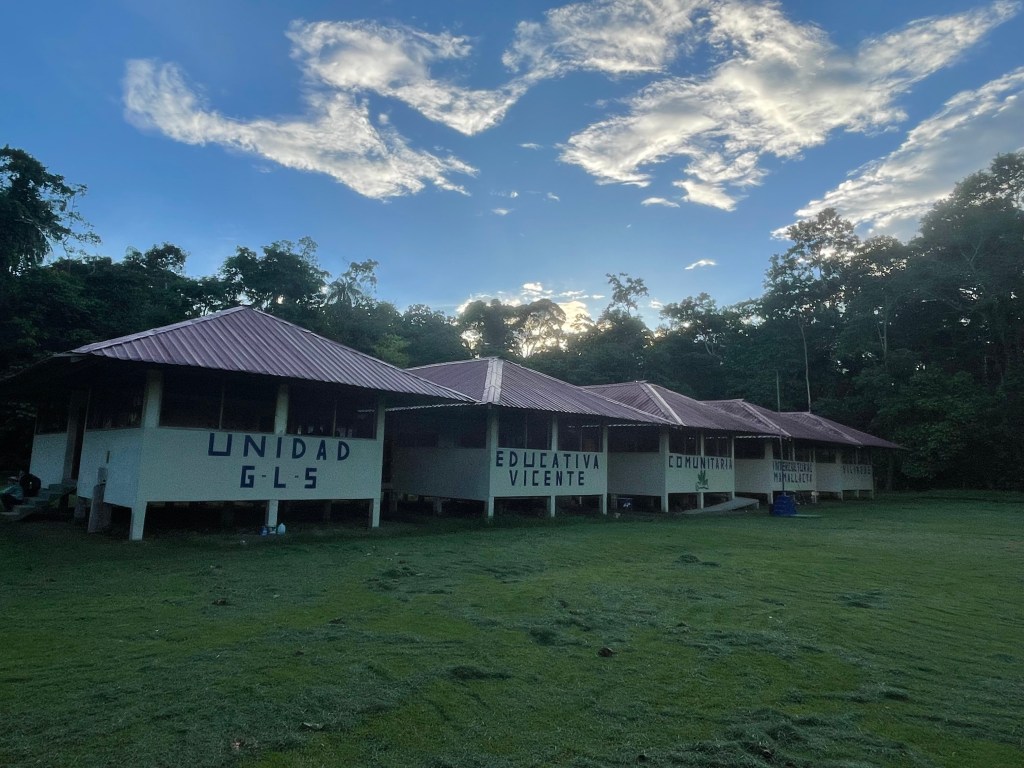
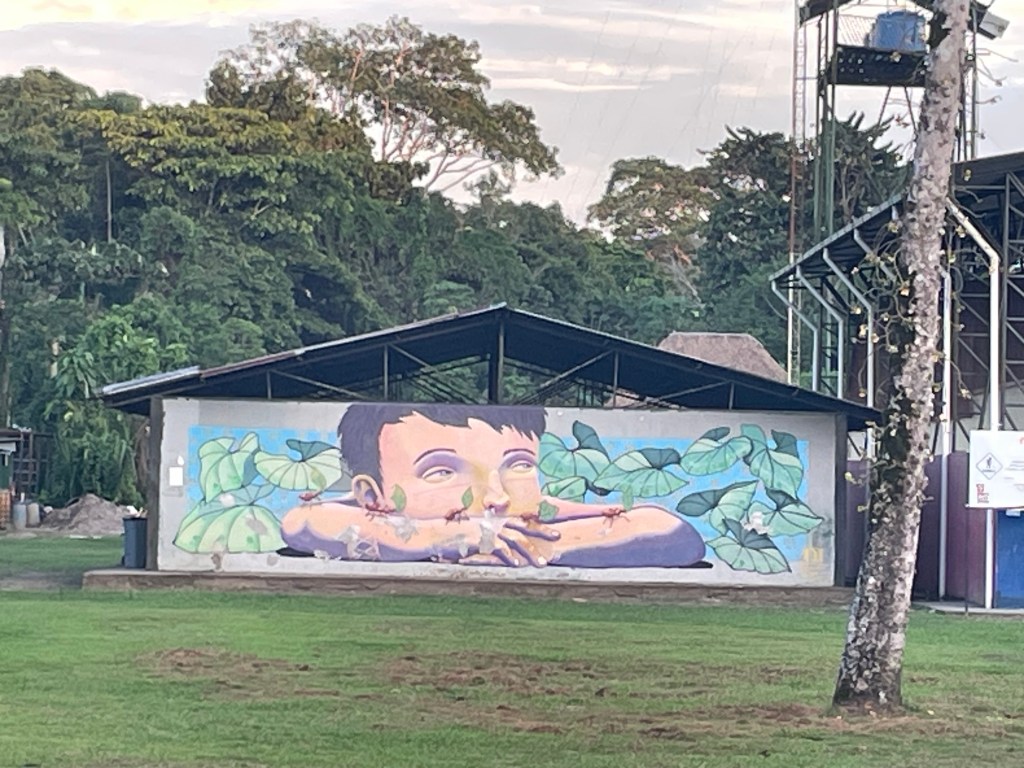

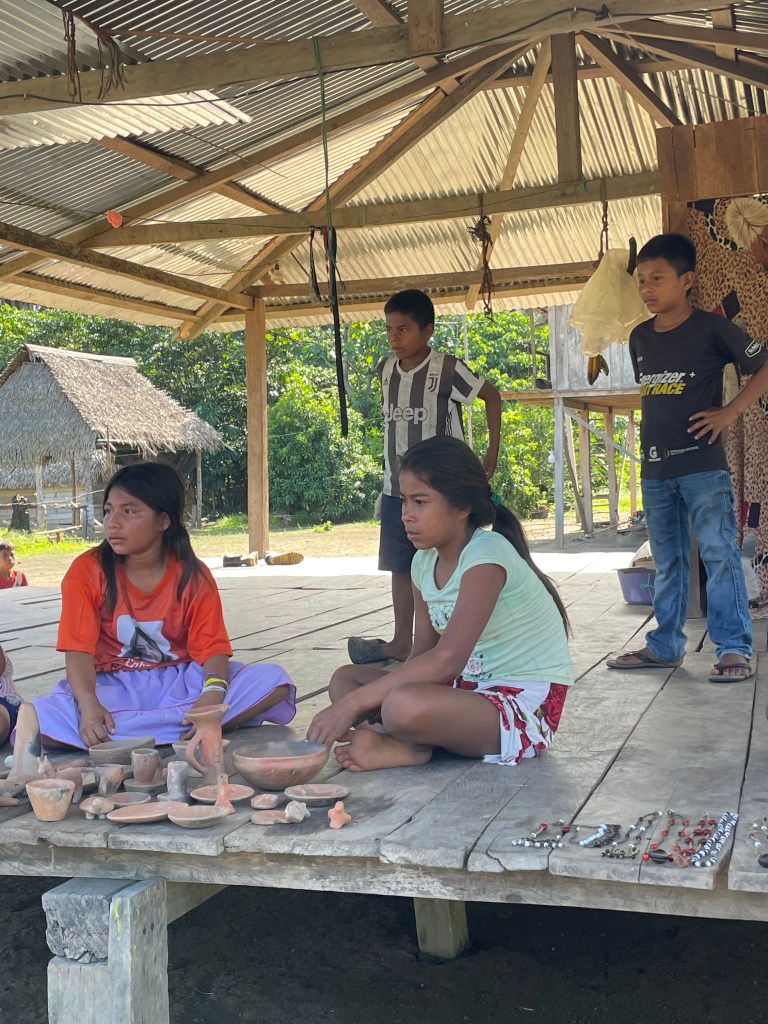
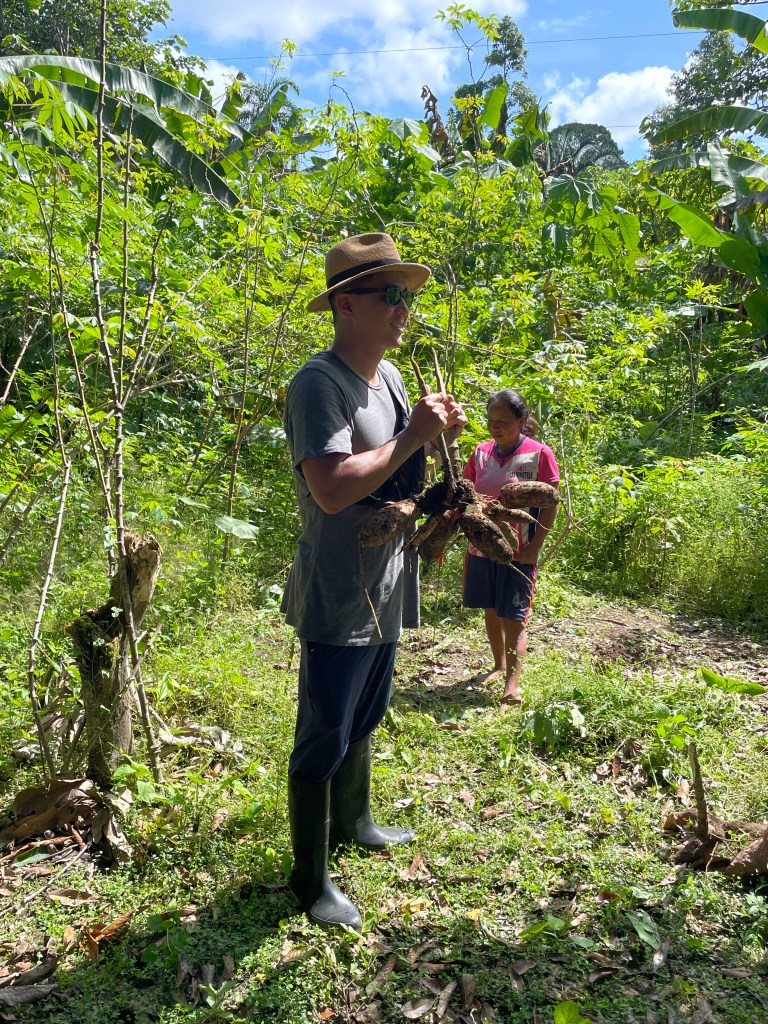
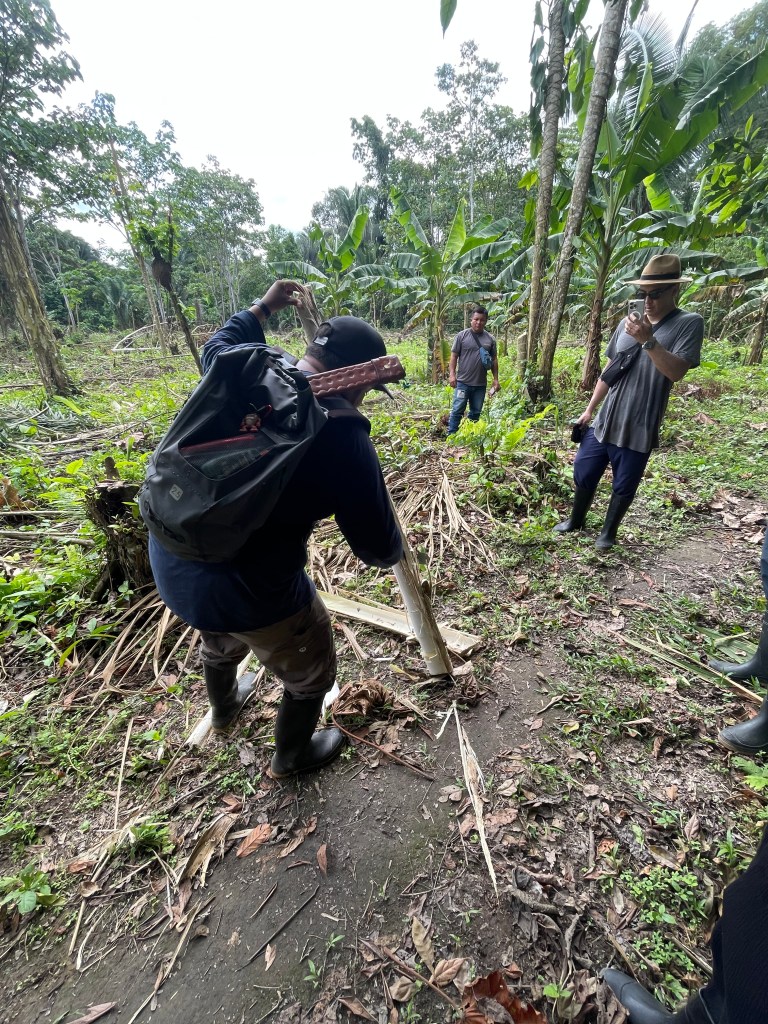
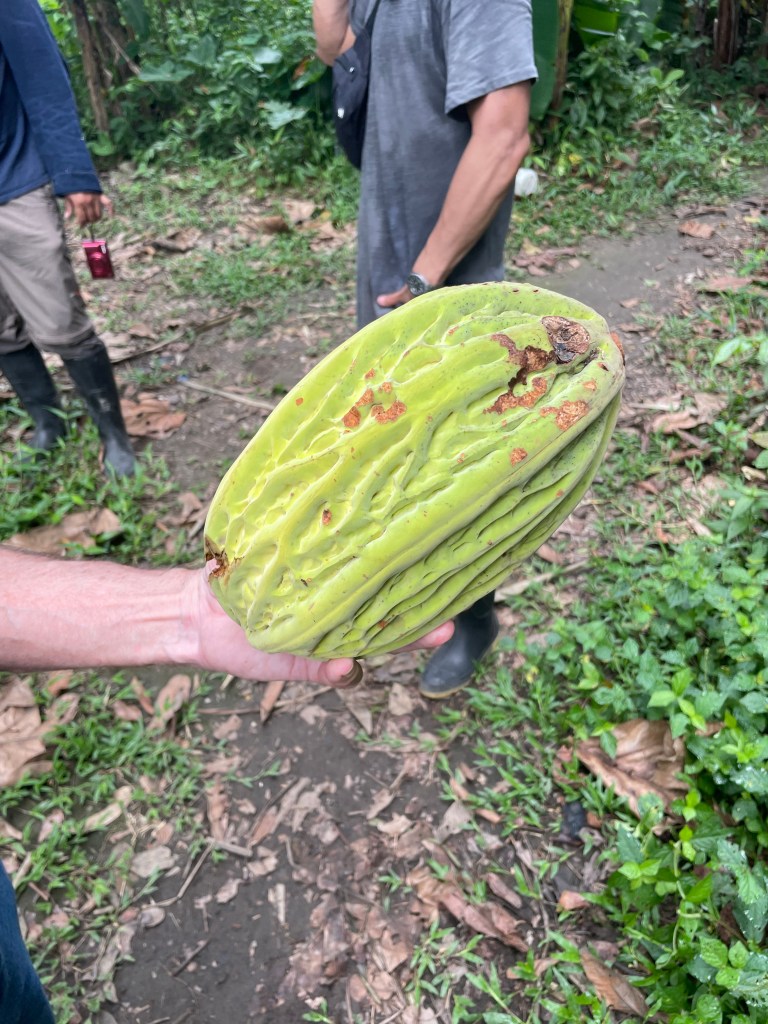
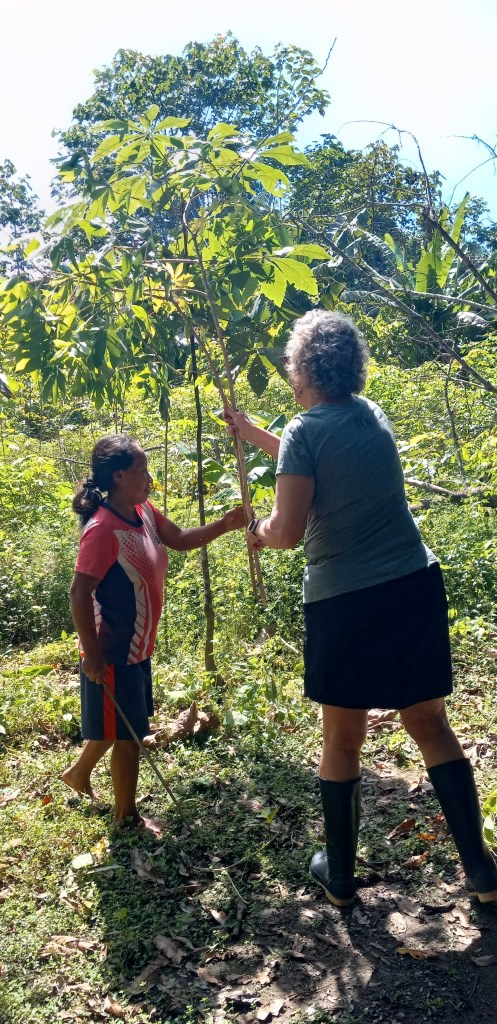
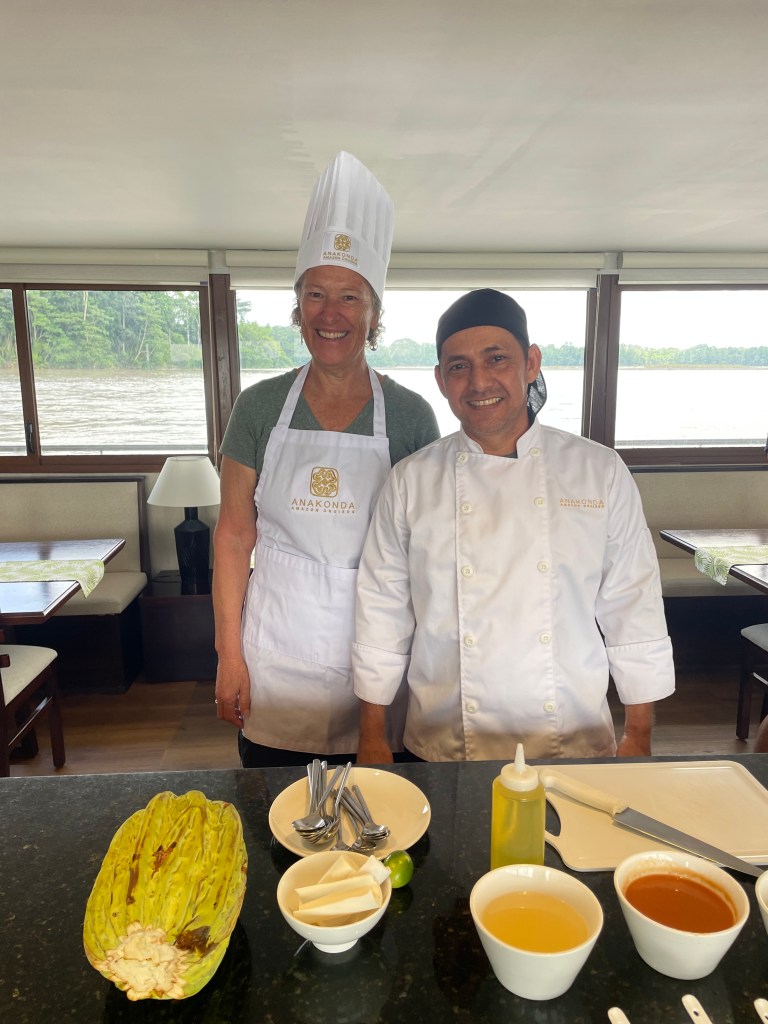
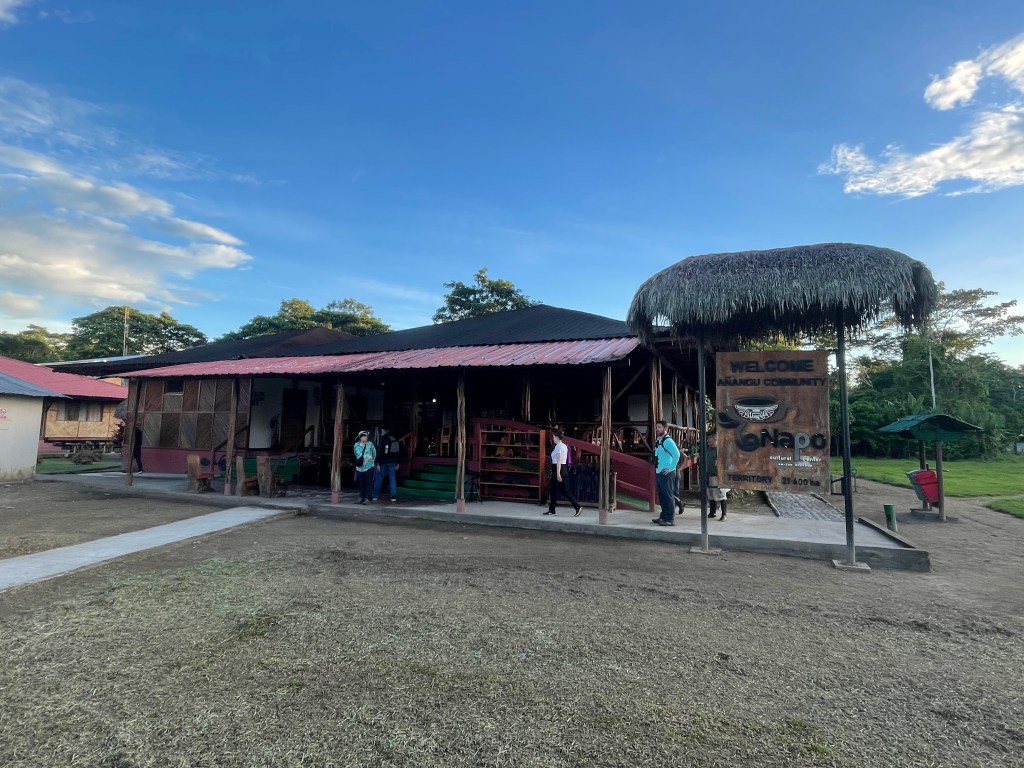
Each village was different. One tribe lived with their houses encircling a village green. The men left most days to hunt, work on the river or in a nearby town, leaving the woman and children behind with one tribal elder. The women, working at the ‘community center’, fashioned small items out of clay, to be sold to tourists to earn additional cash. One tribe granted large acres to individual families so they lived spread apart. They subsisted on the plants they grew from their permaculture gardens. We ‘shopped’ there for some items for the boat – yucca, plantains, bananas, hearts of palm, breadfruit and cocao. When we got back later in the day, we had a cooking class using some of the foodstuffs. The third village was one of the first models of eco-tourism in the area. It was created to reduce the tribes reliance on the oil companies that were ravishing the rainforest. They had a beautiful lodge, which attracted backpackers, as well as an observation tower which allowed us to see the jungle from above the tree line. In 2023, the citizens of Ecuador voted to stop all oil production in the Yasuni National Park, which is where these tribes live. Fifteen percent of the nations oil reserve will now be left untapped. The oil company needs to clean up the area and reforest it within a year.
The Andes
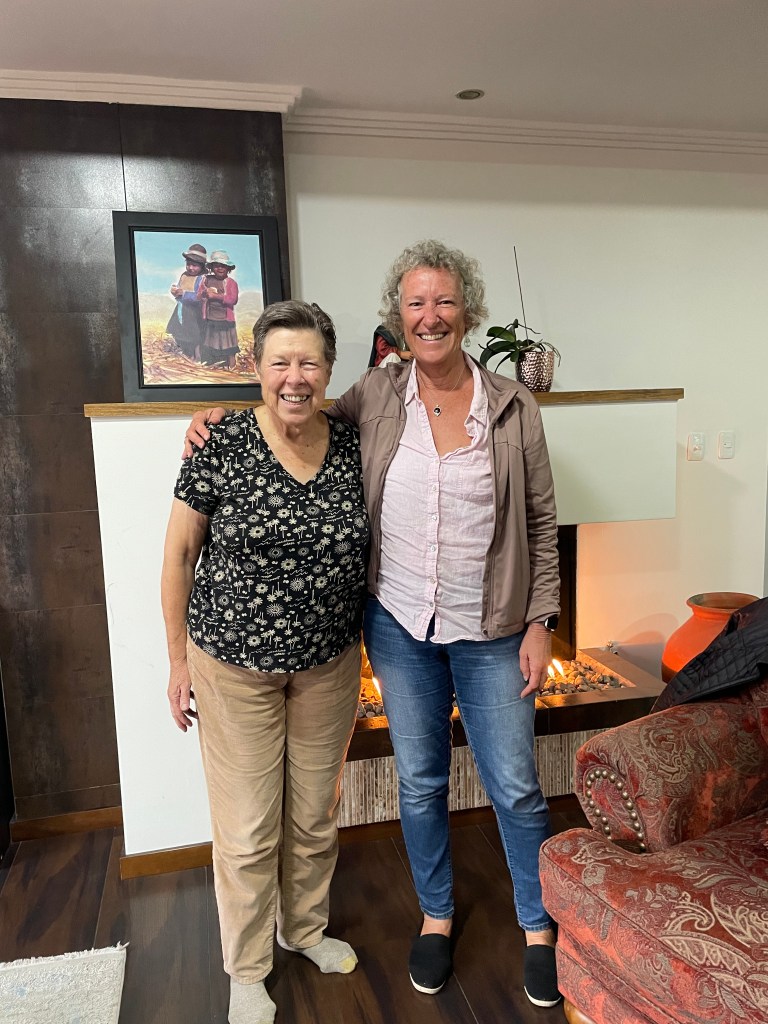
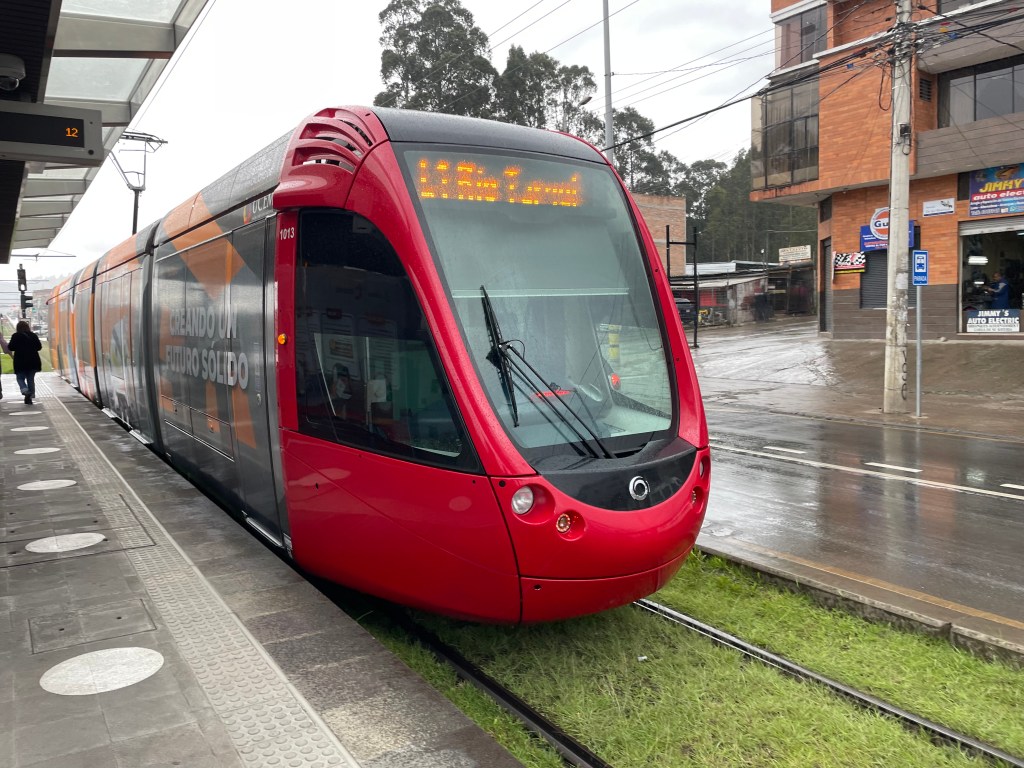
The largest city, population 3.2 million, and the commercial center of Ecuador is Quayaquil. It’s on the coast and is the only region I didn’t have a chance to visit. I did however spend several days in Quito, the capital, a city of almost two million people and Cuenca, the cultural center, population of 600,000, both located in the Andes region. I was invited to Cuenca by a friend I worked with during my years as a consultant, she retired there 5.5 years ago. It was a lovely visit and a wonderful city. Of all the places I have visited, I could see living there. It has a temperate climate, an active ex-pat community, a quaint historical town center called El Centro, nice restaurants, good health care, and is very affordable. My friend has a beautiful condo, about 1600-1800 sq ft, with a large terrace that surrounds three sides. She has a dining table outside, lots of sitting areas, plants every where that attract hummingbirds and bees, and even a grassy area for her dog. In Nashville, the terrace alone would cost me what she paid for the whole condo. I definitely had terrace envy. She lives across the street from a wonderful park that lines a river for miles, and less than a block from a tram that takes her to El Centro and shopping for $.17/ride. Taxis cost around $3 to most anywhere in the city so she did not own a car. There is no heating or air conditioning in the condo so utility costs are very low. She is learning Spanish and can converse fairly easily with almost anyone who has just a little patience. She is very engaged with the local community, even adopting a sweet street dog named Spirit.
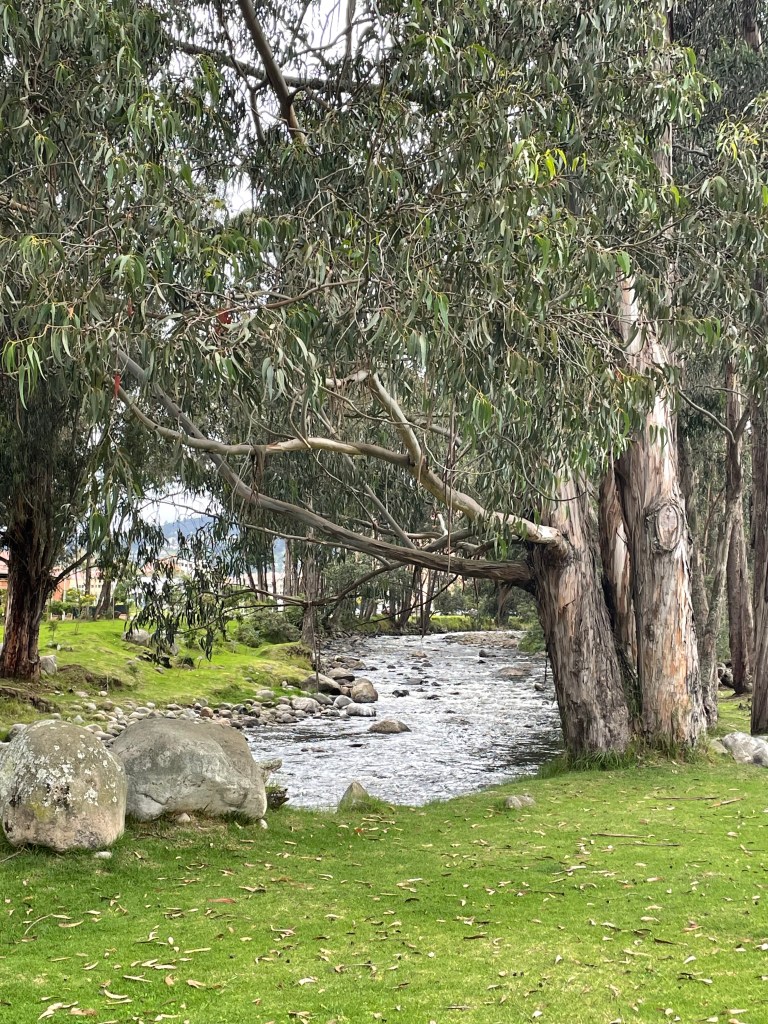
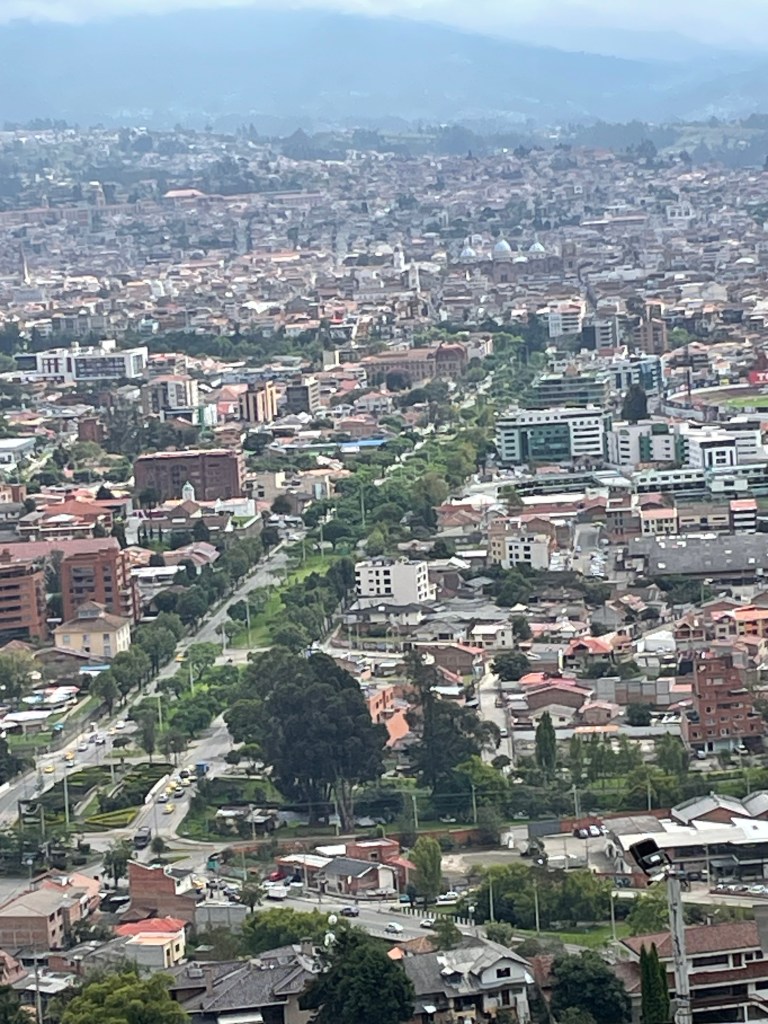
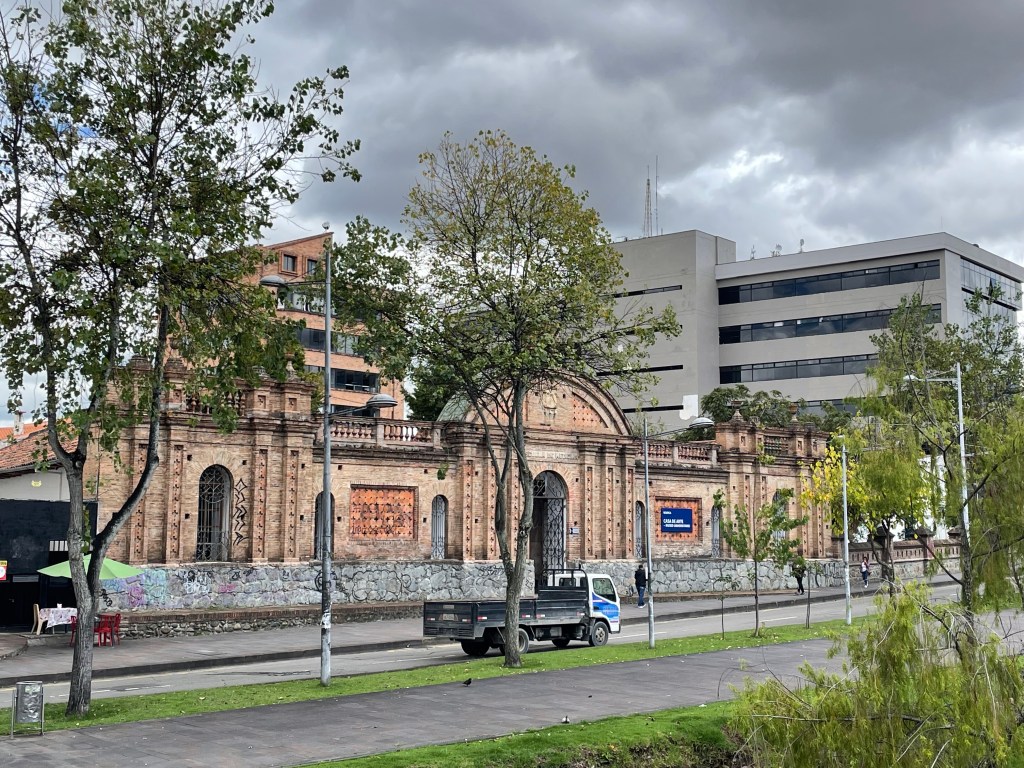
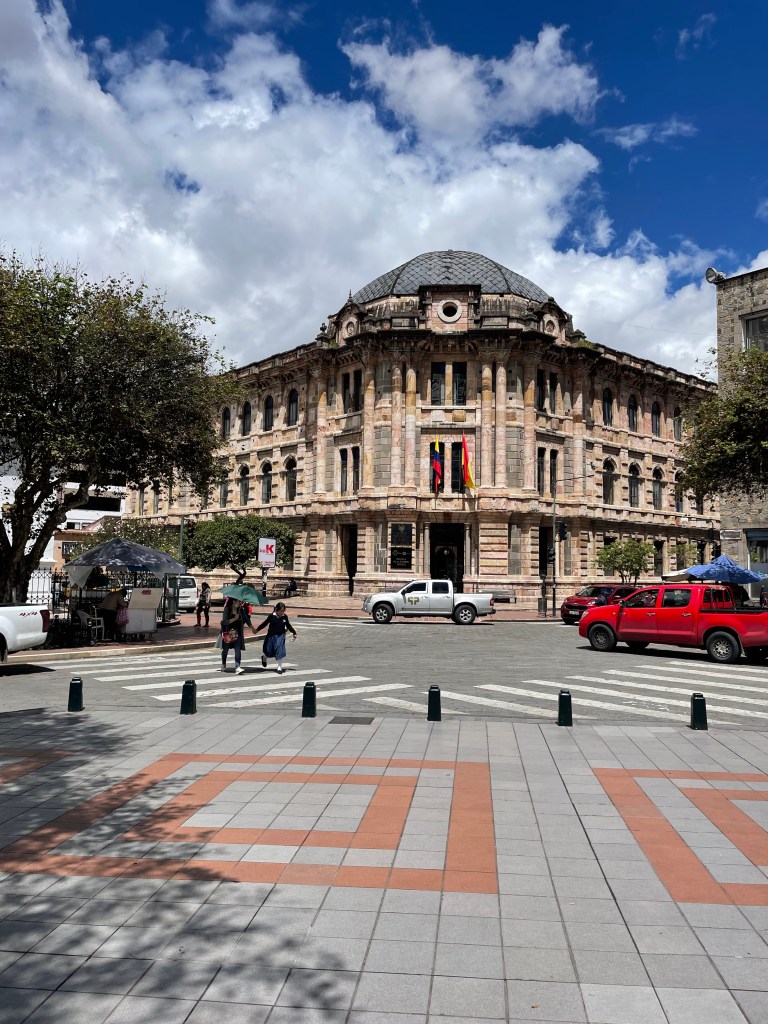
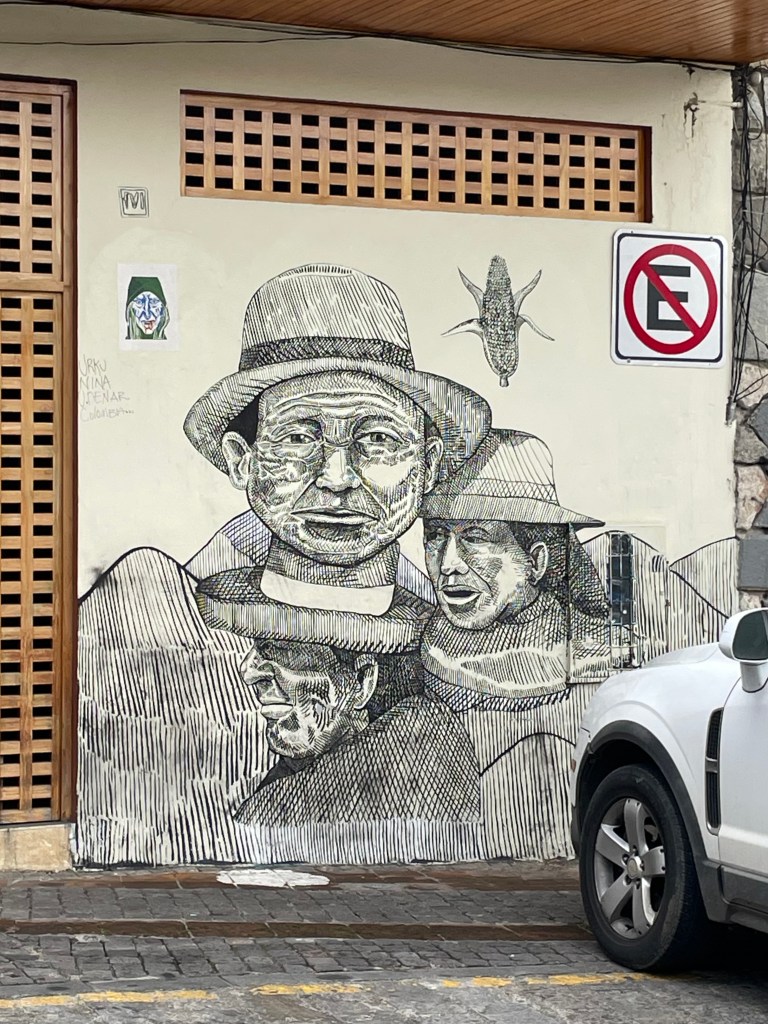
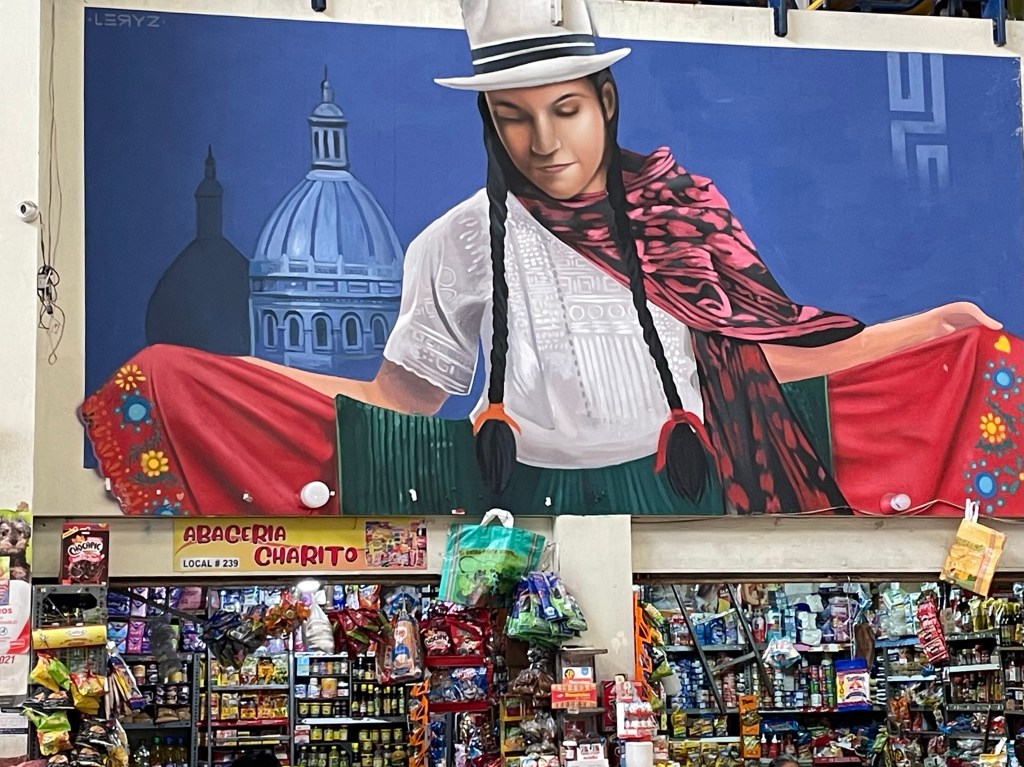
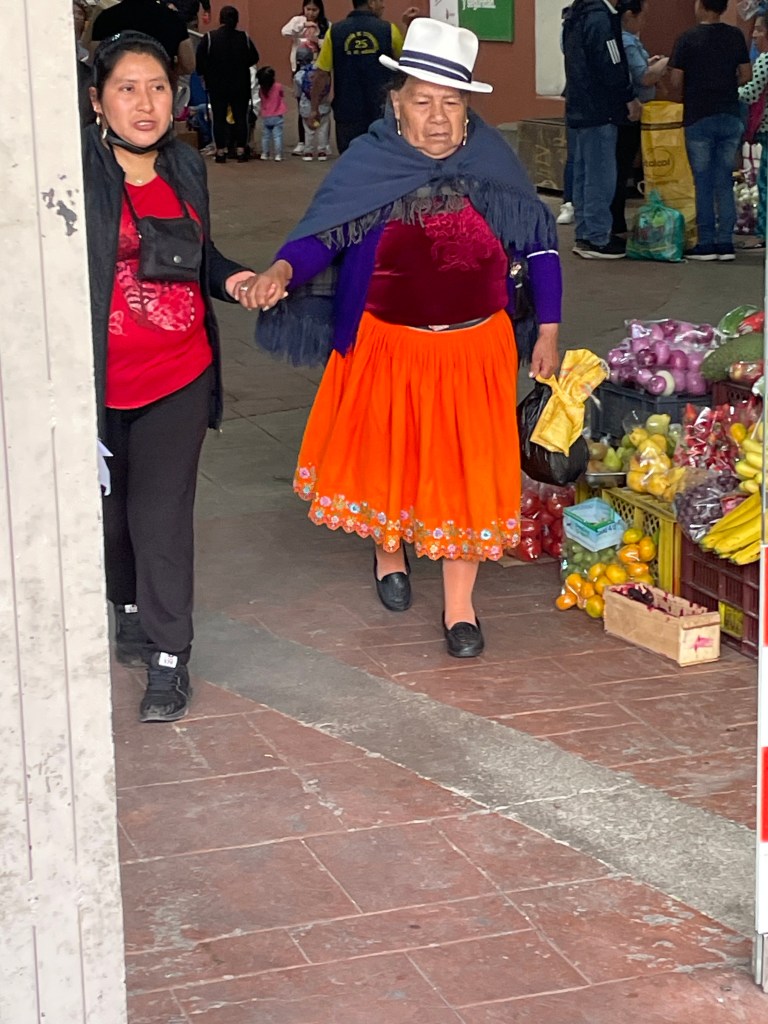
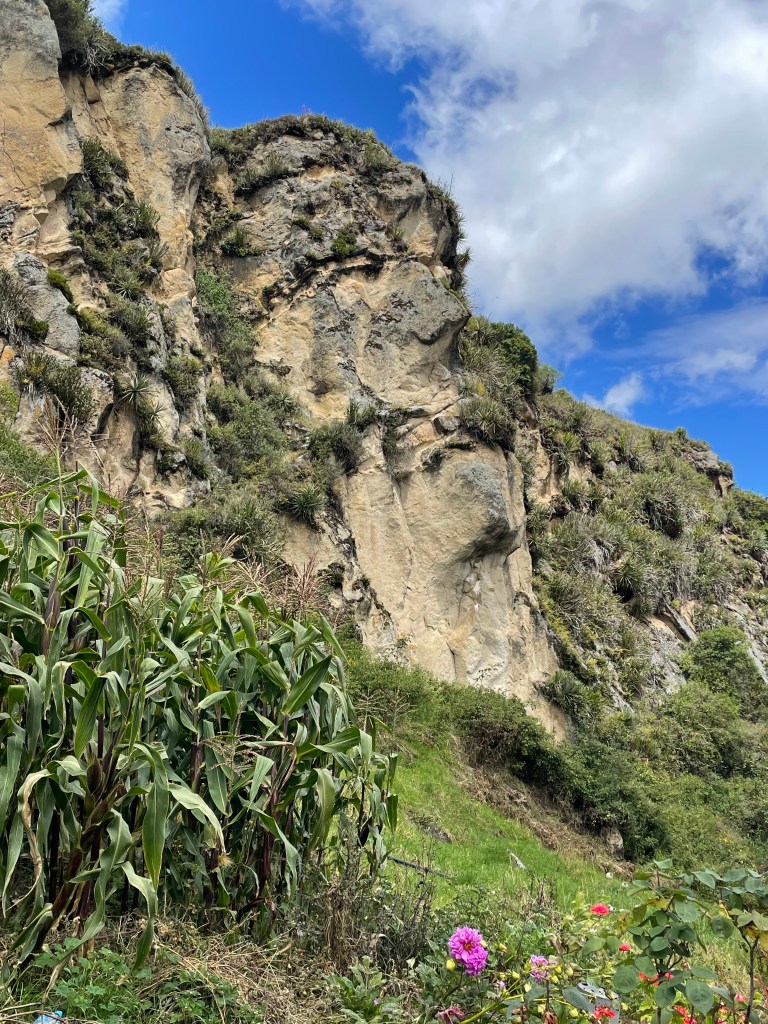
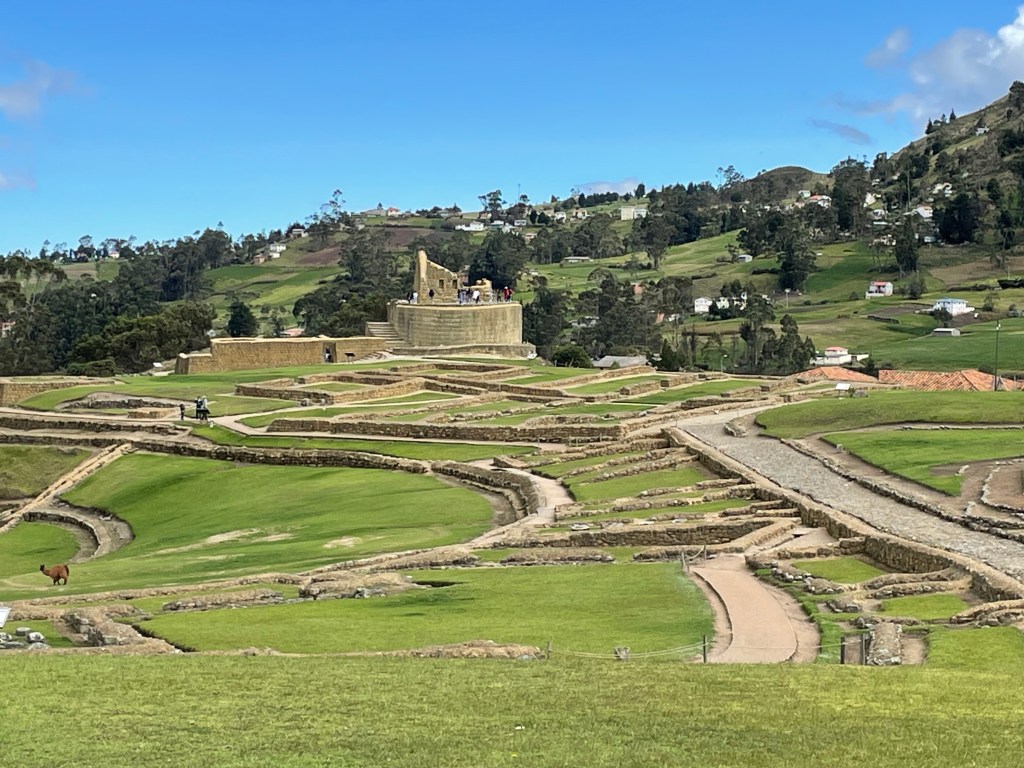
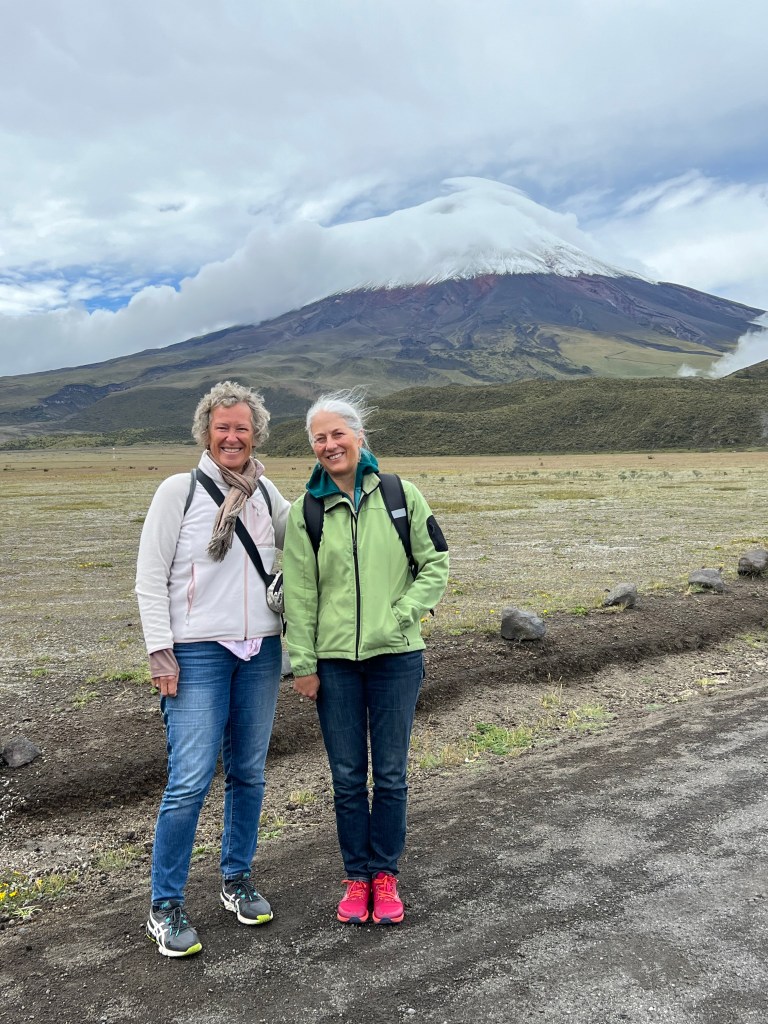
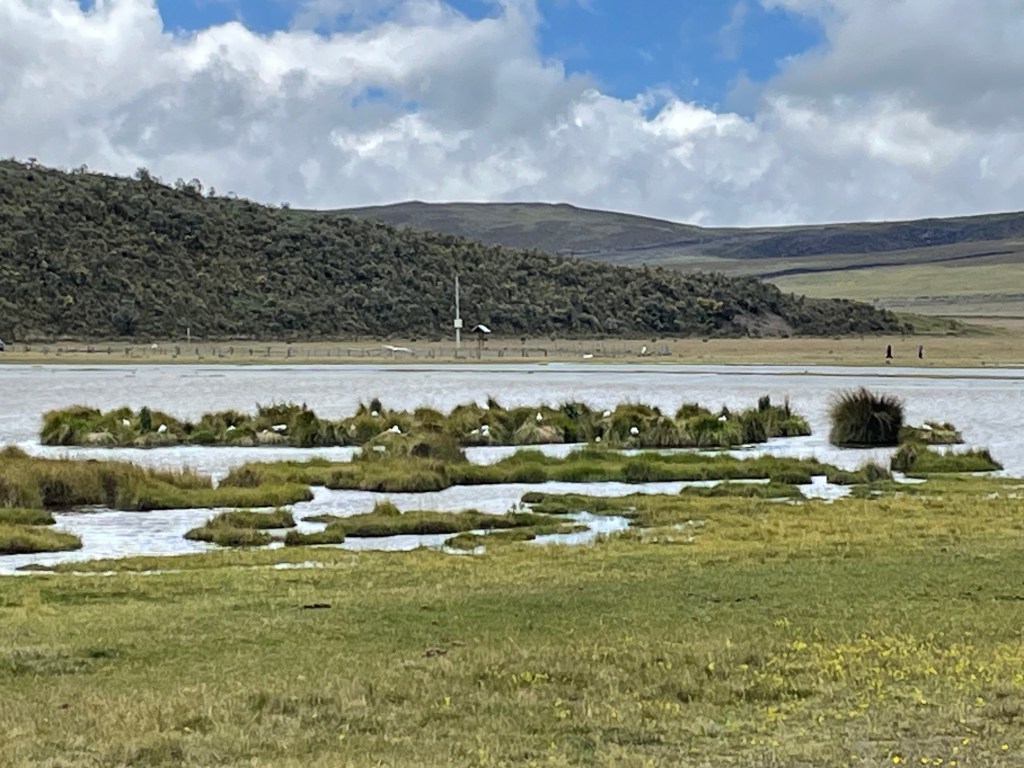
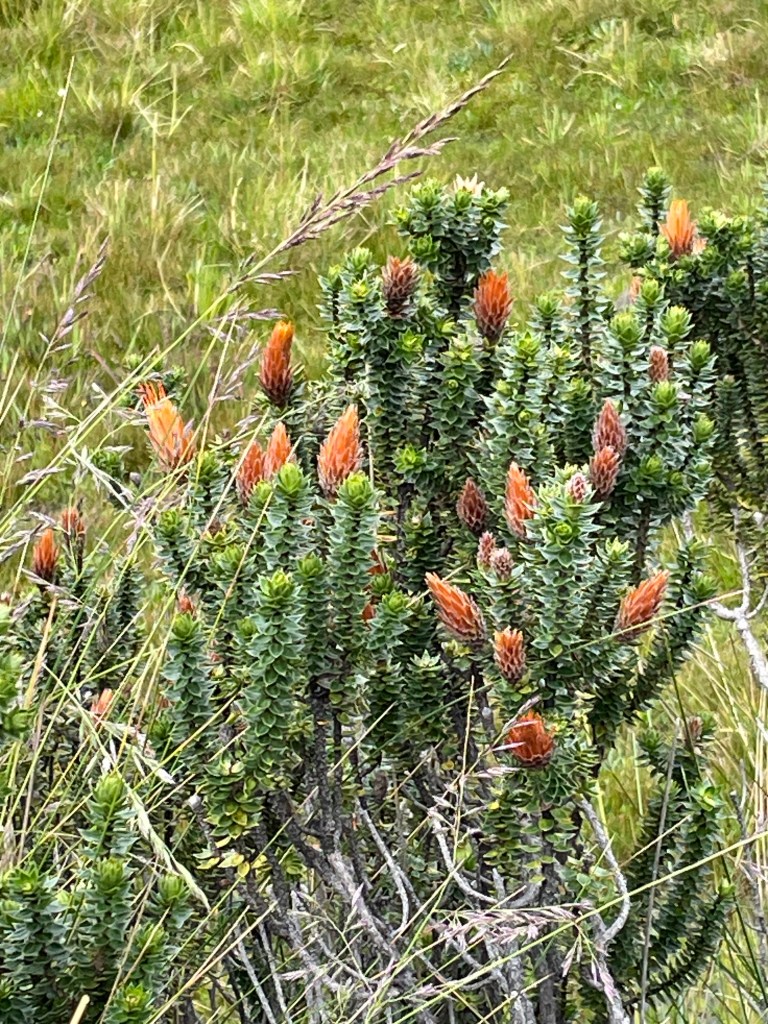
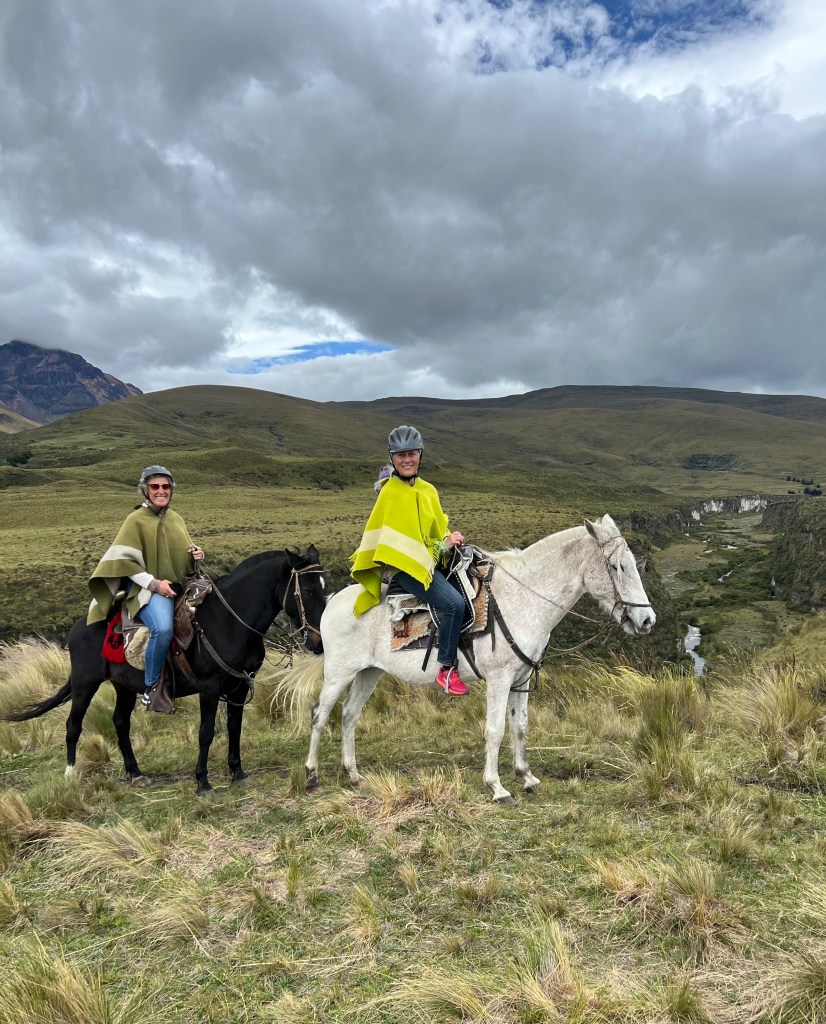
While in Cuenca, I enjoyed a tour of El Centro ending with a cleansing by a local woman at the central market. There were 10-12 woman offering their services, often with people lined up waiting for an empty chair. I also visited the historical ruins of Ingapirca, located on the Inca trail. Originally, a Canari city, it was later taken over by the Incas after they invaded/settled the area. At 10,000 feet elevation, the 45 minute hike around the area caused me to be a little short of breath. But it was a beautiful day and I loved it. I also hiked at Cotopaxi National Park, about an hour outside of Quito, which was at 14,000 feet and appreciated that the trail was almost flat. My friend Pam, who I met when she lived in Nashville though she recently moved to Colorado, joined me in Quito and on the hike, before our tour in the Galapagos Islands. The trail at Cotopaxi, went around a clear pond where white birds nested along its grassy banks and dozens of varieties of wild flowers in pink, white, orange, periwinkle and yellow bloomed. After our walk, we rode horses across the vast, unique landscape of the Andes, surrounded by three volcanos, the Cotopaxi covered in snow. On our two hour excursion we didn’t see another soul, except a falcon soaring overhead, and the only sound was the wind rustling the grass and the jingling of the bridle when we trotted. It was stunning. Driving through the park we saw herds of wild horses and cattle.

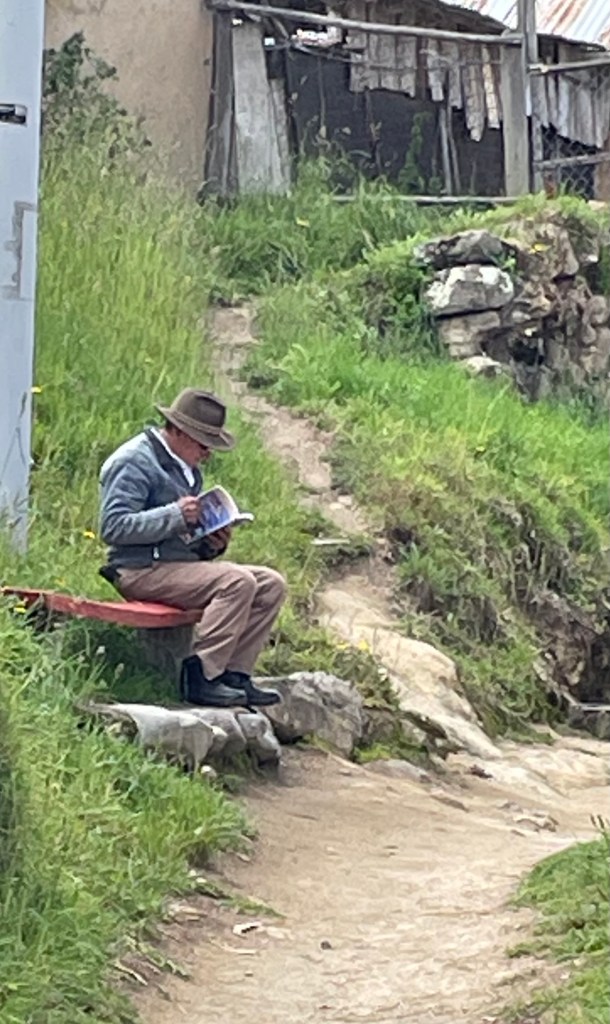
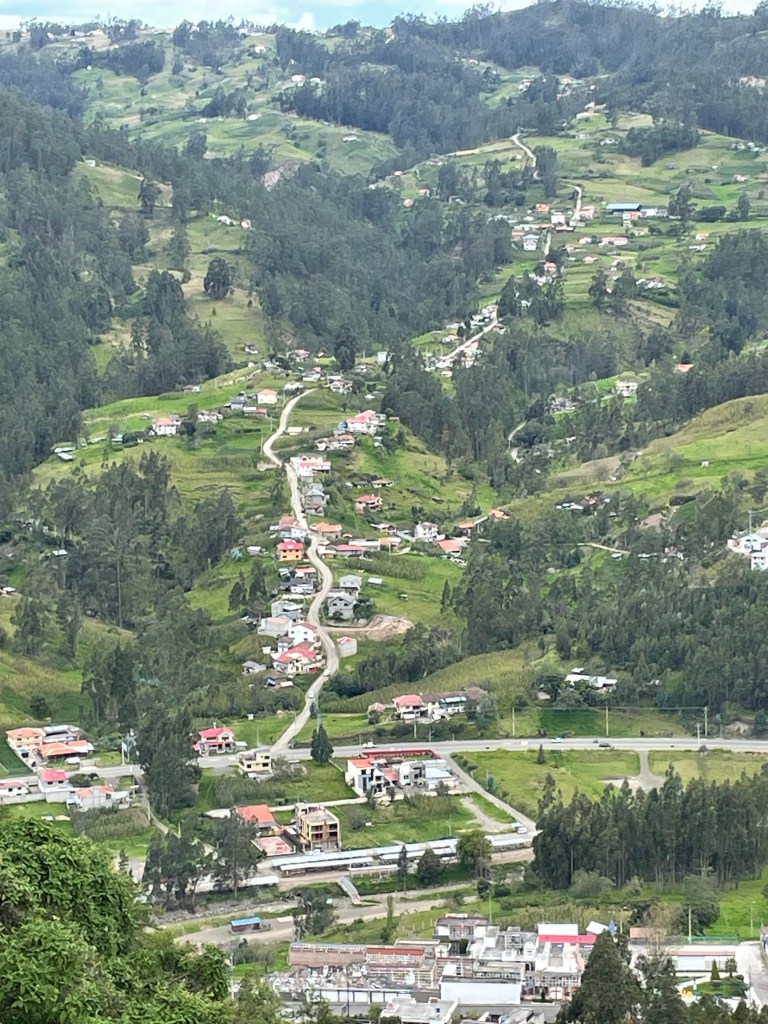
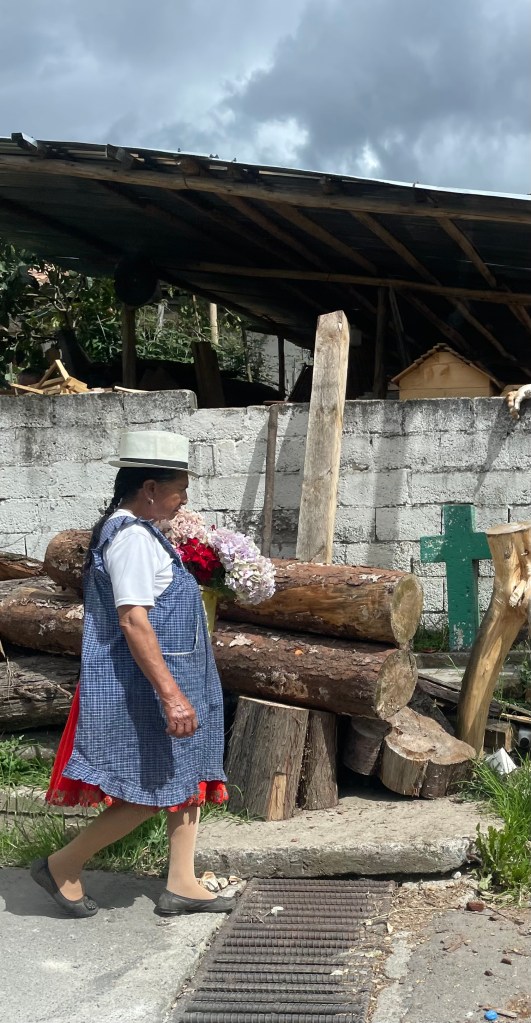


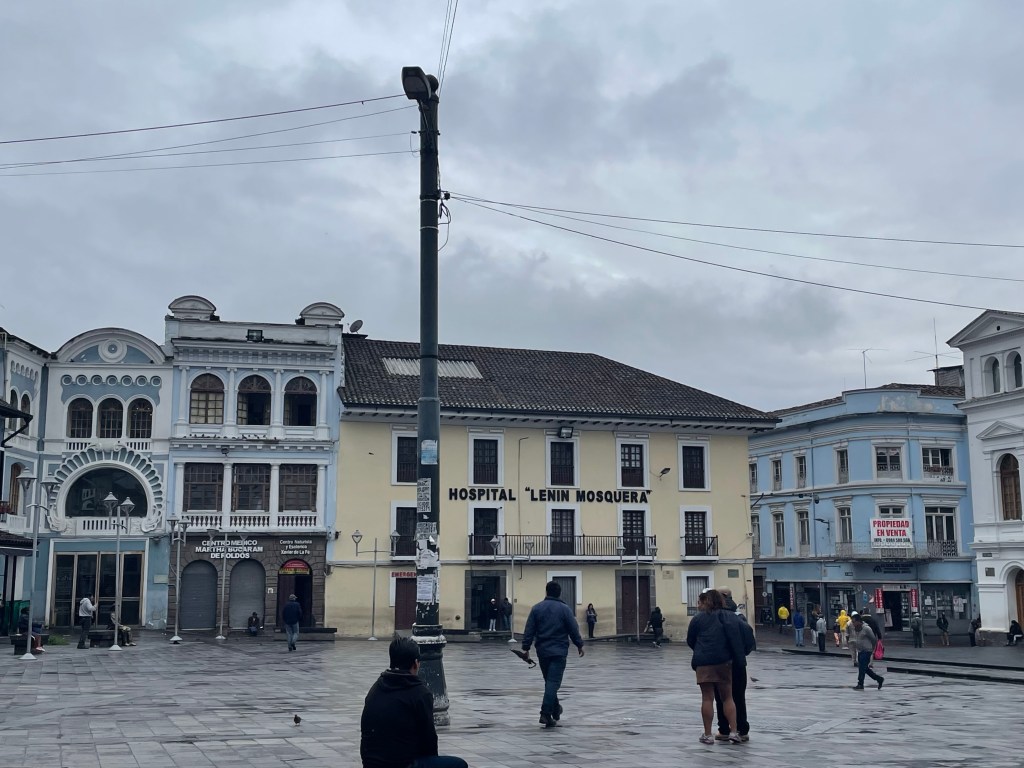
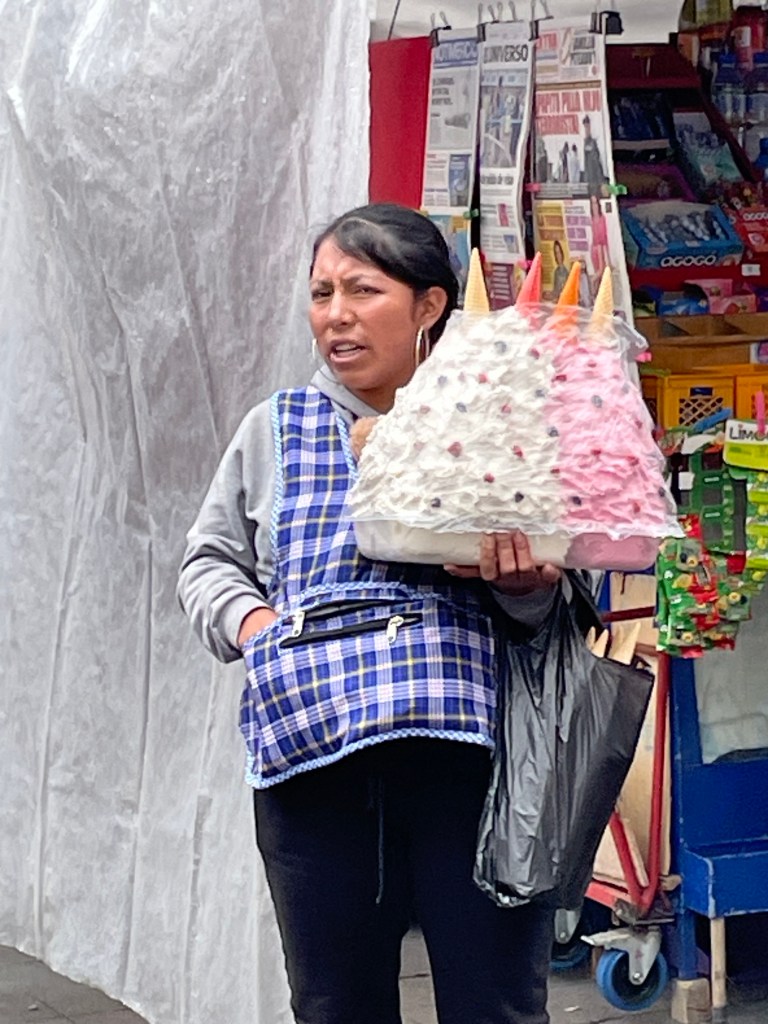
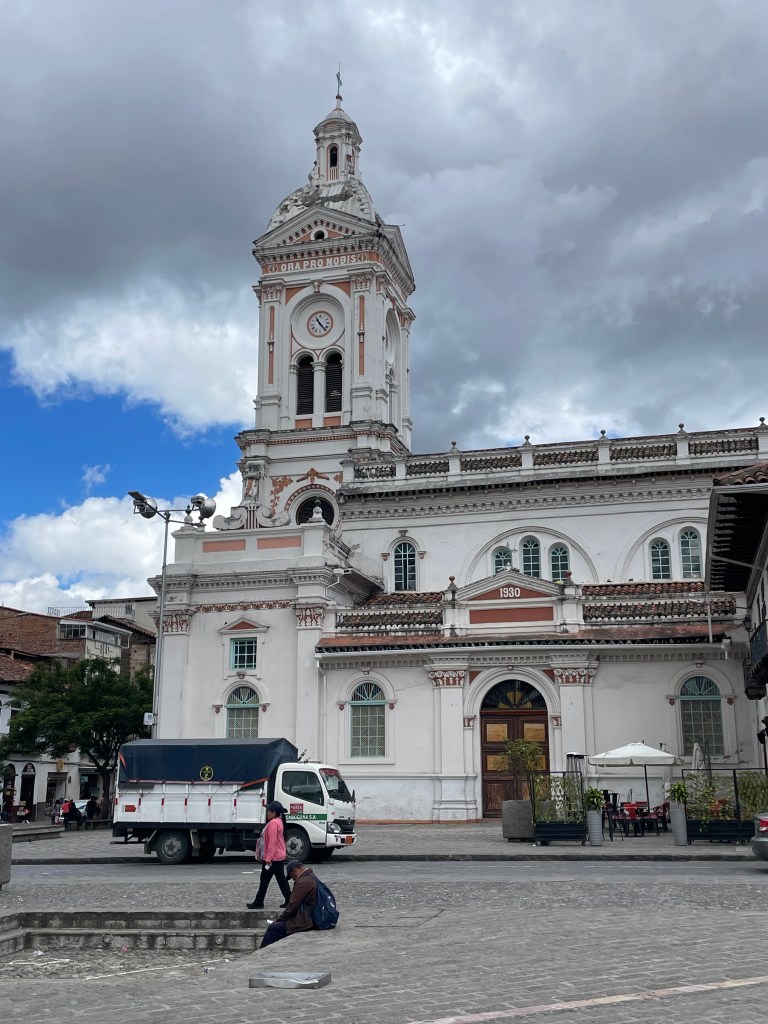
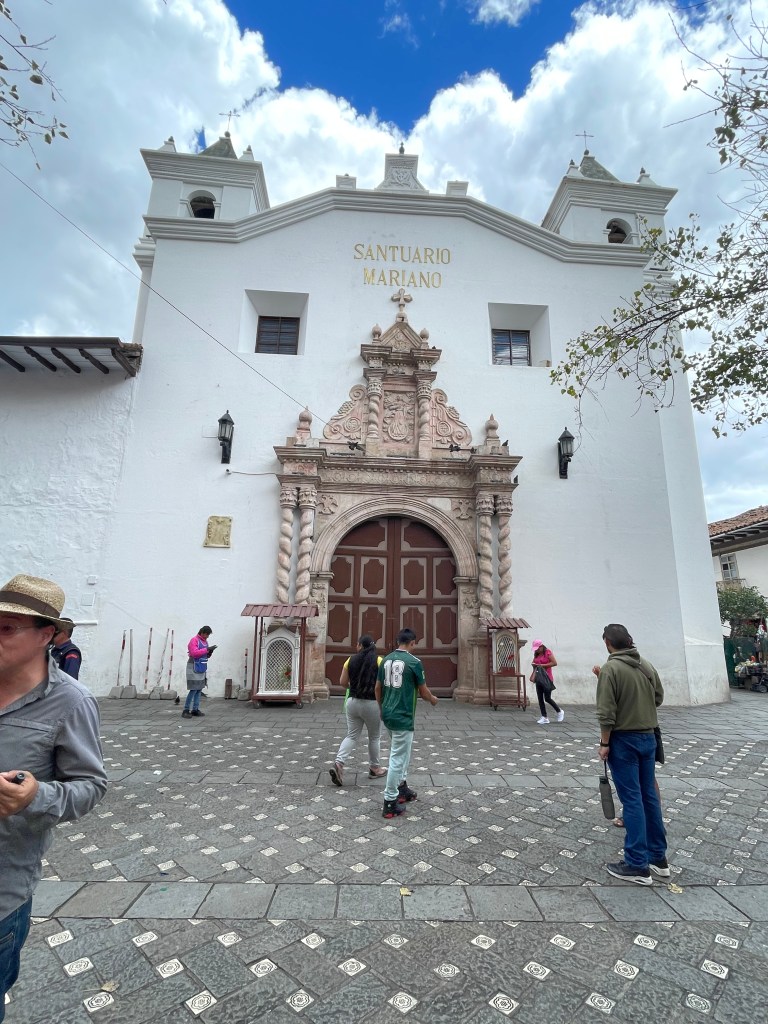
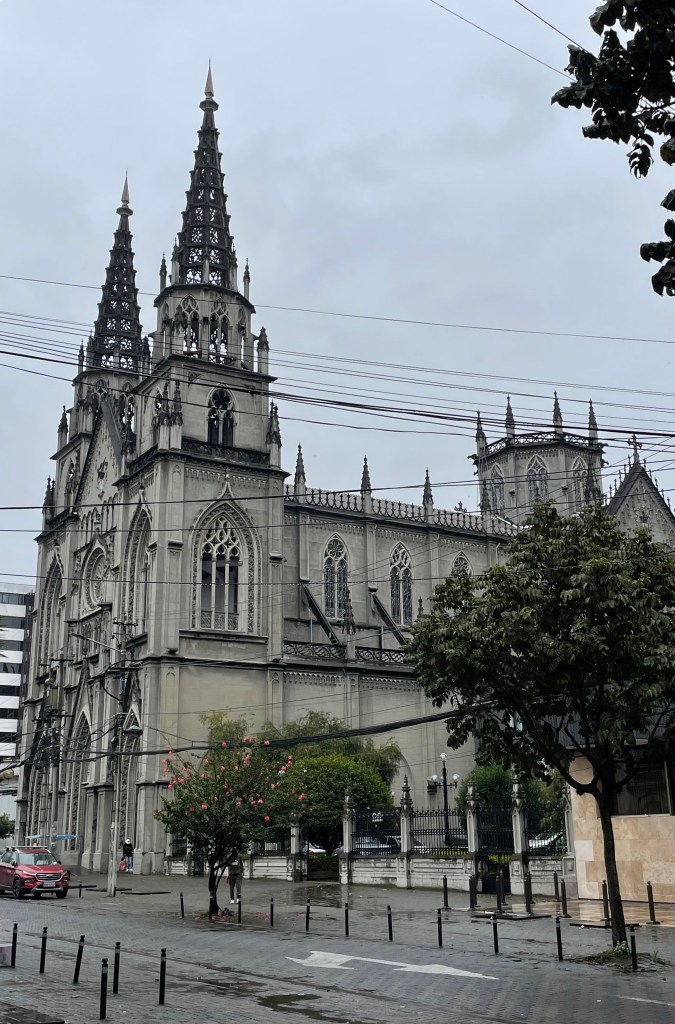
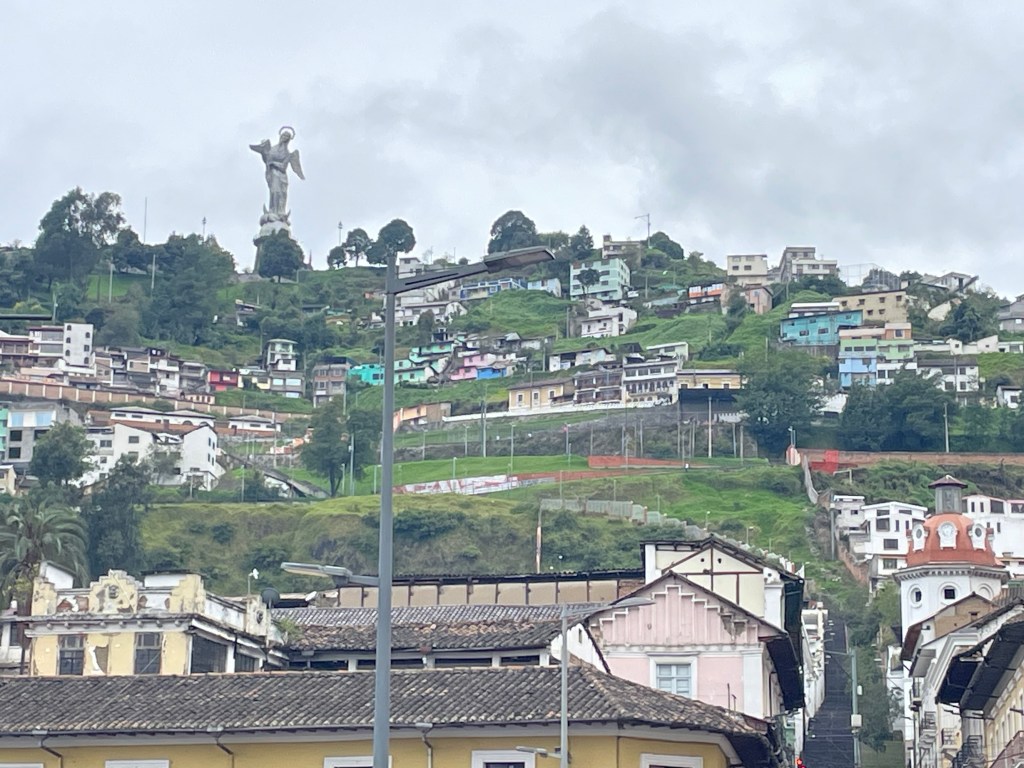
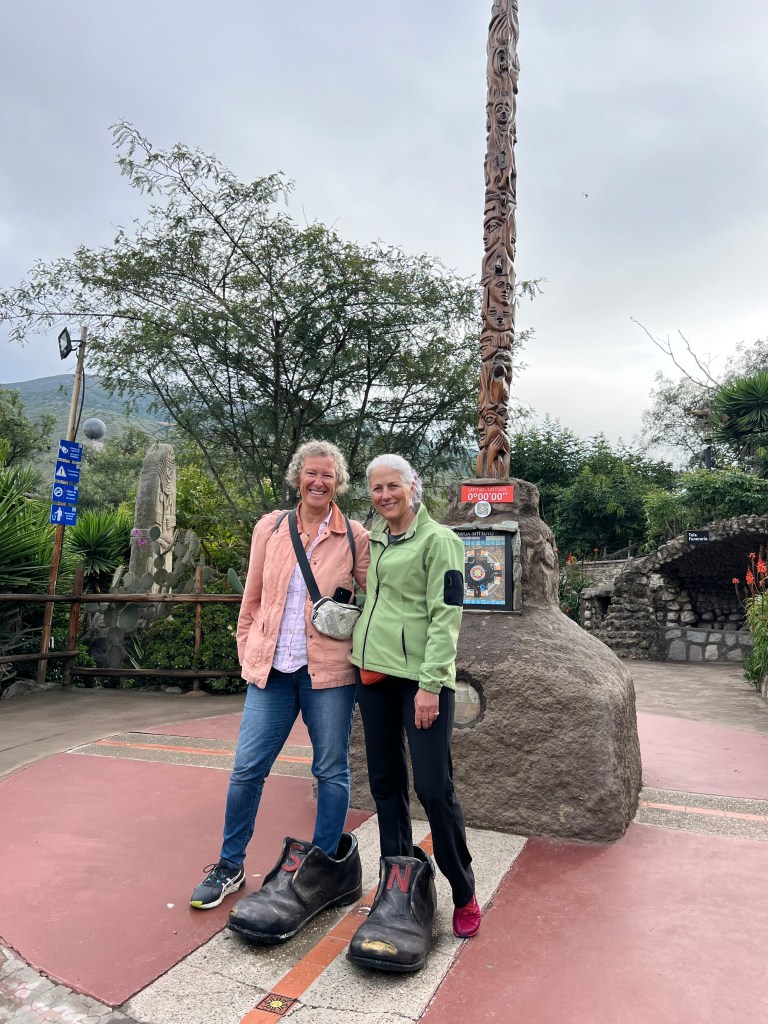
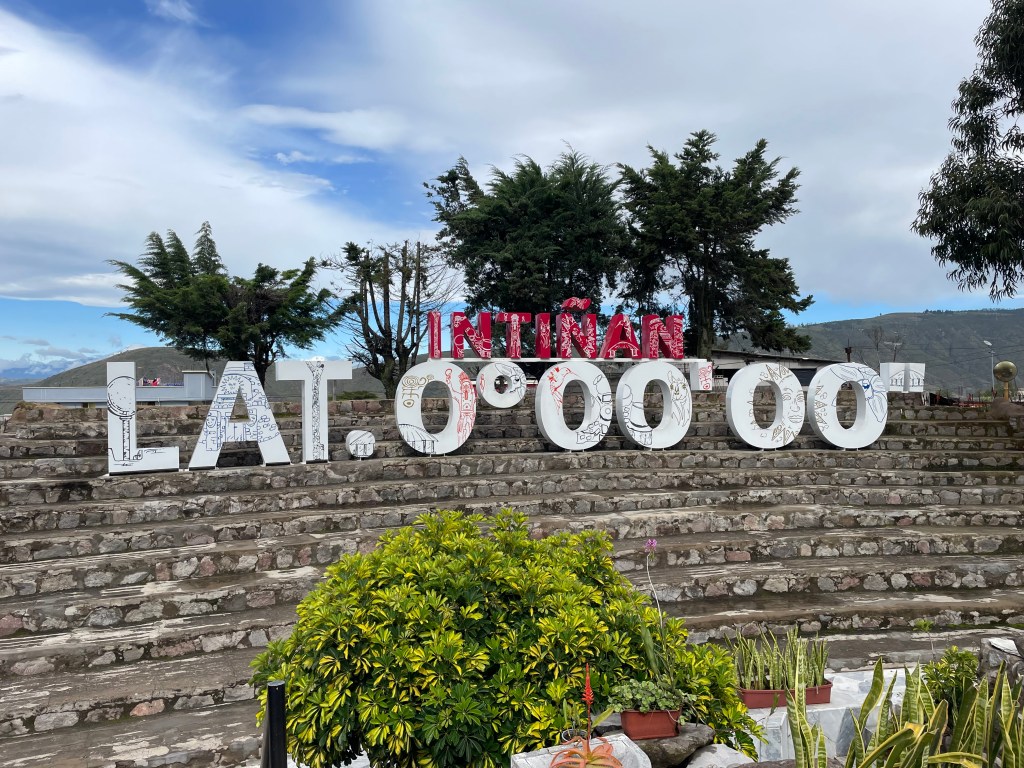
Quito proper is situated high on a hill at 9,350 ft elevation. We stayed in two different locations. The first, near the Mariscal neighborhood- once an enclave of the rich outside of downtown but now the beautiful houses have been turned into offices and shops and the area has lost its luster. The second, in the newer north end of the city, is filled with malls and fancy, tall, condo buildings. We took a bike tour of the old town, on Sunday morning when the traffic was light, enjoying the vibrant city center filled with people strolling the pedestrian streets after church. Street vendors were selling their wares – from art work to meringue, a popular sticky, sweet treat. Ecuador is primarily a Catholic country. Ninety percent of the people in Cuenca are Catholic but only 80% in Quito. In Cuenca, there are 17 churches in El Centro – one every two blocks. In Quito, there are 43 churches in the old town area, including two huge Gothic style edifices. The streets in some areas are very hilly, requiring me and occasionally the others to walk our bikes. No trip to Ecuador would be complete without visiting the equator, so we hired a cab for the thirty minute ride to experience the Coriolis Effect.

The Galápagos Islands
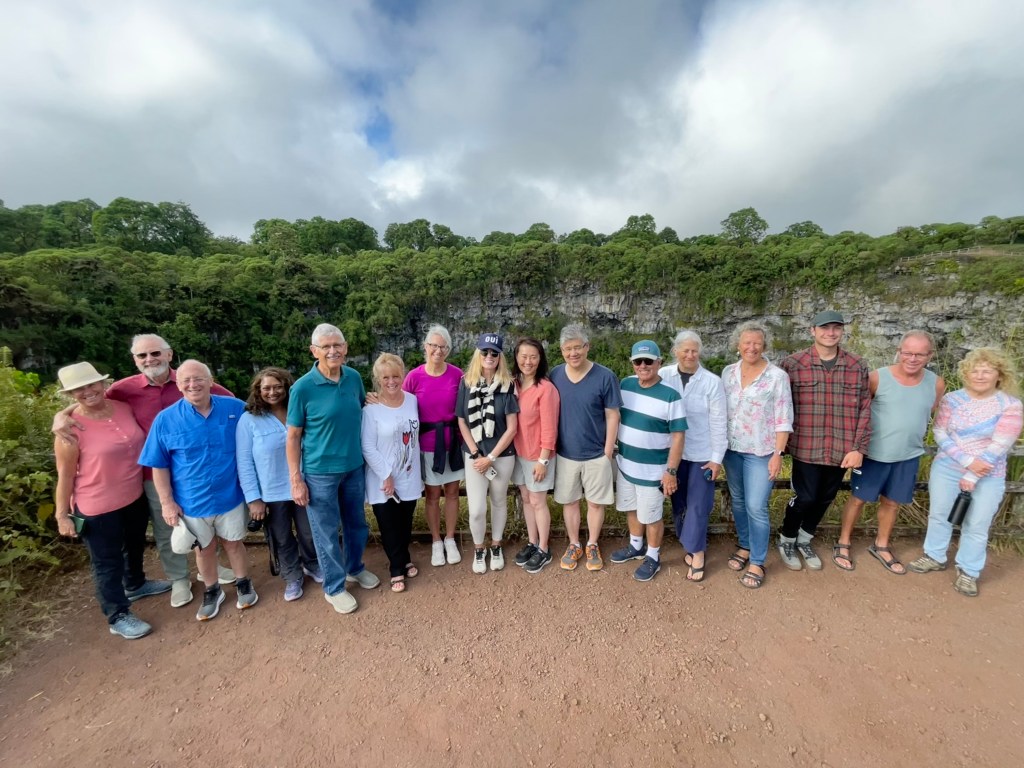
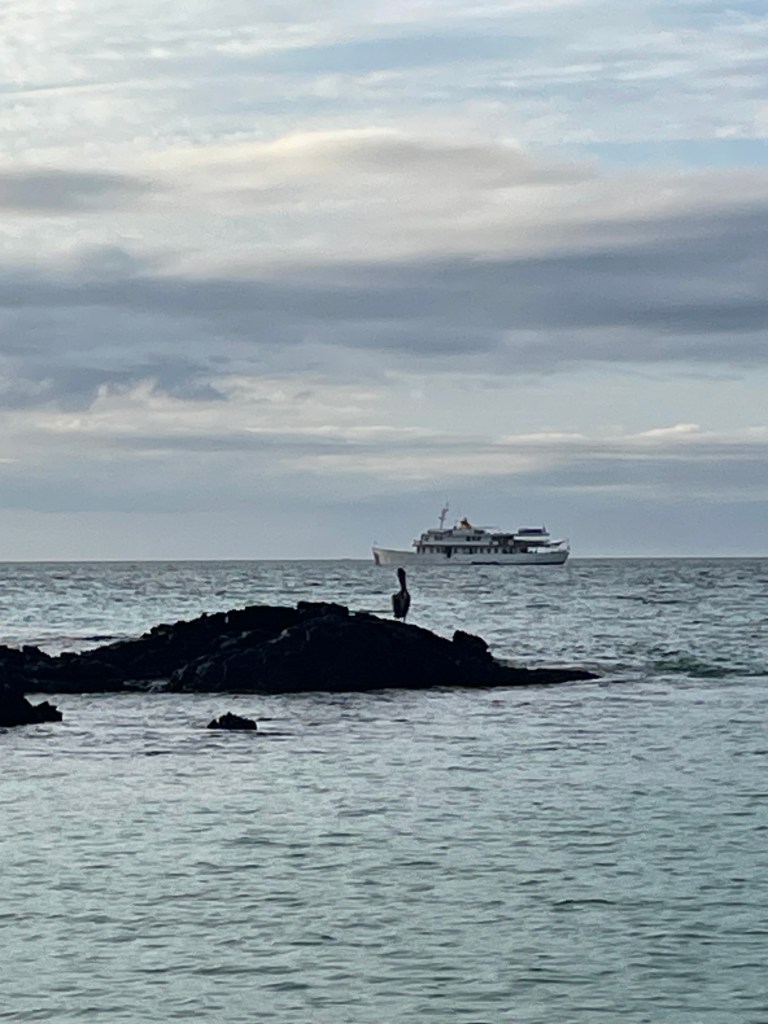
Time to get back on the water. Pam and I arrived in the Galapagos on a beautiful sunny day and boarded the Grace – once the yacht of Princess Grace of Monaco. Many thanks to my friend Brad Eskind – who you might remember joined me in Bhutan, for recommending it. She slept 16 guests. All of us were from the US, spanning the nation from San Diego to Boston. One woman came with her son who was 21 but the others ranged in age from their fifties to their seventies. I enjoyed meeting and hanging out with all of them. From day one, they told us this was not a vacation but an adventure and provided us with one wonderful activity after the other – snorkeling, hiking, kayaking, nature talks and panga rides. As the boat cruised from island to island we navigated daily in a panga or zodiac to our activities. There were two naturalists on board, Diego and Walter, who accompanied us everywhere we went, providing in-depth commentary. Gibson, the on-board chef prepared three delicious meals each day, with multiple options for the main course. Highlighting, of course, the fresh seafood of the islands. Xavier, not only mixed fabulous cocktails but served us our meal as well. Ten more staff worked to make the trip safe and special, from Jorge, our captain, to Alex who cleaned our rooms and left creative towel animals on our beds.

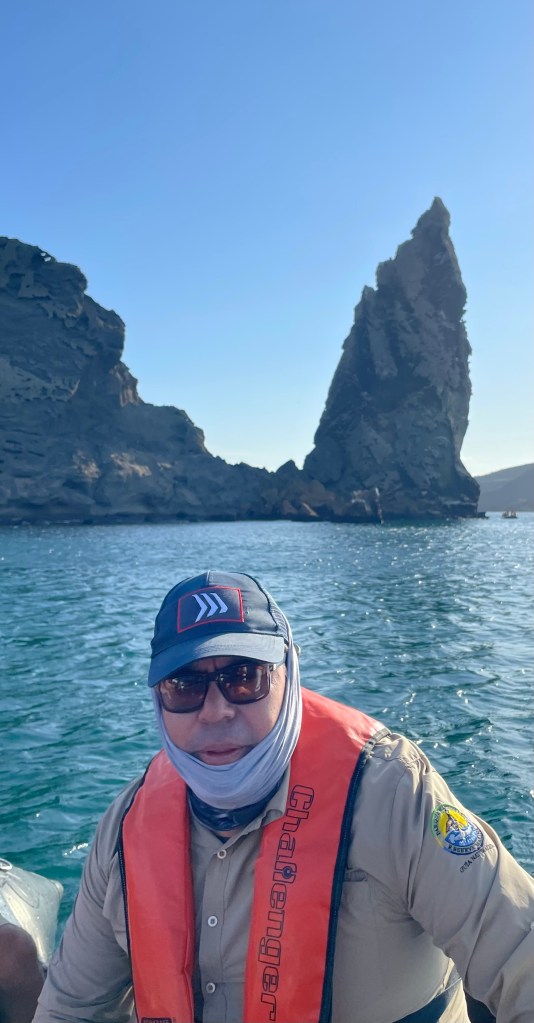

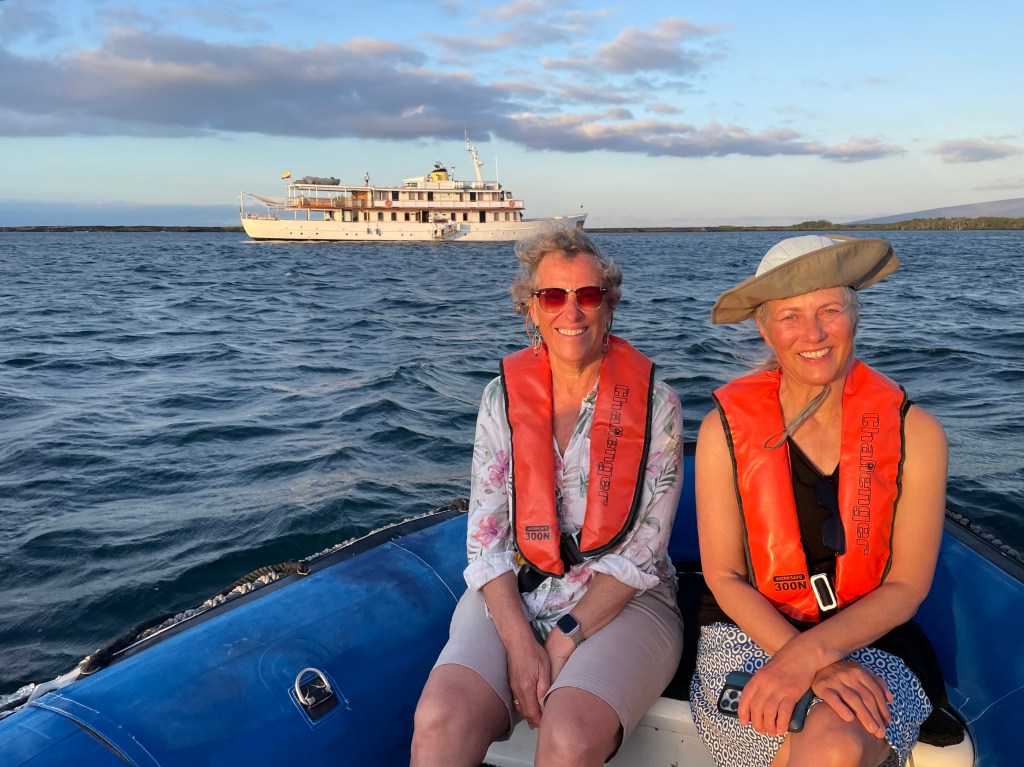

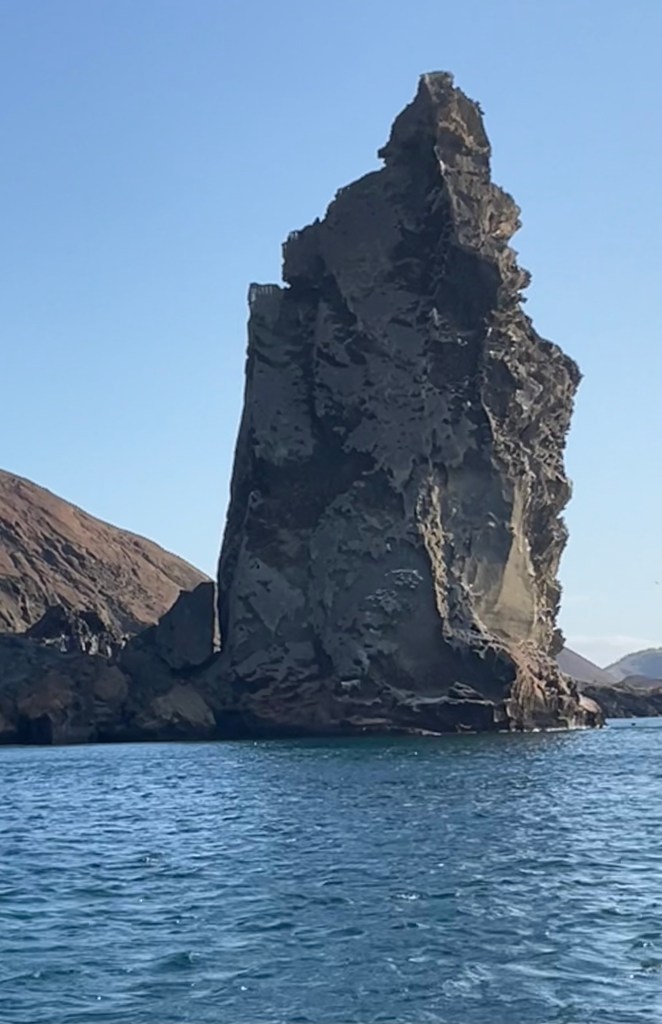
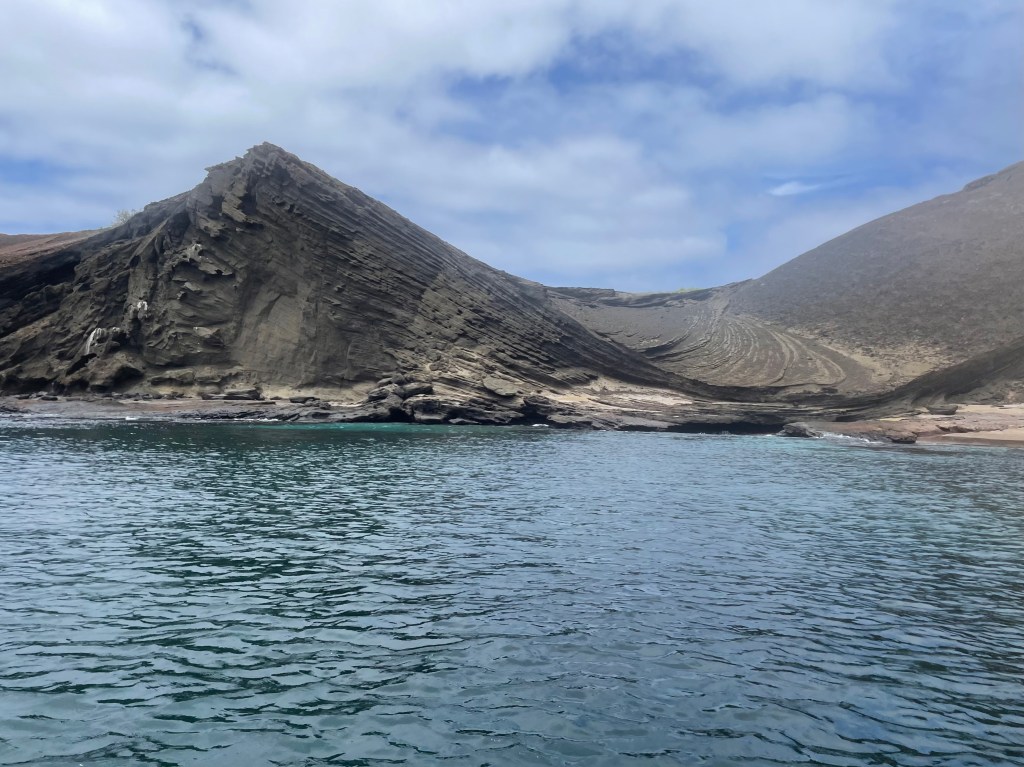

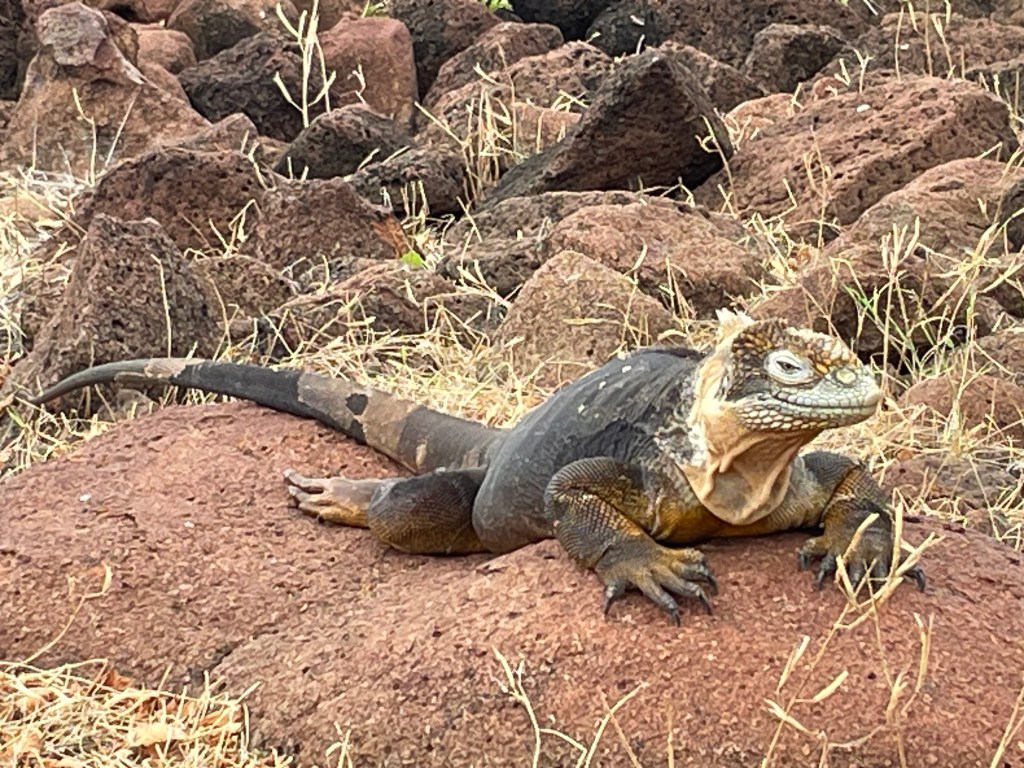
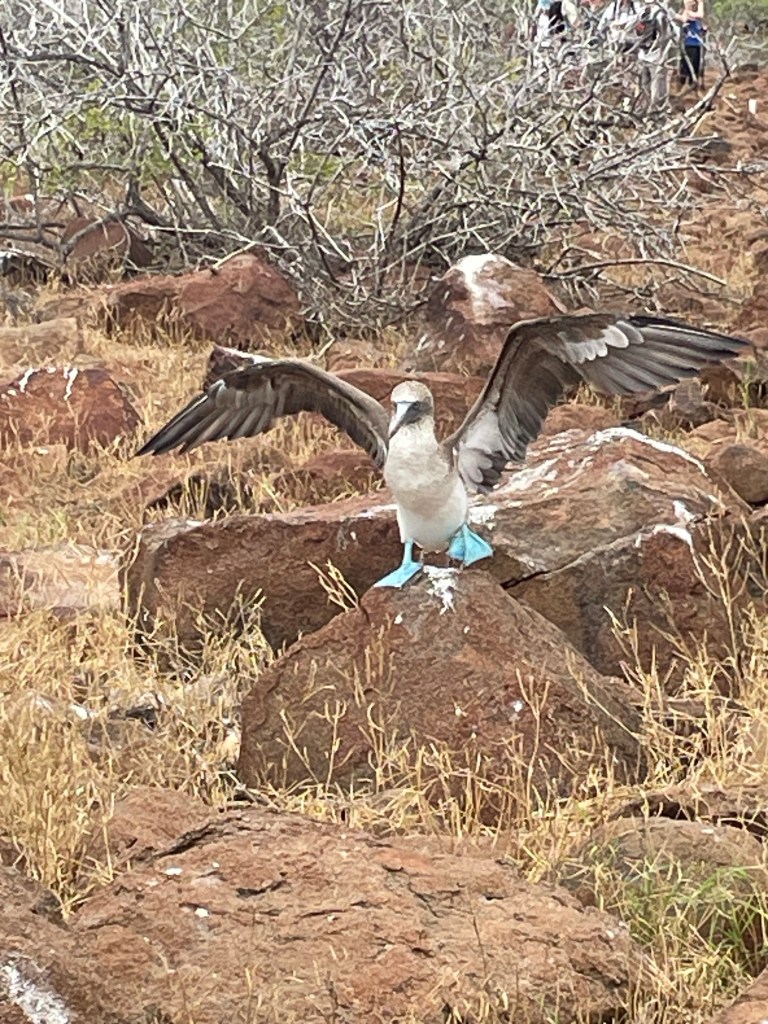
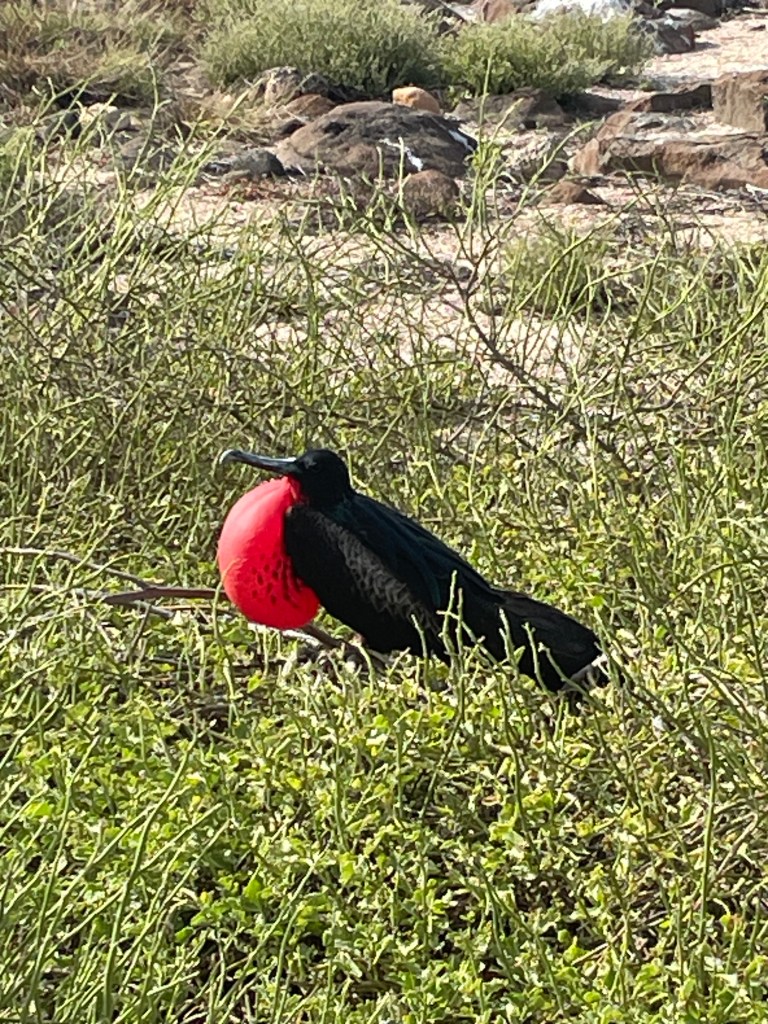
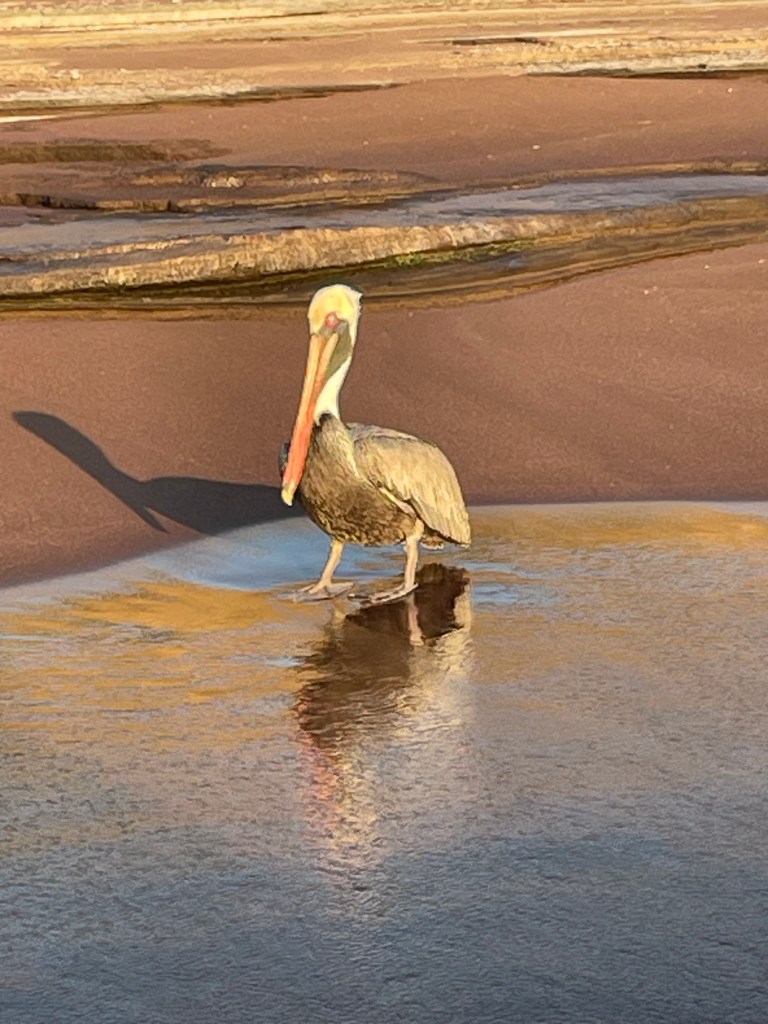
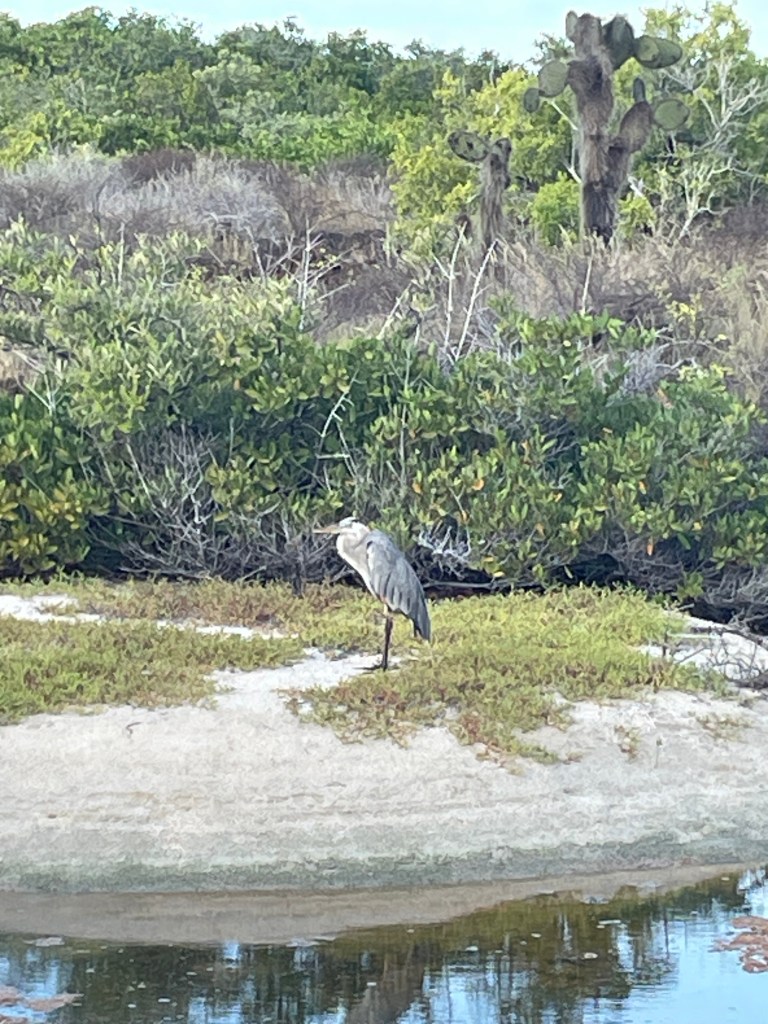
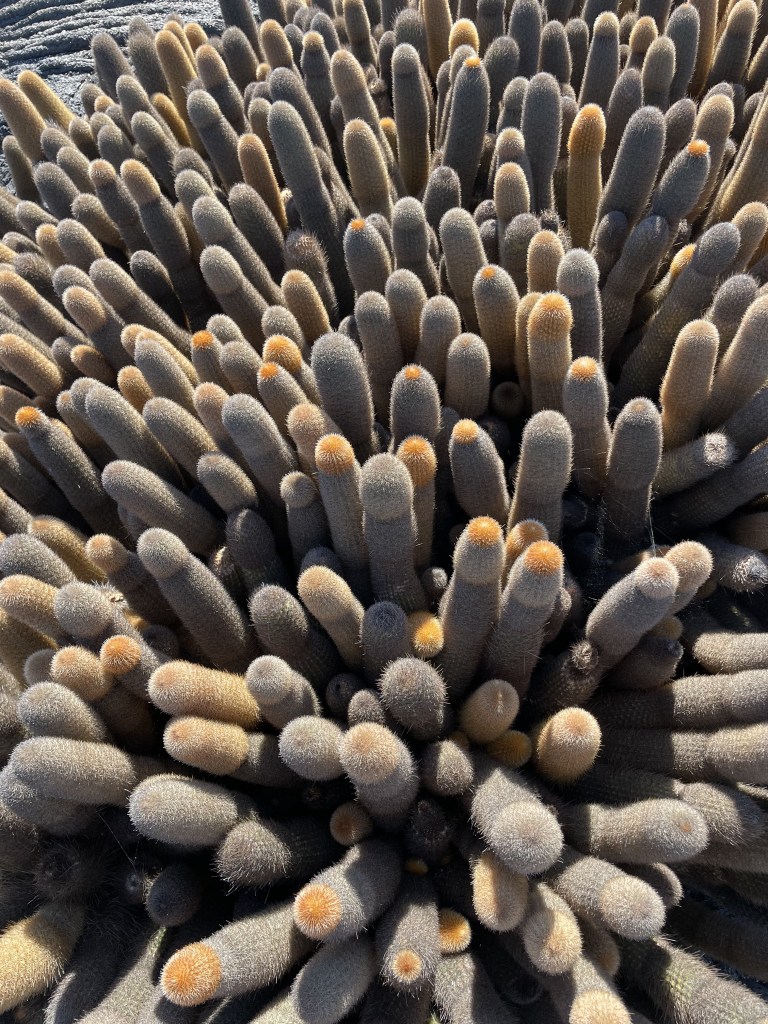
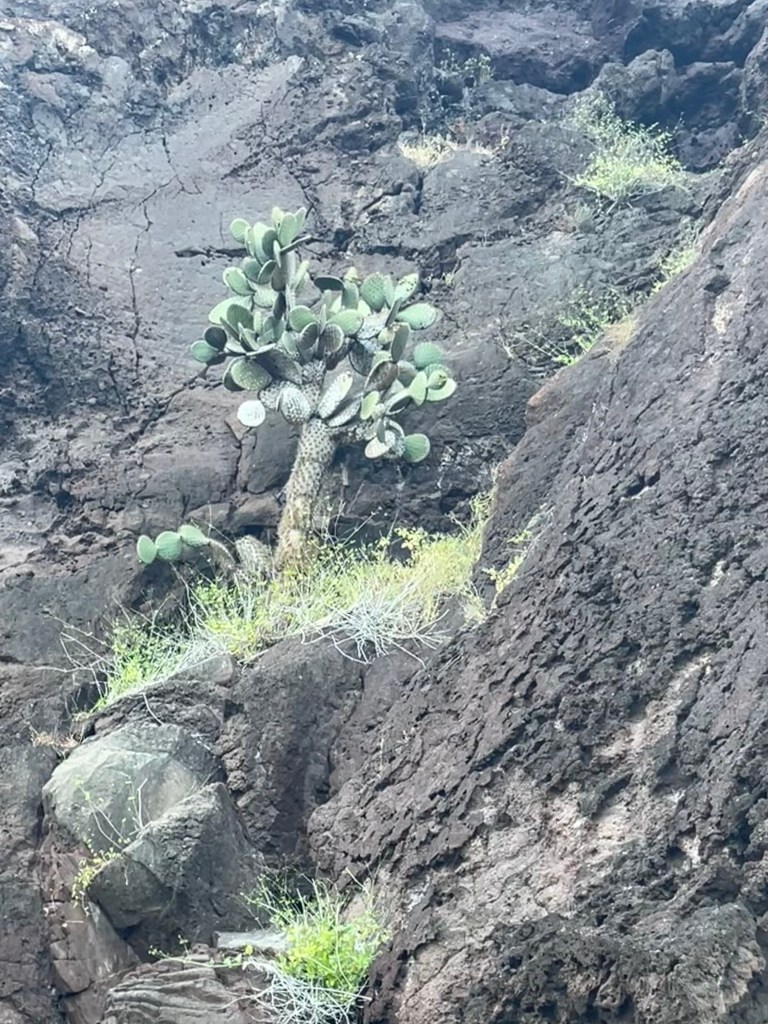
On our daily hikes we saw some fabulous wildlife, which is what the Galapagos is all about. Our first day, we experienced the dance of the blue footed boobies. It was their mating season so once there got close to a potential partner, they had show each other their beautiful blue feet, then the male flapped his wings and they pecked at each other. The male then proceeded to find small sticks to present to the lady in question, hoping to impress her. Since they nest in the dirt, it’s not clear what the sticks were for however. If accepted they continued on to copulation. In the midst of all this dancing, huge land iguanas crawled by unimpressed. Scattered among the dancing partners were bushes full of frigate birds, the male’s bright red necks inflated to attract a worthy companion. On other hikes, we saw thousands of the prehistoric looking marine iguanas piled up on top of the lava rocks, warming in the sun. We also saw great blue herons, pelicans, penguins, Darwin finches, egrets, terns, flamingos, red eyed gulls, Galapagos hawks, and others. We also experienced the varied landscapes of the island, from black lava fields to calderas. Some islands were covered with vegetation and others close to barren.


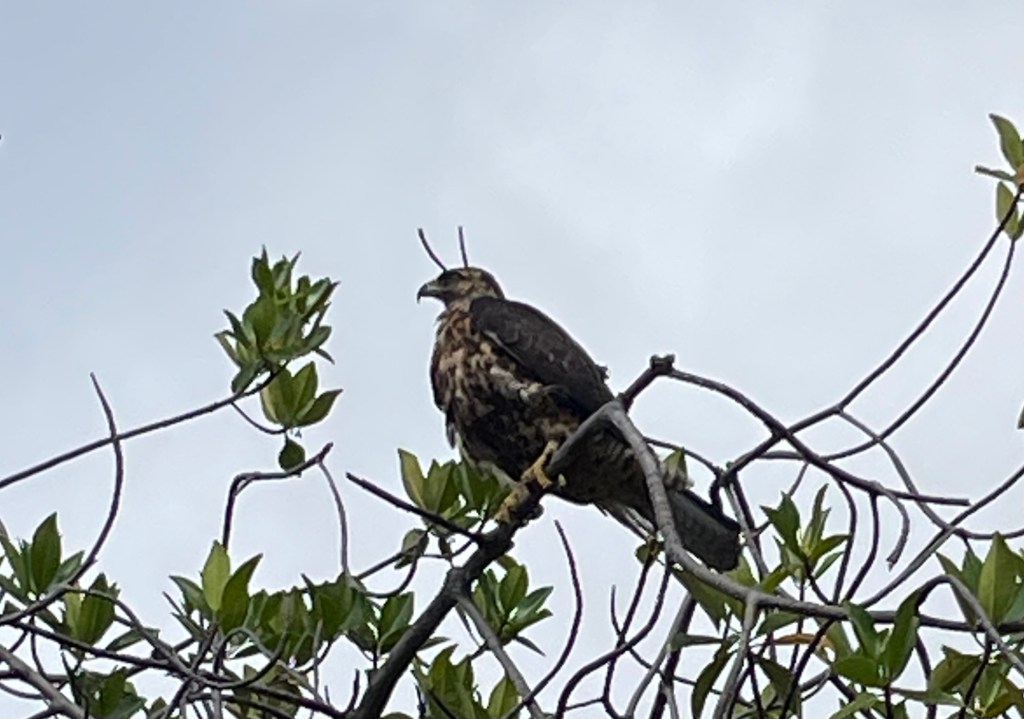
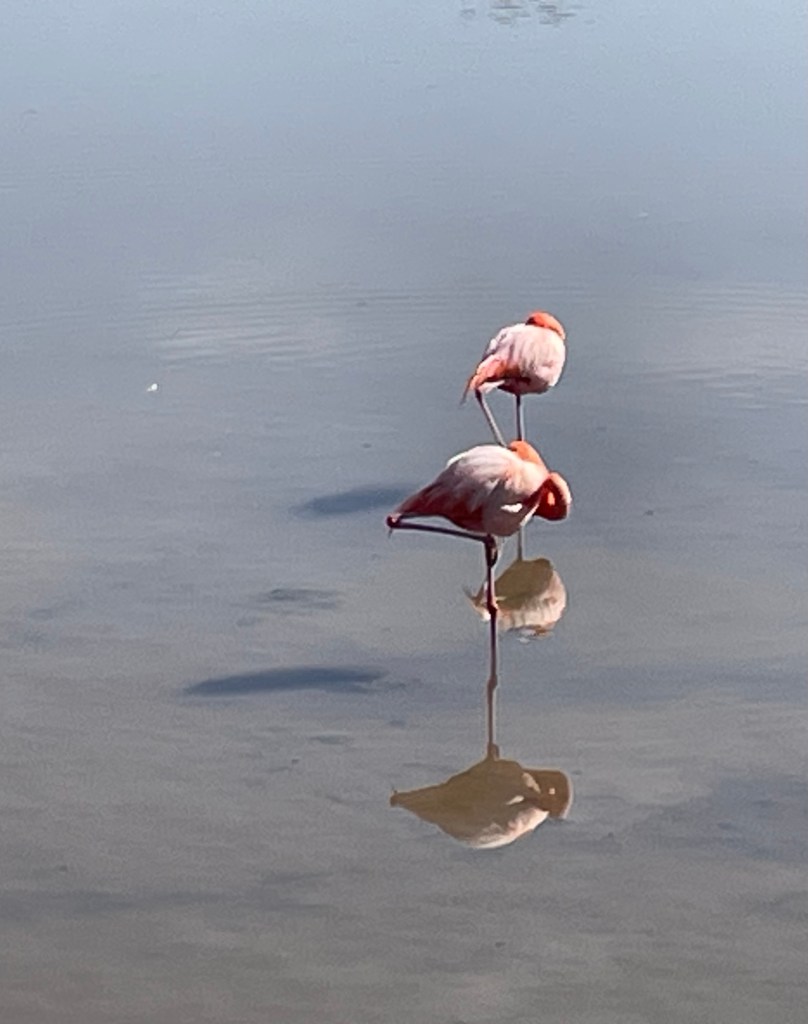
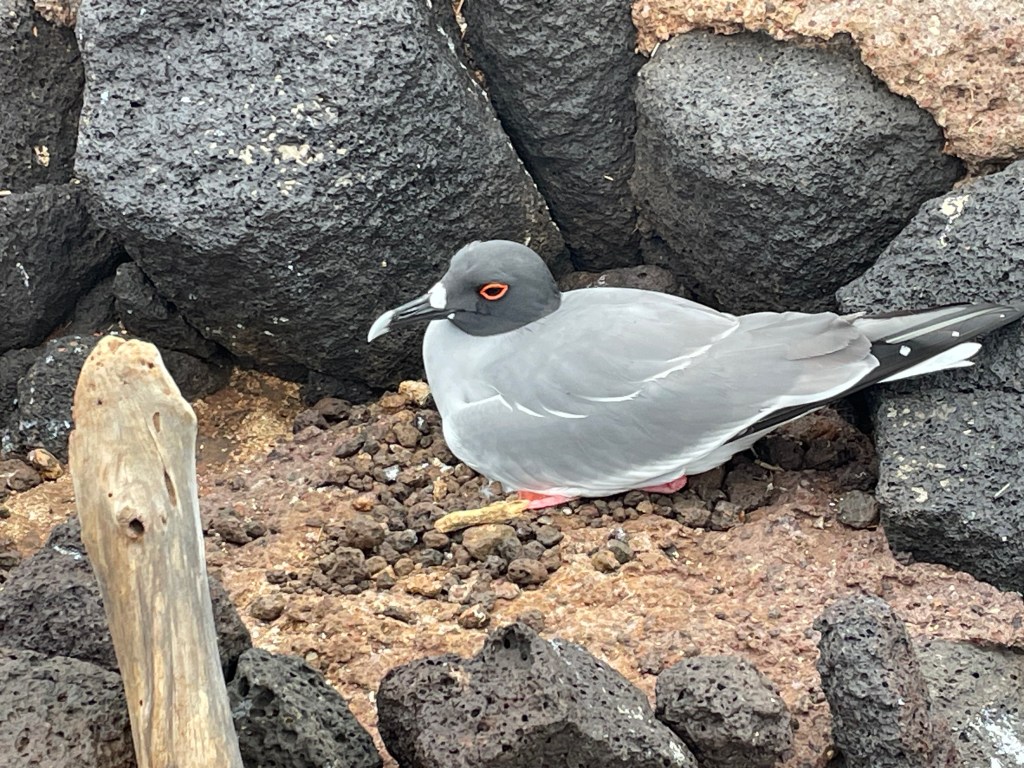
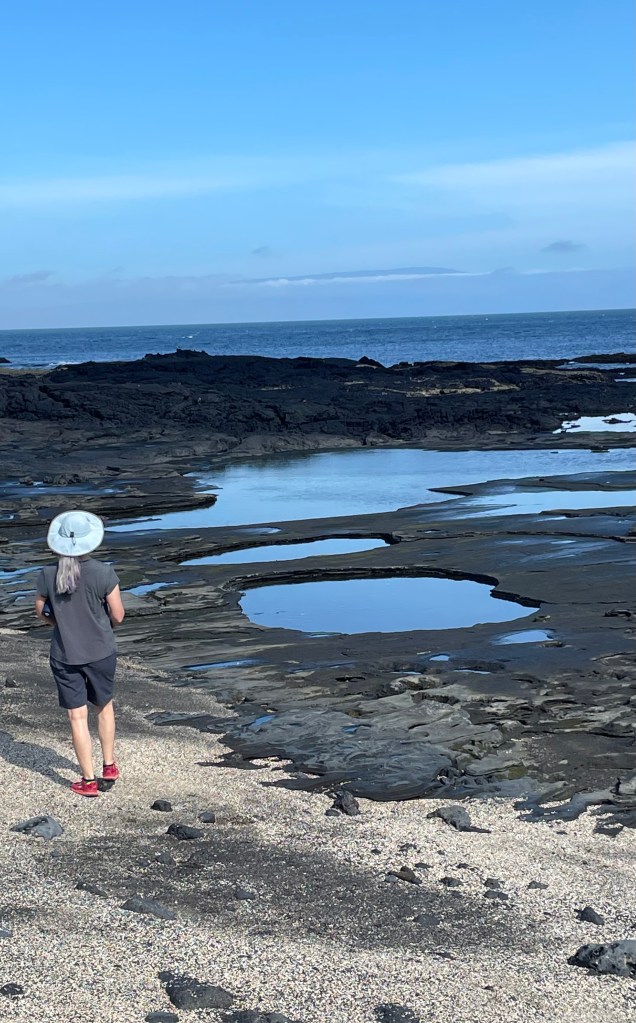
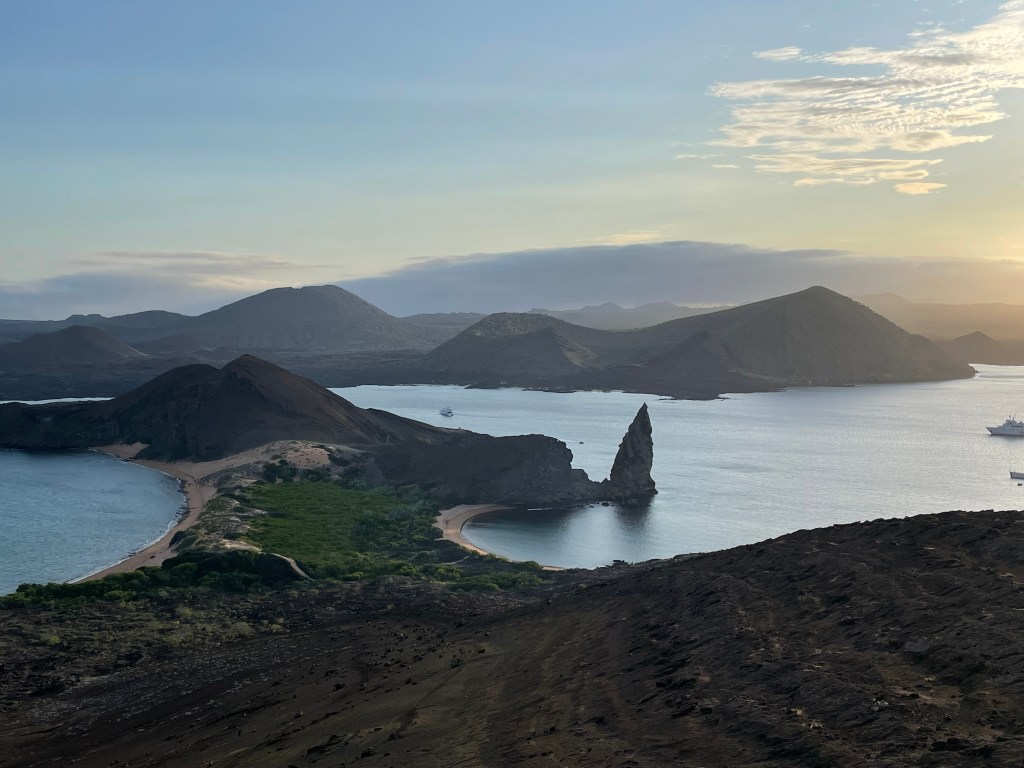
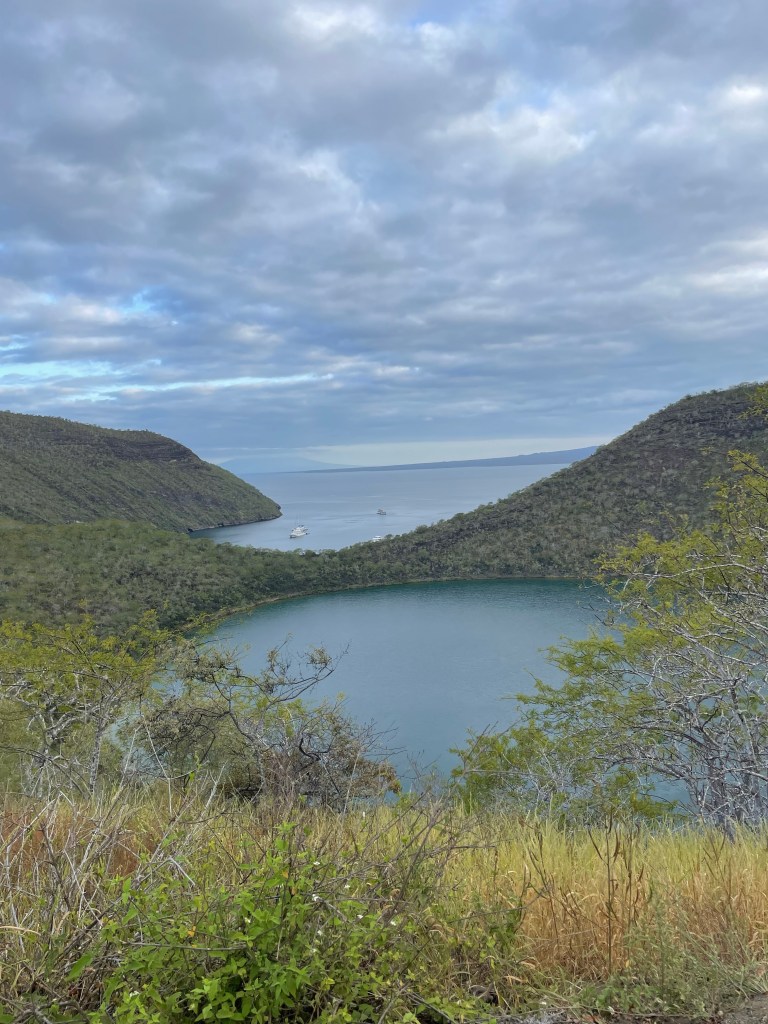
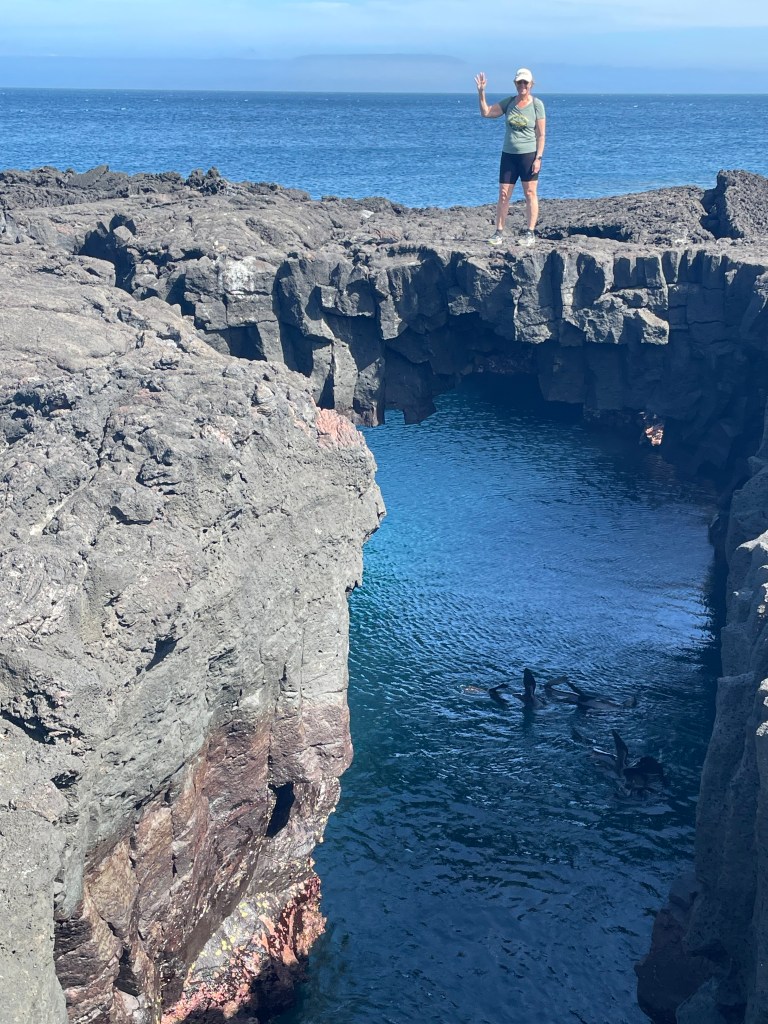
We were given options to snorkel almost every day and twice on some days. Thankfully we were loaned wet suits, as the water was very refreshing, though getting in and out of them could be the basis for a comedic sketch. We peeled them off on the front deck, right next to the hot tub, and then proceeded to climb in to warm up and have a chat about what we saw. I delight in being in the water so couldn’t be more happy. There were so many schools of fish, ranging in size from almost microscopic to good sized surgeon fish. Bright yellow, orange, red, purple, white and silver flashed in front of us as they swam by, as spots, stripes, tails, bellies and backs. We witnesses several white tip and Galapagos sharks. I floated above huge sea turtles as they nibbled on the algae on the rocks. I frolicked with sea lions as they swam between us, curious to what these strange beings might be. Penguins dove in and rocketed to safety. Wing tip, golden, and marbled rays gracefully glided their way through the water, one about 5 feet in circumference. Flightless cormorants plunged beneath the surface scouring the bottom for tidbits to eat. Our heads plunging in after him to watch his flight across the ocean bottom. An octopus, which Pam discovered, scurried for safety under a rock, completely camouflaged once he settled in. All seemed unconcerned with our presence though maybe a little annoyed as we hovered above them.
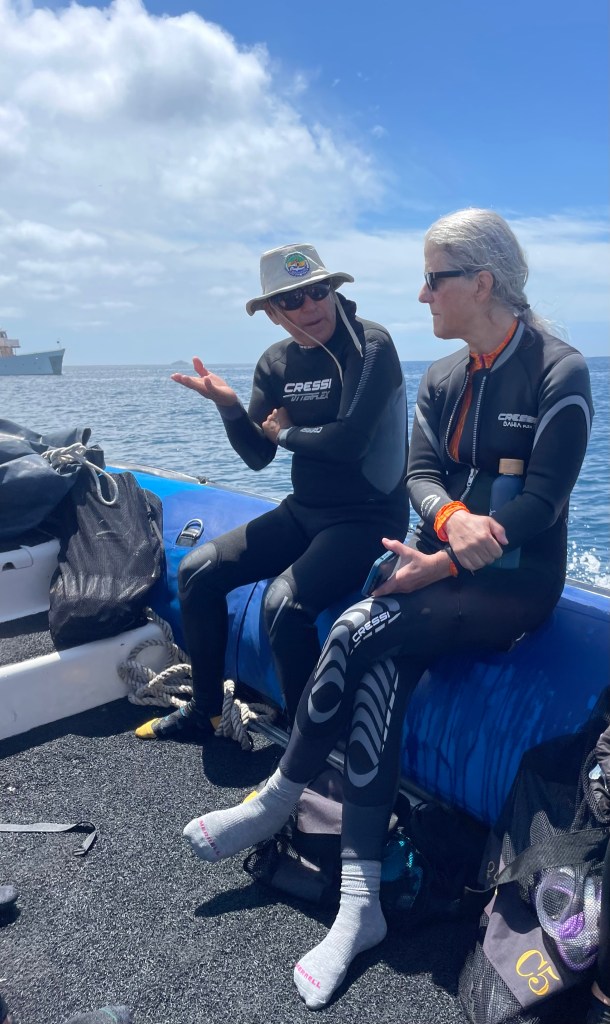
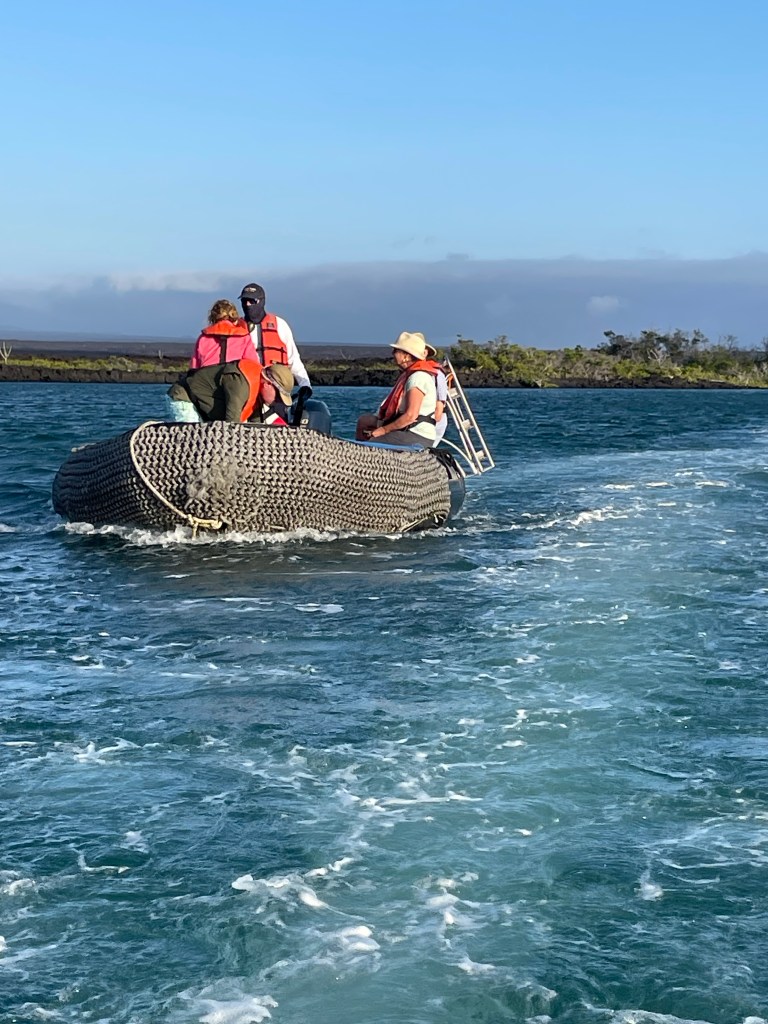

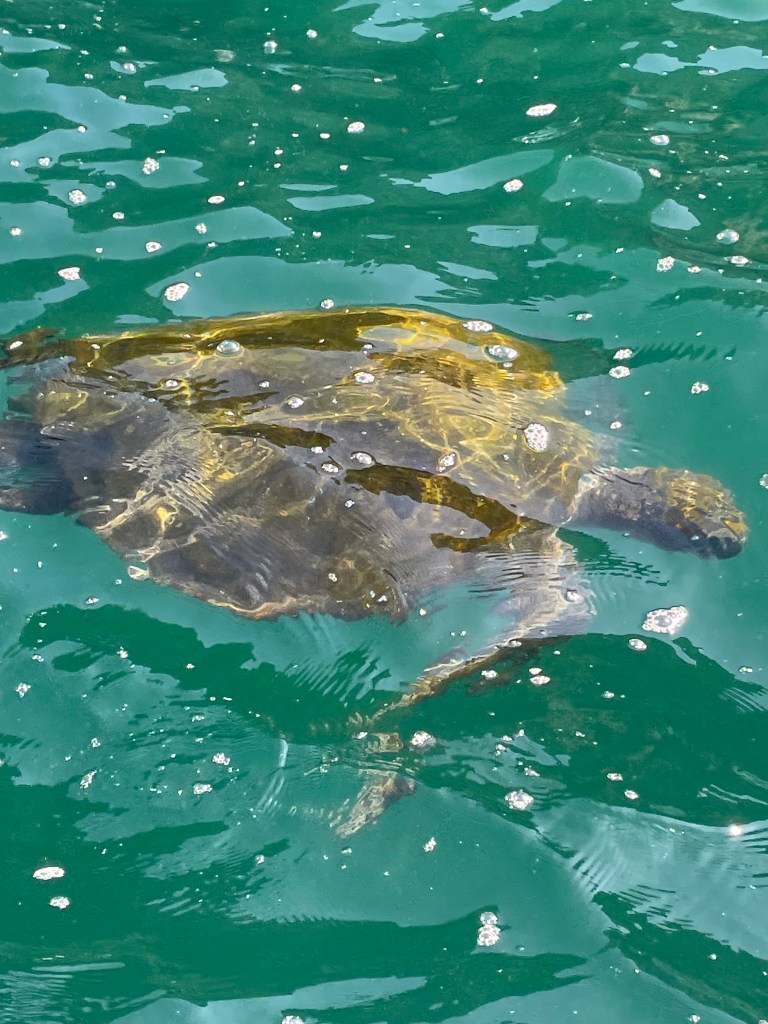
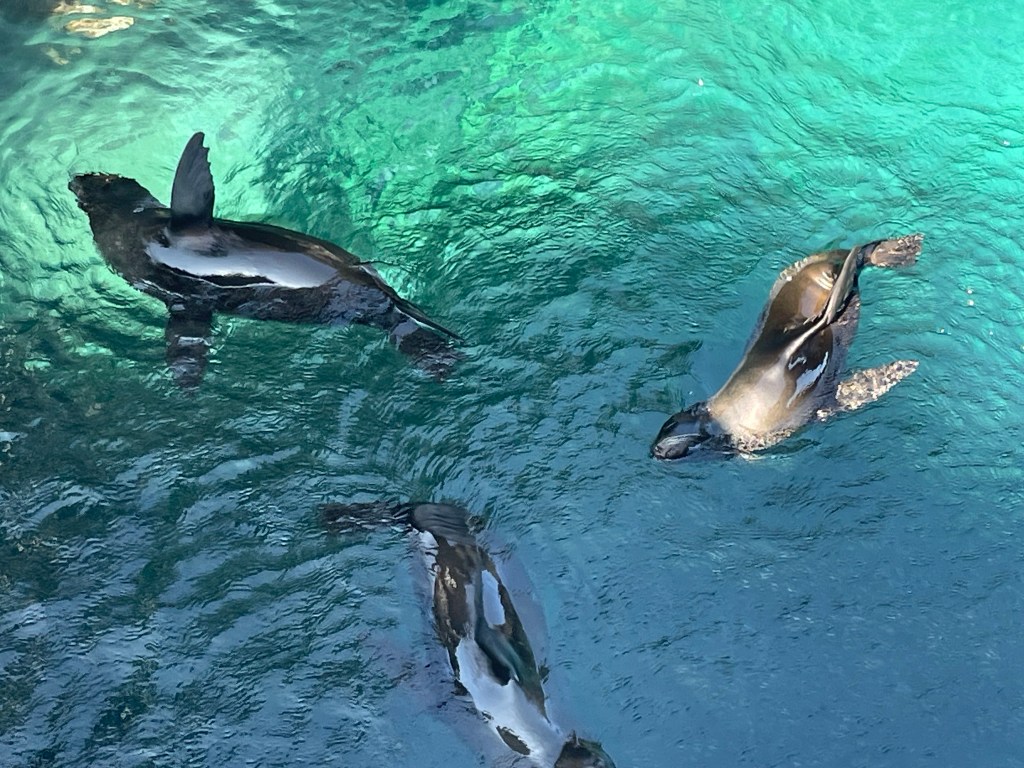
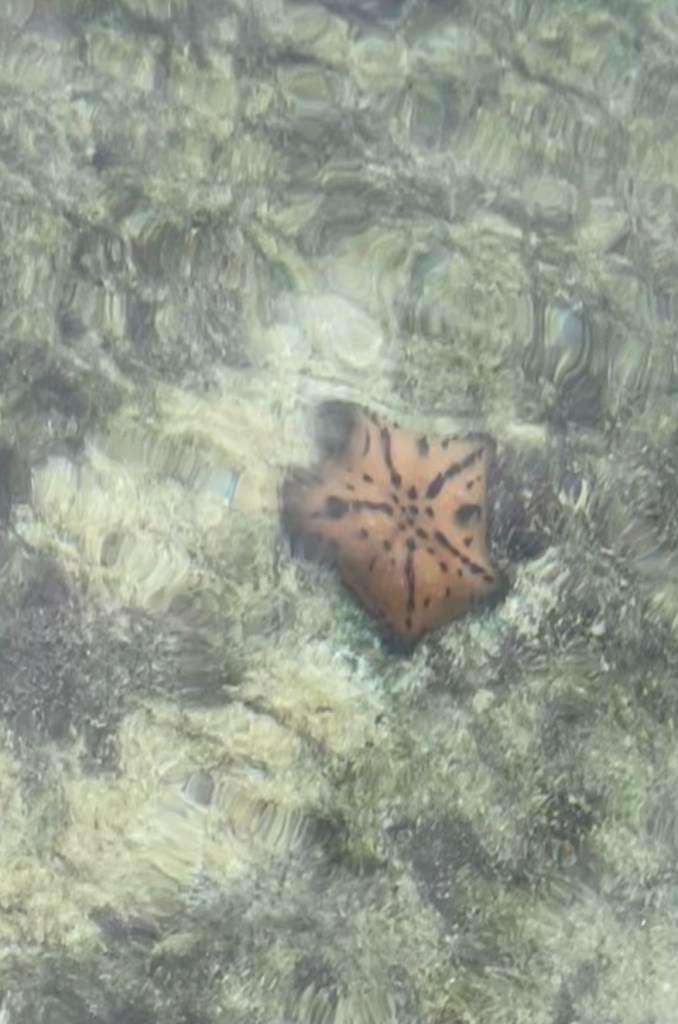
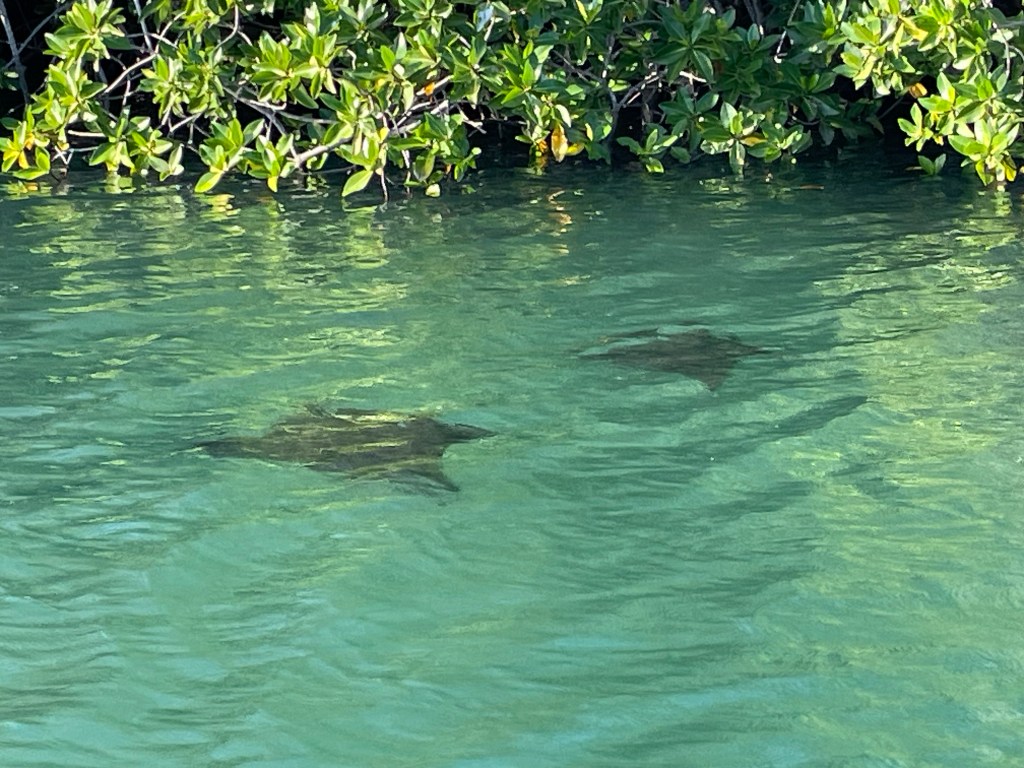
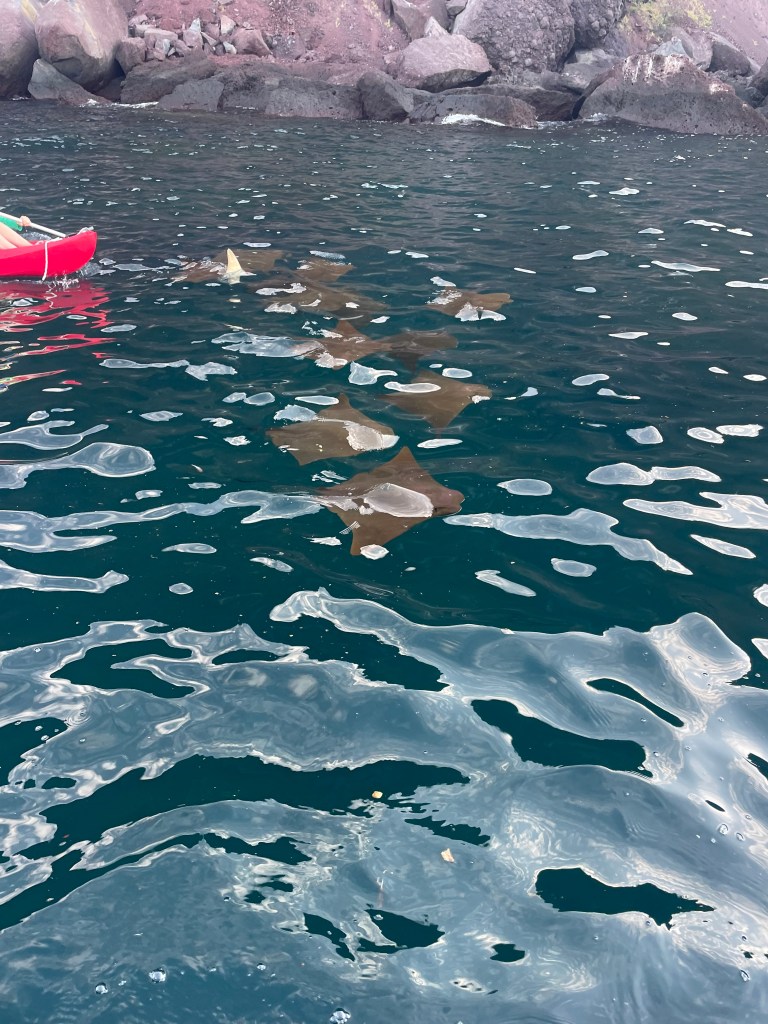

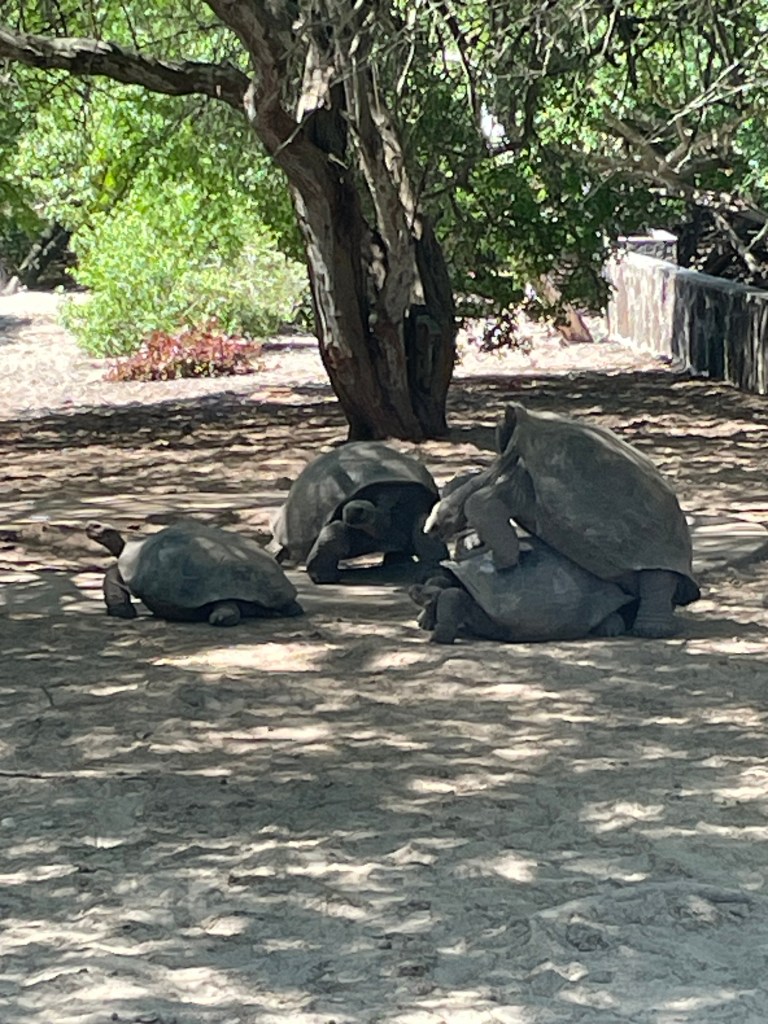
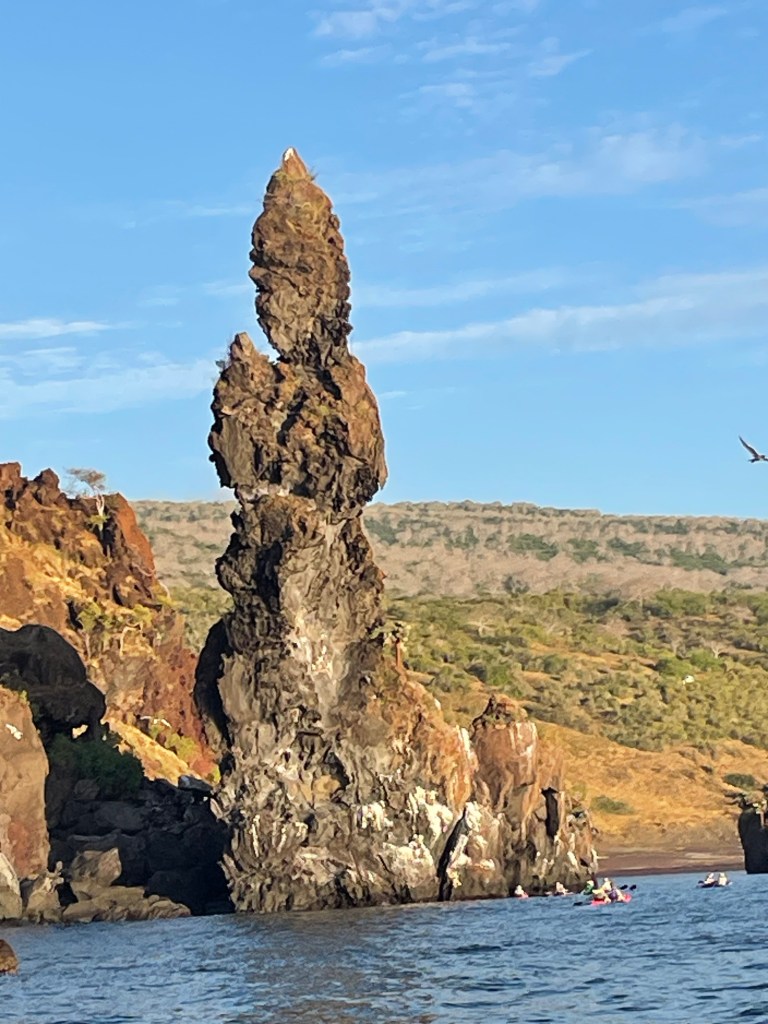
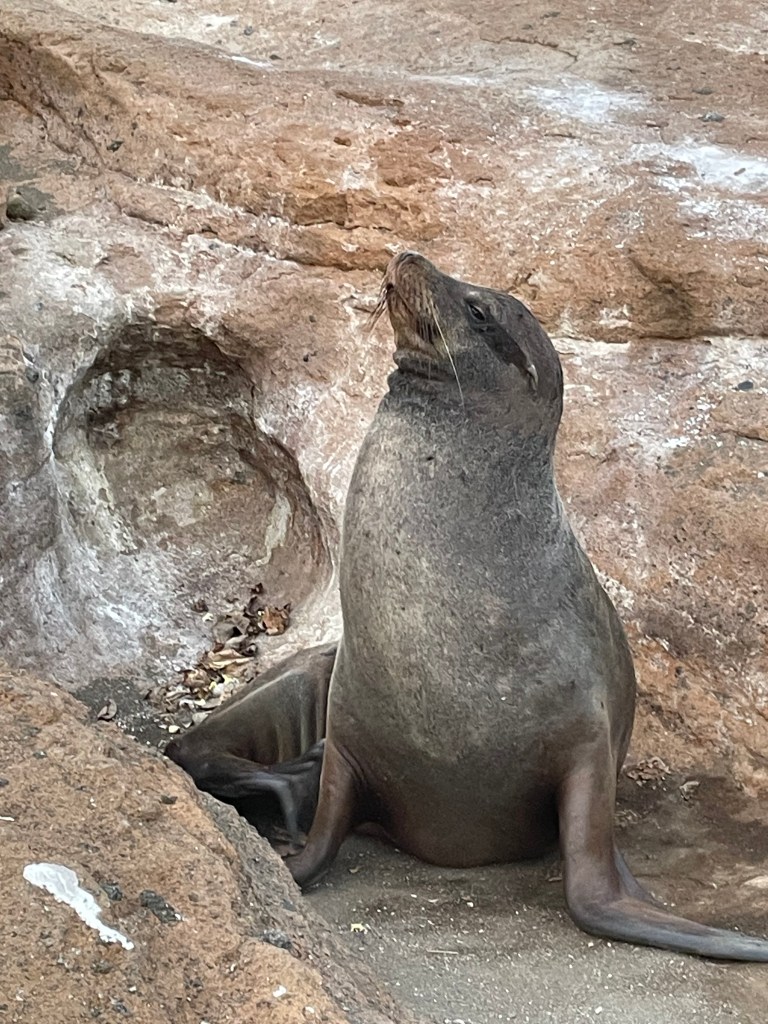
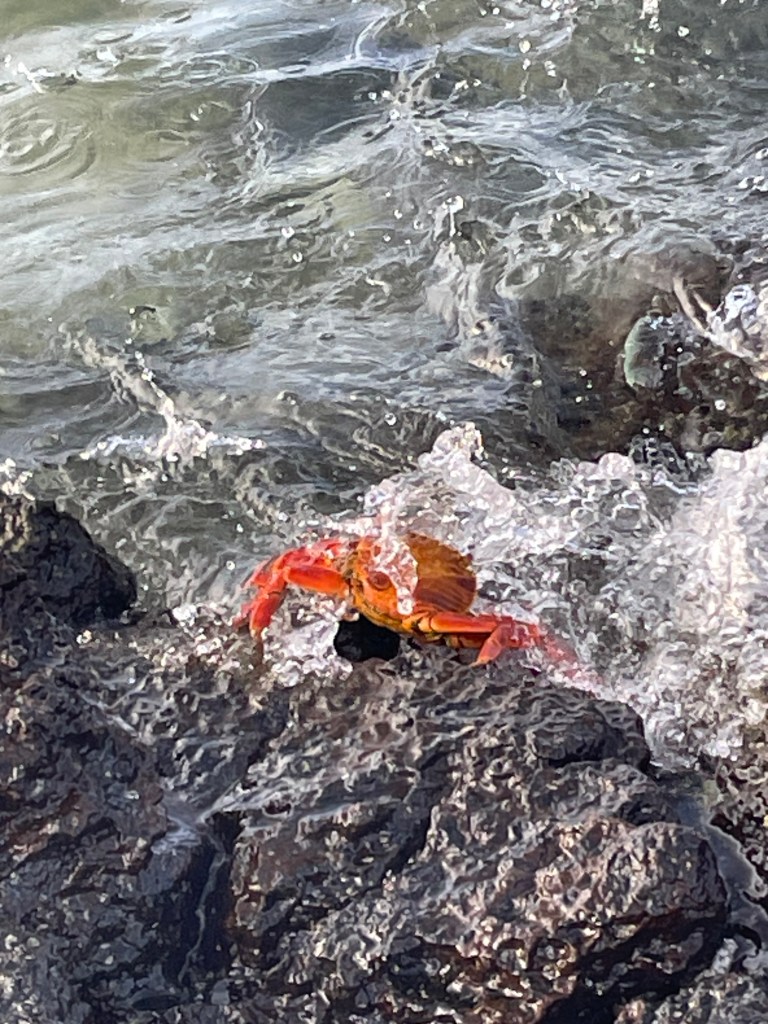
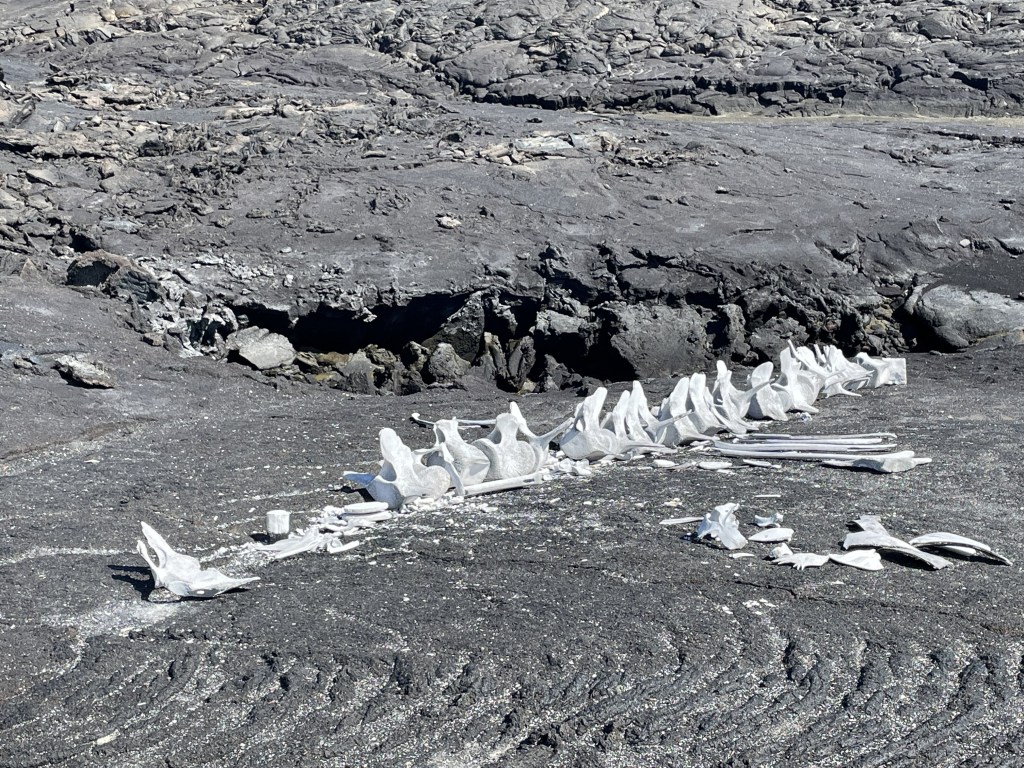
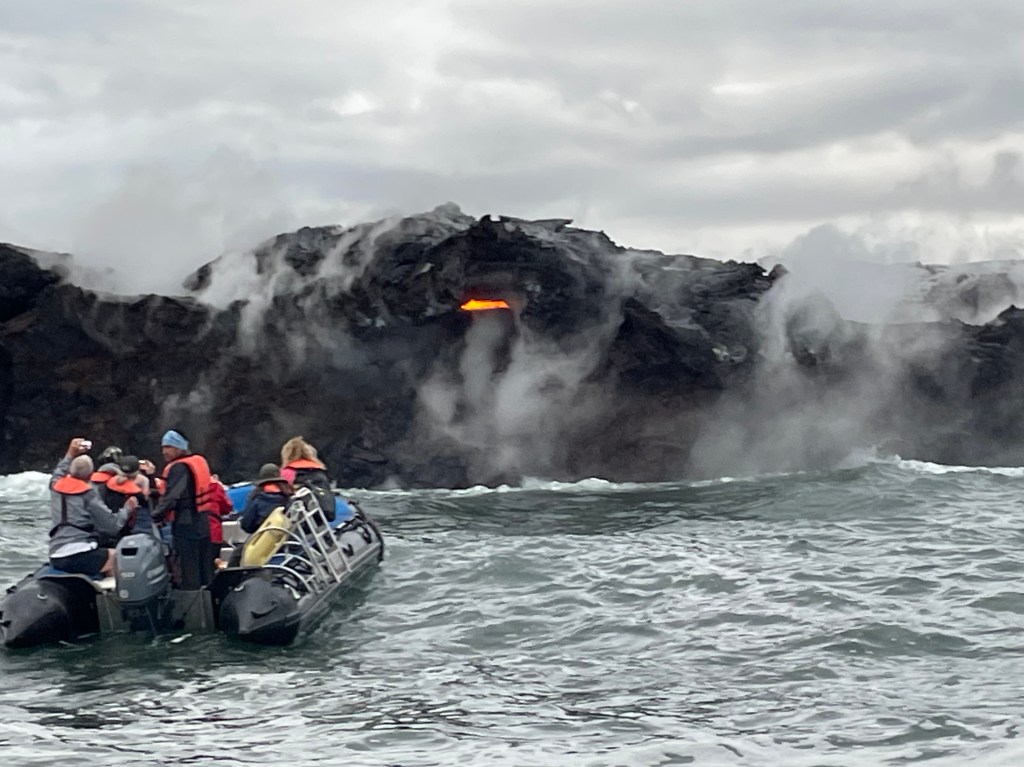
We often cruised the along the coast in the pangas, to observe the fish and fowl as they went about their daily lives. Observing more of what we saw beneath the water or on the land from a different angle. We watched sea lions lazing on the rocks or blocking our way when we disembarked, laying in the pathways and looking up at us to see what we wanted. Many of the birds were easier to see from the water as they perched on small ledges along the rocky shoreline. Everywhere there were bright red crabs clinging to the rocks as the waves washed over them. Baby ones are black to protect them from predators, slowly turning red as their shells harden. We not only saw the animals active in their regular pursuits but also in various stages of decay, having succumbed to predators, old age or harsh conditions. We even saw the spine of a whale washed up yards from the shore, I imagine during a violent storm. We had two opportunities to see giant tortoises, once in the wild and once in a breeding center. Both times, some were actively creating the next generation. At one island, we boated close to shore to see the remnants of a recent volcanic eruption. Steam billowed as the lava cooled along the coast. And in one large formation we could see a sliver of hot magma, peering at us like Sauron’s eye. If it hadn’t been for the heavy rocking of the boat on the last day – seasick remedies needed by most, we all would have been happy to spend another week in these beautiful and amazing islands.



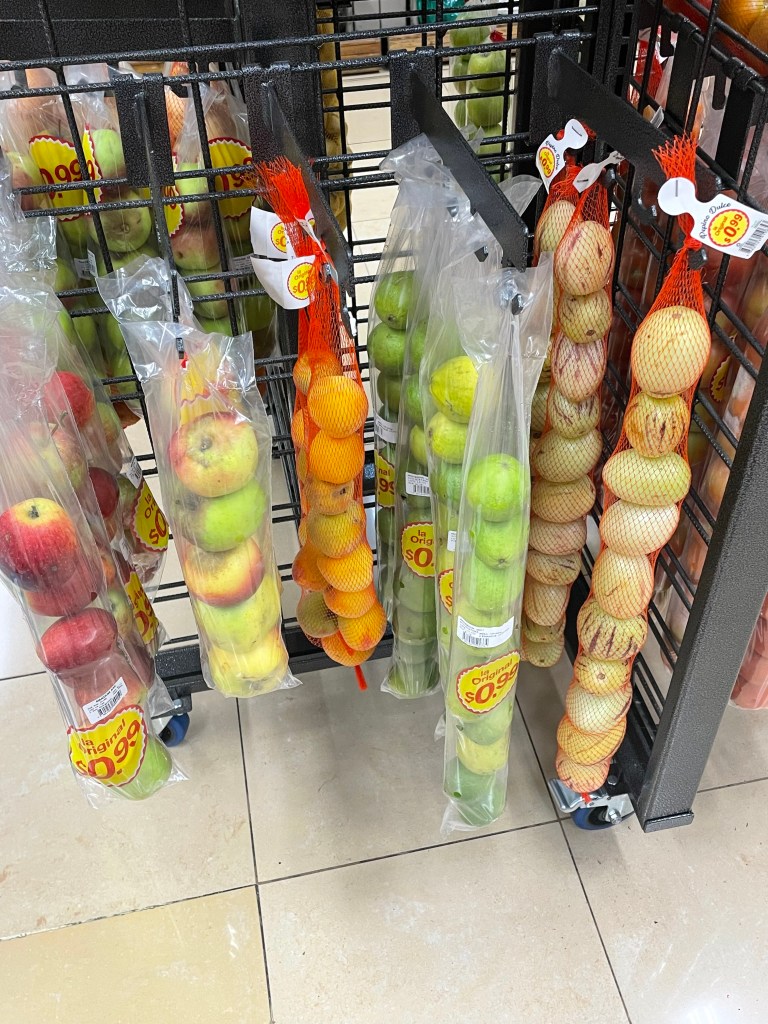
Ecuador was the most expensive country on my itinerary but I went to places like the Amazon rainforest and the Galápagos Islands that not many people get to see and need to be protected, so I thought the money well spent. I liked the people a lot too. It was not unusual to hear them singing as they went about their work – which made me smile. A few fun facts and then I’ll end, as this is a long post. Quito means center of the world. Ecuador is about the size of Colorado and one of the most diverse countries of the world, the smallest country in the top ten. A main export of Ecuador is roses. My friend in Cuenca gets 25 big, beautiful blossoms each week for only $8. The US dollar is the legal currency in Ecuador. And I saw more Volkswagen bugs here than I have seen anywhere.


Reading List:
Savages by Joe Kane
Galapagos by Kurt Vonnegut
The Old Man Who Read Love Stories by Luis Sepulveda
Next Up: Alaska


 Where in the World is Debra Grimes?