“I don’t want an uneventful life, I prefer an adventurous one.” Isabel Allende
4/12-23/2024
This post has been delayed somewhat due to travel glitches and limited access to the internet. In fact, three flights connected to Chile had issues of some sort or another. My flight from Sydney to Santiago was delayed by 5 hours, which didn’t cause major problems since I had nothing scheduled on my arrival date. Plus, I spent much of the time waiting in the first class lounge with two Aussie business men, Vic who lives in Beijing and David in Manila. They were partners in a commodity company. It was enjoyable chatting about travel, Australia, family, etc. and sipping champagne. What a life! Then I missed my flight from Rapa Nui (Easter Island) back to Santiago due to some miscommunication between the airlines and my guide. I showed up at the airport at the time I was given, only to be told that security and immigration had left already, so I would not be boarding the plane. I had to spend another night on the peaceful island – poor me! The room in the hotel where I was staying was still available so I had a place to say. And the tour operator rebooked my flight and managed the re-arrangement of my itinerary back in Santiago and of course she paid for all the changes. I appreciated all her efforts.
The third incident was when I was trying to leave the country. First the flight was delayed by two hours, then three, at which point they gave us lunch vouchers. Then it was postponed another seven hours so we had to collect our luggage, go back through immigration to get on a bus and carted off to a Sheraton hotel to rest. There was a voucher for a dinner buffet, which I opted out of, instead I enjoyed a pizza in the bar. Now if all this wasn’t frustrating and confusing enough, none of the announcements were given in English. One, of the desk staff spoke limited English but getting his attention was difficult, given that hundreds of people were bombarding him with questions. Luckily, there was another passenger who was bi-lingual and kind enough to translate for the handful of us, who unfortunately did not speak Spanish. By leaving at 1:20 am, I would miss an early connection in Panama City to Quito and would have a very long layover, plus I would be herded with a multitude of people back to the airport and through check-in, immigration and security. No thank you. So I called the airlines and was rebooked on a flight that left at 12:50 am. I was elated that I made the change when I found out my original flight was now postponed until 6:30 am. I have no idea what time it actually left. The delays it seemed were caused by Boeing conducting additional safety checks on the plane. I was glad they were being done, only wished they could be done in a more timely manner. My rebooked flight took off and arrived without a hitch. I was tired however, as I only got about 2 hours sleep.
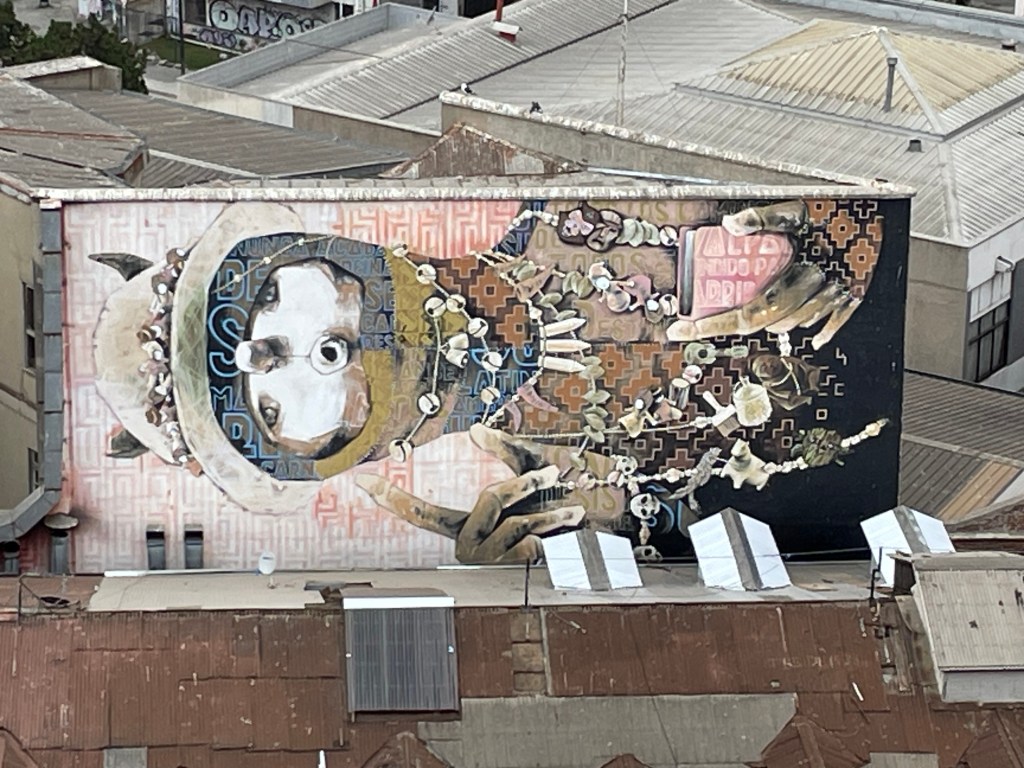
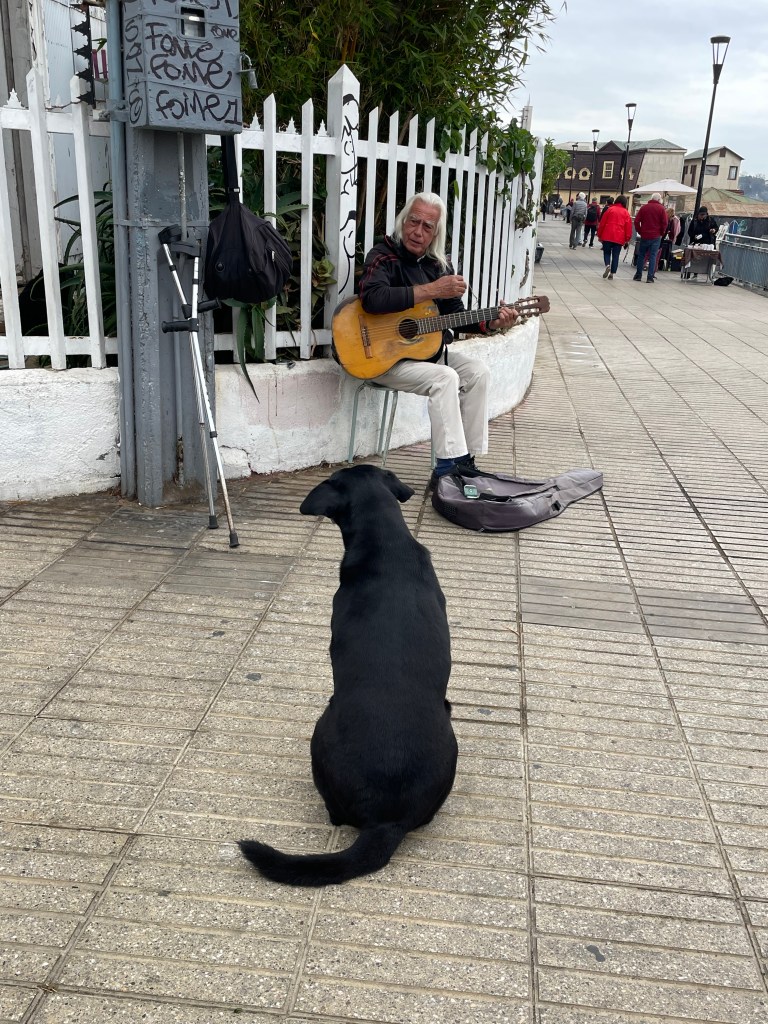
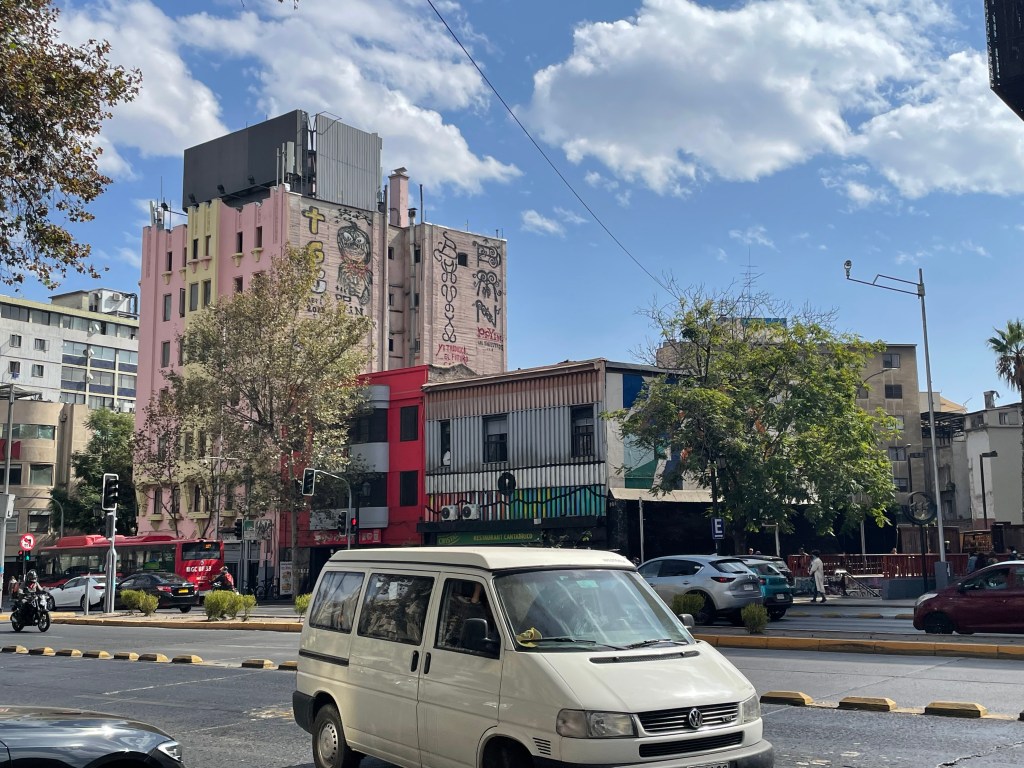
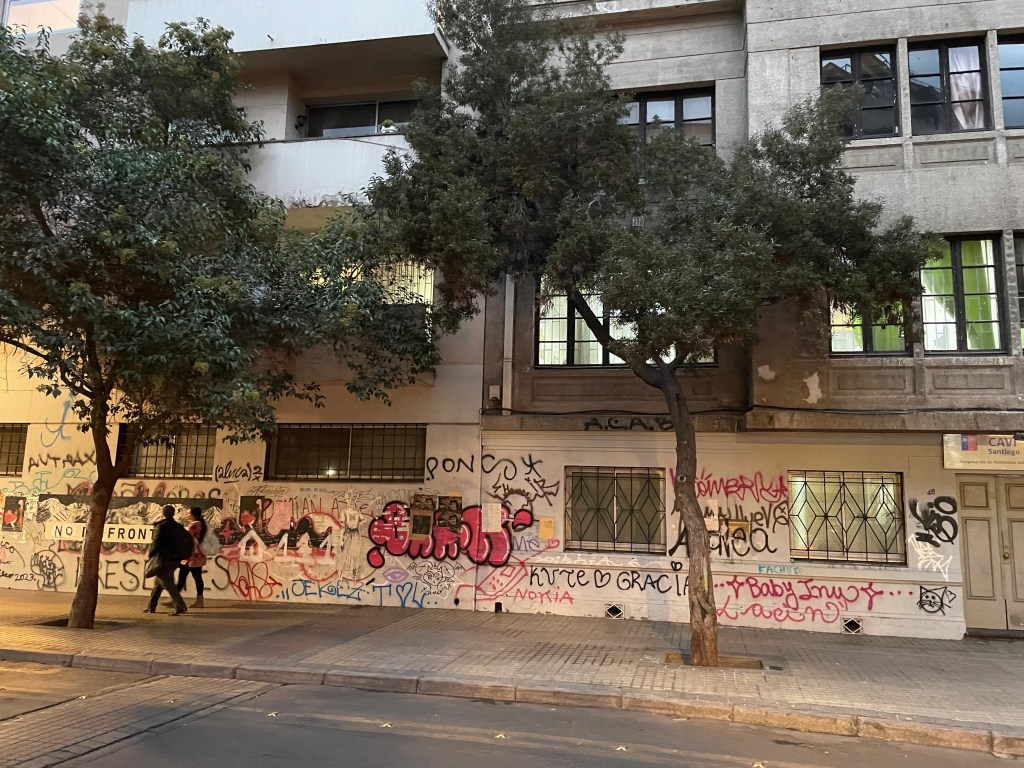
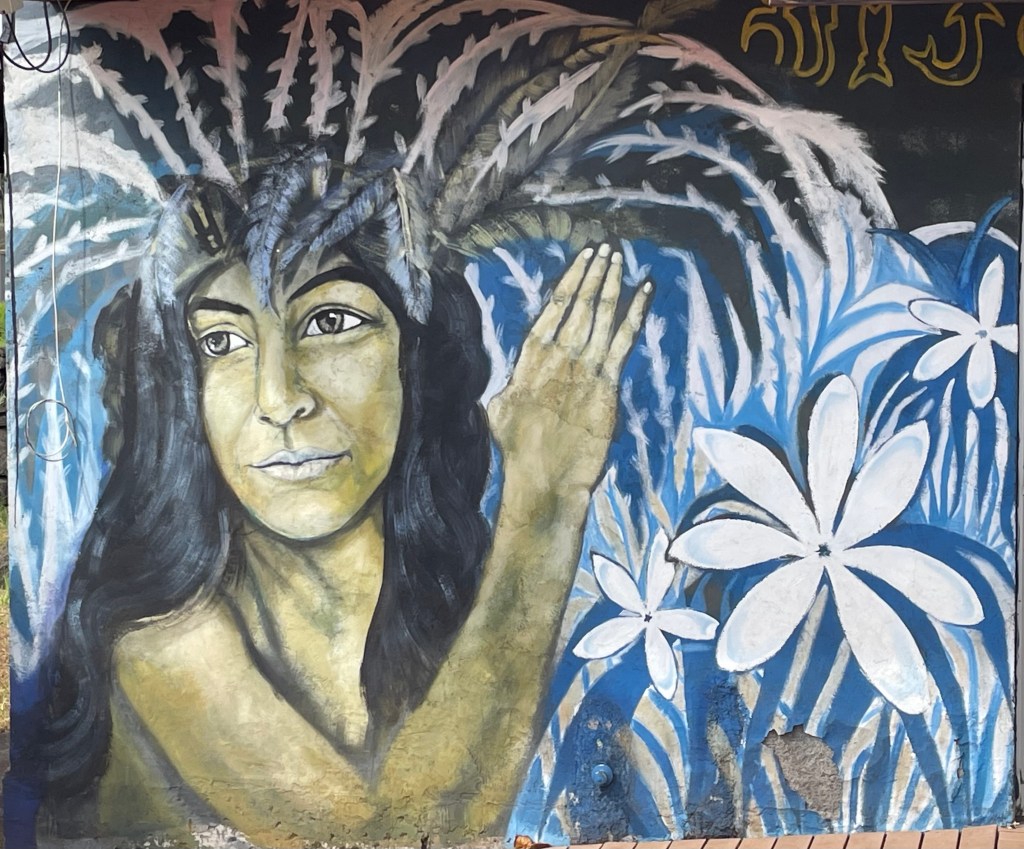
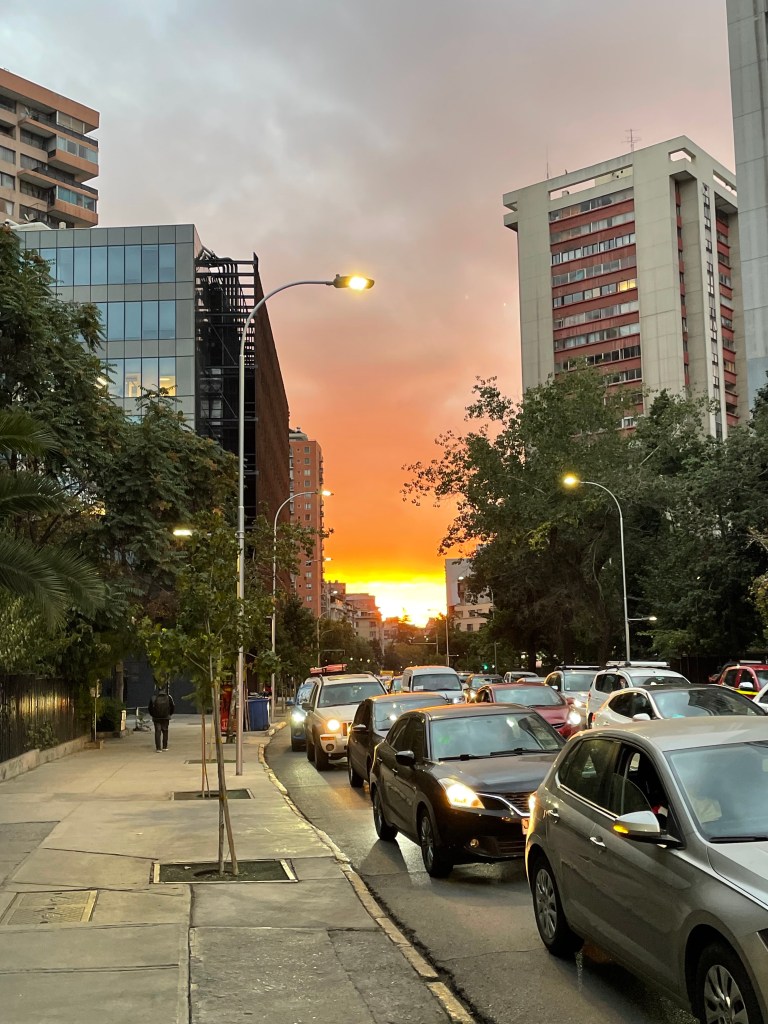
Chile is the second country on my trip that is a repeat visit. I toured Patagonia in 2020 with a group of friends, ending that stay with a couple days in Santiago. So as I walked through that city again, both on my own and on a half day tour with a guide, many places looked and felt familiar. It’s hard to describe Santiago, the best I can come up with is shabby chic. It has quaint neighborhoods, active parks, fabulous street art, and a bustling restaurant scene. It also has graffiti everywhere. And most of the shops and restaurants throughout the city center have shuttered their windows and draw down steel doors when they’re not open. These ‘safety’ measures are left over from the riots in 2019. I was warned about pickpockets and to be alert but generally felt safe wherever I went and I wandered one day for over an hour, even on the wrong side of the river. I saw quite a few homeless people encamped along the river not far from my hotel so I asked about the poverty level. He said that a lot of people say there are two classes in Chile, middle class and wealthy but obviously there is some poverty.
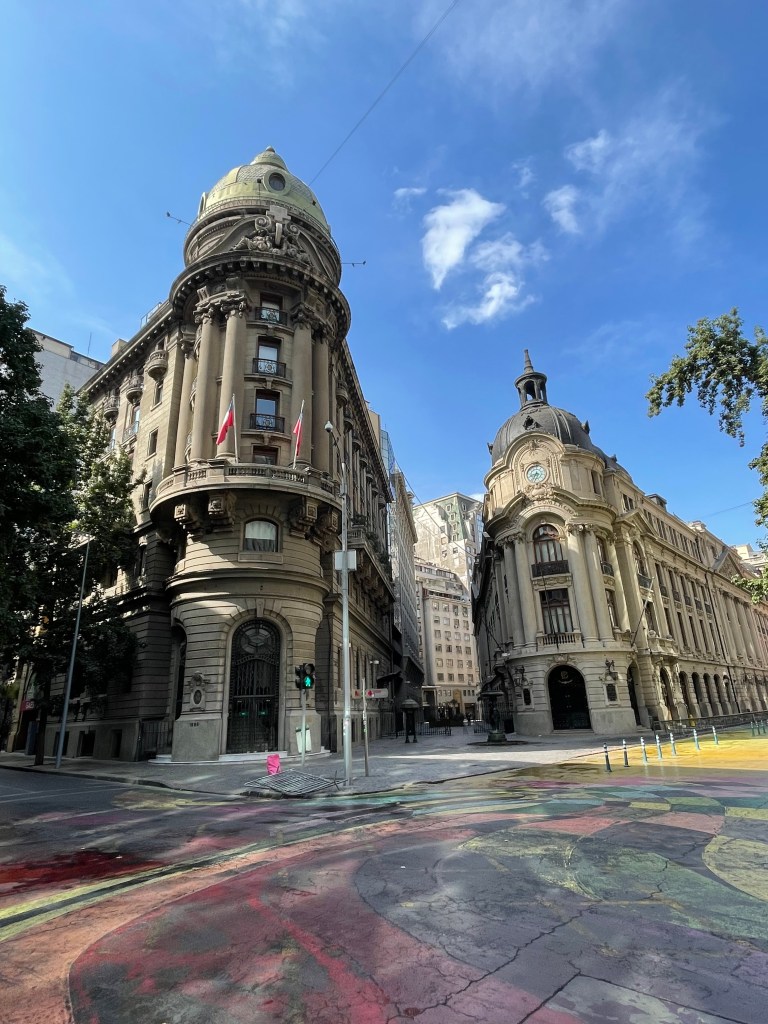
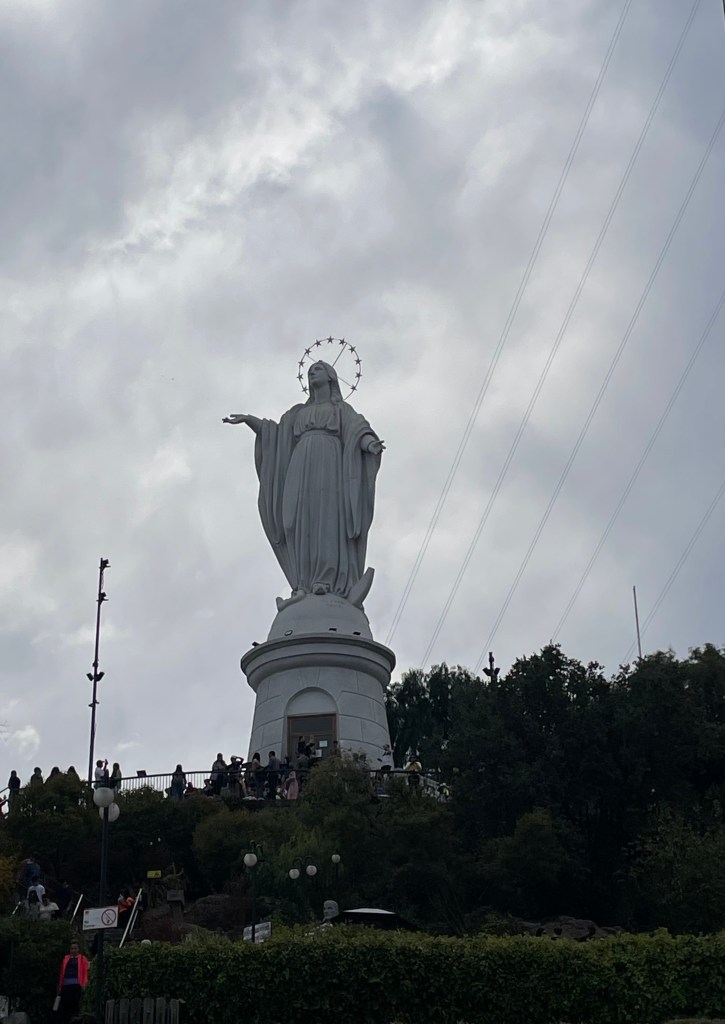
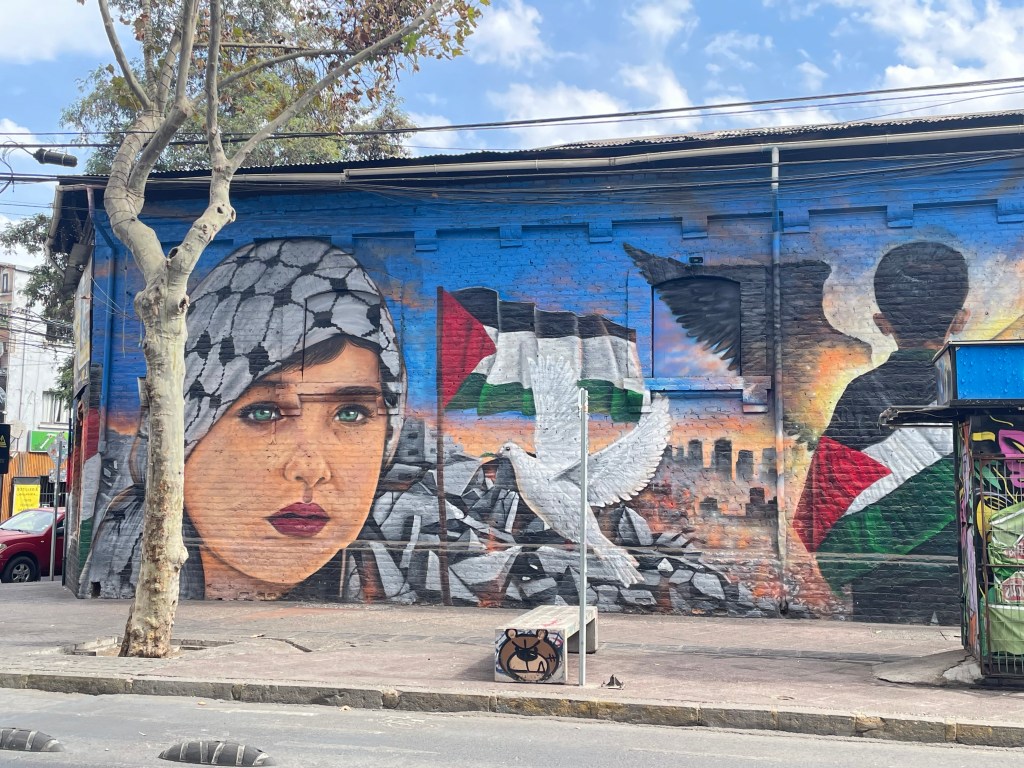
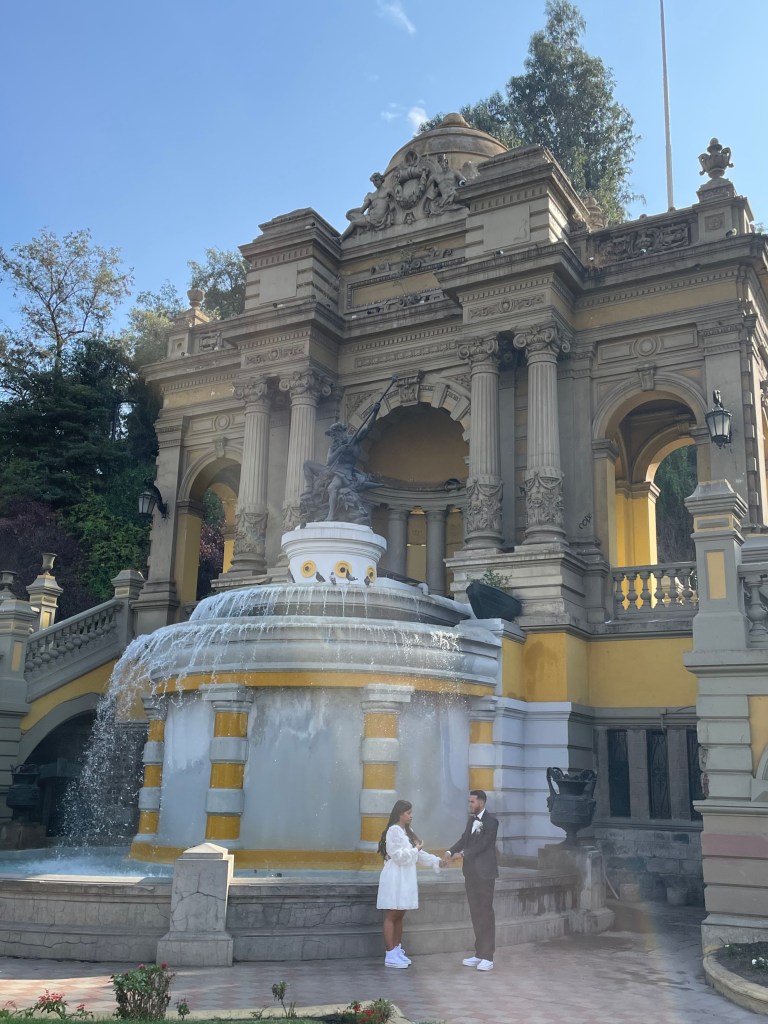
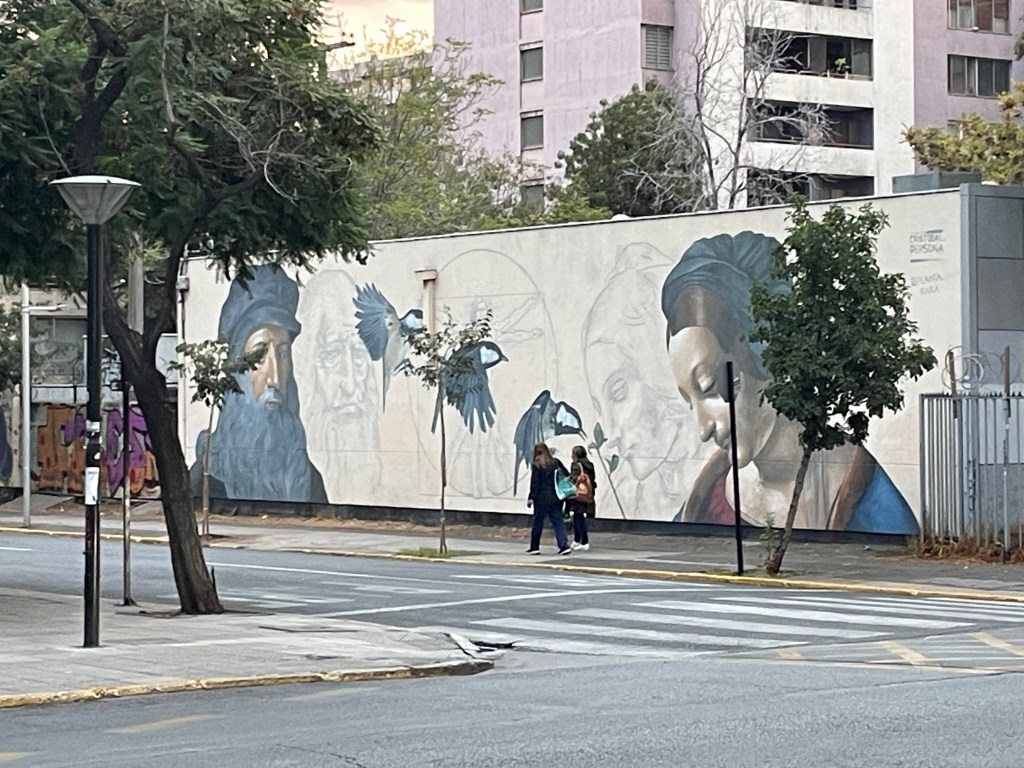
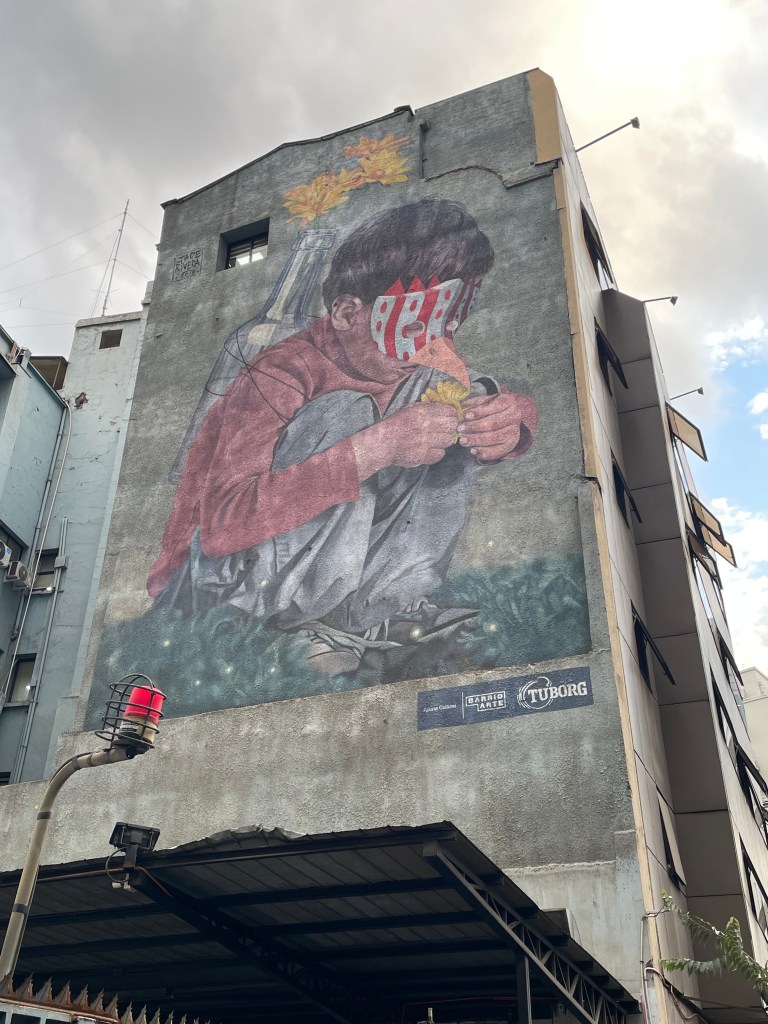
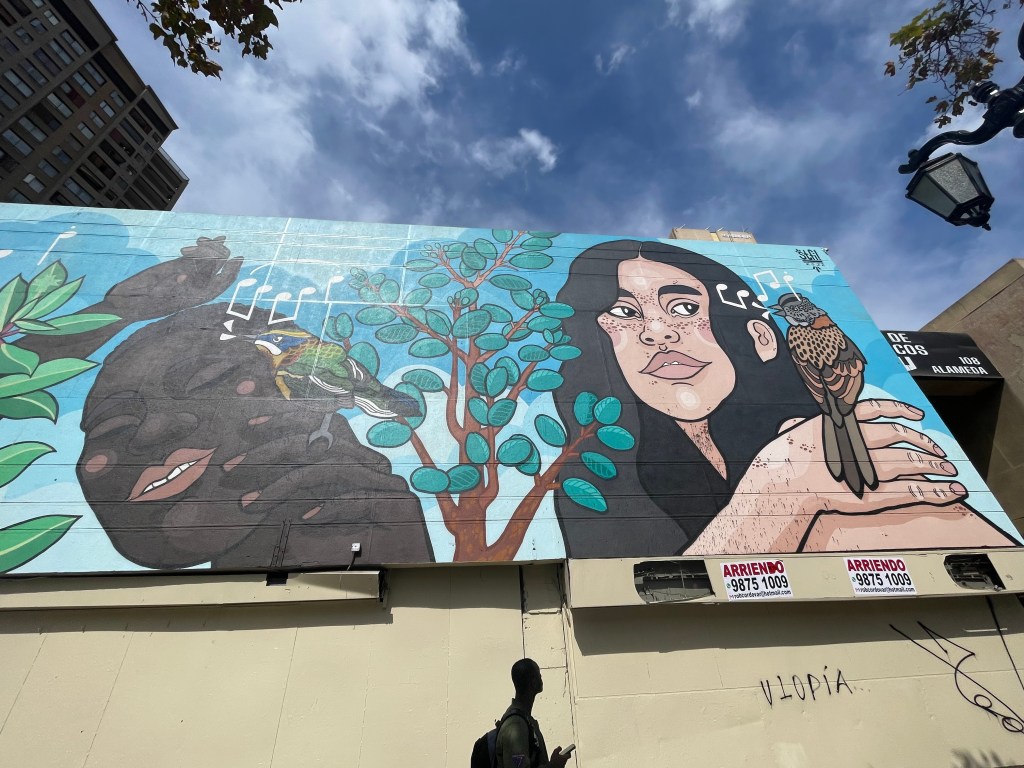
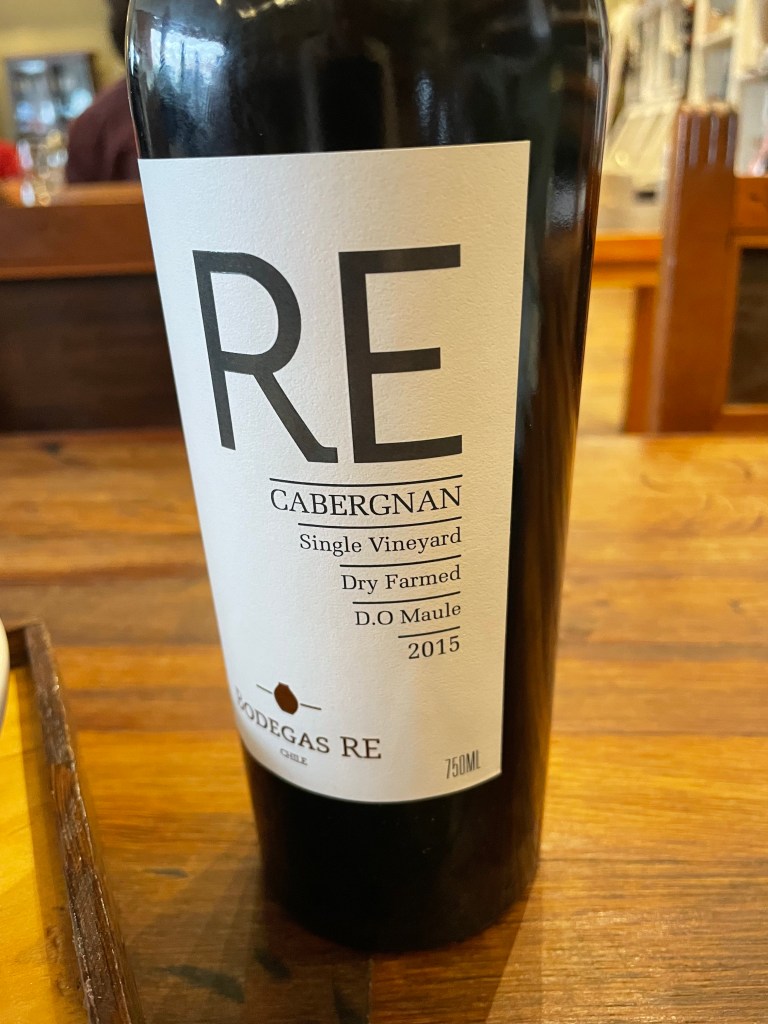
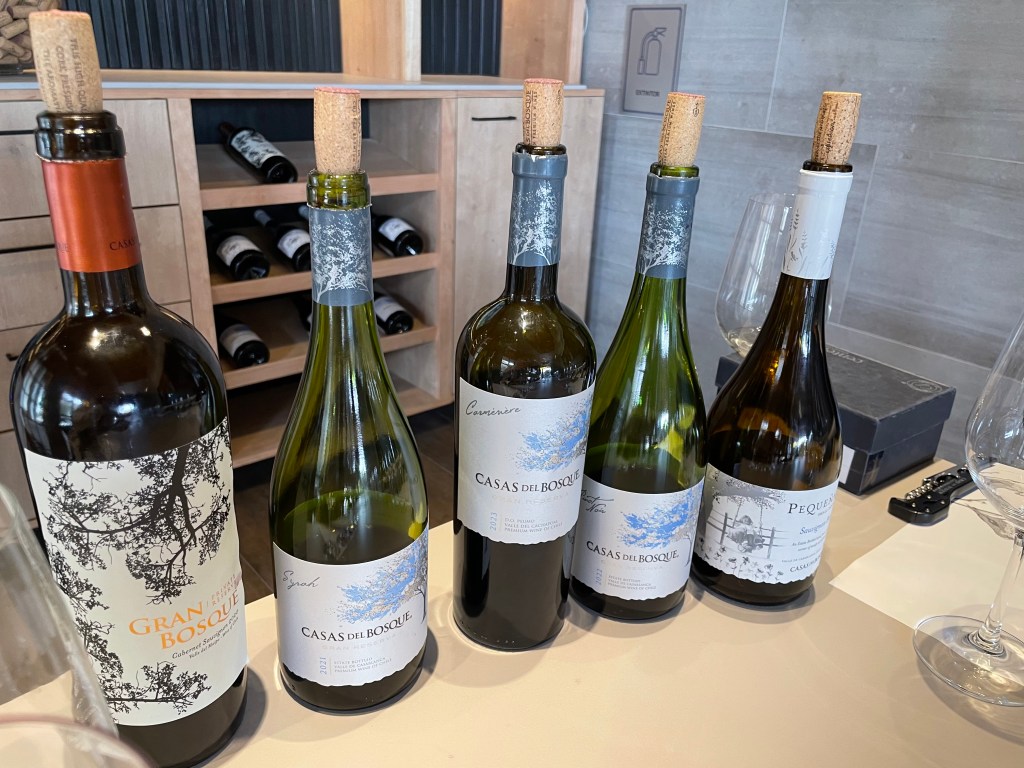
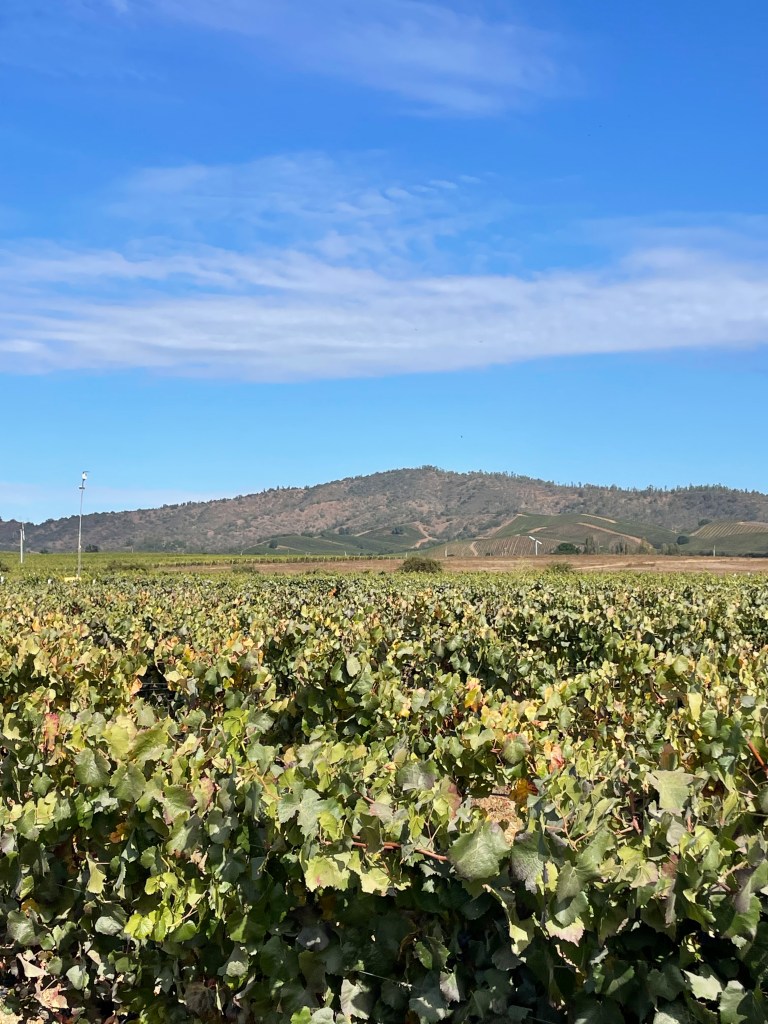
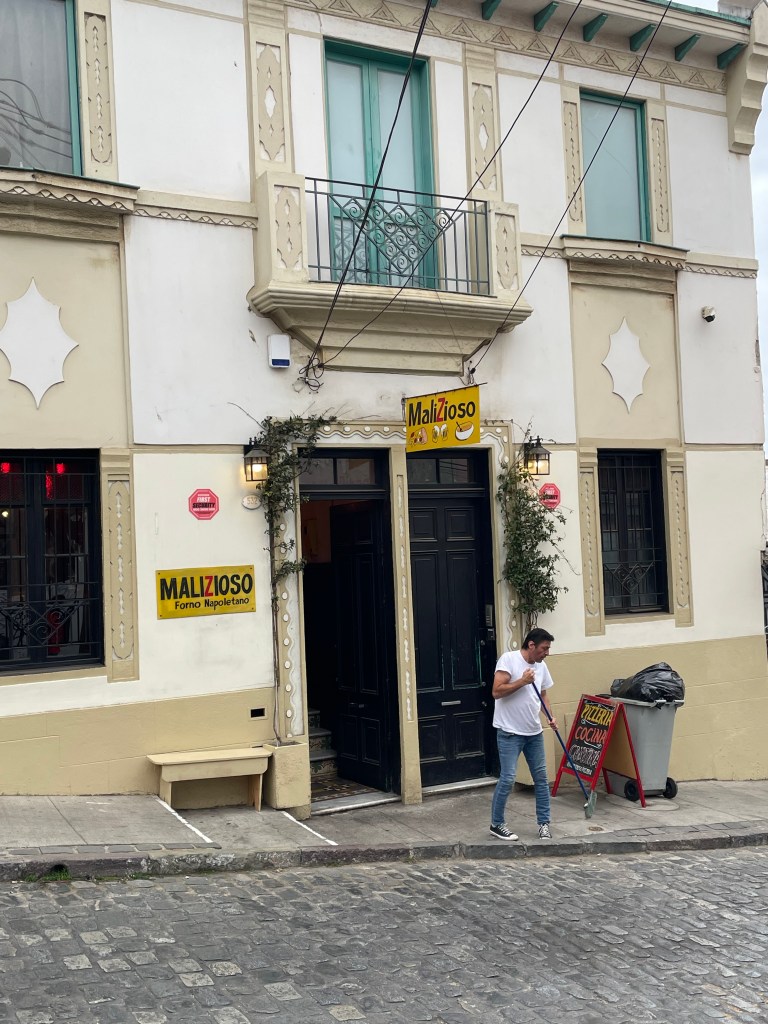
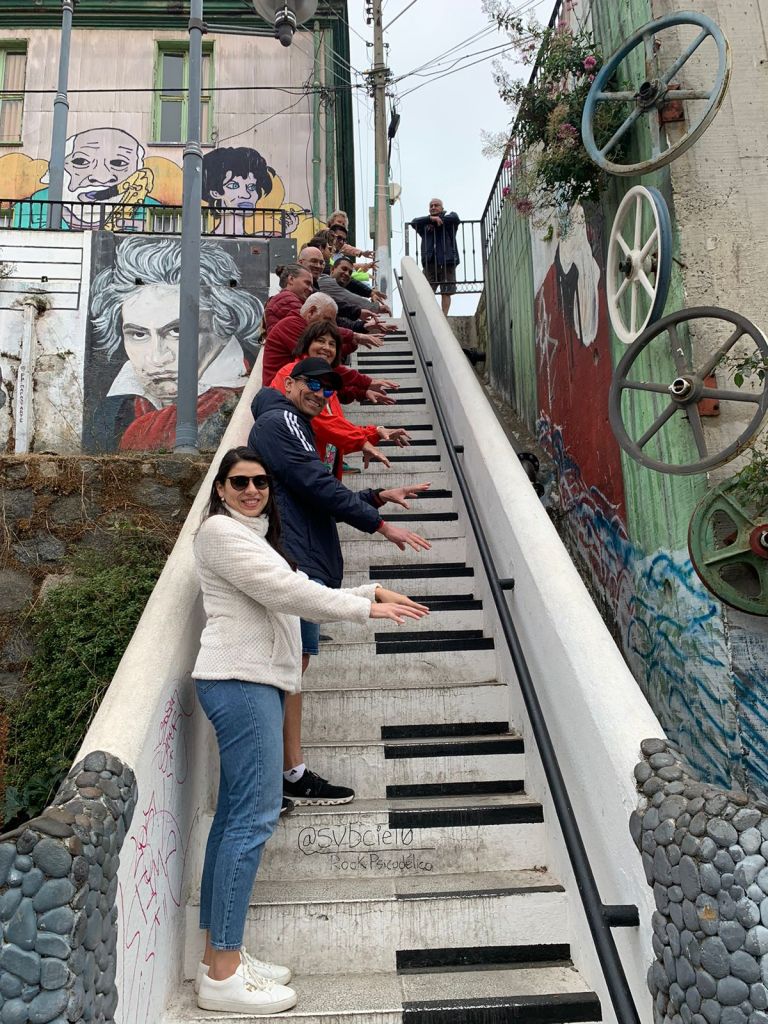
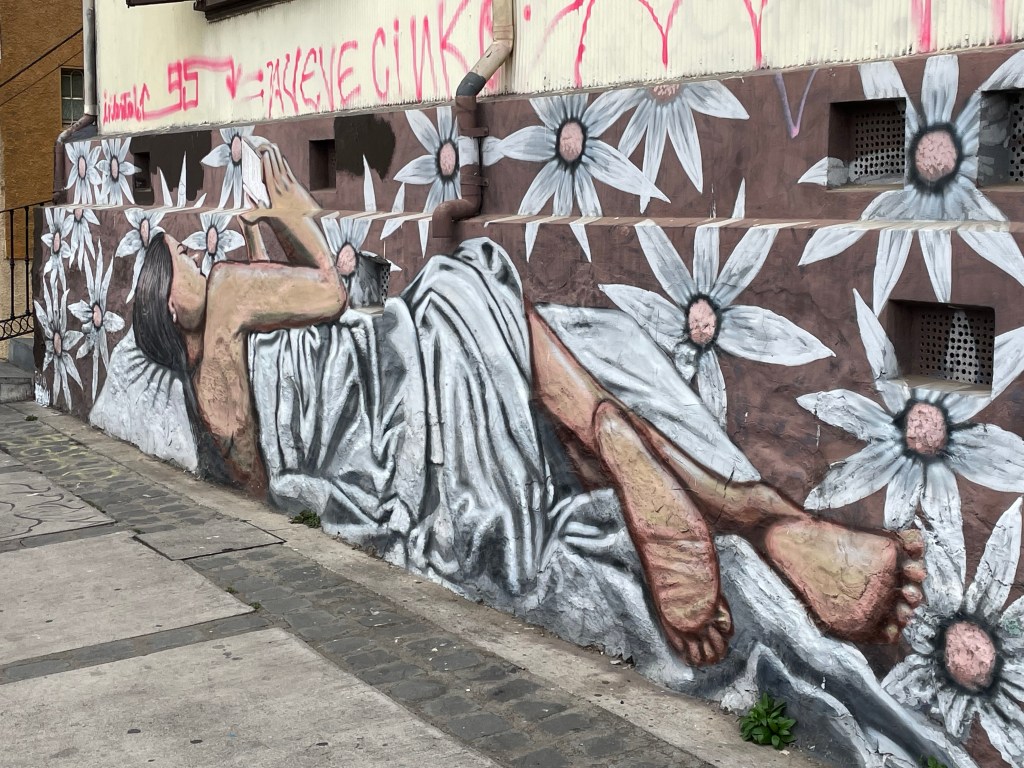
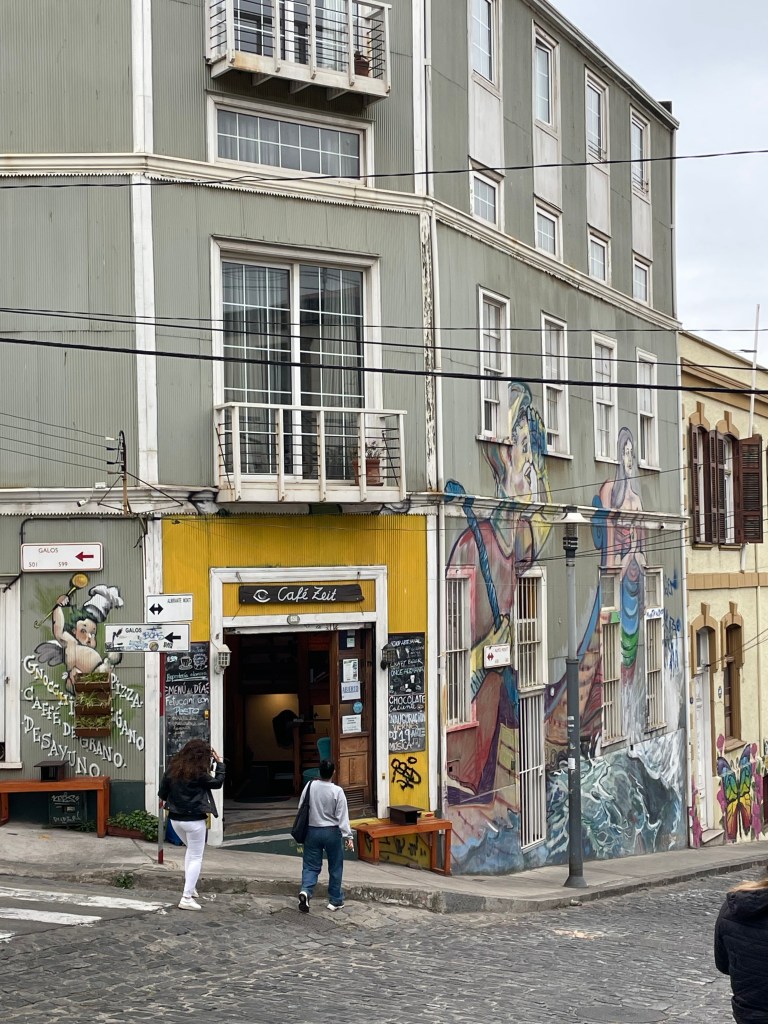
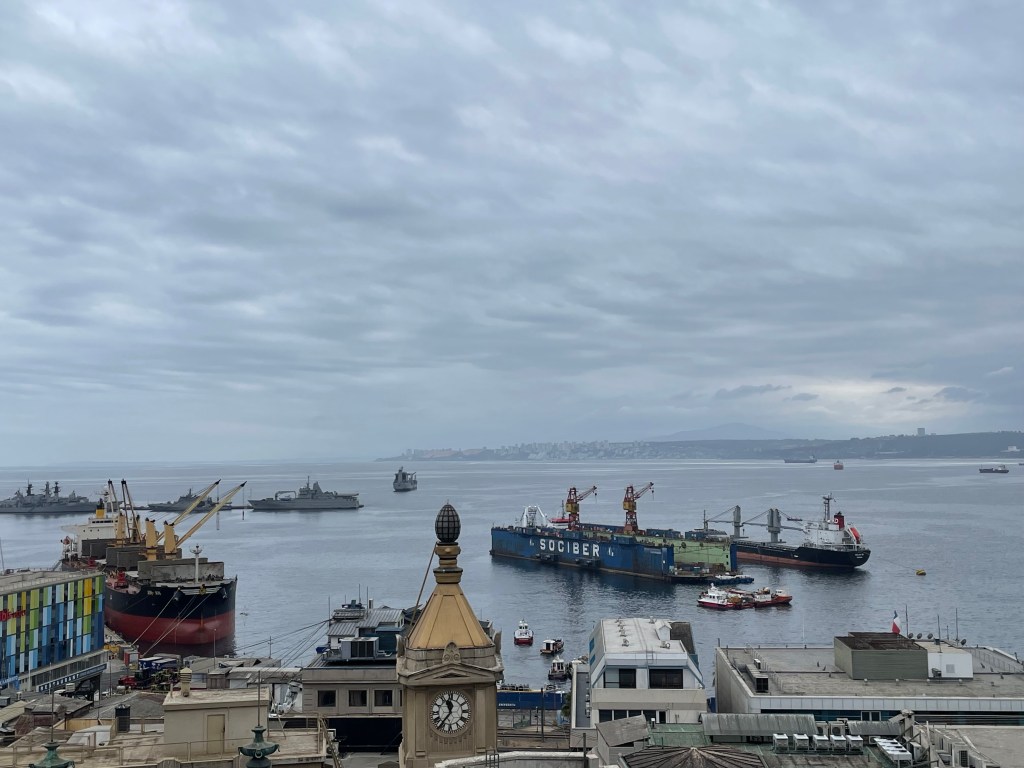
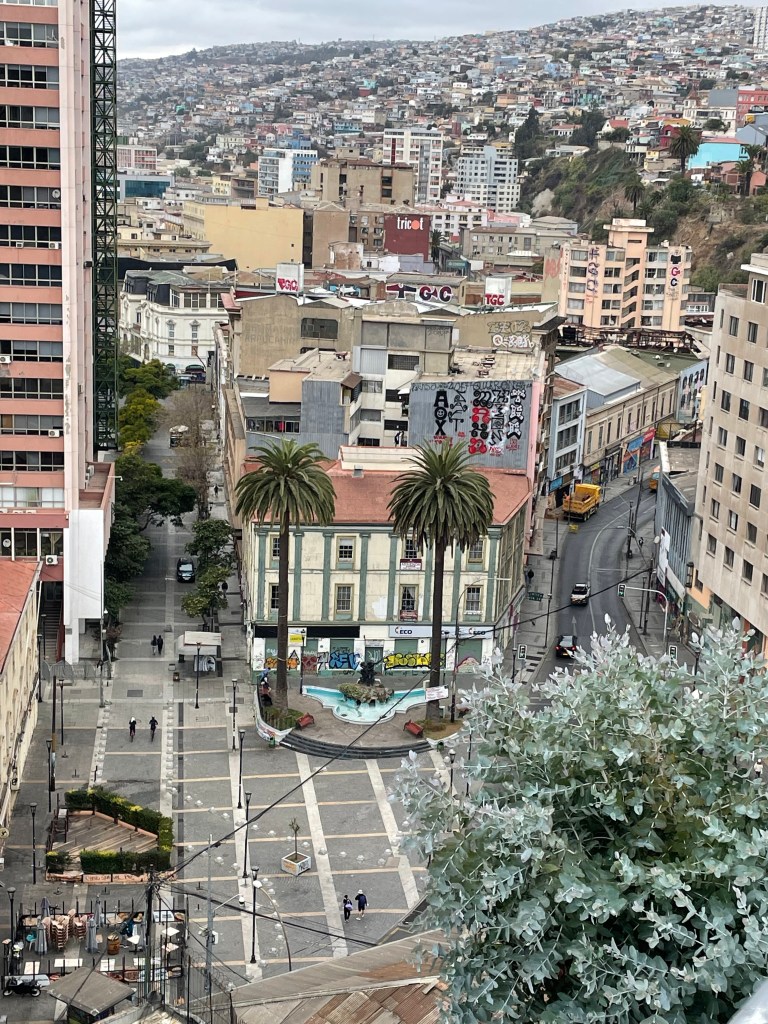
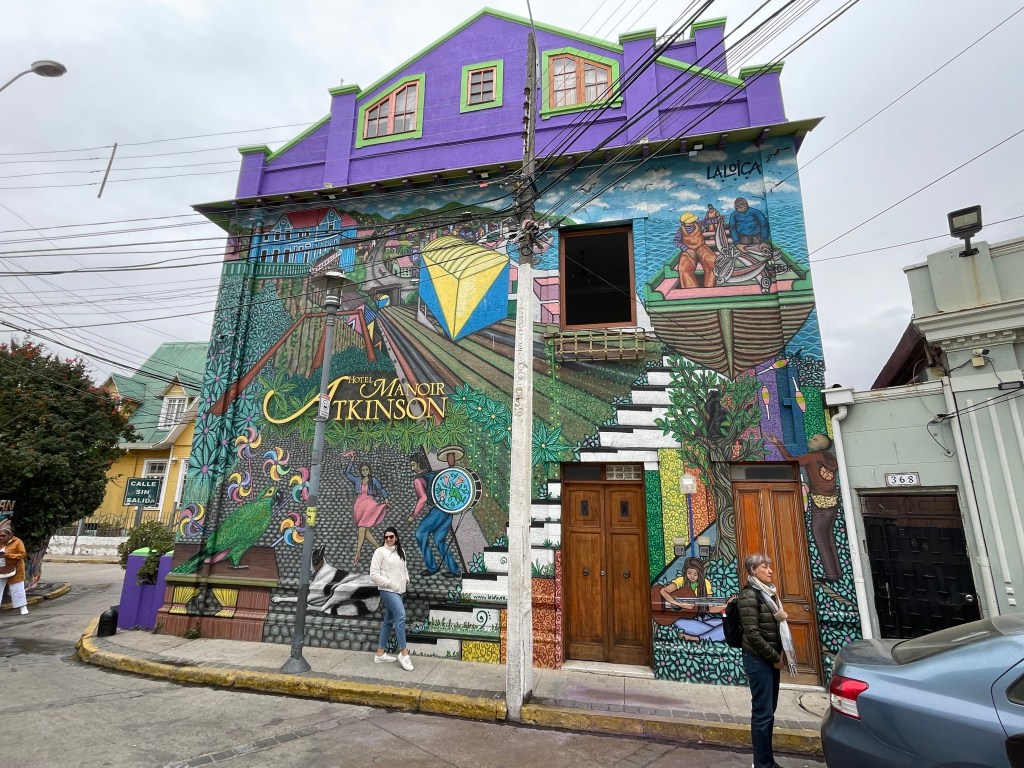
Since, I had been to Santiago before, I also scheduled day trips to the wine country of Casablanca and to Valparaiso and Renaca. I visited two boutique wineries, one a sprawling vineyard with a lovely restaurant where I had a delectable lunch and the other making very unique wines. The vintner loves to mix grapes and create new names for the wine such as Chardonnoir or Cabergnan. He also made liquors from a number of different fruits and herbs. Valparaiso, a port city on the Pacific Ocean, also had a shabby chic demeanor. The city was known for its elevators or funiculars climbing up the steep hills leading from the water. Many are no longer operational, as bringing them back to UNESCO standards is a costly endeavor for which there is no funding. We drove by one of Pablo Neruda’s homes and walked through an artsy area with lots of historical buildings, murals and restaurants before re-boarding the bus to the upscale sea side town of Renaca. The day was cool, cloudy and windy but I enjoyed a stroll down the promenade, taking in the sea air. It was also interesting to see the surrounding countryside as we traveled from city to city, filled with high rolling hills covered in scrub brush.


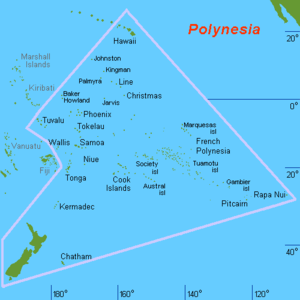
My main reason for going back to Chile was to go to Rapa Nui or Easter Island to see to moai. As I mentioned, probably in several of my posts, one of my bucket list items is to see the new seven wonders of the world. I’ve now seen six. I protest the seventh one, Christ the Redeemer in Rio, as there are large Jesus statues all around the world along with large Buddhas, etc. So why did this one make the list? I’m not disputing it is an impressive sight, just not unique. I do think the Moai on Rapa Nui should be on the list, and they are when the list is lengthen to 24 wonders. The flight to reach the island took 5 hours and 40 minutes, it’s considered to be one of the most isolated places on earth. It is part of Polynesia, a triangular shaped area in the Pacific that stretches from New Zealand to Hawaii to Rapa Nui. The island has a population of around 8,000 down from 11,000 before the pandemic. It was found by a Polynesian king sometime between 300 and 800 AD. The Dutch then discovered it in 1722 on Easter Sunday, which is how it came to be called Easter Island. Then the Spanish arrived and claimed it for Span in 1770. In 1888, Chile annexed the territory for sheep raising. Now it seems to be a little bit of this and a little bit of that and something in between. It has an island vibe and uses the Chilean peso, Spanish and Rapa Nui are spoken.
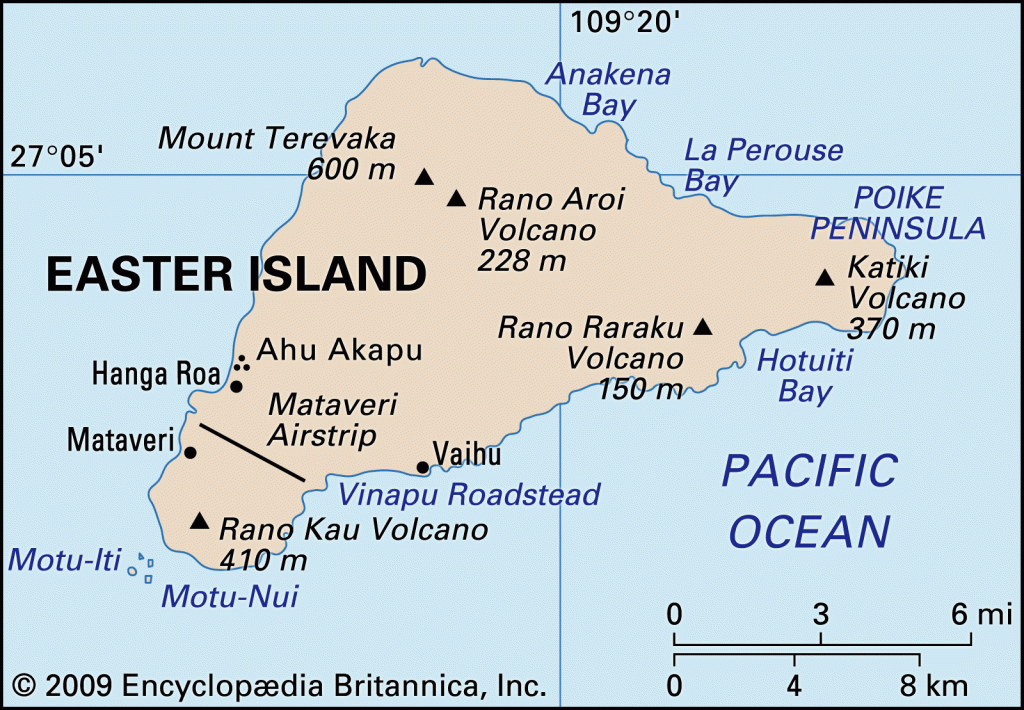
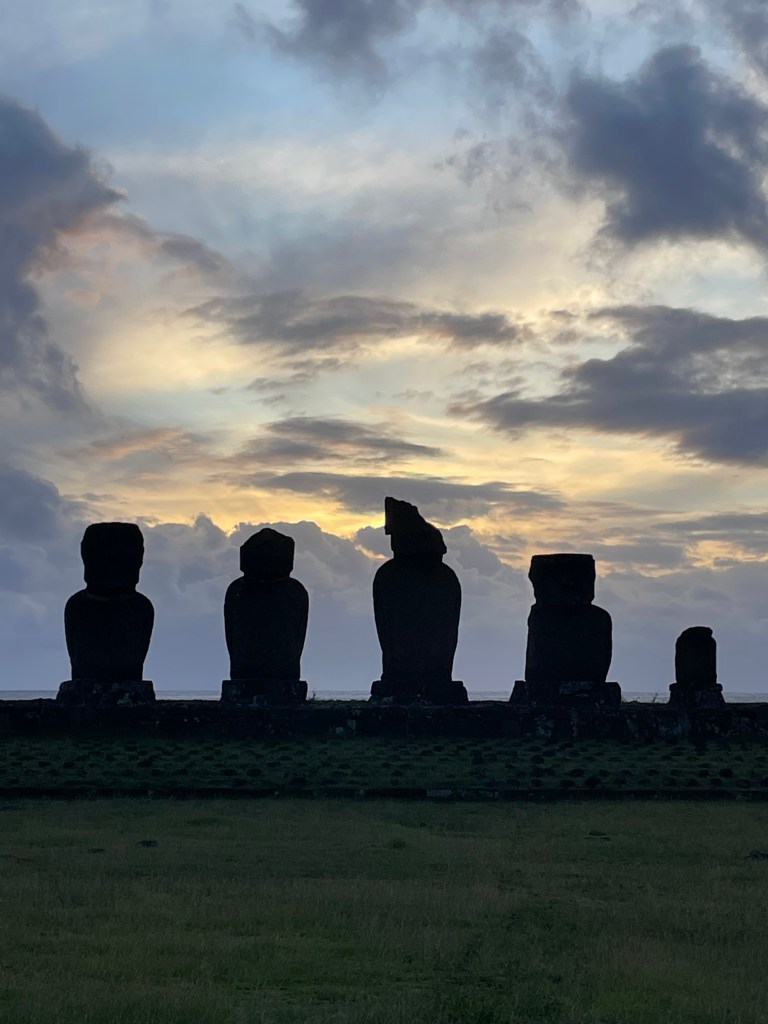
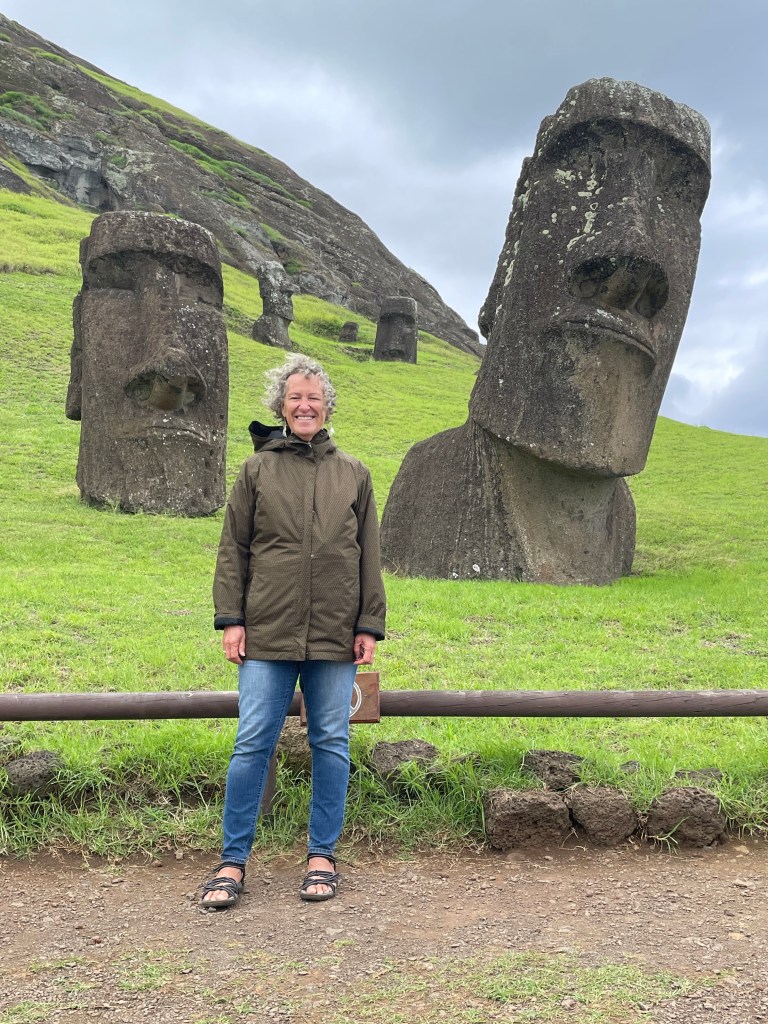
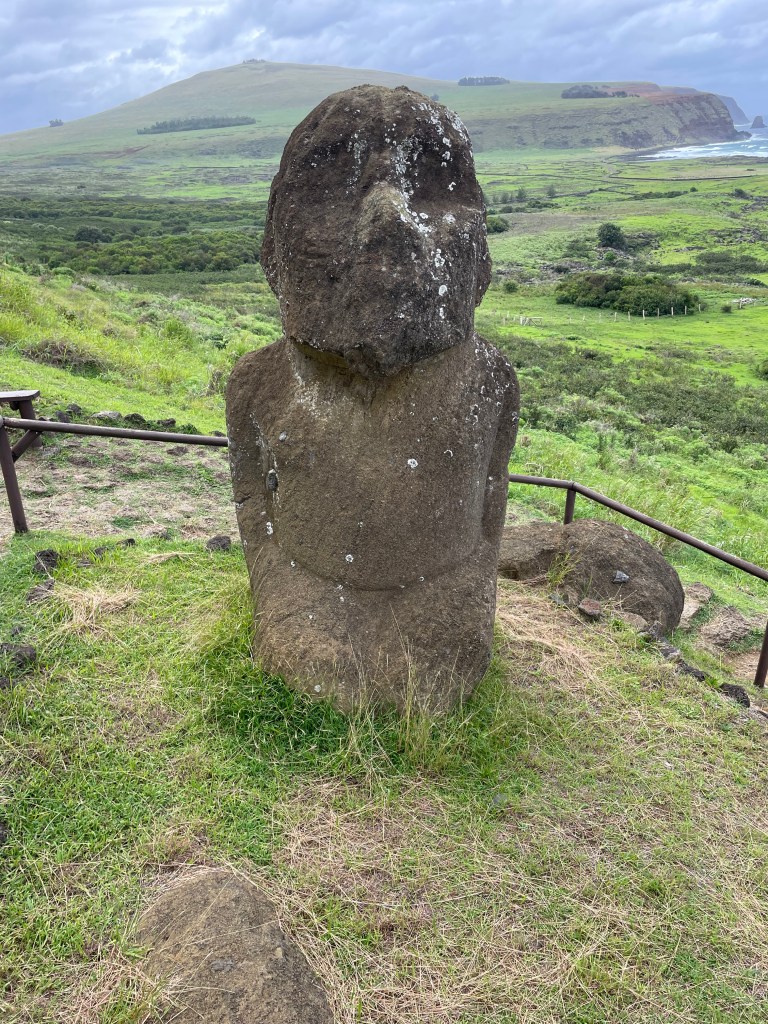
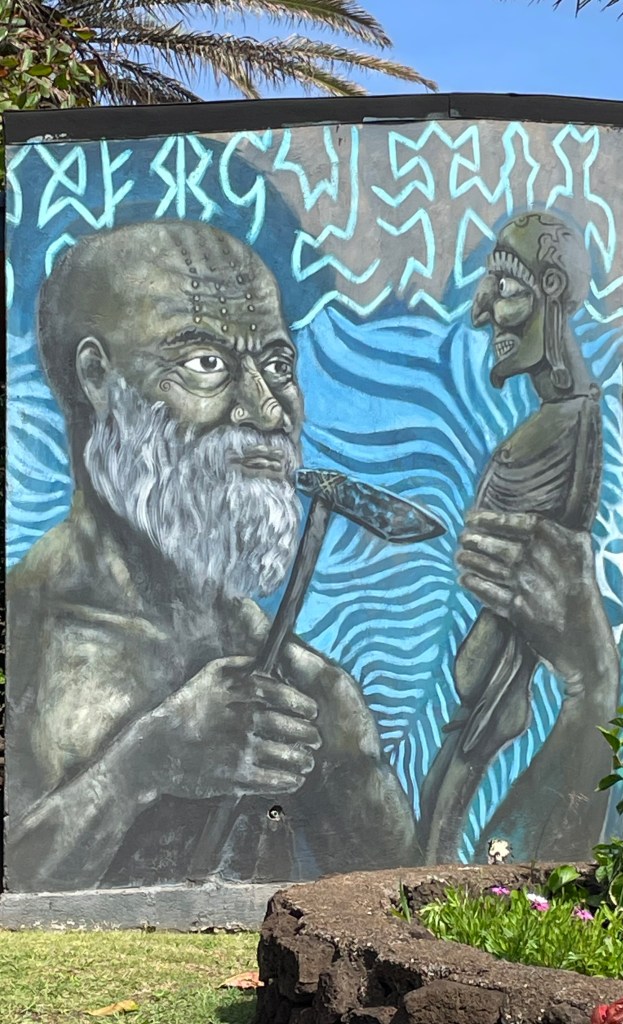
The moai were carved – chiseled? between 1100 and 1650 AD and there are over 1,000 of them on the island. The vast majority of them are still at the quarry, where there were made, in various stages of completion. The Rapa Nui carved them from the rock face using stone tools. It’s really amazing to see them outlined in the hillside, partially ‘freed’ from the rock. Large numbers of them are up to their neck in the dirt. The statues range in size from 6 to 37 feet tall. Many are erected in various locations across the island, situated on platforms called ahu. Dozens are scattered over the island en route to their final destinations. The biggest mystery is how they got the figures from the quarry to the perimeter of the island where many of them are located. The method most embraced by the Rapa Nui is that they were ‘walked’ across the land using ropes, similar to how you would walk a refrigerator from its space in the wall. Moai were carved and erected to honor the spirit of their ancestors, at least those of their leaders. Once placed on the pedestals, coral eyes were set in the sculpture which imbued the figure with the mana or energy of the chiefs and shamans they represented. This mana was believed to protect the people and assure that they had the resources they needed. Without the eyes, they held no power. In the late 1700’s, the island’s population had grown so much that resources on the island were scarce, causing intertribal wars. It’s suggested that the moai were toppled during this period as their power was no longer protecting or providing for the island.
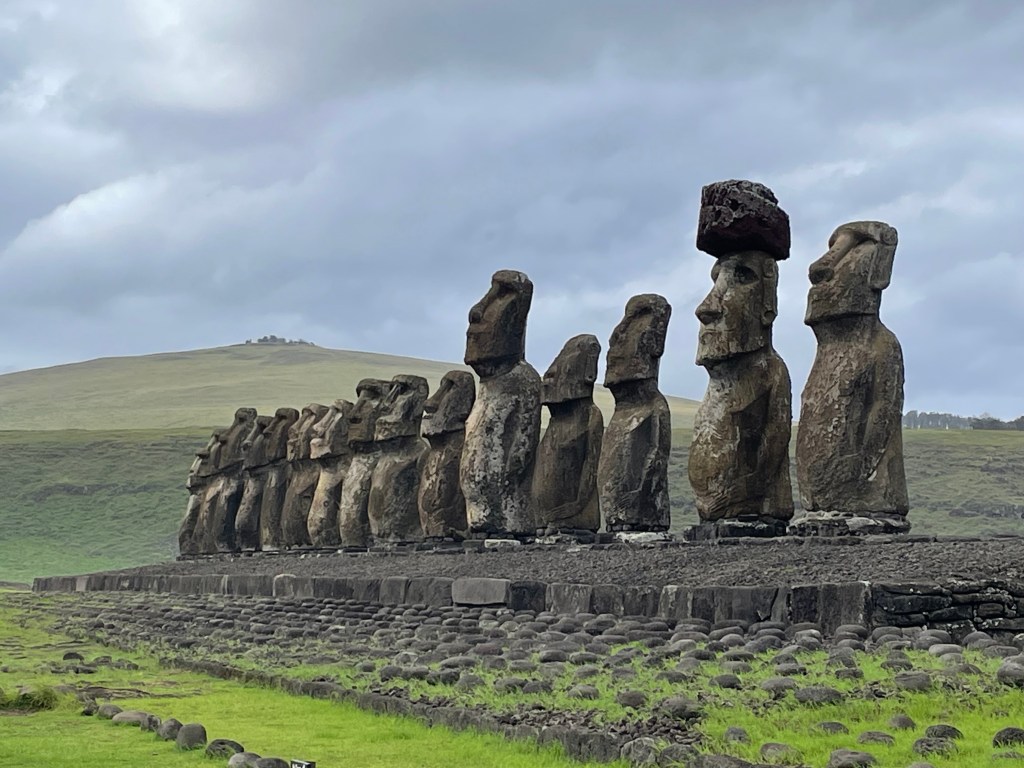
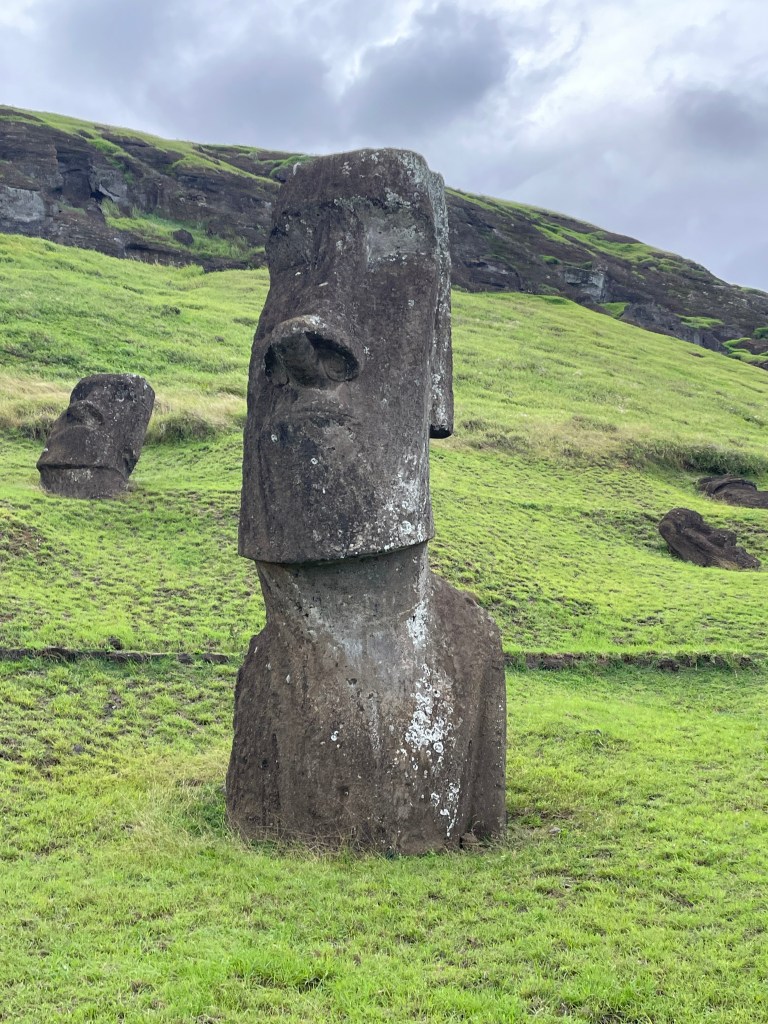
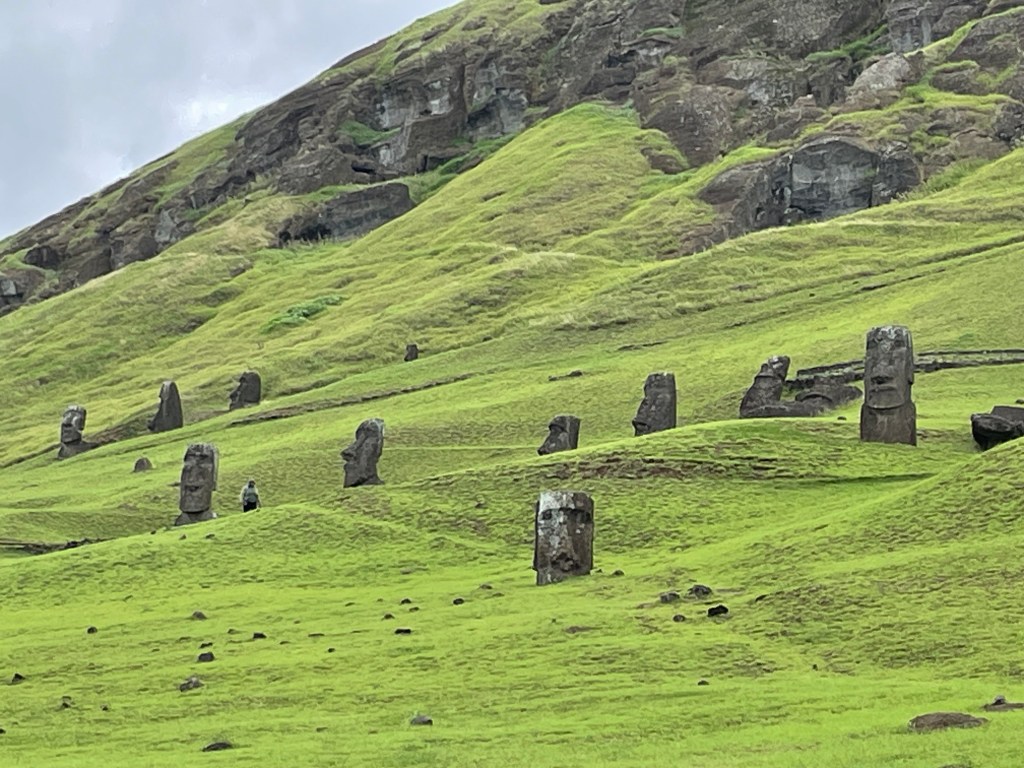
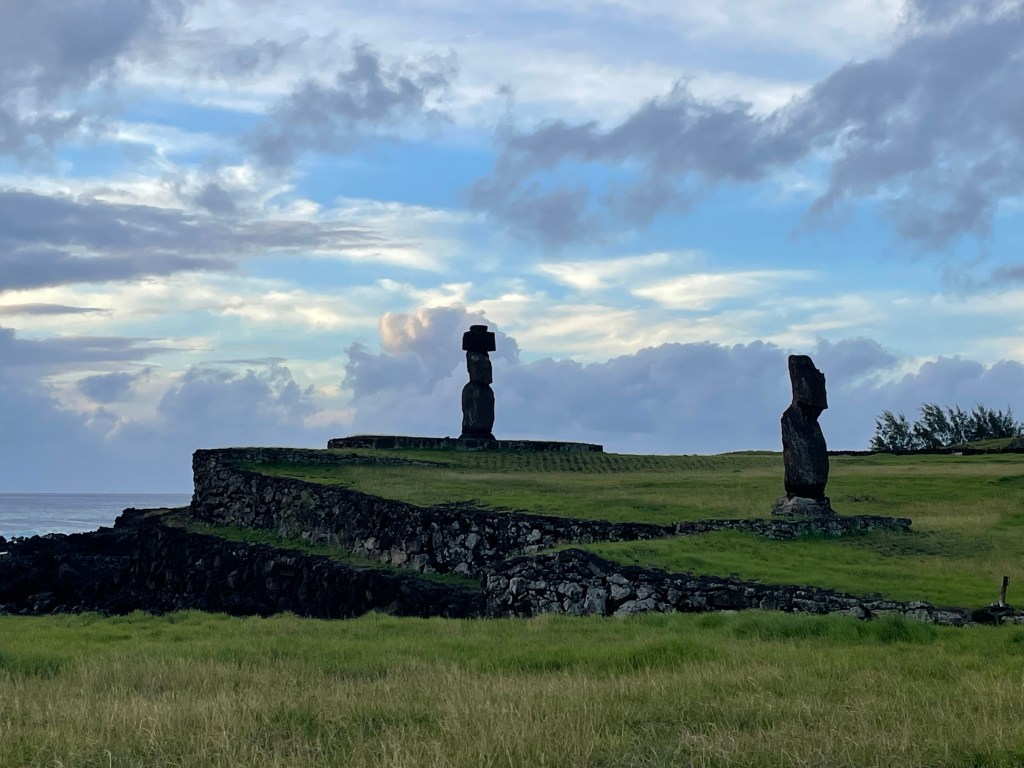

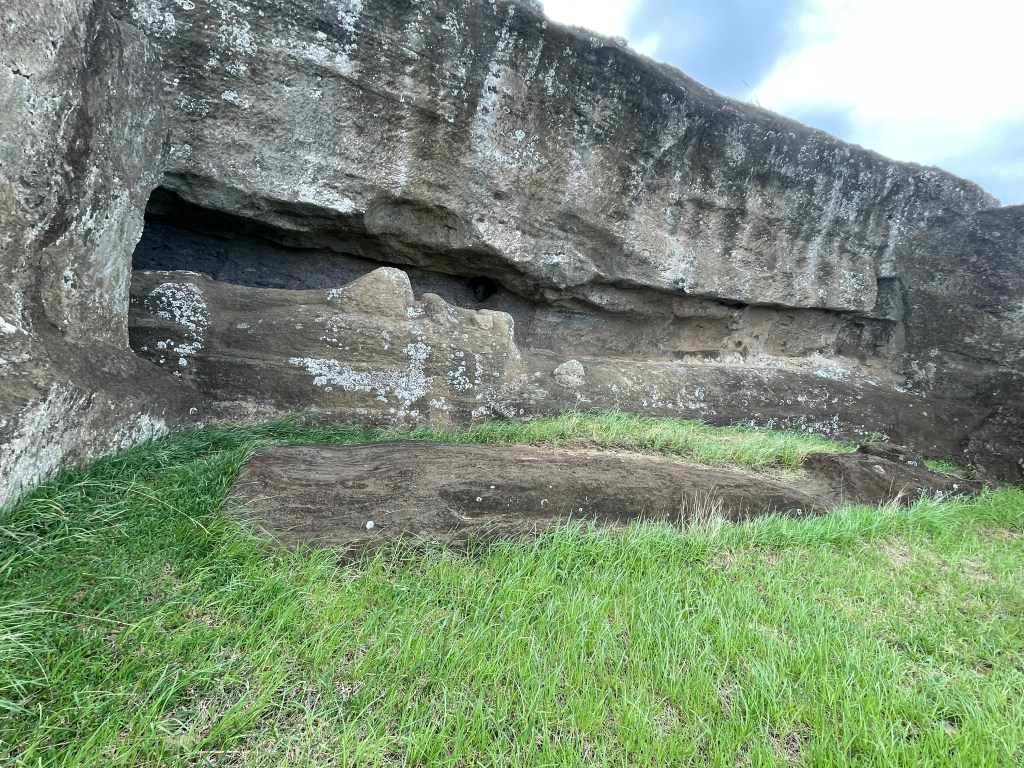

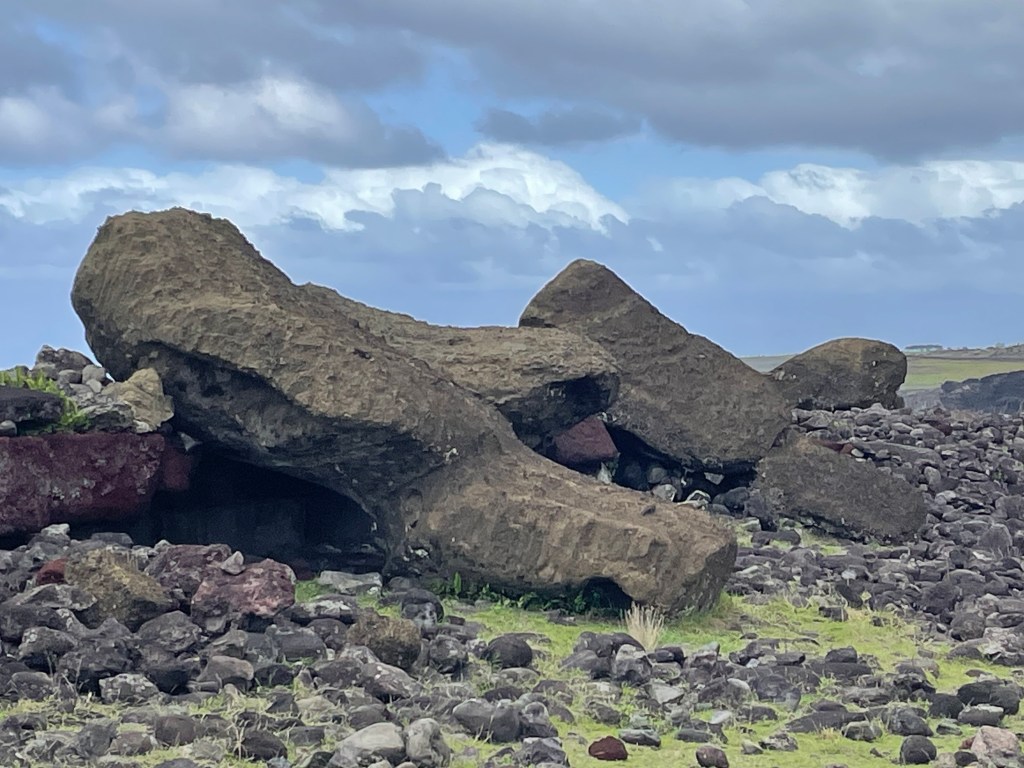
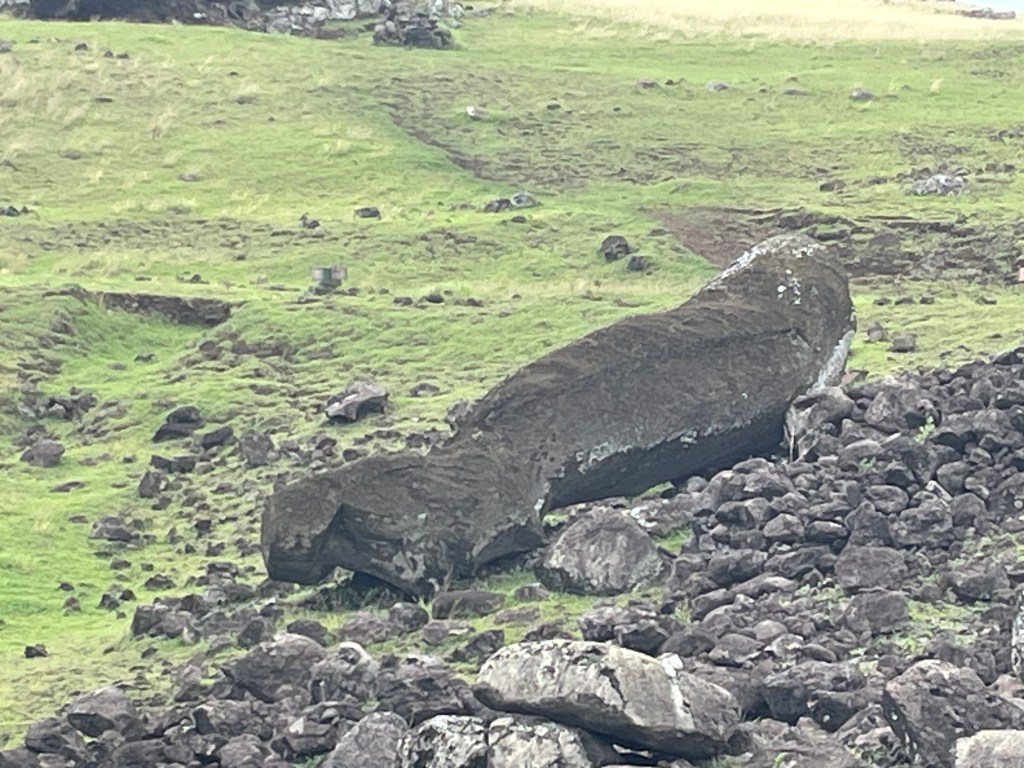
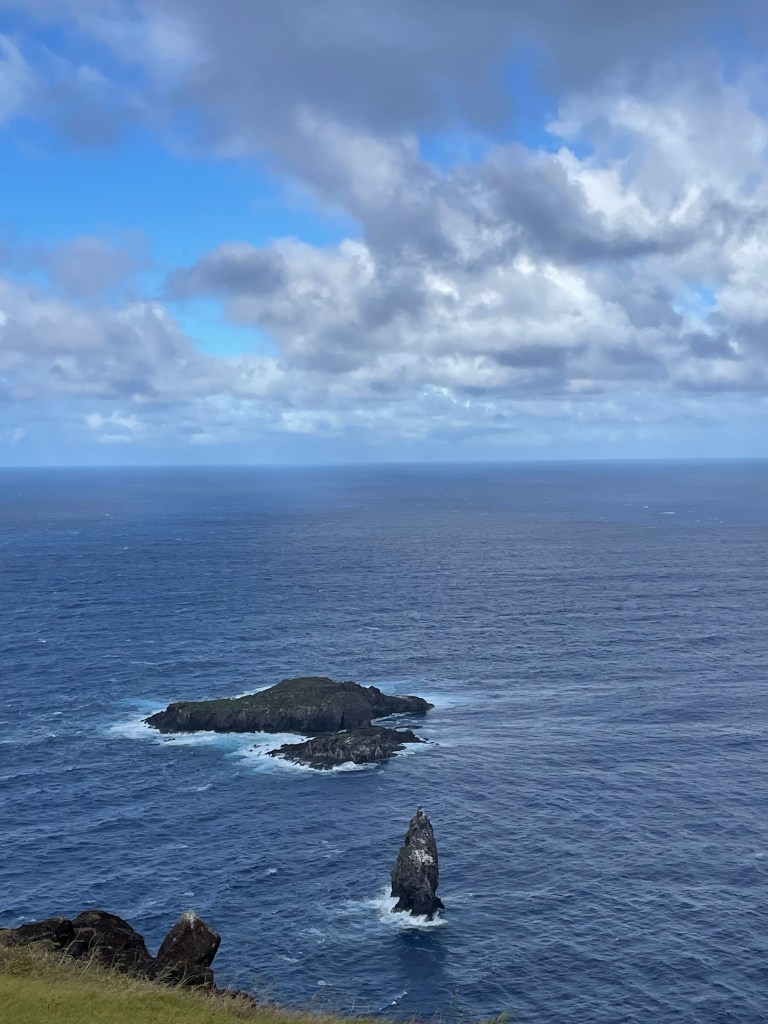
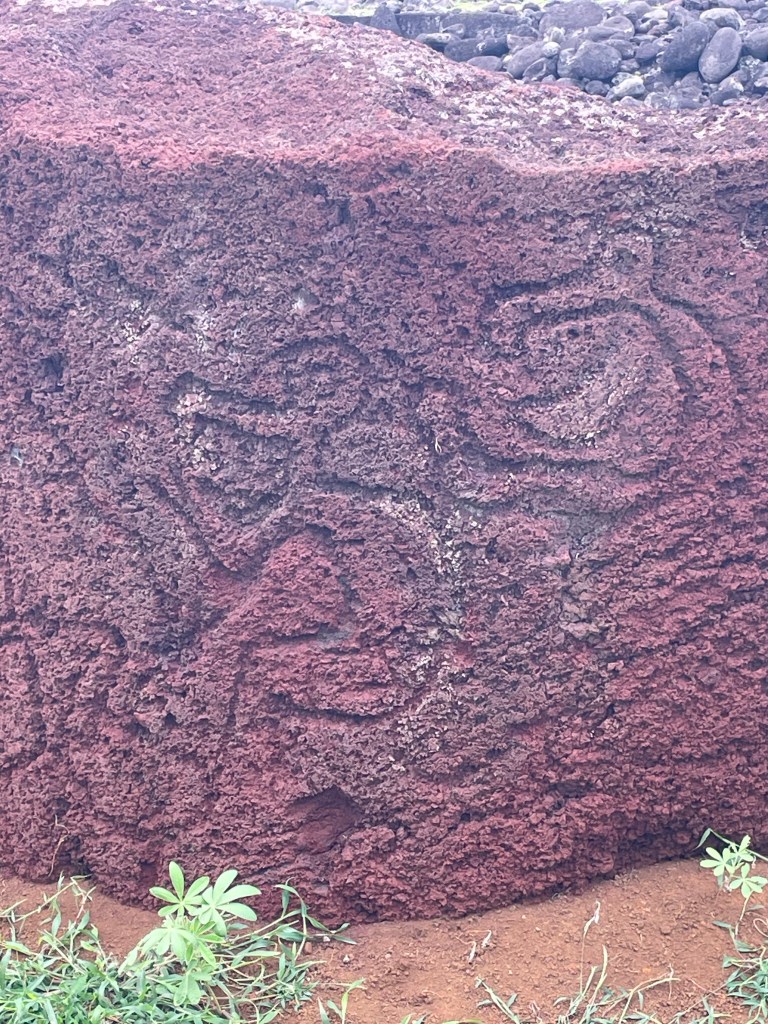
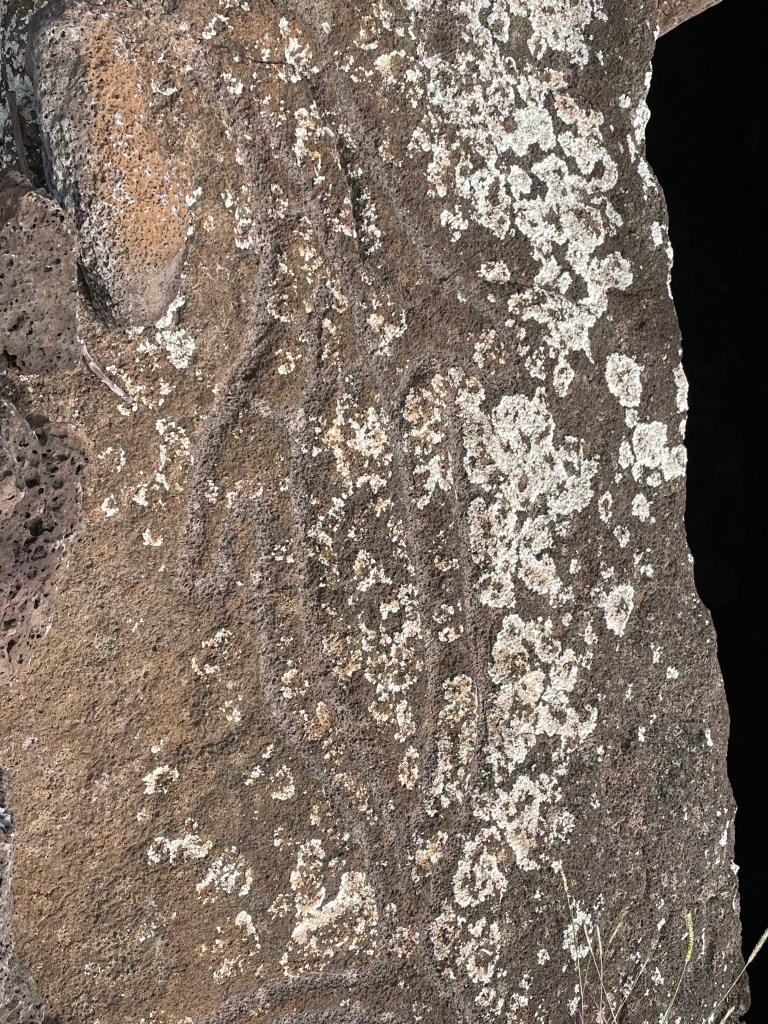
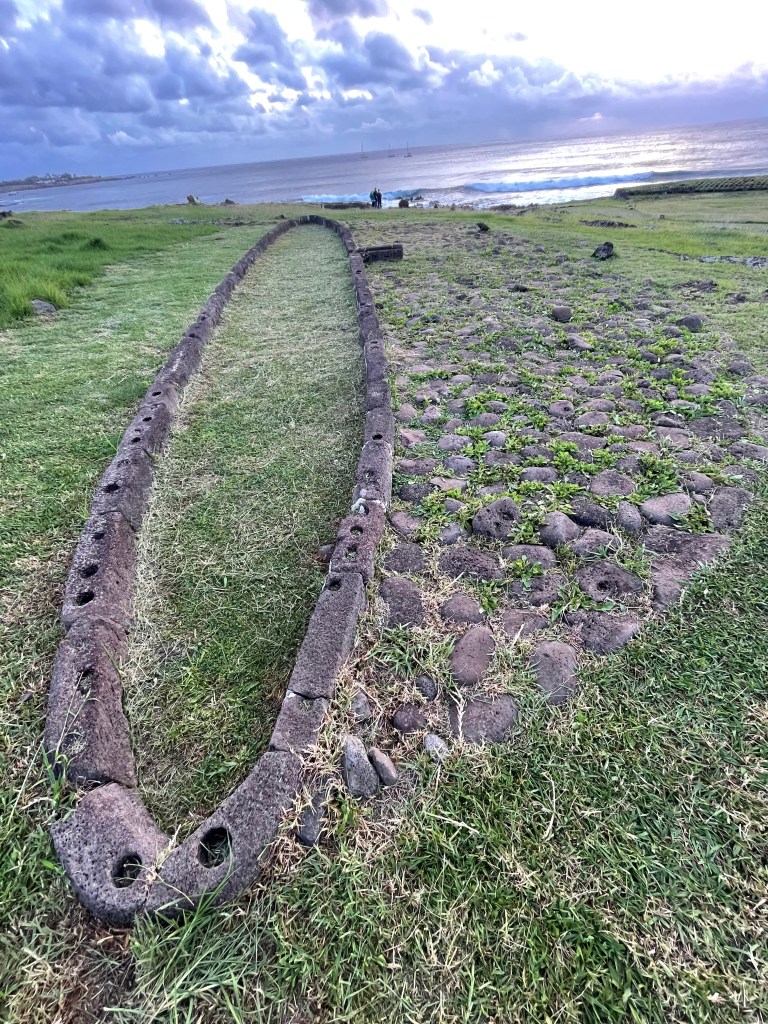
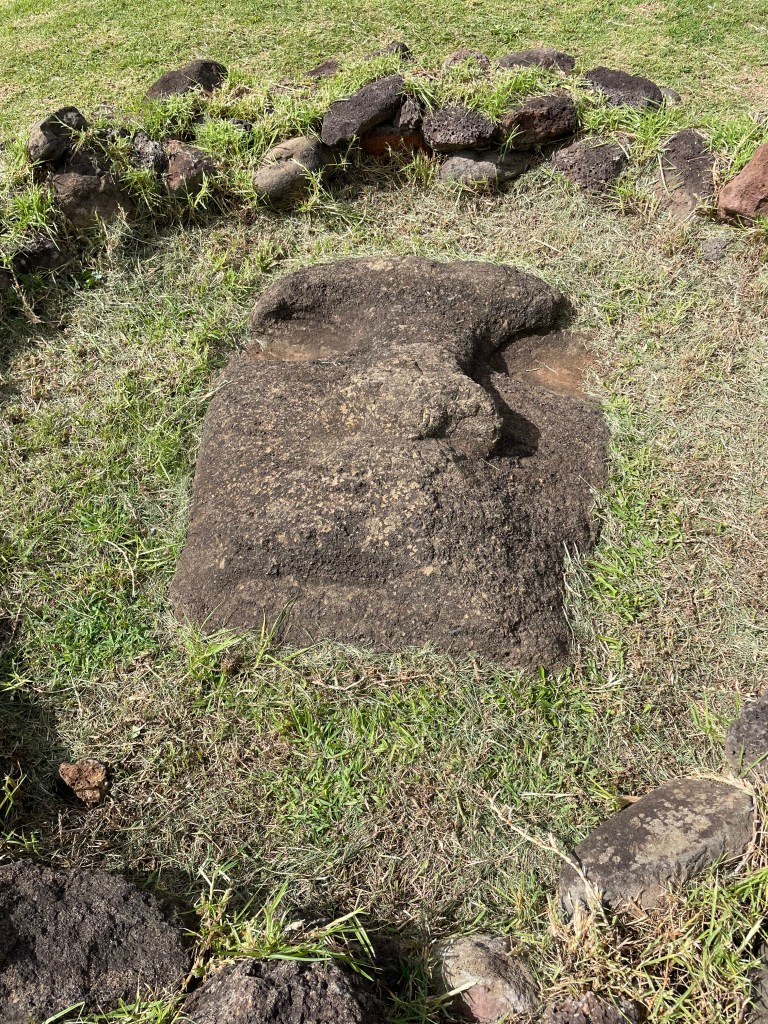
During the time of the intertribal wars, a Birdman competiton was started. Competitors, who came from various tribes, had to swim to a small island off the coast, through treacherous water of strong tides and sharks, to find the first egg laid by the sea birds on their spring migration. The return of the birds signaled a time of plenty. The winning competitor or his chief would then rule the country for that year, allocating the resources among the tribes. It was an attempt to contain the constant fighting over food to a single event. There are petroglyphs of the birdman across the island. There are also reconstructed stone buildings at various sites, once used for homes and chicken coops. Foundation stones of others are found quite often at locations around the island. Many of the Rapa Nui lived in caves for many years. We toured a cave, climbing through its various rooms. It was too dark for me but I was told their eyes got used to it. There was usually water there and in the openings they created gardens. Wind and water are eroding both the petroglyphs and the moai and there has been a lot of discussion on how to preserve them but there doesn’t seem to be a good answer. They also struggled with re-erecting the Moai, due to the cost and determining if it is the right thing to do. Some have been repaired and returned to the ahu and others are left in their tumbled down state.

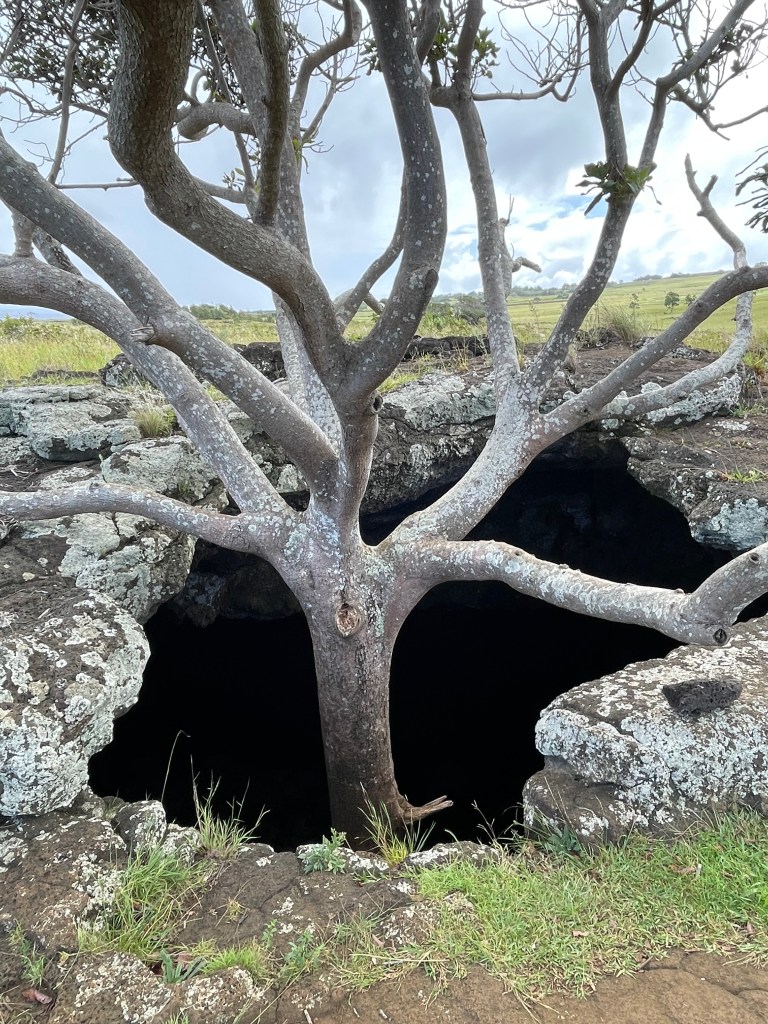
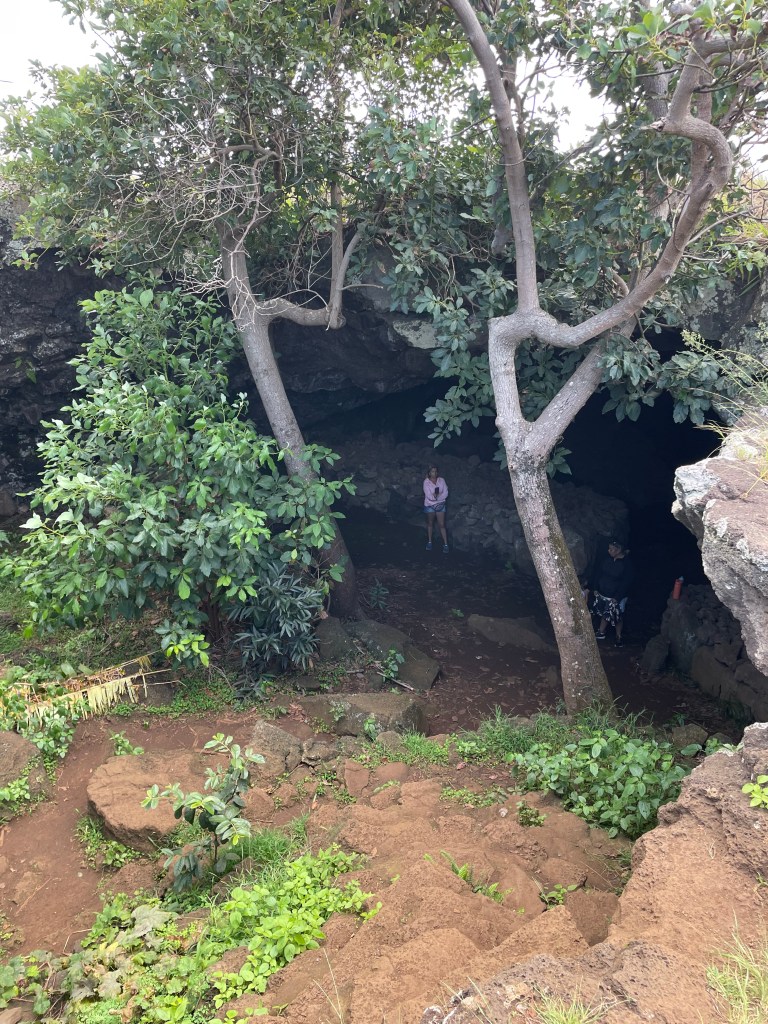
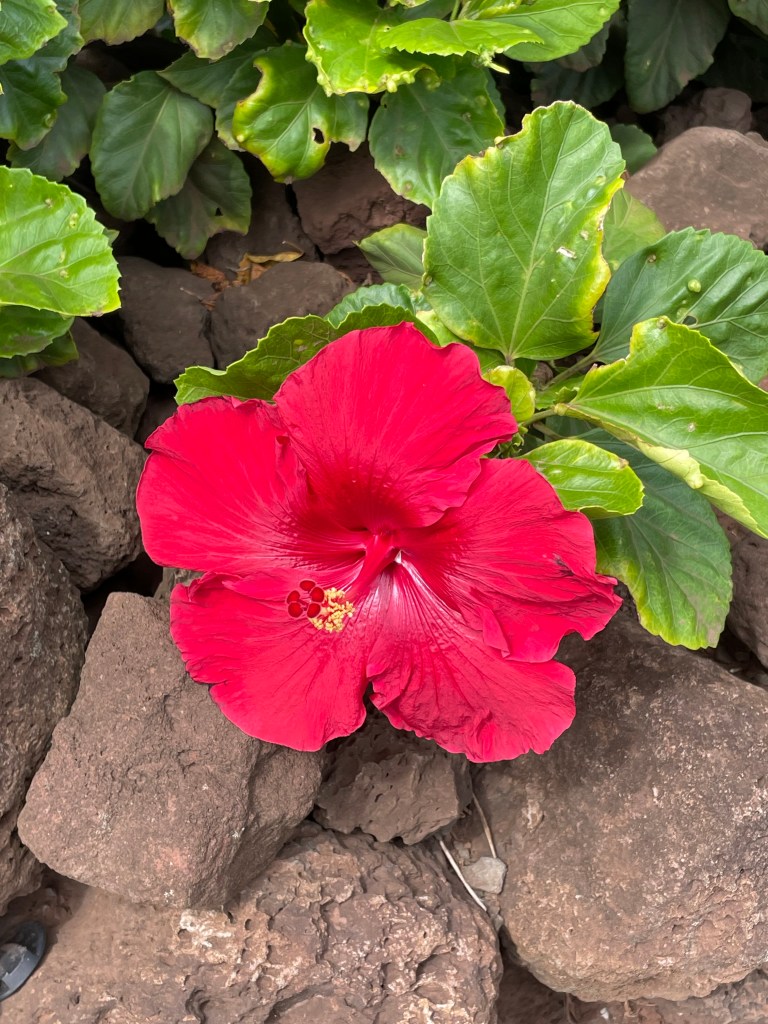
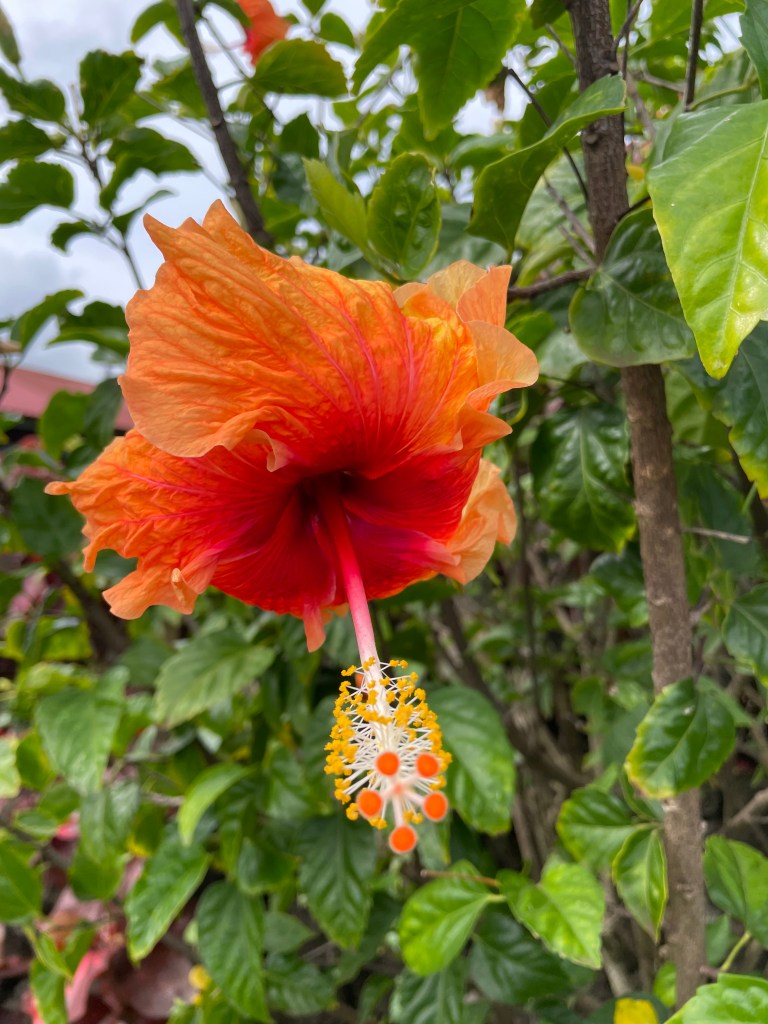
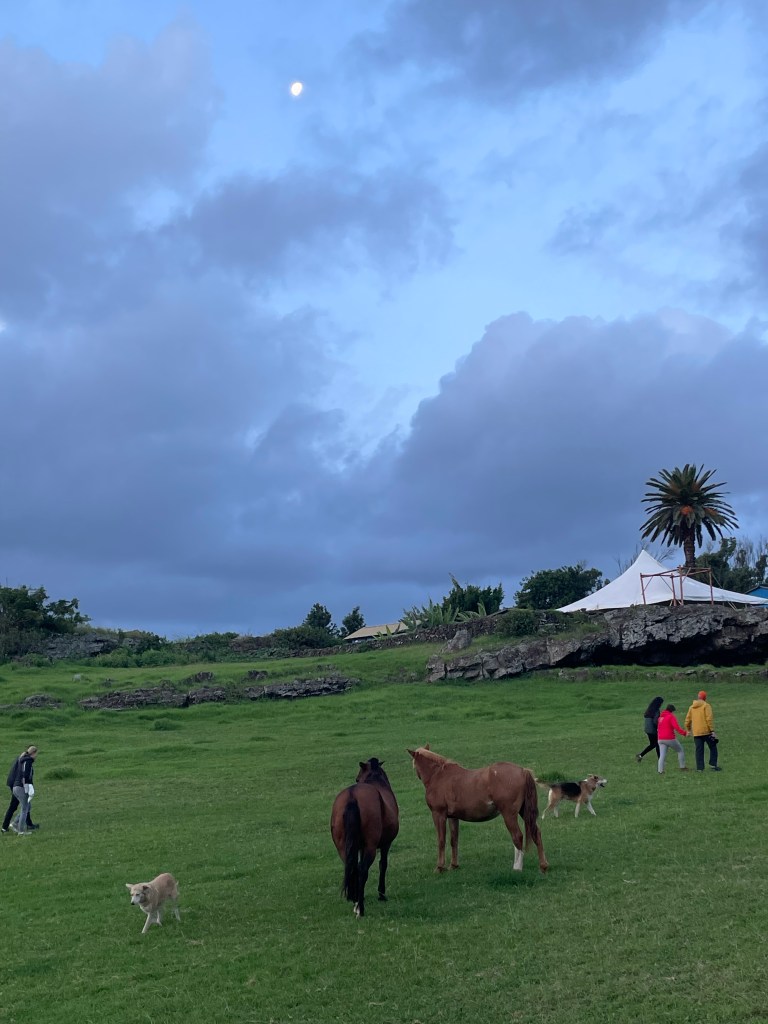
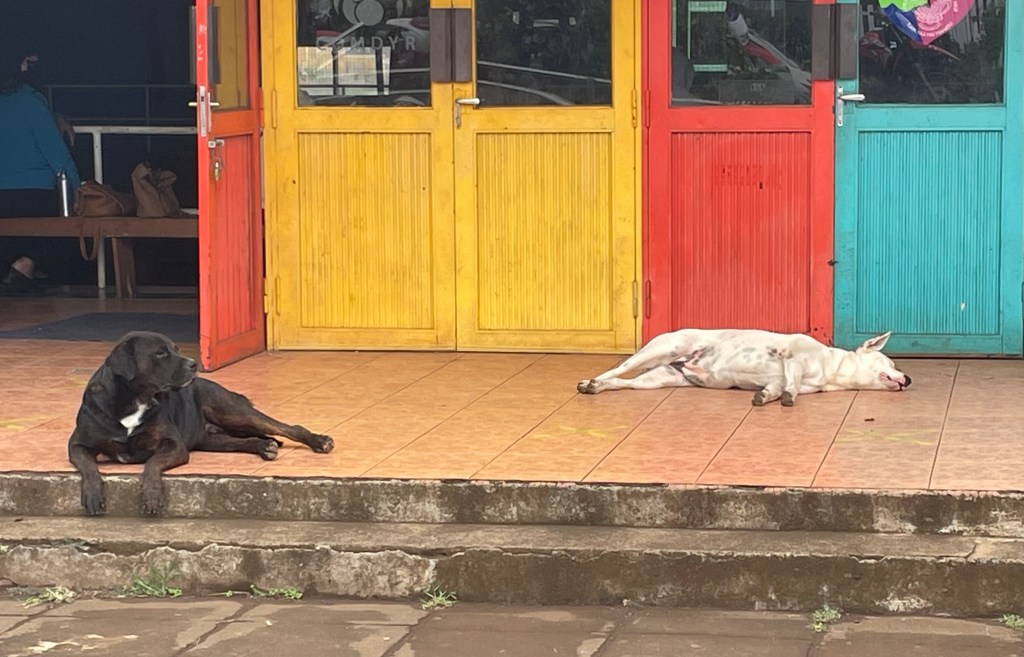
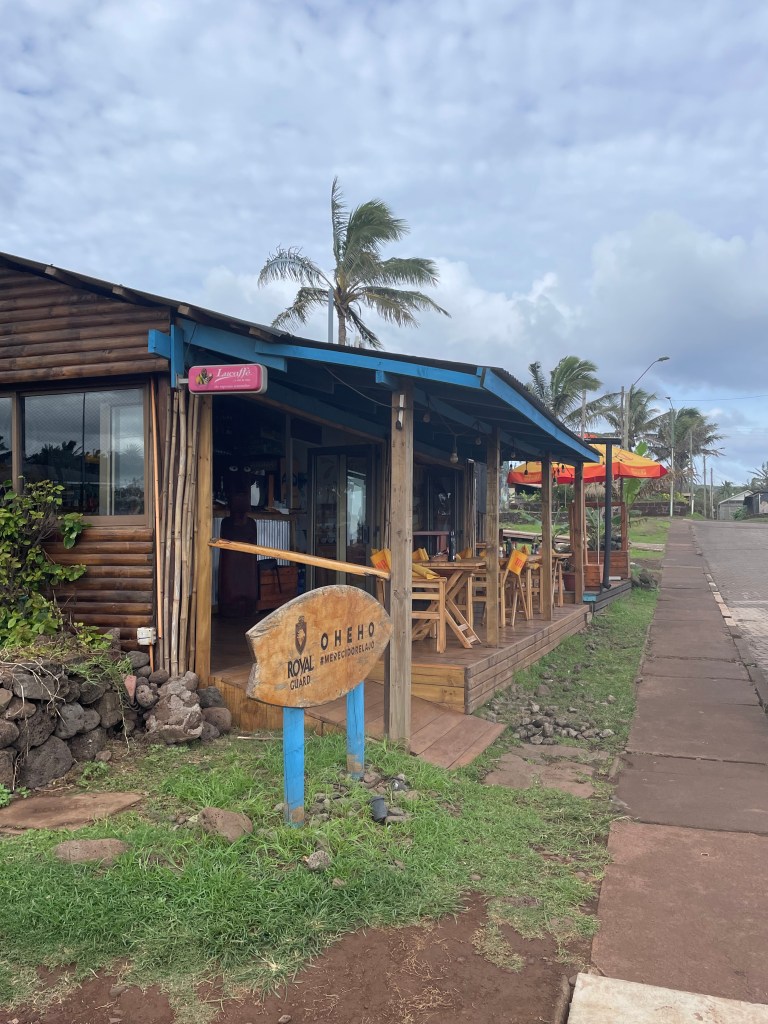
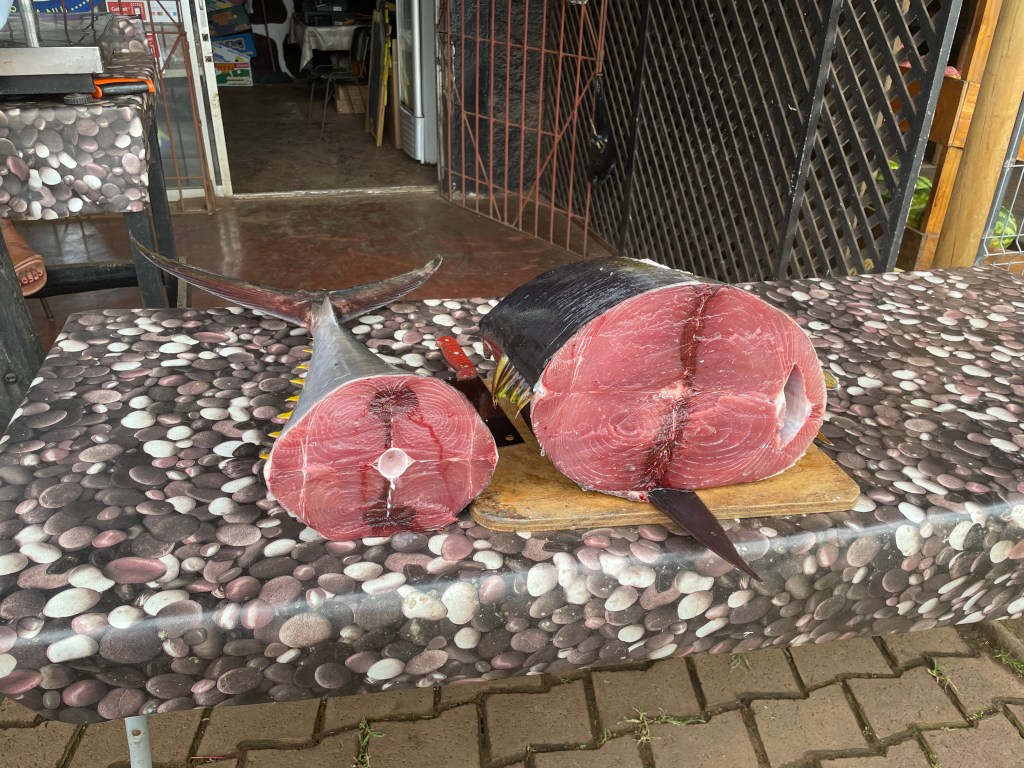
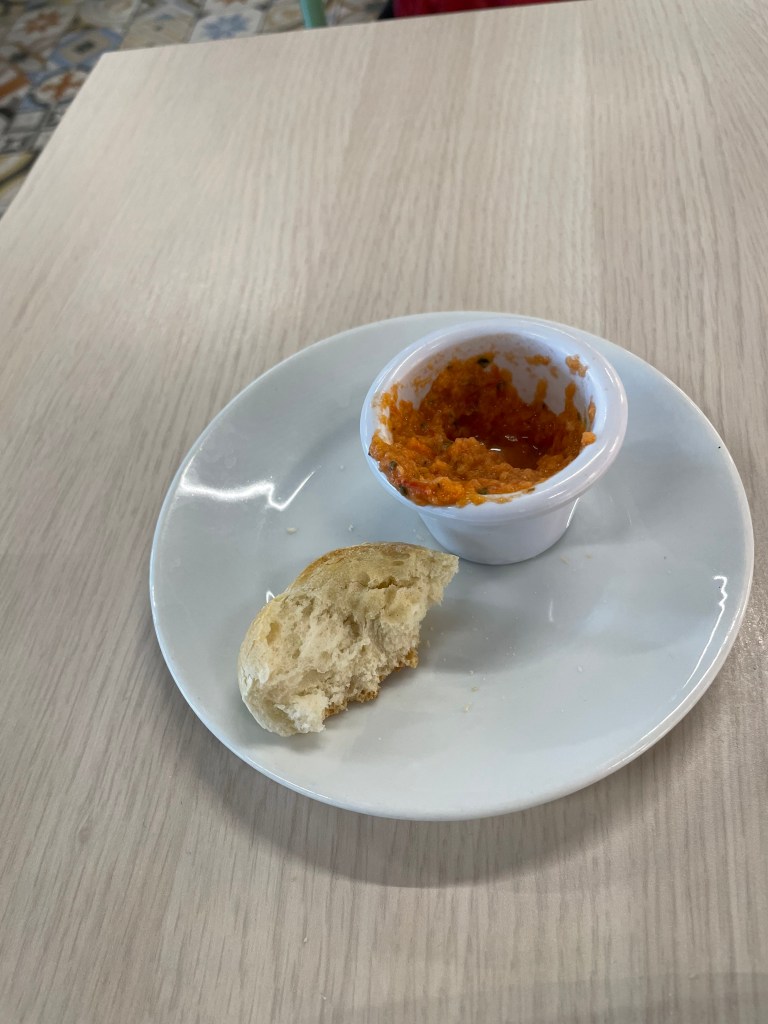
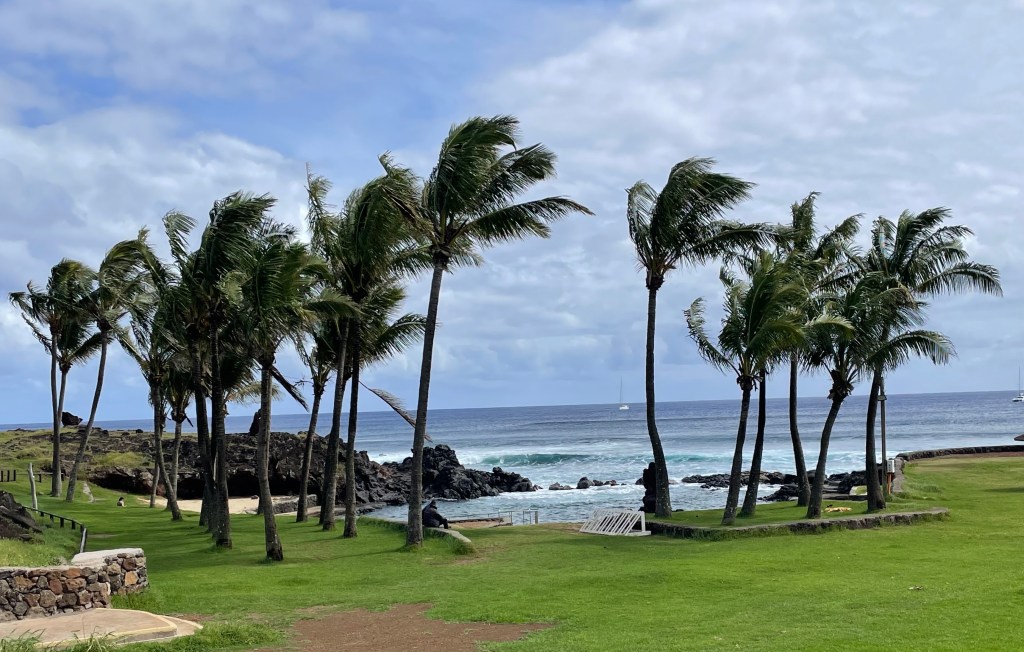
Walking to the cave we went through a wild guava field. The bushes had some ripe fruit which we ate while we walked. Yum. The island was adorned with blooming hibiscus, one of my favorite flowers, and other colorful blooms. Dog and horses run freely over its 63 square miles. The only town, Hanga Roa, is small but was filled with cute boutiques, souvenir shops, grocery stores and marts, as well as many restaurants. I stayed at a boutique hotel – as far as I could tell I had the only room, but there were also cottages behind the building. Each day breakfast was served in a dining room that spilled out onto the patio overlooking the ocean. Paula, the manager, always had a wonderful spread of fresh local fruit and juices, a selection of meat, cheeses and breads, yogurt and cereal and eggs to order. Papas frites were readily available in most of restaurants often topped with cheese sauce and bbq meat. Empandas were everywhere and I managed to find several vegetarian versions. Ceviche was wonderful and fresh. Tuna is a specialty, in the past there were times that royals were only allowed to eat it. Now however, you find it in tacos, empanadas, ceviche, sushi, and grilled. I had shrimp fajitas one night and a poke bowl another. I also enjoyed the picante sauce that they serve with bread instead of butter. Muy bueno.


Water is an issue in Chile, an historic drought has impacted nearly every aspect of life in the copper-rich nation, affecting everything from mining output to green areas in the capital. And water is privately owned so it often goes to those that can pay the most, such as avocado farms. The vineyards I visited were working on being sustainable with advanced systems, only watering when necessary, and holding rainwater in cisterns and cachement areas for future use. A fun fact: Rapa Nui’s airport has a runway that is 3.3 km long, it was built to allow the space shuttle to land there if needed, though it never has. A typical commercial runway is 2.4 km.
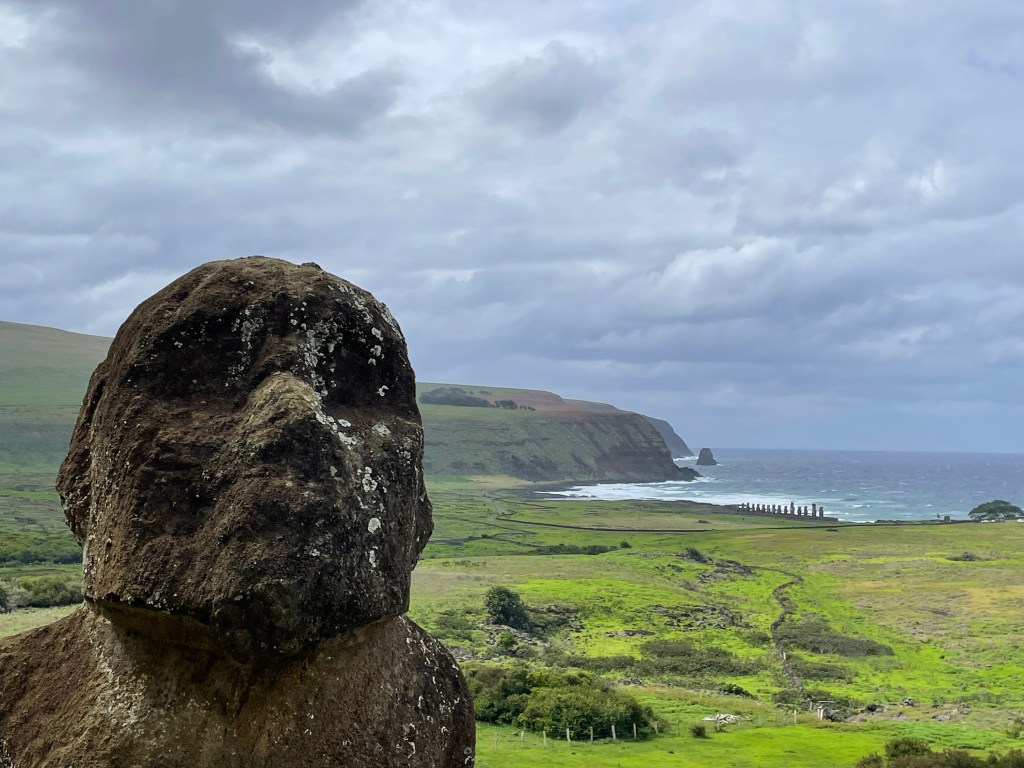
I enjoyed my stay in Chile and was fascinated by the moai. I just think it’s incredible what men can do with just rudimentary tools. Rapa Nui was beautiful and lush and a relaxing place to stay for few days. The people were friendly and kind, especially to a gringa with very limited Spanish.


Reading List:
My Tender Madador by Pedro Lemebel
Next up: Ecuador


 Where in the World is Debra Grimes?