One learns more from traveling ten thousand li than from reading ten thousand scrolls. – Chinese Proverb
2/22-26 and 3/24-4/11, 2024
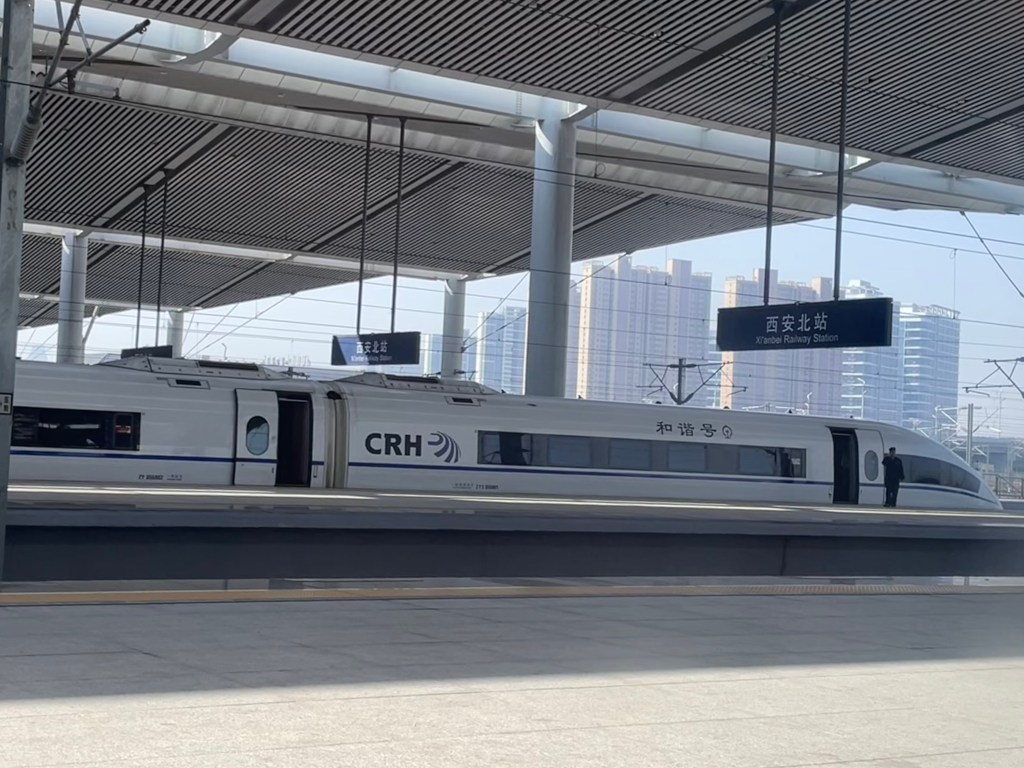
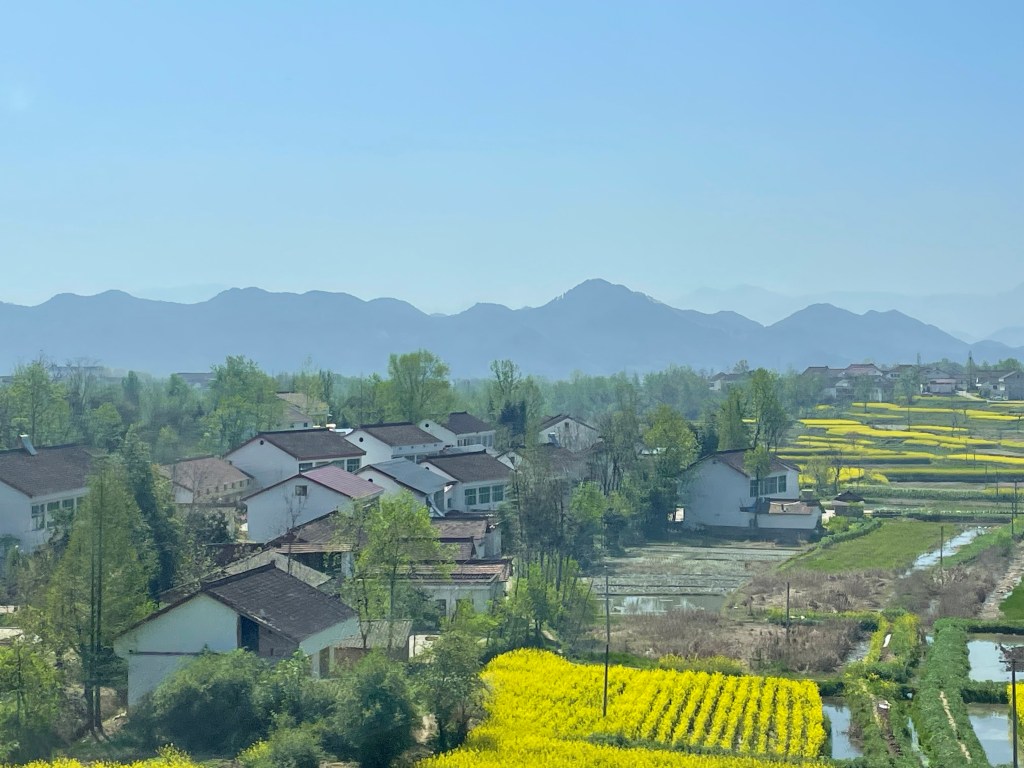
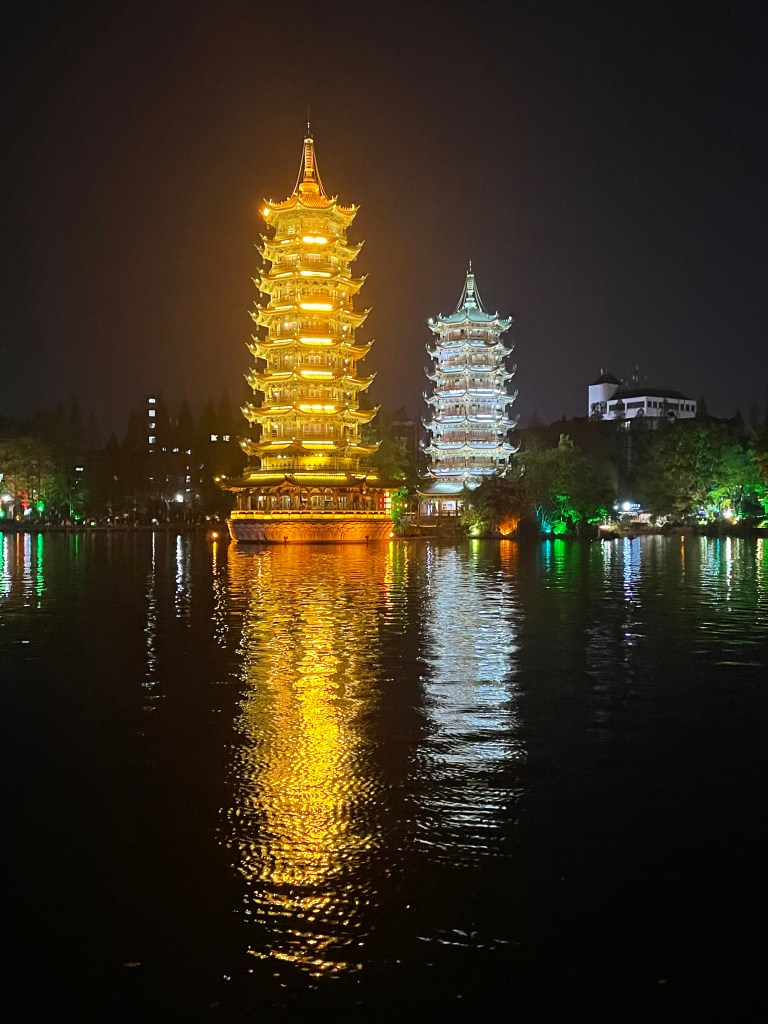
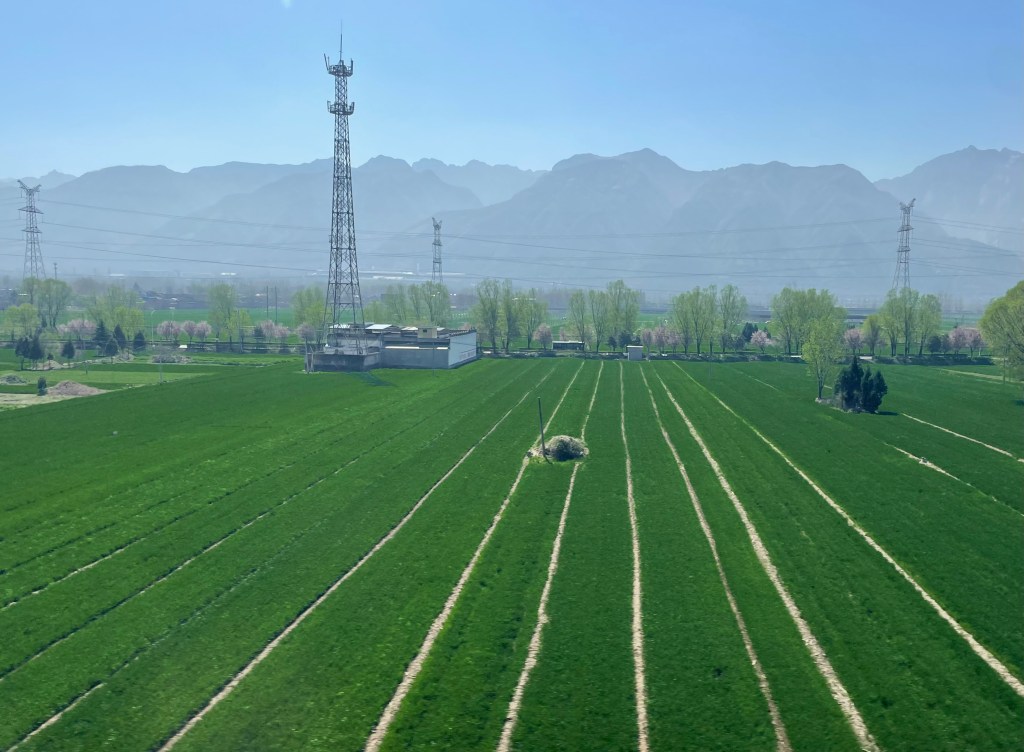
China was very interesting. On one hand, it was filled with amazing places, buzzing cites, fast trains and wonderful food. On the other, I struggled with some behaviors, the wifi, and the gray skies. I visited Hong Kong for a few days then left China, and then came back to visit Beijing, Xian, Chengdu, Guilin/Yangshuo and Shanghai. I traveled over 26 hours by high speed train – 300 KMH, so also saw much of the countryside and smaller towns and villages along the way. It was cold and windy in Beijing – I had my shoulders up to my ears for two days despite multiple layers of clothing, and wore shorts in the heat and humidity in Guilin. But then, they’re a little further apart than Minneapolis and New Orleans.

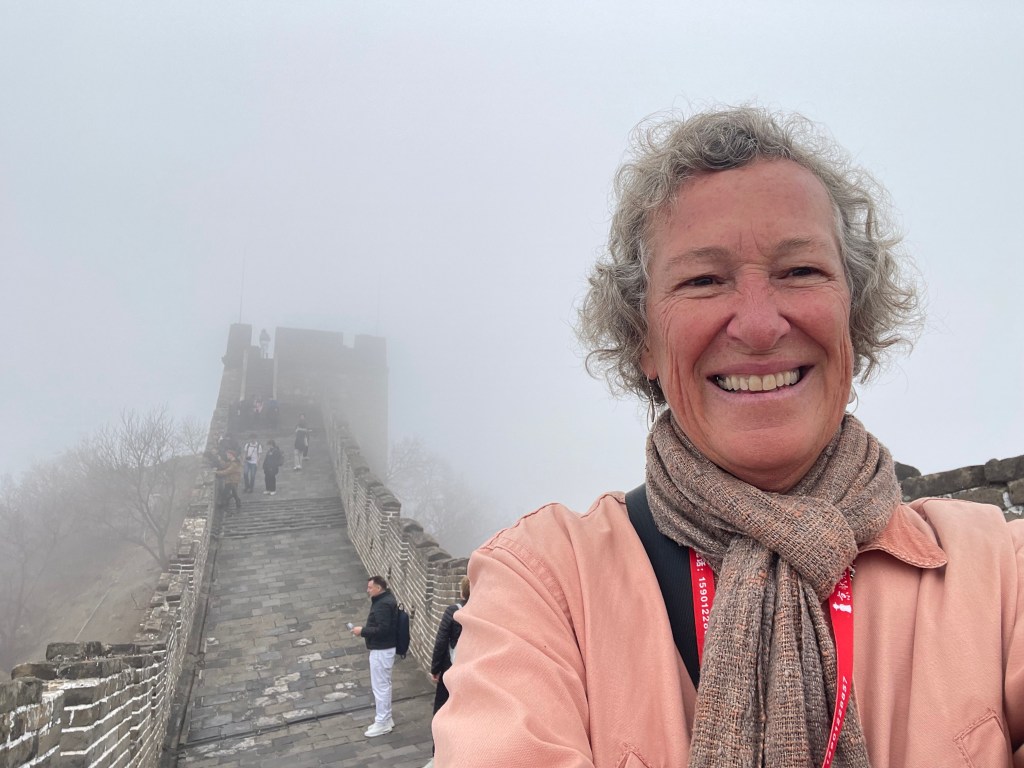
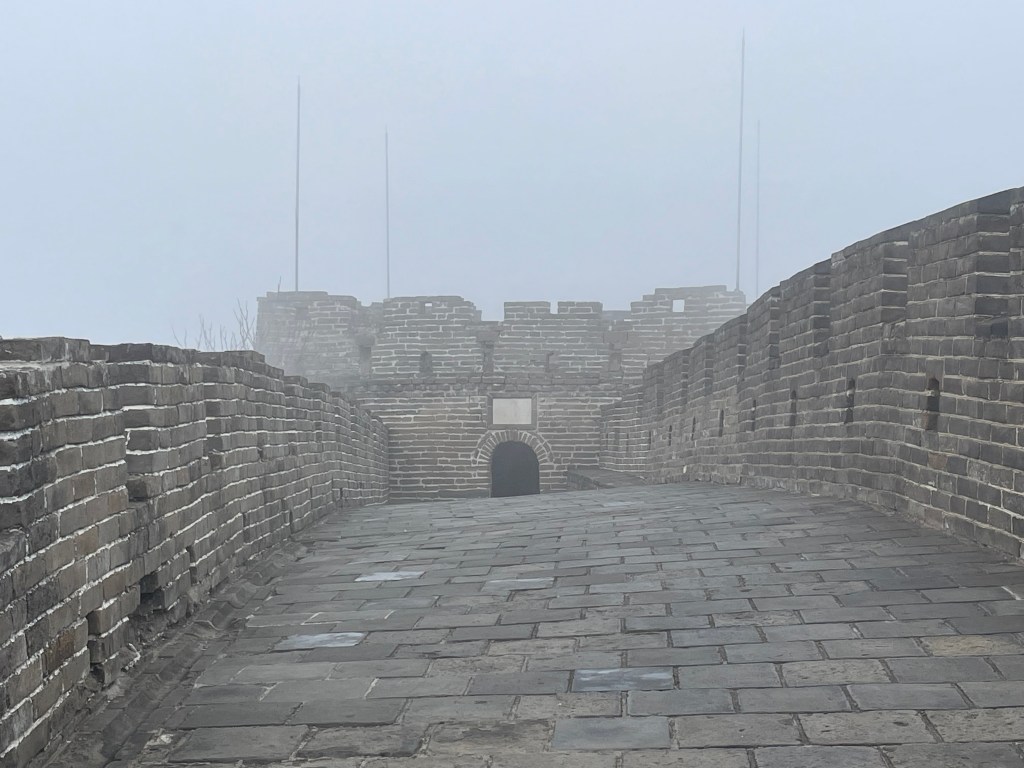
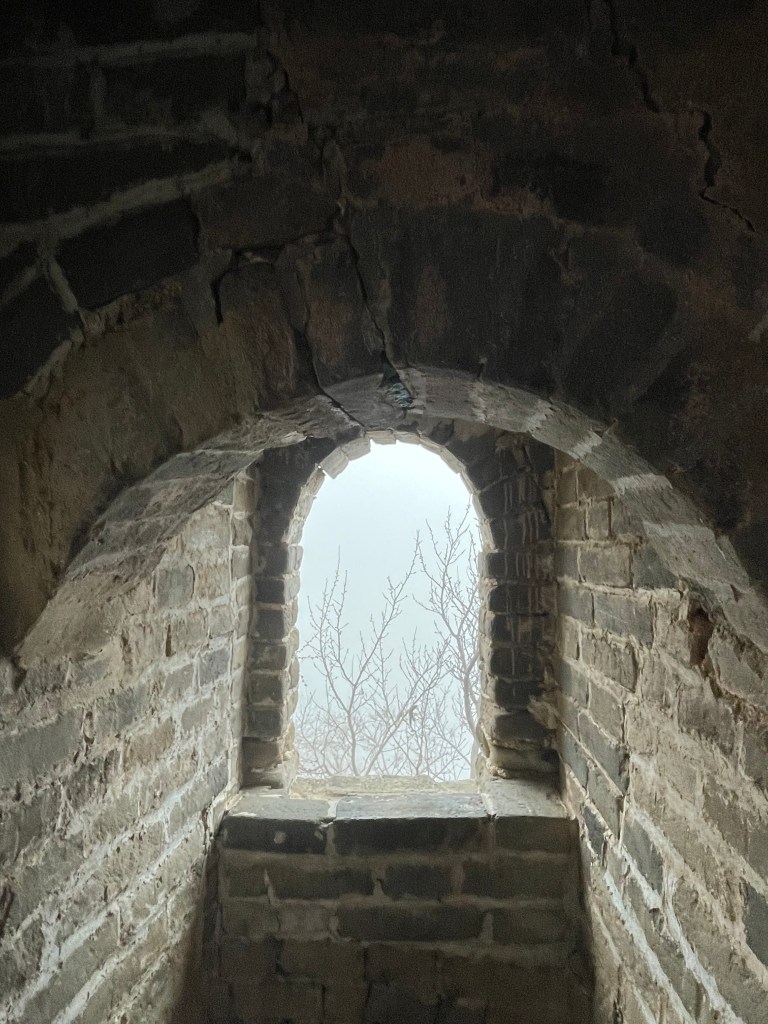
China was one of the major places on my itinerary as I’m hoping to see all of the new Seven Wonders of the World, and the Great Wall is on that list. And now that I’ve seen it, I only have one left to visit – Christ the Redeemer in Rio. A lot of travel blogs will tell you that the Great Wall can be skipped but I disagree. It’s a testament to the lengths man will go to protect themselves. Started in 220 BC, it was added to and fortified until the mid 1500’s to defend China from tribes invading from the north. It was an interesting experience to walk along its undulating pathways, look over its ramparts and shelter in its watch towers. We were encased in fog that day so the views were less than stellar.
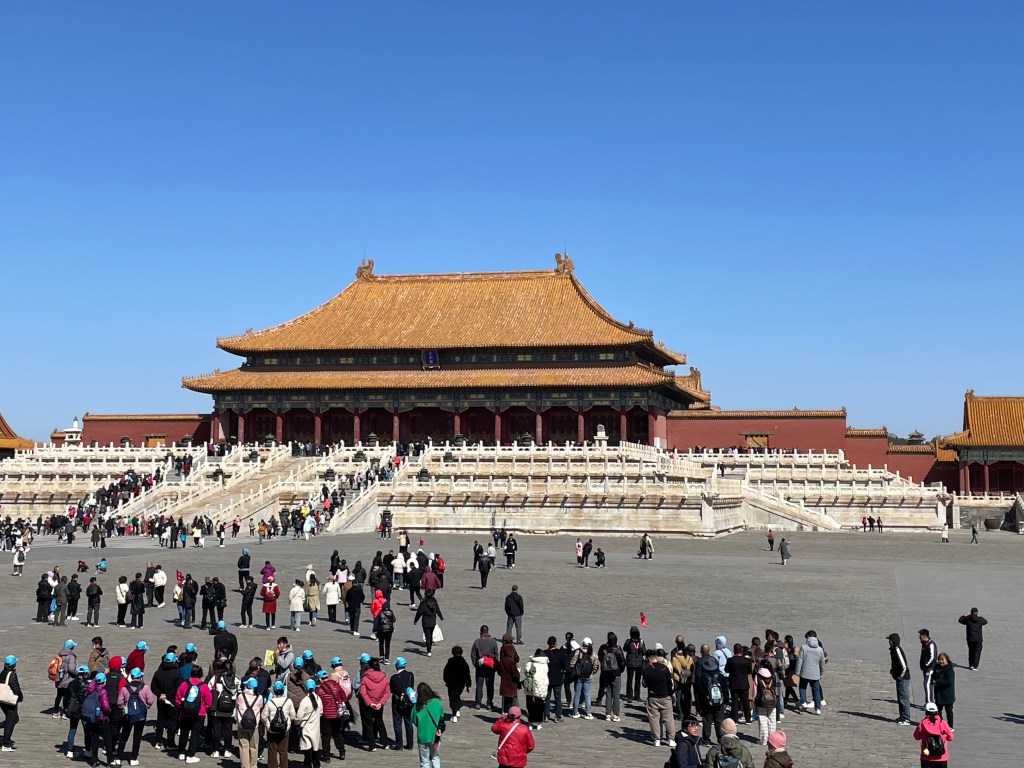
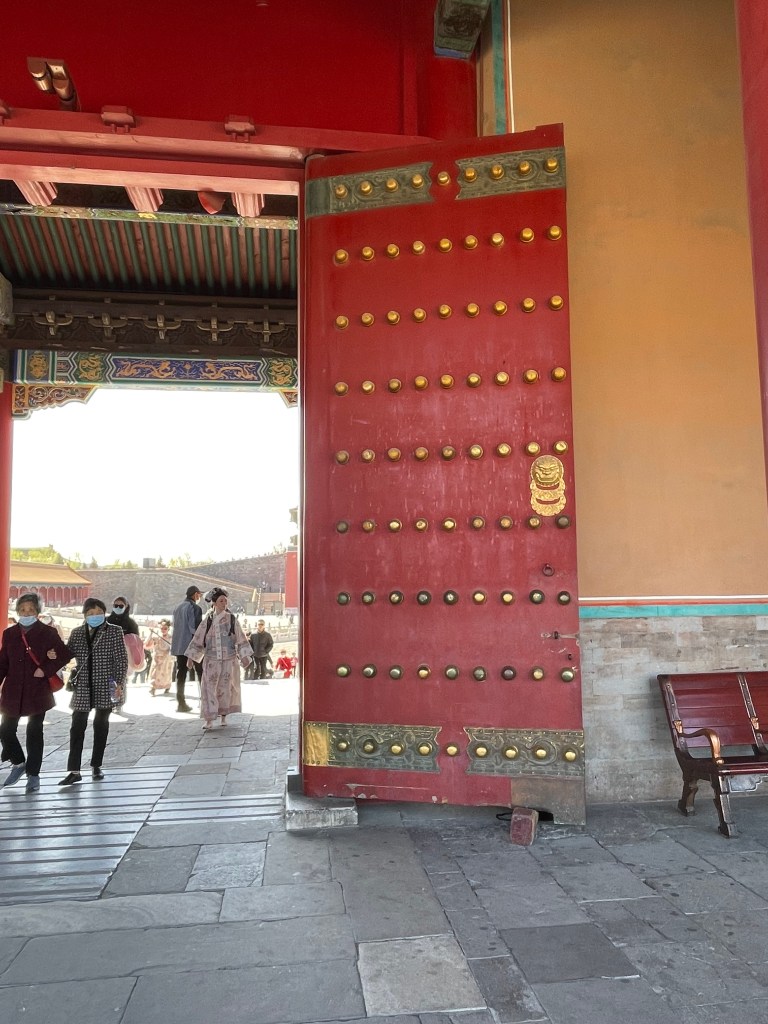
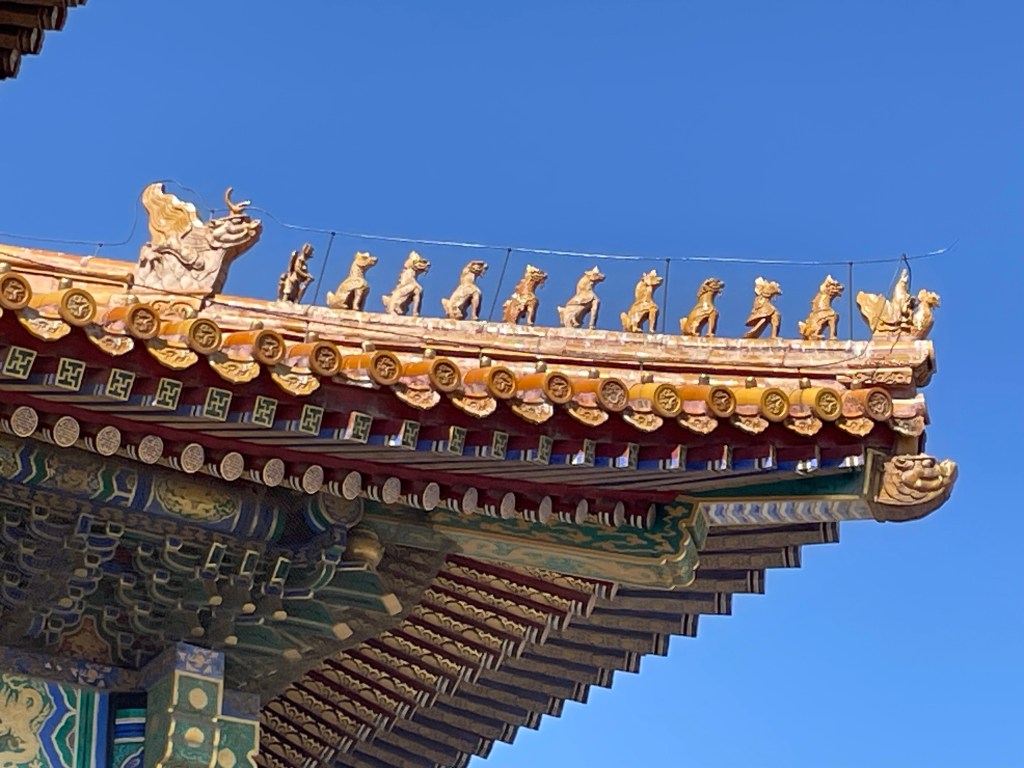
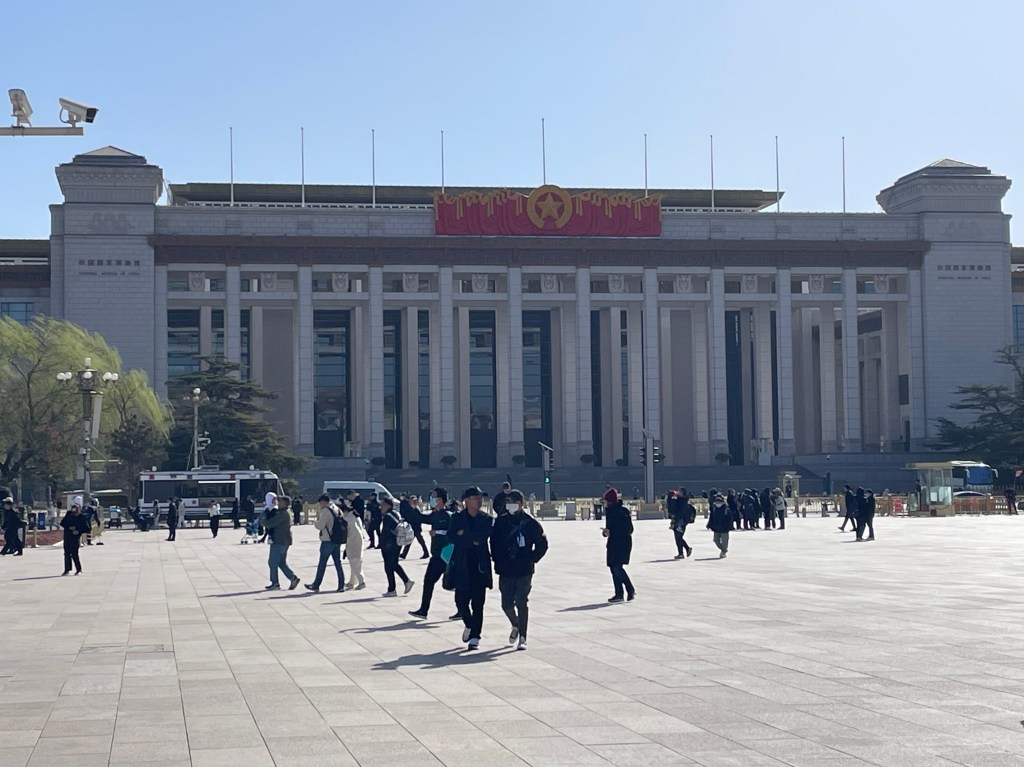
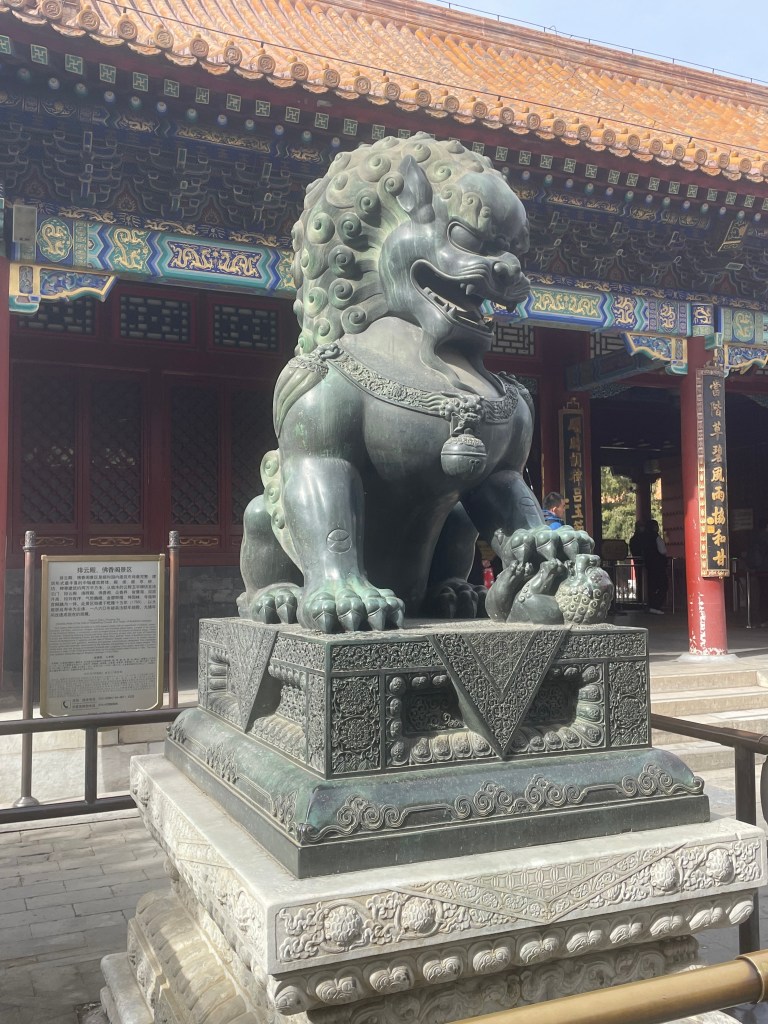
I loved the Forbidden City in Beijing. Built in the early 1400’s, it was the seat of power in China for centuries. A complex community, with courtyards dedicated to public events, state business, private audiences and living quarters for the emperor, empress, concubines and their families. It’s the largest palace complex in the world – twice the size of the Vatican. The buildings are beautiful- quintessential Chinese construction with golden roofs, red walls and lots of iconography. Having just finished a book that partially took place there, I could easily visualize the daily life and intrigue that occurred within its confines. Tinnanman Square, just out side the city walls is a huge plaza, though only half the size of the Forbidden City. Each morning thousands of people come to watch the Chinese flag raised.

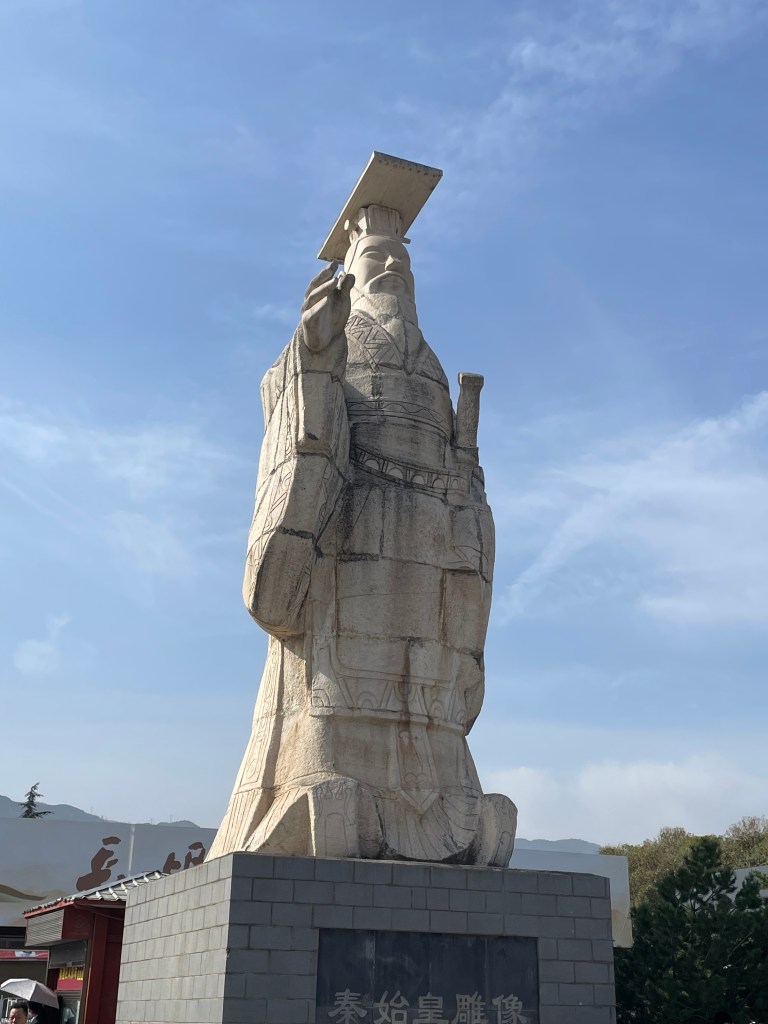
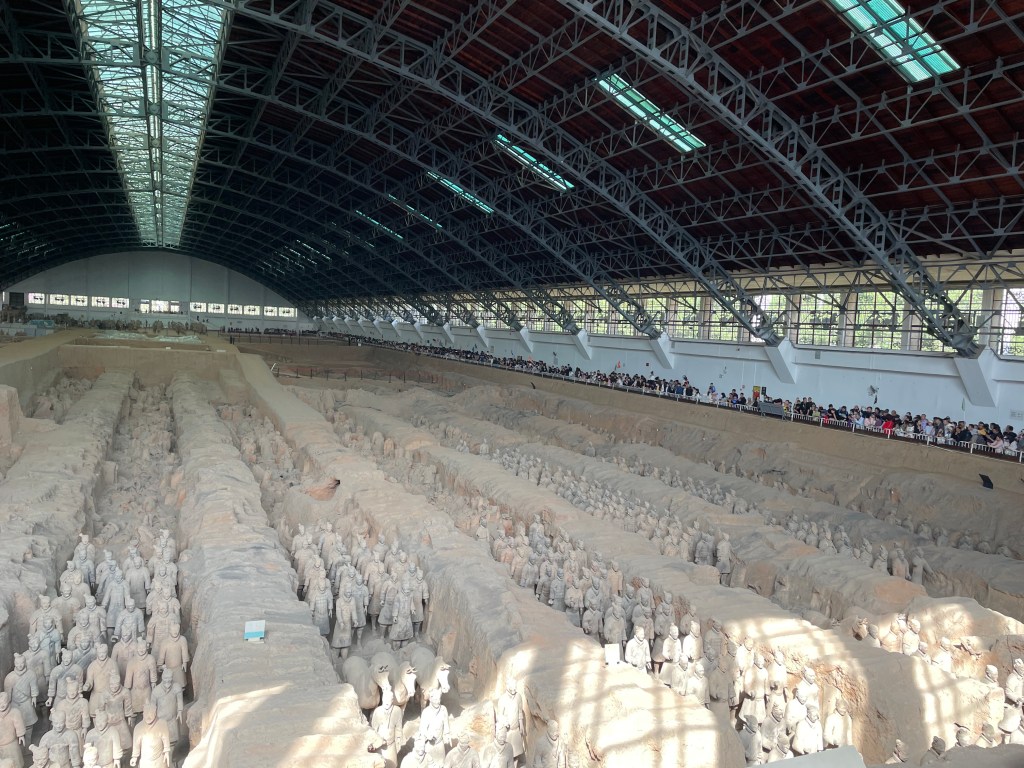
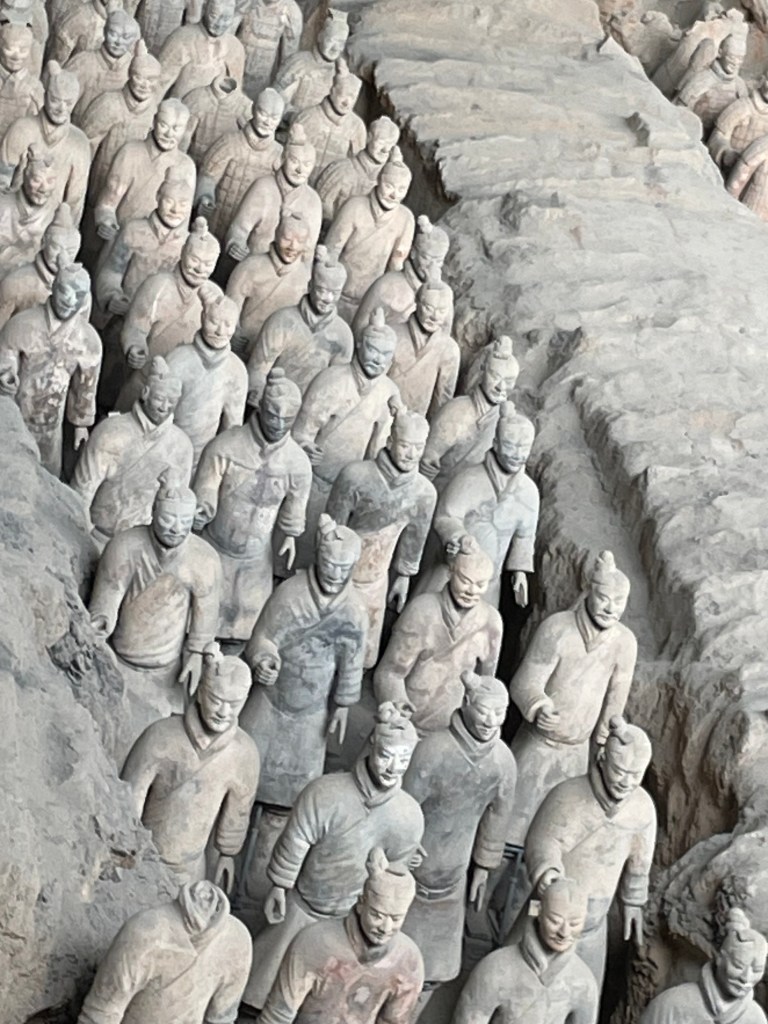
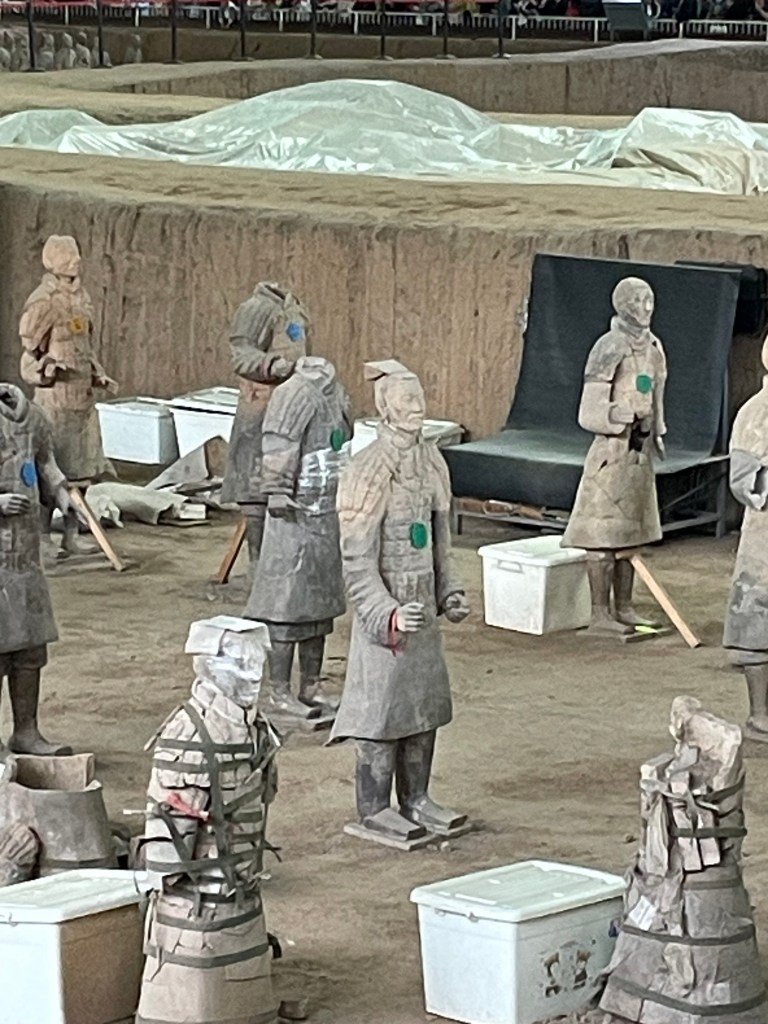
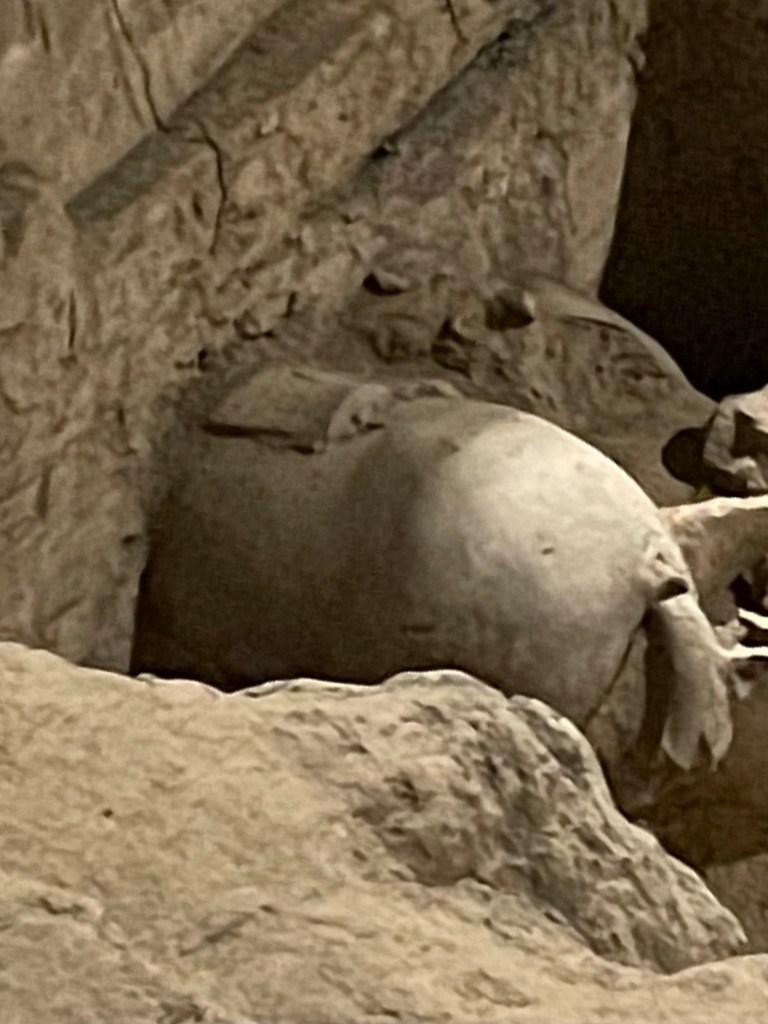
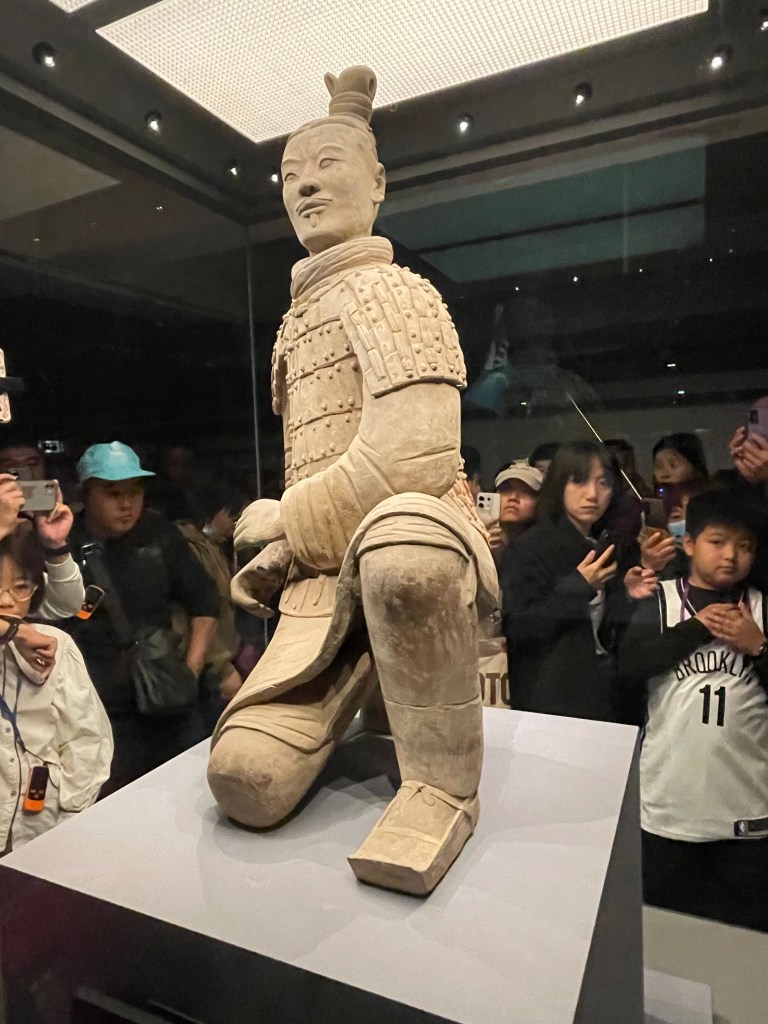
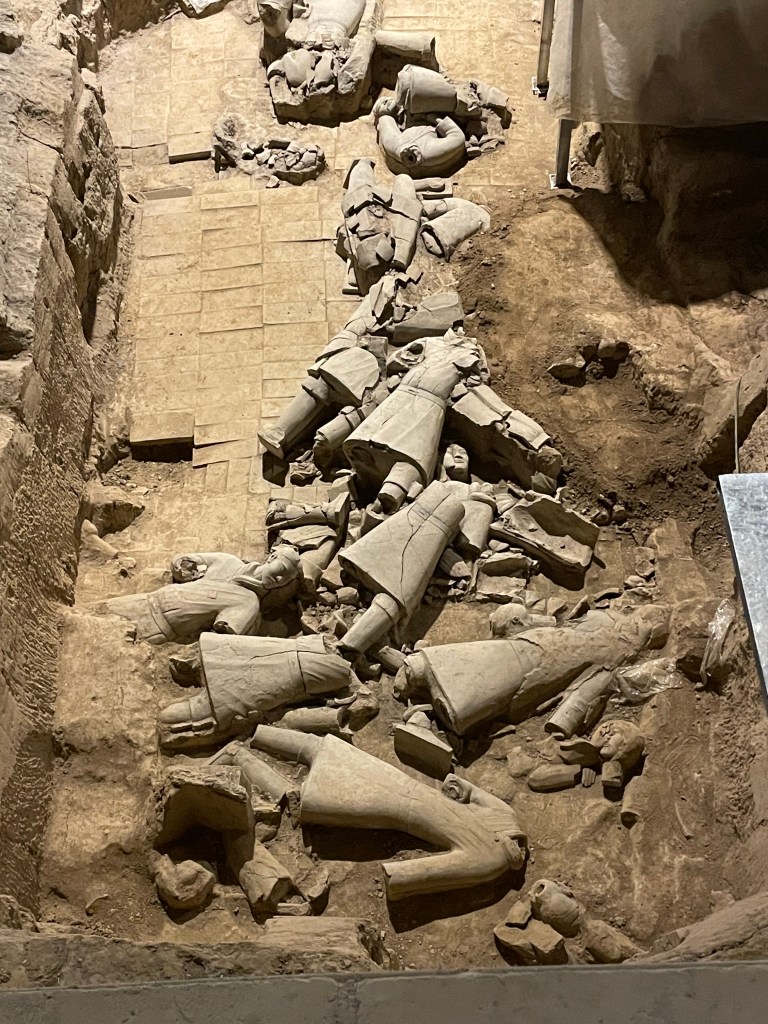
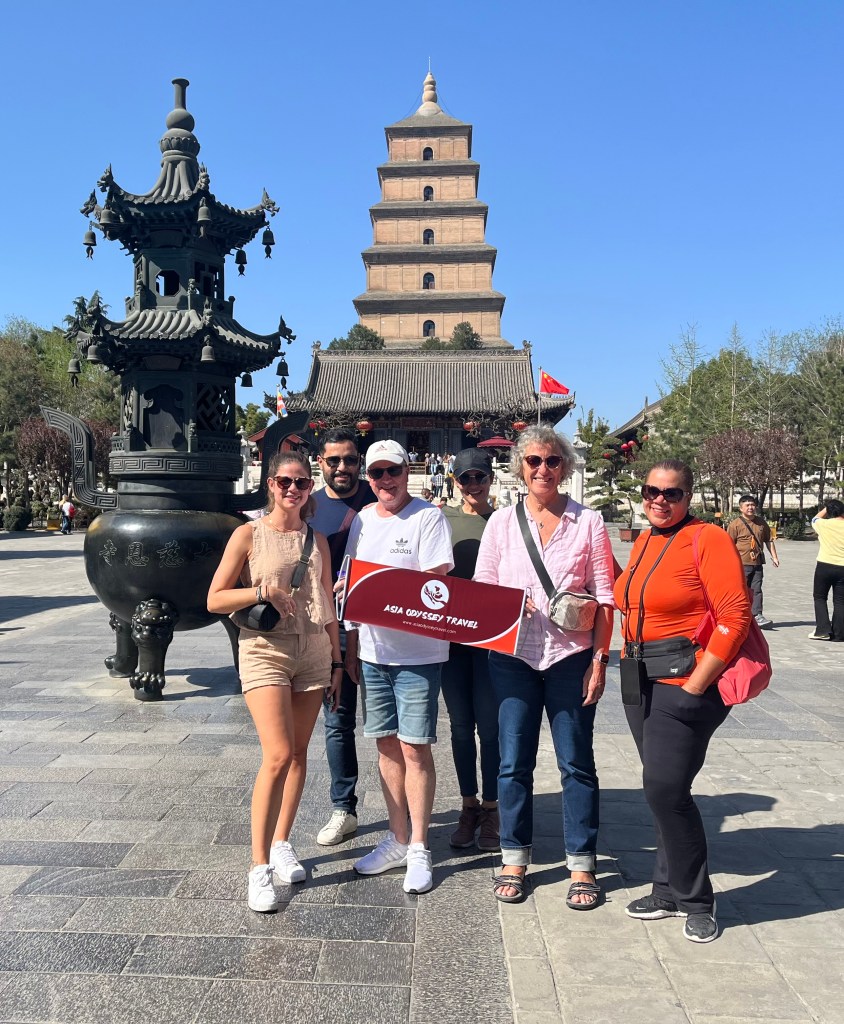
The terra cotta warriors in Xian were amazing. Not only were there so many of them – 9,000 warriors plus chariots, horses and cavalry, but each one is unique with individual features, clothing, and hair styles. Created in 248 BC, they were buried for over 2000 years before being discovered by four farmers in 1974. Only one was found whole, most have been painstakingly put back together from piles of rubble found under the dirt. Qin Shi Huang, who the terra cotta warriors were built to protect in his afterlife, became the first emperor of China after unifying the 7 kingdoms. He ruled from Xian, the first capital of China. It was also the first city in the world with a population of one million people, including 50,000 foreigners. This is where the Silk Road started 2,000 years ago. The city burned in the 12th century so that was when the capital was moved to Beijing.
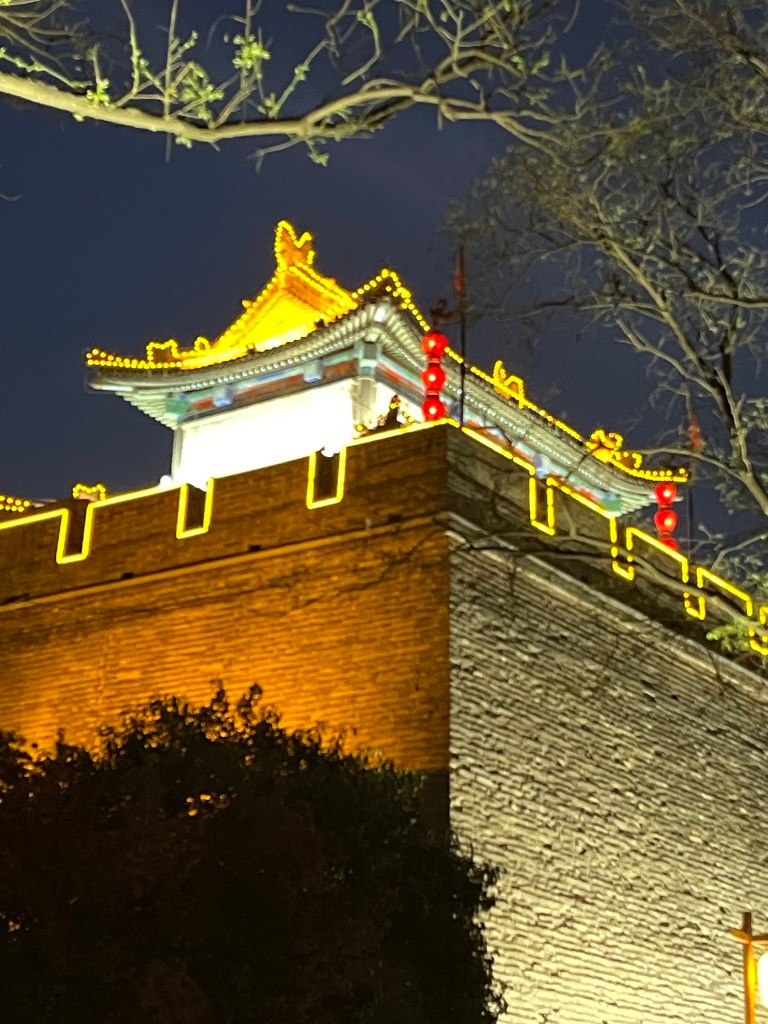
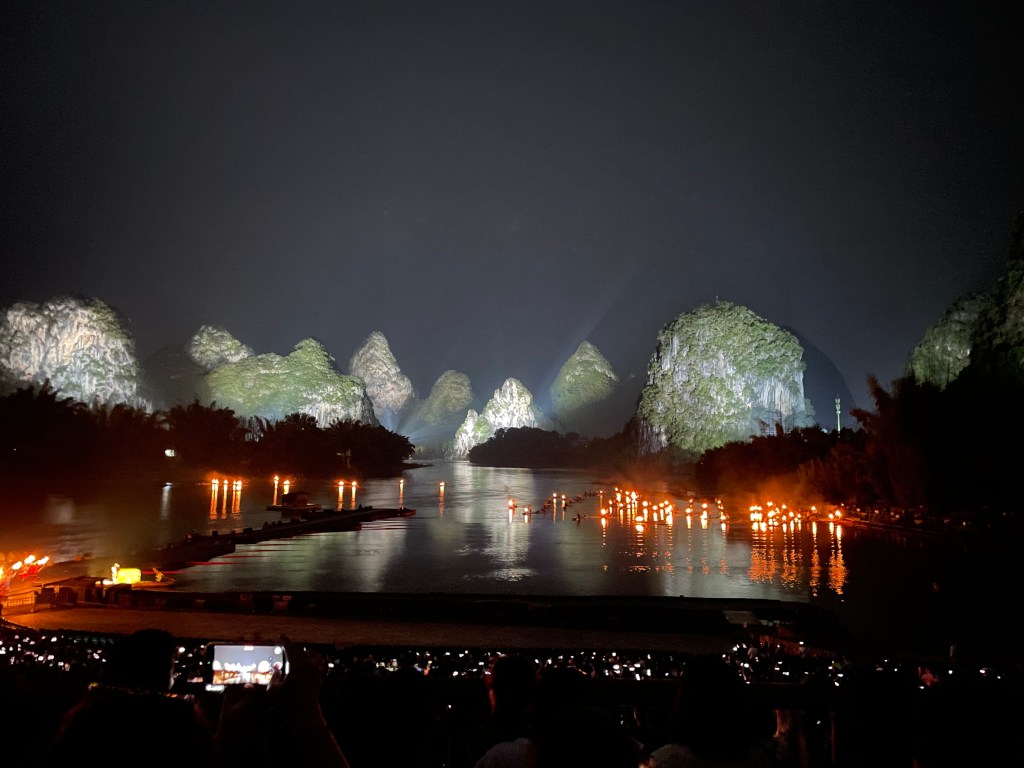
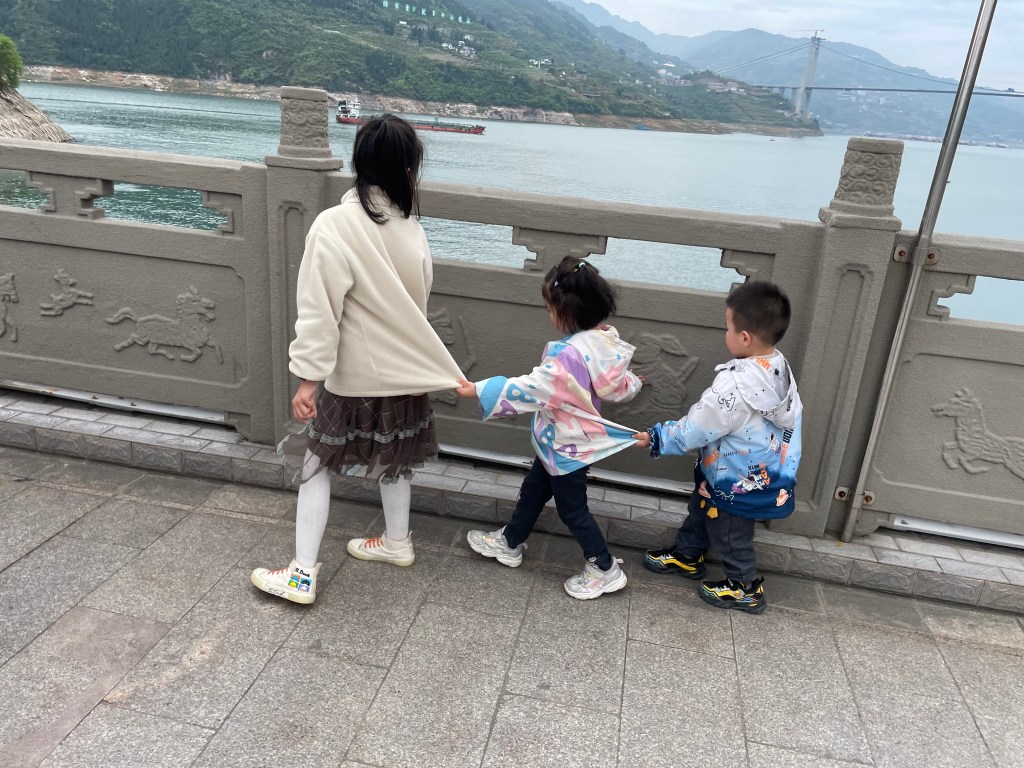
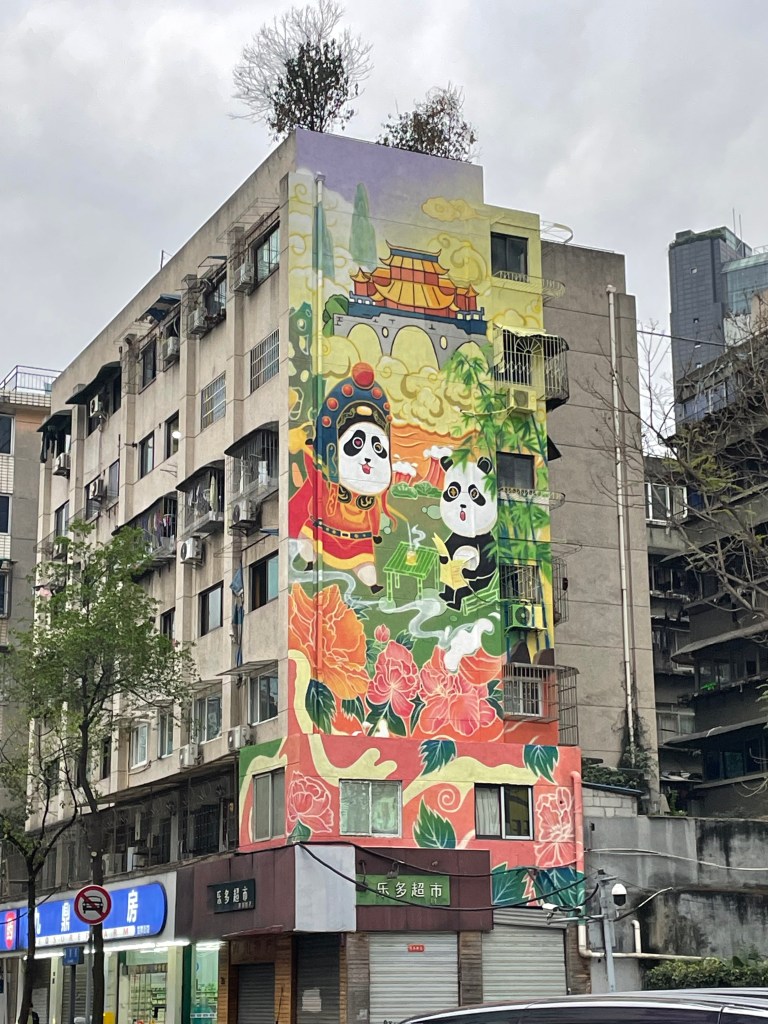
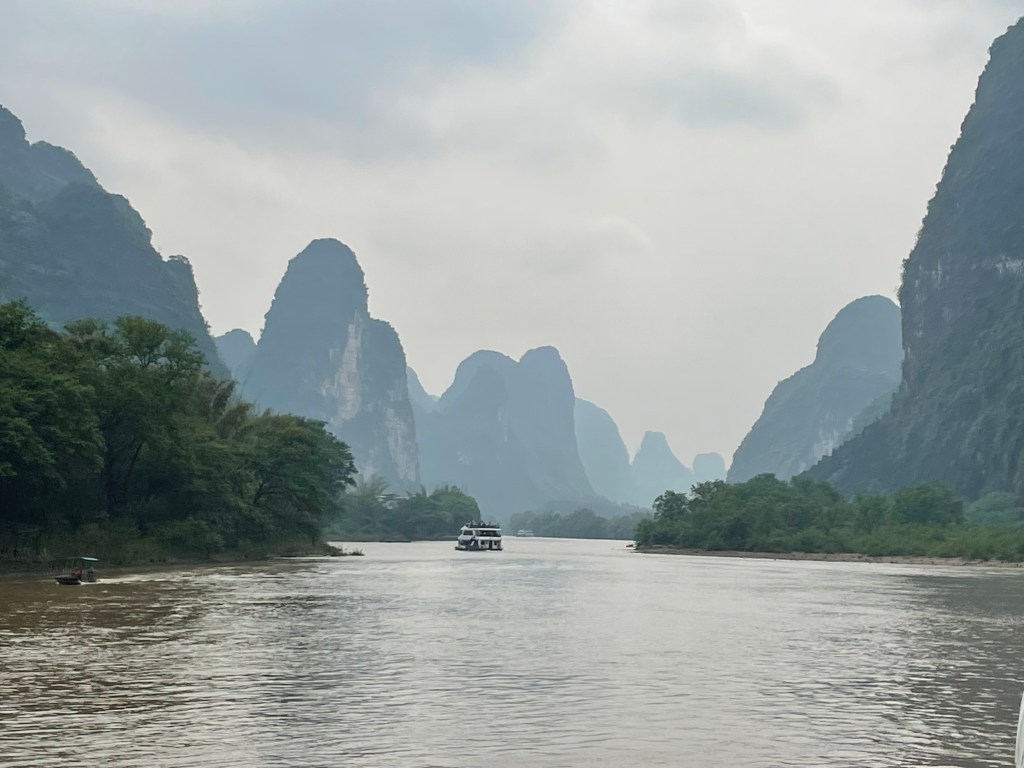
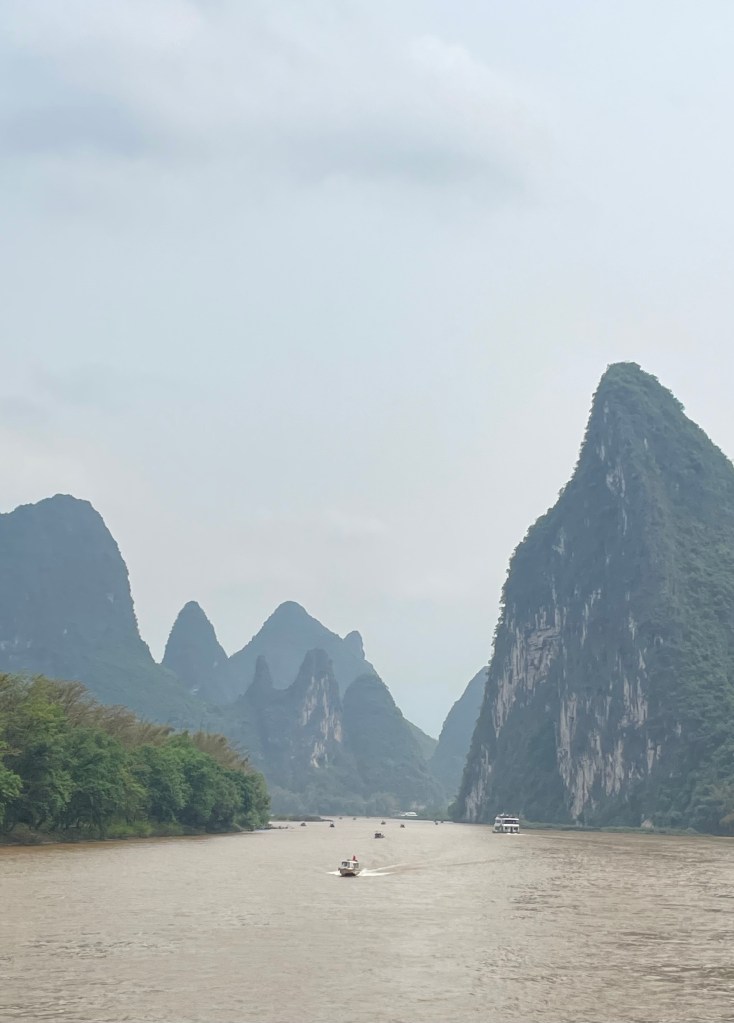
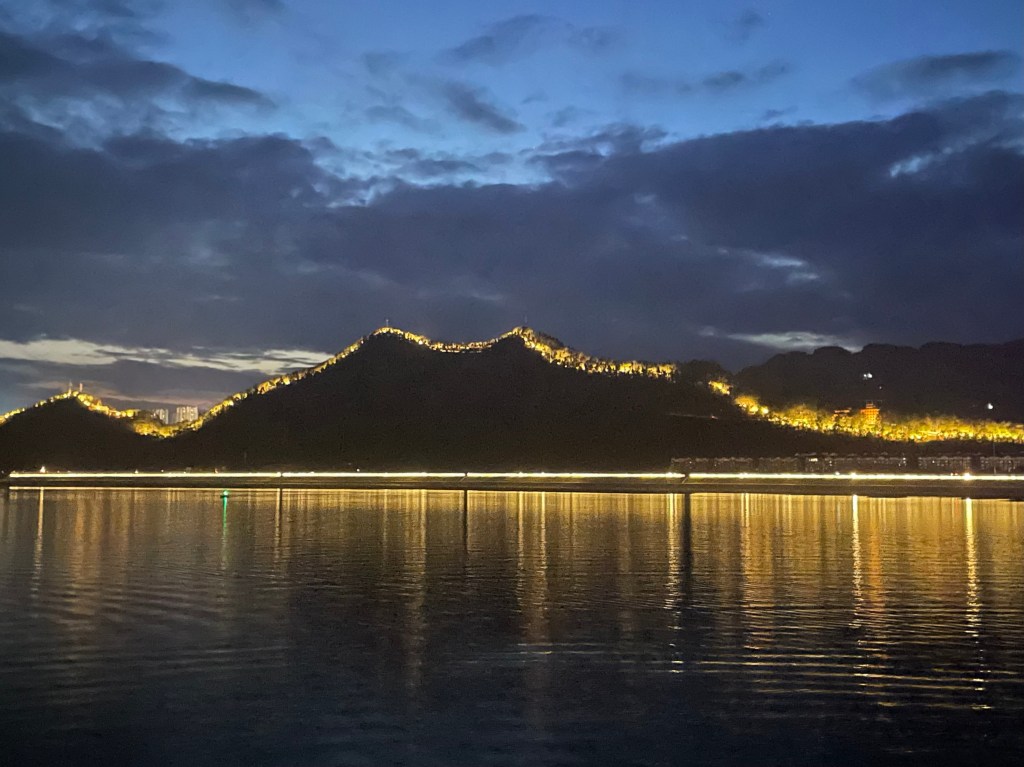
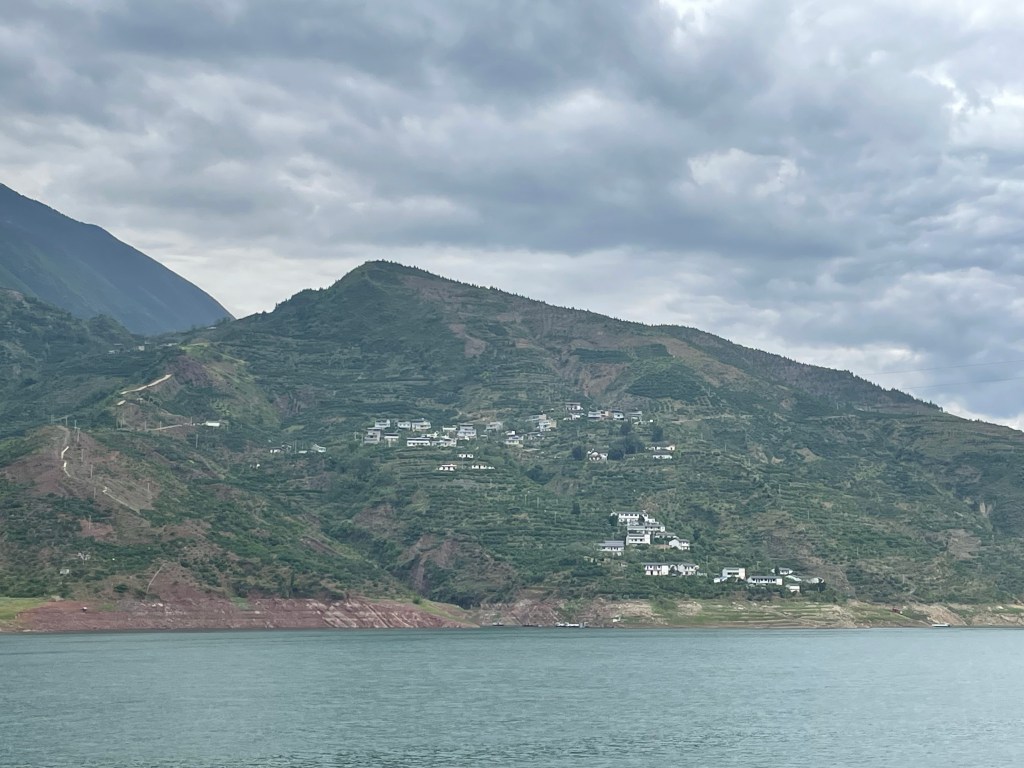
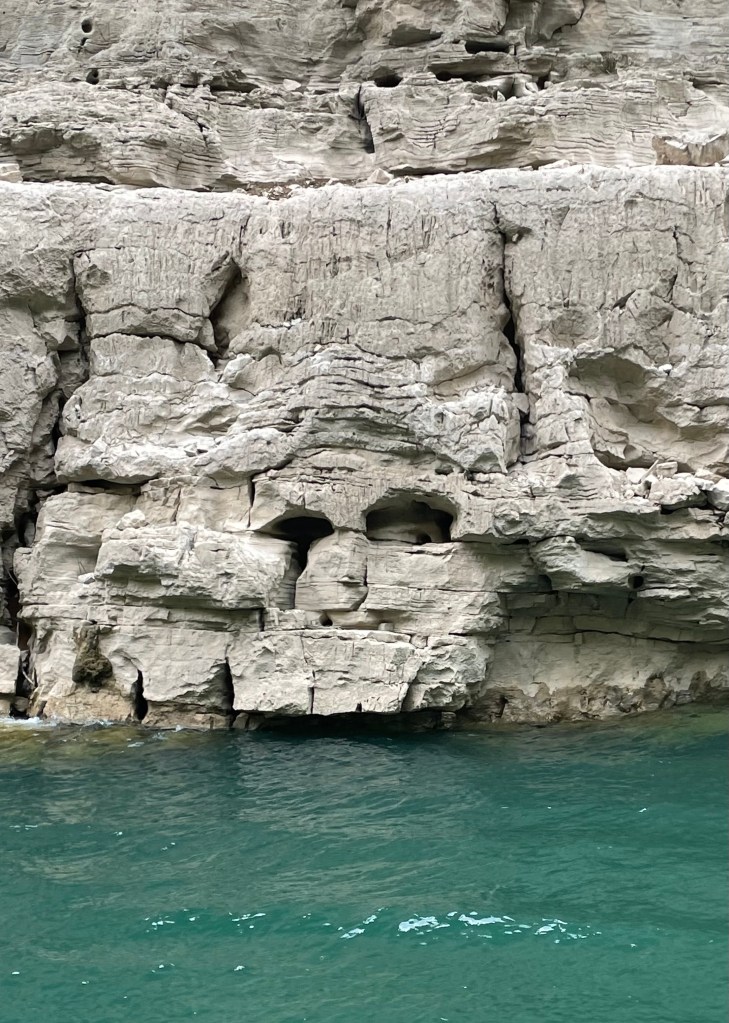
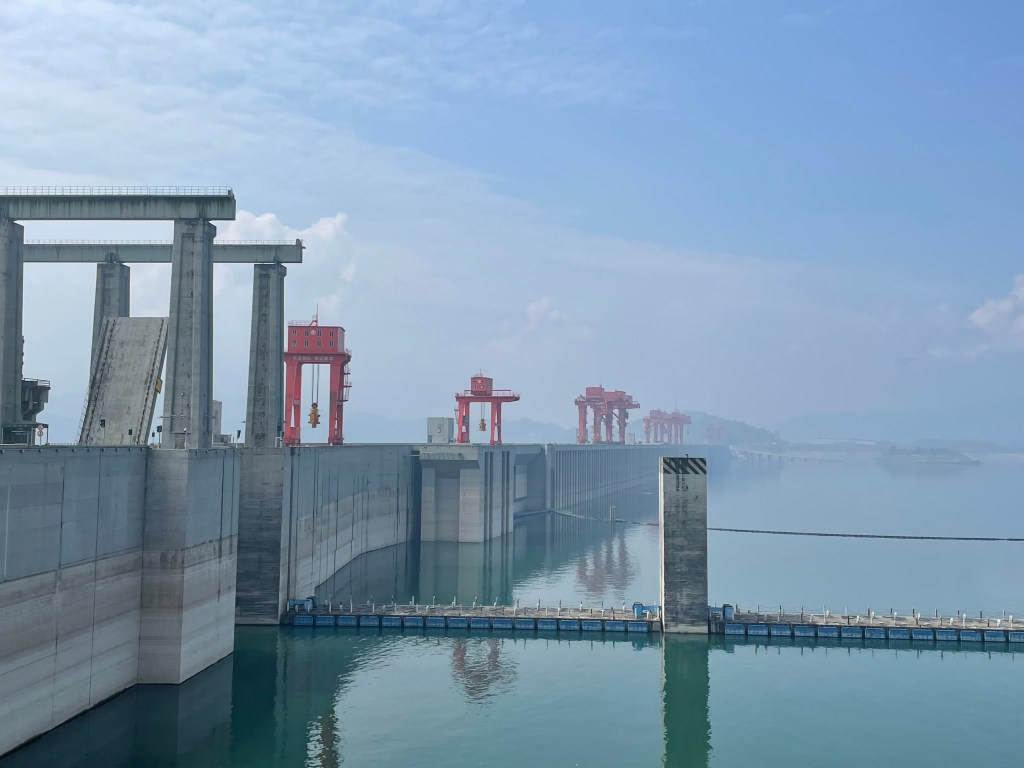
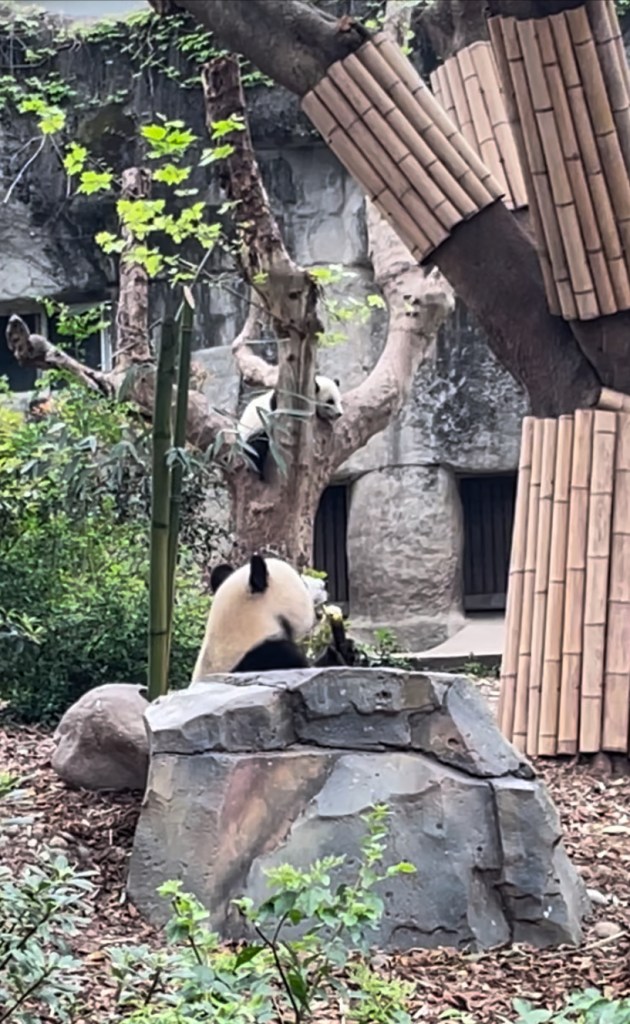
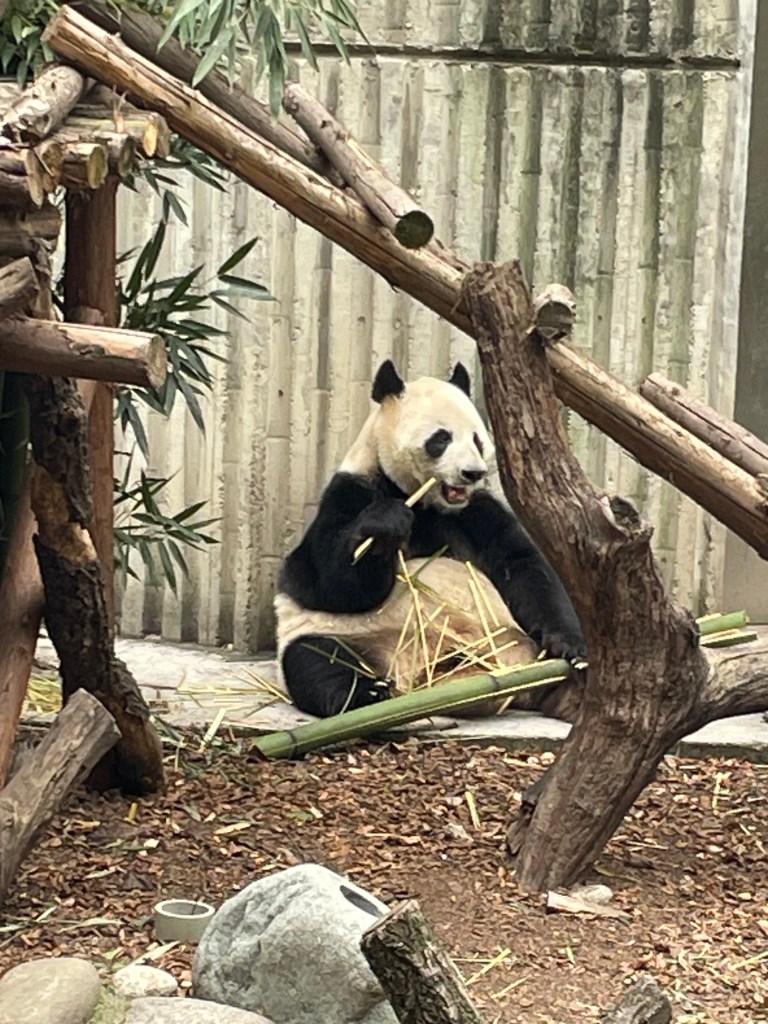
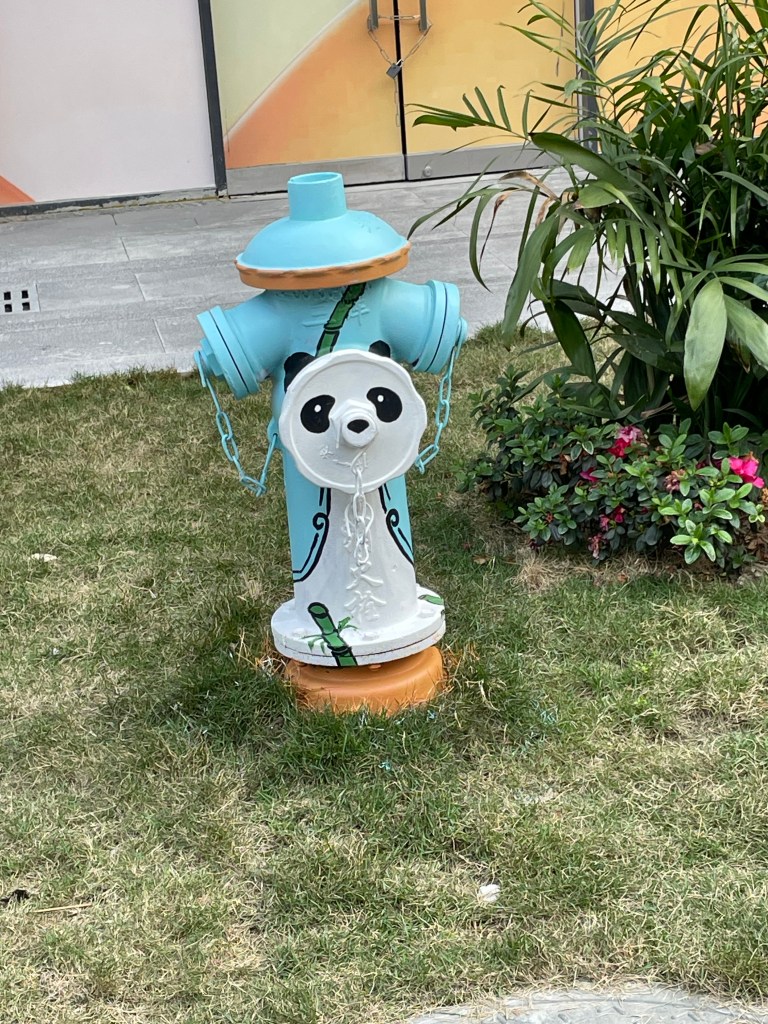
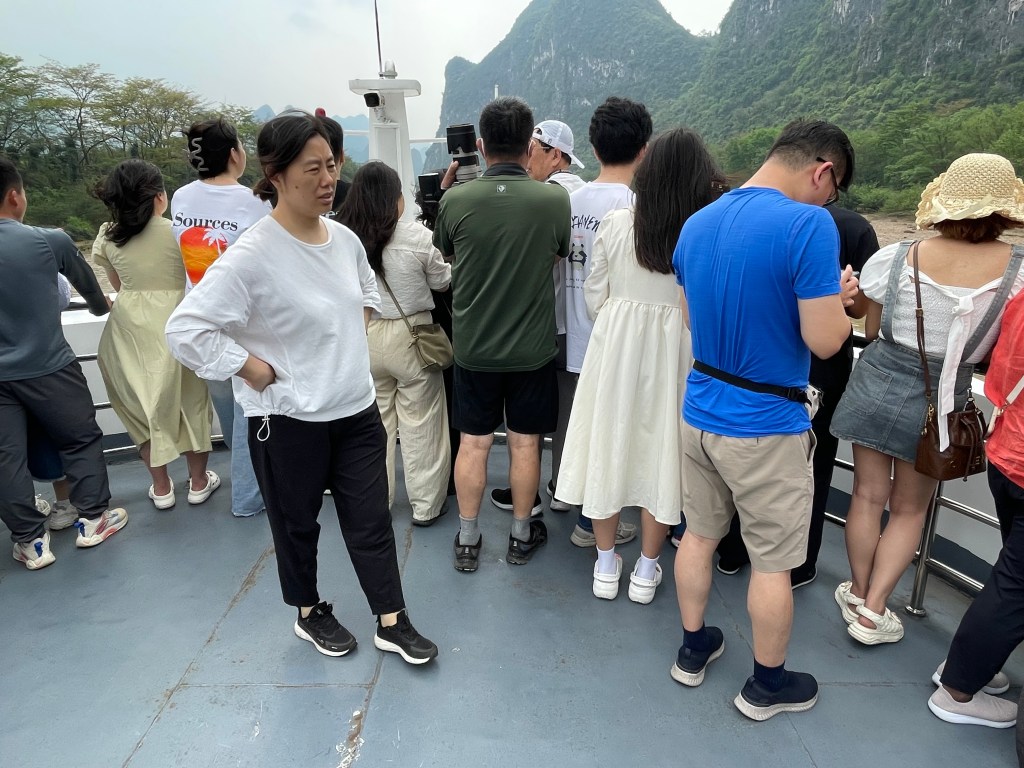
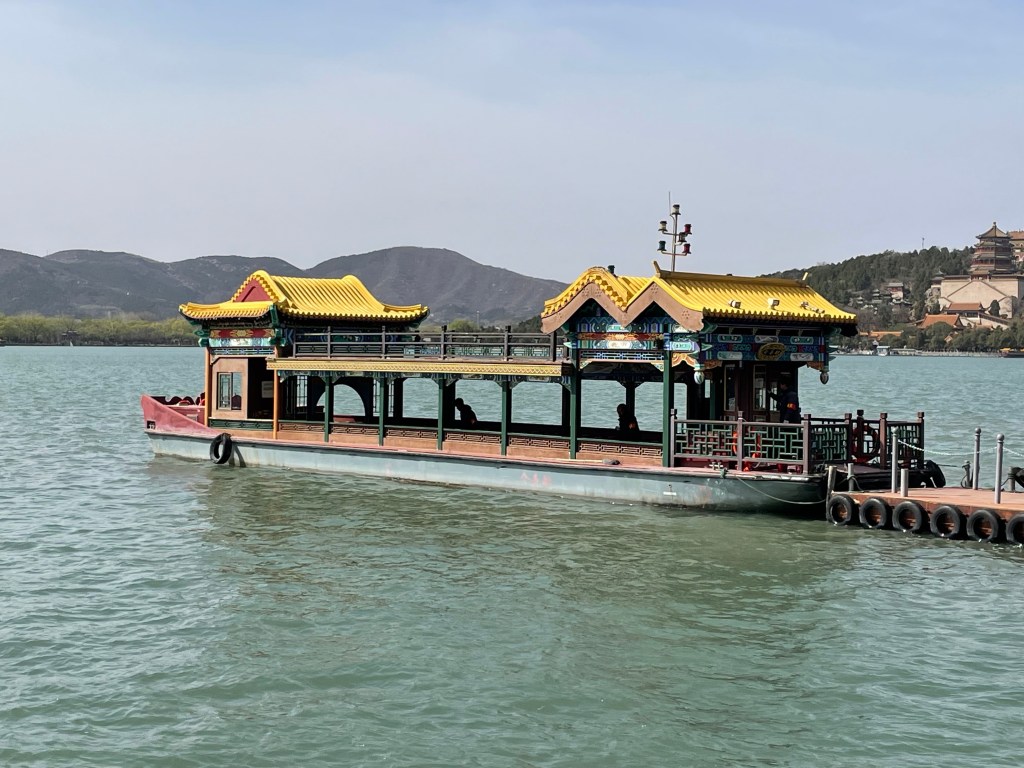
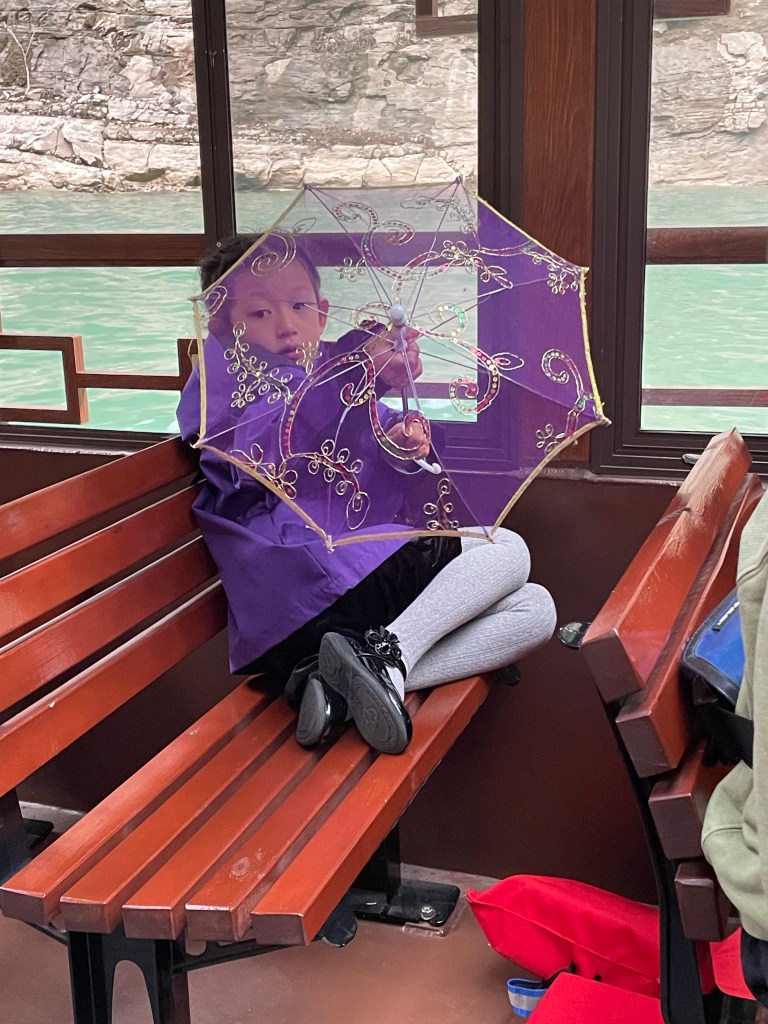
I took two river cruises in China. One, a four hour ride from Guilin to Yangshuo, to view the peculiar peaks and strange rocks on both sides of the Li River. The other, three days on the Yangtze River. The banks here were covered with pine trees and terraced farms and villages. We stopped at the Three Gorges Dam, the most productive hydroelectric dam in the world. Cruise ships used to go through the locks at the dam, but with wait times of up to 200 hours, most turn around. I visited the panda conservation area near Chengdu to observe the cute creatures as they slept, ate and played.

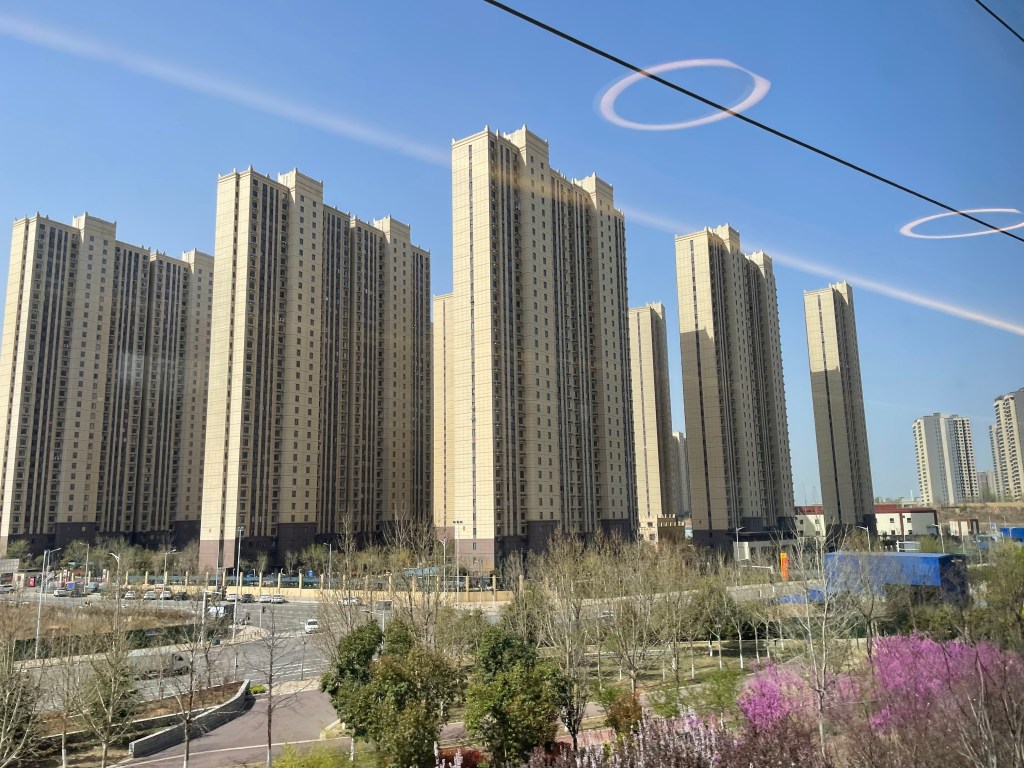
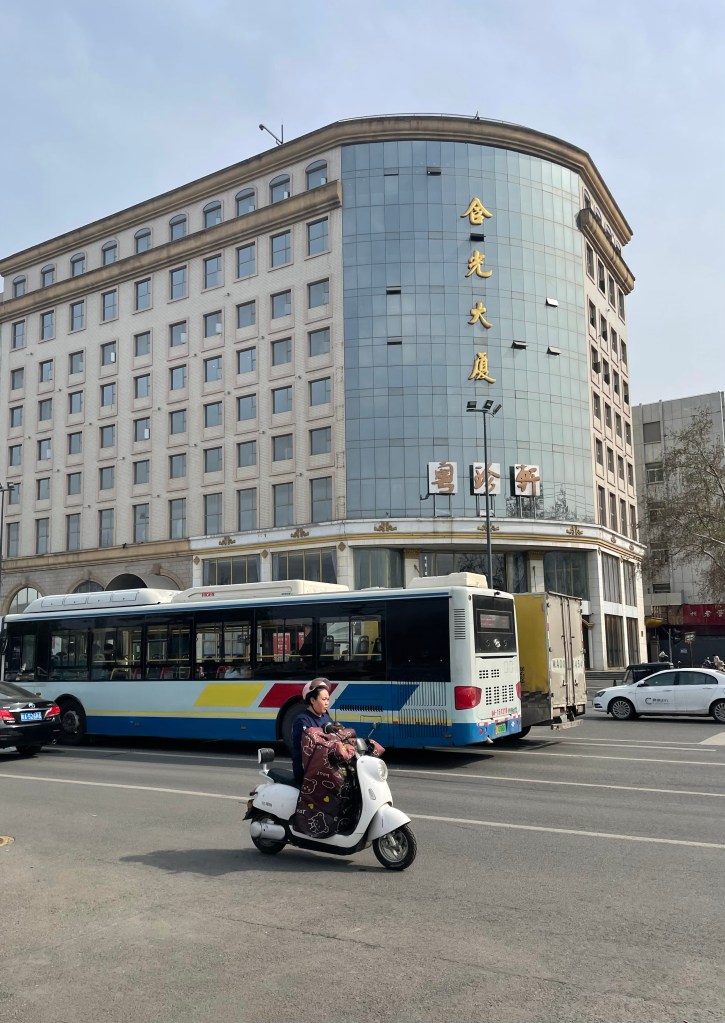
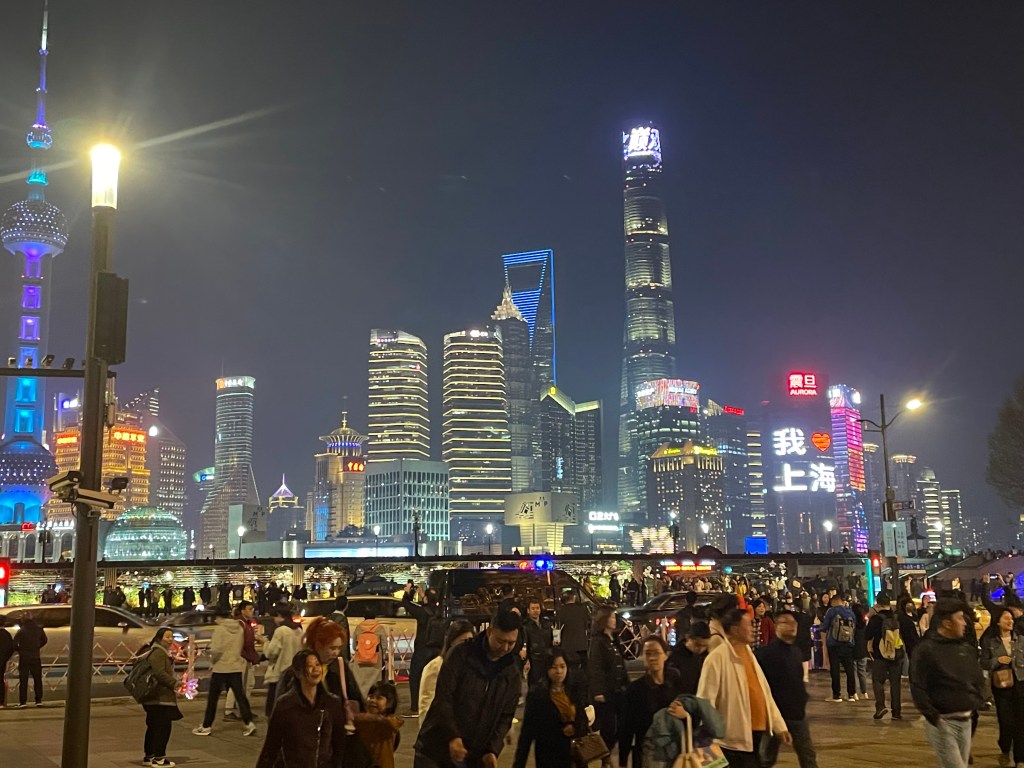
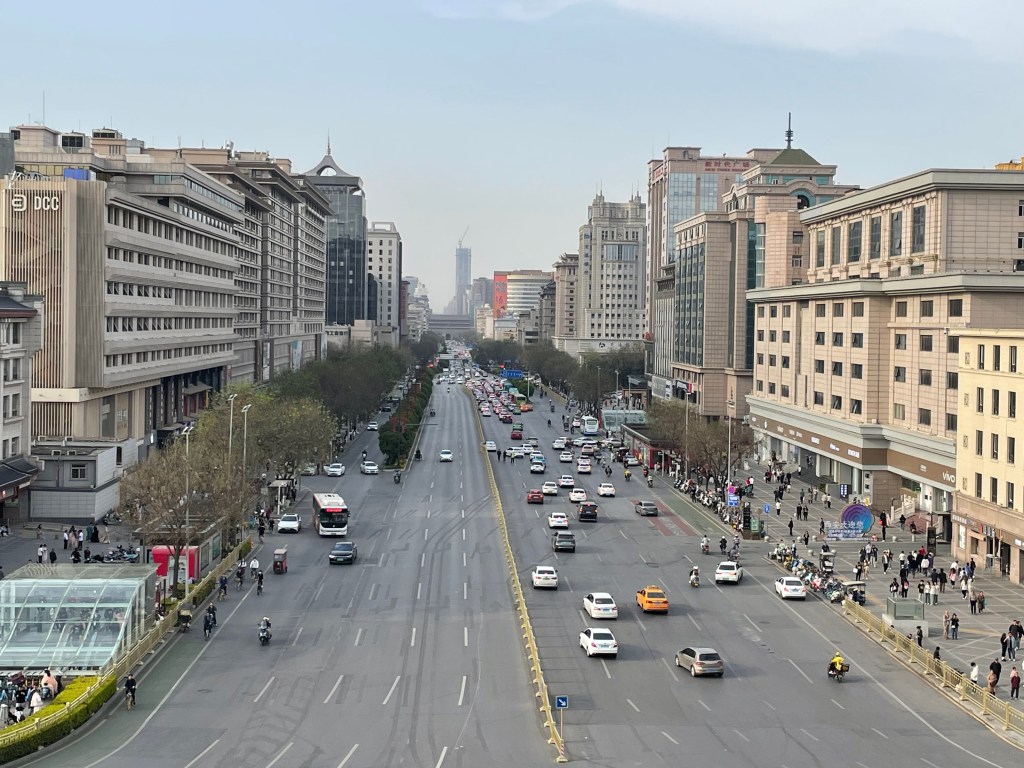
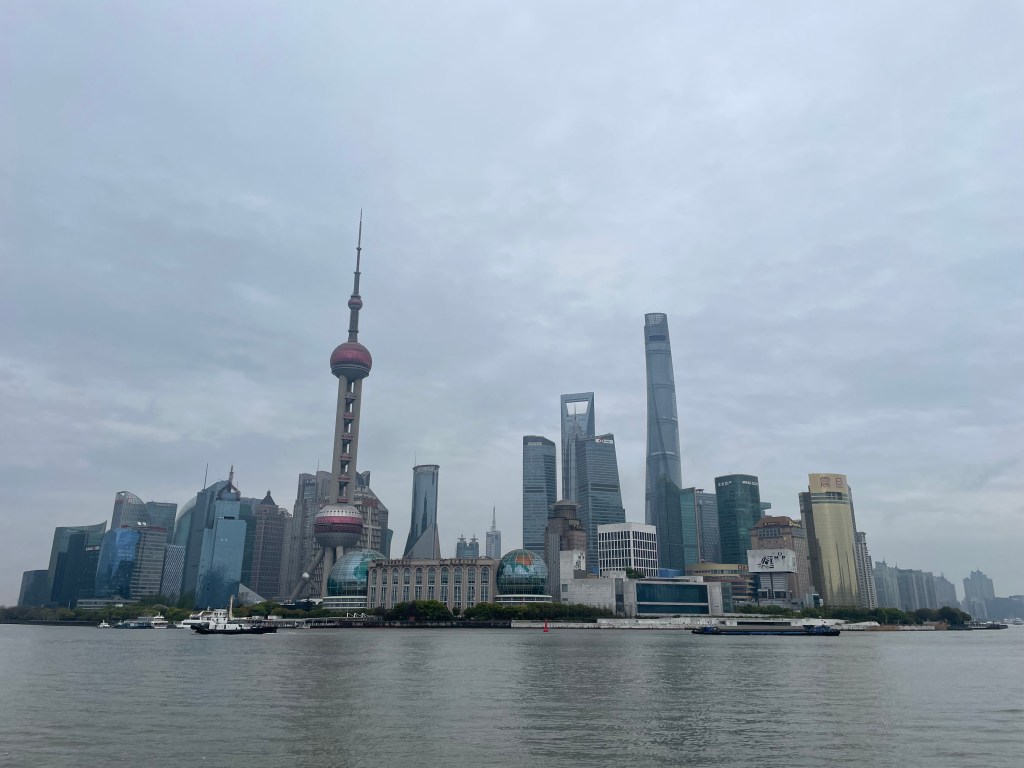
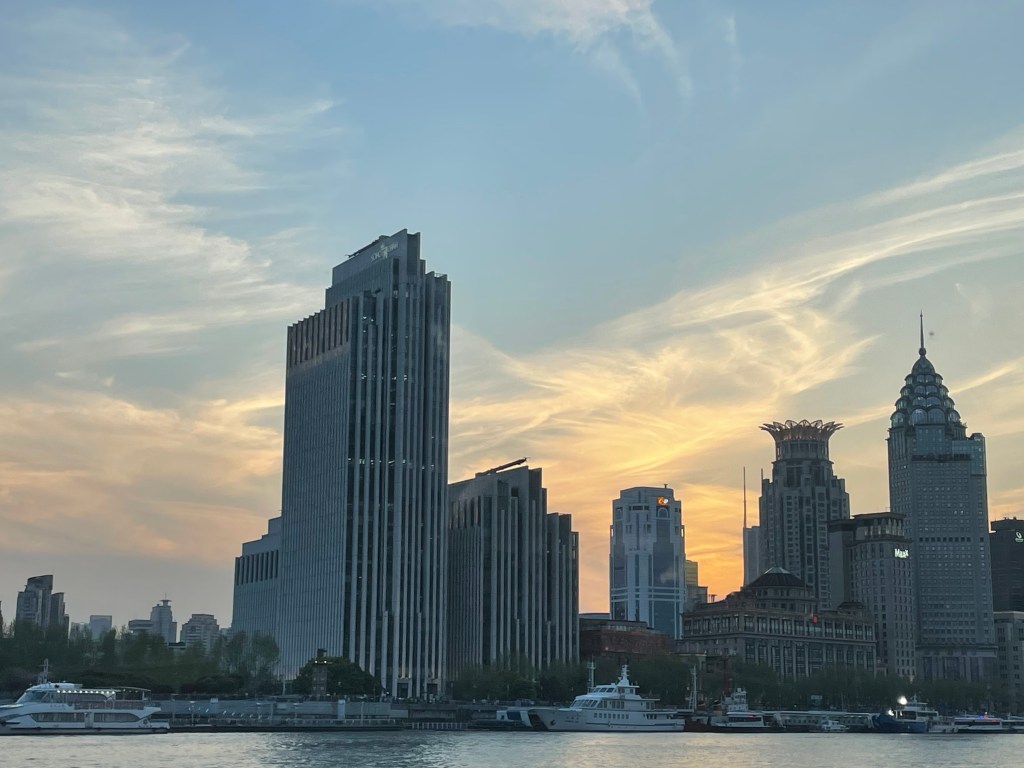
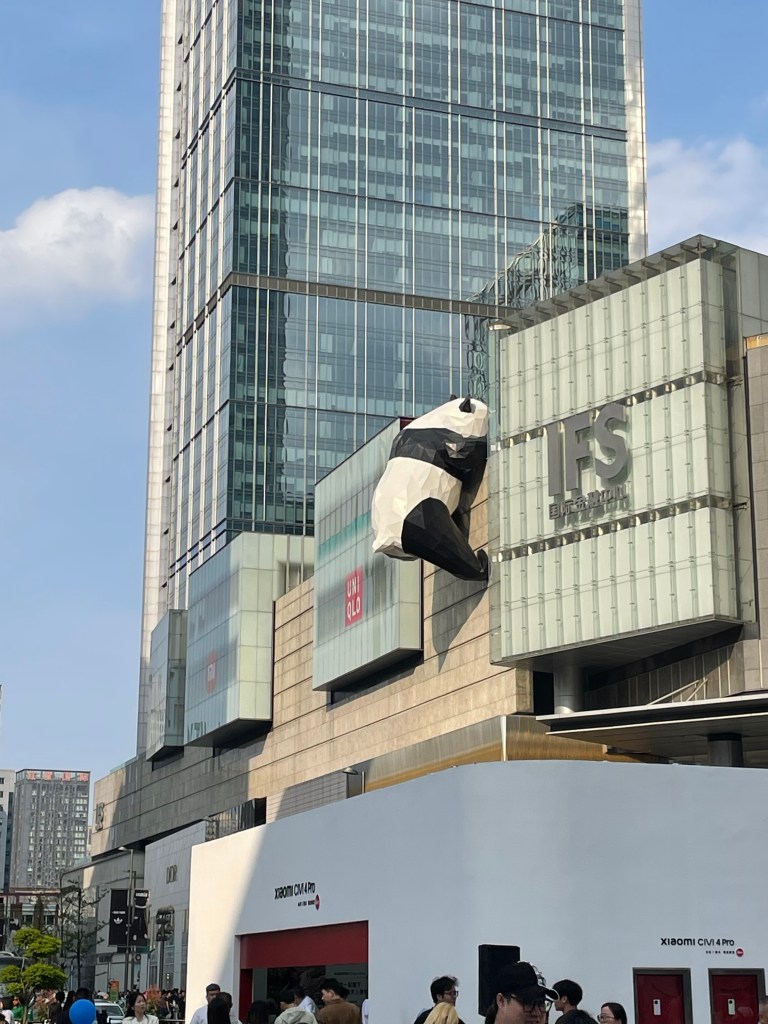
Several guides asked me if I was surprised to see that China had large sophisticated metropolitan areas, as it seems that many tourists expect to see a very rural country. I assumed that as a world power, China would have large cities just like any other developed country. I was actually bewildered by their question. But they went on to tell me that China looks very different today than it did 25 to 30 years ago and urbanization is relatively new. Now, the quintessential Chinese structure is a 30 to 60 story high-rise apartment building. They’re present not just in the major urban areas but also in most of the cities and towns I passed while on the train. To me, the buildings are unappealing with little or no architectural aesthetic. However, one of my fellow travelers, suggested that inside, each has been made into a unique home, reflecting that occupant’s taste. In Beijing (pop 22 million) and Shanghai (pop 30 million), a 1,000 square foot apartment can cost close to $3 million. In smaller cities such as Chengdu- 10 million people, they may only cost $750,000. Shanghai has the third tallest building in the world and China has 6 of the 10 tallest structures.
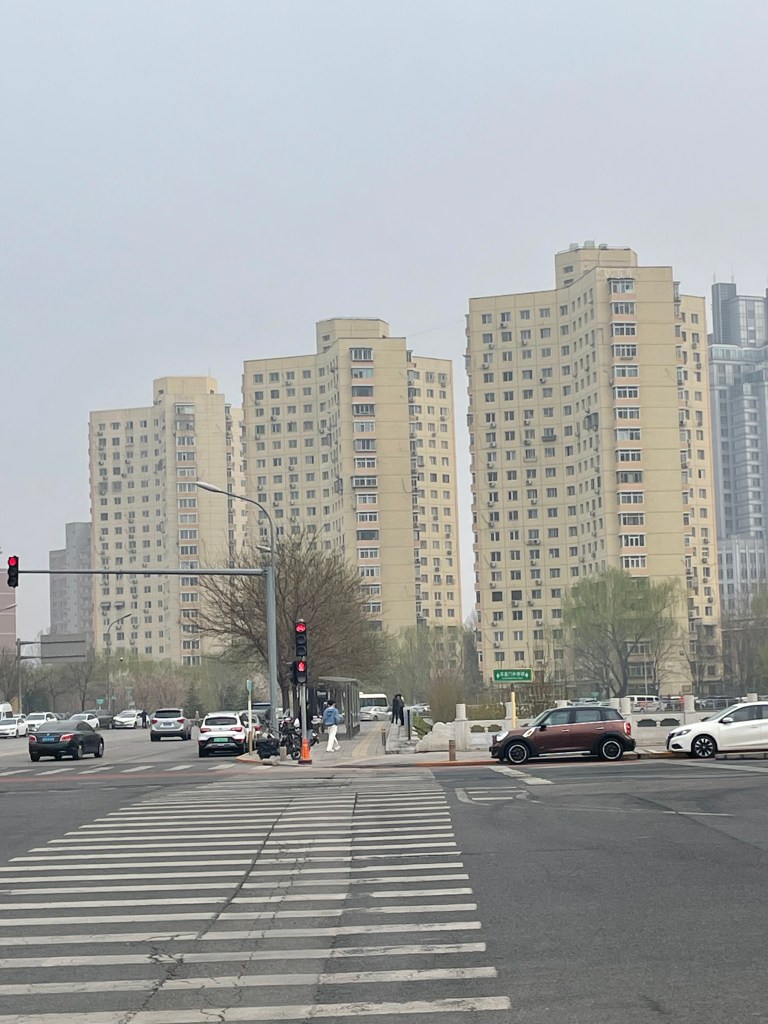
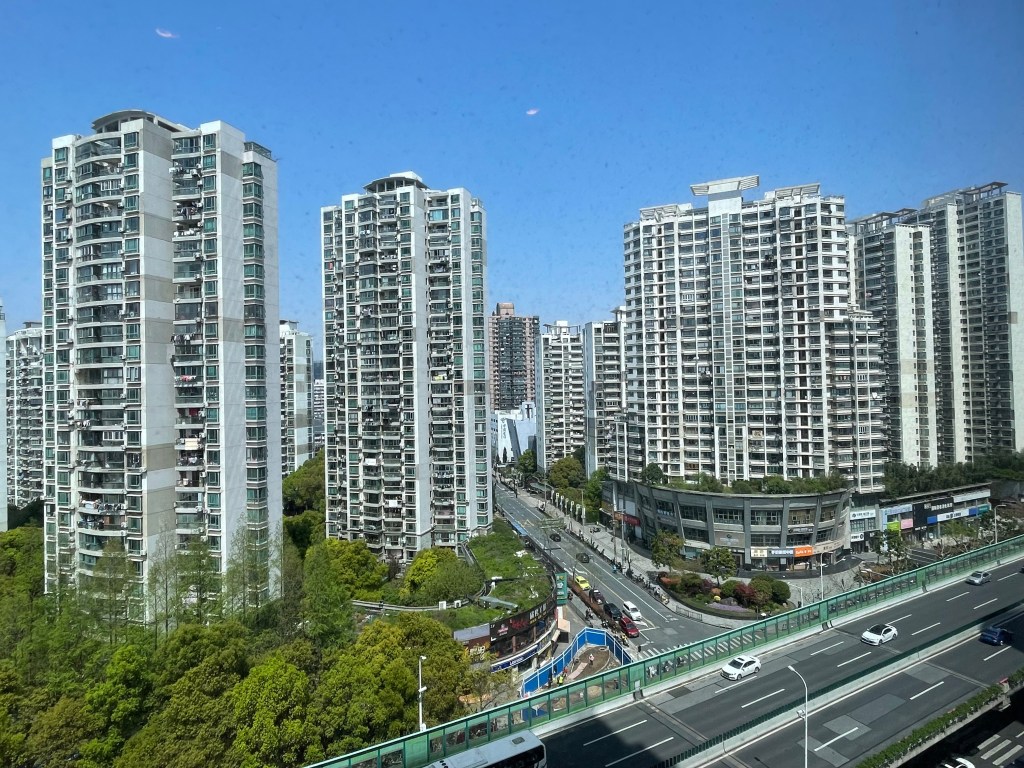
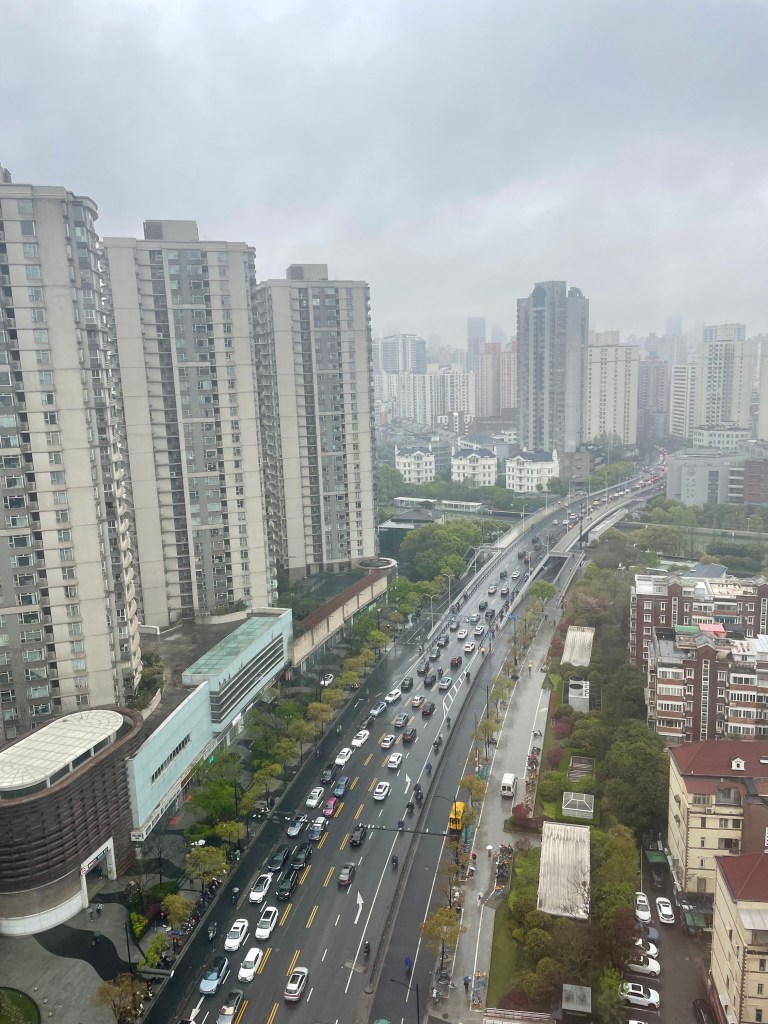
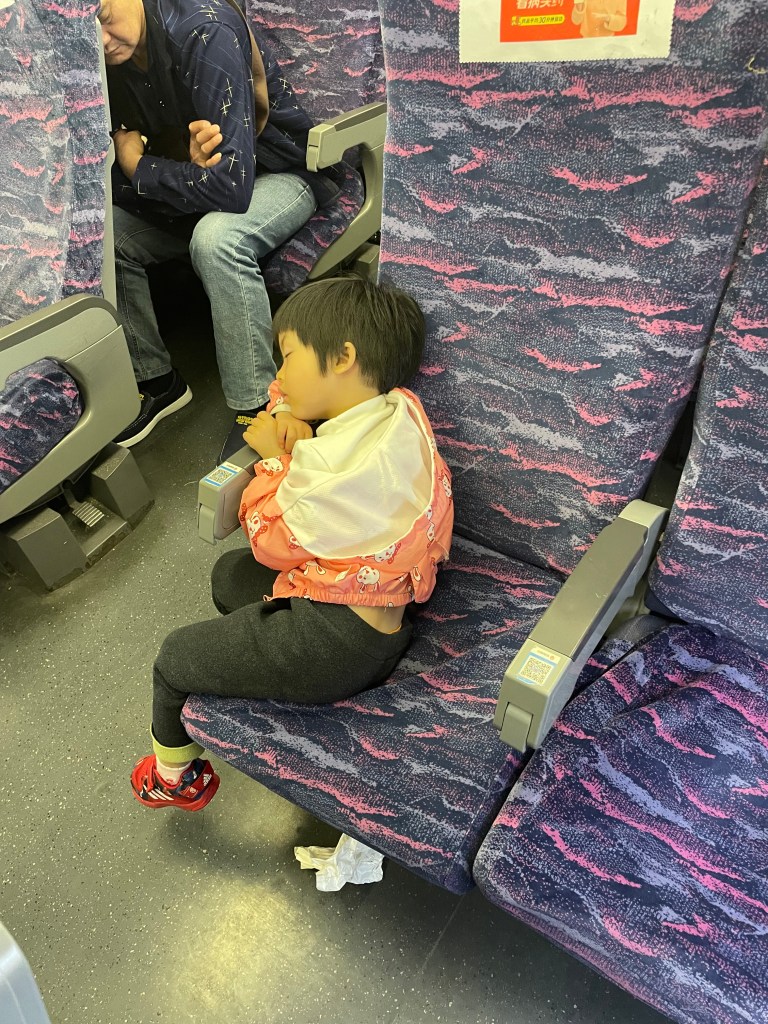
It’s not unusual for three generations to live in a 500 or 800 square foot apartment. How they manage that I’m not sure. Children often live with their parents as they are expected to care for them as they age. And most grandparents are the ones to provide childcare for their grandchildren. China’s population is aging rapidly, so the government ended its one child policy and encourages people to have two or more children. Many are not having any, as it’s too expensive. One of our guides, who was 35, said she and her husband both sent money to their parents each month, so they can’t afford children. To pay a reasonable rent, many people live far from the city center and have to commute each day. One guide, in Beijing, said her commute was 3.5 hours, one in Shanghai traveled 1 hour and 40 minutes. Between work and getting to your job there is no time to have children but the ones that are born are doted on.
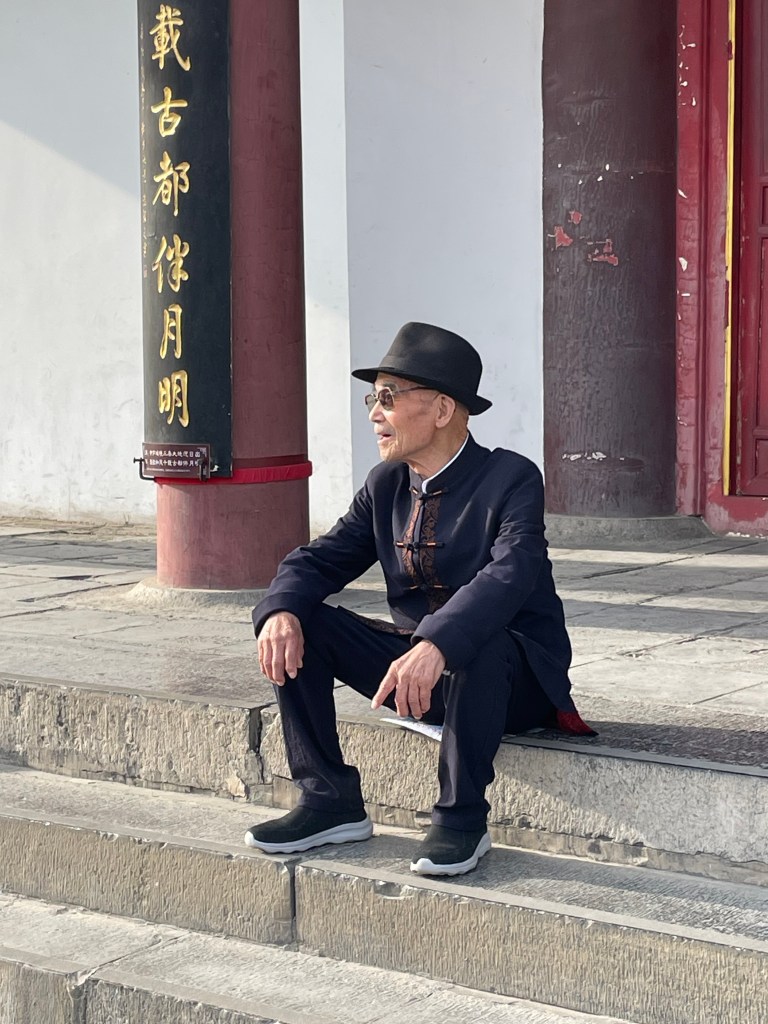
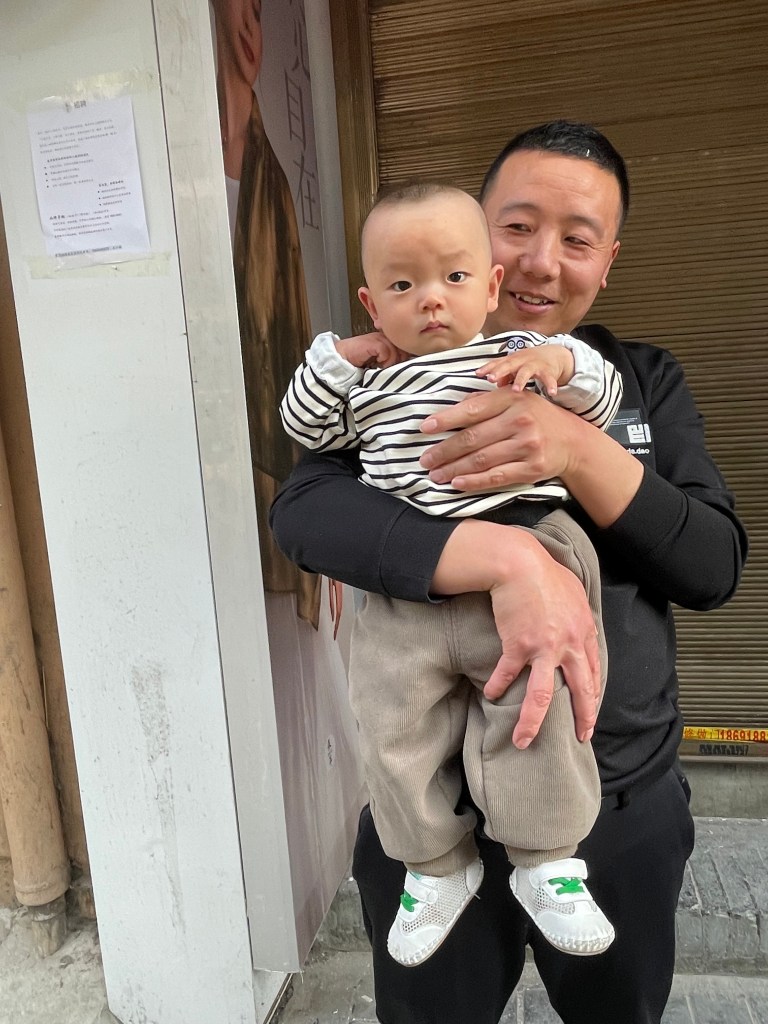
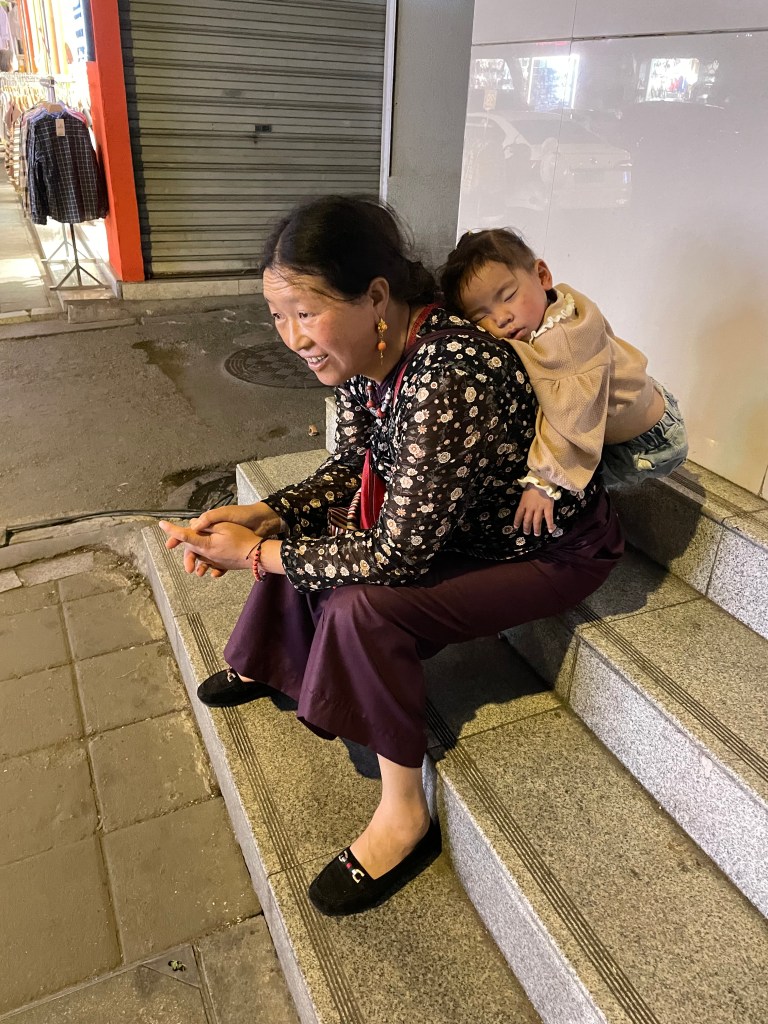
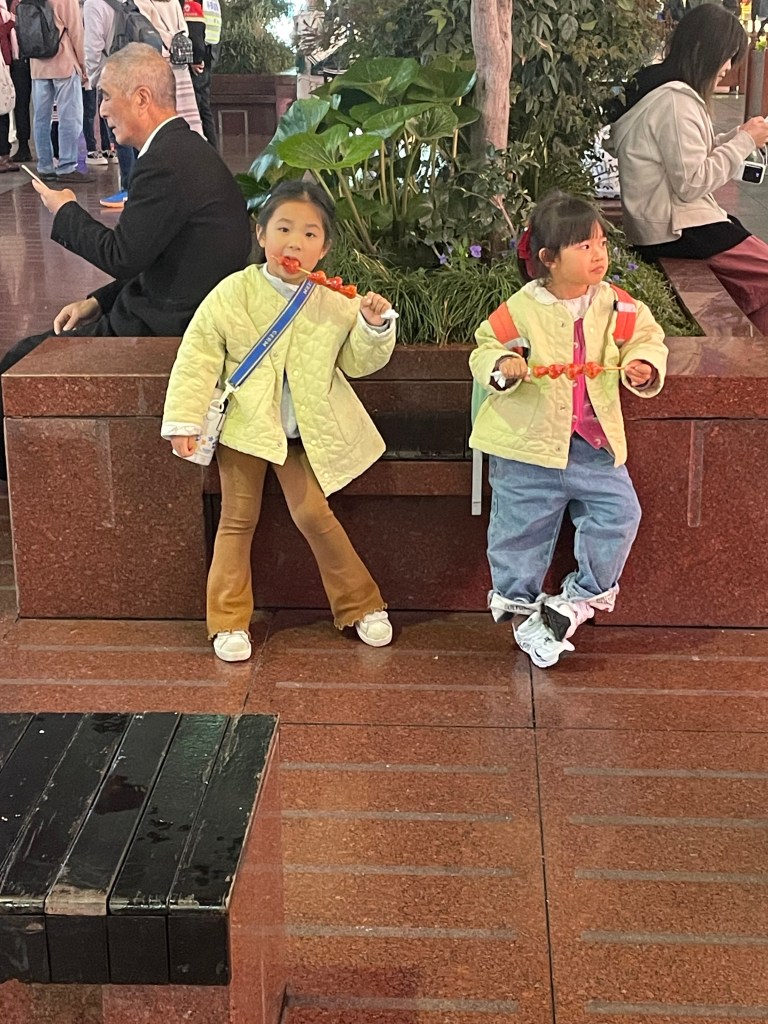
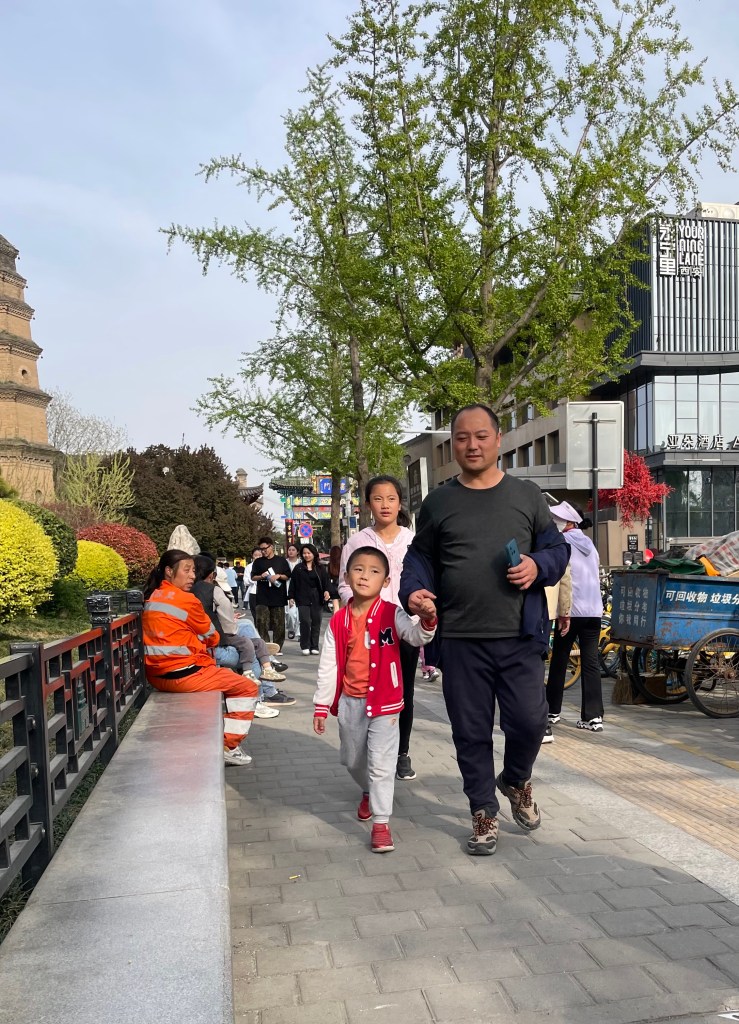
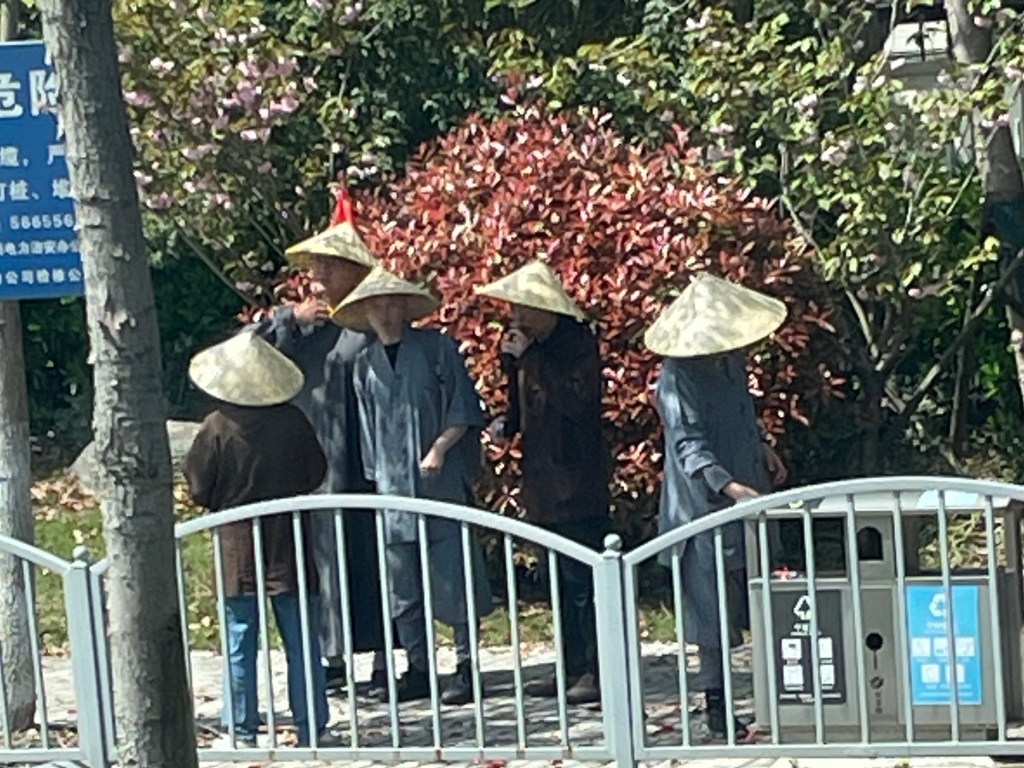
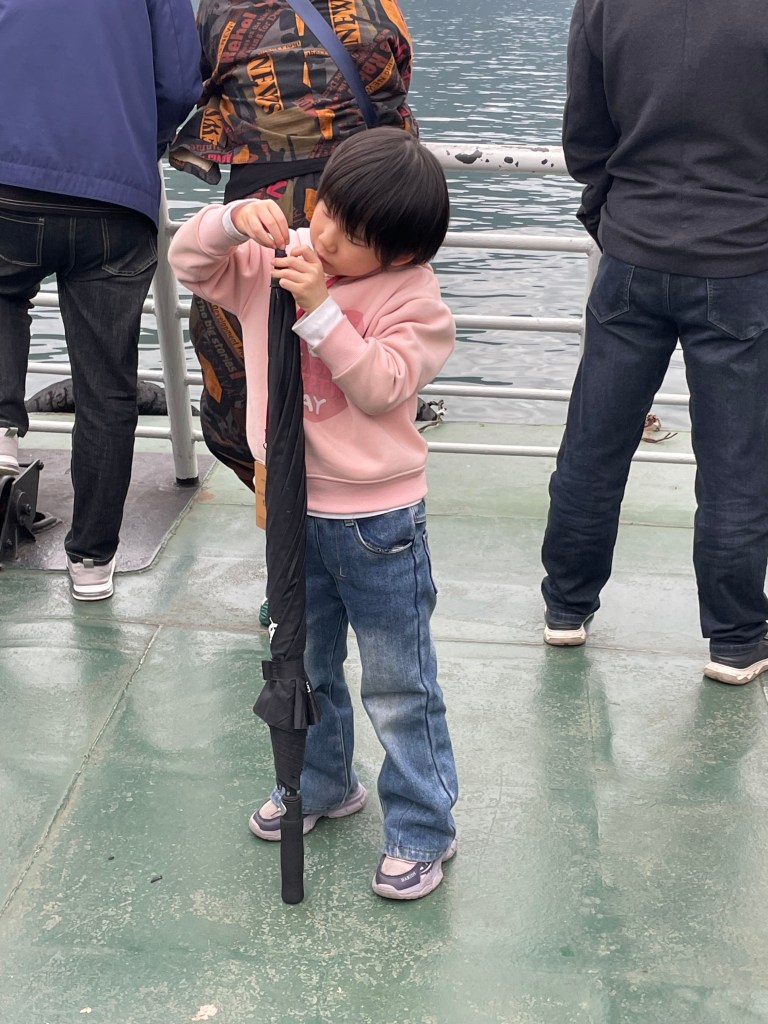
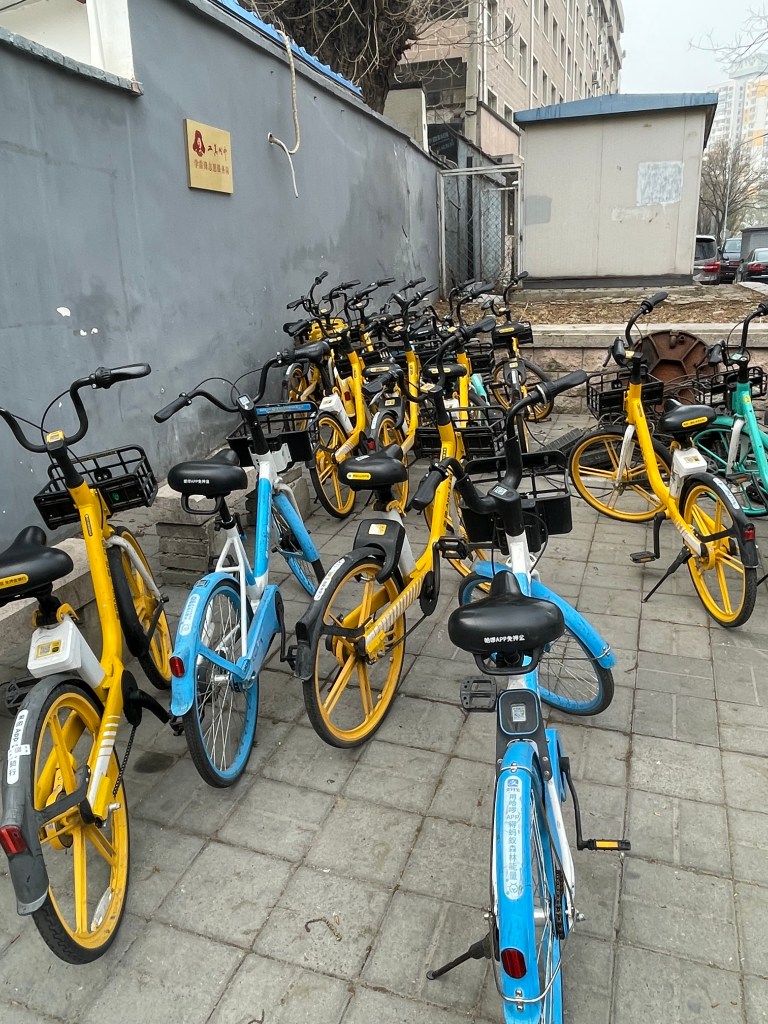
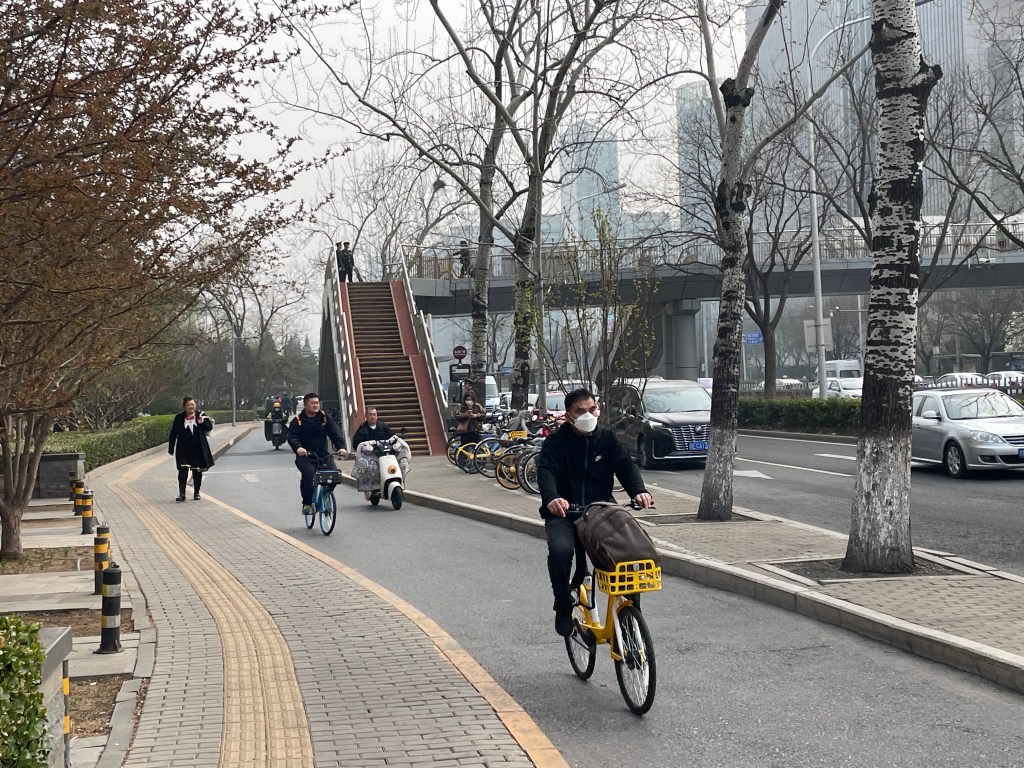
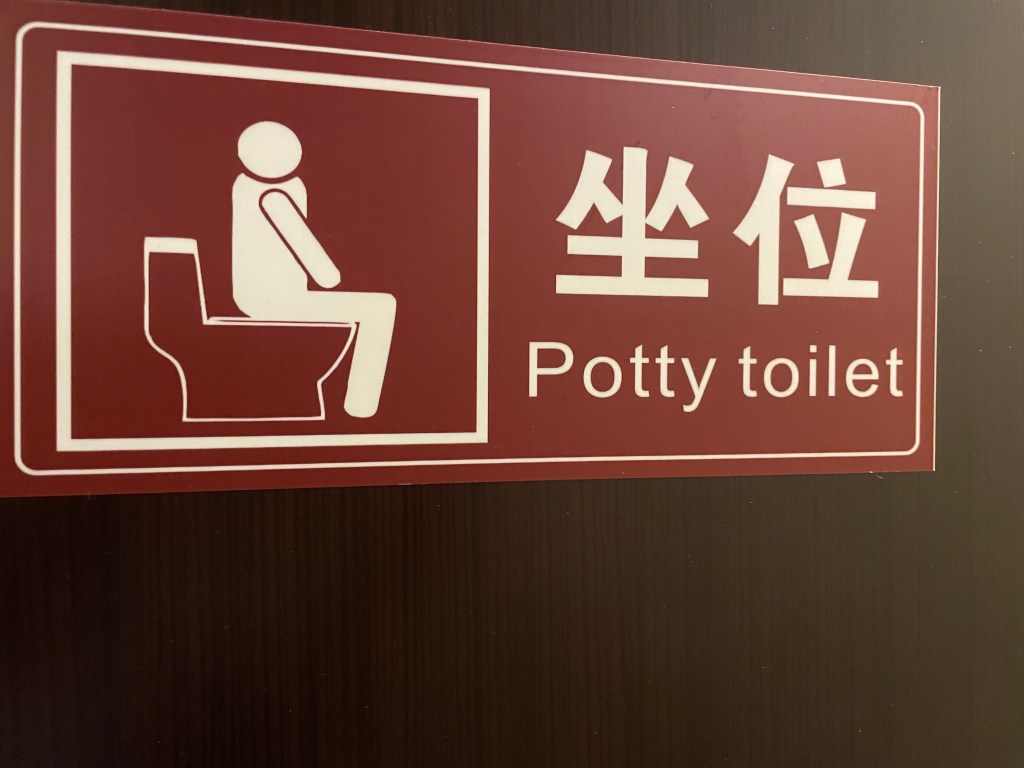
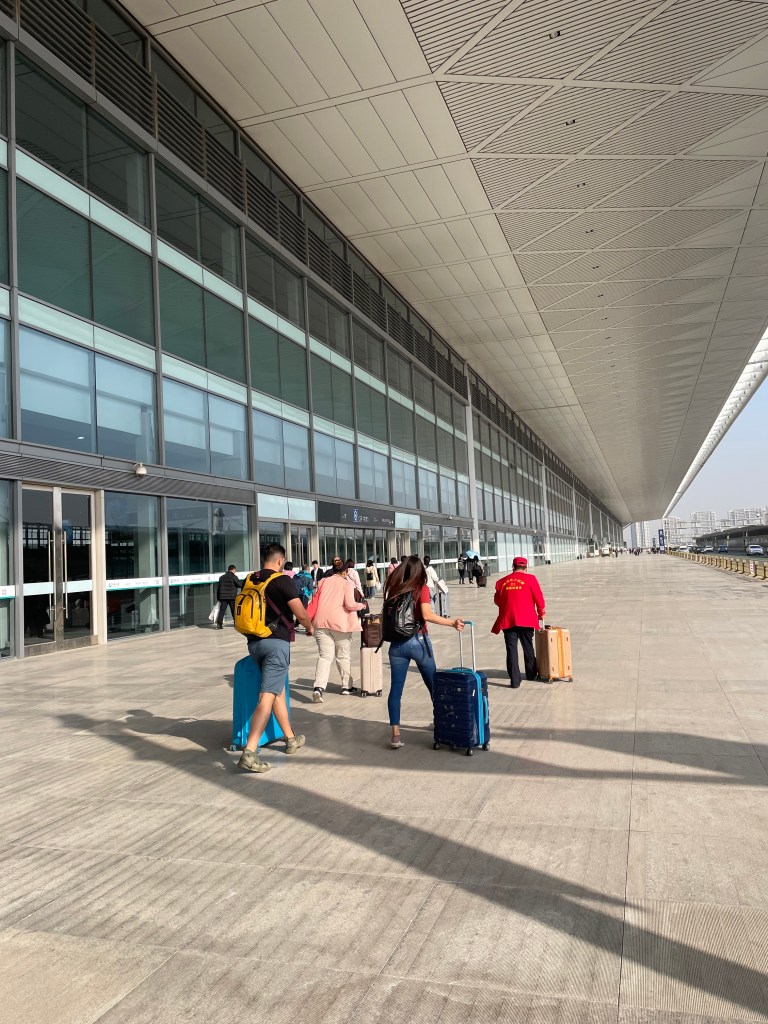
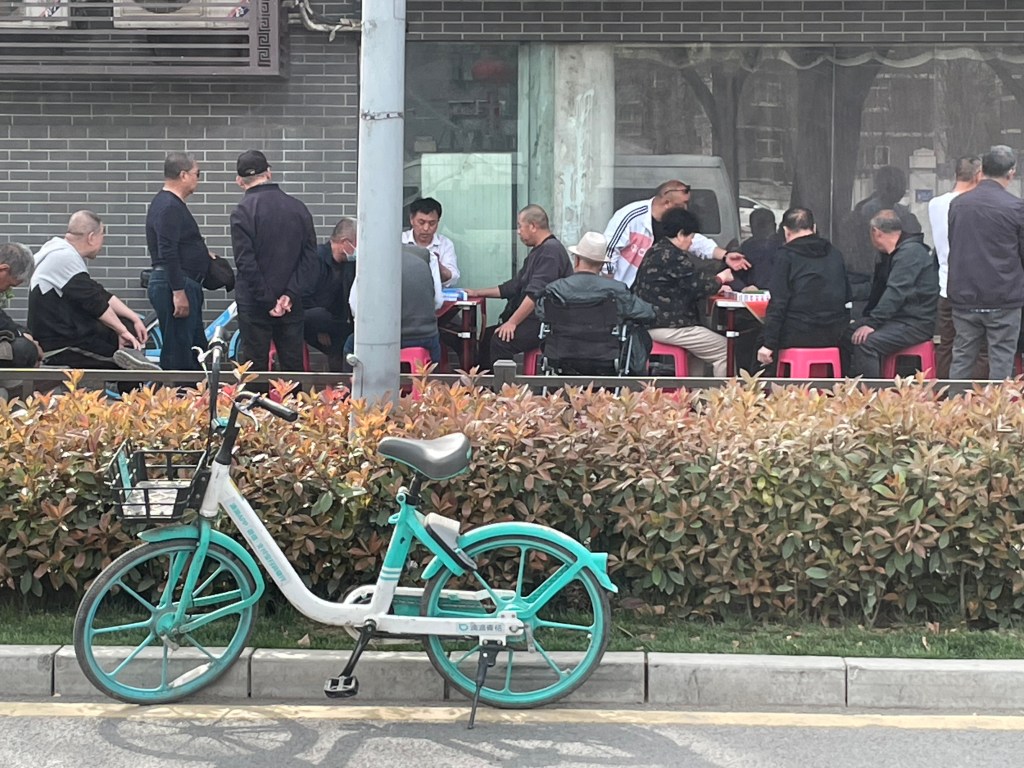
China is very clean. This was oft remarked upon by fellow travelers, which says something. We were told that people were hired to sweep the streets and sidewalks but it has to be more than that. I never saw a street sweeper but yet saw no trash. As in Japan, people just don’t litter. Public toilets were quite common and they to were clean too. Just having them available amazed me, especially as frequently as I saw them. The preponderance of the stalls contained squat toilets and seldom had toilet paper. Bike shares are very common here – the yellow and blue bikes are seen everywhere, both lining the road ready to be used or being pedaled down the streets. Motorbike shares are also available but not as prevalent. The bikes are used for the last mile(s) of a commute. You might take your car or a bike to a metro stop, ride the metro into downtown and then ride the bike to your destination. Nashville and other cities in the US are trying to incorporate this feature, hoping to increase ridership on our public transportation. Let’s hope it takes off. I mentioned their fast trains already but want to add that their train stations remind me of airports. They have different gates for each platform, I saw 26 gates in one station, each one has a waiting area.


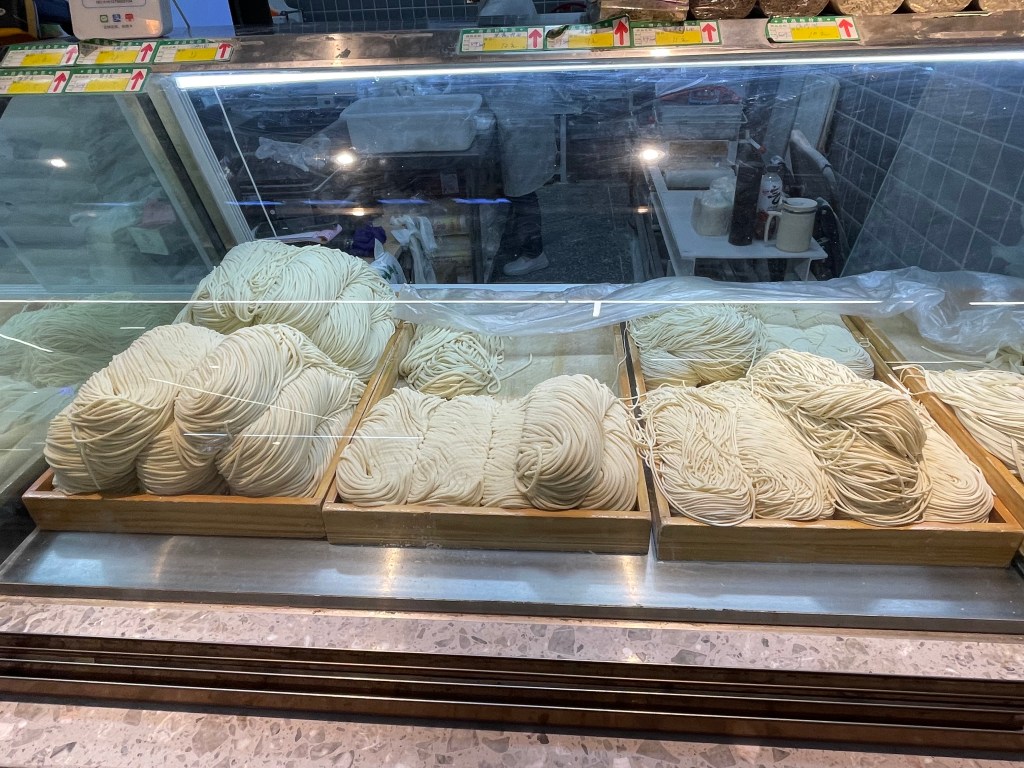
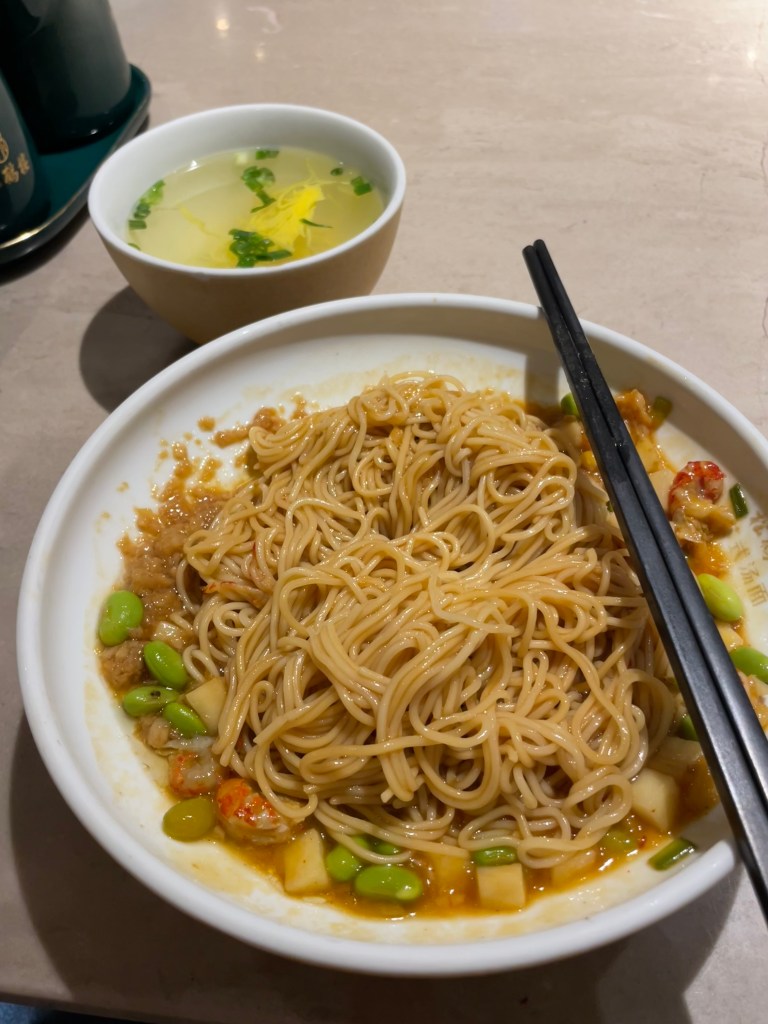
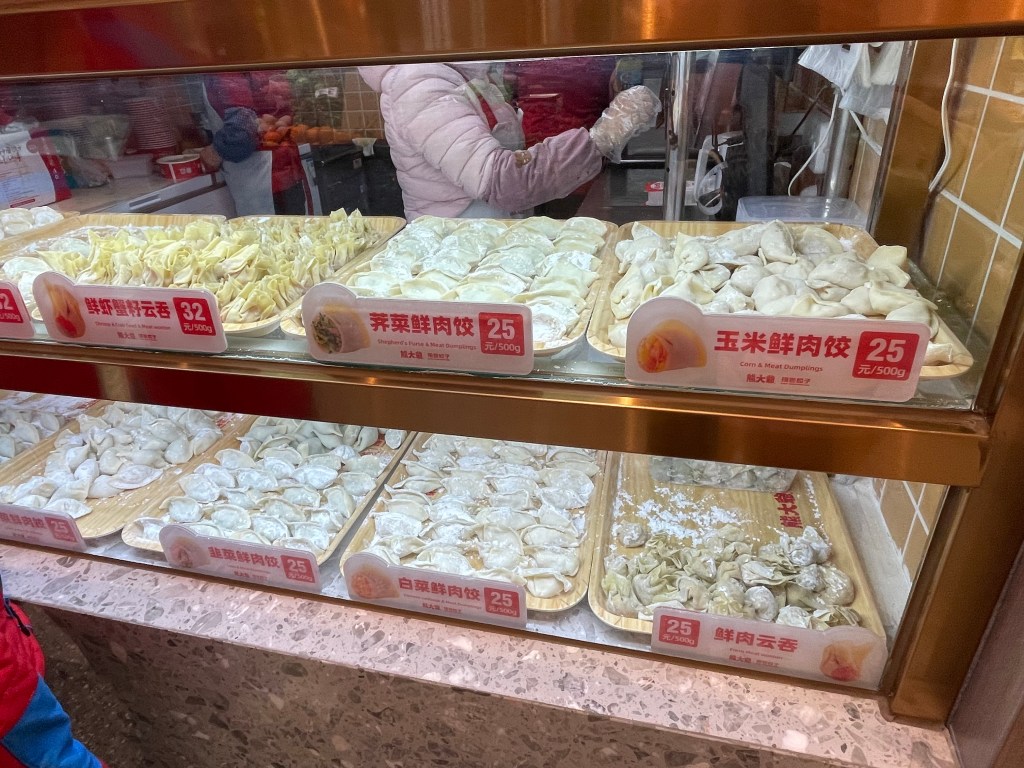
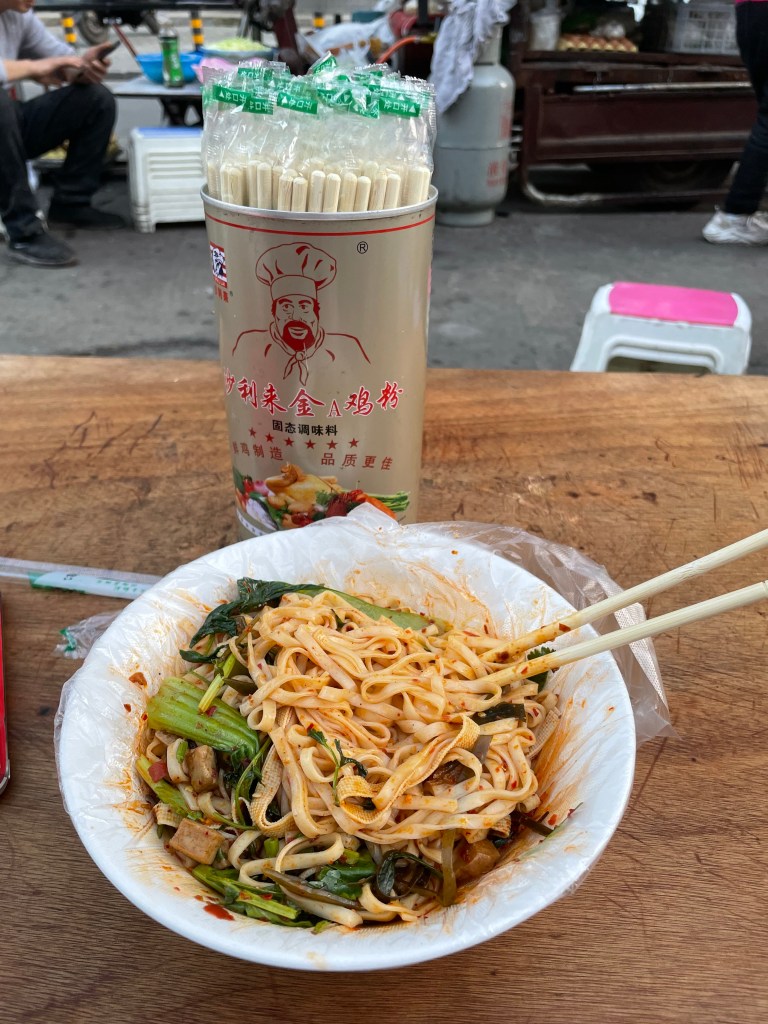
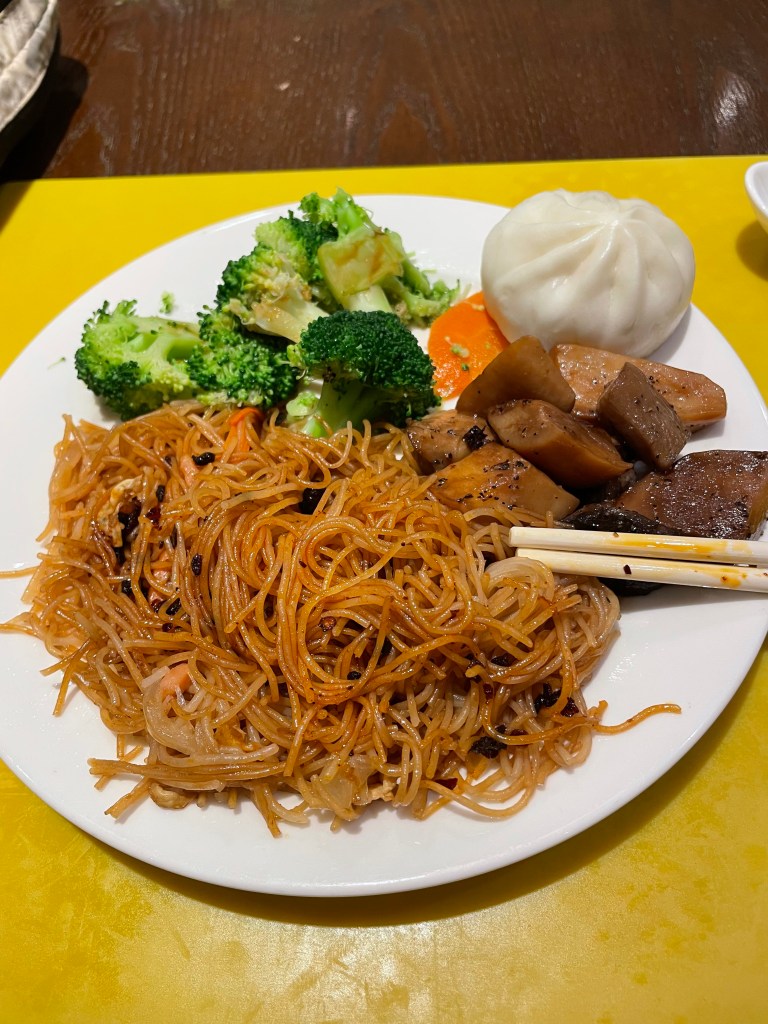
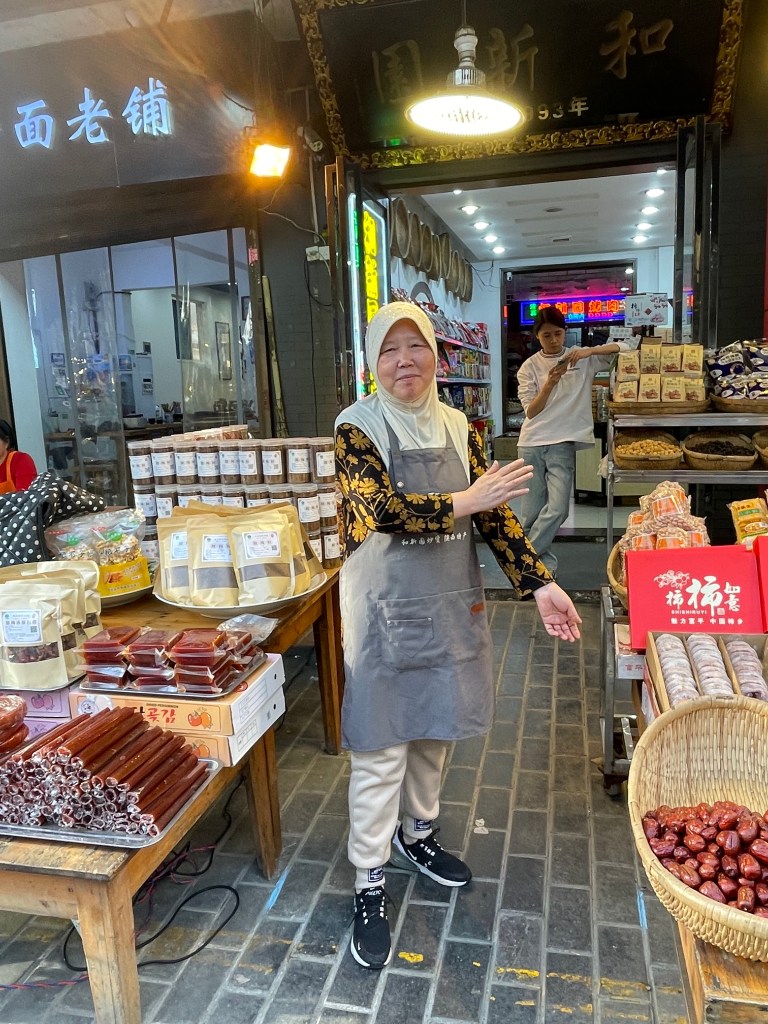
One of the most popular foods in China is noodles, eaten much more than rice. Rice, I was told is usually eaten at breakfast and noodles for lunch and dinner. I often ate noodles three meals a day, though rice was a pleasant reprieve. Now noodles come in all different shapes and sizes and are served in a variety of ways. Noodle soup is big. First, you choose your noodles – thin round rice noodles, spaghetti like wheat noodles, or flat fettuccine style, usually given to you in a broth of some kind. Then you can add toppings – meat, garlic, green onions, pickled veggies, chili oil, peppers, etc, stir it all together and slurp the noddles with the help of your chop sticks. Keep your face close to your bowl if you don’t want food all over your shirt. Bite off what you don’t want in this mouthful and let it fall back into the bowl. Another variety of noddles found in soup is a wonton, filled with pork, chicken crab, or shrimp.

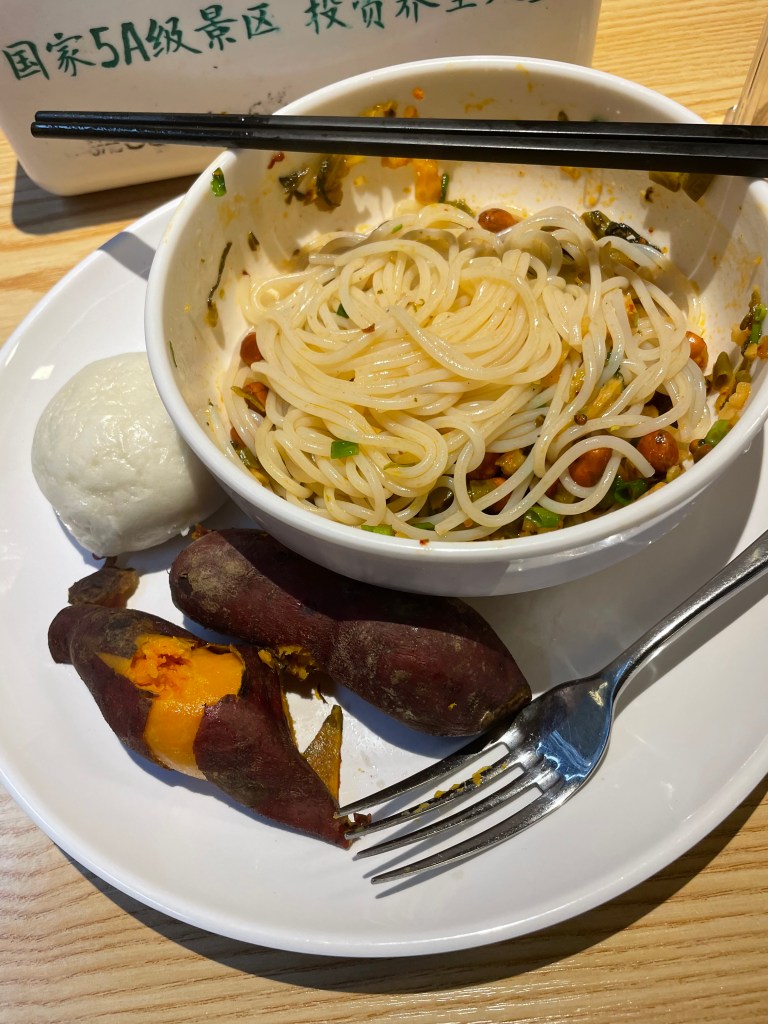
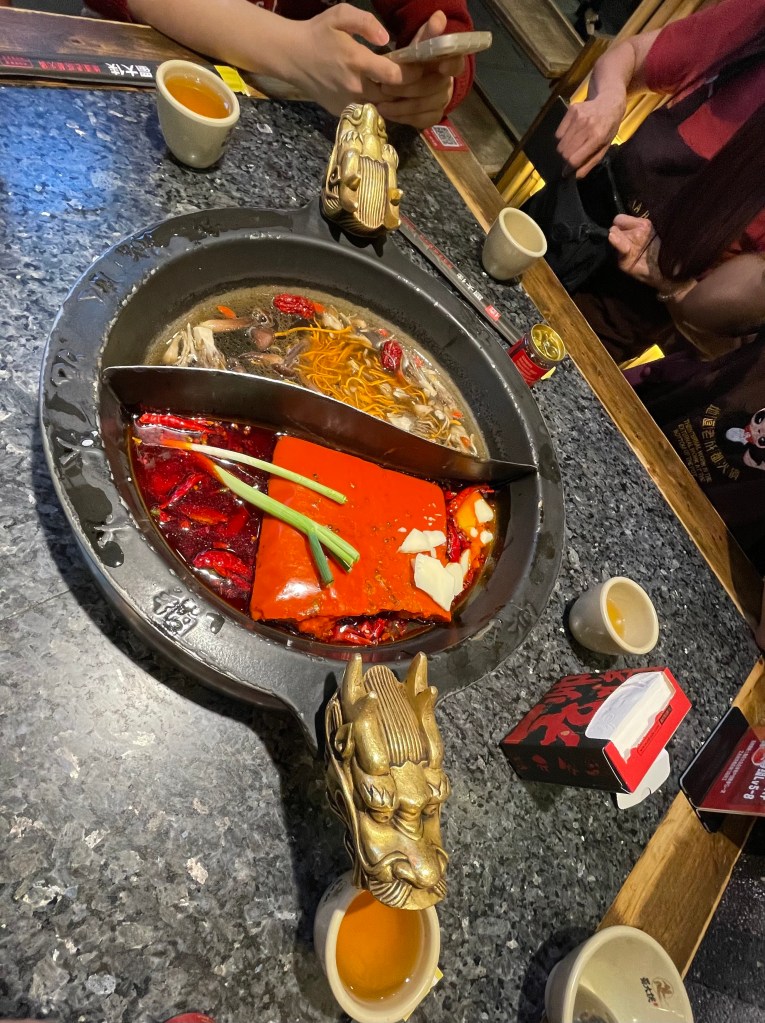
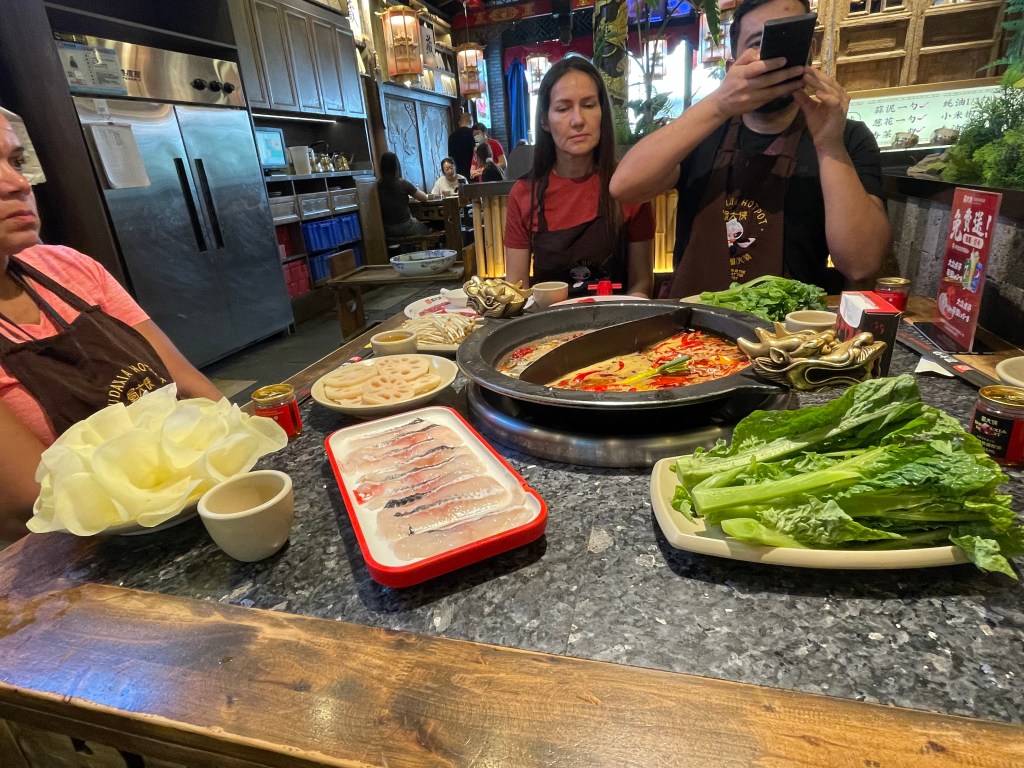
In Chengdu, which is in the Sichuan province known for spicy food, we had a hot pot. It’s a specialty of theirs. You sit at a table with a heating element and a large wok like pan. The vessel is filled with a broth of some kind, our choices that day were mushroom based or tomato based. You can choose spicy or not spicy. Our pan was divided into two with a spicy tomato sauce on one side and a mild mushroom broth on the other. You prepare a bowl with a dipping sauce – base of sesame oil with garlic, green onions, peanuts, etc added and have it ready. Then you throw or gently place, if you want to keep from getting burned from any splashes, your desired items into the boiling broth. Items included meat or fish, lotus root, bok choy, bean sprouts, potatoes, mushrooms, etc. Let them cook and then using chop sticks – a little longer than the ones you usually eat with, or a ladle with holes in it to scoop the items into the dipping sauce. Once it’s cool enough, eat and enjoy. It was very fun but works best with like minded eaters. Something I ate every chance I got was scallion pancakes, a good vegetarian choice.
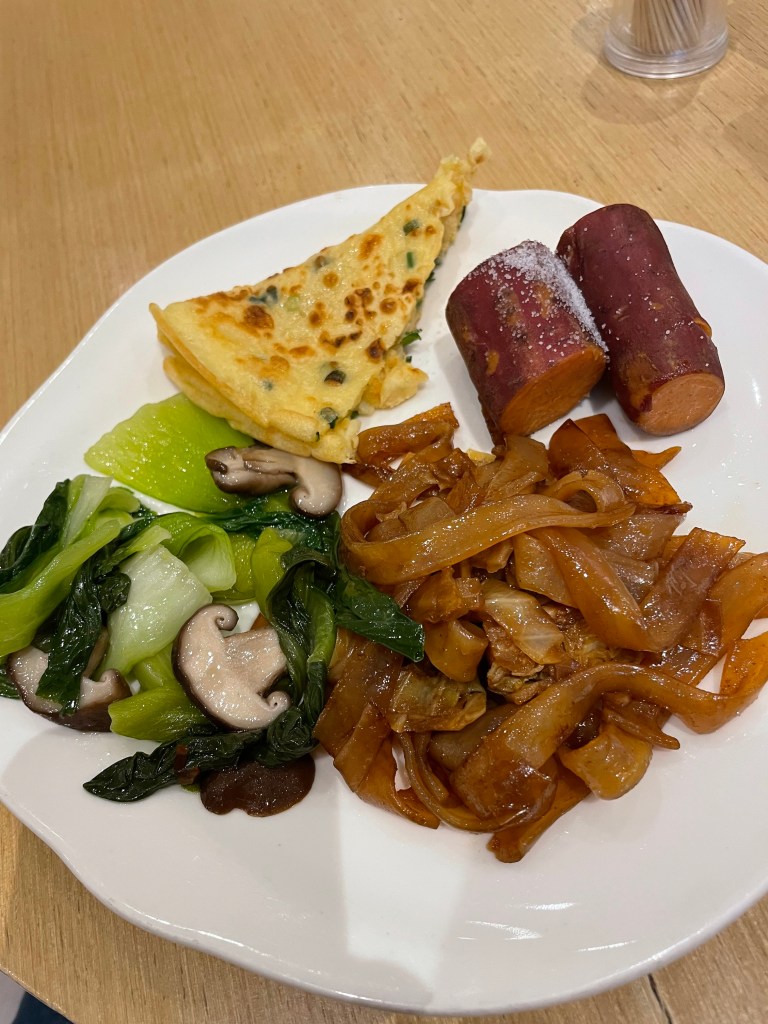
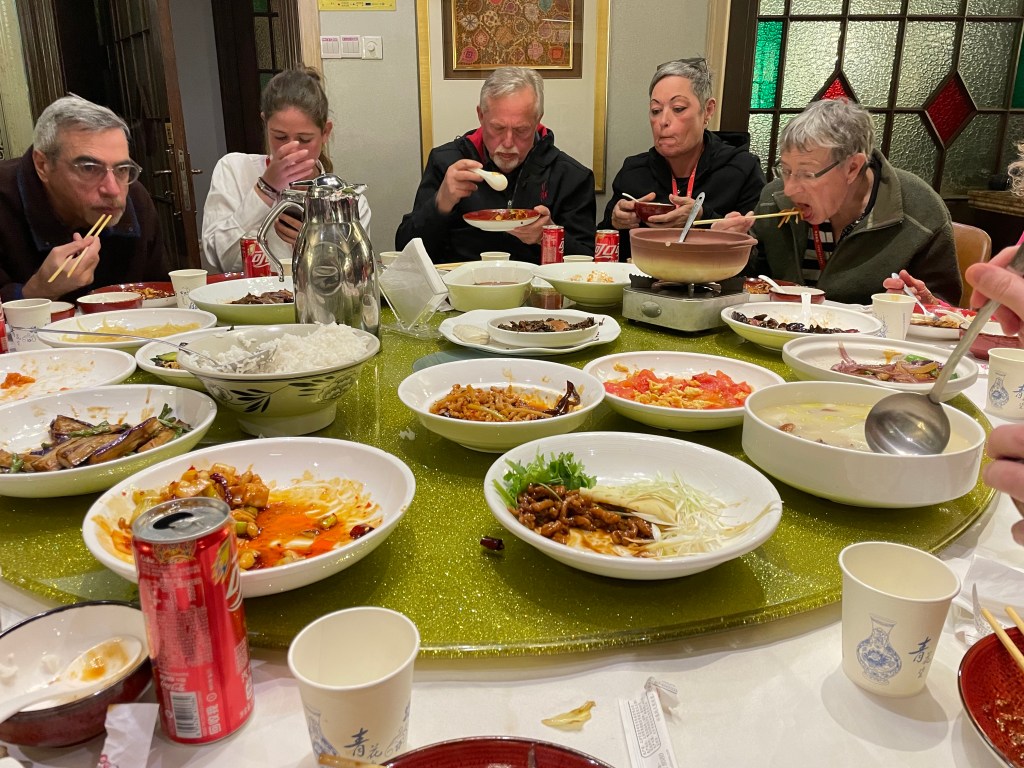
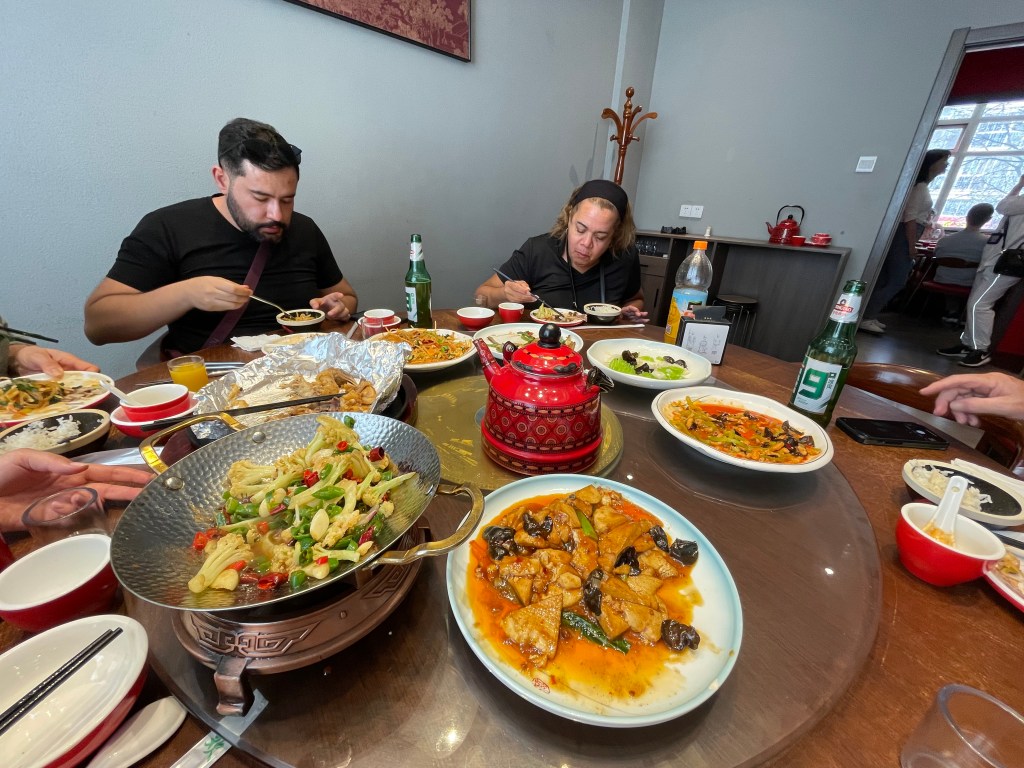
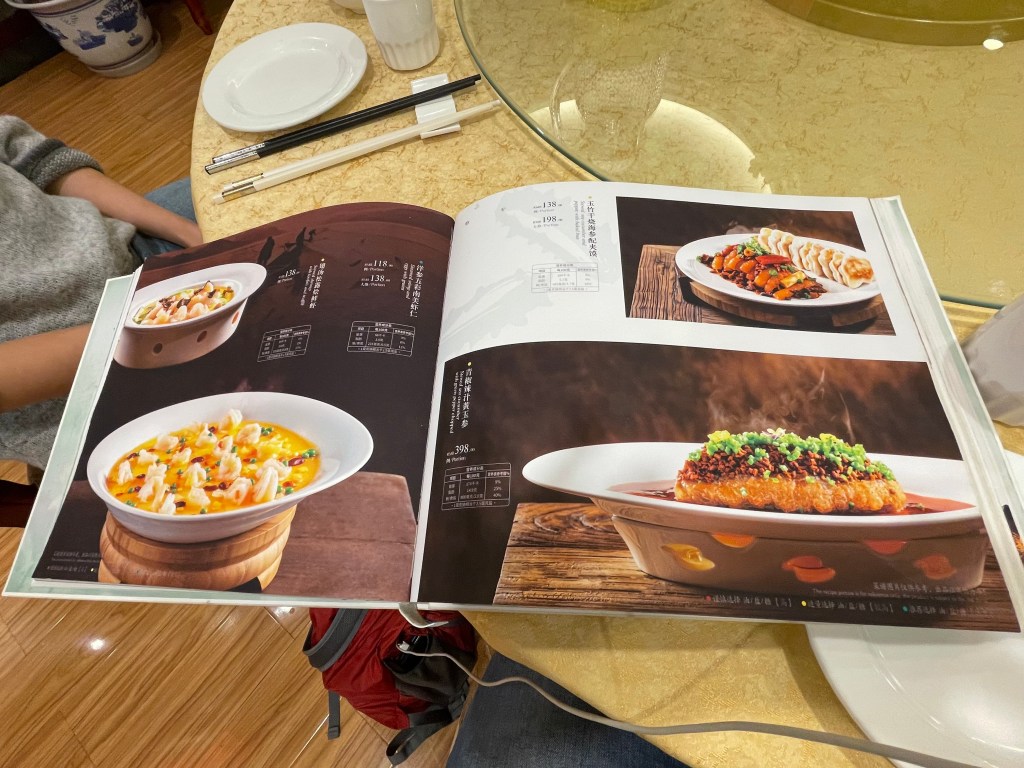
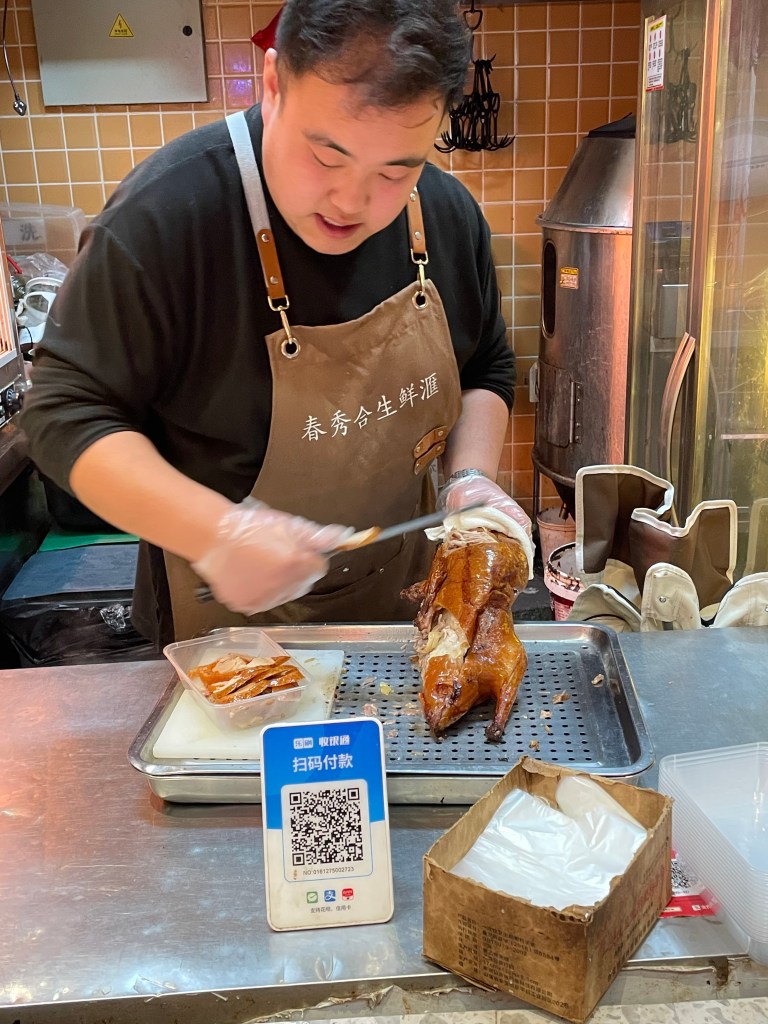
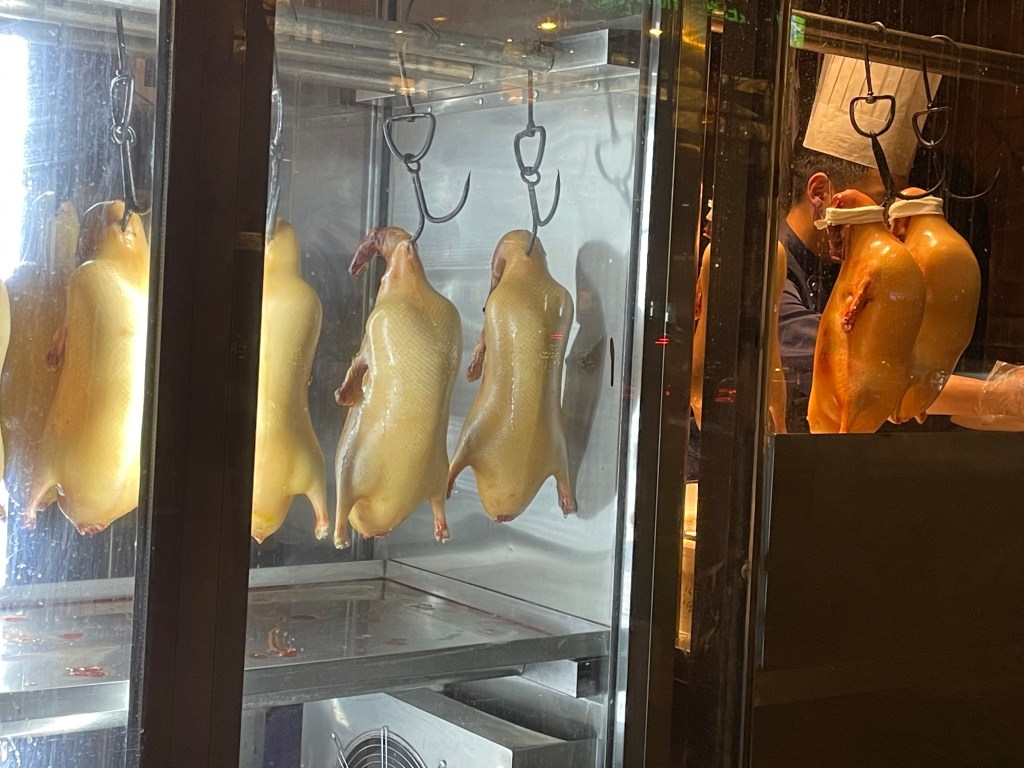
It was very common, especially at the beginning of my trip when I was with a larger tour group, to have a large lazy susan filled with a variety of dishes. About halfway through, I was the only one left so ended up on a private tour of Guilin and Shanghai. Sometimes we had 8 or 10 items to choose from, sometimes only 6 or 8. One time we had duck heads – not a big favorite of the group. The Chinese eat every piece of the animal so organ meat, stomach, intestines, etc filled menus. In Shanghai, while I savored shrimp noodles, my guide had fried large intestines and seemed to be enjoying them (it?). Usually there were a variety of meat and vegetable choices and spicy and mild dishes. It was fun to sample so many things. Everyone’s favorite was a dry-fried cauliflower. It was often cooked with meat, but was served to us without it. It’s the one dish that was always empty at the end of the meal. This is how Chinese families eat – sharing a variety of dishes around a large table. A perennial hit in Beijing, of course, is Peking duck, which was sold in most restaurants.
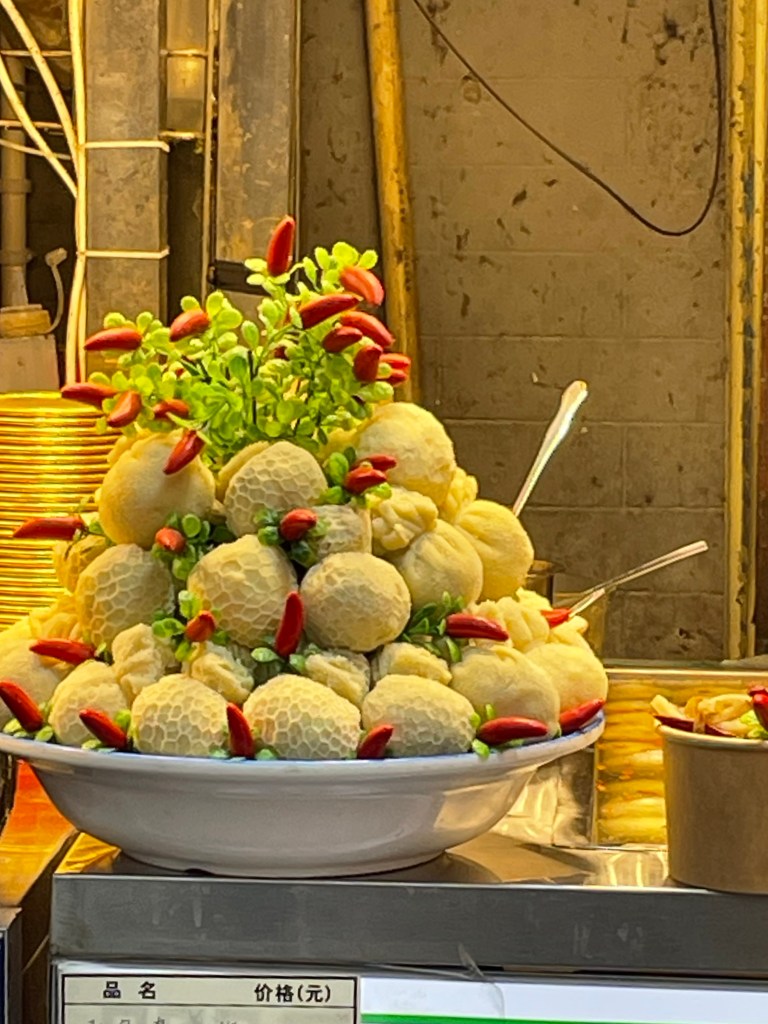
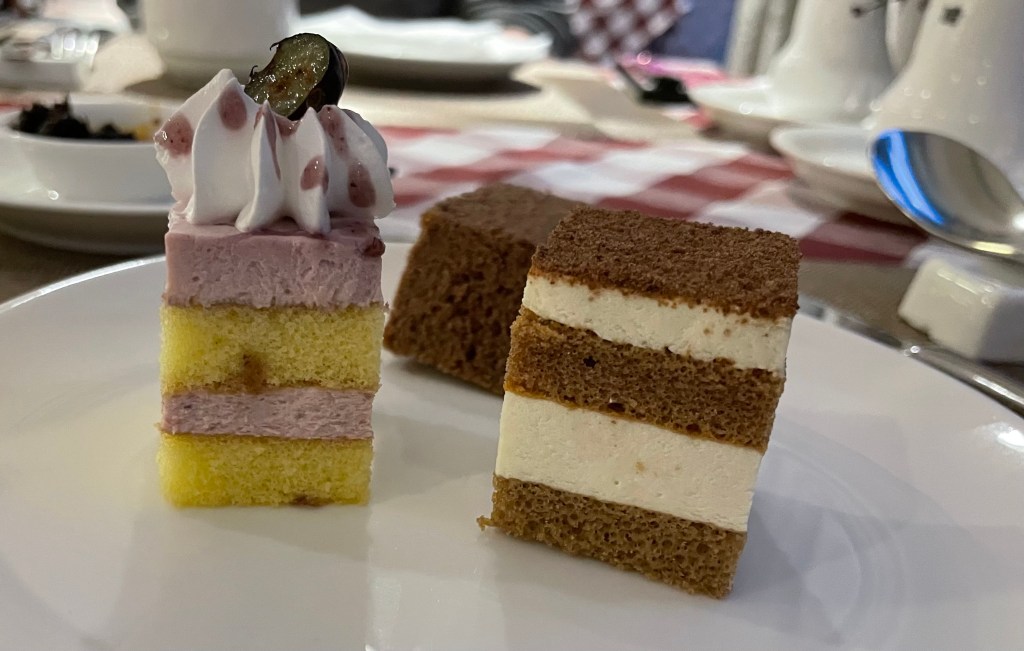
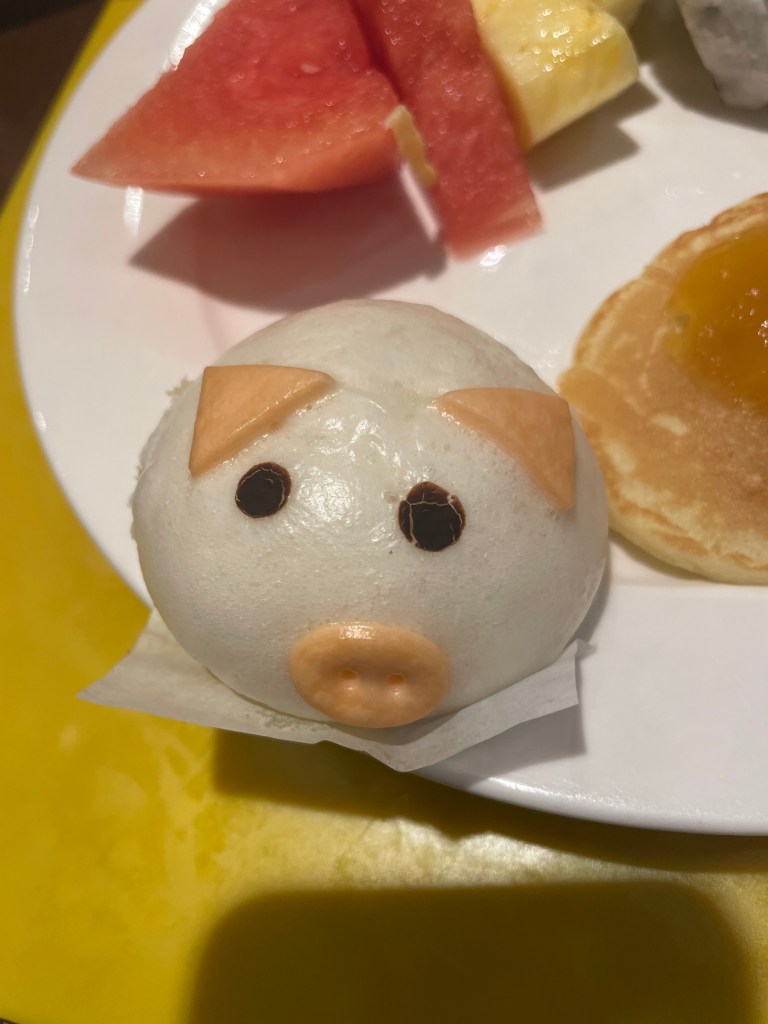
And I would be remiss not to mention their steamed buns. My first one was at a dim sum restaurant in Hong Kong, a fluffy round bun filled with custard. Very good, you just have to be careful not to eat it too fast as the filling is hot. The common fillings are pork, spinach, red bean paste, and custard, some are unfilled which is just like soft white bread. The Chinese are not bakers, they like to steam, so these take the place of bread. A big disappointment for all the European travelers who like bread, cheese – also seldom seen, a sliced meats for breakfast. Marta, from Poland, said everything was either too spicy or too bland. I like spicy so I didn’t have a problem and if it was bland I just added chili oil.
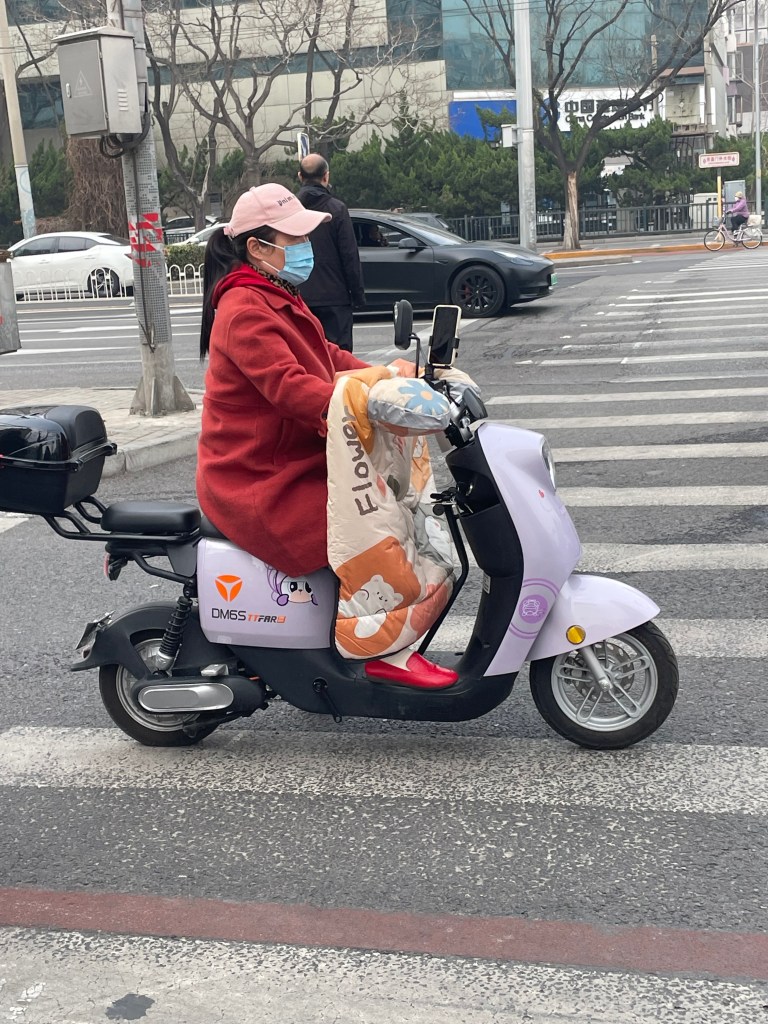
Here as in most Asian countries, motorcycles were common. One thing, however, was unique. They have quilted blankets made that cover them from the neck to deck of the bike with big mittens in it to wrap over the handles. It made a lot of sense in Beijing where it was so cold but I wasn’t sure of the purpose for it in Guilin where it was hot. My guide suggested it was to keep the sun off them, but it was way too warm to pull the blankets up over you. As in many countries, woman here try to keep their skin as white as possible. The motorcycles however seemed to have free range to go and do whatever they wanted, so the would roar up behind you on sidewalks, go the wrong way down a street, ride over on the cross walk, and ignore the traffic lights. They were pests constantly whizzing you by even though they usually had a dedicated lane.
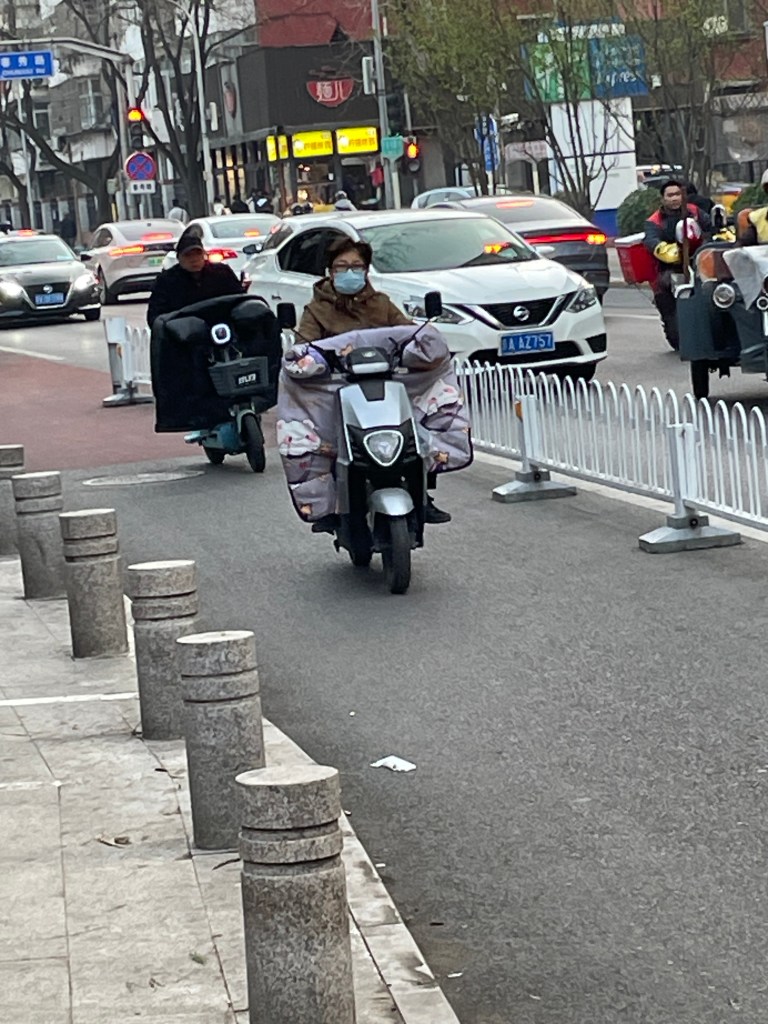
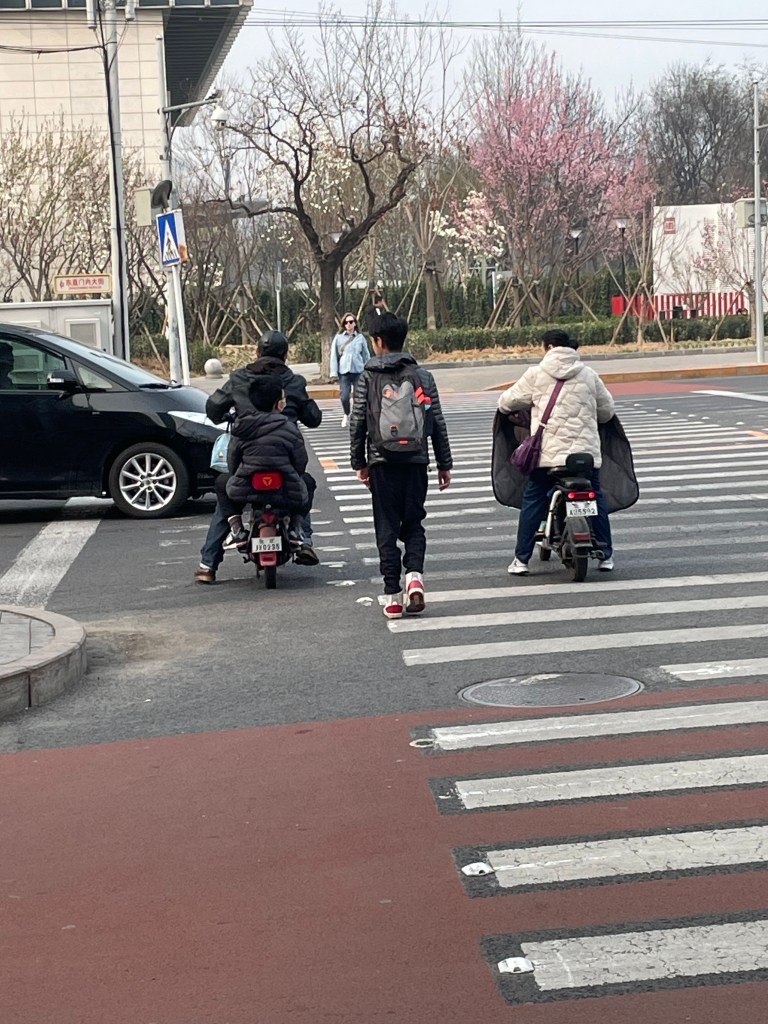
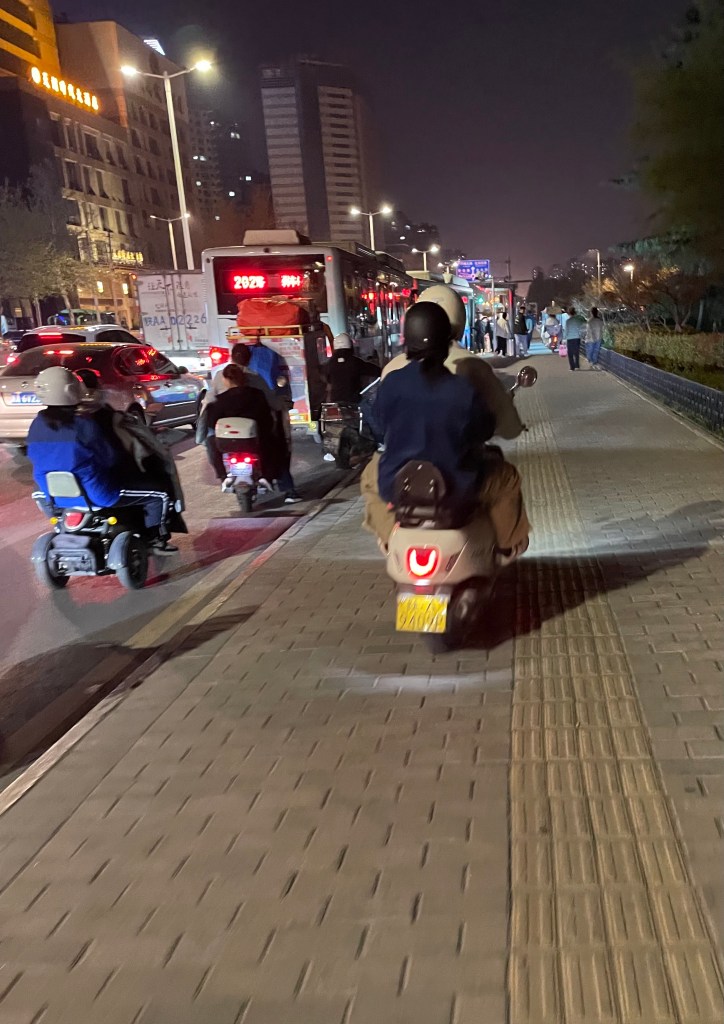
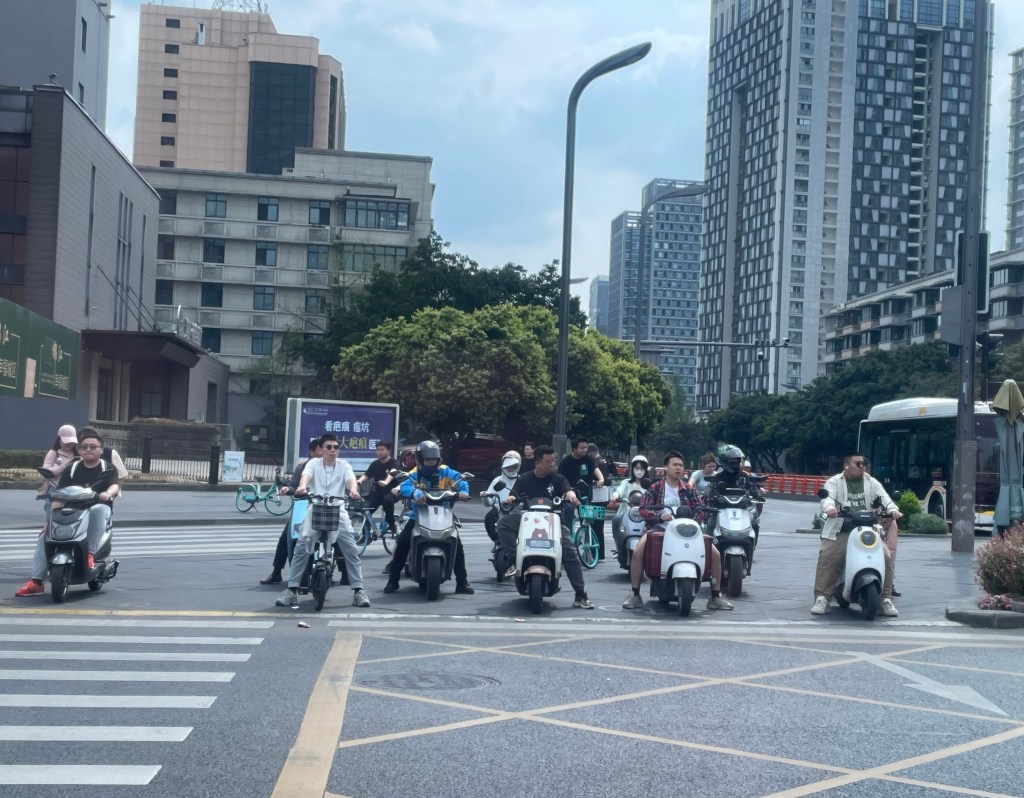
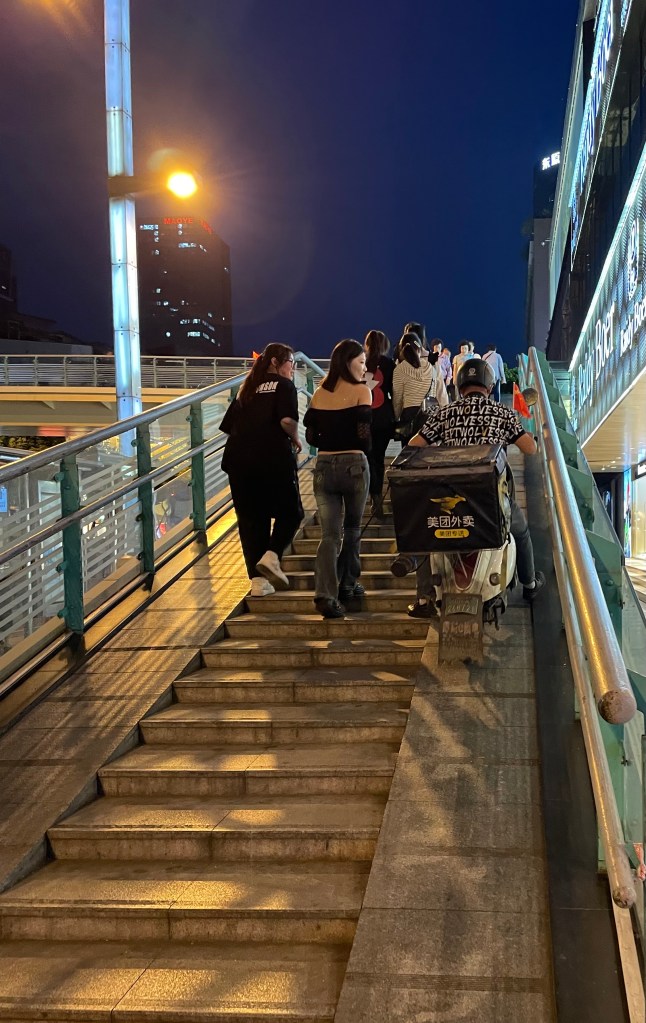
Another thing that tried my patience was the constant pushing and shoving. One time I was in line to get on an elevator and a woman stepped over my suitcase to get in front of me. Another time I was waiting for our guide, as part of a larger group, to lead us off the cruise ship when a man shoved through a tiny sliver of space in front of me and a woman coming from the other direction shoved through a tiny sliver of space behind me, spinning me around like a top. I didn’t hear one excuse me or I’m sorry. This was constant, there are no lines in China, you just push your way through. Don’t dally when exiting a train, because you won’t be able to get off, once the oncoming passengers get a foot in the door. Judith, a young woman from Germany who lived in Beijing, said she was used to it and learned to be just as aggressive as they were. This would be one reason not to live in China as far as I’m concerned. Another is the smoking. Now people smoke all over the world, but in China the men somehow seem entitled to smoke with no regard to anyone else. They put their cigarette in the mouth before they even exit the train and as soon as they step onto the platform they light up, blocking everyone else from leaving the train and then exhale directly into the faces of the people who are boarding. Imagine 4 or 5 of them together. I think that’s what made it so egregious for me, as I had so many men blow smoke in my face. Yuck! And don’t get me started on the spitting, I’ve never seen or heard so many men spit. They say it’s better than what it used to be, I can’t imagine it being worse.
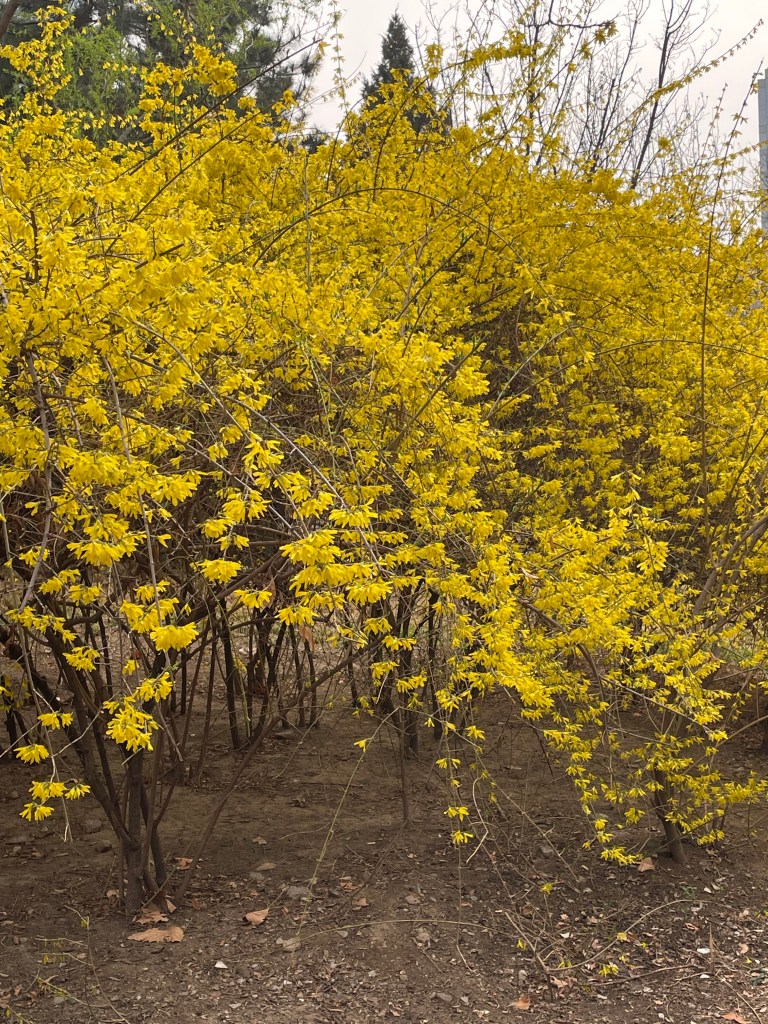
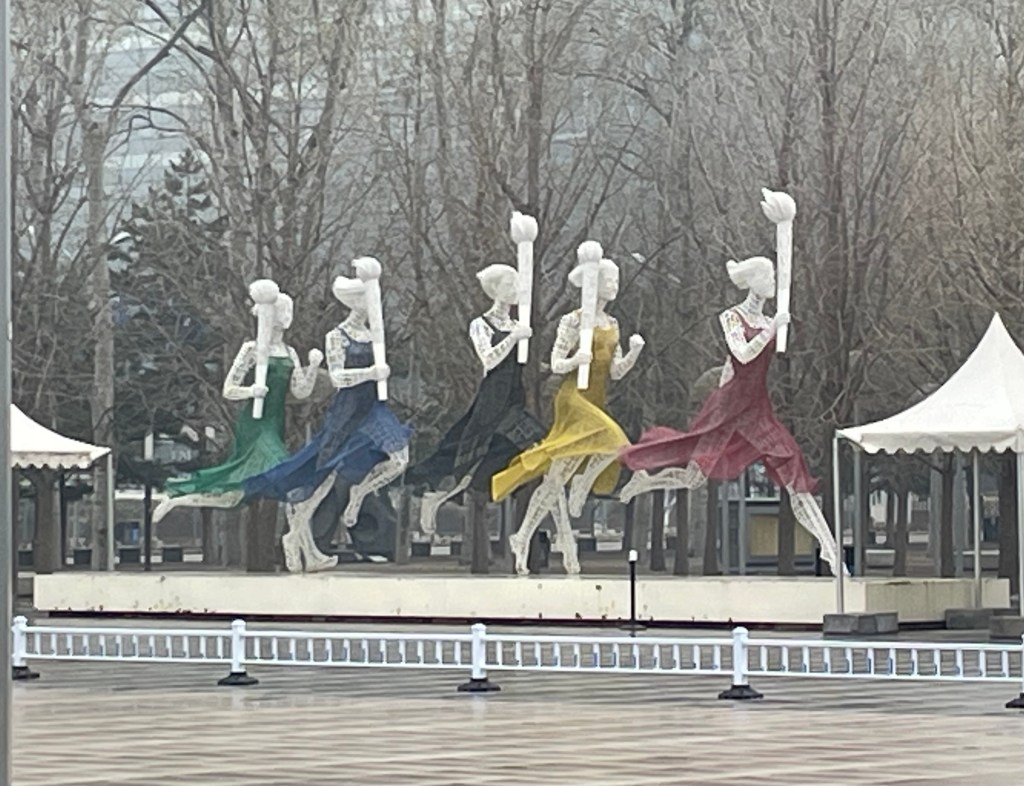
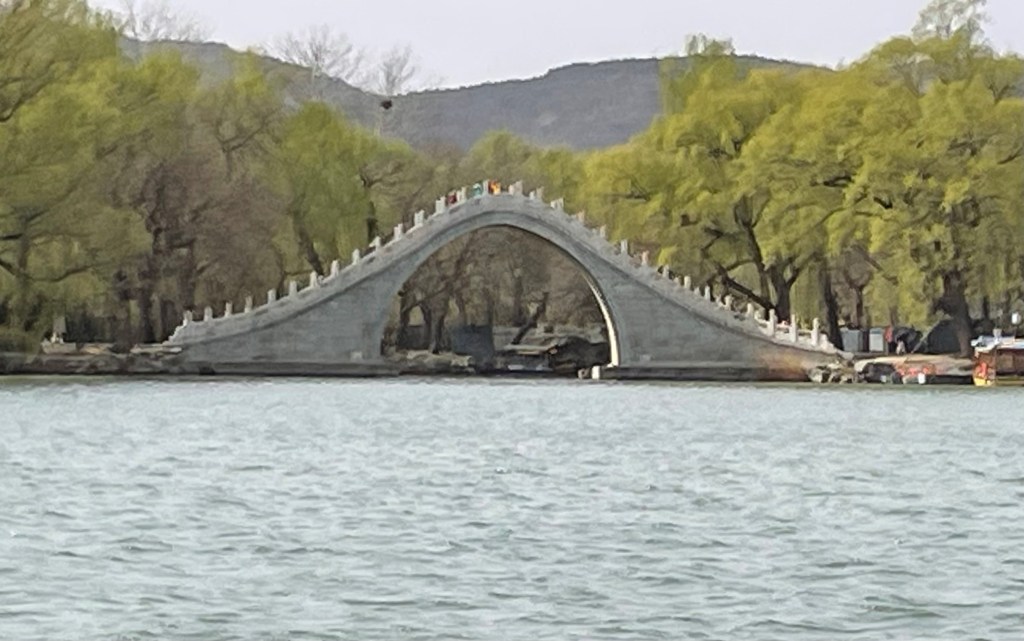
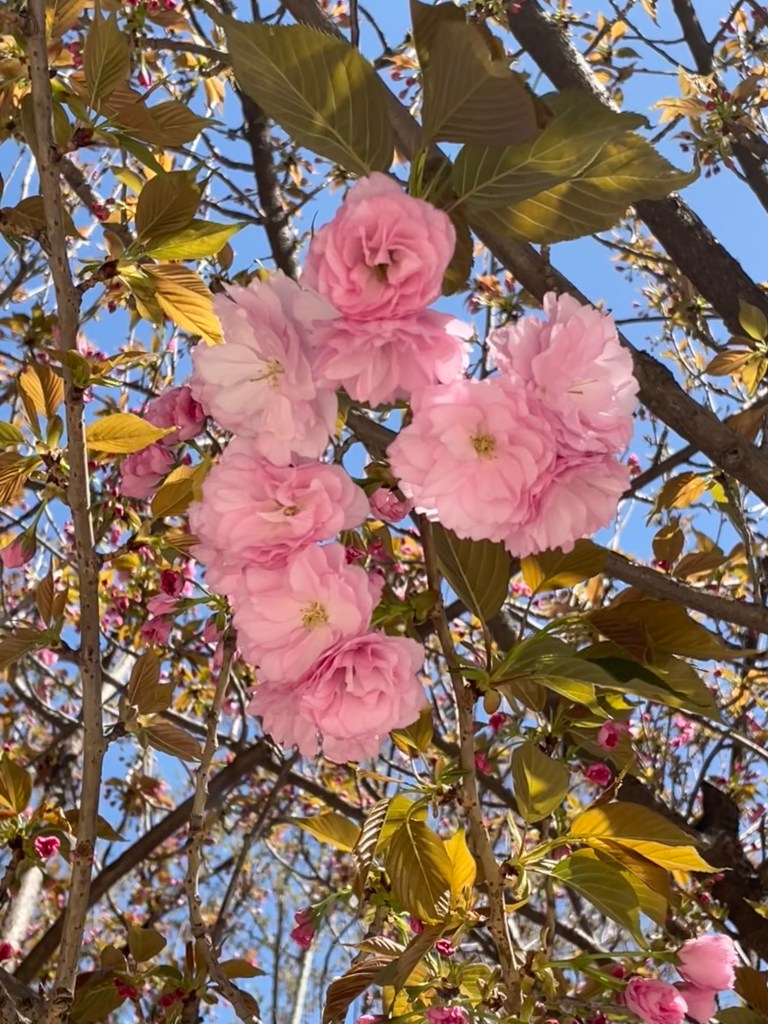
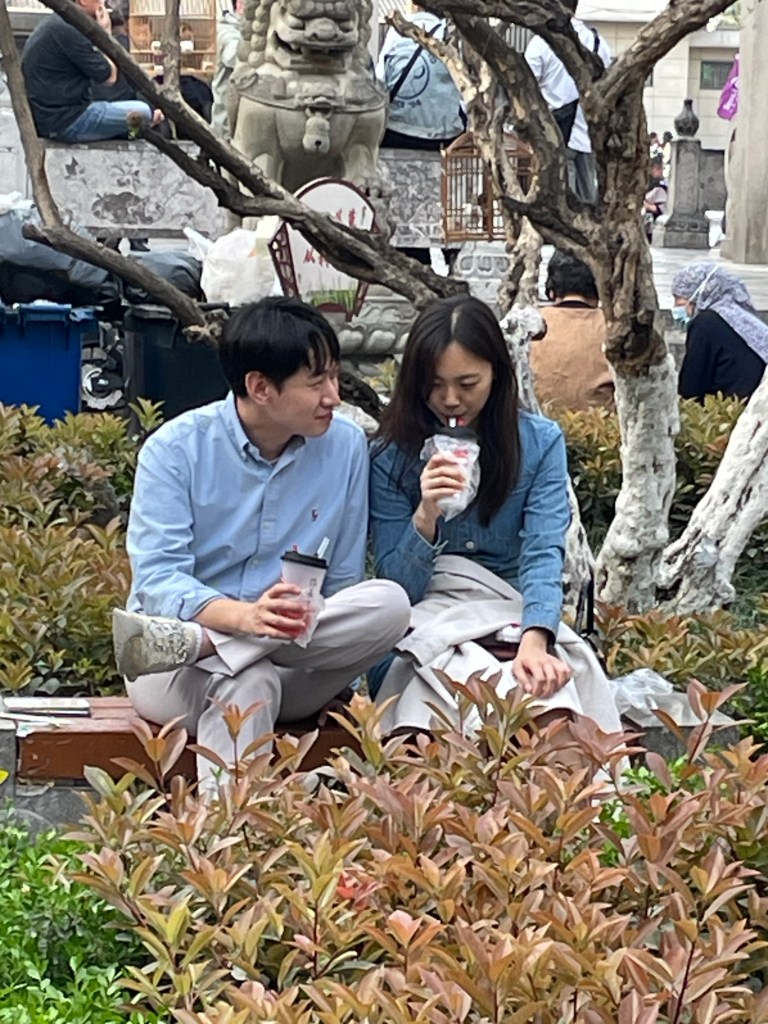
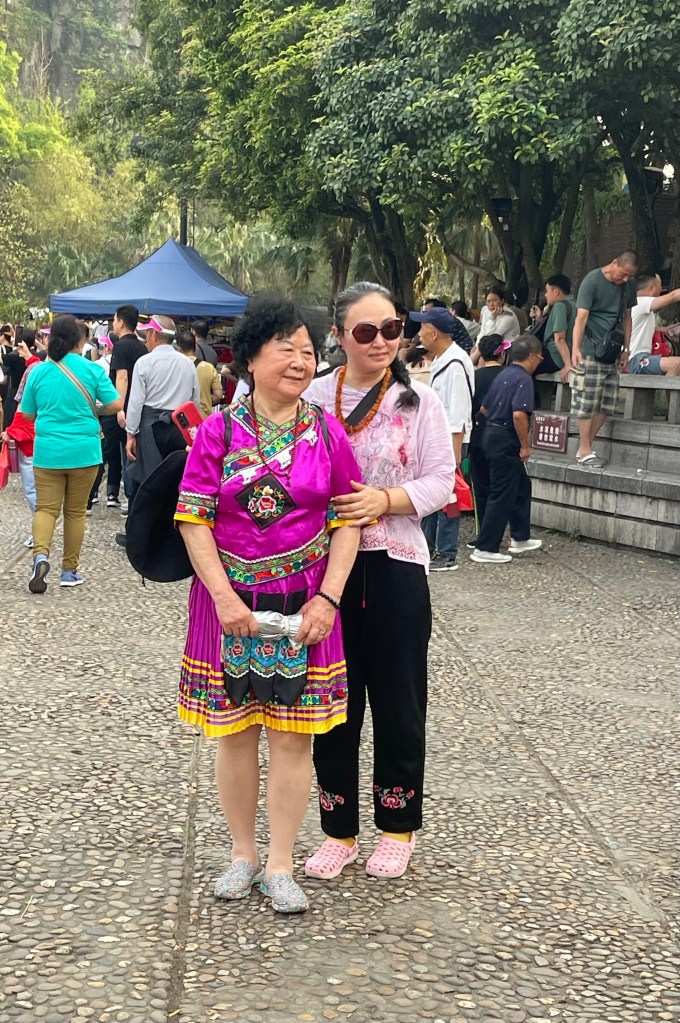
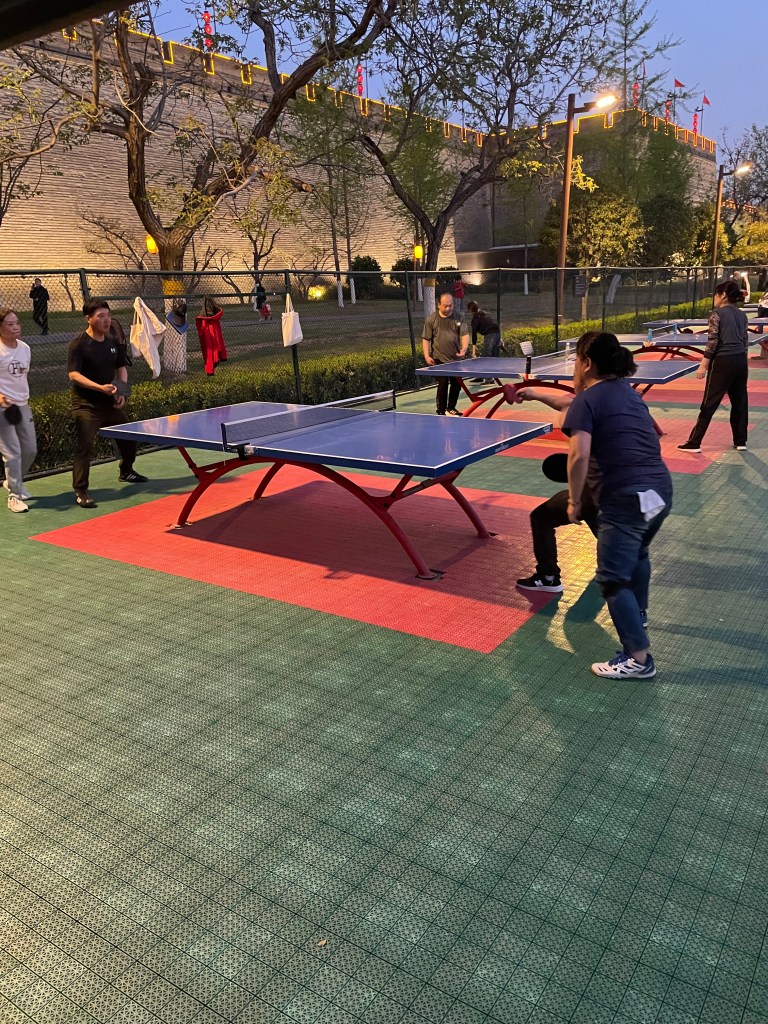
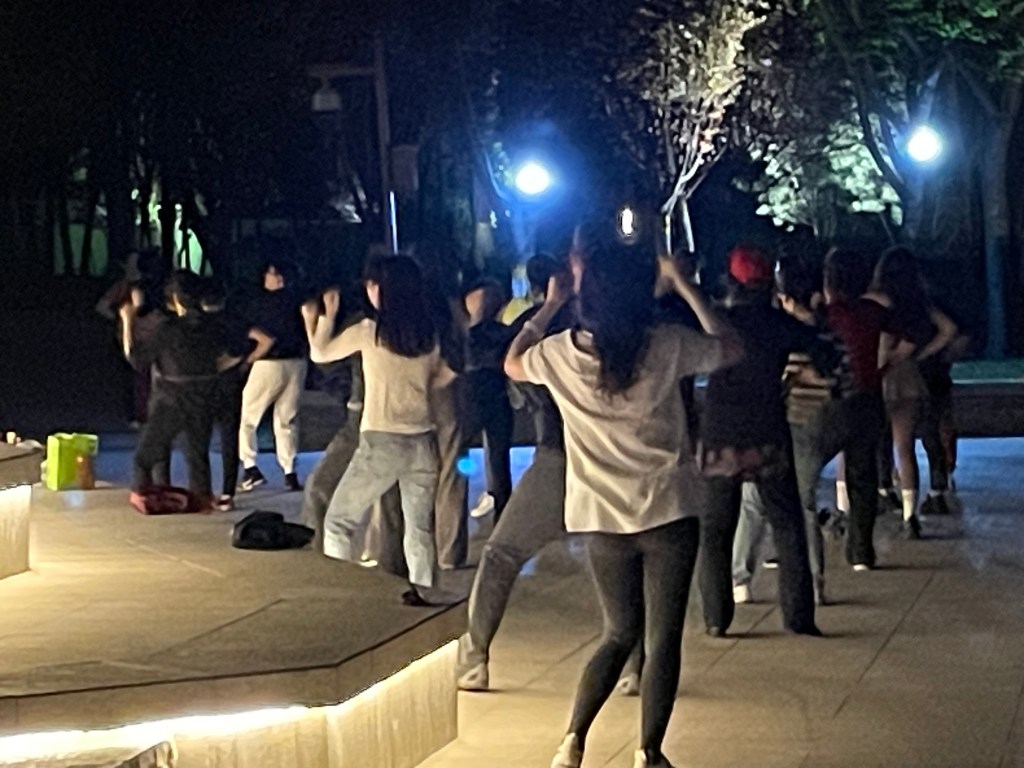
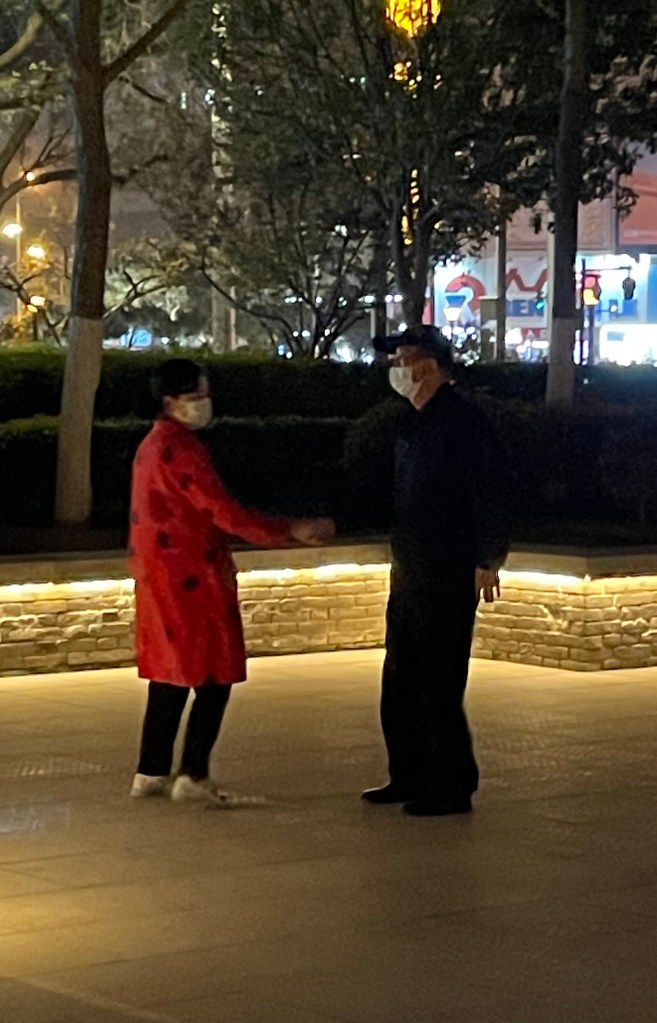
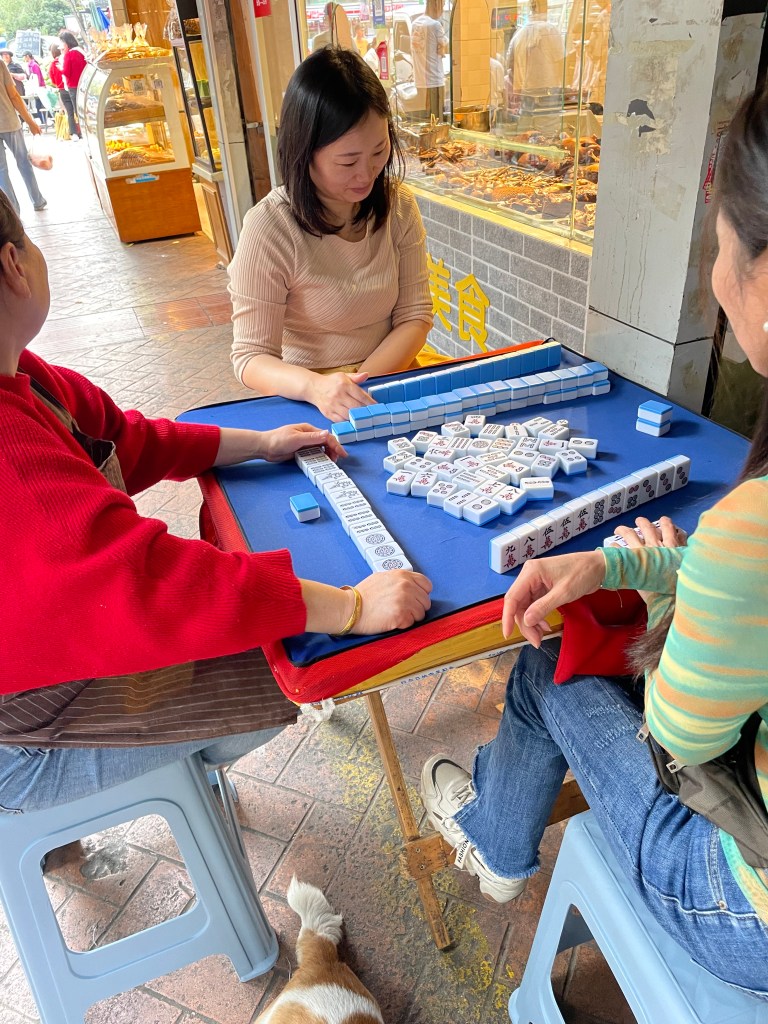
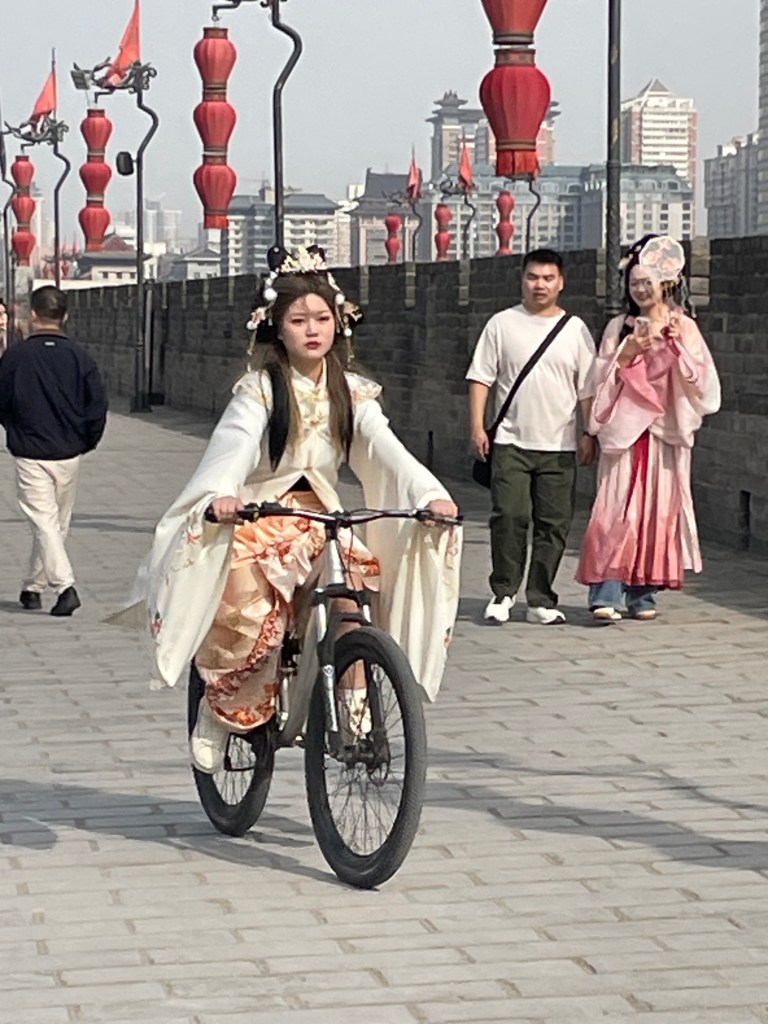
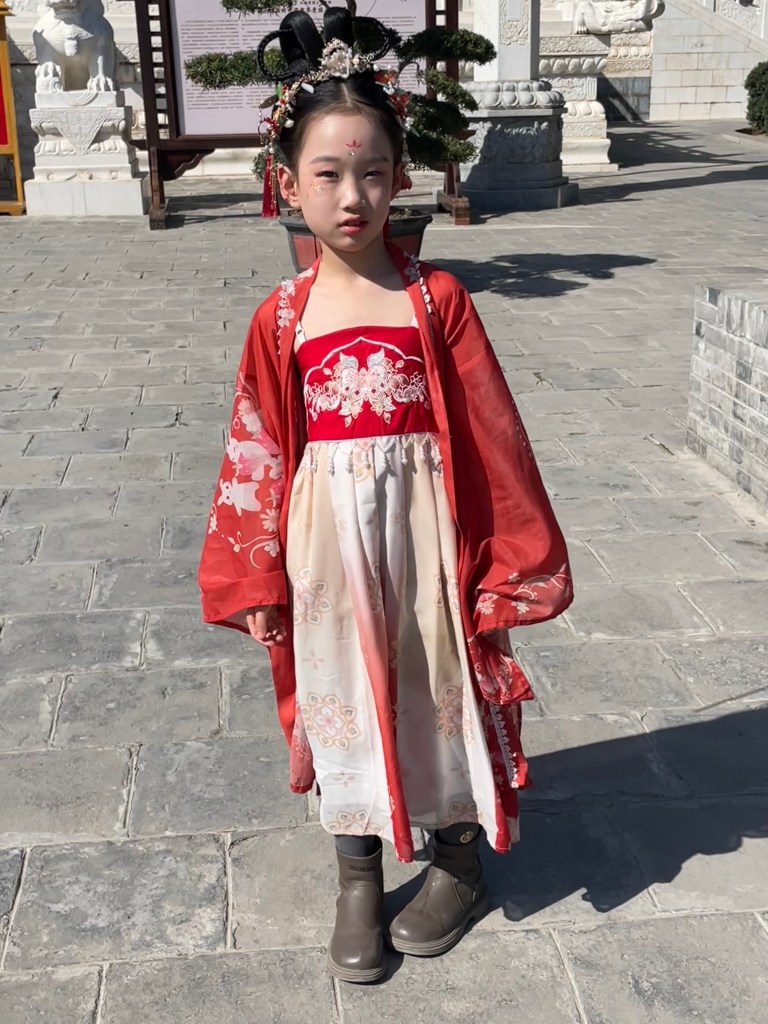
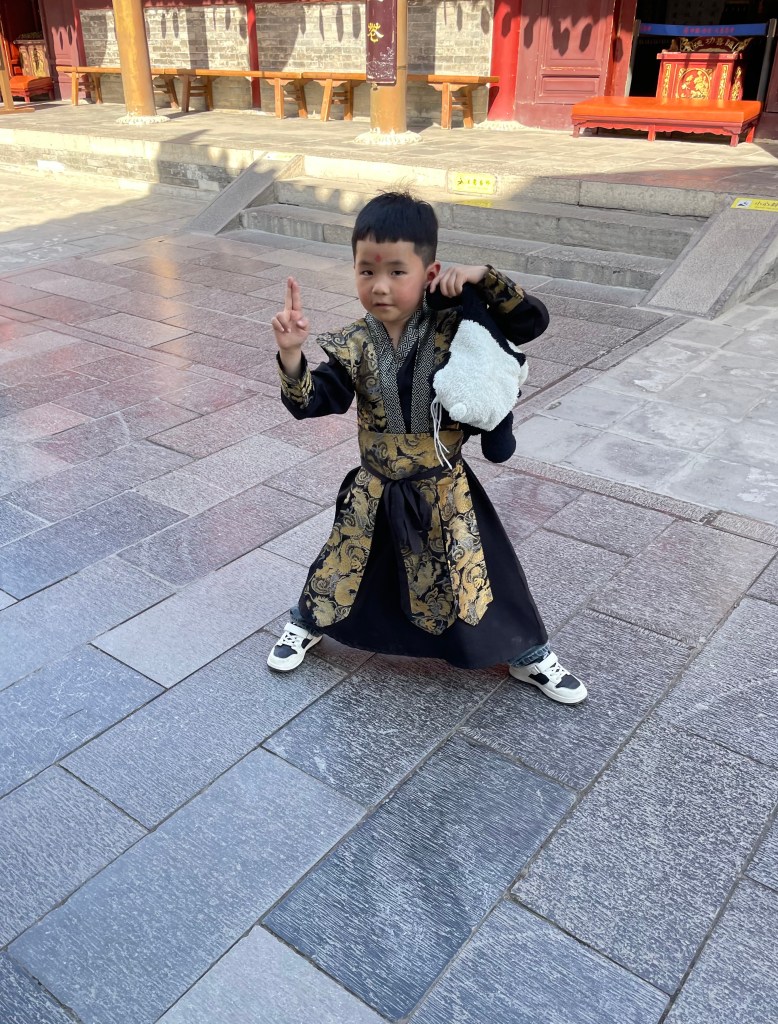
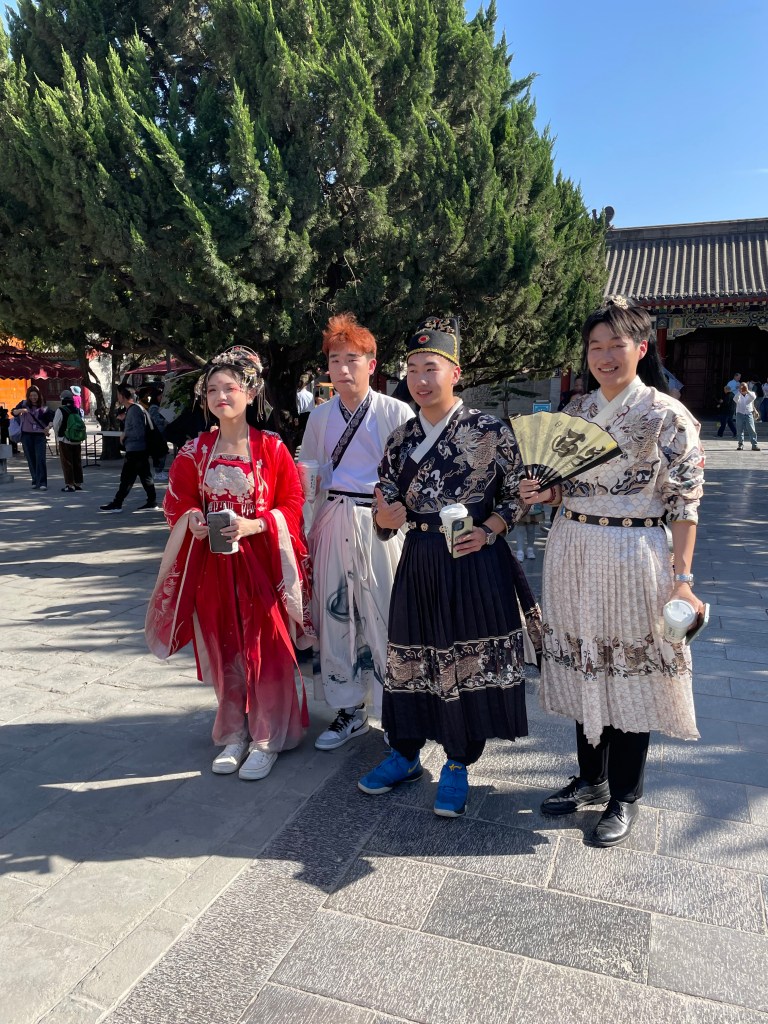
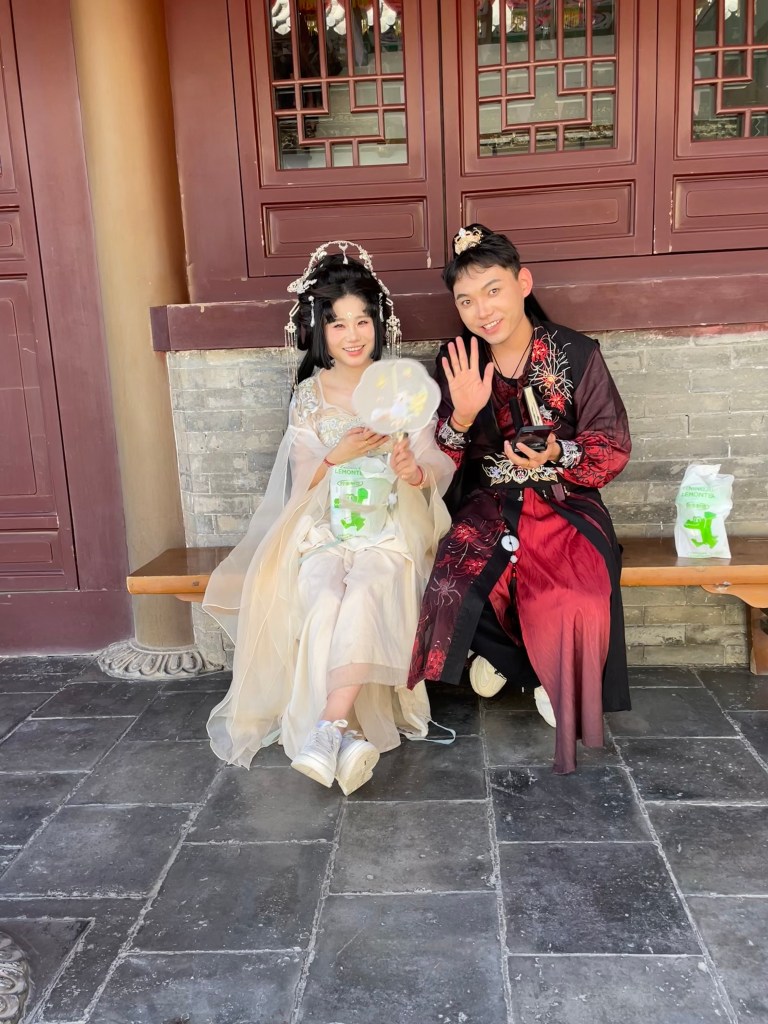
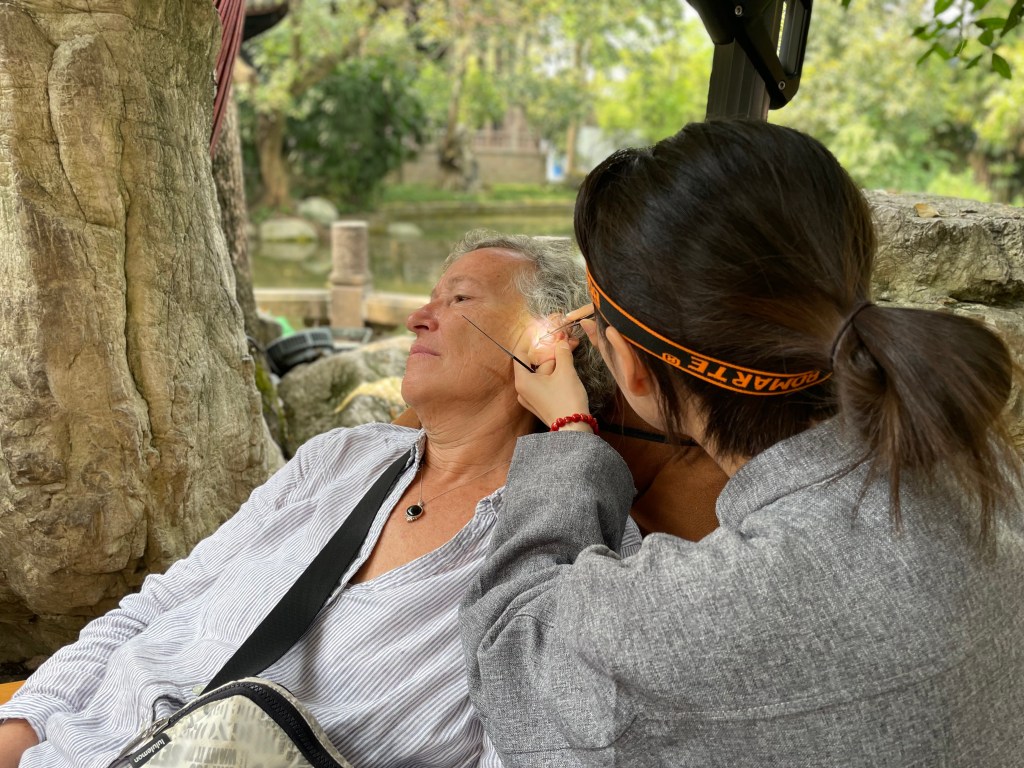
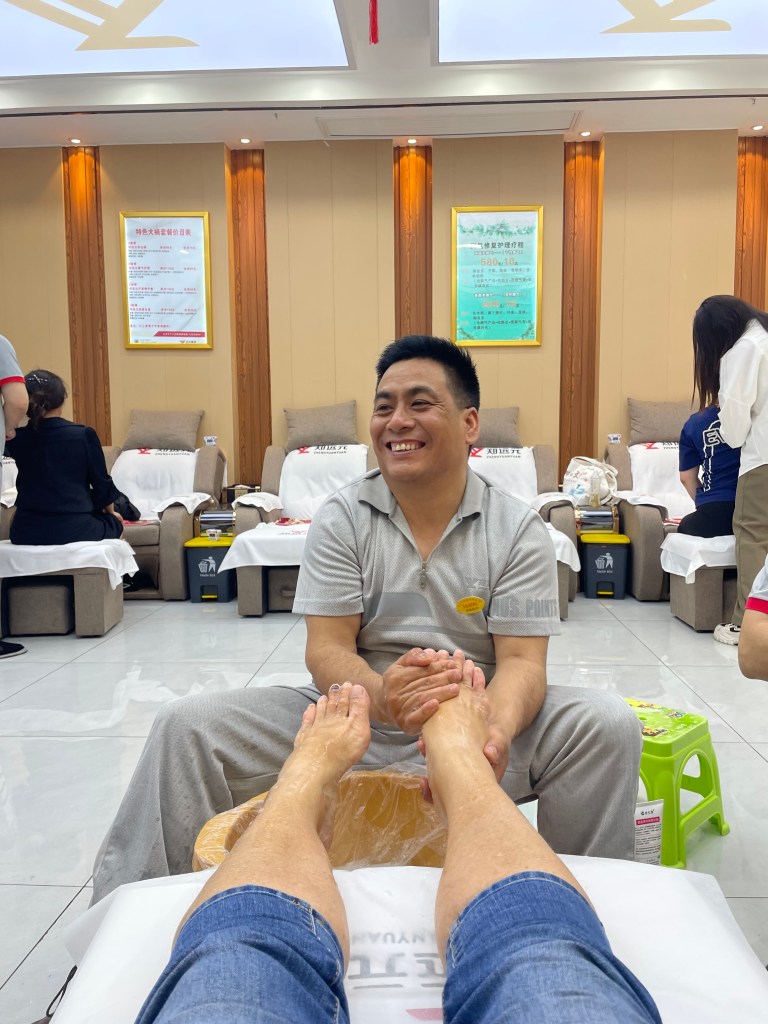
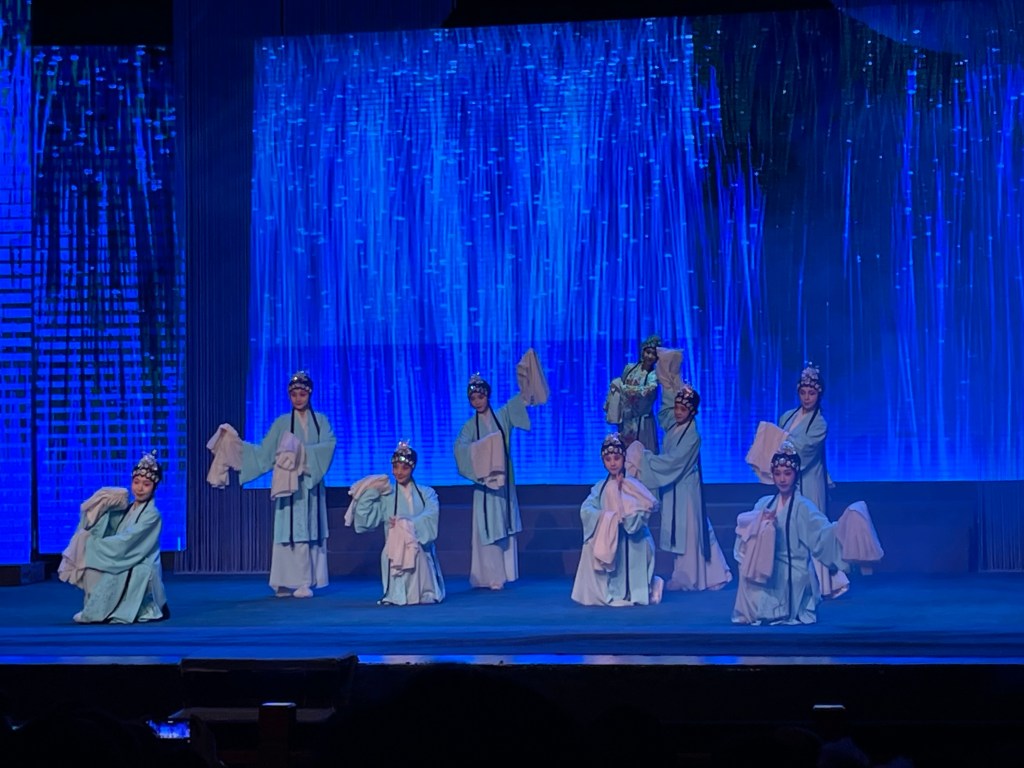
I really liked that they were a lot of parks where people gathered all day long. It was fun to watch them play mah jong and ping pong. I wanted to join in the groups dancing together for exercise. And lots people picnicked on the grounds. The parks were places of community. Here as in Japan and Korea, I saw a lot of people dressed up in the traditional clothing at the various tourist sites, which is always fun to see. In Chengdu, I got my ears cleaned which is a must do activity. There are chairs lined up in various places throughout the city where you recline while your ears are poked and prodded. And I got a foot massage with was so much more than that. It was wonderful. They soak your feet for twenty minutes while they massage your neck and back, digging deep into the knots, I almost fell asleep when they were done. Then they cut your nails and callous off your feet with a knife. It’s a little scary. I wondered if I’d lose a toe if he slipped. Then your feet and legs are massaged. Oh, it felt so good. Where ever they pressed on the soles of my feet, it perked me right back up.
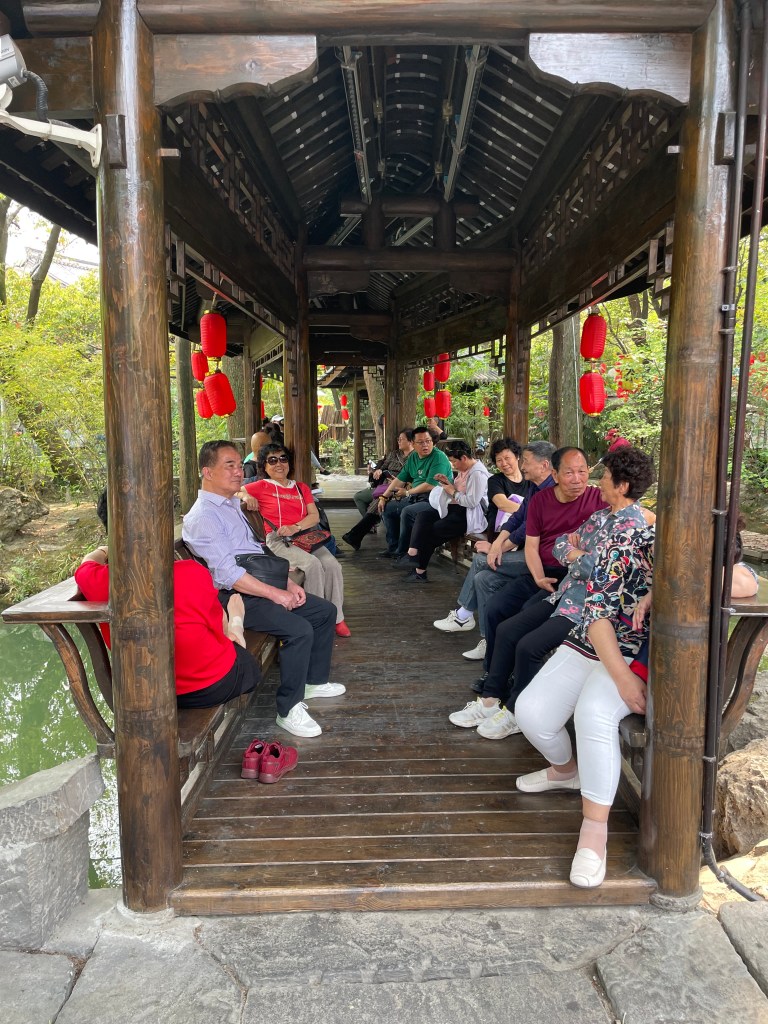
Another young woman, also from Germany, who was with me in Xian walked for several miles through the city and commented that she didn’t see one other foreigner while she was out. On my cruise on the Yangtze, there were over 350 passengers and only 7 were English speakers. At Disney in both Hong Kong and Shanghai, I saw less than a dozen Caucasian faces in a sea of thousands. Now, I have been one of an only few white people in many countries, but somehow this felt lonelier. I think because really no-one speaks English in China unless they’re a tour guide and with a few other exceptions. Even at the Western hotels I stayed at, the front desk did not speak English. They always ran to find the one person in the establishment that did, when I had a question. I’ll modify those comments by saying a met a couple from Alabama – Danielle and Michael, who live and work in China and don’t speak Mandarin but said that their team mates speak English well enough for them to function. Vic, from Australia, has live here 15 years and he says he’s only about 40% fluent in Mandarin. Now there is no reason they should speak English, I’m just commenting on my experience here.
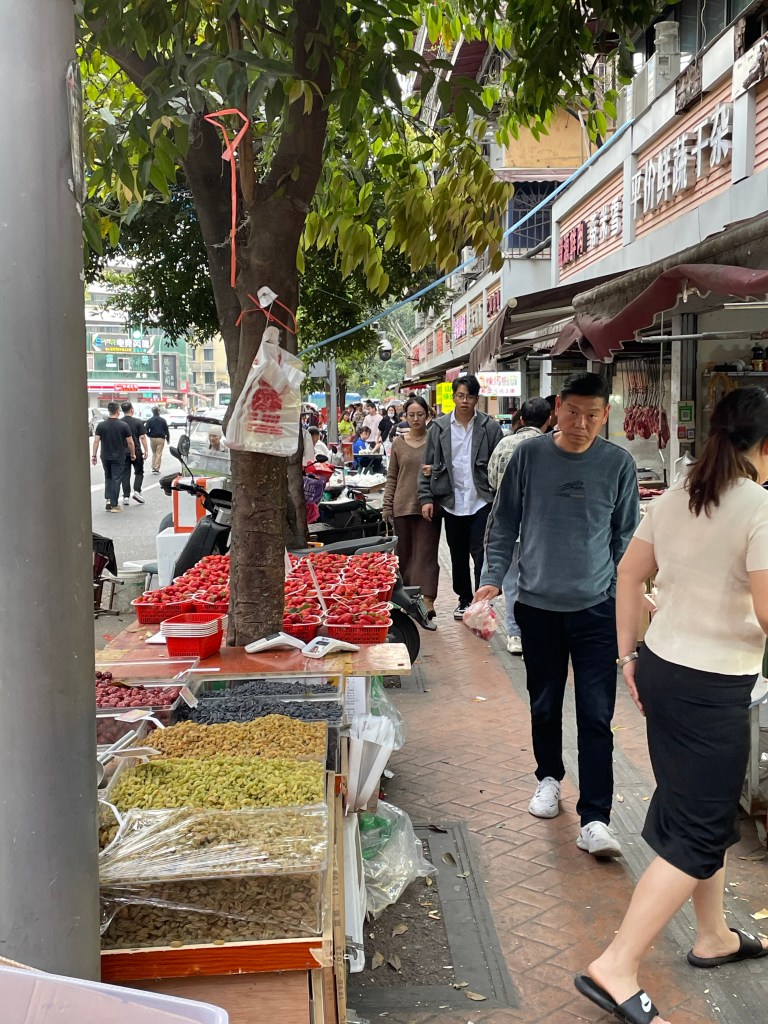
I didn’t know what to expect in China really. Would it be really different than other countries I visited? Would someone be tailing be all day when I was walking through the city by myself – I read that in a book? Would I be able to get my email, use WhatsApp to contact my family, etc? Well, no-one followed me as far as I could tell. I felt free to go wherever I wanted. I got a VPN, thinking it would help me get WiFi but it didn’t. Well it did for a little while and then didn’t work no matter which server I selected. But luckily my cellular service worked just fine – I could get emails, call on WhatsApp, check Facebook and Instagram. Thank you T-Mobile. But all-in-all China really felt just like any other country with the normal routines of daily life, albeit with cultural differences as you would expect.
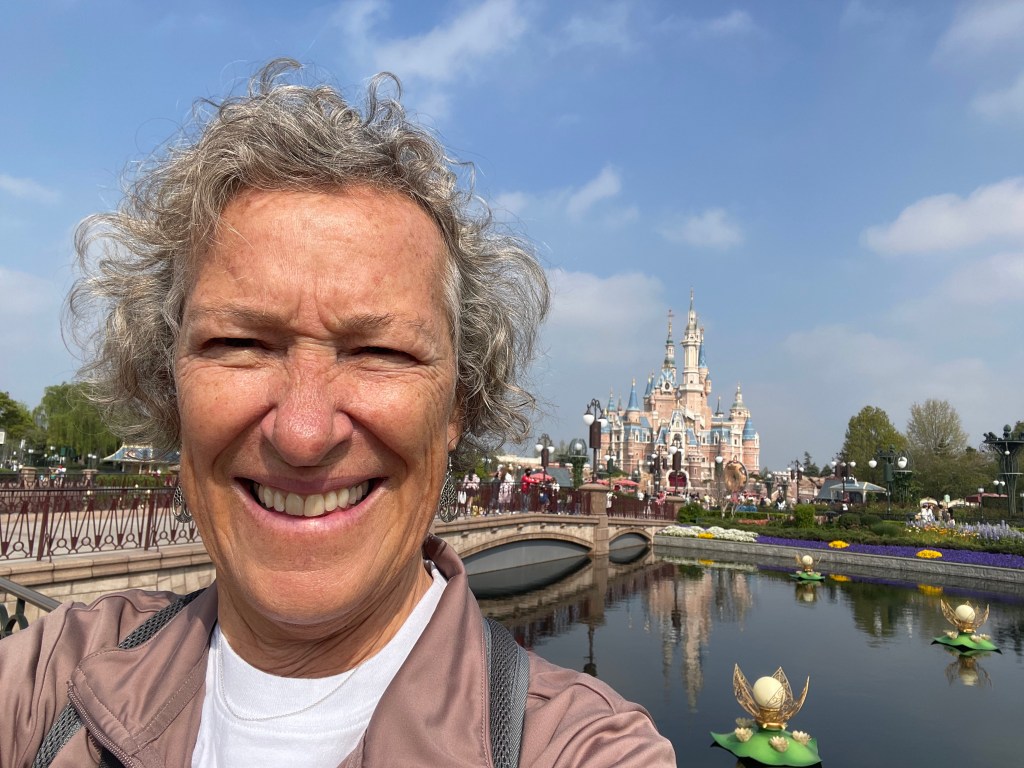
There is alway so much more to tell you, but I always feel that my posts are too long. For example I failed to mention the use of slippers in Japan. But I guess I need to leave some details to tell you in person once I’m home. I have now been to all three Disney properties in Asia – Hong Kong, Tokyo and Shanghai. I have of course visited the parks in California and Florida. So once I go to see the one in Paris, I will have conquered them all.
Reading List:
Lady Tan’s Circle of Women by Lisa See
Treads of Silk by Amanda Roberts
The Flower Boat Girl by Larry Feign
The Valley of Amazement by Amy Tan
Next Destination: Chile – after a 24 hour flight via Sydney. My longest flight to date.


 Where in the World is Debra Grimes?