“Like all great travelers, I have seen more than I remember, and remember more than I have seen.” -Benjamin Disraeli
January 28 – February 1, 2024
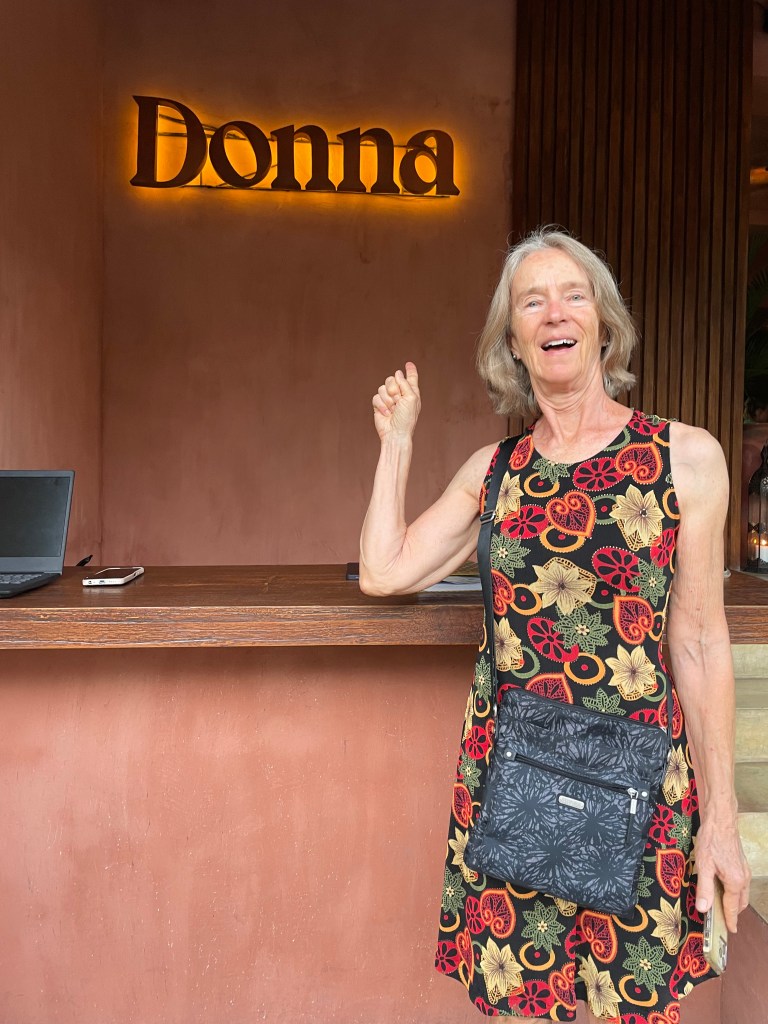
I’m sure you didn’t expect to hear from me again so soon. But unfortunately, I only got to spend three full days in Bali. The time was pleasantly spent with a good friend from Sedona, Donna Forsythe, which was a wonderful treat. Previously of Nashville TN, she was in Thailand visiting her son and took the opportunity to meet up with me, since she was in the area. We both had Bali on our travel bucket lists so it seemed the perfect spot. According to the all knowing web, January and February isn’t the best time to visit due to the monsoons, but it fit our schedules. Because of the potential for rain, I didn’t book any additional days there once Donna headed back to Thailand. We only had a few quick showers while we were there and none predicted for the following week, so I missed out on an opportunity to explore further. I may need to go back.
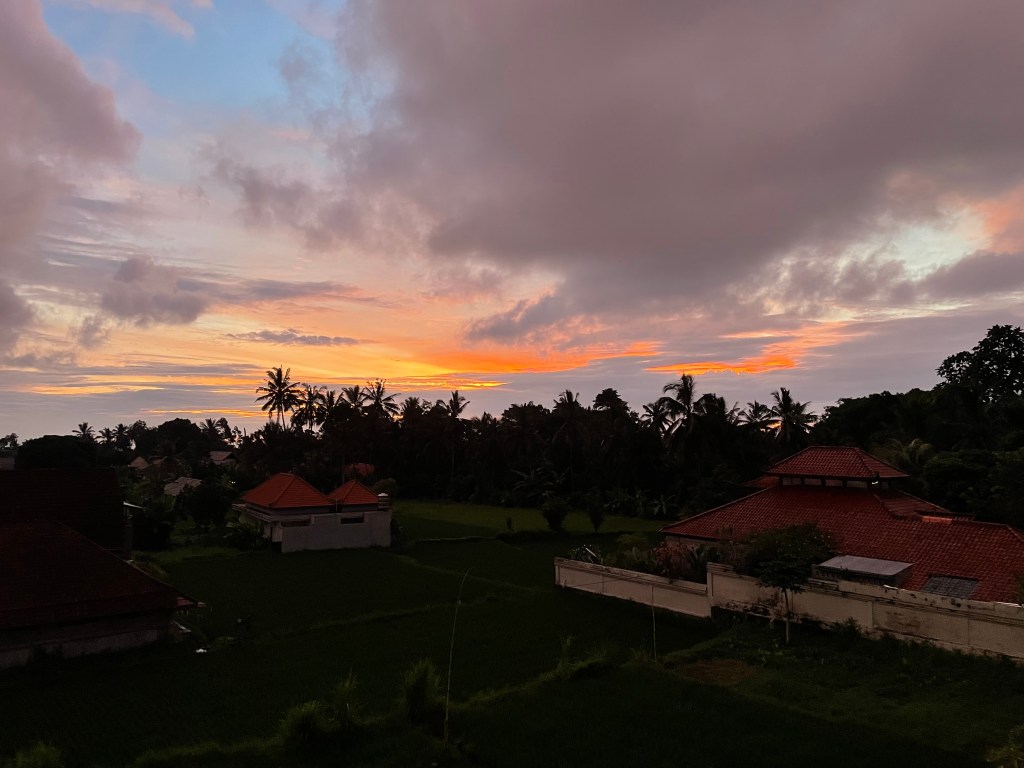
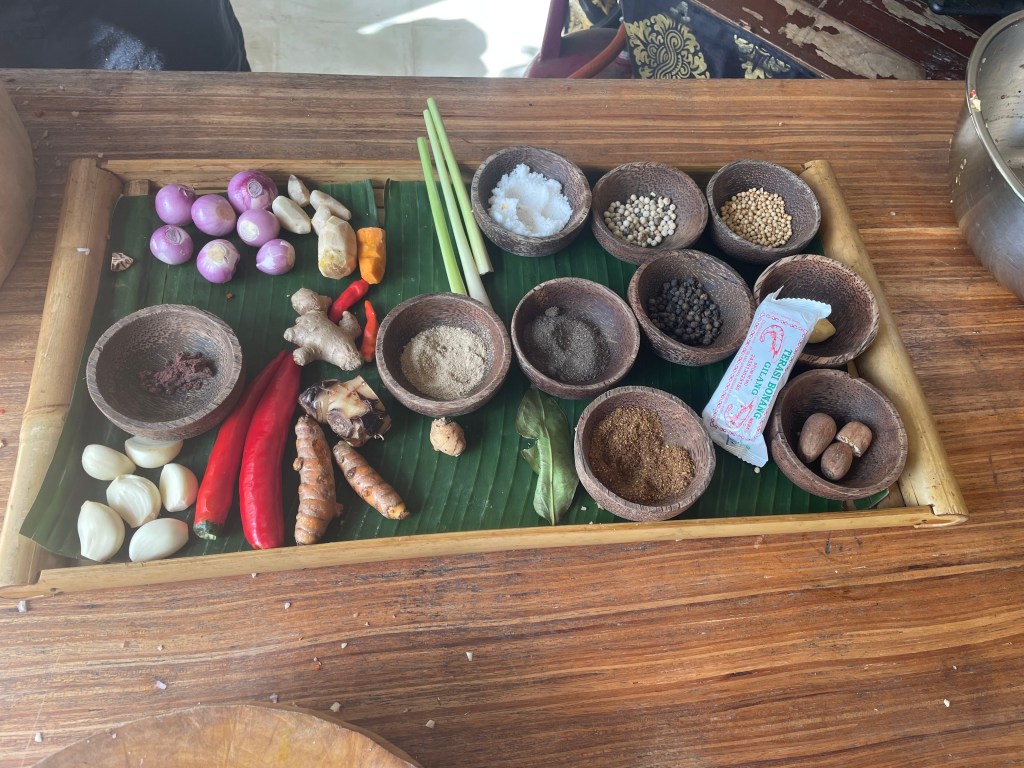
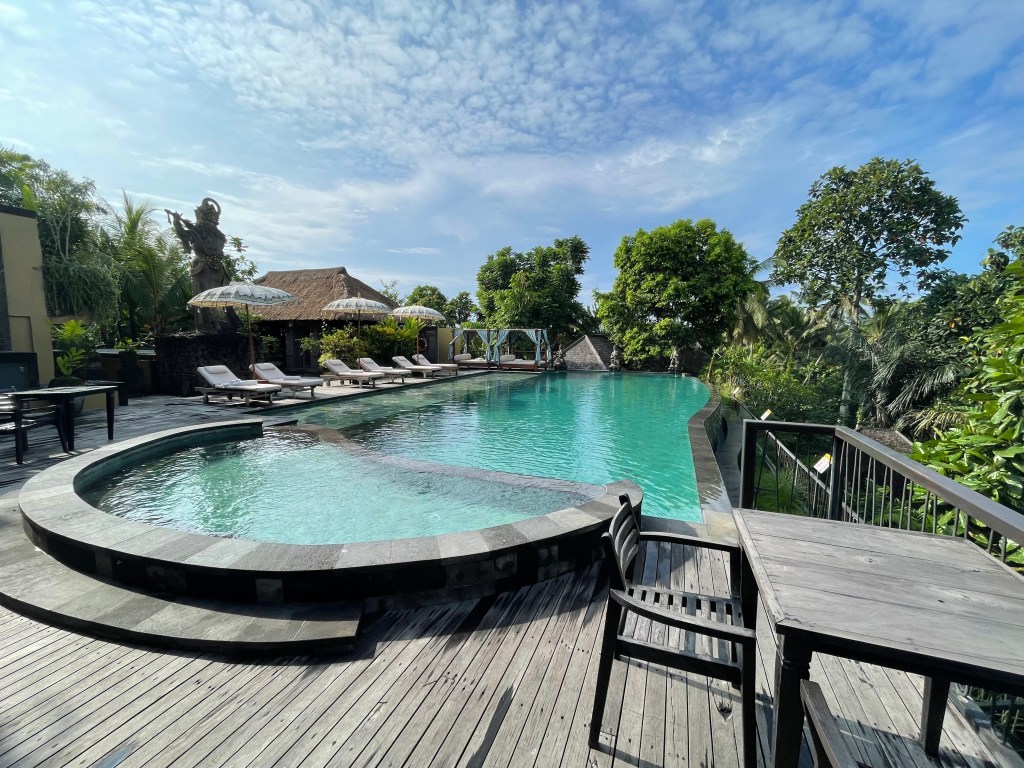
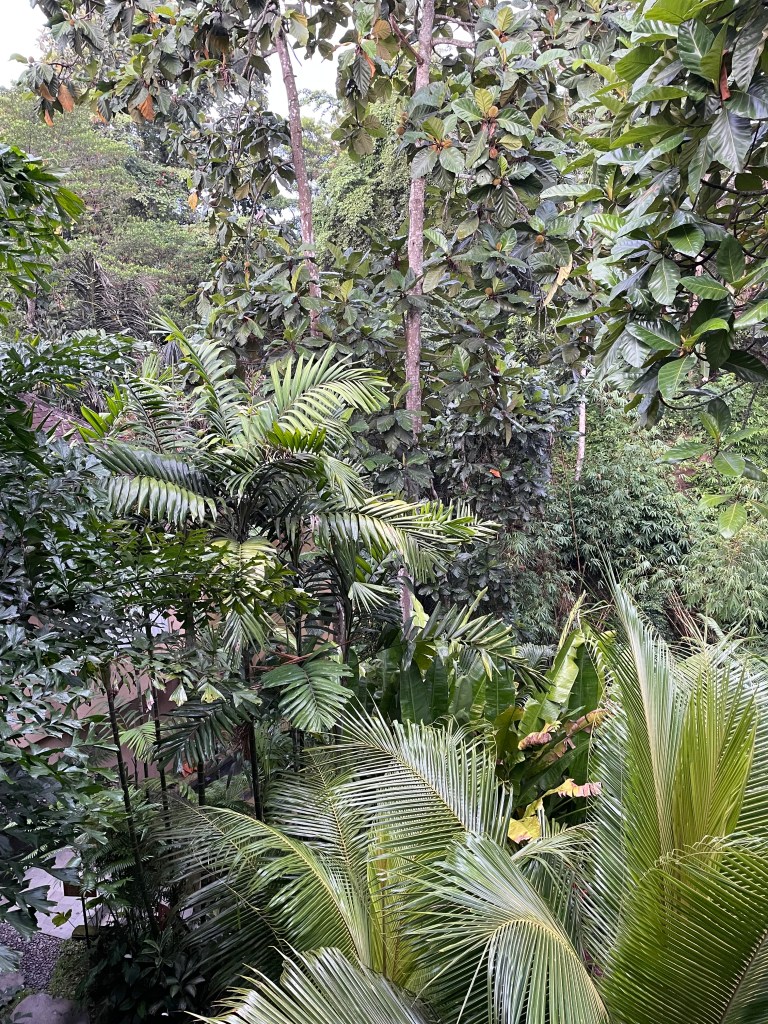
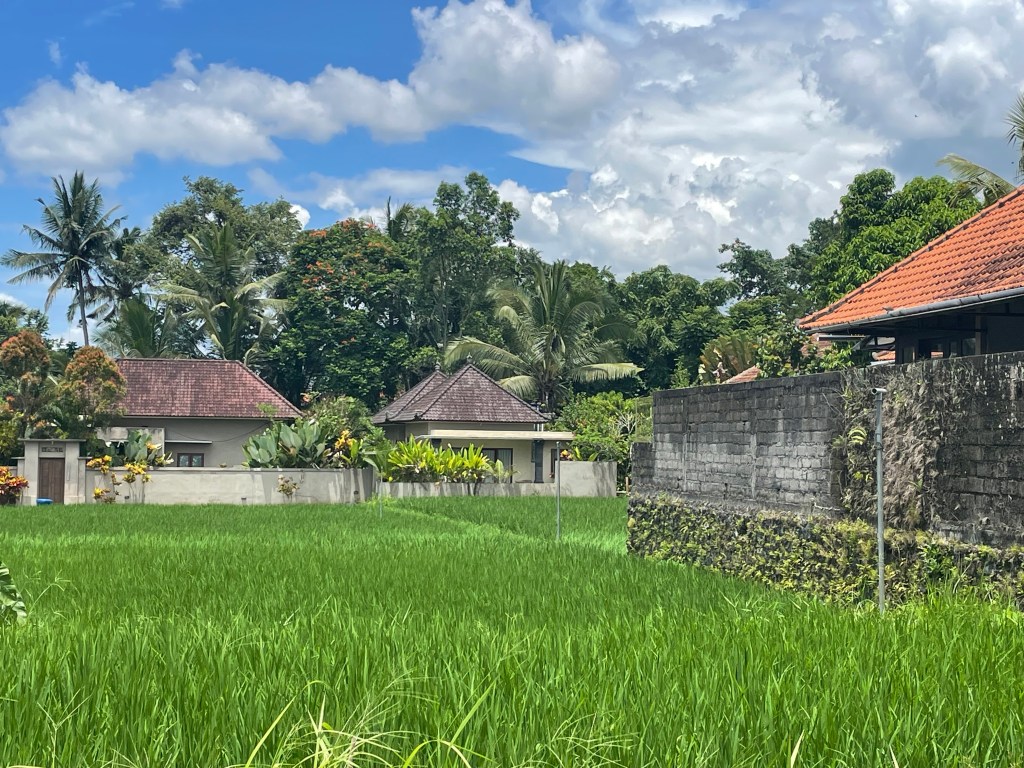
Our time was spent in Ubud, in the center of the island about an hour north of Denpaser, the capital. We stayed at Sankara Suites & Villas, a very lovely resort about 10 minutes outside the city center. We had beautiful large rooms overlooking the jungle. The open air restaurant, where we had our breakfast, was on the second floor with a high domed thatched roof and views of the lush landscaped courtyard in one direction and a brilliant green rice field in another. The service was impeccable and the food delicious. The chef taught a class on Balinese spices and we created a paste that is used as a basis for many dishes. It contained ginger, turmeric, garlic, shallots, lemon grass, shrimp paste, lime kefir leaves, fresh bay leaves, and more. It was very tasty. We enjoyed yoga each morning in another open air, thatched roofed room overlooking the pool. As intended, we spent some time pampering ourselves in the on-site spa and reading by the pool. The resort offered regular shuttle into the town center which we utilized every day.
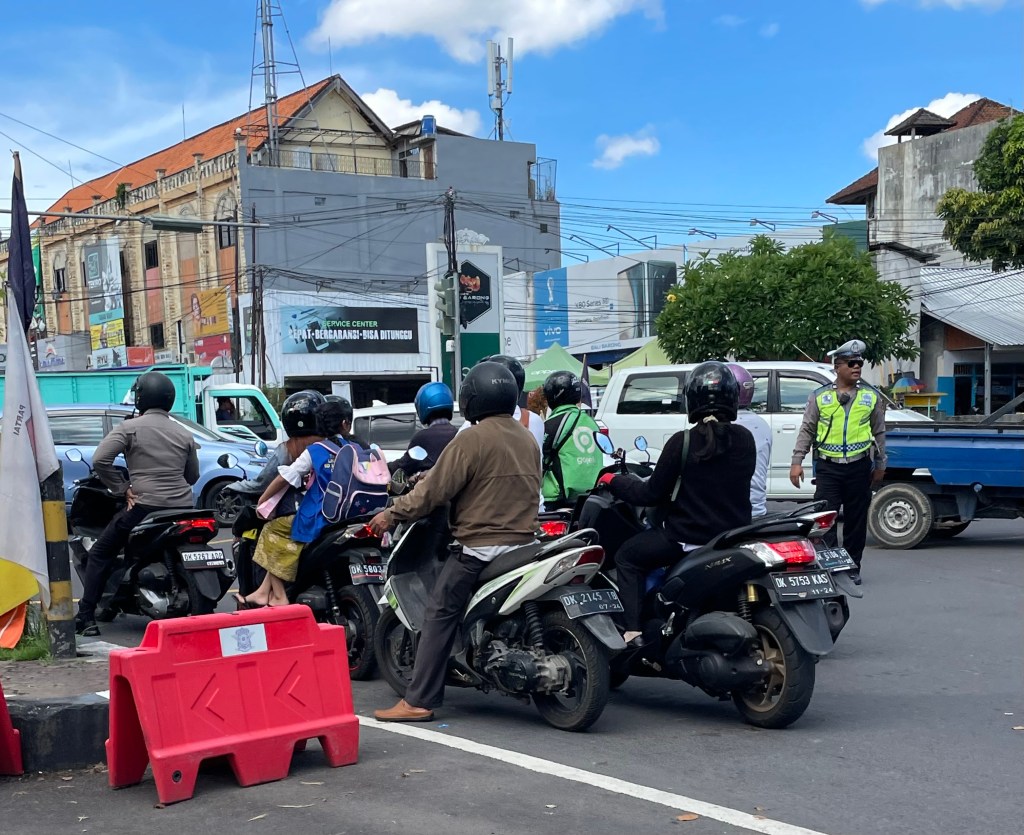
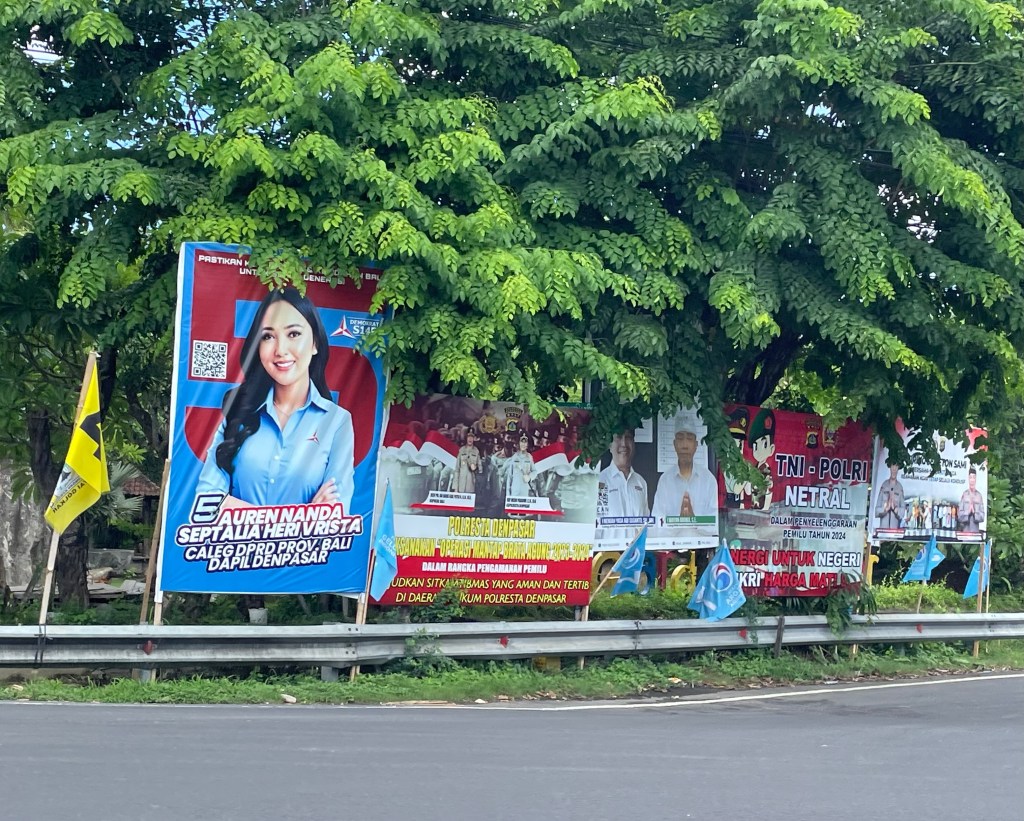
One of the first things I noticed about Bali was how narrow the roads were once outside the downtown area of the capital. The roads were barely wide enough for two cars to pass each other. If anything was stopped or stored along the side of the street, you would need to pause and wait until you gained access to the other lane. And things were always near the road – cars, motorcycles and trucks parked in front of any place they had business to attend to; piles of dirt, lumber, and other materials dumped waiting to be used; and dogs and cats lying on the warm pavement oblivious to the passing cars. Donna often gasped as we squeezeed by a car with barely an inch between us. I didn’t bother to look, relying on the local driver to know what he was doing. It is an election year in Bali too so the roads were lined with political posters, especially in Denpaser. The streets I traveled on through the capital, Ubud and in-between were very busy, filled with cars and trucks and motorbikes weaving in and out of the traffic. And very seldom a horn to be heard.
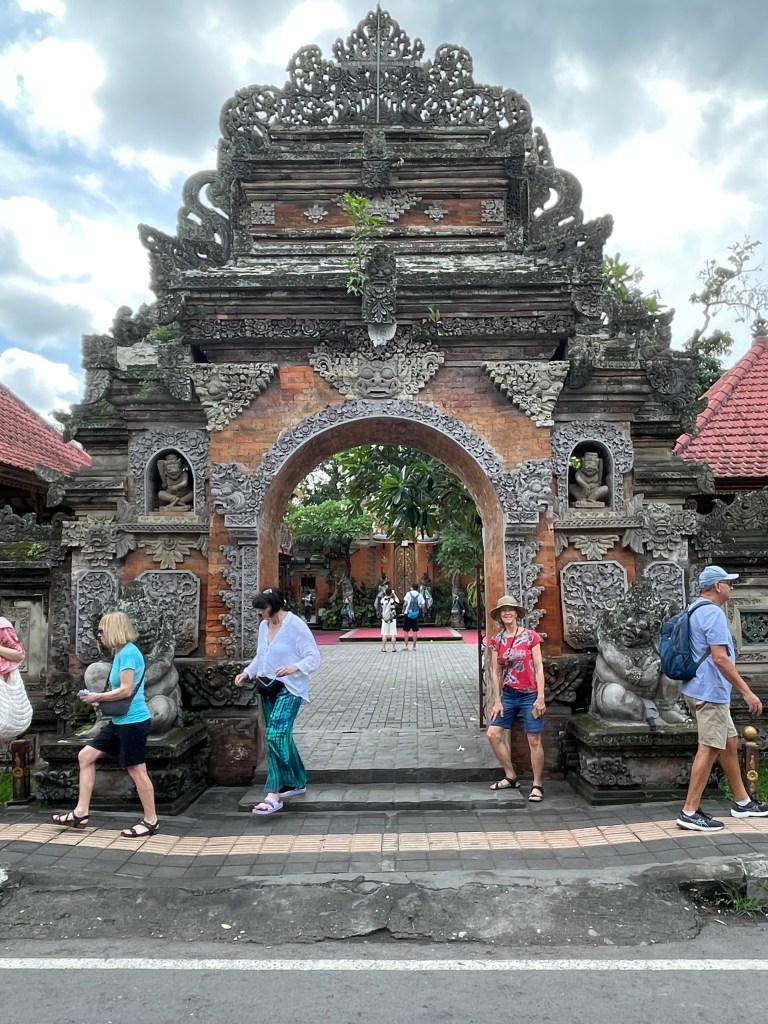
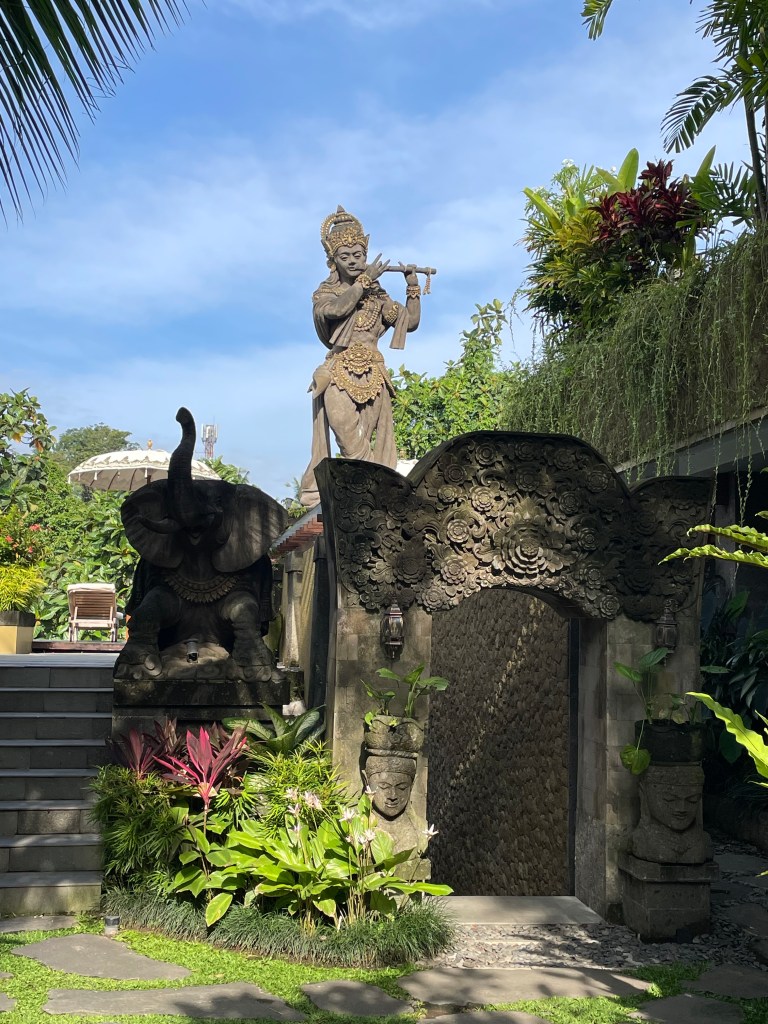
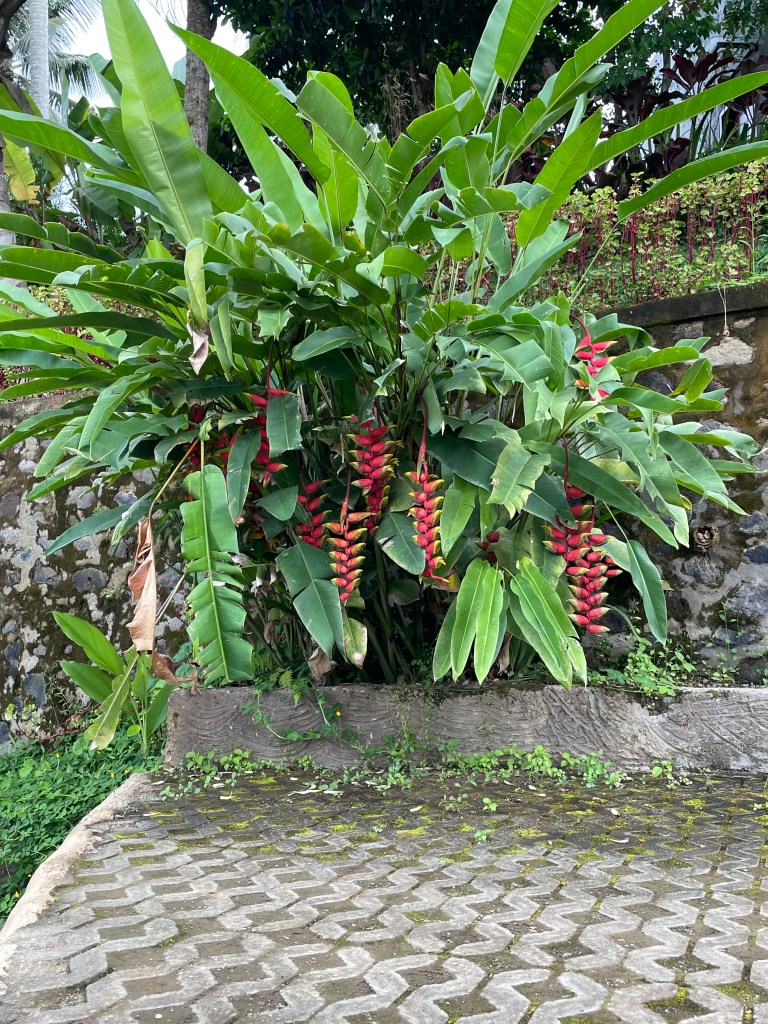
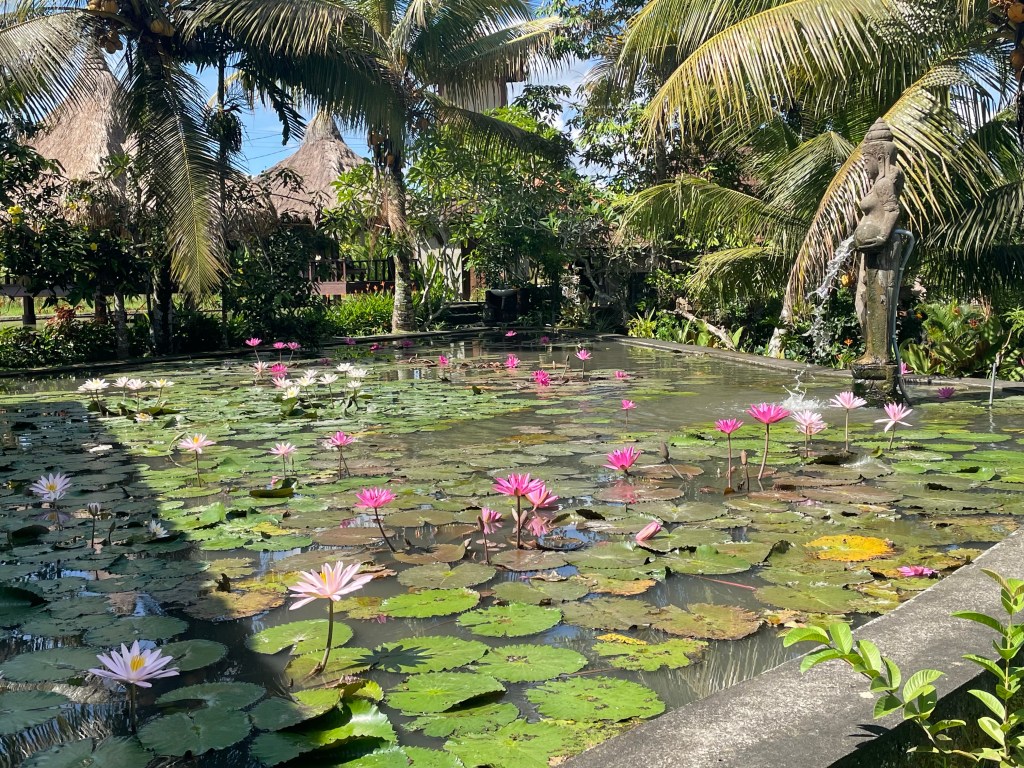
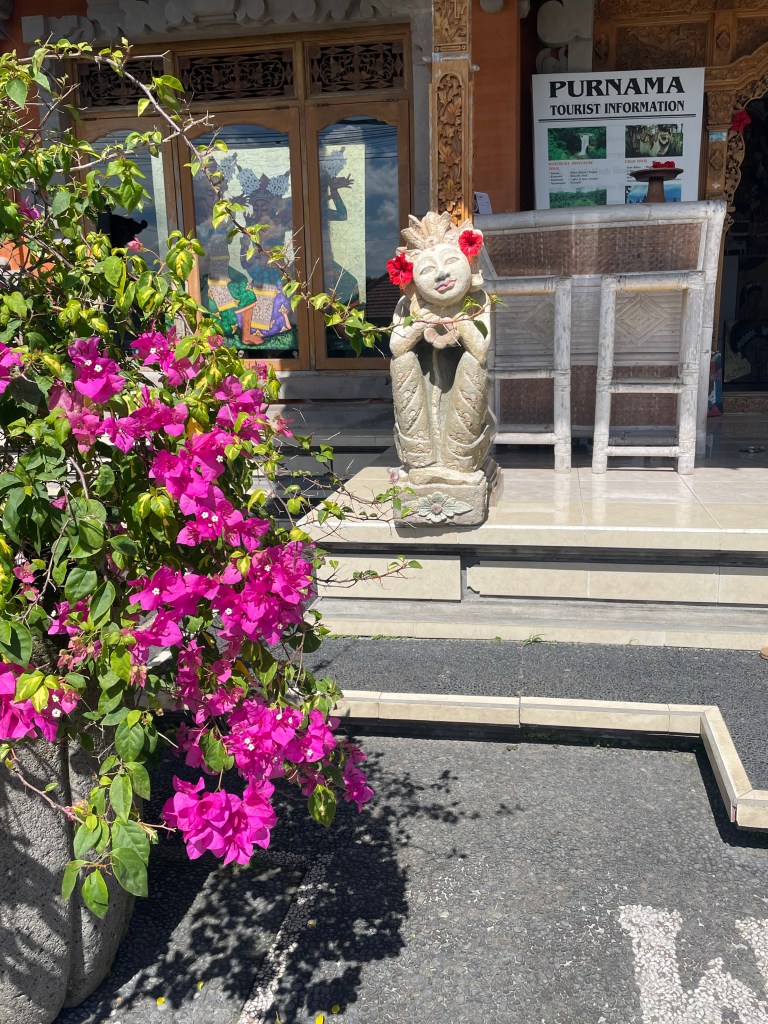
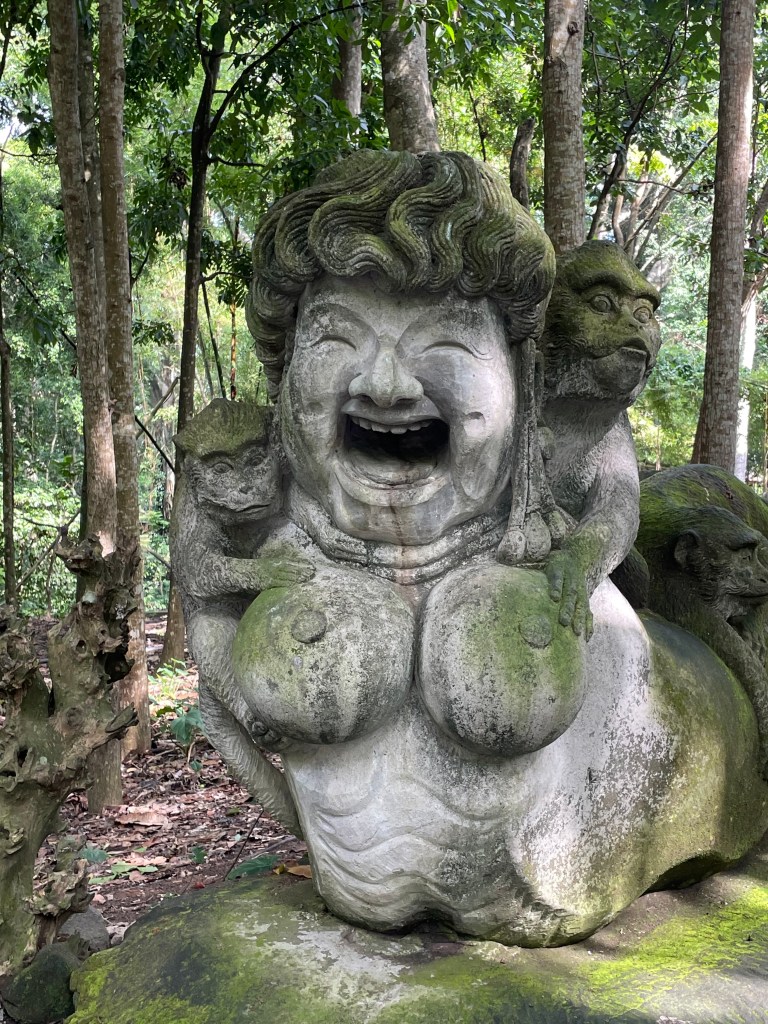
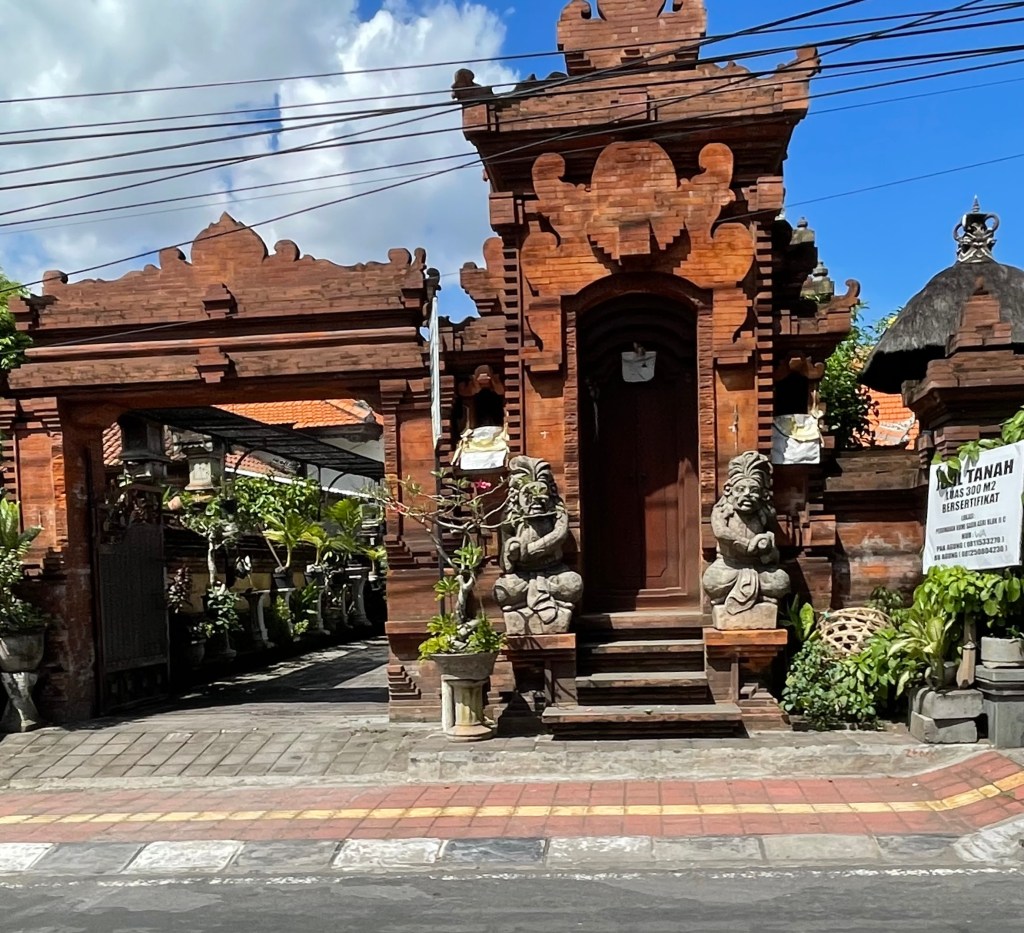
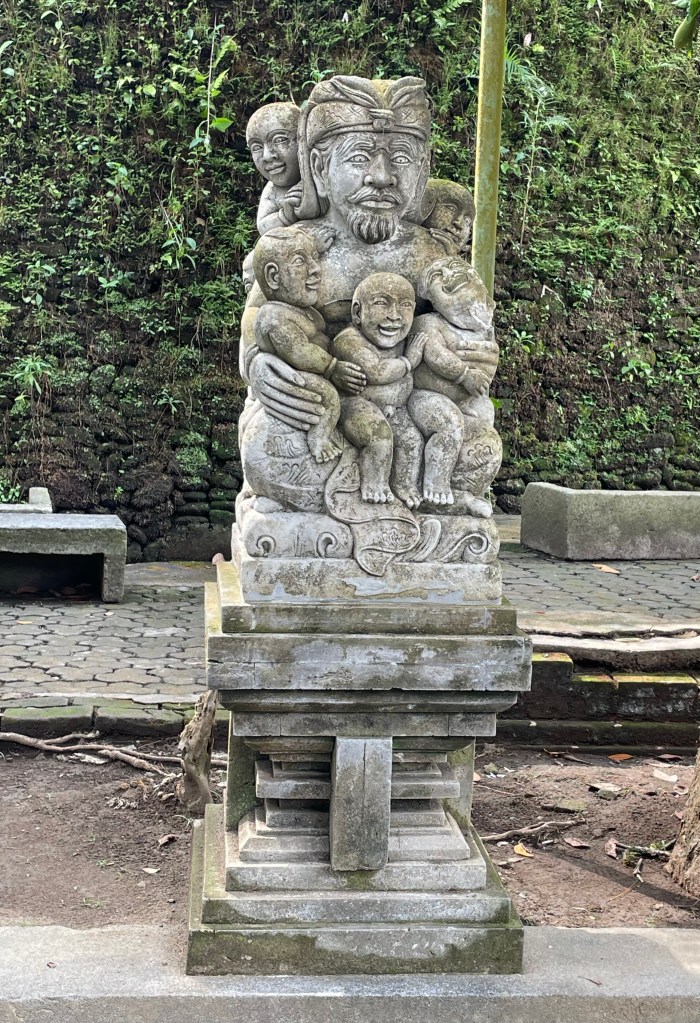
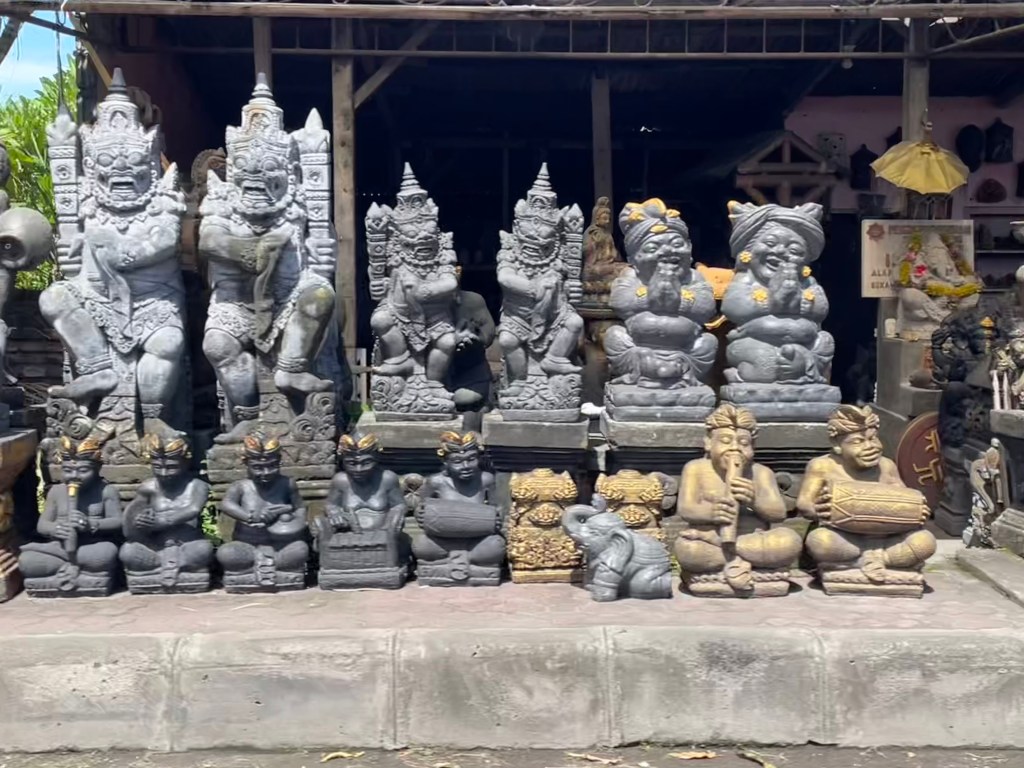
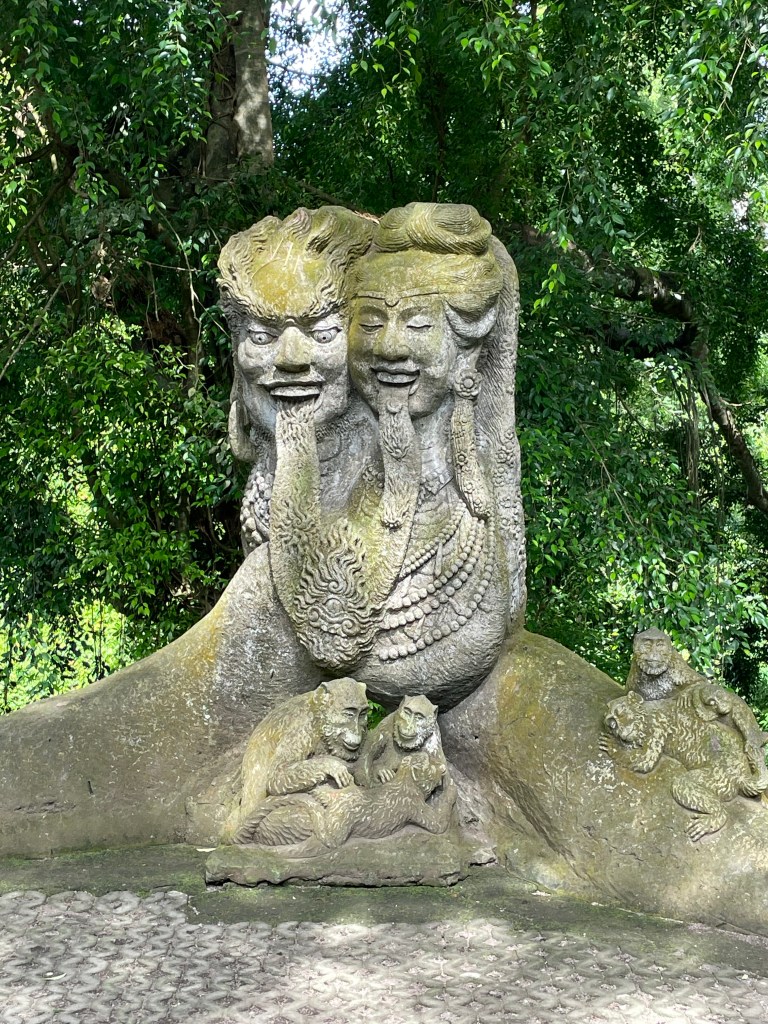
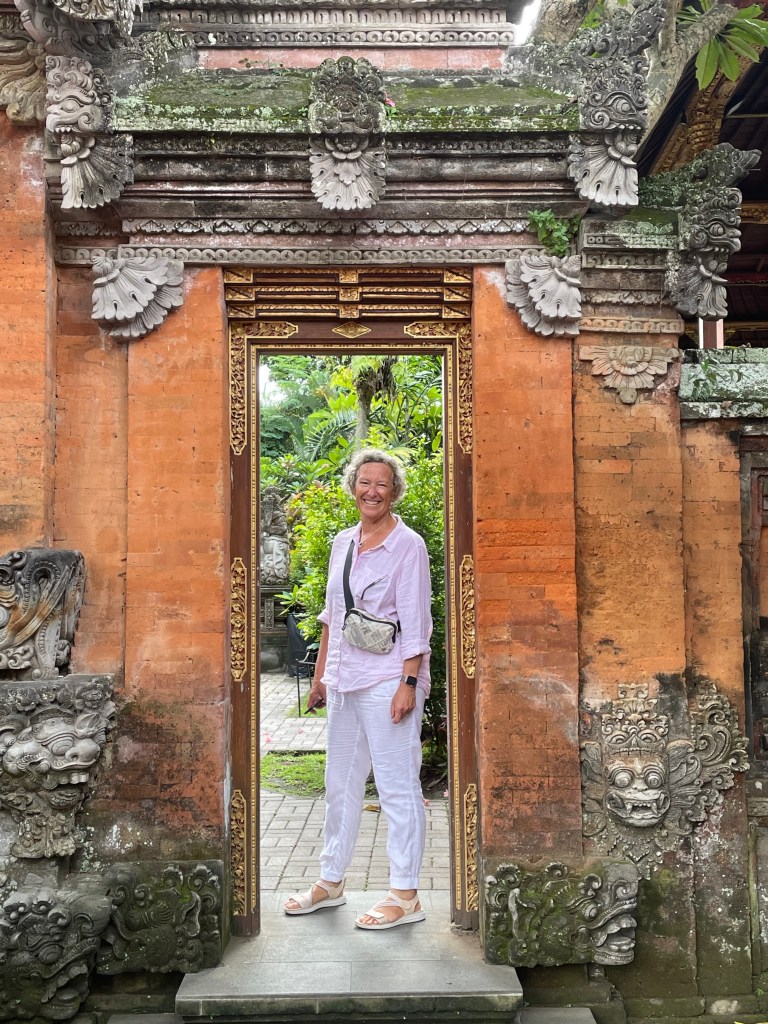
As soon as I entered the hotel, I noticed flowers everywhere. There were bright orange chrysanthemums blossoms on the stairs; beautiful yellow and white frangipani placed on my pillows, my towels and my yoga mat; vibrant pink orchids adoring the restaurant and lobby; and vivid red hibiscus embellishing rock faces. At the hotel and across Bali, sandstone statutes of all sorts are everywhere. They welcome visitors into businesses, homes and resorts; they decorate temples inside and out, paying homage to the many manifestations of the Hindu god; they adorn homes and courtyards; and appear in parks and in the countryside. The variety and detail in the sculptures are amazing. I saw statues that were thirty feet tall, some just a few inches in height and everything in between.
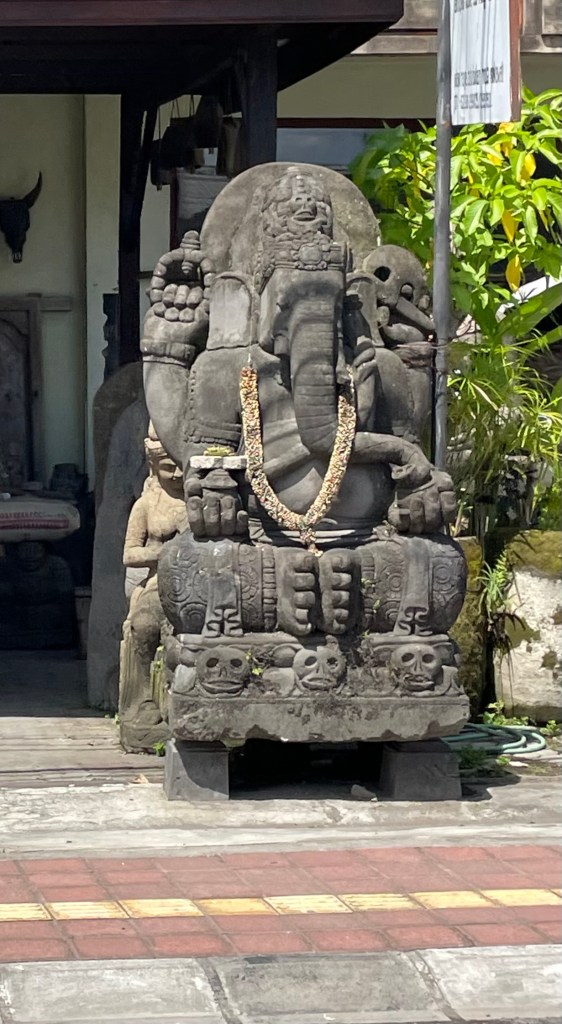
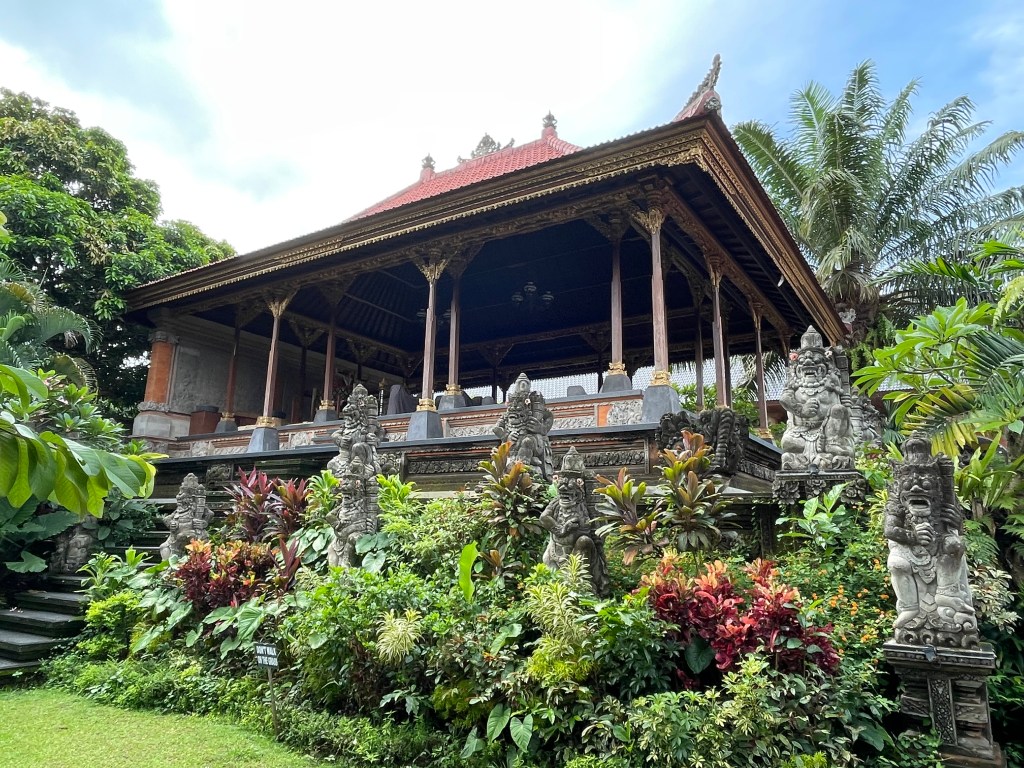
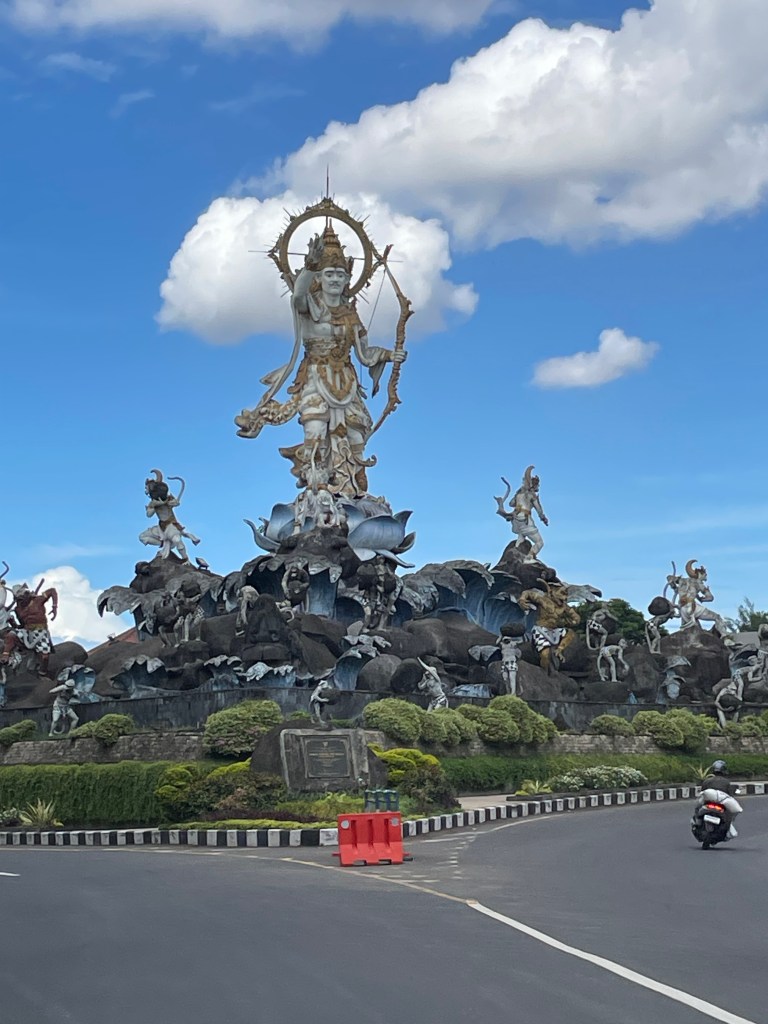
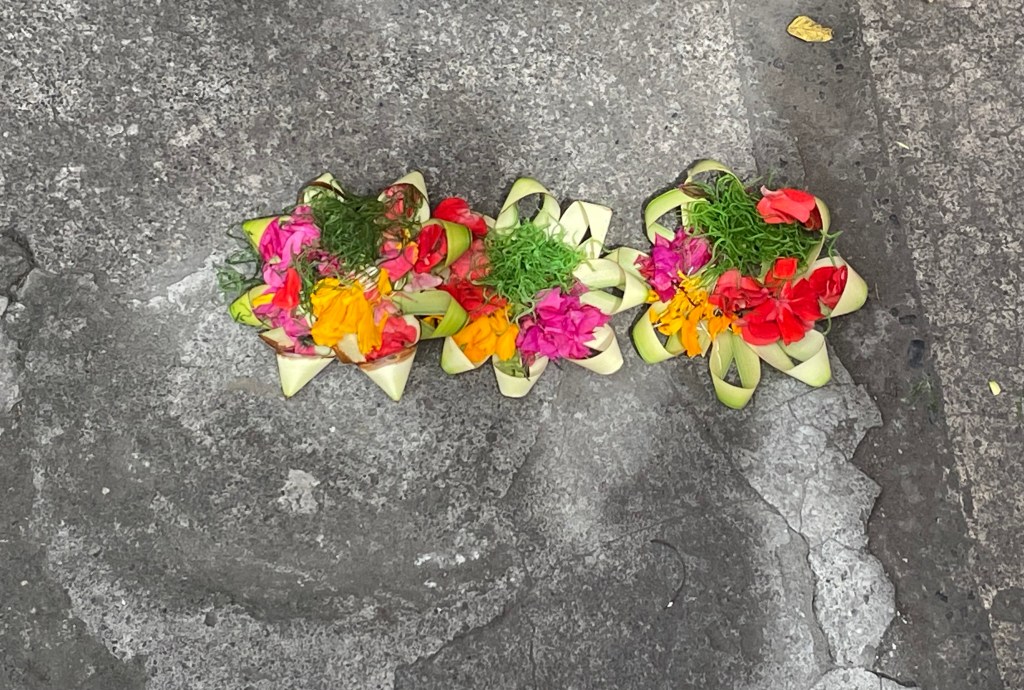
Another ubiquitous item was daily offerings to the gods. Or to be clear to the manifestations of the god, as Hindus believe there is only one god with many attributes. They were usually handwoven small trays of palm leaves, filled with flowers, rice, coins, and candy or crackers. A stick of incense was burning as well. They were placed on the steps of businesses, in front of houses, on the stage of a show or dance, inside taxis, and really anywhere the owner or caretaker wanted good fortune. One day, Donna and I got to the ‘art’ market just as they were opening and the store owners all wanted us to be the first customers, offering us nice discounts, as an early sale provided them good luck for the day. We helped as many vendors as we could!


The art market, as it was called, was really more of collection of souvenir stalls and contained hundreds of items. Sarongs were plentiful; t-shirts; a wide assortment of elephant and linen pants and shorts; suitcases; interesting carved and decorated masks; sun glasses; hats; woven purses; colorful tile trivets, coasters, and bowls; wooden bowls and platters lined with abalone; small statues of Buddha, Ganesh and other beings; and jewelry – earrings, rings, bracelets and pendants. Bali is known for its gold and silversmiths. Along with the markets, as there were several of them down various alleys around town, were many shops selling just as many items. We gladly shopped each day we were in town.
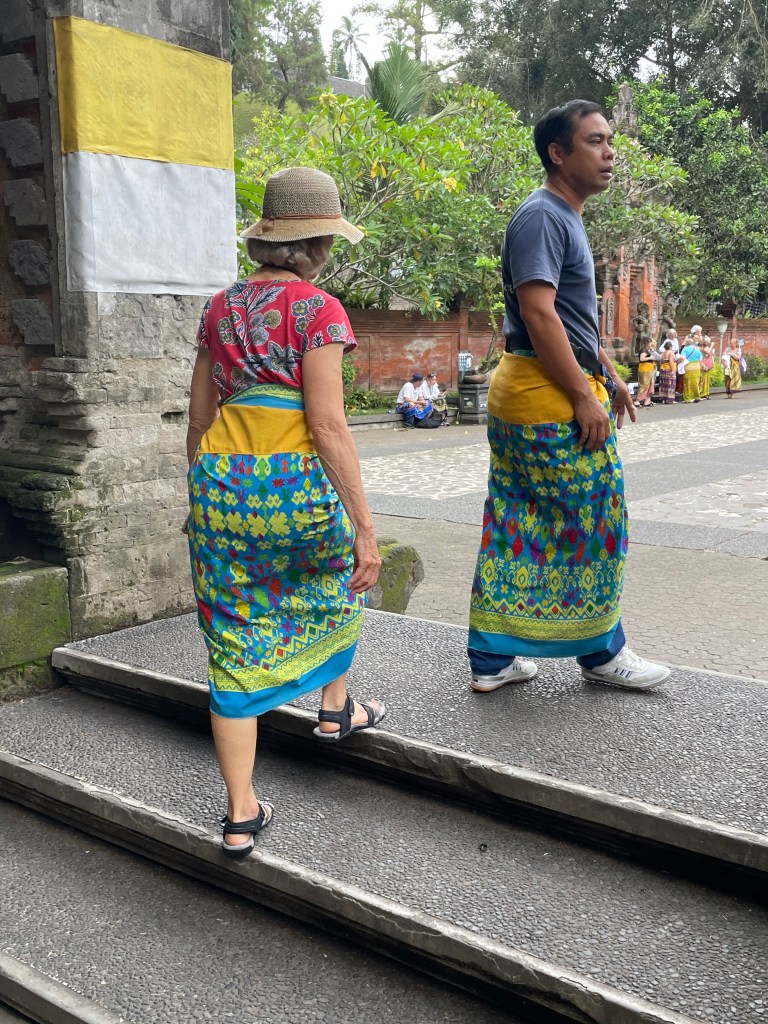
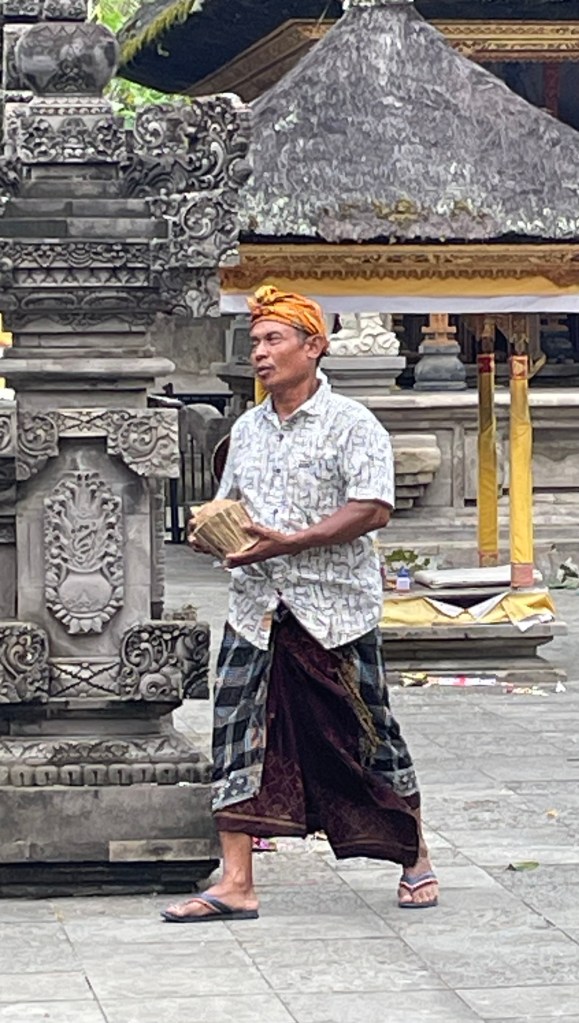
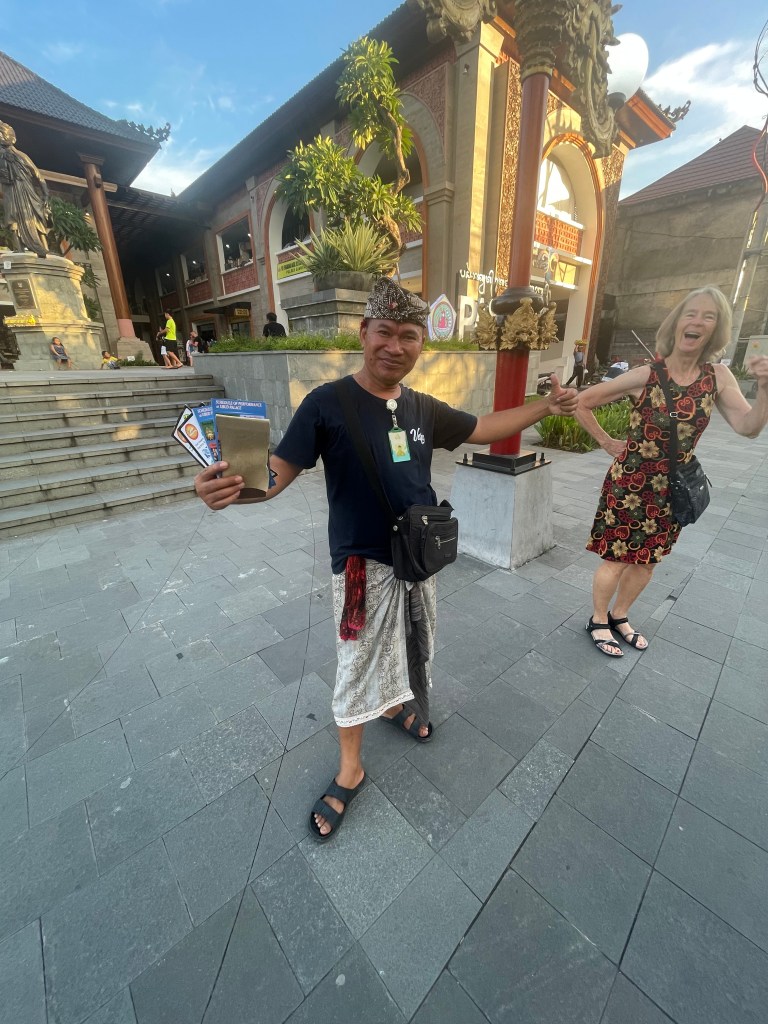
We saw a lot of people, especially men, in the traditional sarongs. Many I think, because they were costumes for the many dance performances in the area or uniforms at hotels and resorts. We watched a show with several dances including fire dances. One young lady swung a hula hoop with flames set about 8 inches apart around her neck and body. Wow! Since 85% of Ubud’s economy is tourism and the streets were packed with tourists, it was hard to tell if the locals wore them on a daily basis. I asked one of my drivers if they were comfortable and he said not really, especially when he was driving. Tourism is the biggest industry in Bali, unlike the rest of Indonesia where the economy relies on agriculture. Bali however does produce a lot of rice -using an effective centuries old irrigation technique, coffee and cocoa. The most expensive coffee in the world comes from Bali. Kopi luwak, also known as civet coffee, is produced when the catlike animal eats the coffee berries and then poops out the partially digested beans, which are collected, cleaned and roasted. As a non-coffee drinker I didn’t try any but I did try a lot of ‘teas’. They don’t make tea from tea leaves in Bali but from many different types of plants and fruits such as ginger, mangosteen, hibiscus, turmeric, lemon grass, lemons, rosella, and others. Each have their own medicinal qualities.
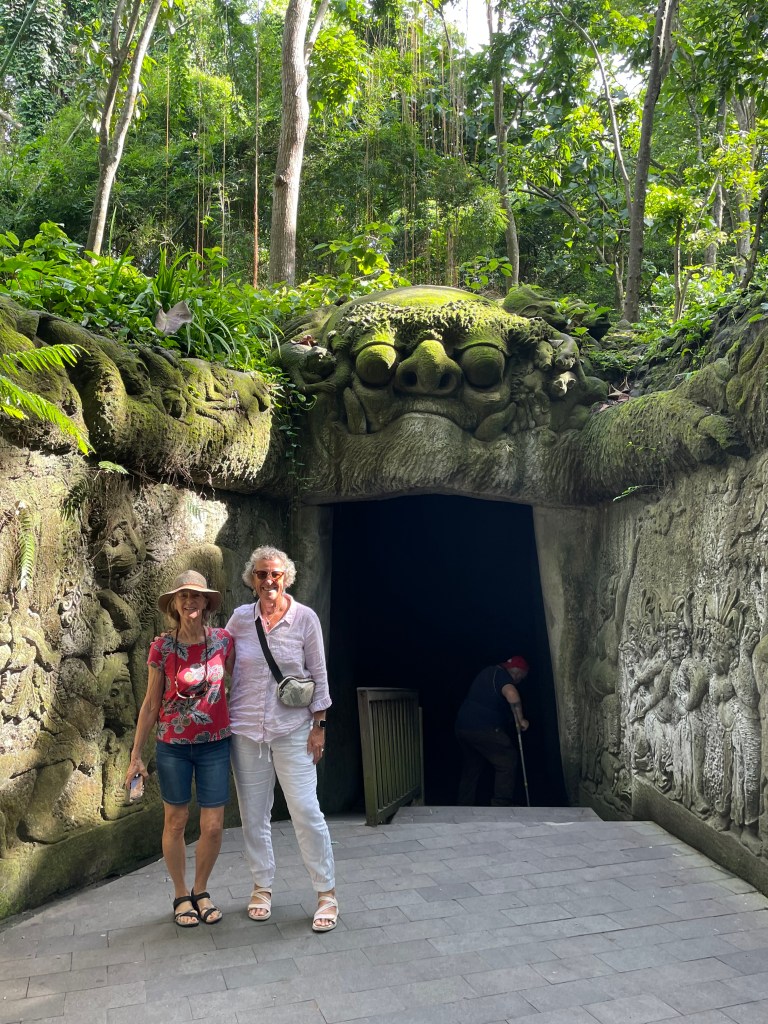
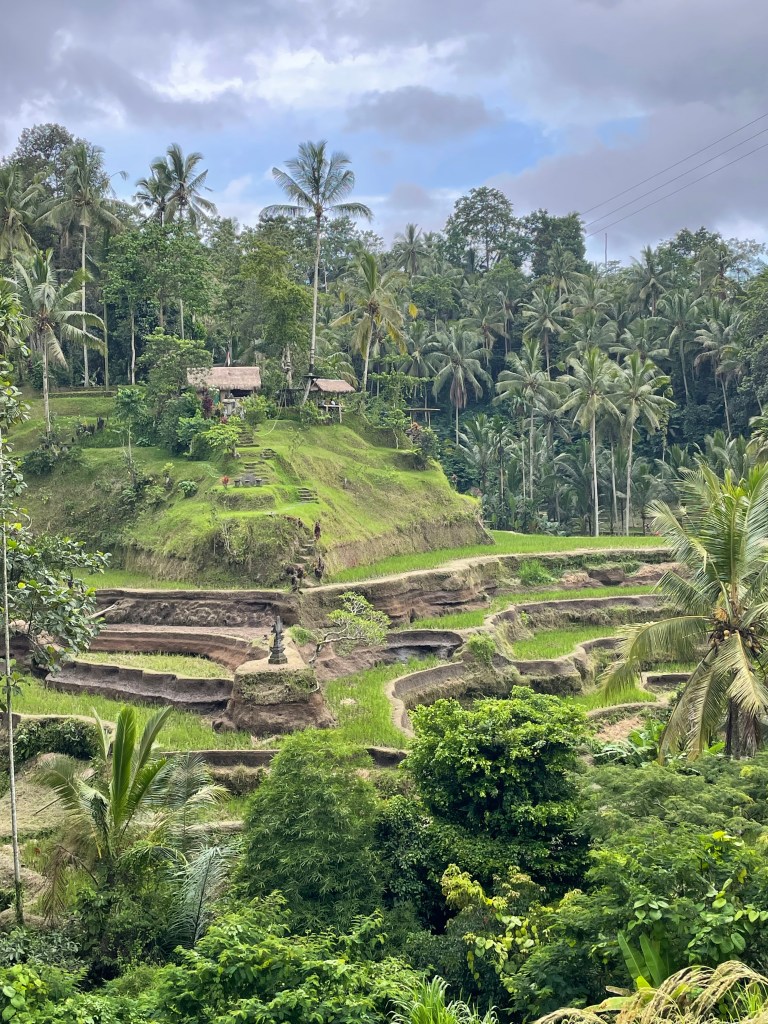
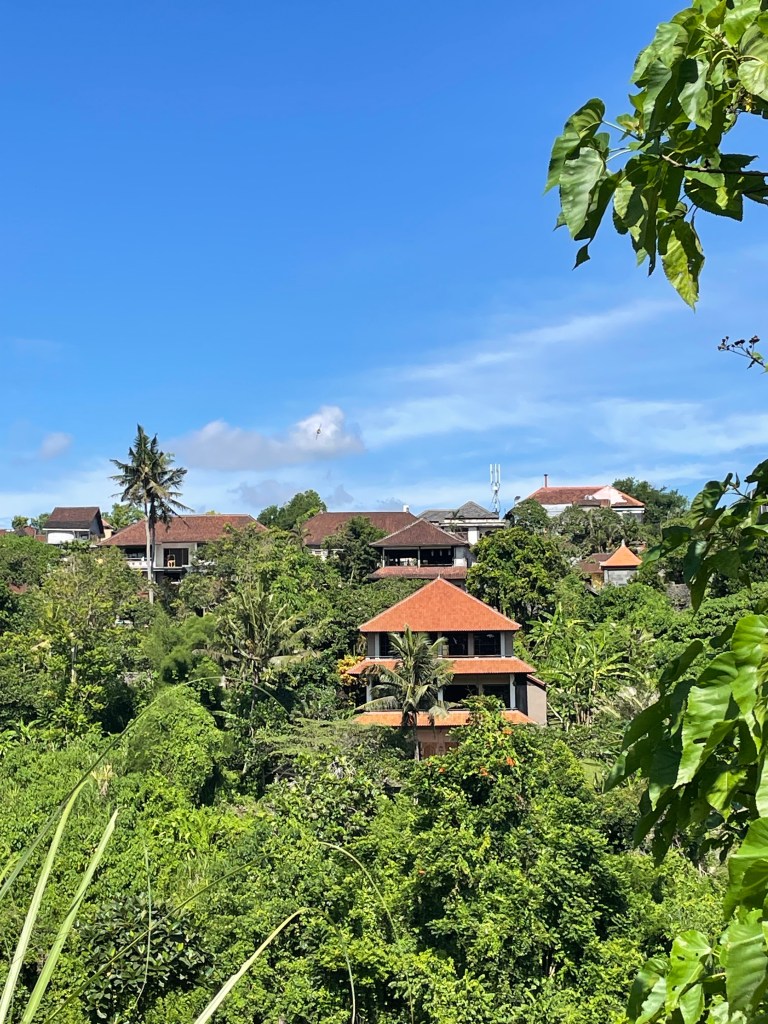
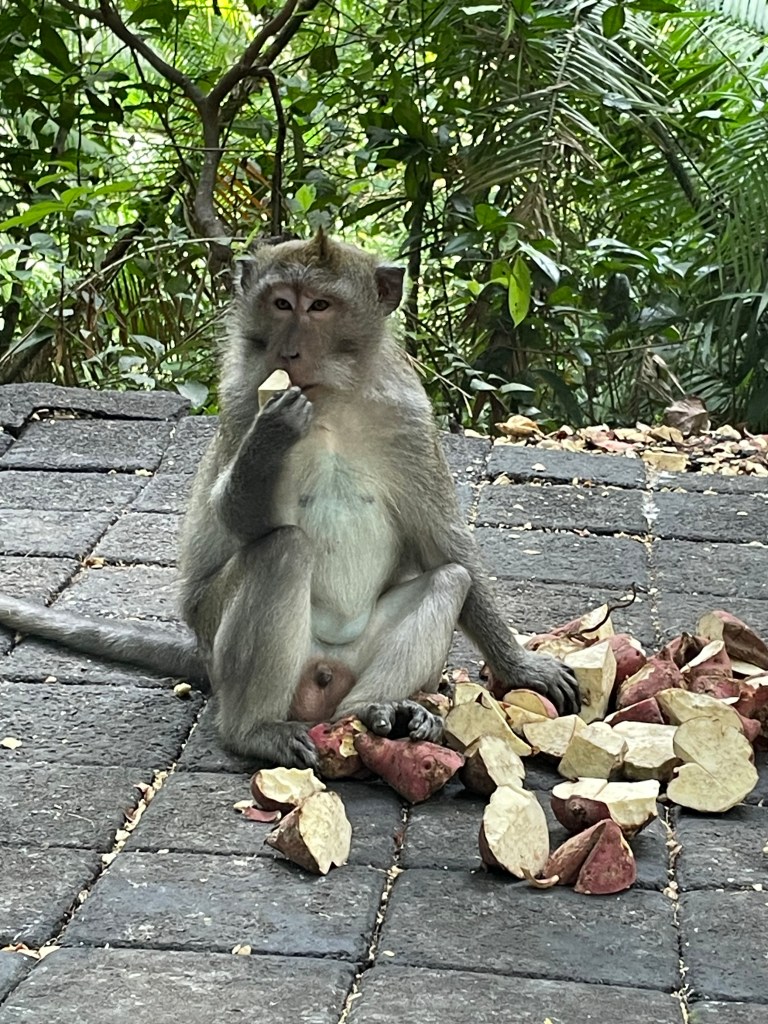
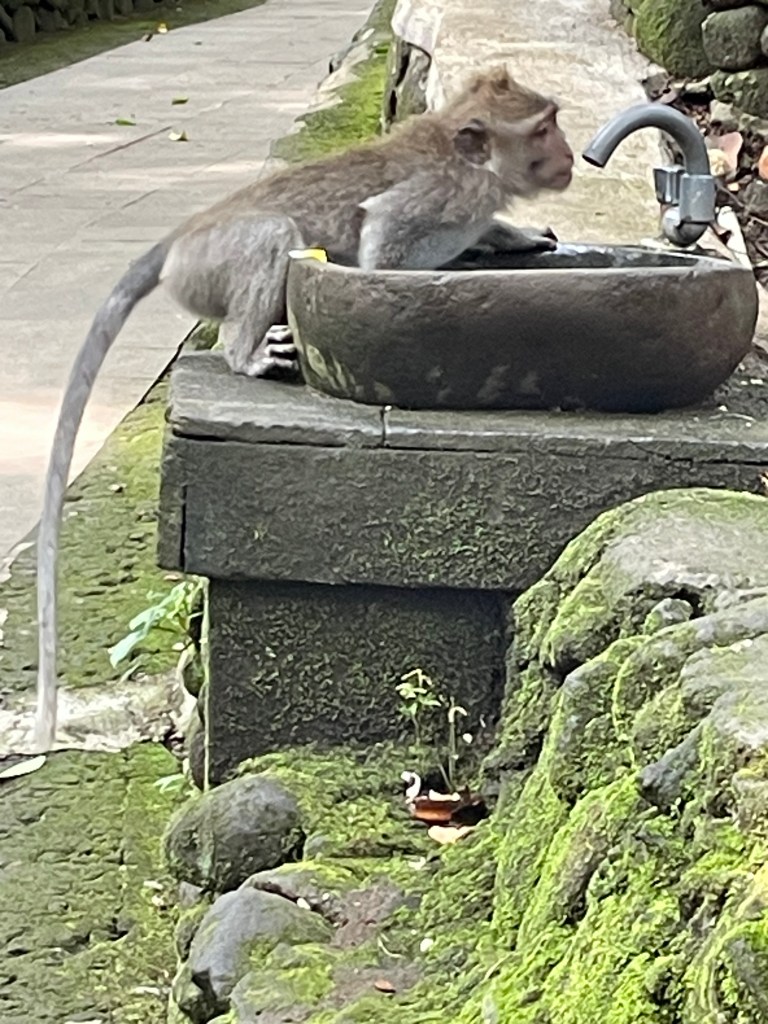
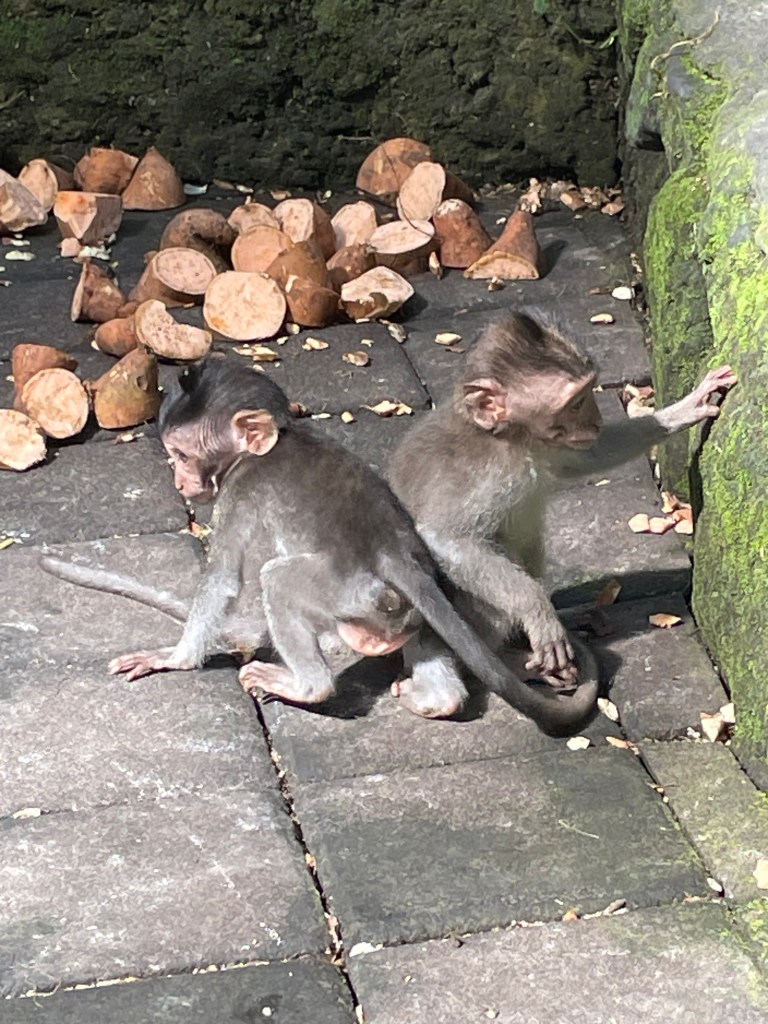
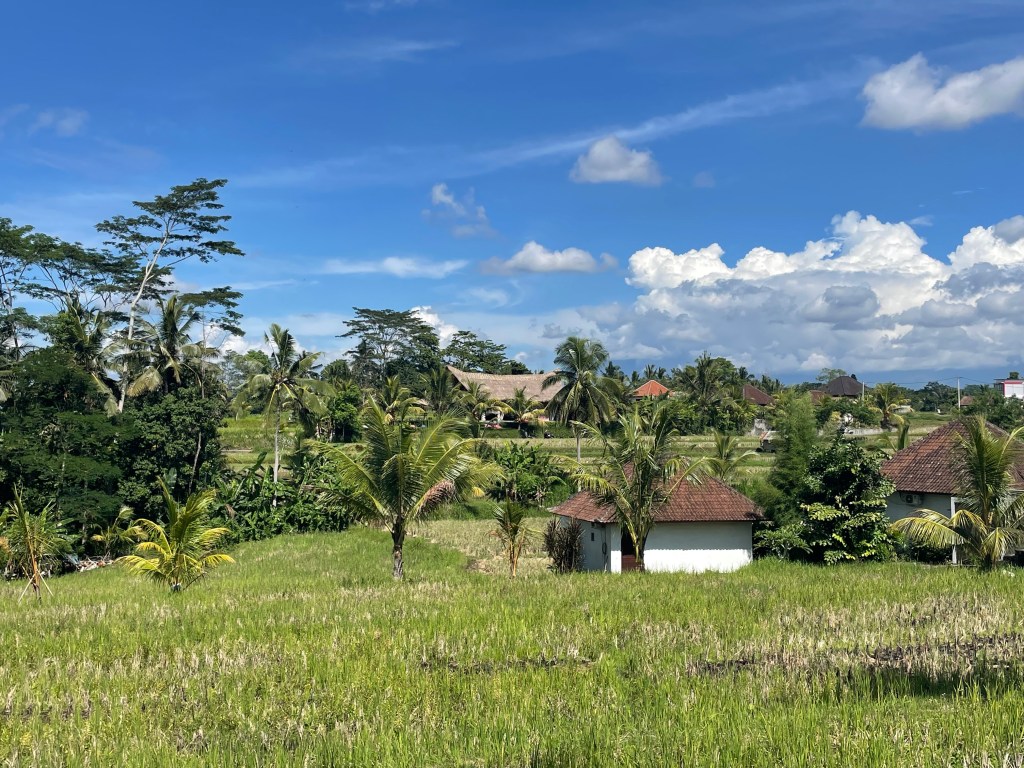
Just past the houses and businesses that cling to the narrow Bali roads are rice fields and jungle. Many restaurants tout jungle views and offer rides on big swings over the top of the trees. Others highlight dining along side the rice fields, suggesting a calming experience as you watch the wind softly ruffle thin green stalks. We toured a terraced rice farm and I had to applaud their commercialism. Not only did they charge admission, but they had a zip line across the valley, swings flying up over the terraces, as well as the usual gift shop and cafe. Even though it was very hot and humid, Donna and I hiked a ridge trail on the outskirts of town, viewing the thick jungle with mountains in the background and villas on the rim across from us. We walked through small villages providing food, drinks and art to those that passed by. Our first day in Ubud, we walked through the monkey forest, home to hundreds of long-tailed Macaques. They were quite fun watch. This jungle was filled with statuary as well which the monkeys used as perches to view the tourists.

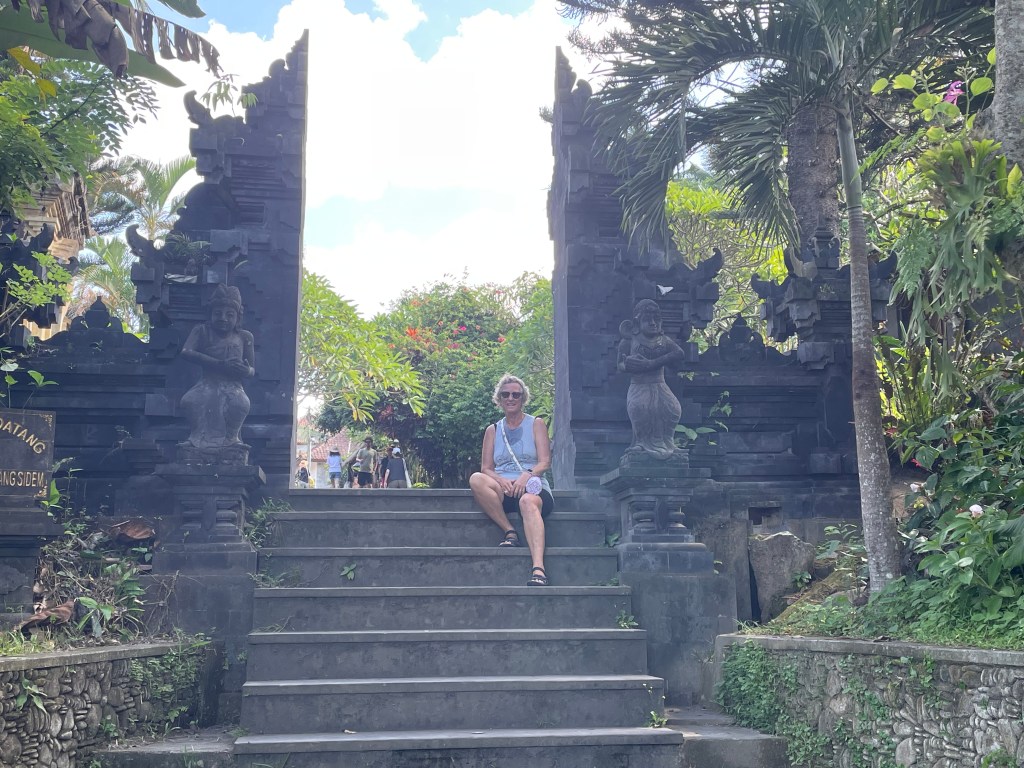
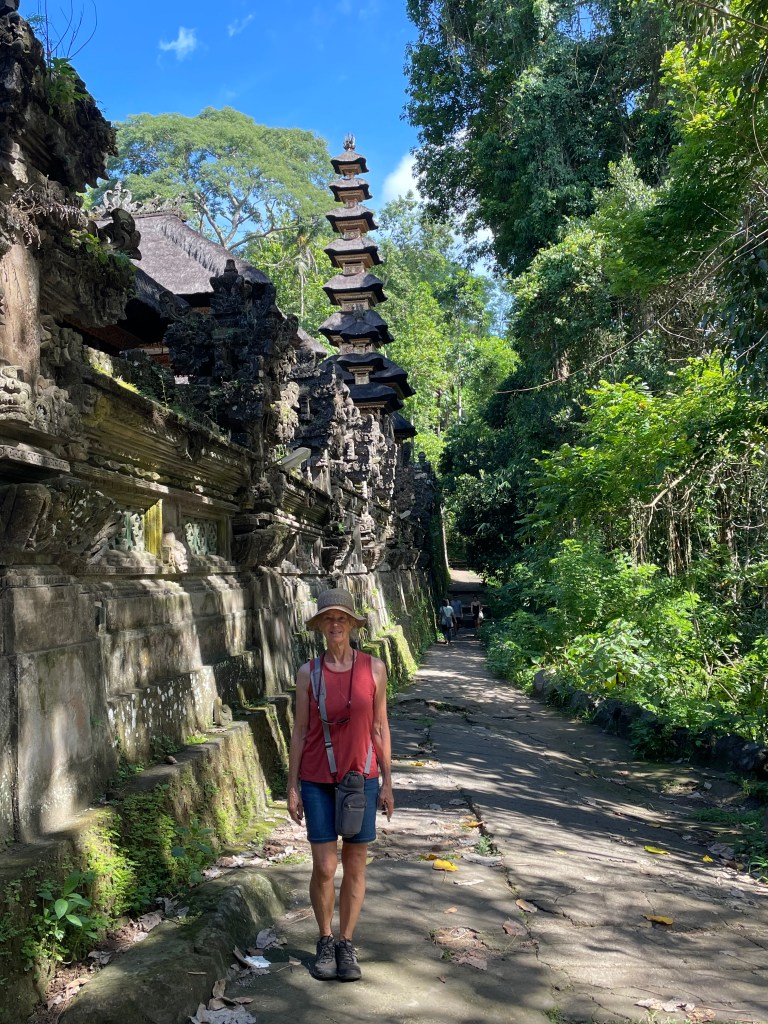
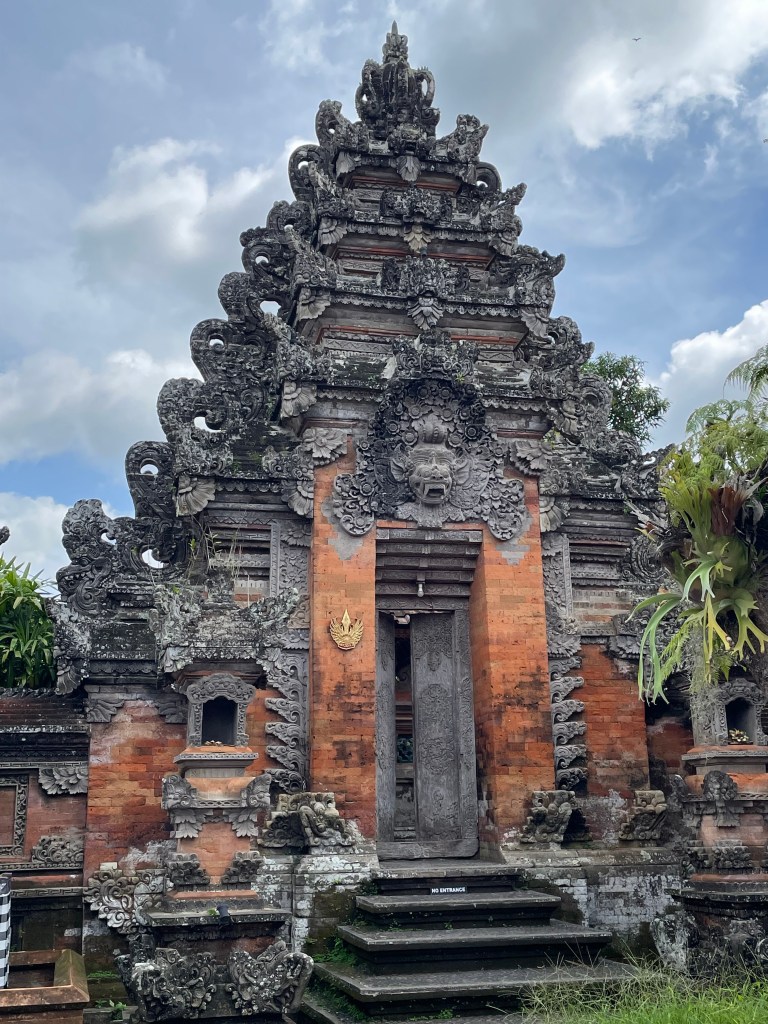
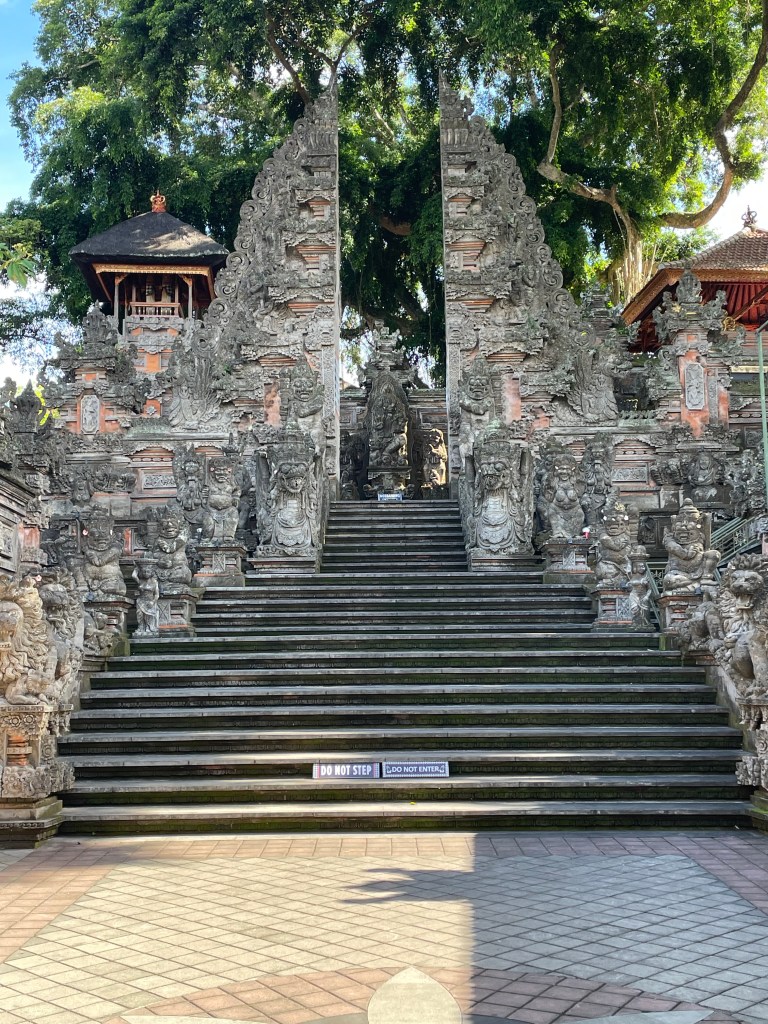
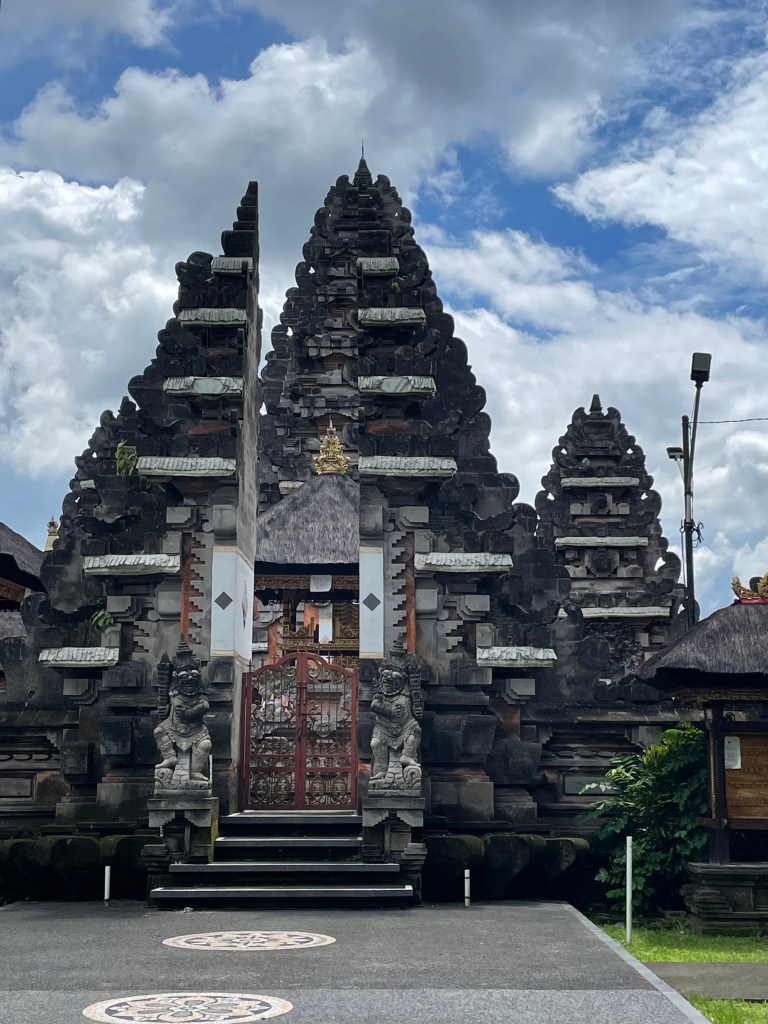
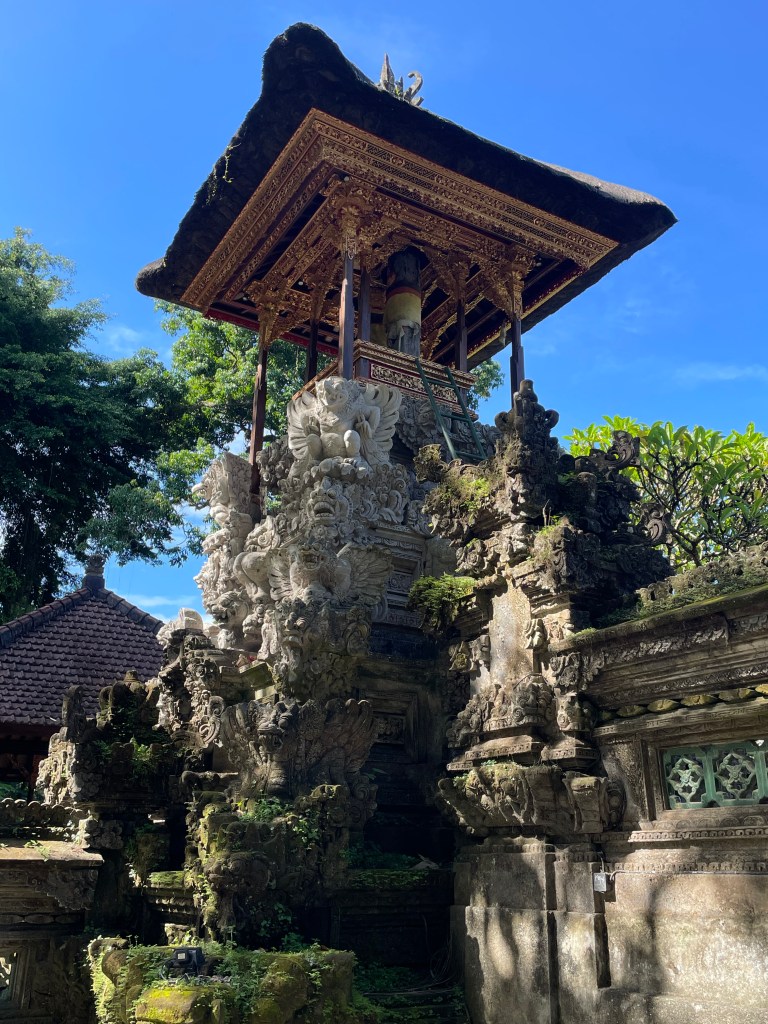
There are a lot of temples in Bali. Some are large and very ornate with intricate carvings and statues. At one, people were being purified by dipping their heads under streams of spring water gushing from tubes into a pool. They showered and dressed in special sarongs before entering the holy water. You could see the tops of many other smaller ones, in the courtyards of homes, indicated by the traditional thatched roofs of temples. The gates of heaven, two tall triangular structures standing guard on opposing sides of an entry way was also a common site.


One interesting tidbit we got from our tour guide on our first day was an explanation of names in Bali. In general, Balinese people name their children depending on the order they are born, and the names are the same for both males and females. The firstborn child is named Wayan, Putu or Gede, the second is named Made or Kadek, the third child goes by Nyoman or Komang, and the fourth is named Ketut. If you have five children you start over. If you have eight children both the fourth and eighth will have the same name.
Book List:
A House In Bali by Colin McPhee
Next up: Singapore


 Where in the World is Debra Grimes?