“It’s better to travel well than to arrive.” – Buddha
November 1-12, 2023
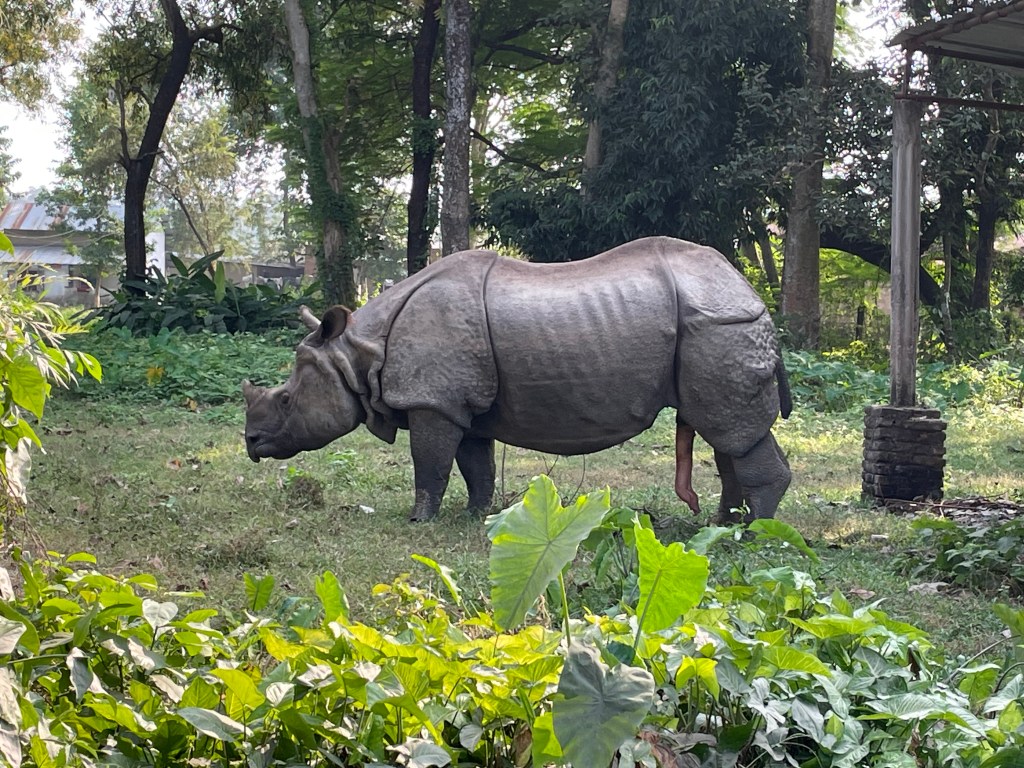
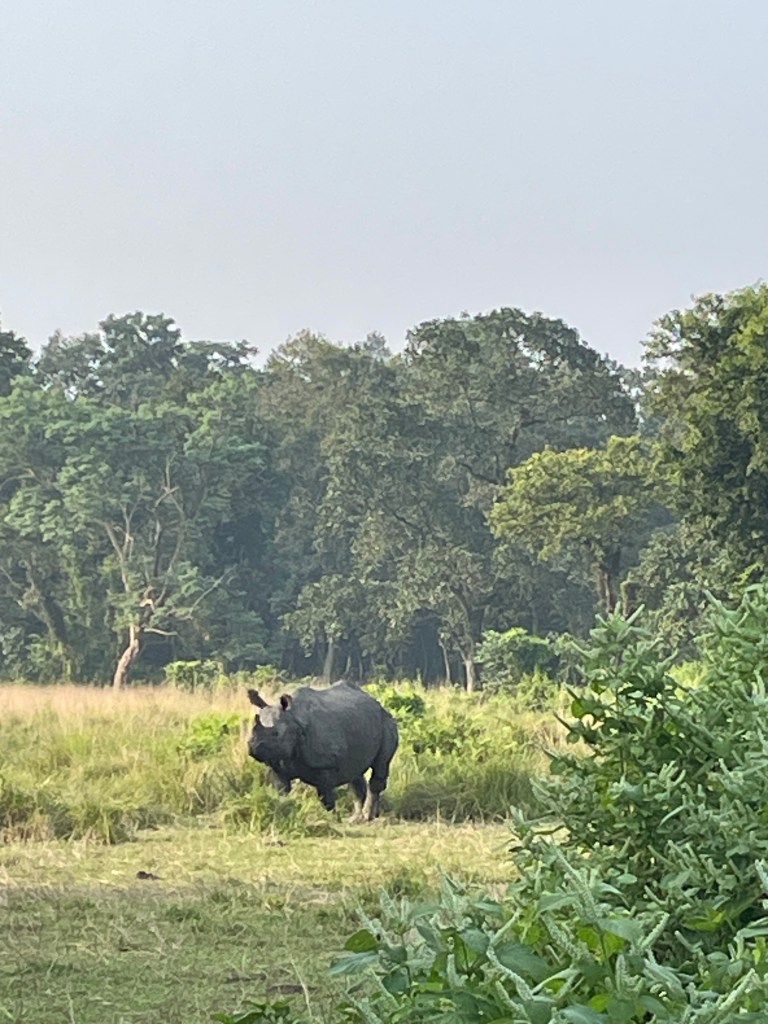
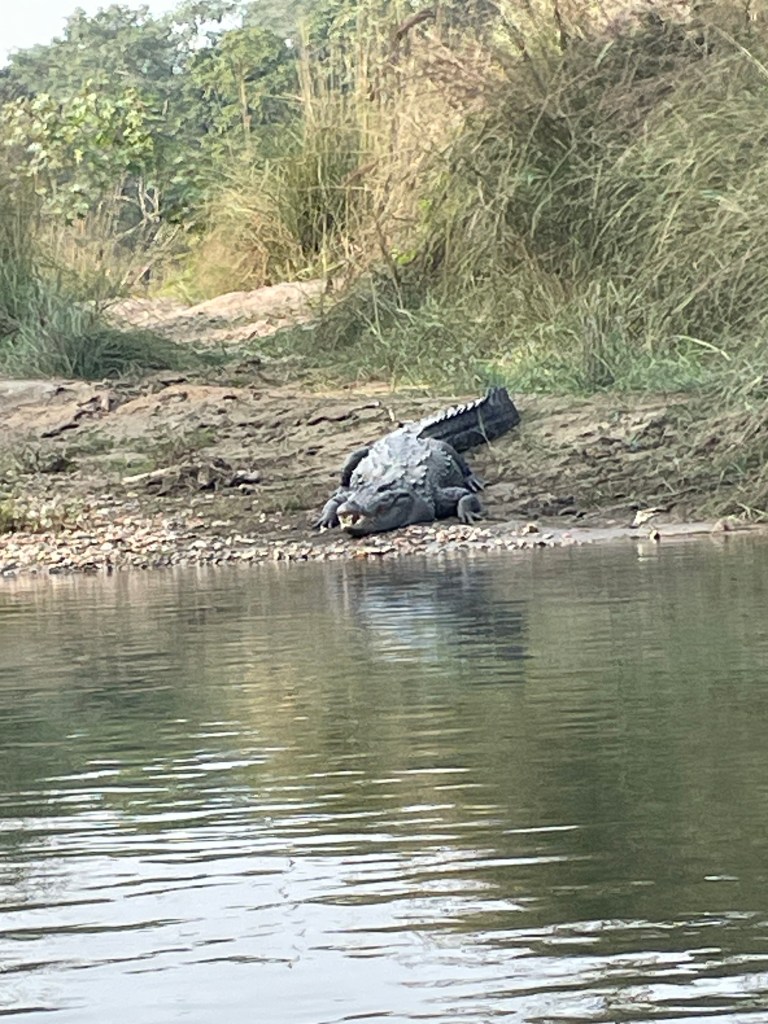
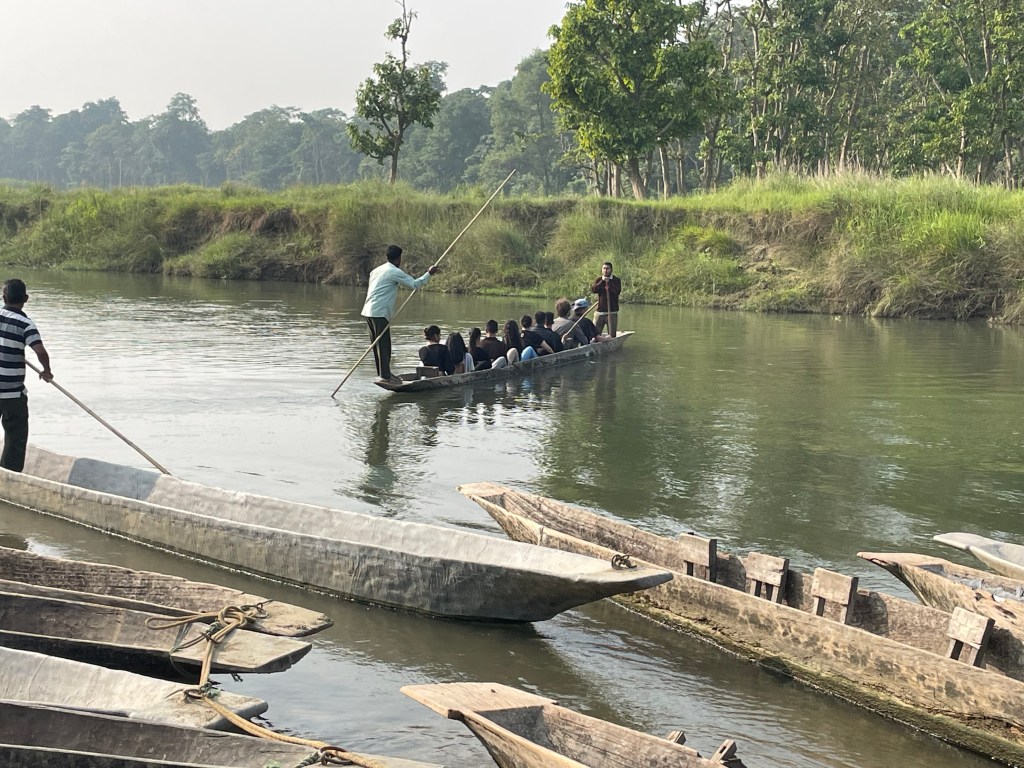
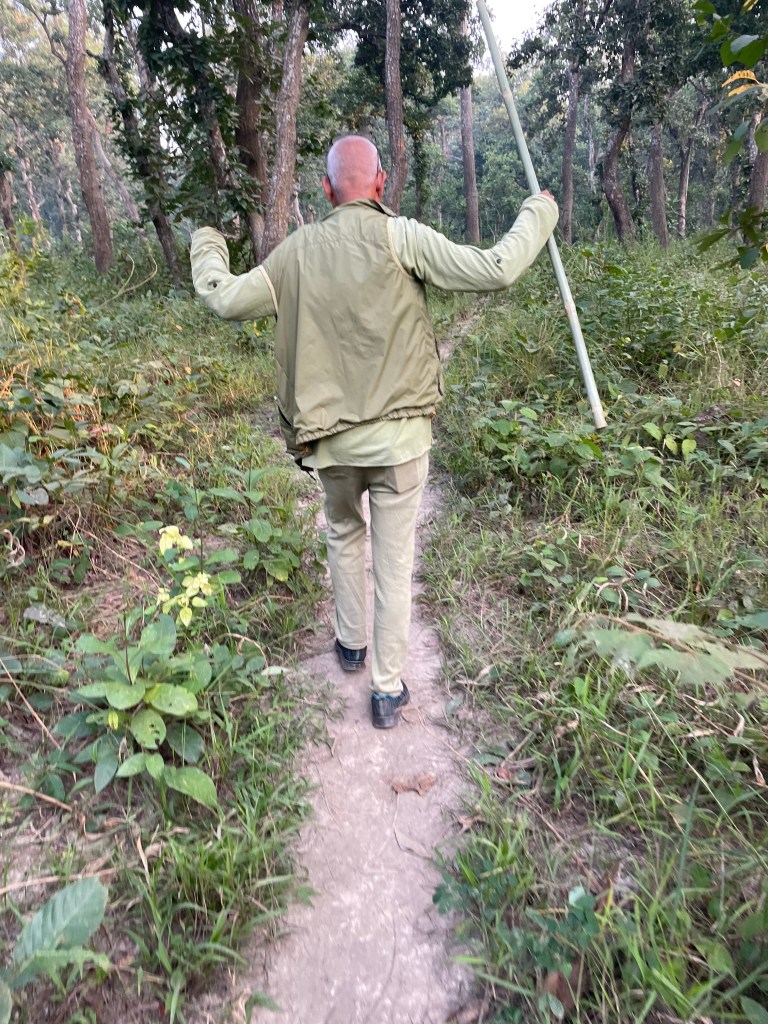
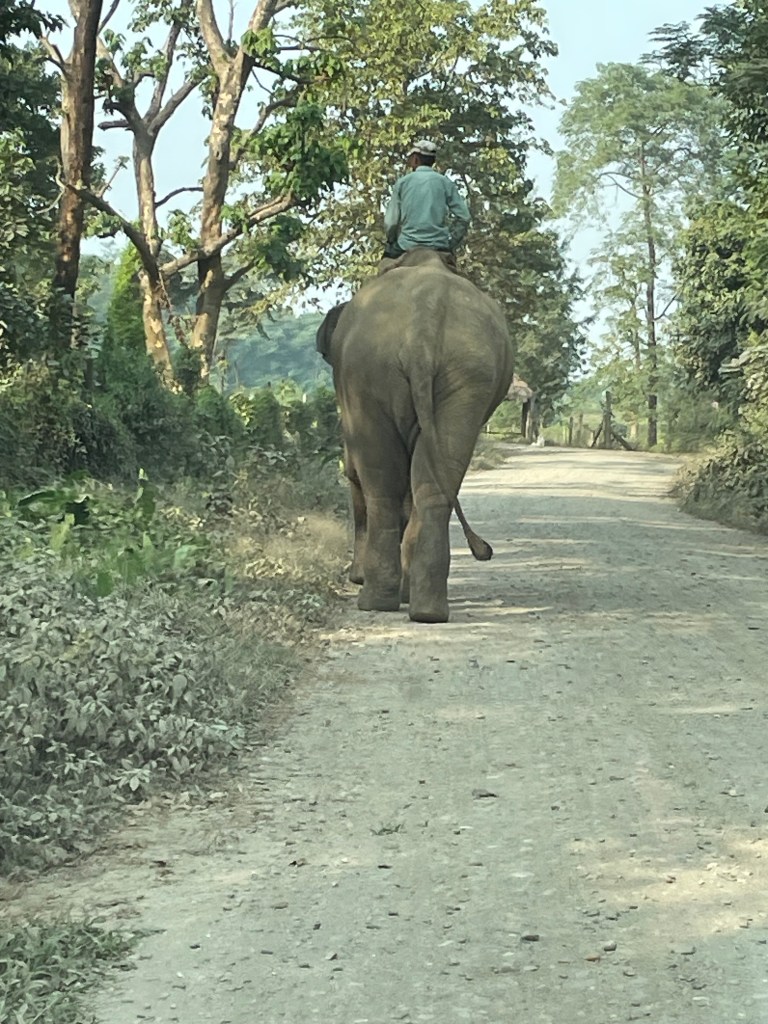
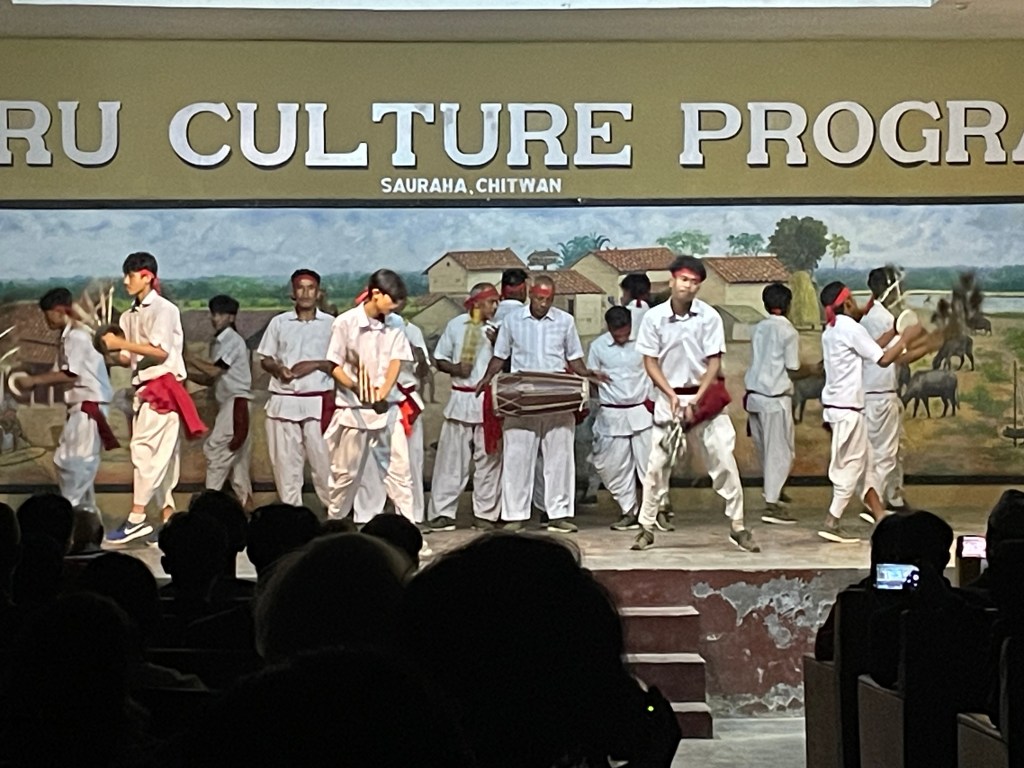
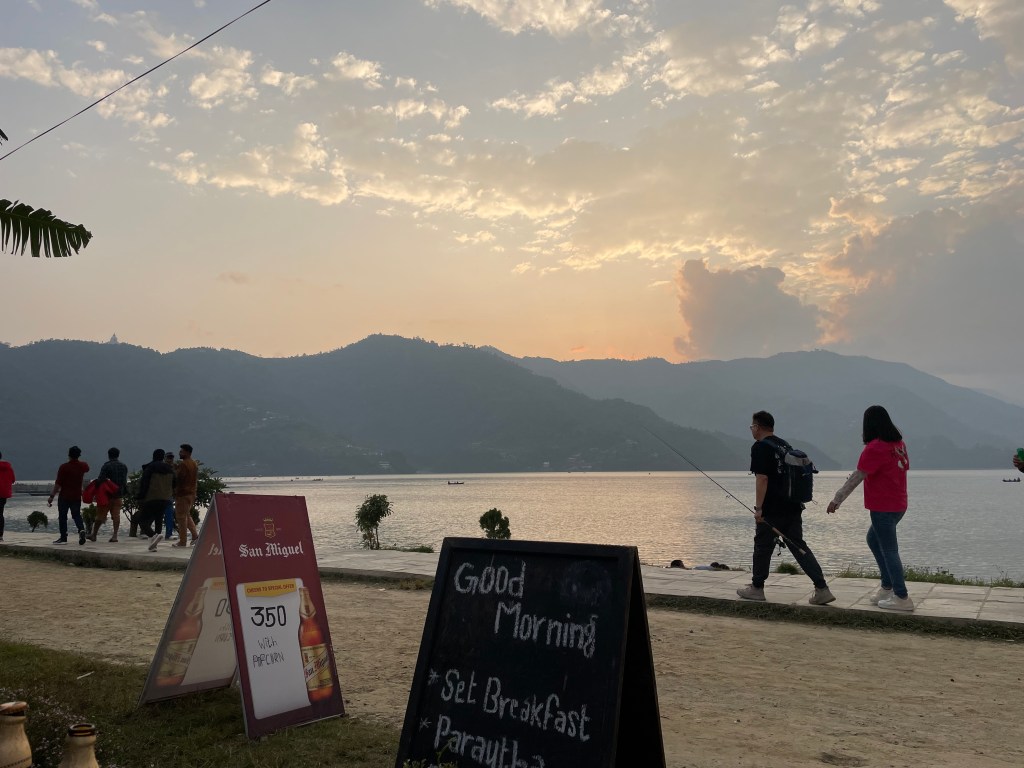
I struggle a little bit in knowing what to write about Nepal. On one hand, I was probably challenged more on this leg of my journey than any other – so far, but on the other, Nepal is a very beautiful and interesting country. Most international visitors come here to trek, so I was a bit of an outlier. My base was Kathmandu but I also took a short, three day trip to the Chitwan National Park and saw several rhinos, crocs, birds and other creatures but missed seeing a tiger. One rhino was quite excited, if his fifth leg is any indication. Our guide there gave us two safety lessons as we walked through the jungle. One, if a rhino charges climb a tree, hide behind a tree or run away in a zig zag fashion throwing any loose items away as a means to distract the animal, if only to give you enough time to get away. If a tiger charges, stop and face him, stand in a power position, look him in the eye and try not to show any fear, like wetting your pants. It would have been a unique experience, if it happened and I lived to talk about it. I also spent two days and a night in Pokhara, a pretty lake side, party town, surrounded by steep green hills. I tried to hike up one of the mountains, but kept getting light headed, I assume from the elevation, so had to cut the hike short after 2.5 km. My first challenge.

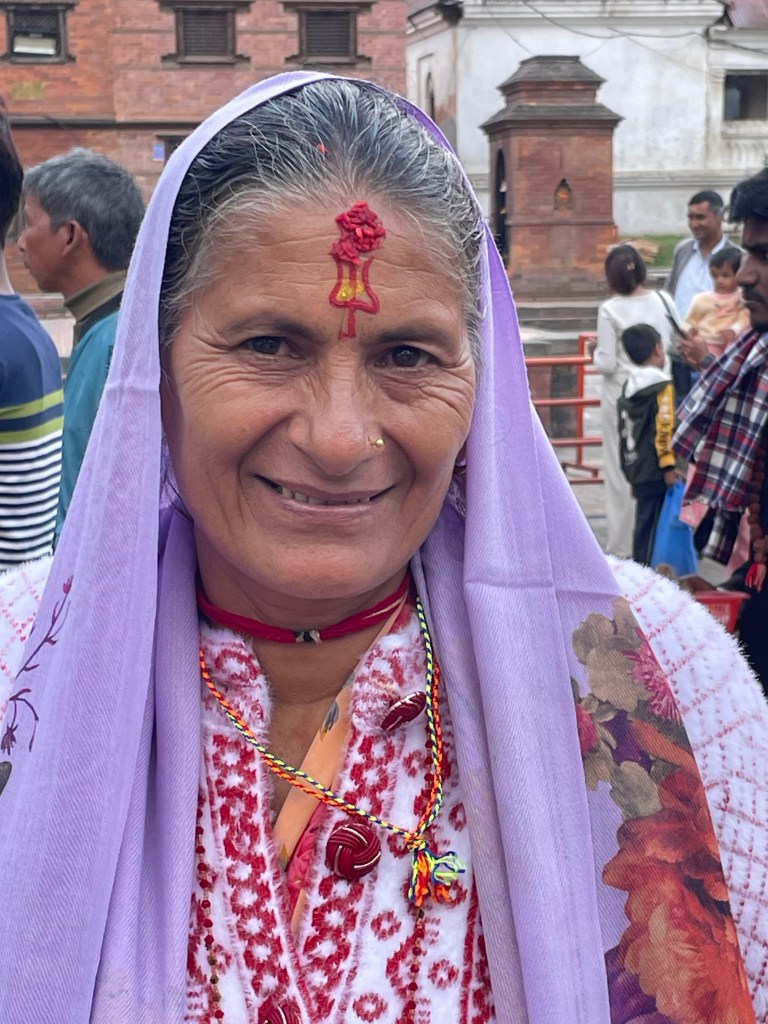
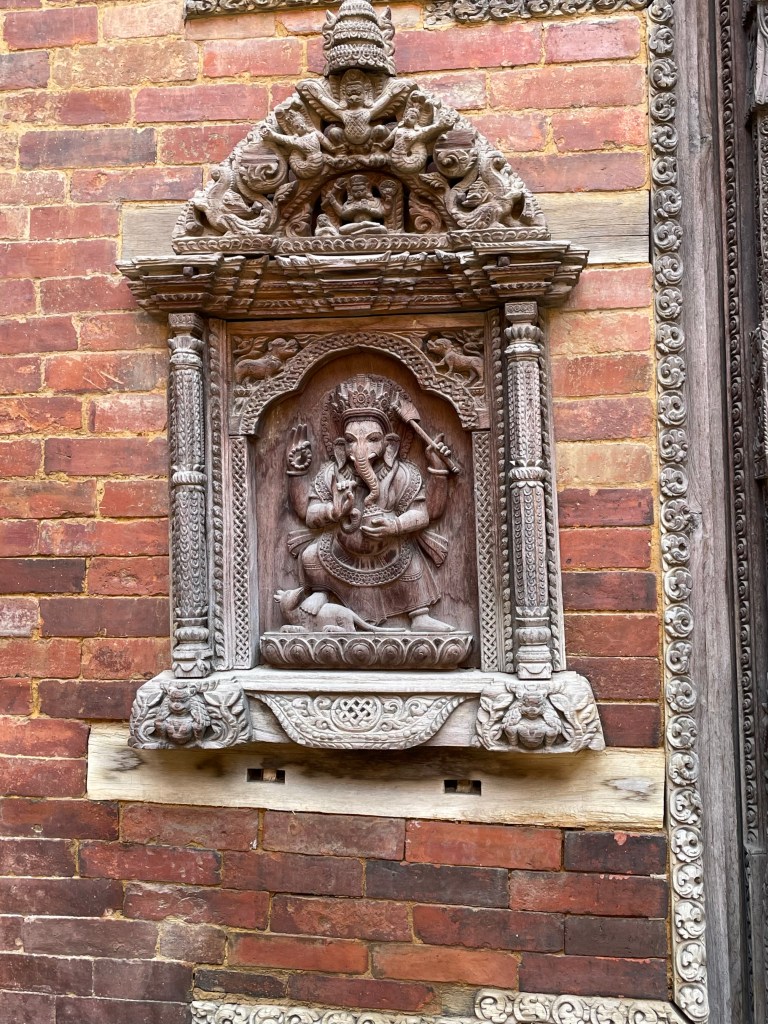
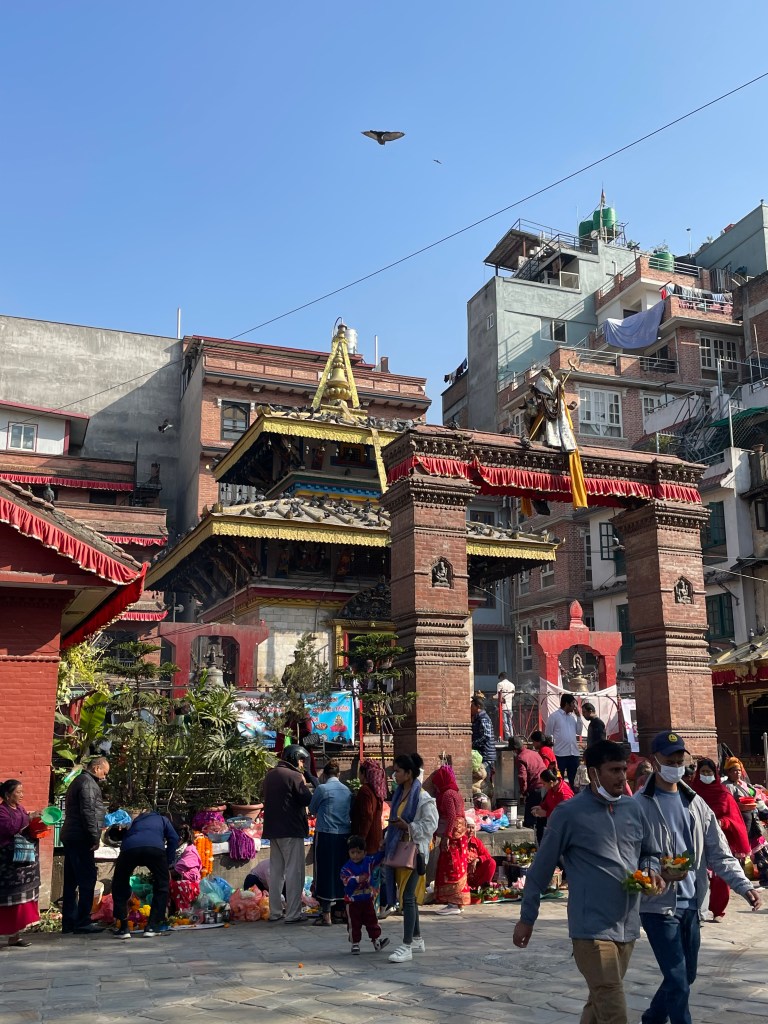
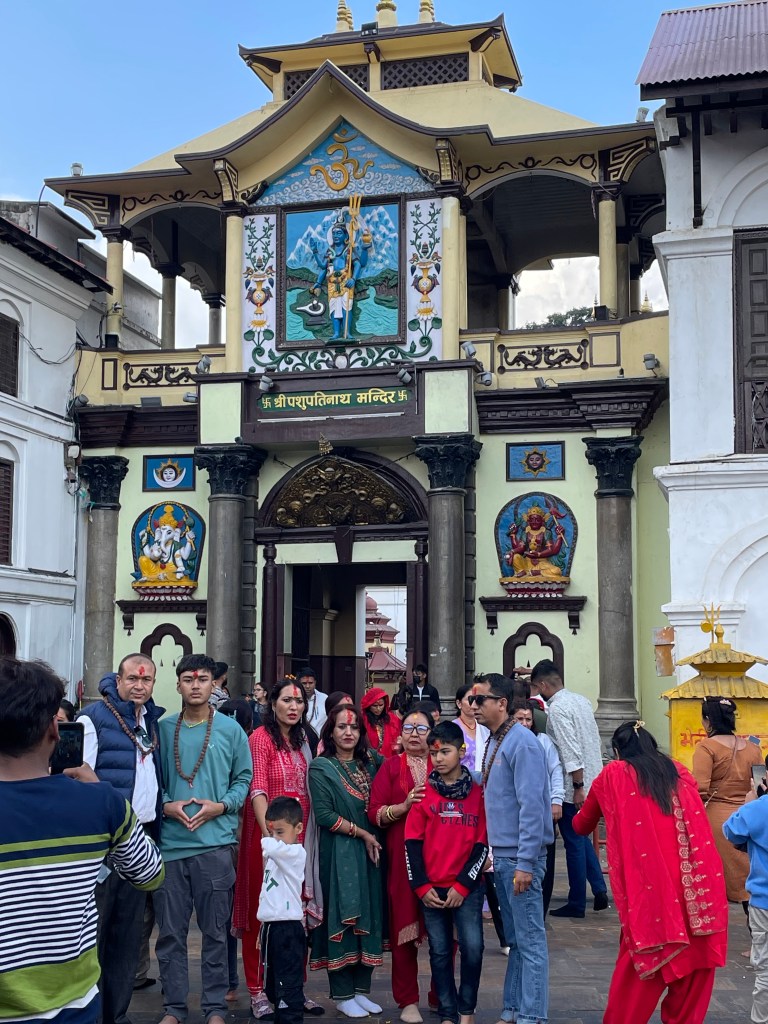
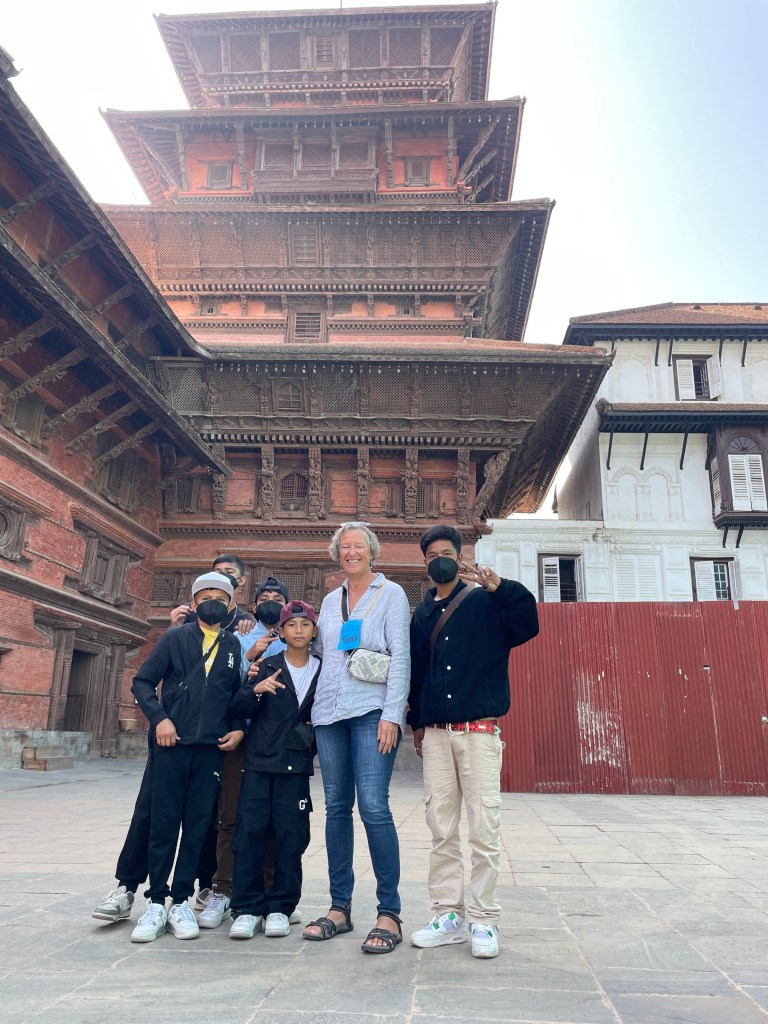
Kathmandu is the city of temples, the city of gods. You only need to walk a block or two to find one and in actuality you’ve most likely passed several more hidden in an alley or up on a rooftop. Many ancient ones are clustered together in squares, a temple for this god or goddess and that one as well, in their multiple incarnations. Buddhist and Hindu temples sit next to each other and some pagodas have images of both Buddha and a Hindu god. It’s a feast for the eyes – intricate carvings and diverse statues embellish all the buildings. I loved the Buddha eyes on the stupas, which I hadn’t seen before. I did a tour of 5 of the 7 UNESCO Heritage sites, each one made up of multiple temples, pagodas and stupas. Many of the temples were damaged during the 2015 earthquake, but with the help of China, America and others about 80% of them have been rebuilt using original material and methods. No improvements can be made and still have the UNESCO designation. Pagoda’s are a Nepali design, spreading to Tibet, China, Japan and beyond from here. Buddha was also born in Nepal. The majority, 82% of the population is Hindu, with another 8% Buddhist. The temples are well attended if the red dots and smears or Sindoor on people’s third eye -a blessing received after prayer, is any indication. The crimson marks are seen continuously throughout the city. The larger sites were crowded when I visited on a Saturday but any day of the week I saw people praying, leaving offerings, or adorning shrines with marigolds, often leaving with a petal on their head or in their wallet for good fortune. And yes, I got a blessing and some petals are in my purse.
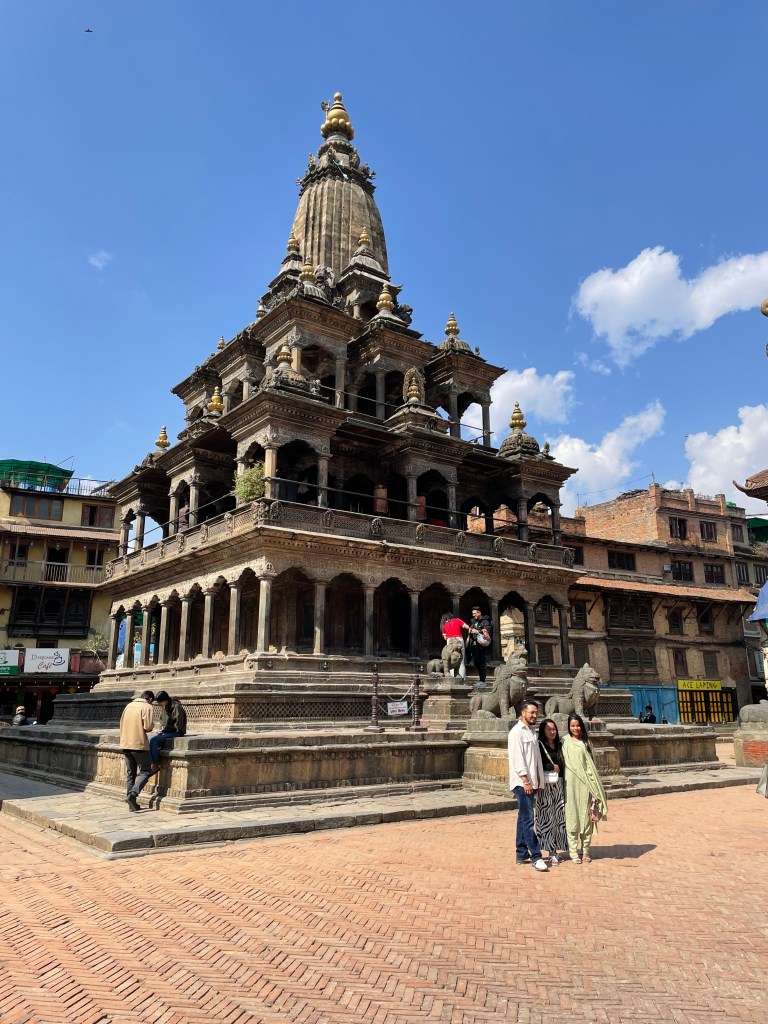

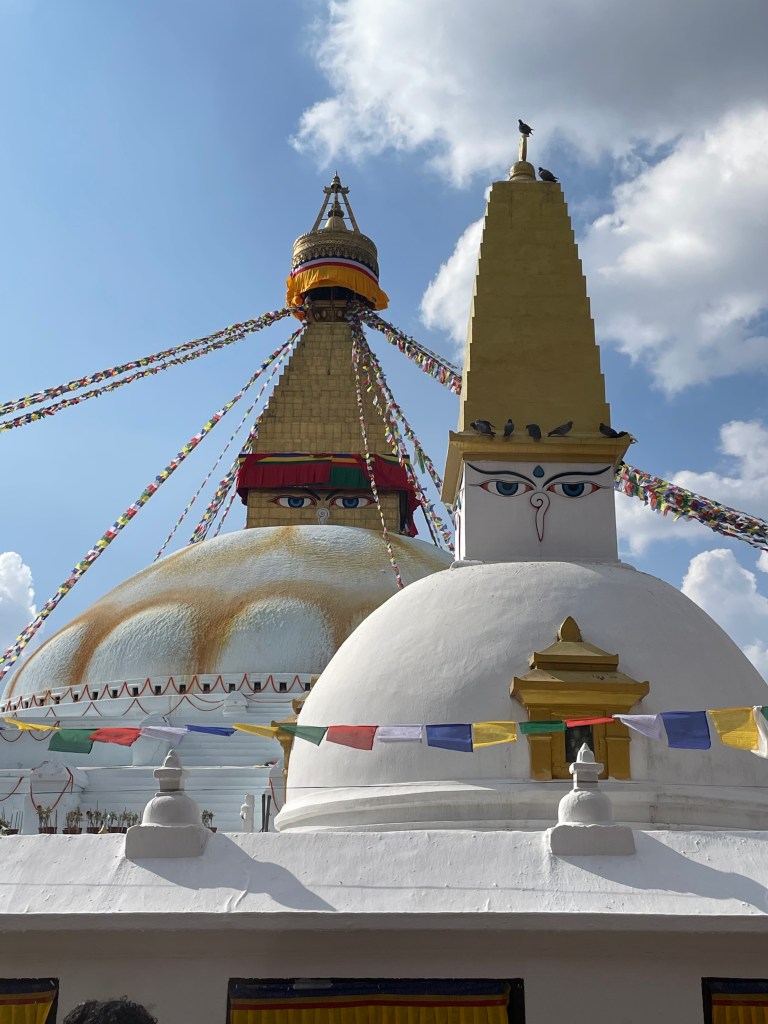
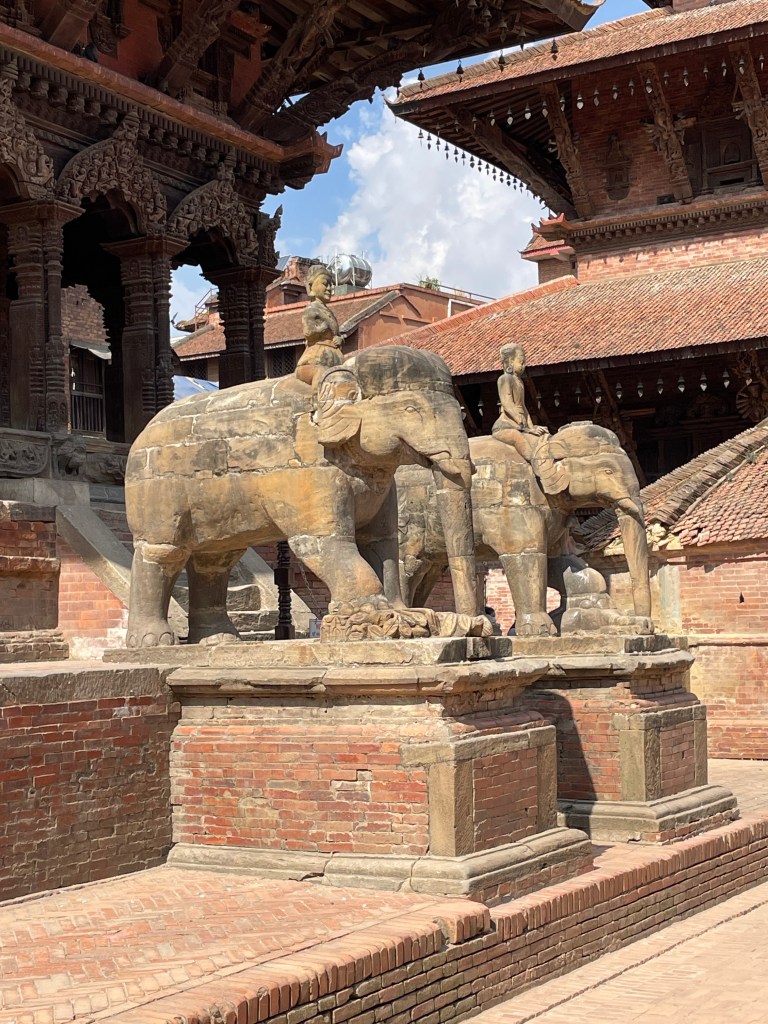
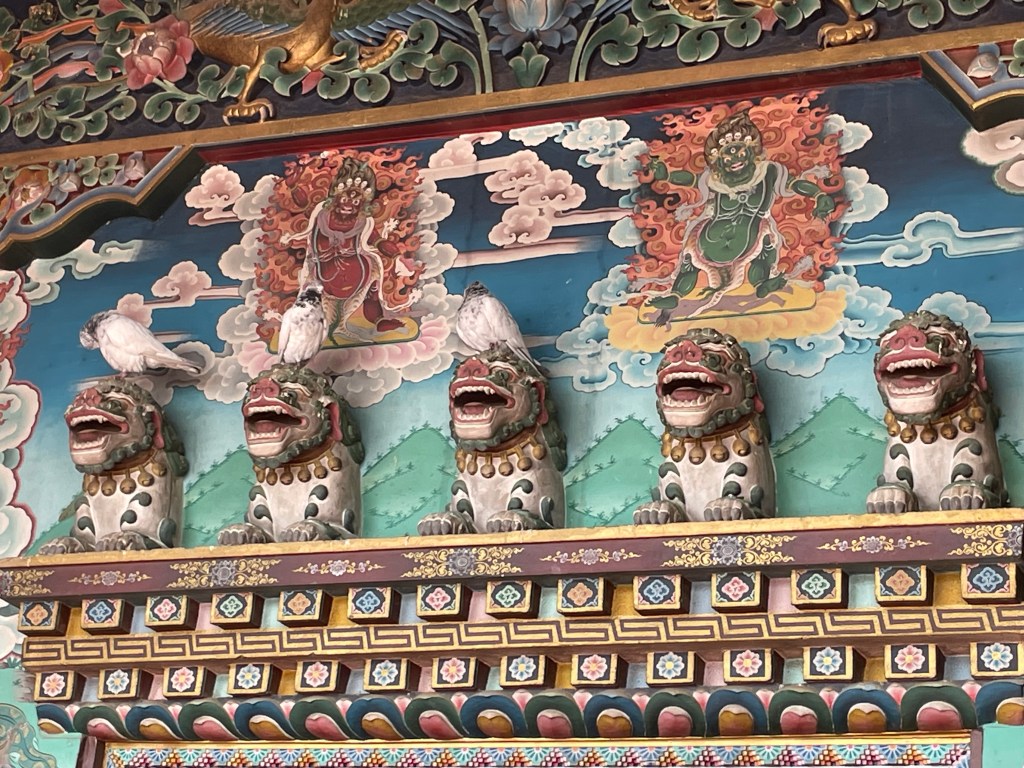
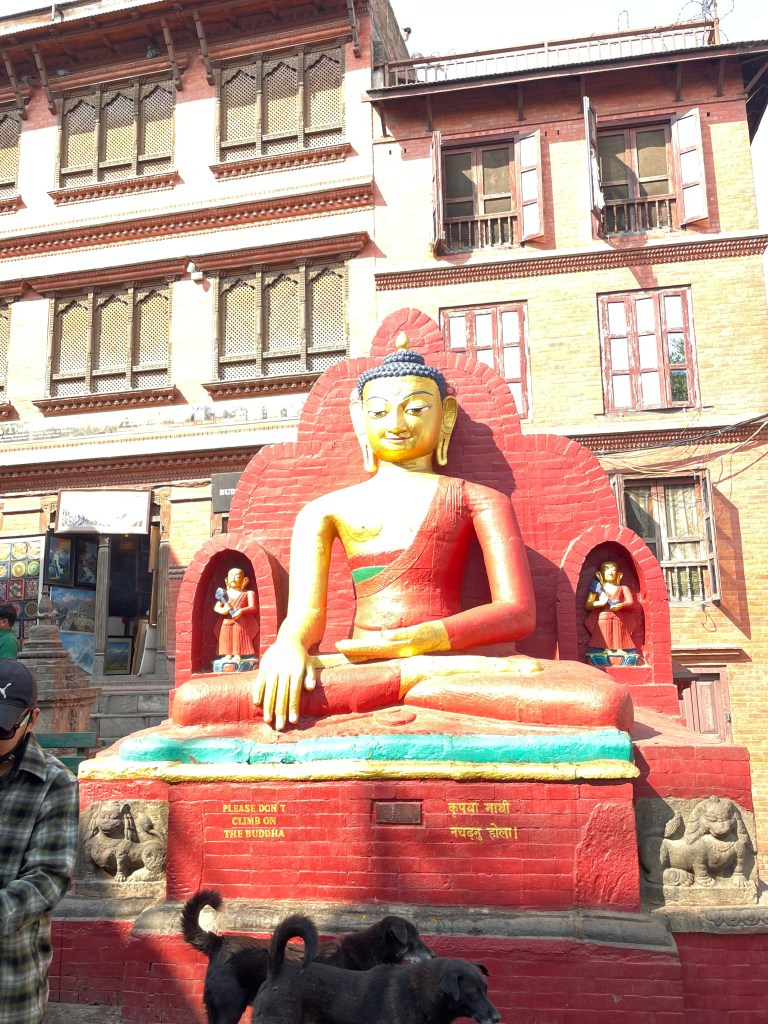
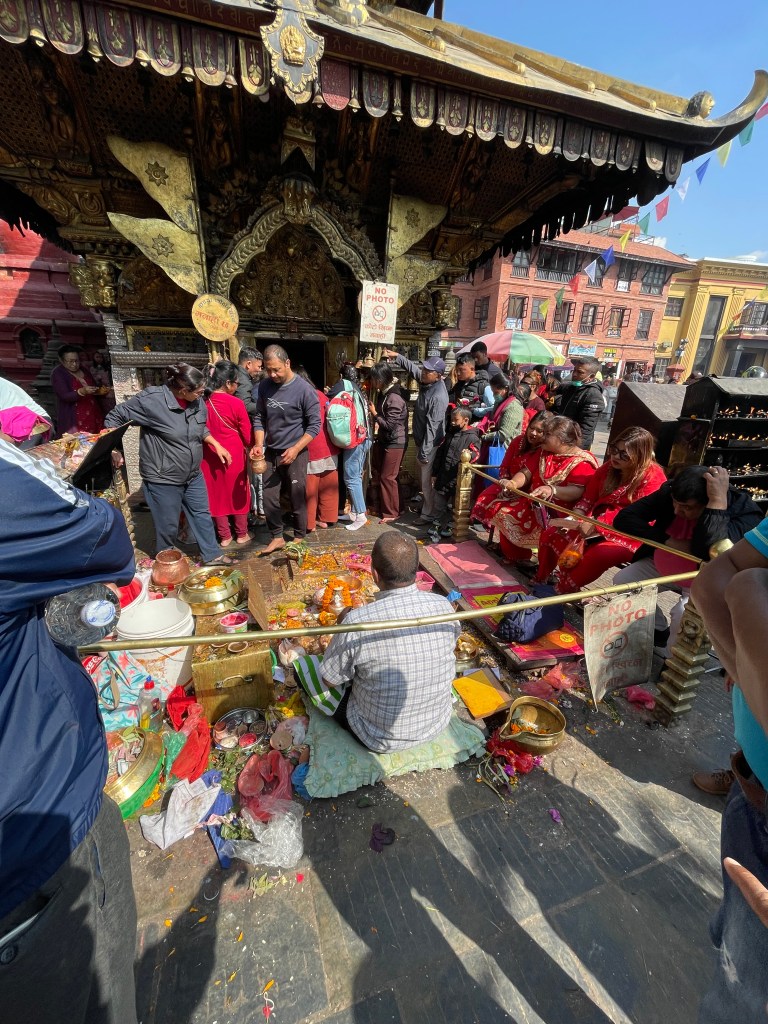
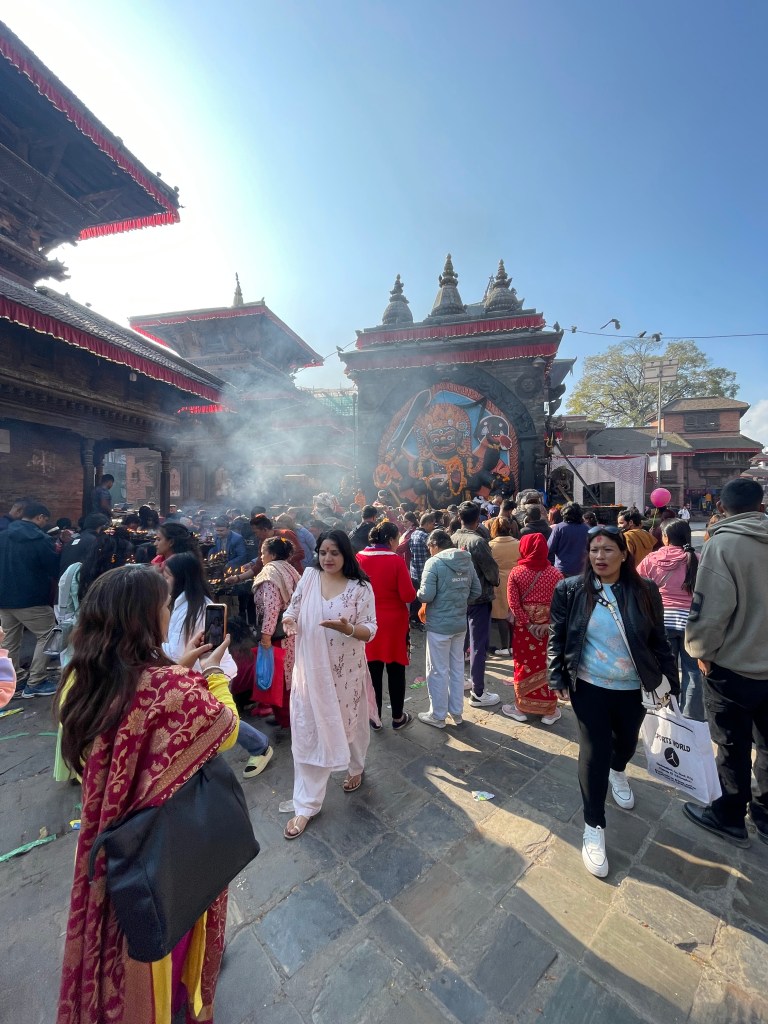

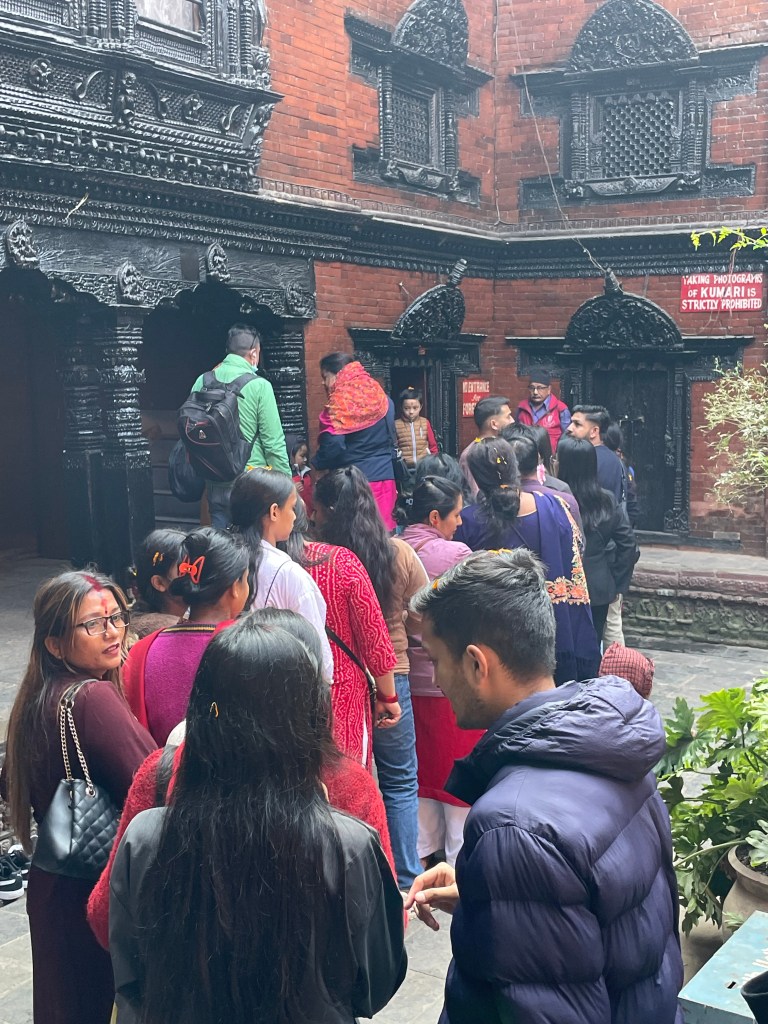
Nepal has a living goddess, called Kumari. She is selected at birth based on 32 attributes of perfection, including the correct alignment of her astrological sign. She used to live a very secluded life, only going into public on certain days to give blessings to the people. Currently, she has a few more freedoms including having friends to play with, family visits, and the ability to marry when she relinquishes her title after she begins to menstruate. When we visited her palace on our UNESCO tour, there was a long line of people waiting to be blessed. Foreigners cannot receive an audience with the Kumari so I was out of luck. Nepal has a very rich history and is one of only a handful of countries not to be colonized by a foreign power. One hundred and thirty-three languages are spoken in Nepal and they have 125 ethnic groups.


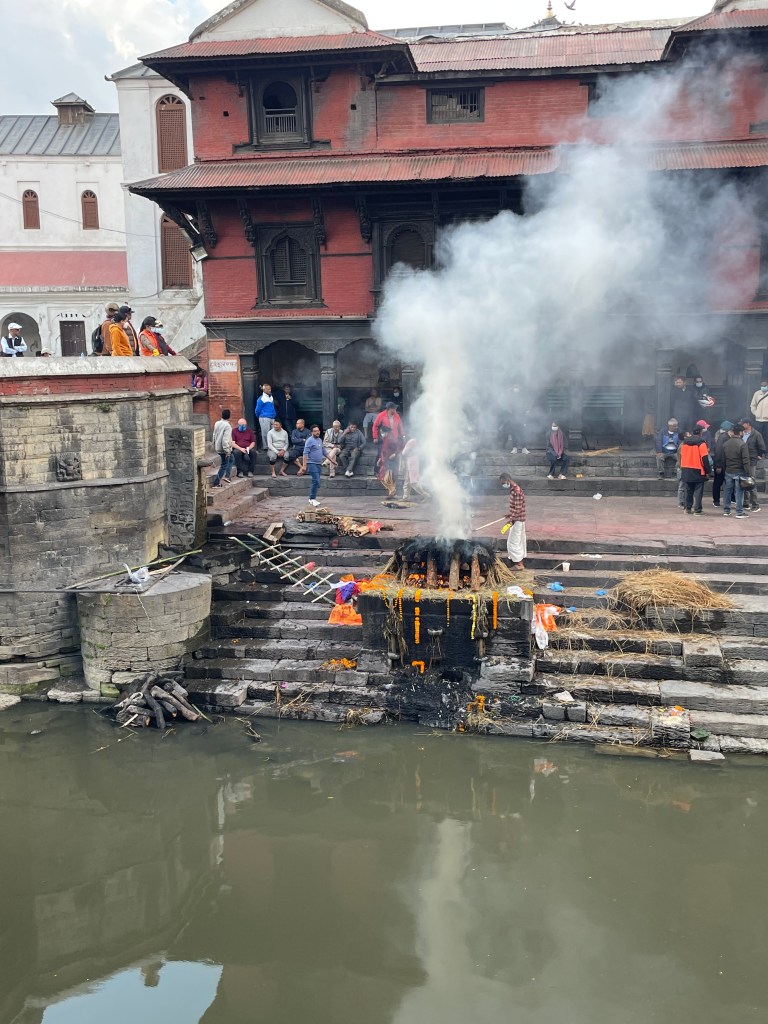
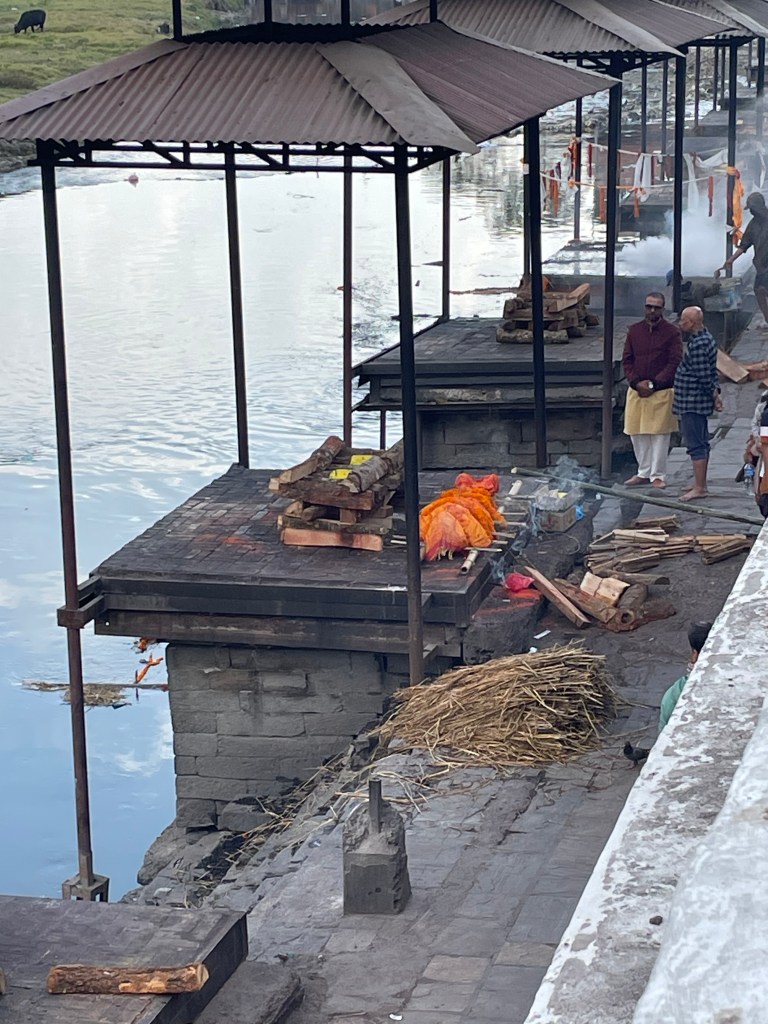
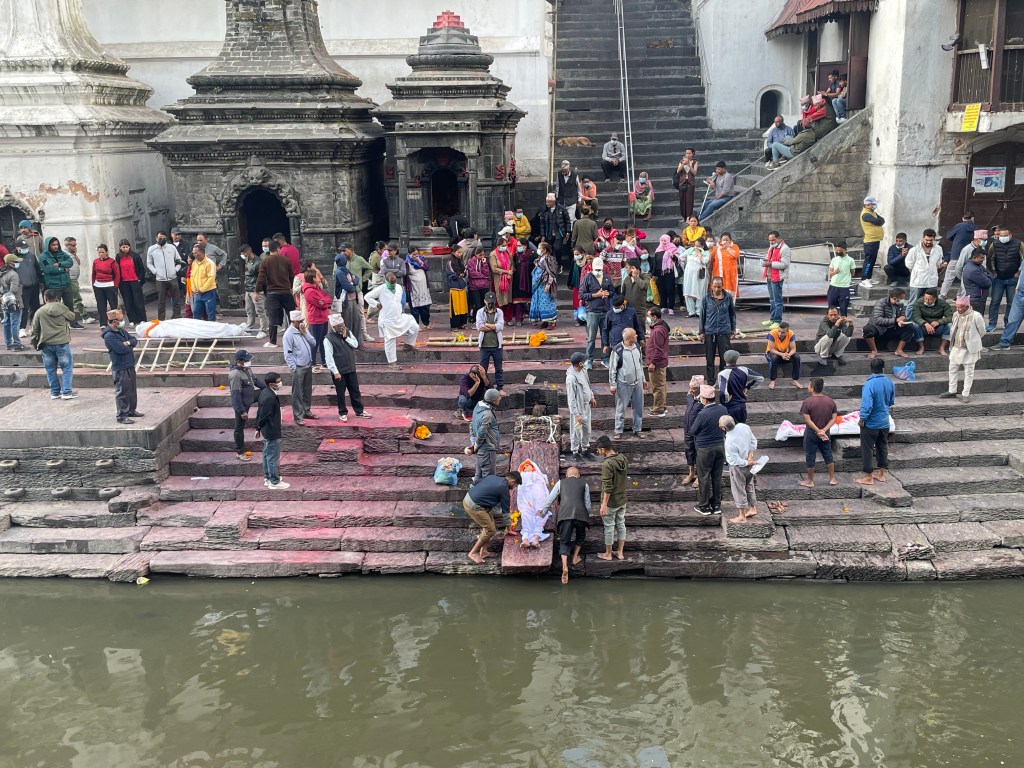
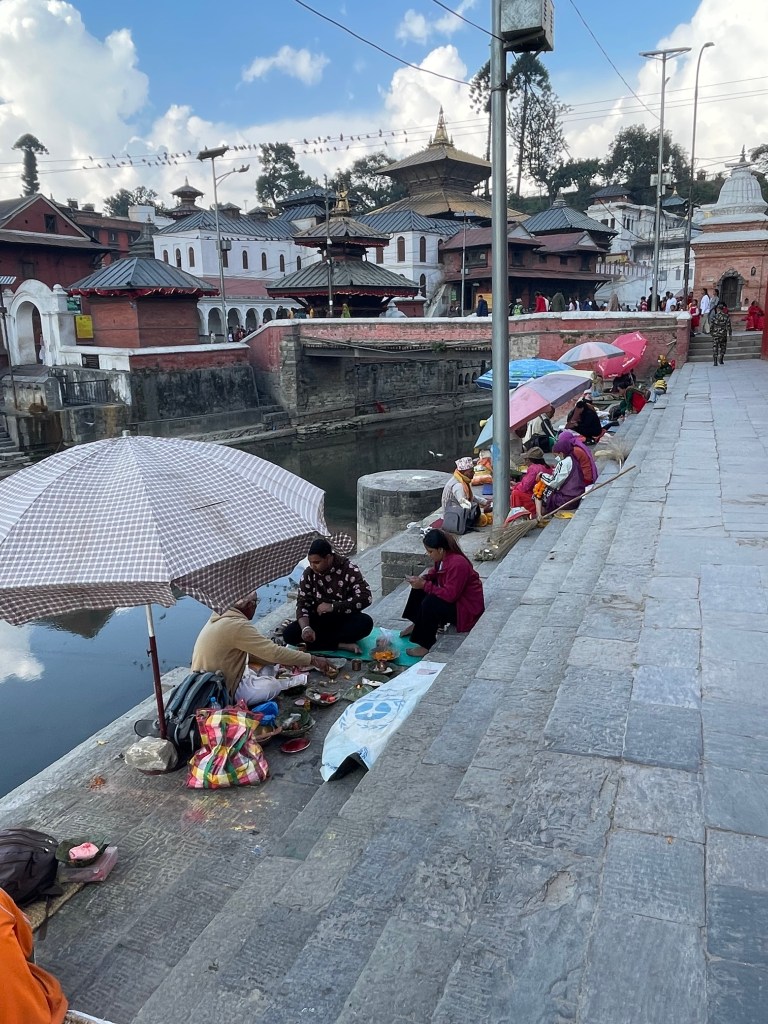
I also went to the Bagmati river, a sacred river in Kathmandu to watch the cremations. One body was already burning, the man who tended to the fire adding ghee on the areas that take longer to incinerate, so the body would be consumed completely. One person was laid out, covered in a orange cloth, ready to set onto a pyre. A remains of an older woman was being purified or washed with the water from the river, only men attended the body though, I’m not sure why. Once done she was carried on a bamboo stretcher to one of the ‘docks’, set up along the river, wood piled up ready to receive the corpse. Three more bodies lay waiting to be purified. The walkway and concrete steps leading to the river was filled with people and across the water, where I was, another group observed the rituals. A little further down, astrologers sat doing readings for anyone interested. I considered it, but there was only one that advertised he could do an English reading and he was already with someone.

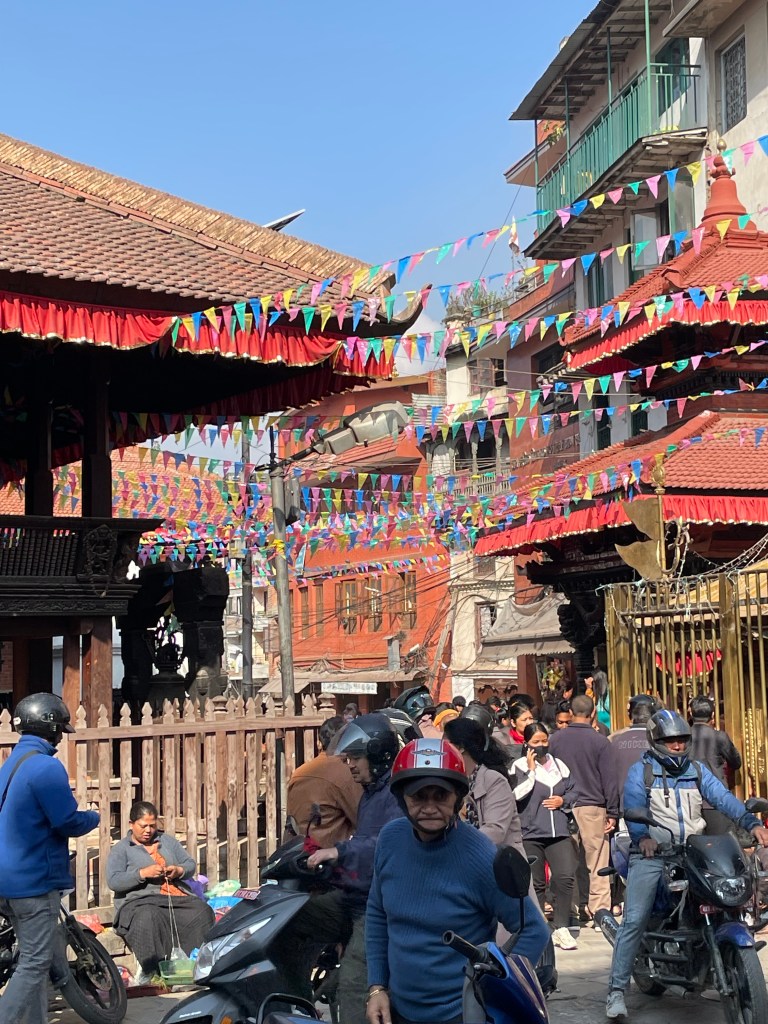
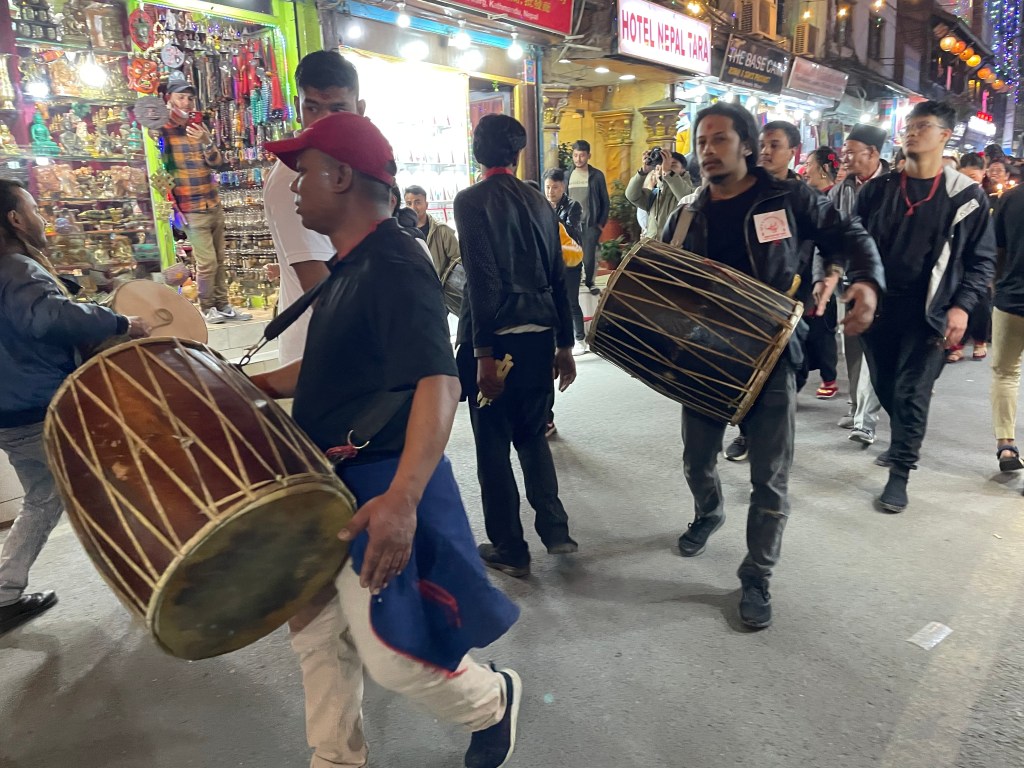
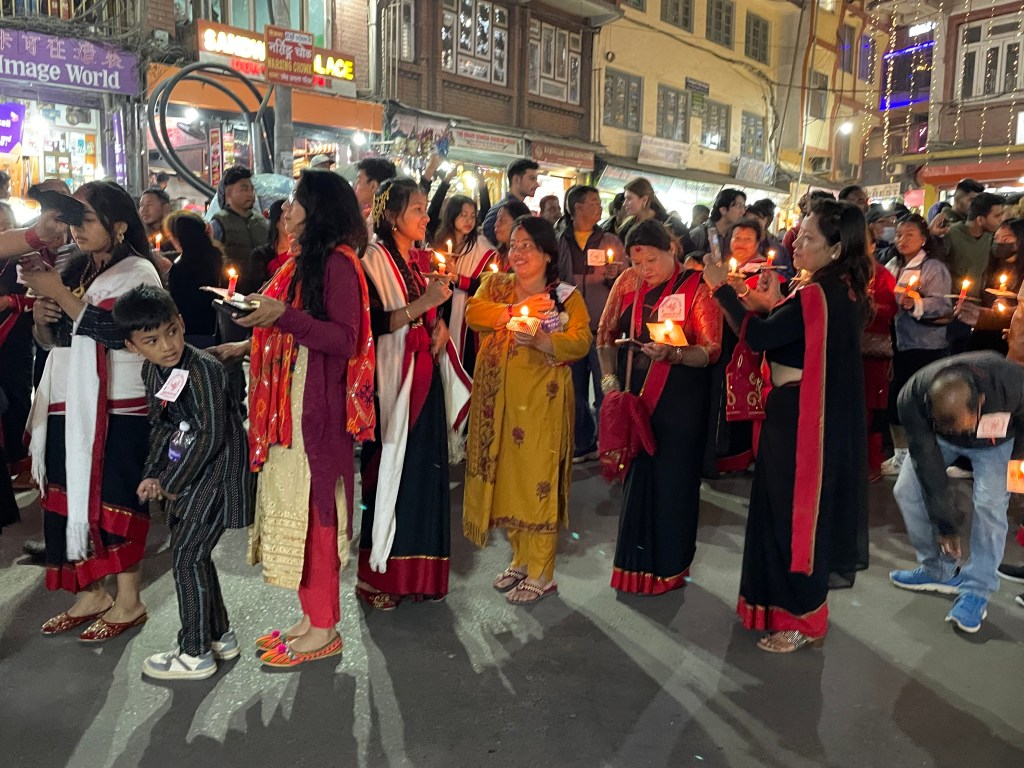
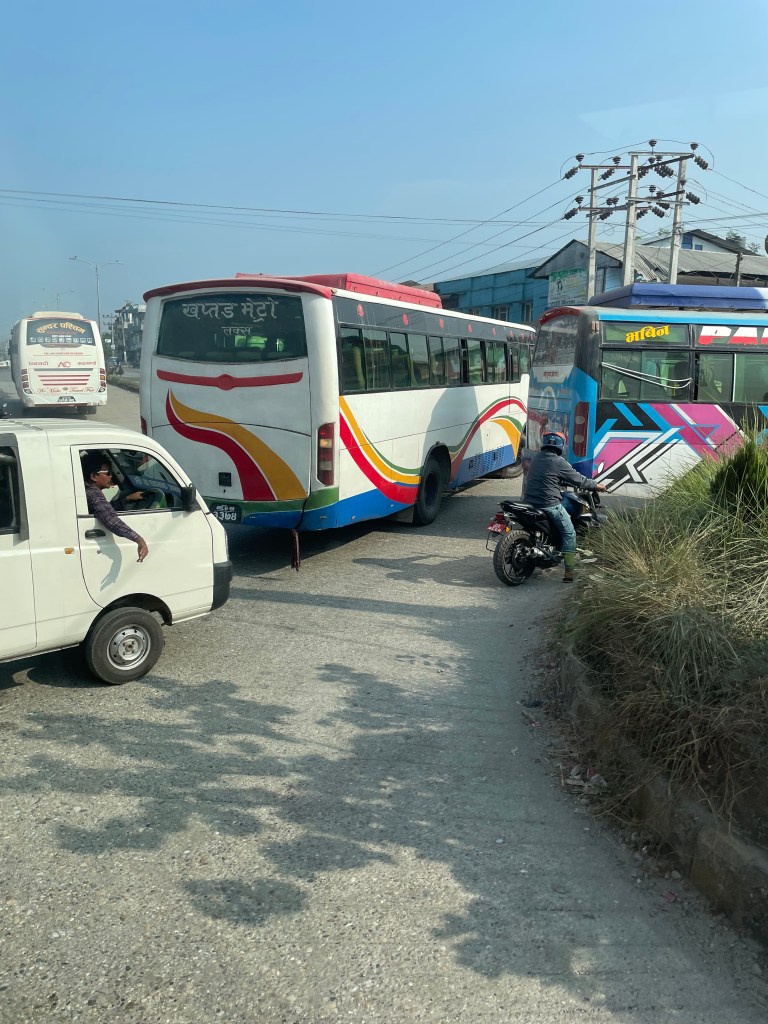
The streets of Kathmandu are narrow and windy, noisy and chaotic and filled with shops selling everything imaginable. Diwali started on the Friday before I left and the level of craziness in the city ratcheted up 50 degrees from the day I arrived. On a 30 minute walk to get lunch, I had to avoid several streets because there were just too many cars and motorcycles clogging the route and I couldn’t squeeze through. It’s an adrenaline rush when you maneuver around the onslaught of people and vehicles, each on their own mission. On Saturday, there was a big parade through Thamel, the neighborhood where I was staying. Diwali is a Festival of Lights, so there were lots of candles in the procession plus drums, cymbals and flutes. Young and old participated as they walked through the city streets. My first night in Kathmandu I did food tour, joined by a man from India. After walking through the crowded streets, with snarls of traffic at every major intersection, he said he had never seen anything like it. I laughed and asked how many cities he’s been in in India because the streets are just like this, but with a lot more horns.
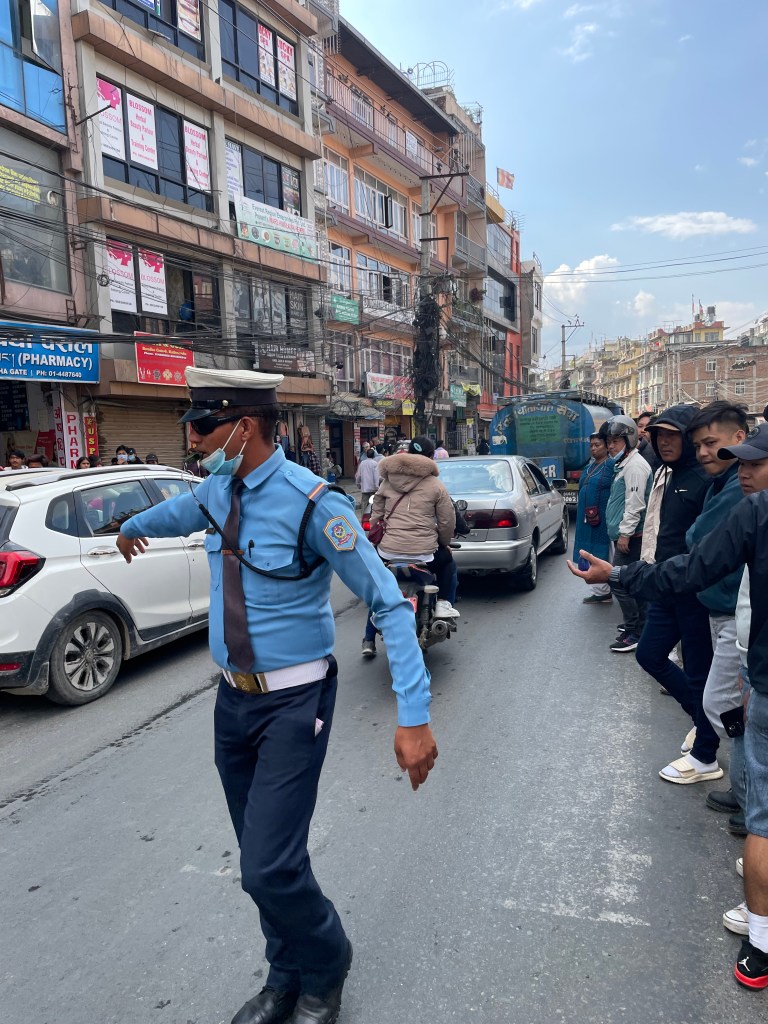
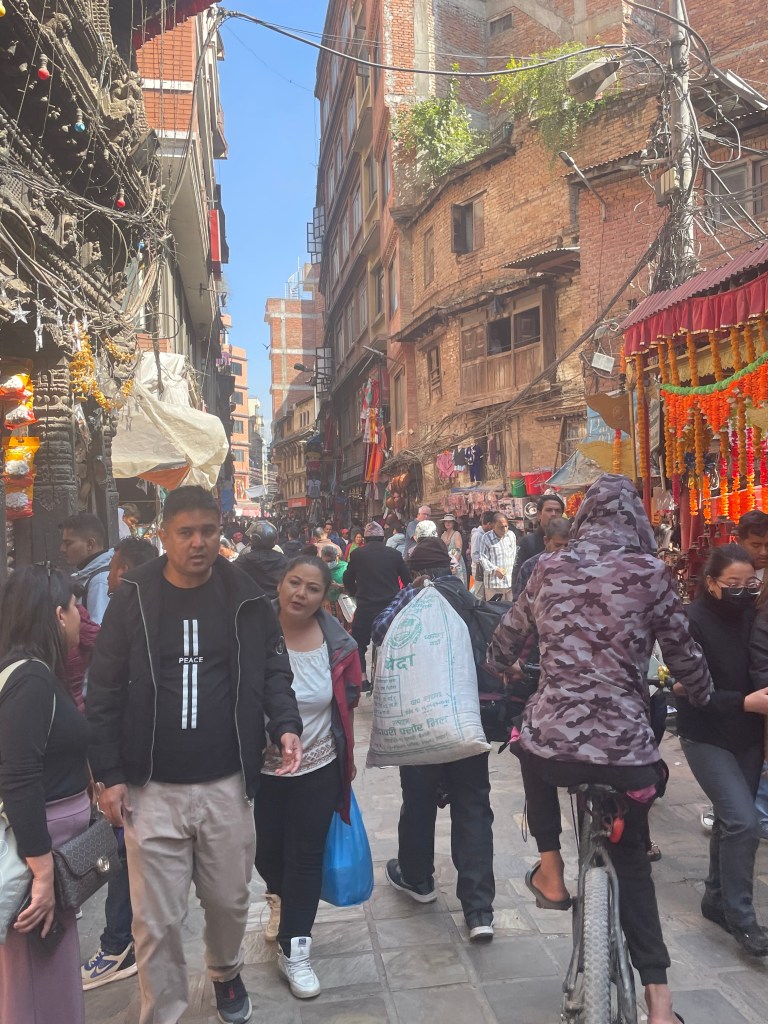
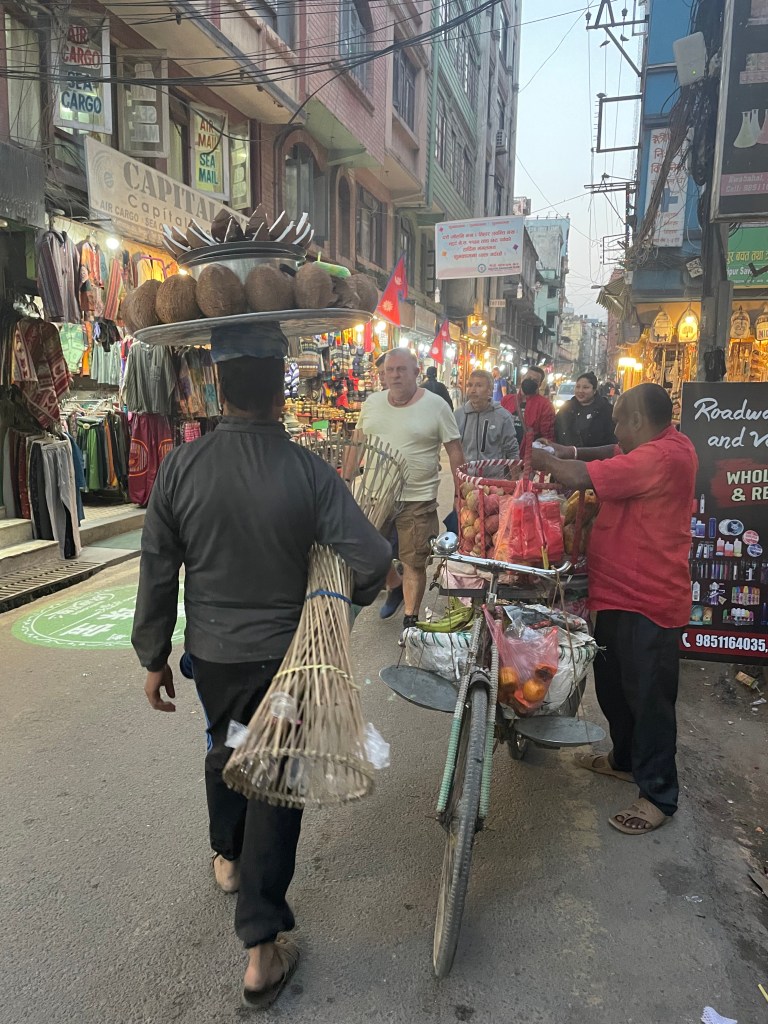
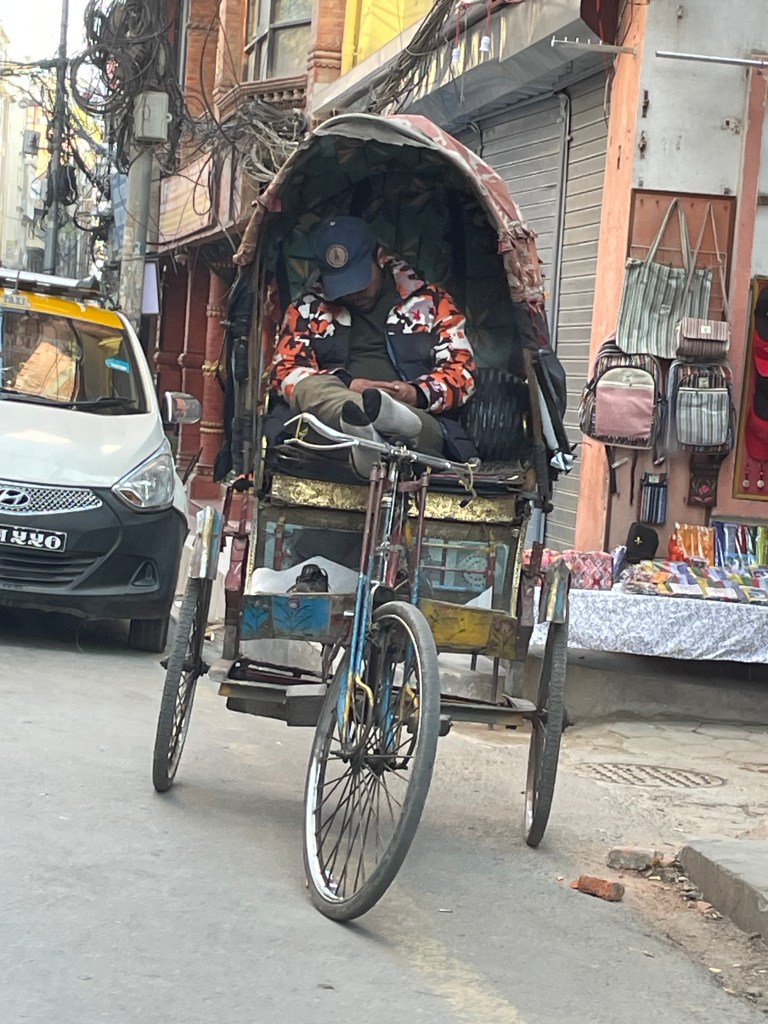

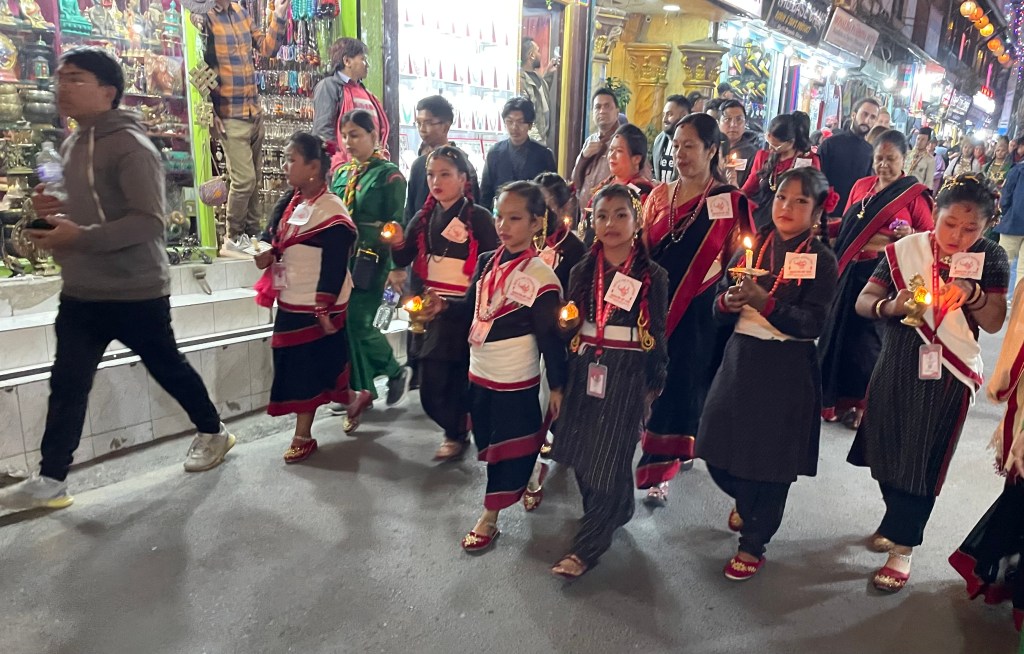
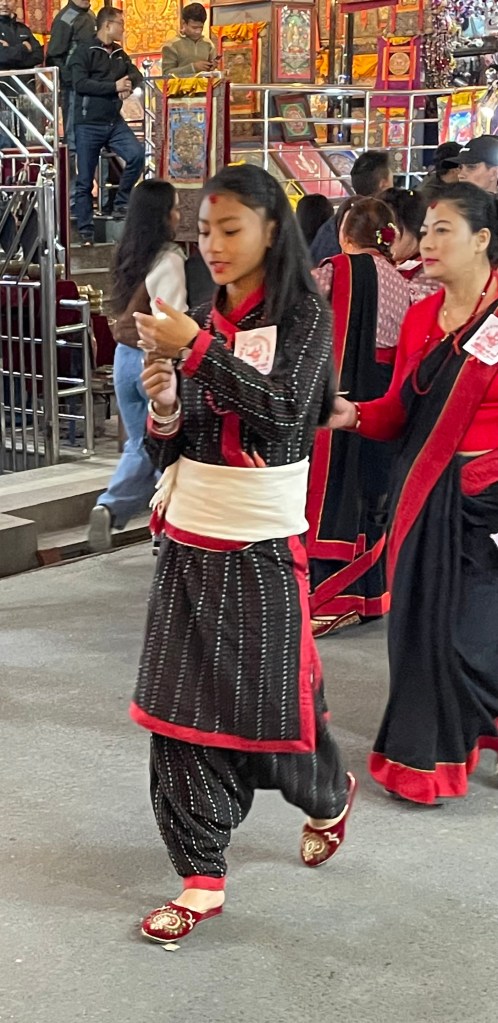
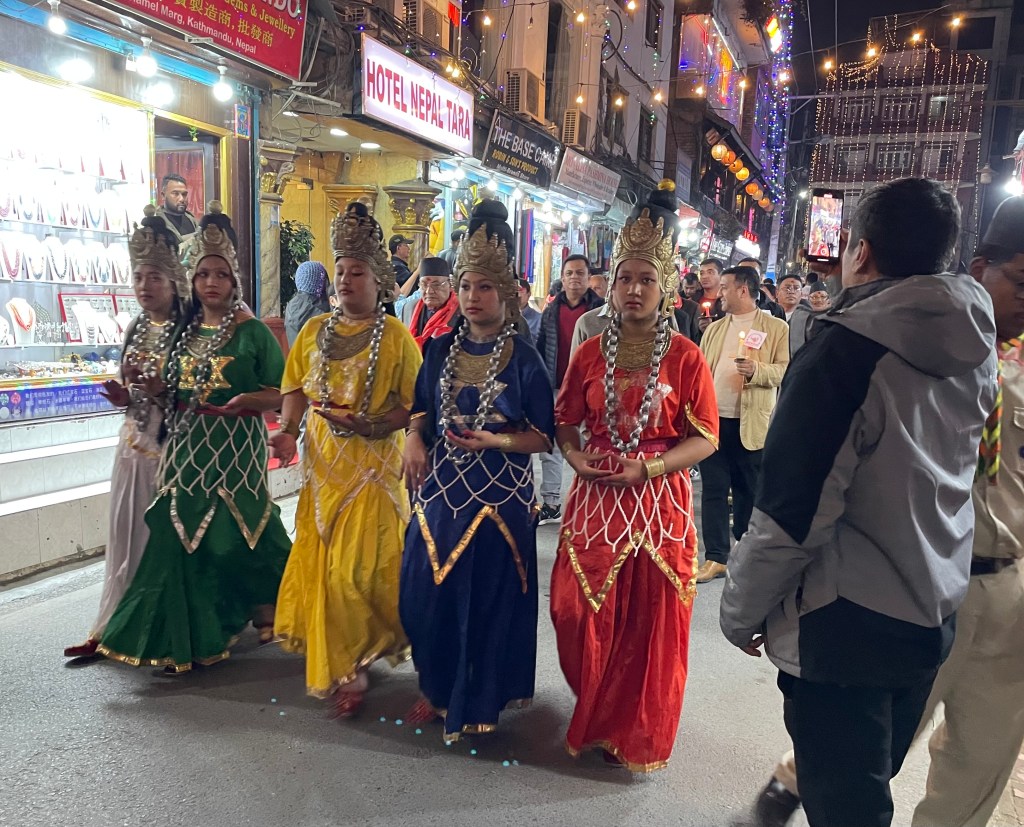
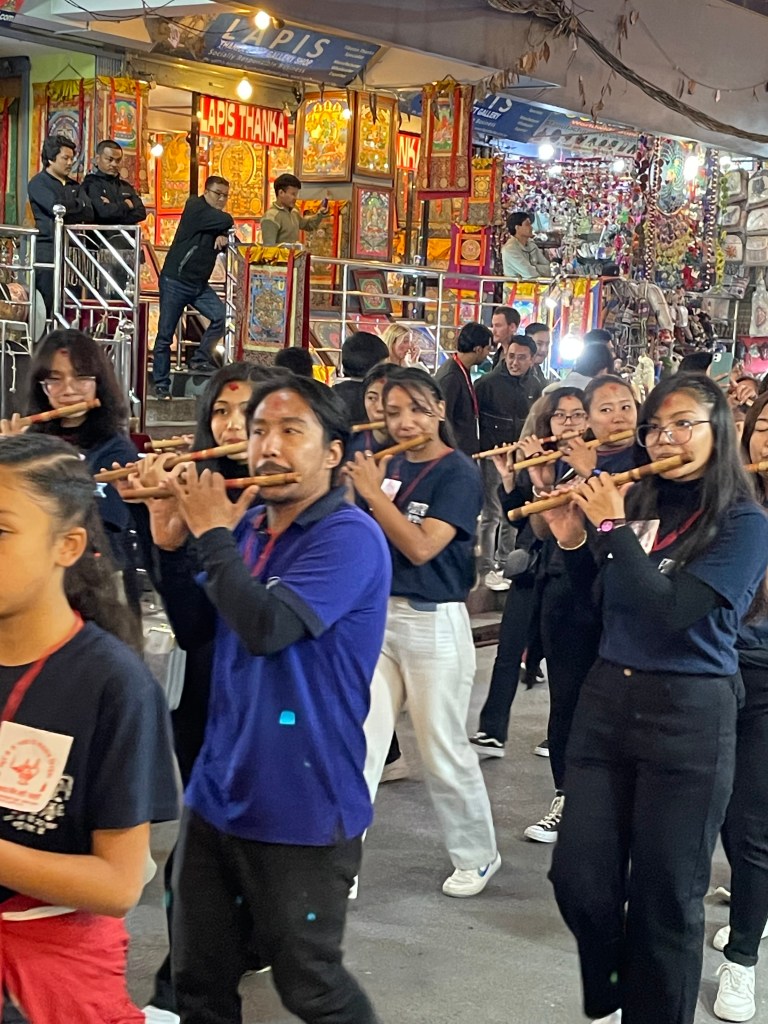
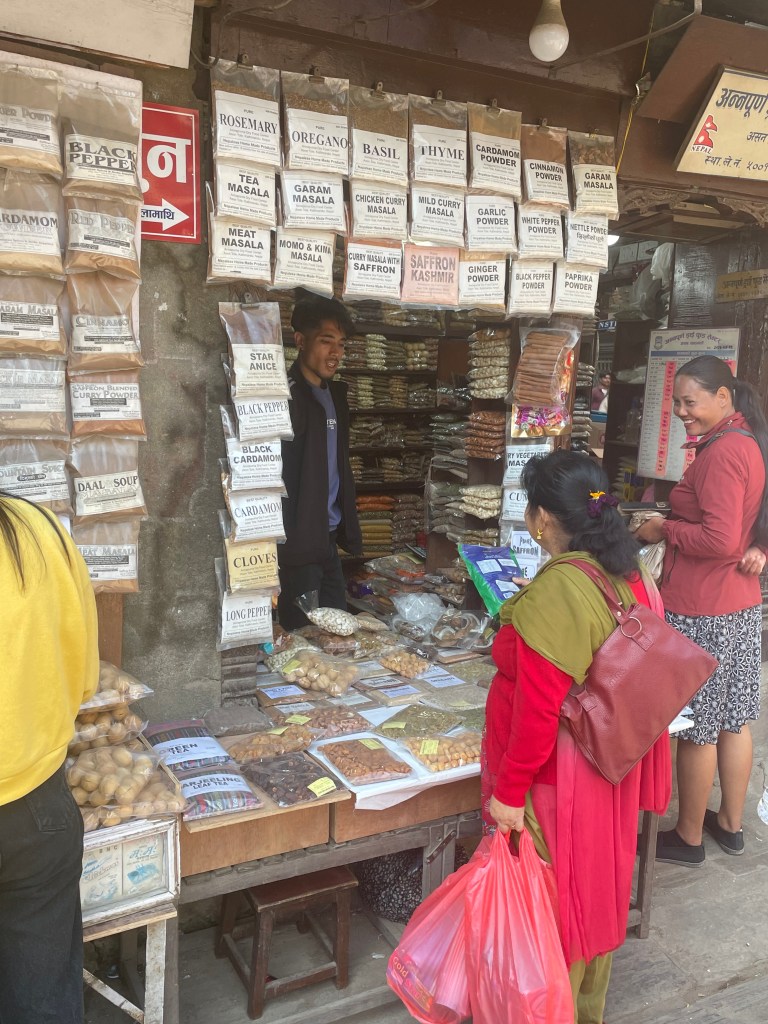
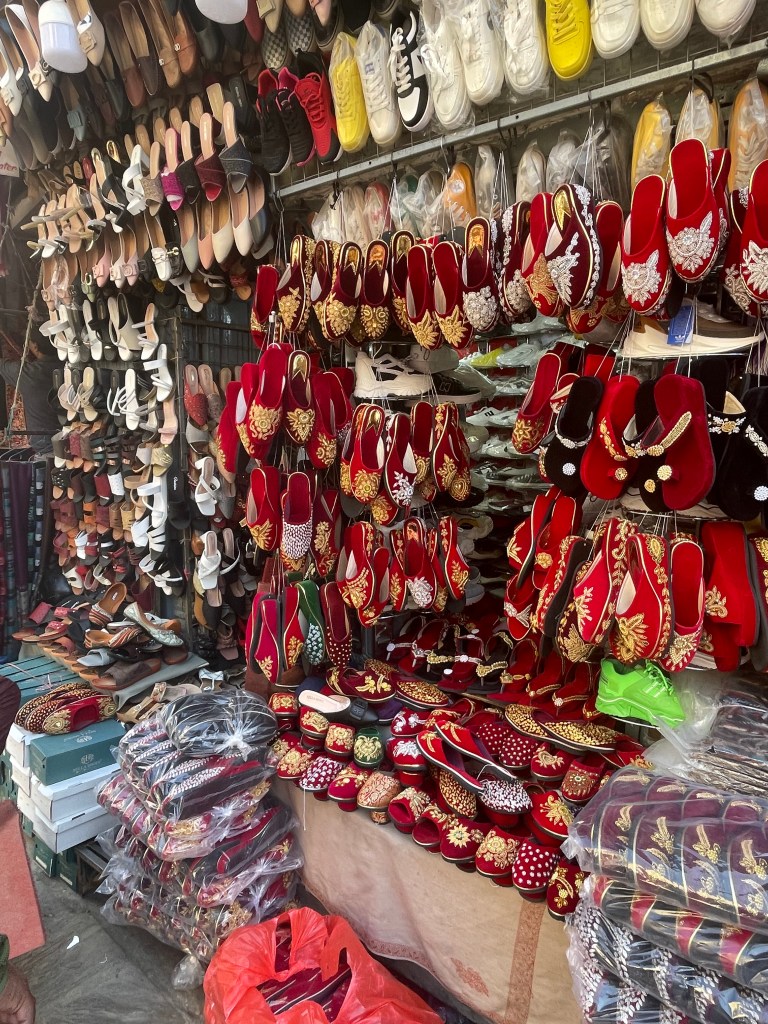
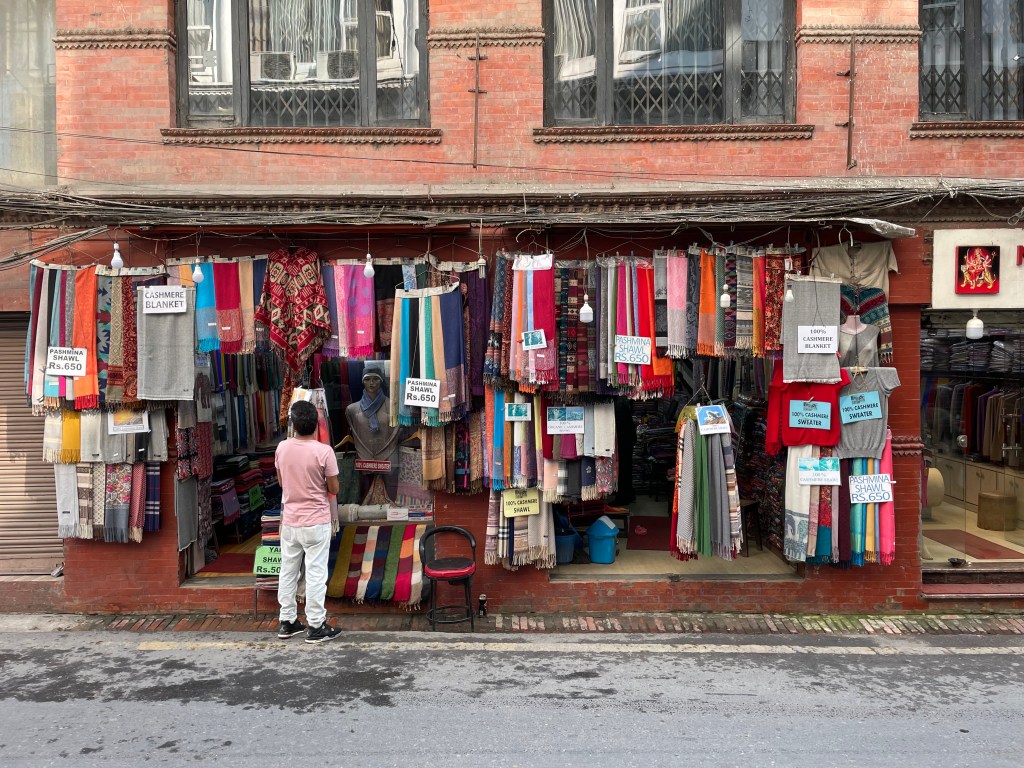
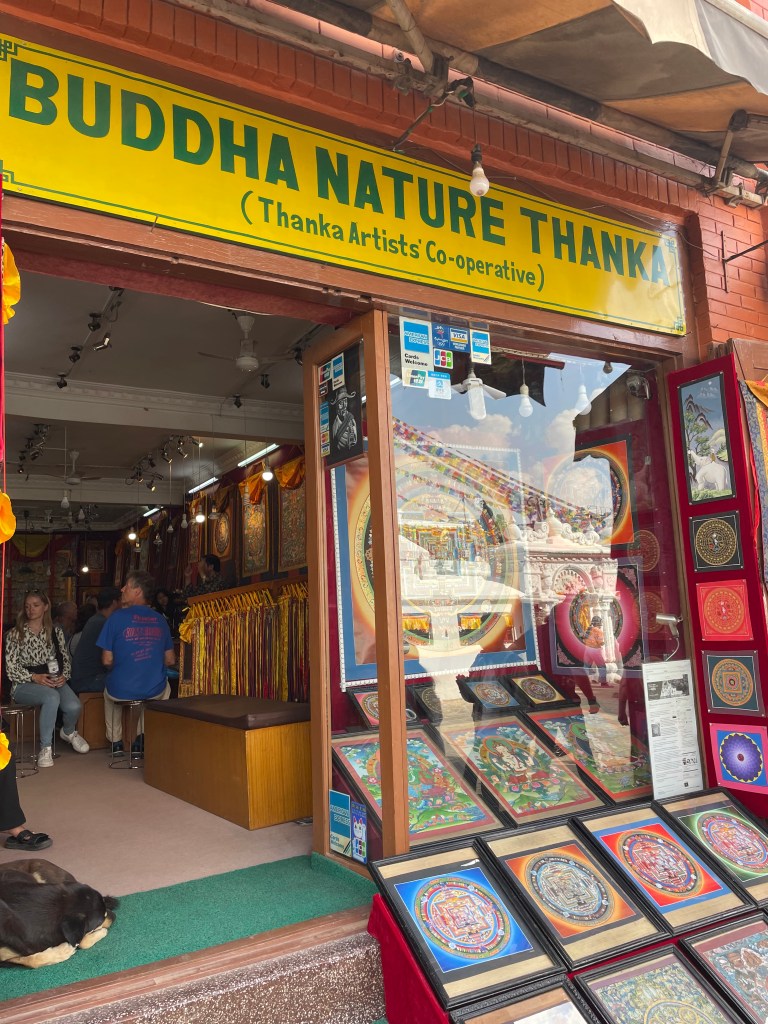
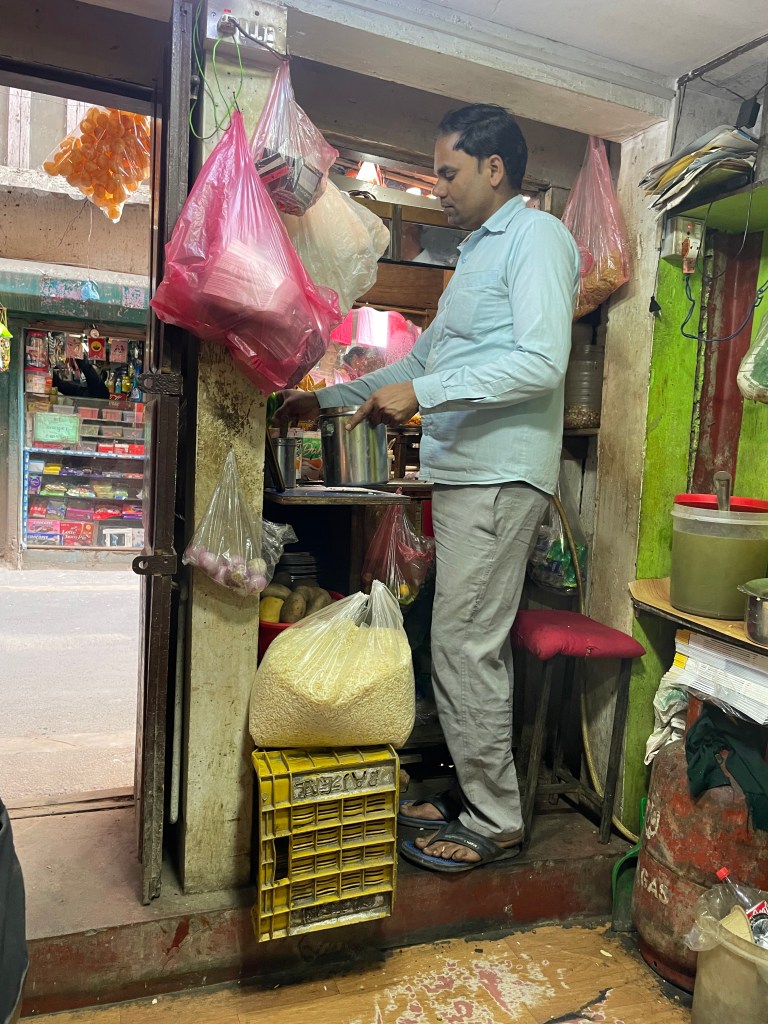
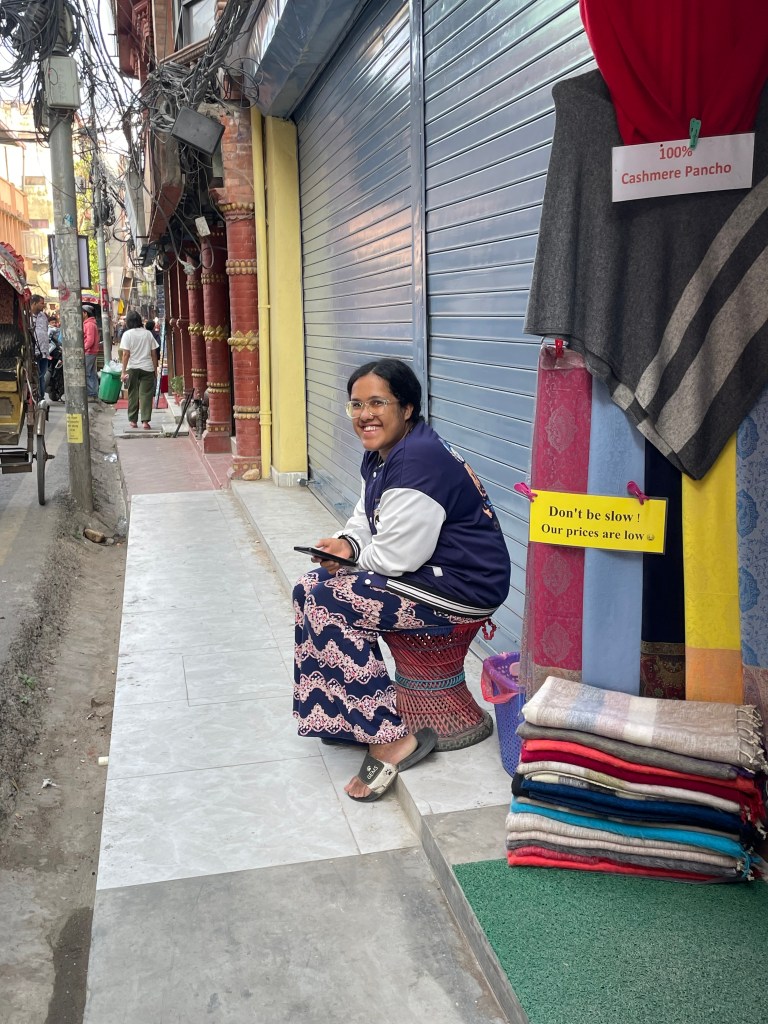
The shops, like in many of the developing countries, are mostly small, family owned, on the first floor of a multi-story building, usually smaller than a one car garage. A few are larger and fancier, selling fair trade products and fine designs. The myriad of stores selling outdoor gear is a clear indication that trekking is the bread and butter of this town – you can get a down jacket for less than $25. It’s probably a North Face knock-off from China, but who can tell the difference. More stores selling pashminas and cashmere sweaters than I can count, shops with silver jewelry, brass items, mandala or Thanka paintings, bright cotton clothing, and t-shirts lined the lanes of the tourist areas. I would love to shop, if I only had room in my suitcase, well maybe I can squeeze in a cashmere sweater and a t-shirt or three for my grandsons.
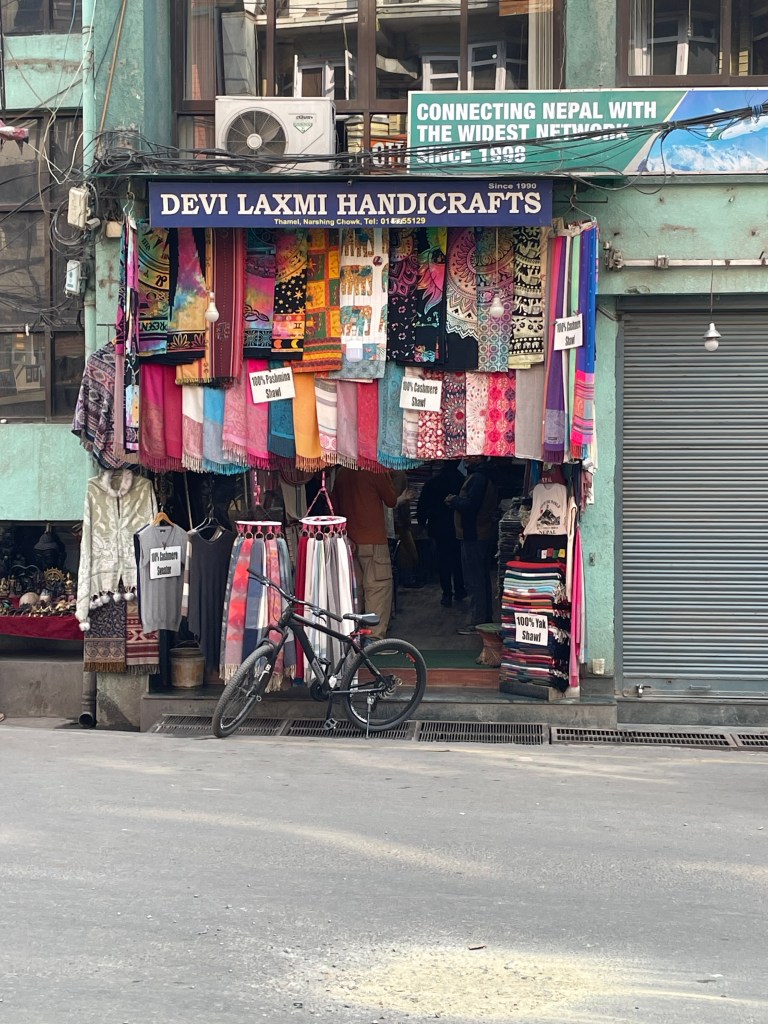
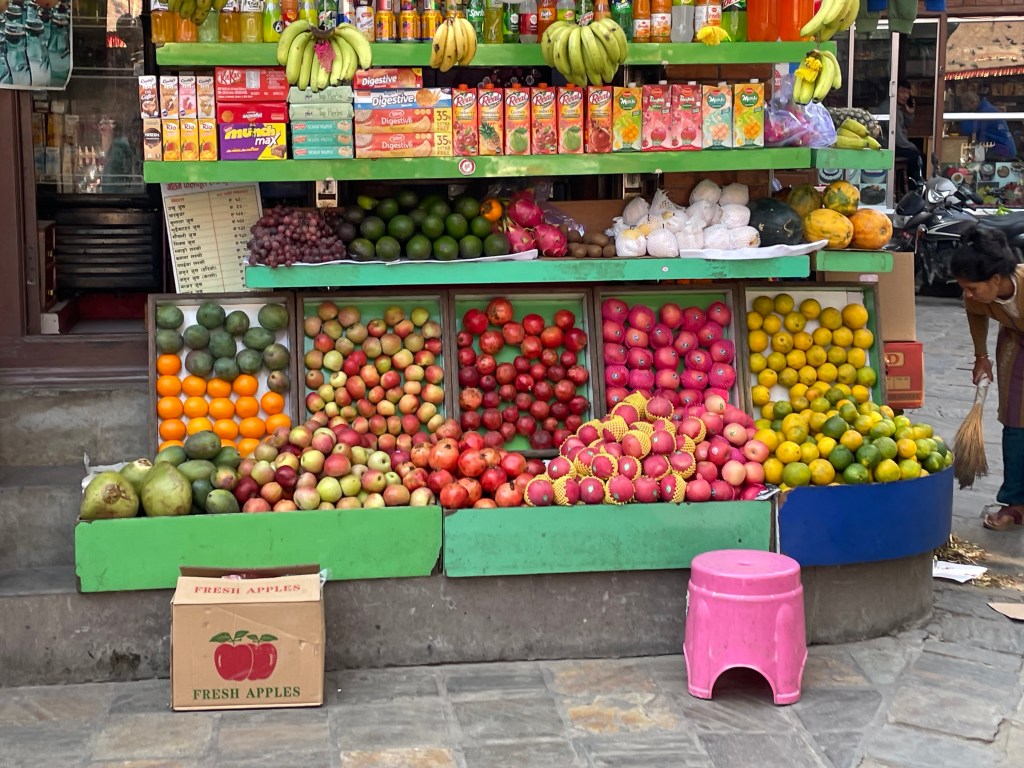
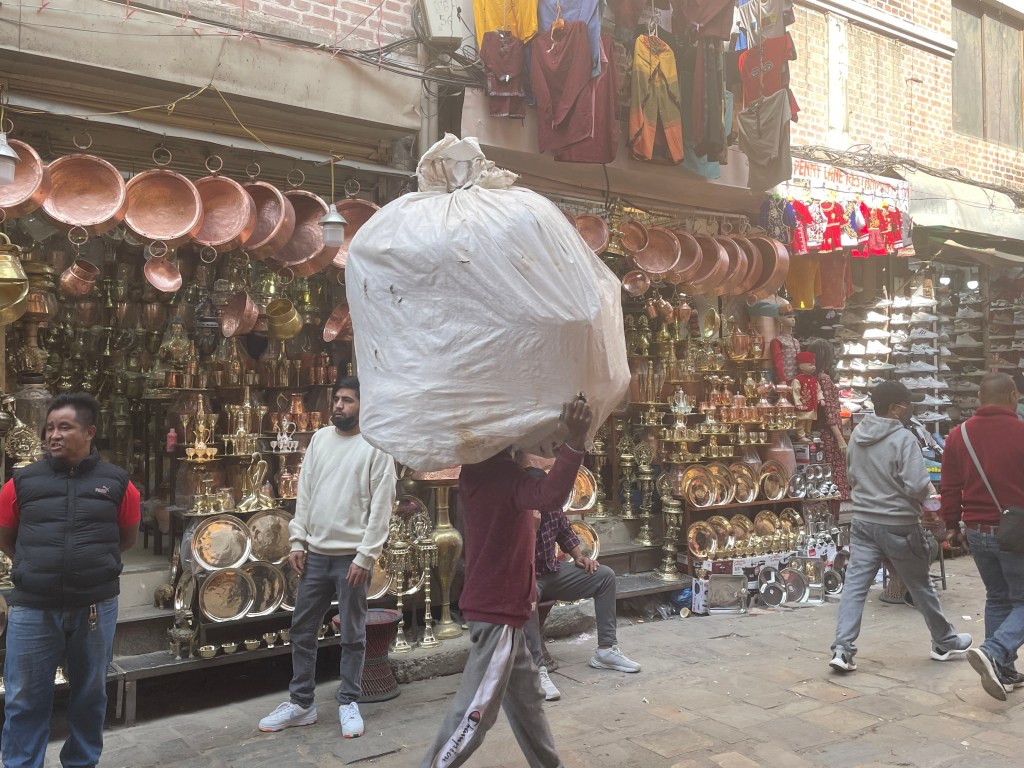
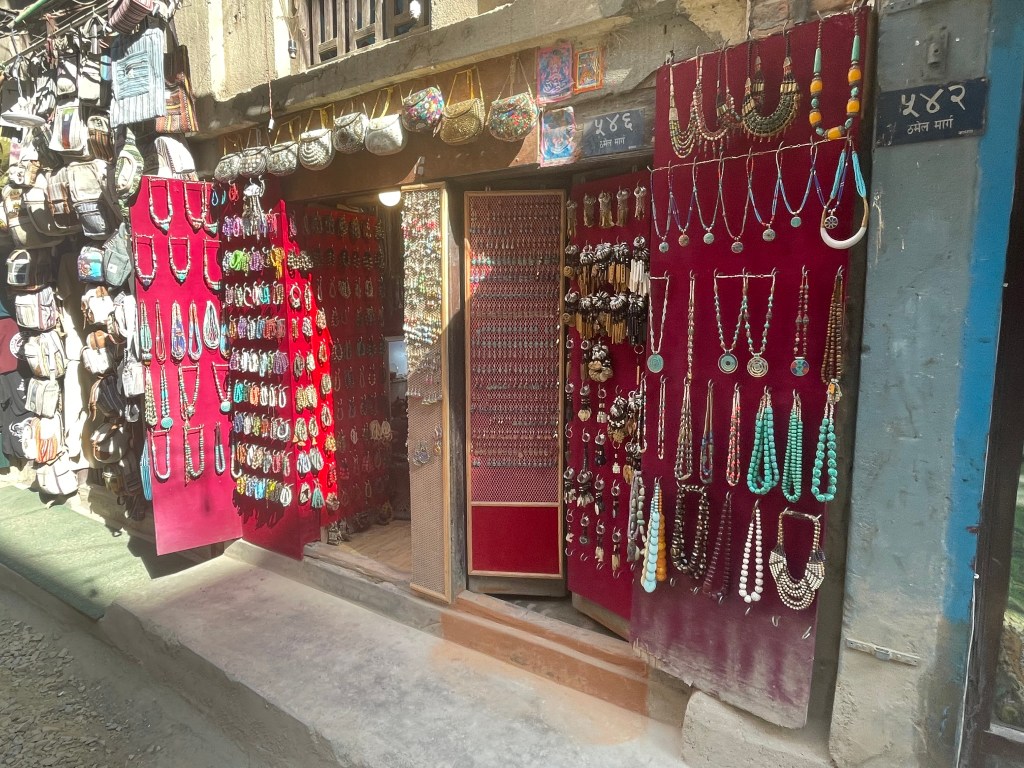


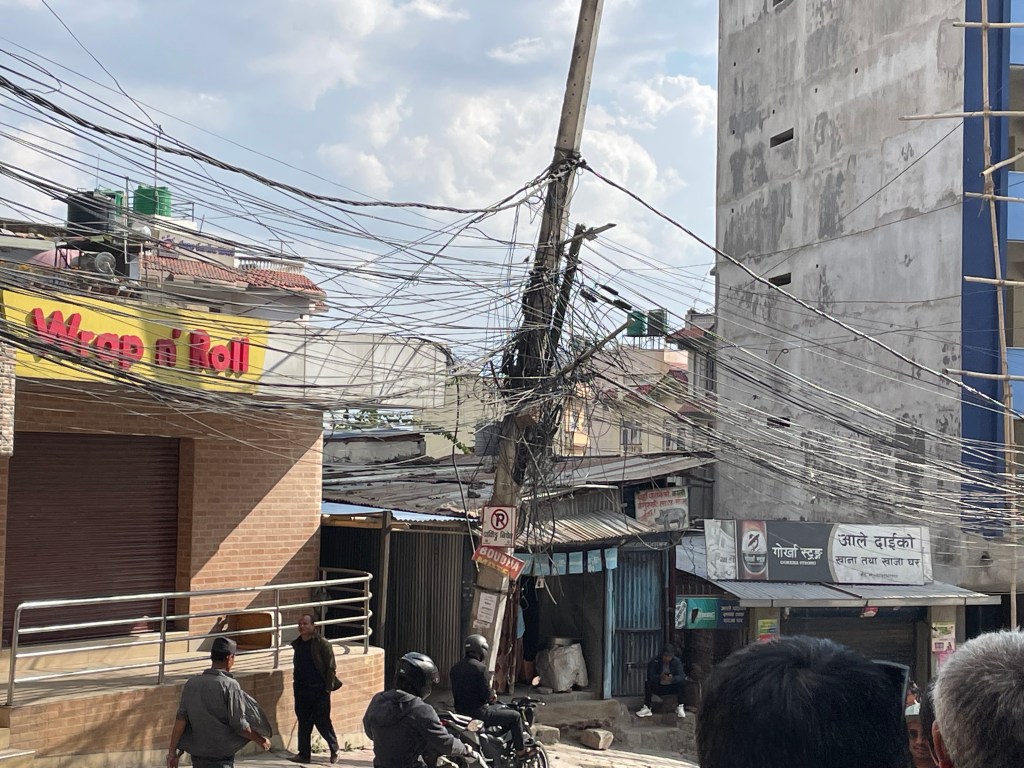
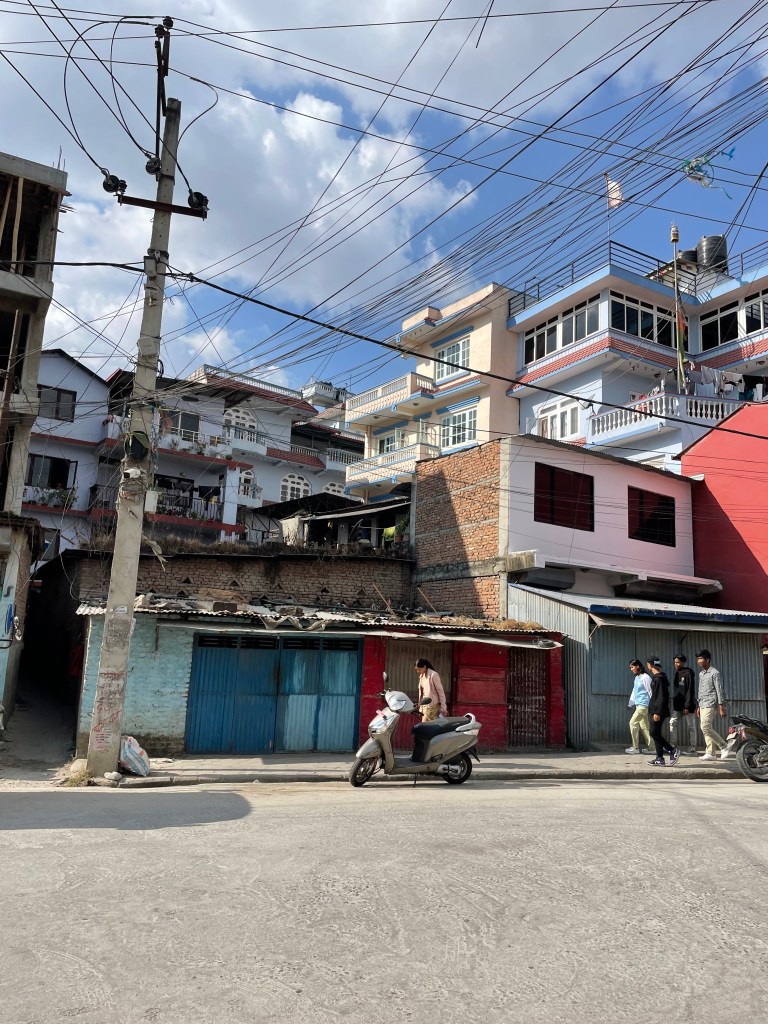
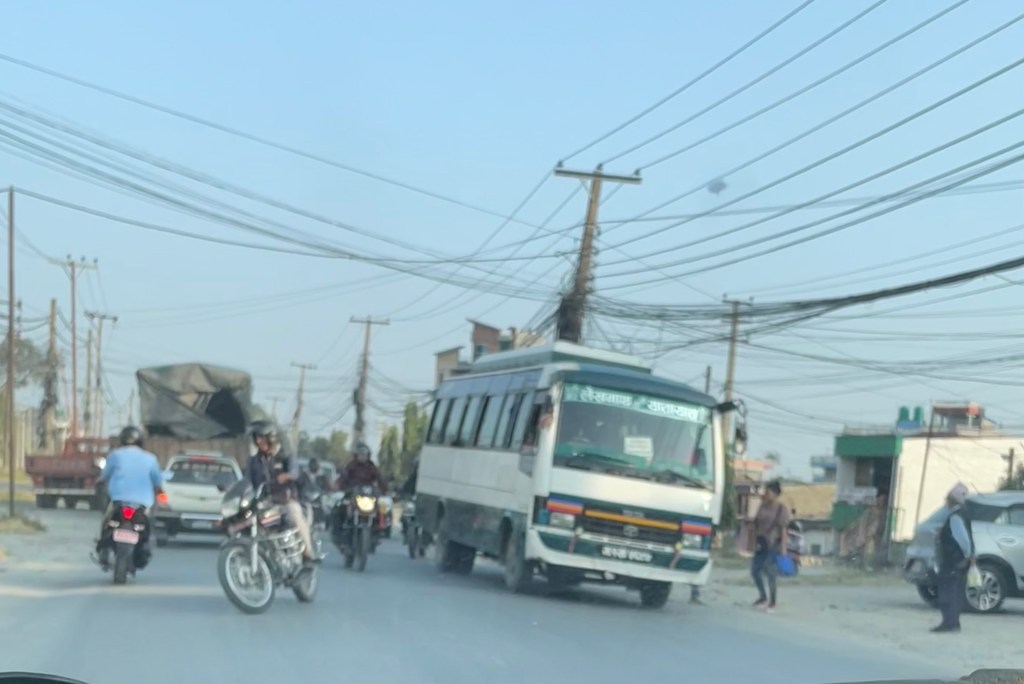
Here and in a few other countries I have visited – Vietnam comes to mind, the electric lines are crazy. First, I’m not sure how the pole holds up so many wires; two, how do you tell which ones are yours; and how do you prevent an overload to the system. Oh that’s right you don’t, the power goes out quite often. One of my guides told me that a lot of the lines are no longer active, once a new one is put up the old one is not taken down. Nepal has a goal to put all their wires underground and has started that process. There is going to be some growing pains here as they connect and reconnect all those cables. And as a foot note to my bus trip, the roads will be wonderful in a year or two once the construction is completed. My guides all bemoaned about the corruption in the government, saying so much more should and would be done if they weren’t skimming money off the top. They also complained about India taking over more and more land and sending uneducated and unskilled people from the slums to Nepal. The politicians, after going to India and receiving bribes, look the other way. At least one member of every family works abroad, and the money they send back has improved Nepal’s quality of life for those that remain. If you’re in the upper class you go to school in America, Australia, or Europe and probably get a job there and stay. If you’re less fortunate, you go to the Middle East, not as much opportunity but the wages are much higher than in Nepal. A group I met in Chitwan, visiting as part of a family reunion, supported this. The oldest daughter went to school in Kentucky and has lived there for 19 years, working as a nurse. Her sister and brother went to Australia and are now raising their families there. Their mother still lives in Kathmandu.

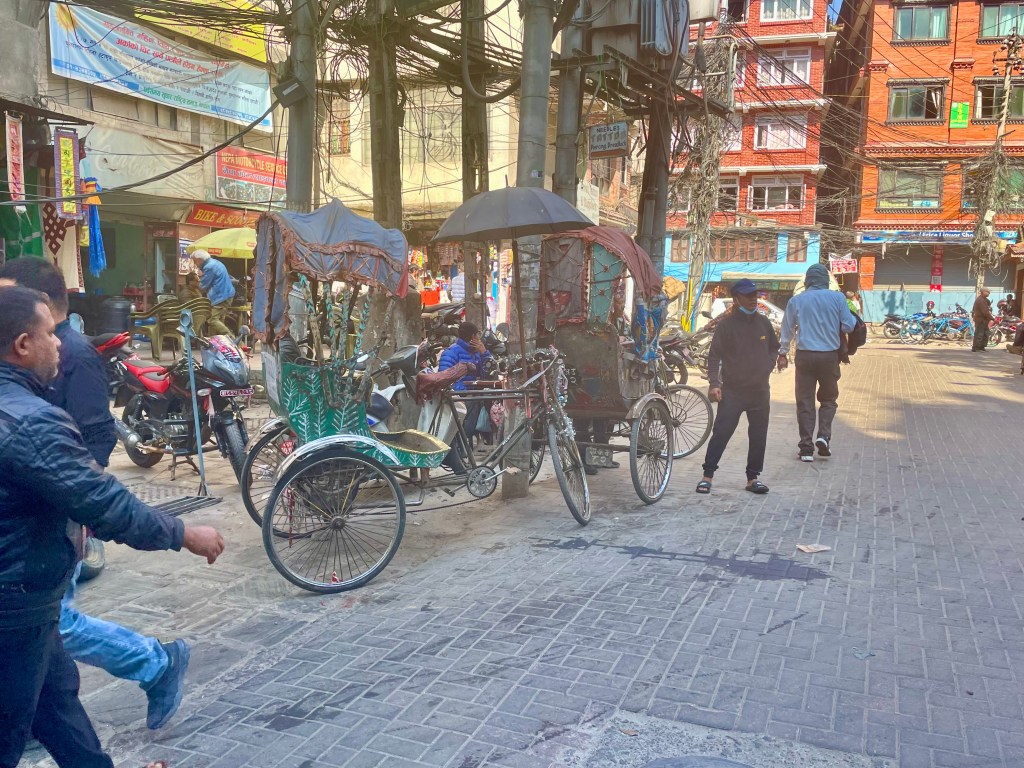
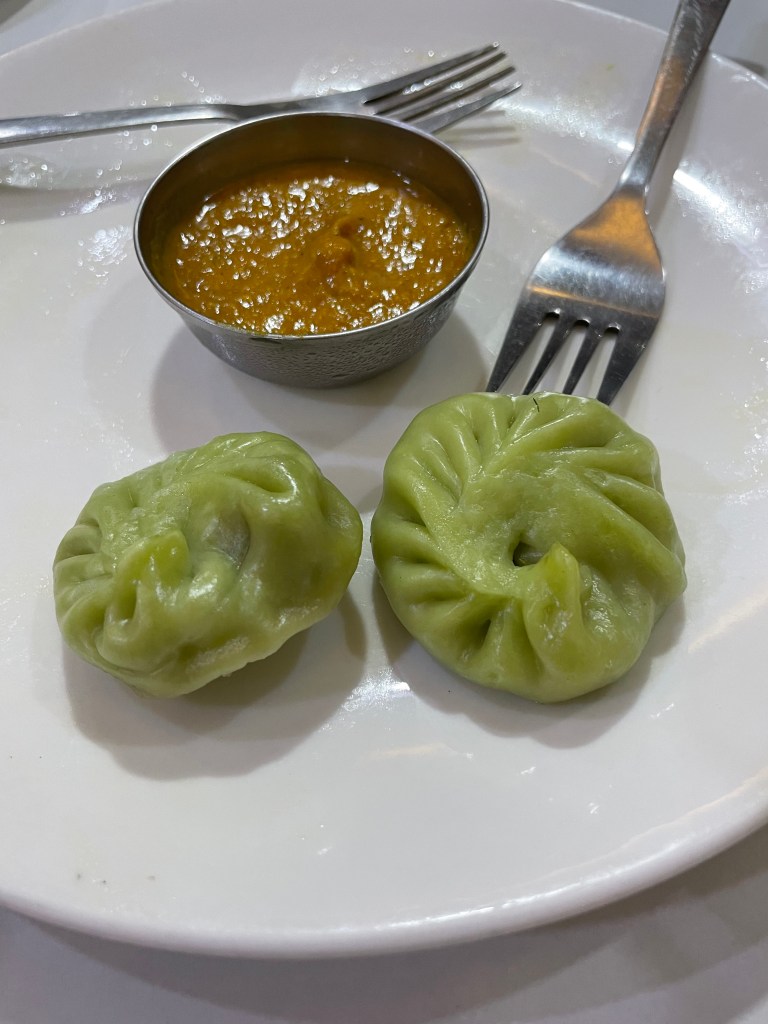
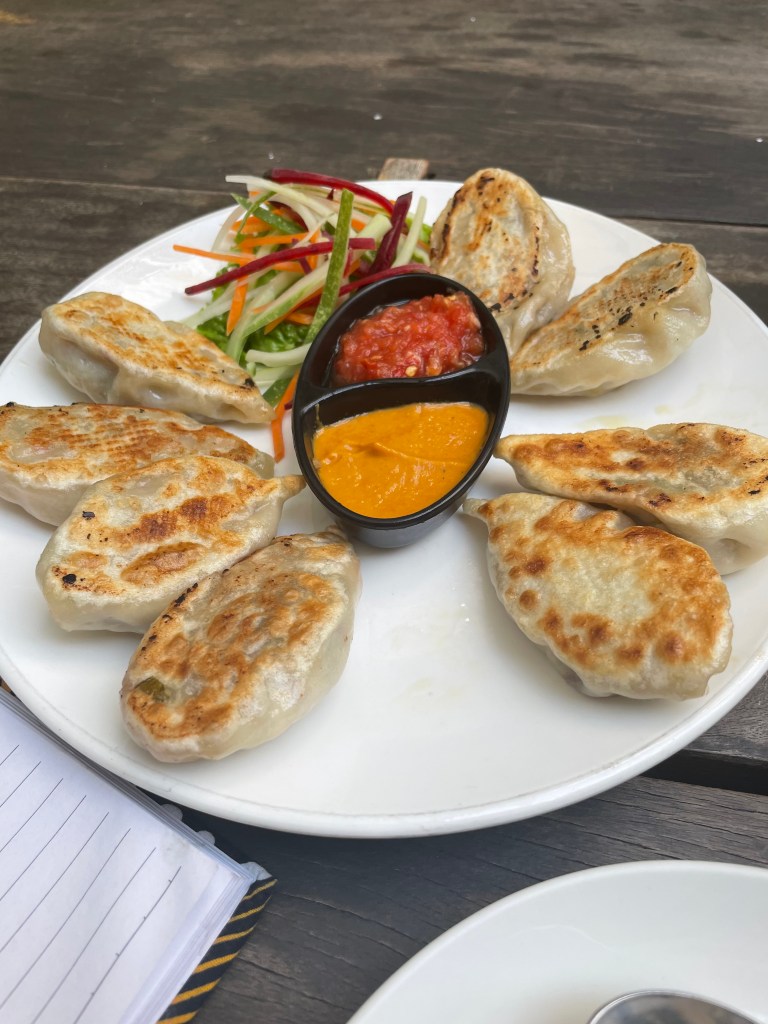
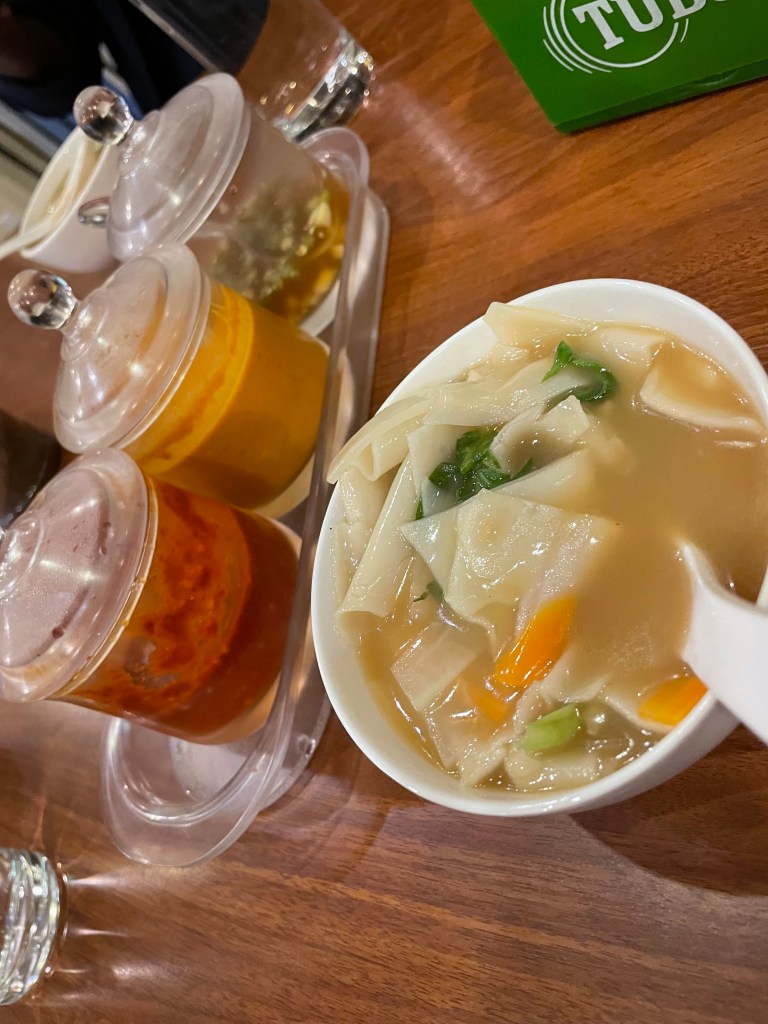
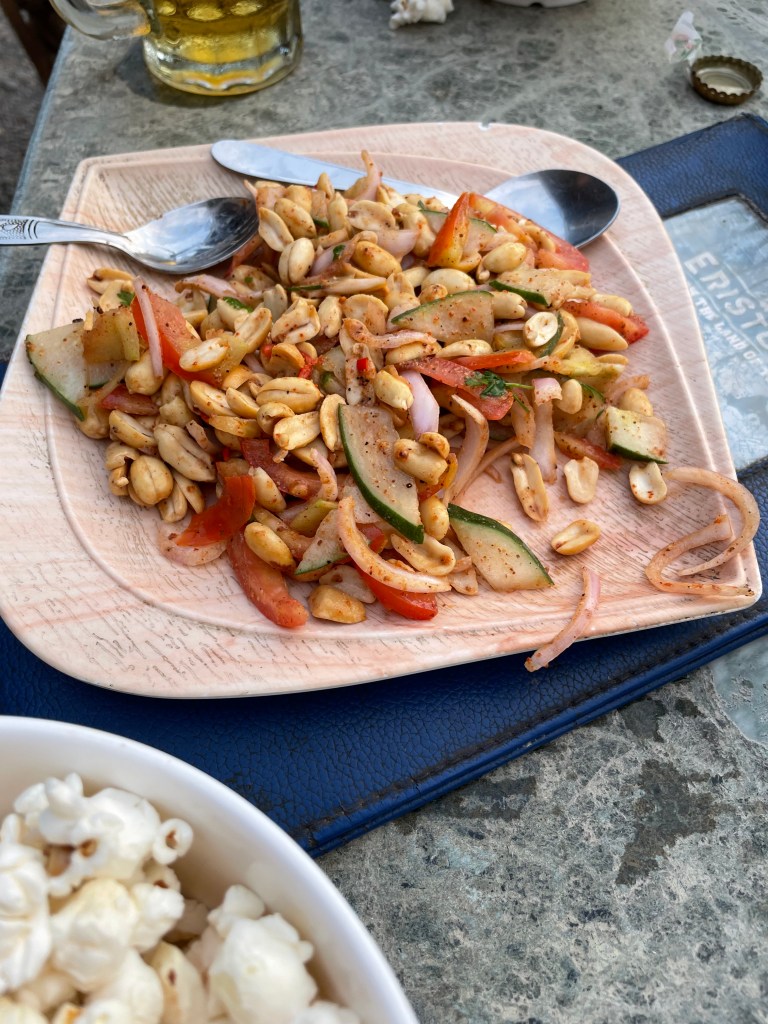
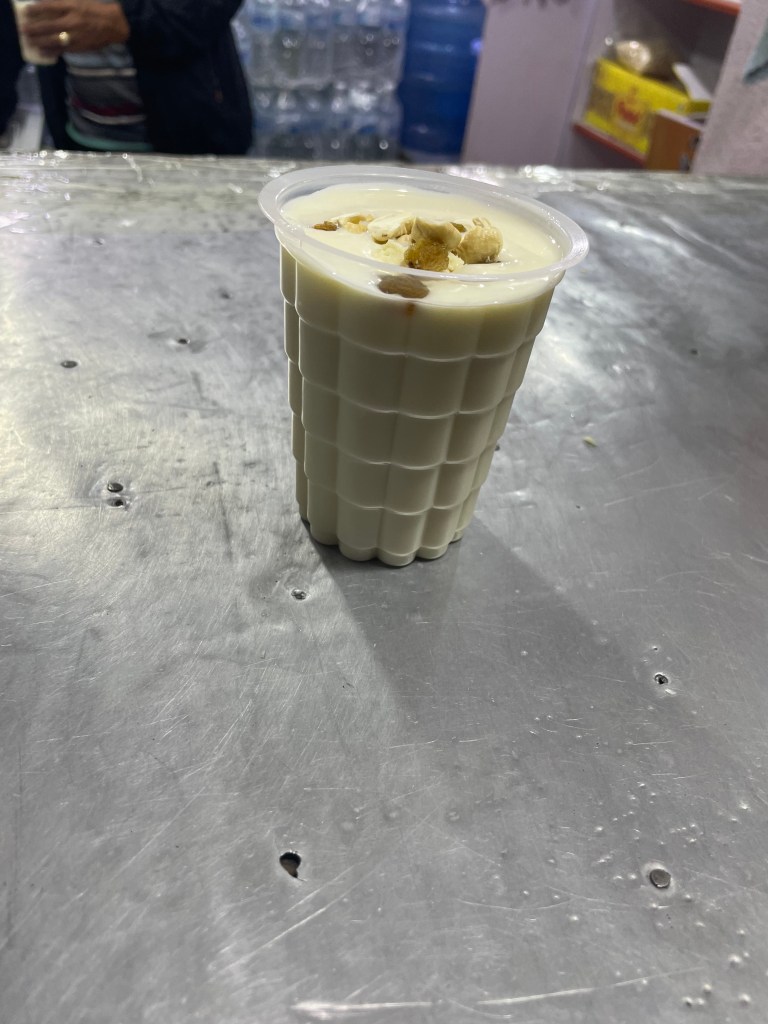
The restaurants here are mostly on the 3rd or 4th floors, occasionally a tiny one is squeezed in at street level and side alleys boast small hole in the wall places. I’ve eaten several times at a little place just across the street and down an alley – the food is good, the staff friendly and they have all the dishes the other joints serve. Most typical is a thali or thakali, similar to the ones in India- a plate with servings of rice, dal, a curry of some sort, curd, and pickles. Momos, or dumplings, are very popular here, filled with veggies, chicken or buff – buffalo. They really don’t eat beef in Nepal but you will find a lot of mutton and buffalo. Thukpa, a wide hand-rolled noodle served in a sauce or soup is very good, I had it both ways. Lo mein, chop suey and spring rolls show the Chinese influence on their cuisine. In Pokhara, which is on a lake, I had fish curry – made especially for me and my guide, and a fresh fish marinated and grilled over coals. You can find samosas, pakora, biryani, pani puri, lassi here as well. And other other type of food you want, as the city is home to people from many countries and they cater to travelers from around the world.

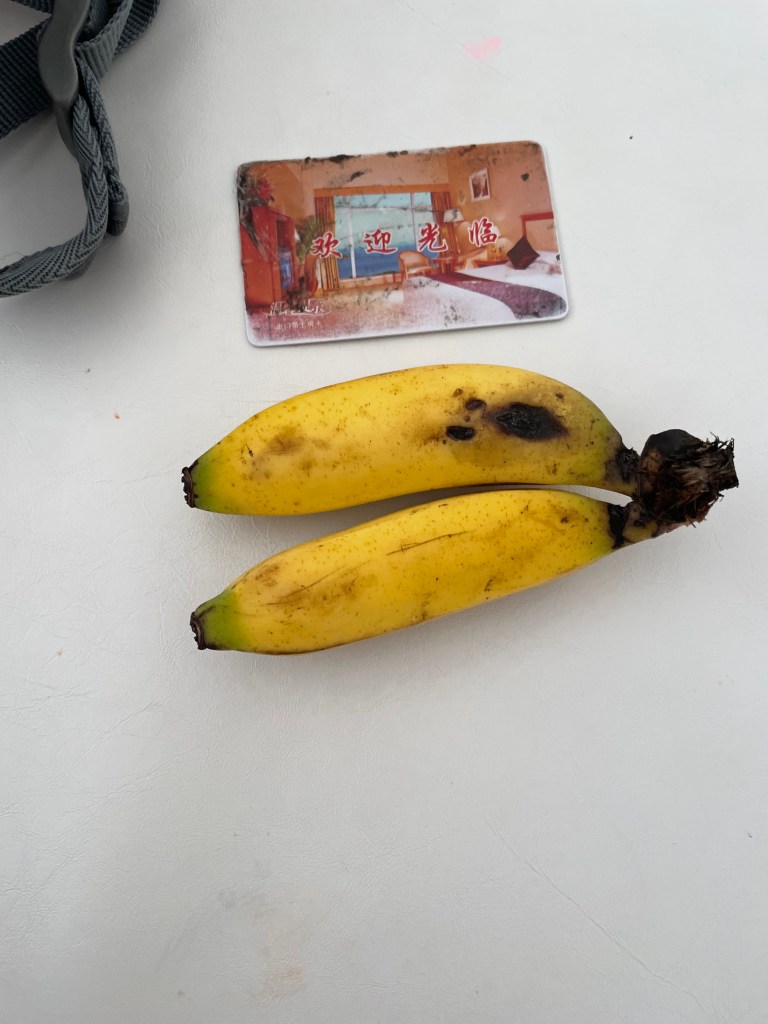
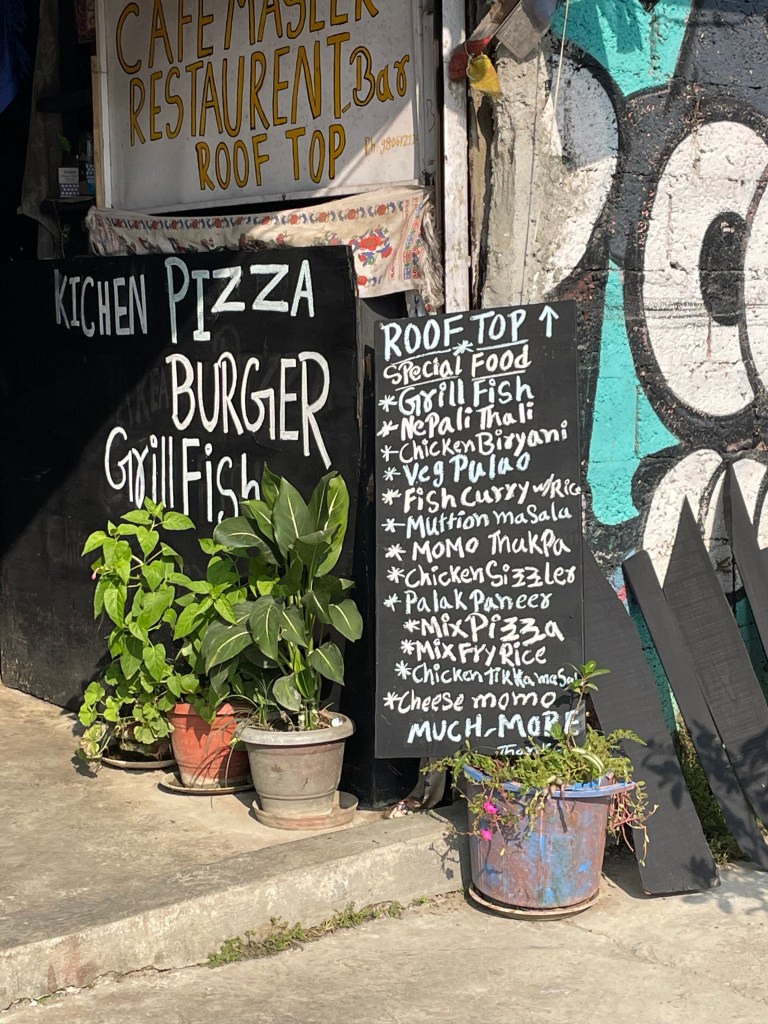
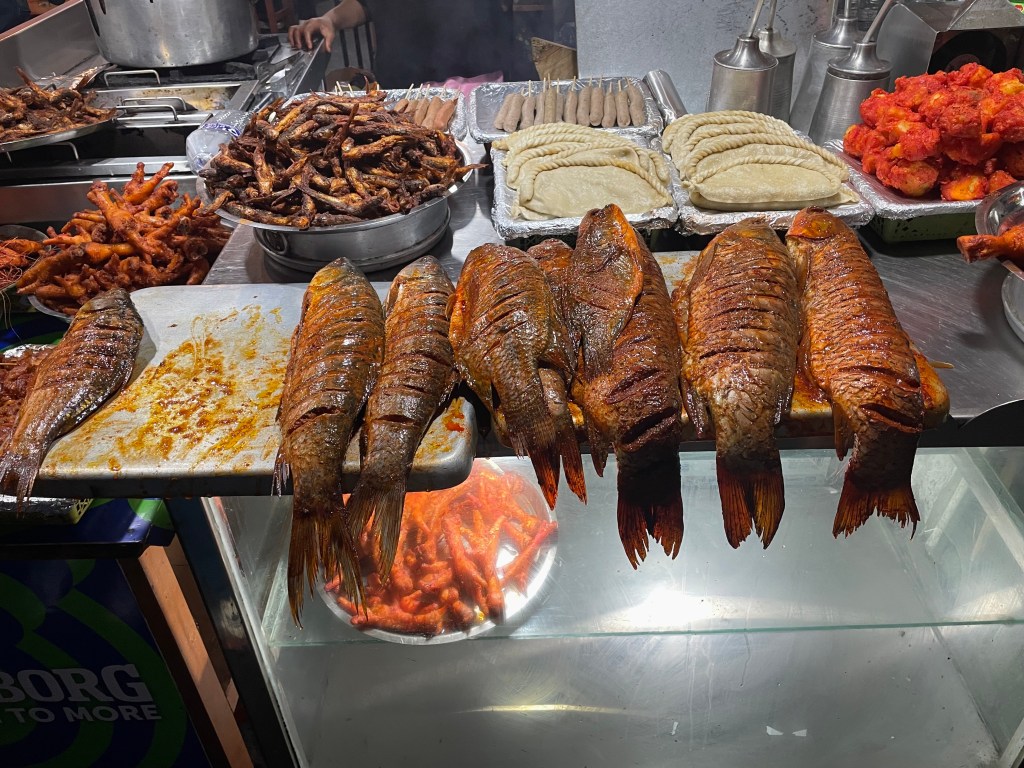
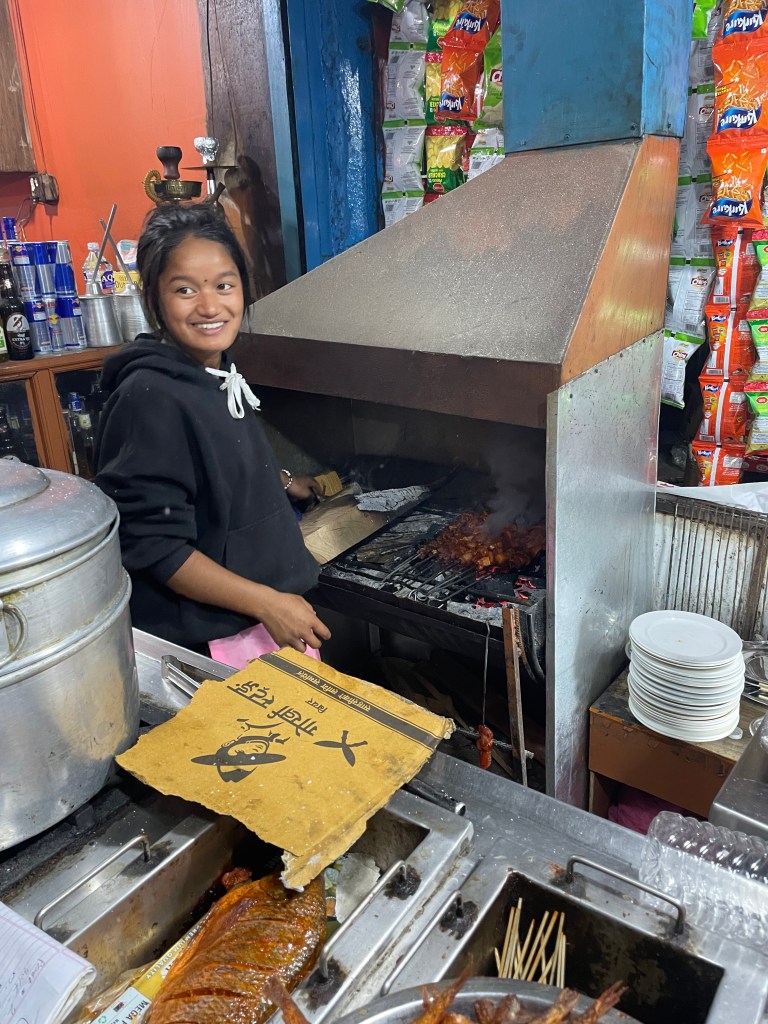
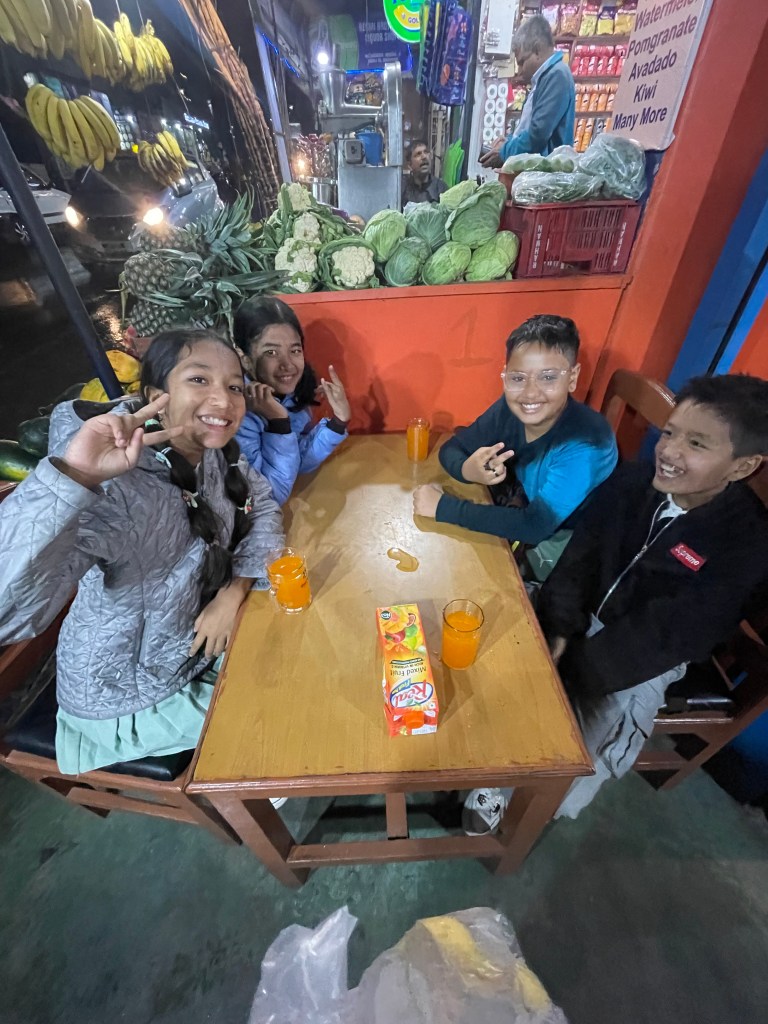
Everyday on this journey I am grateful that I have the ability and means to be embarking on a trip like this. And I am constantly aware that I bring a first world sensibility with me. That said, here more than anywhere, my lodgings have been basic from my perspective although rated high here. Several times I was unable to get even a warm shower – hot showers are a joy; cockroaches scuttled across the floor; there were holes in the walls, draperies and linens; water stains in the drywall; the beds just have comforters, no top sheets on them, that I can’t imagine are washed between guests – they’re so big and bulky – I try not to think about it though; no elevators even though you’re on the 4th floor-I don’t use them often but I like to have them especially when bringing my luggage up; hard, hard pillows; and just an edge of dinginess and shabbiness everywhere. I think the inadequacies are much more pronounced as nothing else is normal or everyday for me, so feeling at home somewhere is important. Things could be much, much worse of course and I have managed just fine, it’s more of an observation then a true complaint.
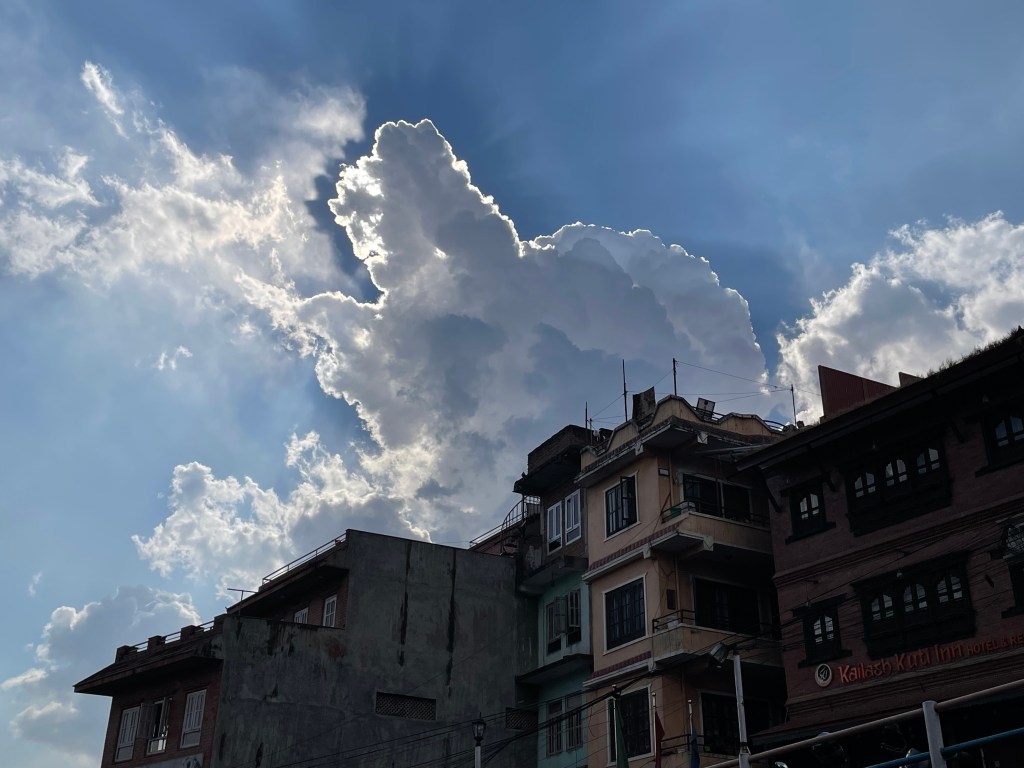
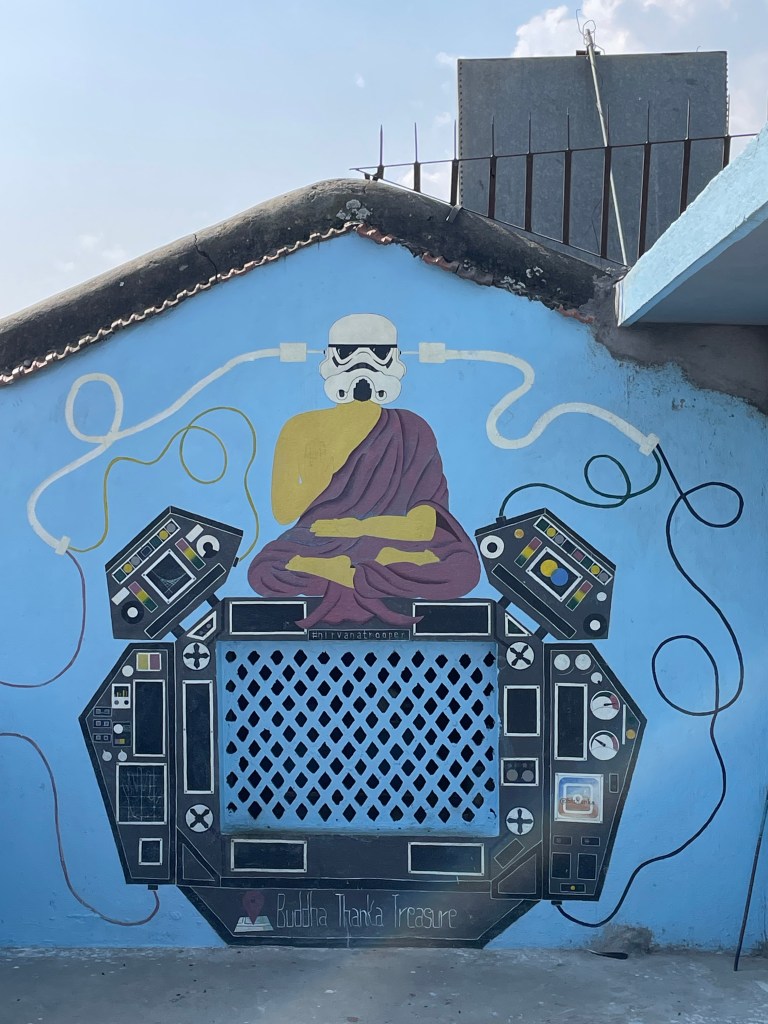
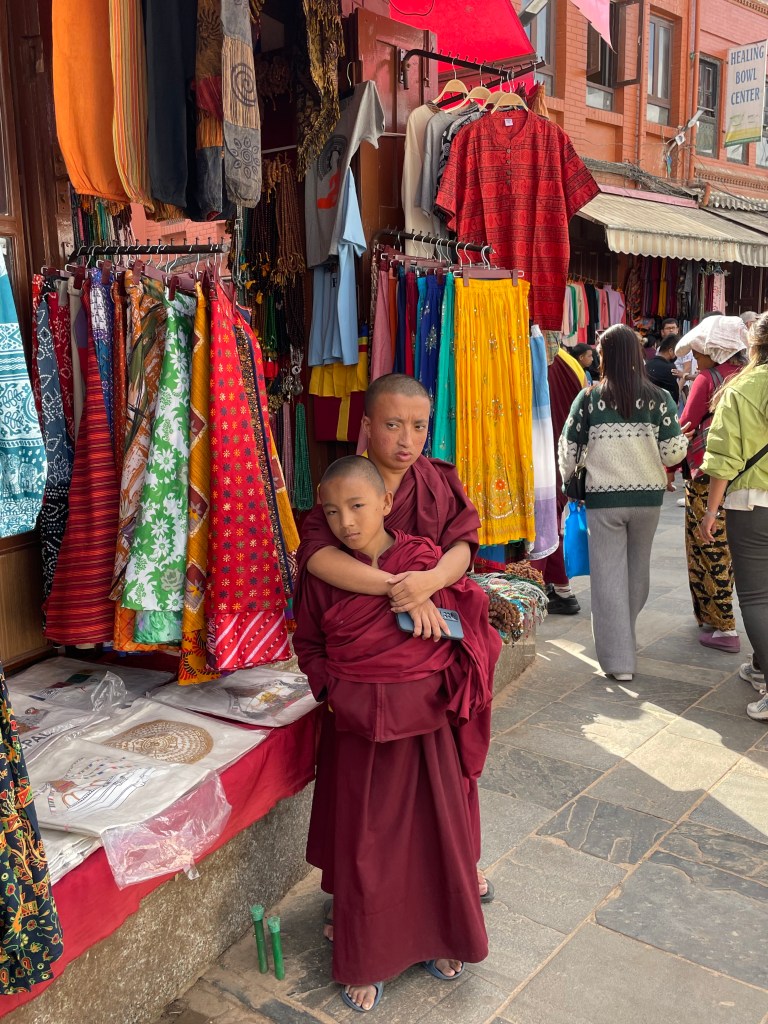
The experience that that truly shouted “you’re in a developing country” was my bus rides to Chitwan and Pokhara. The first ride was supposed to be five hours, but actually was almost 7, on a luxury tourist bus. True the seats looked like recliners but they weren’t that comfortable- no back support at all. I had to fight for the window seat I was assigned. Then we proceeded on a highway that was under construction for the whole 170 km or 100 miles, graded down to dirt and rocks so that we were bounced up and down the entire trip. The roadwork created traffic jams most of the way, so we constantly stopped on a dime and were thrown forward in our seats. The route was down a mountain, the road a series of s curves, so we were also tossed side to side on top of the up and down and front to back. I was so sick when I got off the coach, I threw up five times over the course of several hours, skipped lunch and dinner and slept for 12 hours. After the first ride I almost didn’t take the second one, but my guide convinced me it won’t be as bad, and it wasn’t quite as horrendous. At least I didn’t get sick. But the road was also under construction so the jostling continued and it took longer than expected, another 7 hours. And my pants were filthy from rubbing up against the wall of the bus. Taking pictures on the coach was a challenge as well. As soon as I get a shot lined up we’d serve or bounce, a truck or bus would speed by, or a tree or bush would block the view. Both buses were packed, with the local population going on vacation or visiting family, etc., seemly happy and content with the service. I opted for a plane ride back to Kathmandu, which was delayed almost 3 hours, but was worth it to avoid another seven+ hour bus ride.

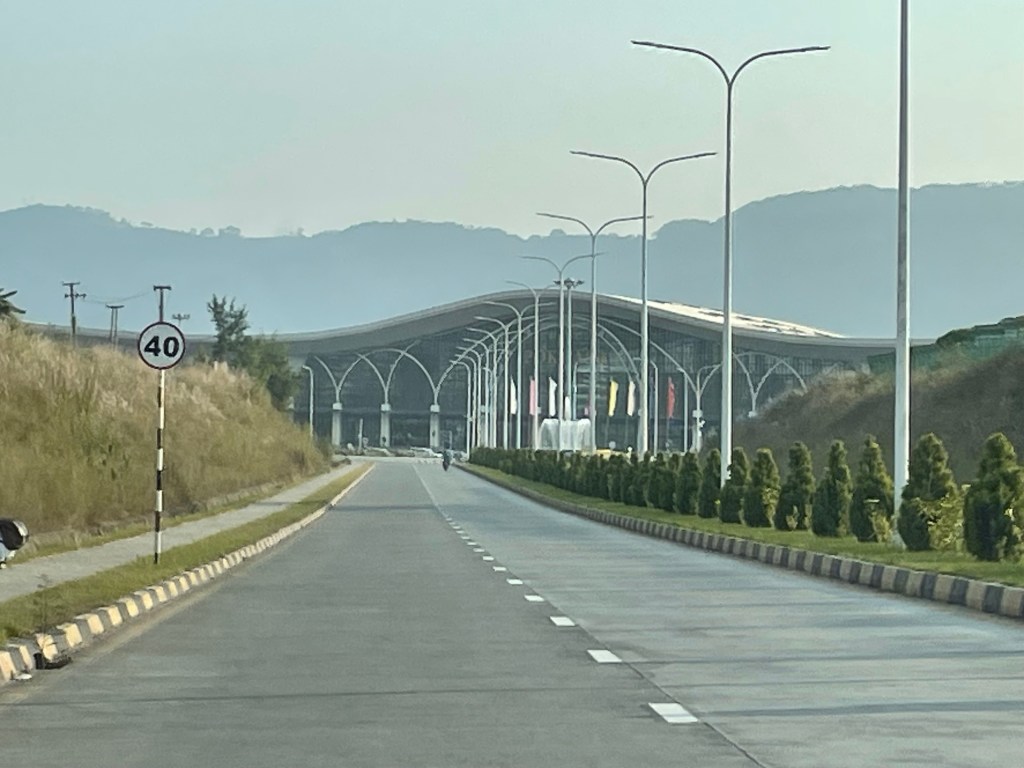
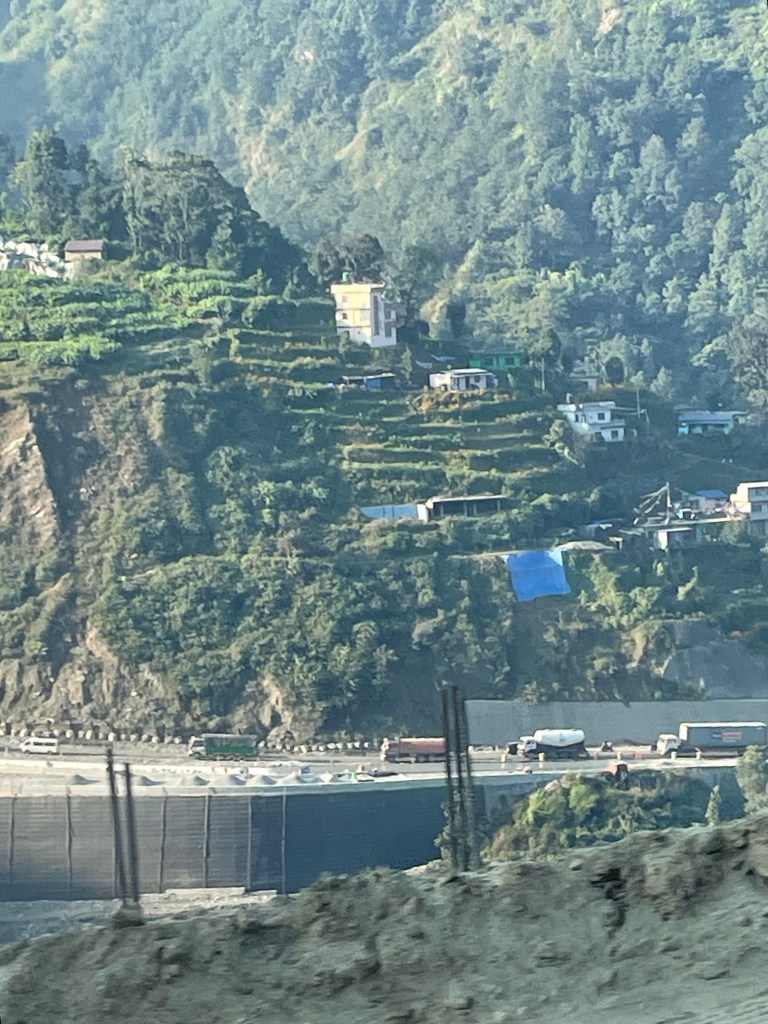
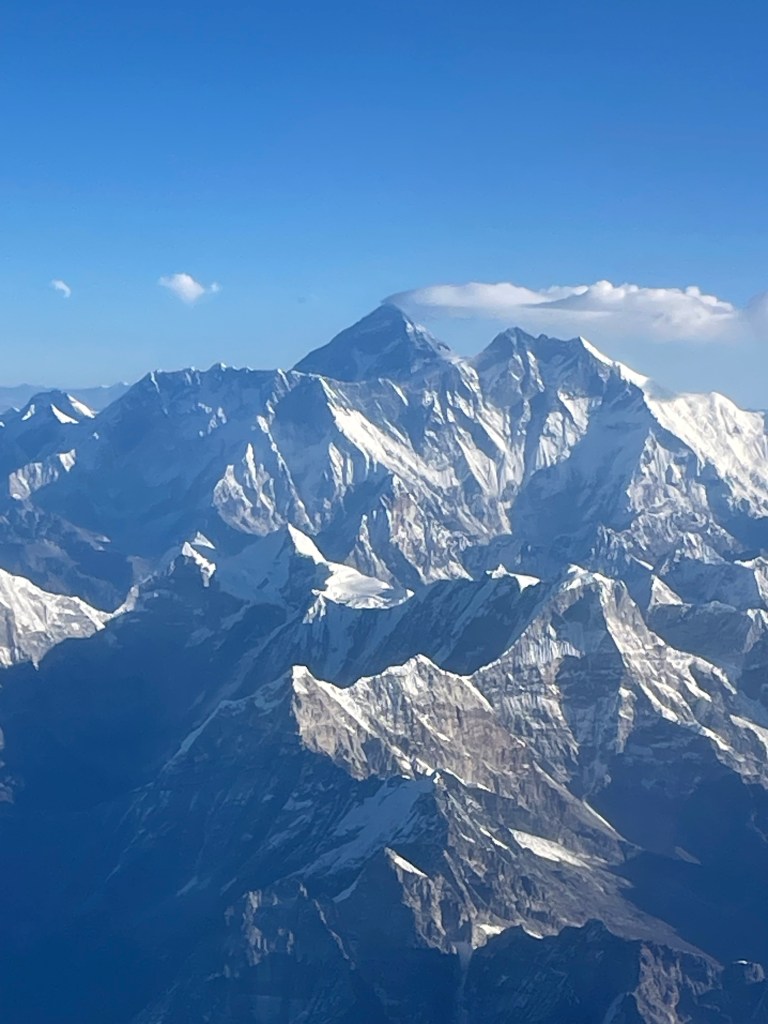
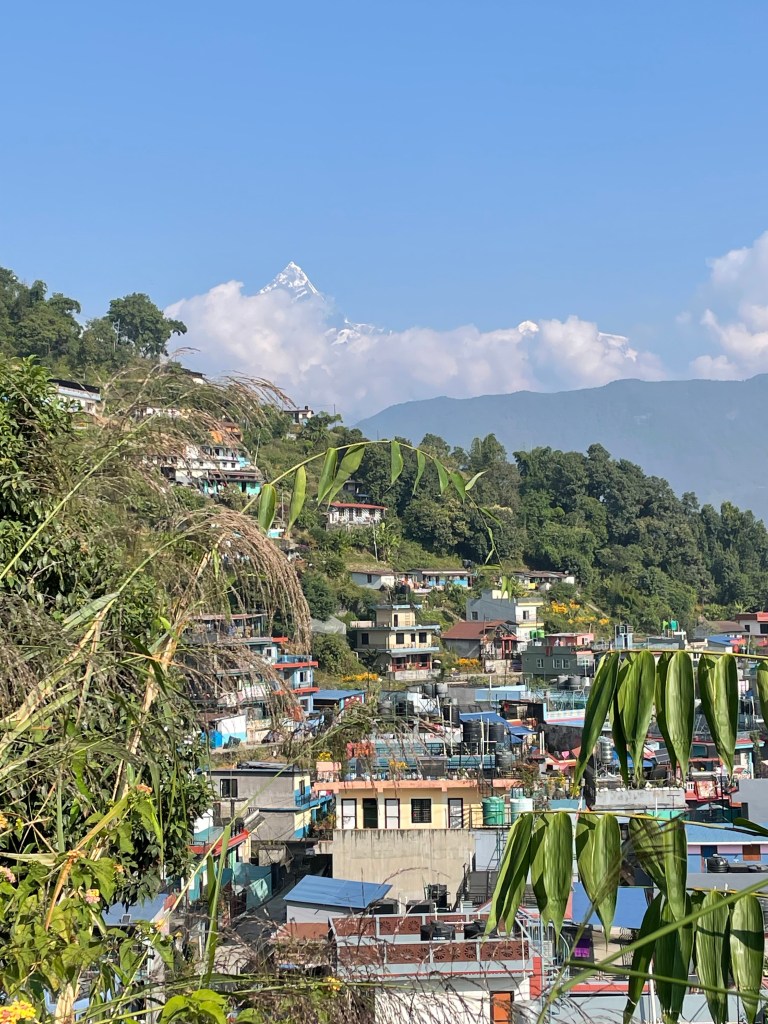
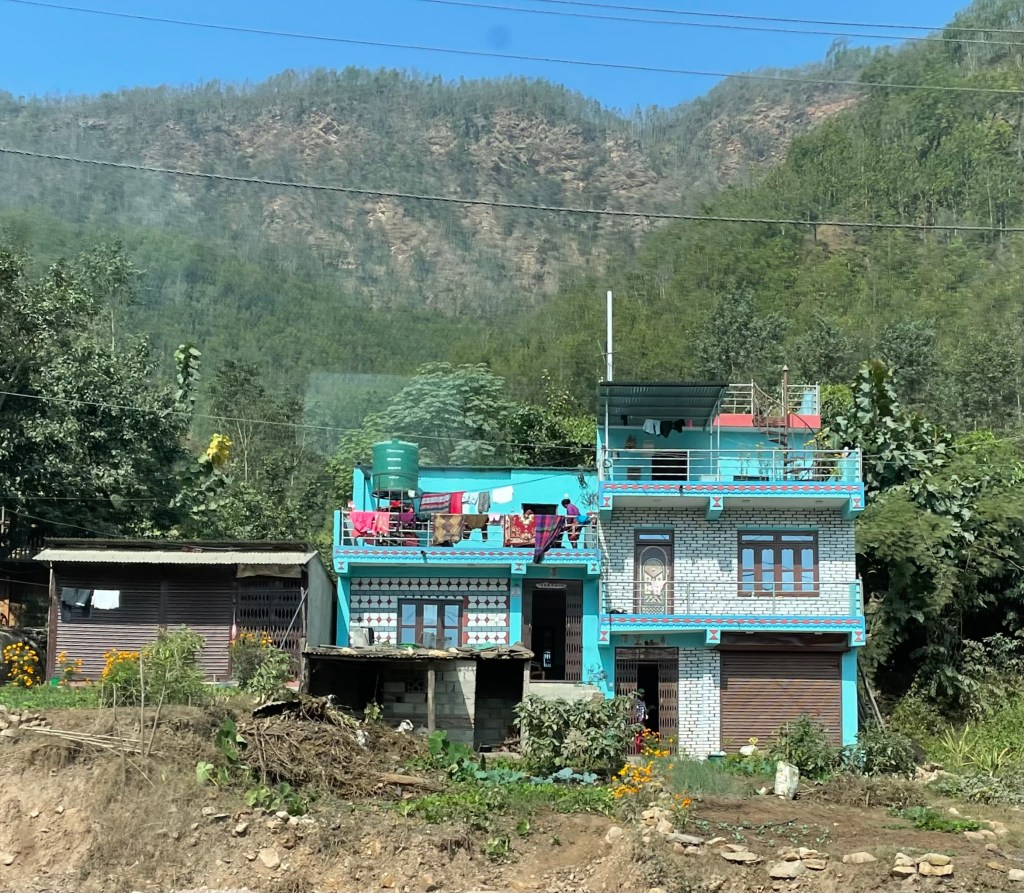
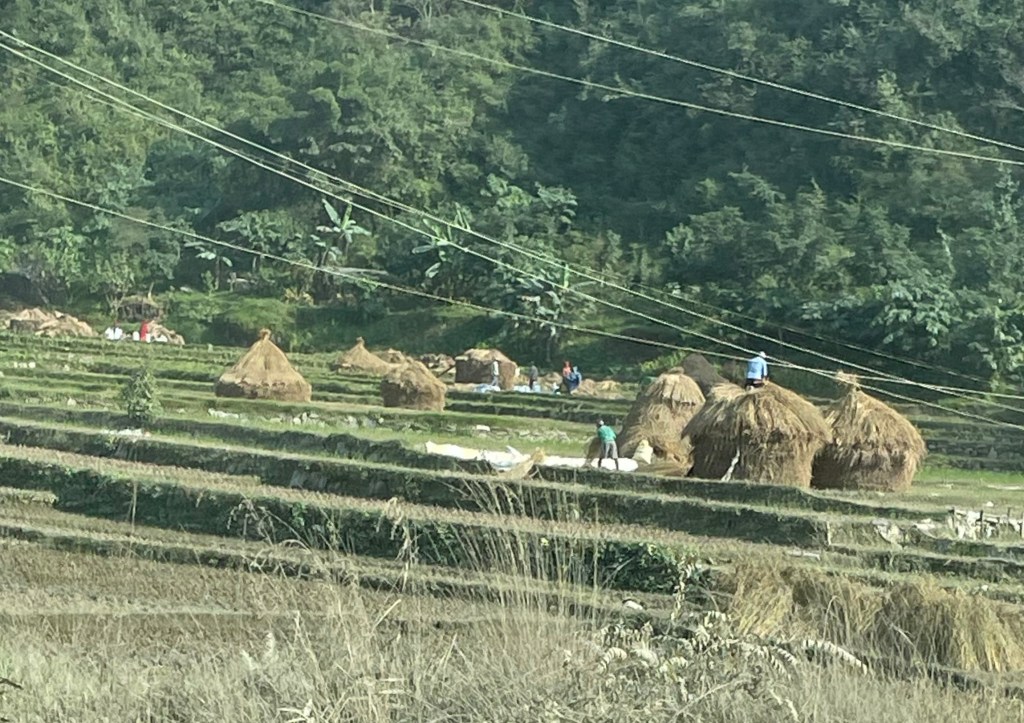
I enjoyed observing the countryside however. Seeing the snow capped mountains in the distance was spectacular. I also took a plane to view Mount Everest which was breathtaking. The rural areas have amazing terraced fields on steep hills, green with the fall crops, some filled with bright yellow and orange marigolds. Rivers large and small rushed by. Nepal is 97% hydro-electric and if developed further could provide a good source of income, they already export power to India and hope to sell to China and Bangladesh in the future. The houses sprinkled on the hillsides and in the towns and village were attractive with bright colors, tiled facades, and terraces on multiple levels. A grain was being harvested, all by hand, so watching them work was intriguing. In one field, a woman stood with a big basket on her back, a cloth stretched across the crown of her head supporting it, while her husband shoveled great clods of dirt into it. I came across other women carrying rocks and gravel in the same fashion. The woman with the gravel was loading the stones herself, throwing them over the top her head.
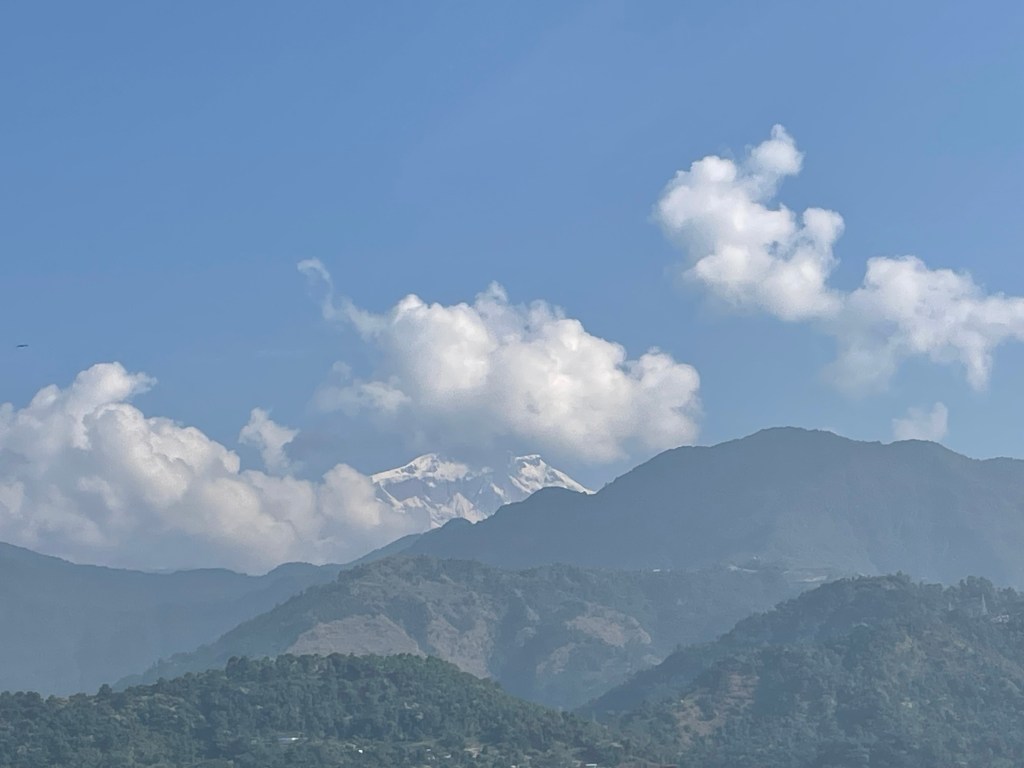



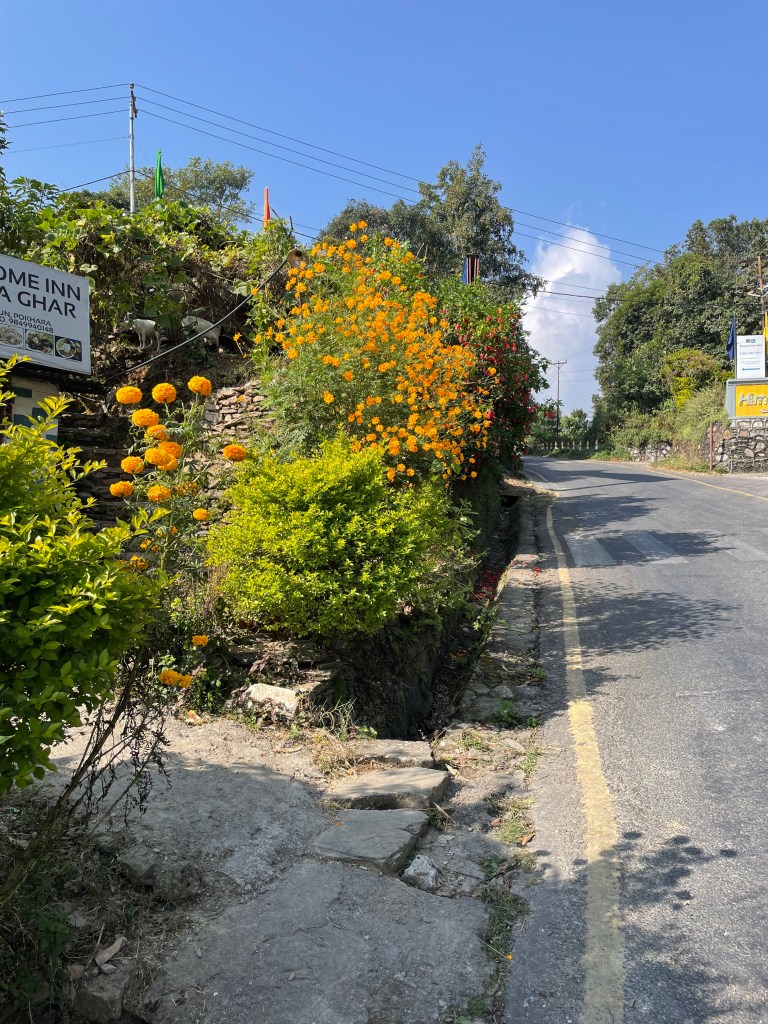
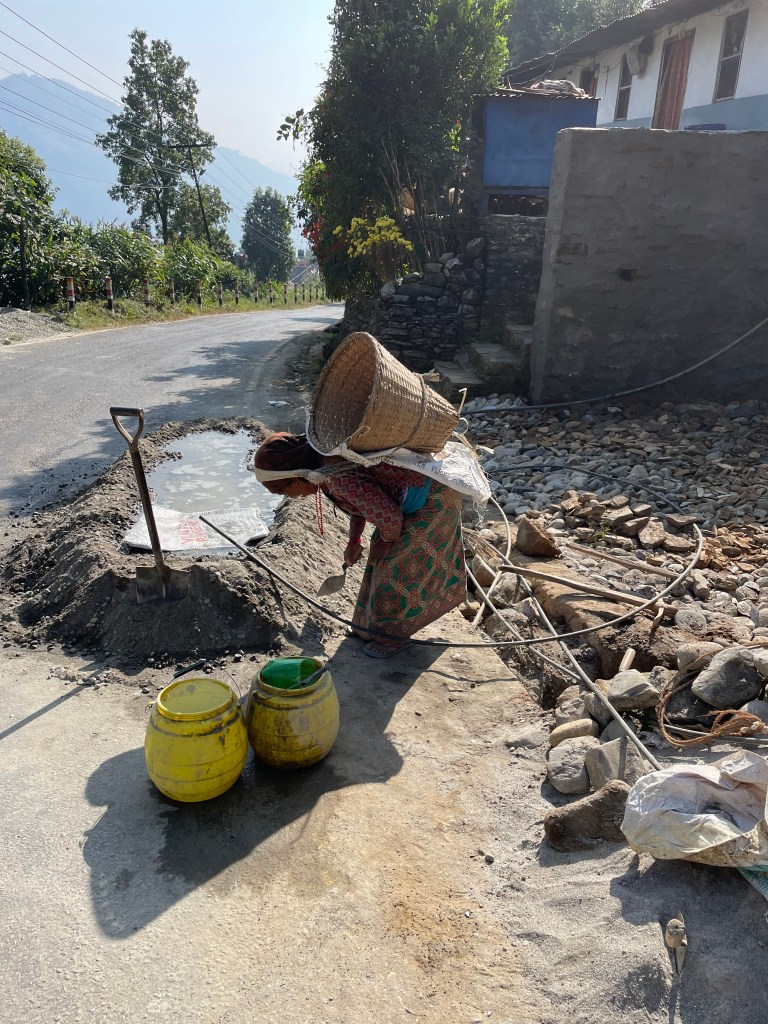
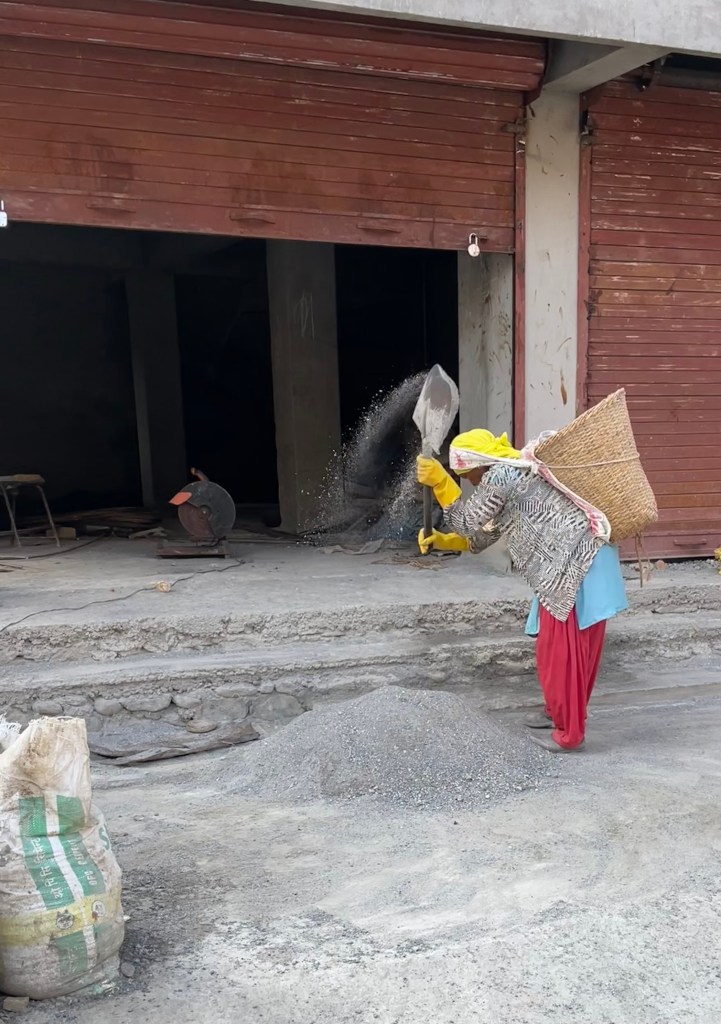
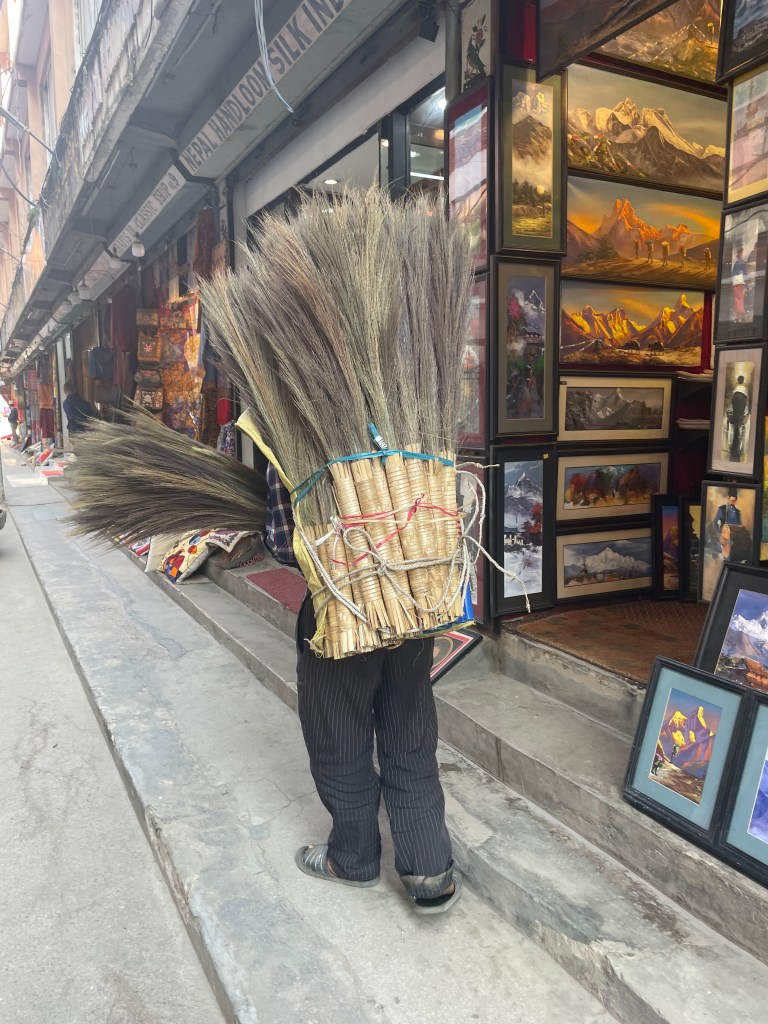
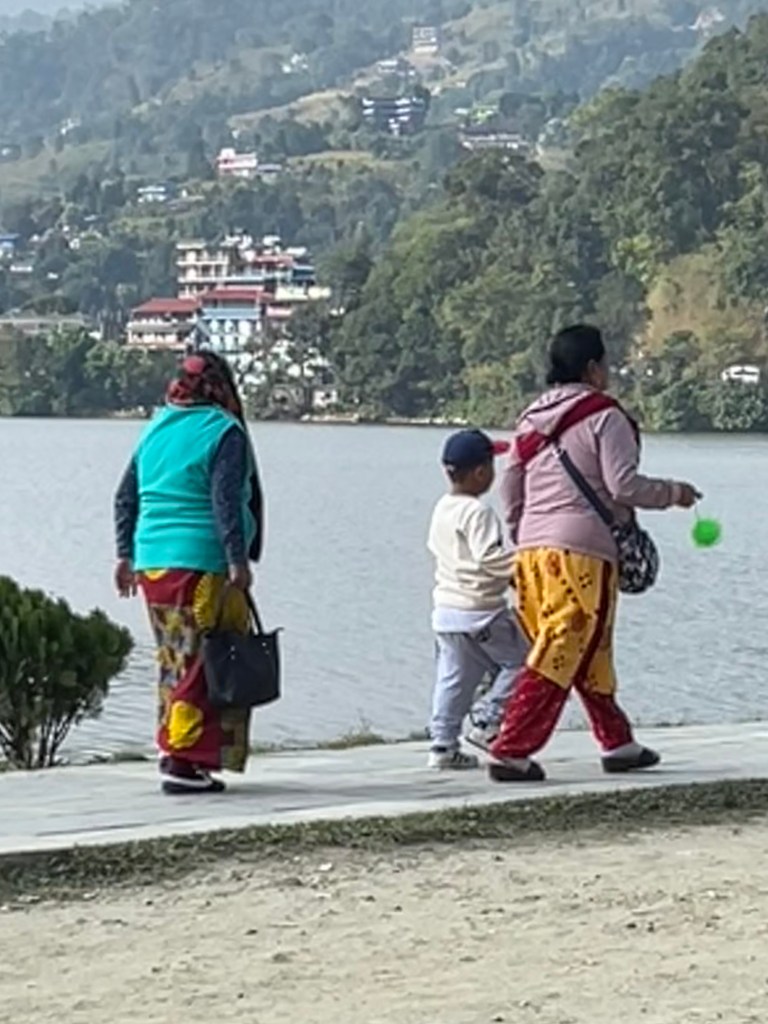
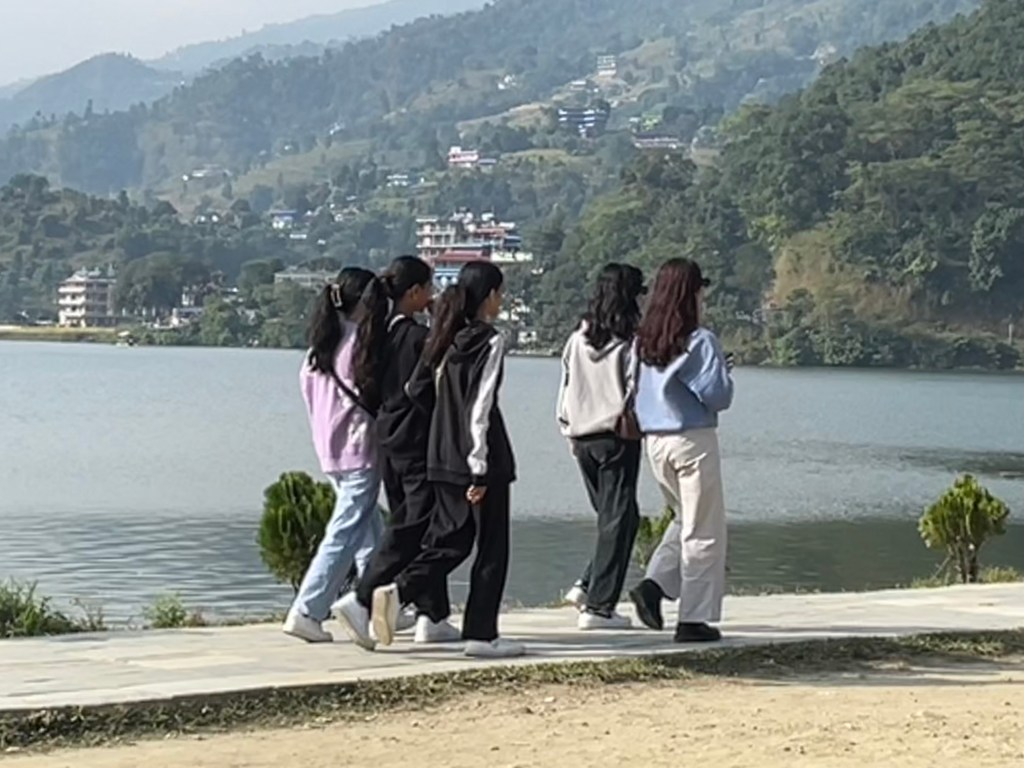
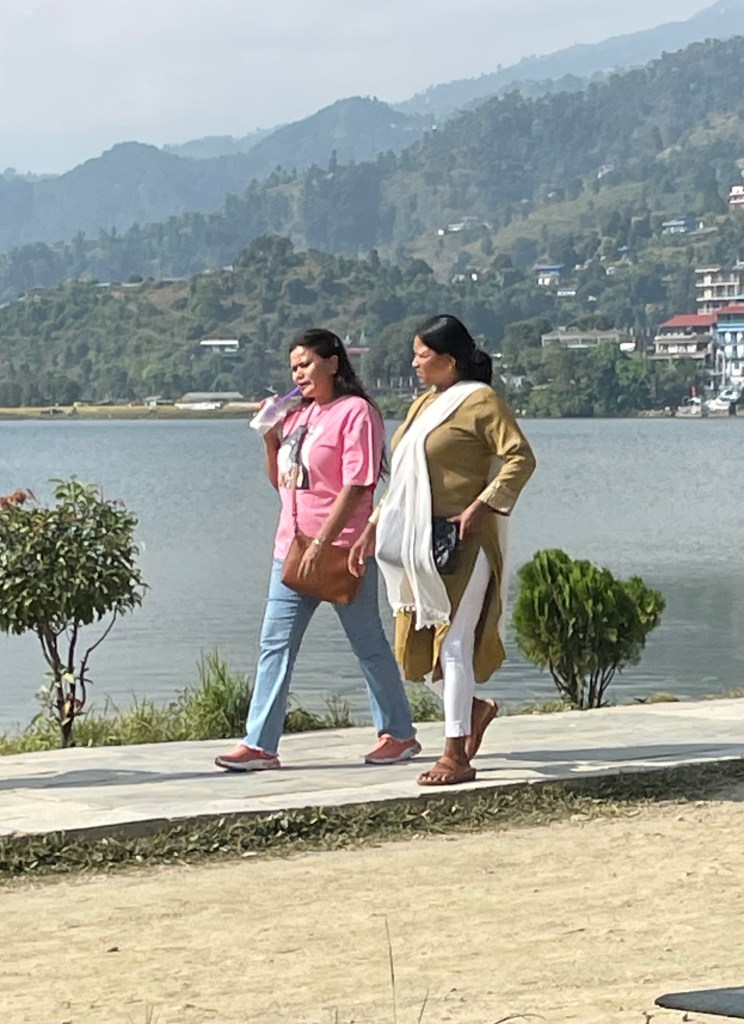
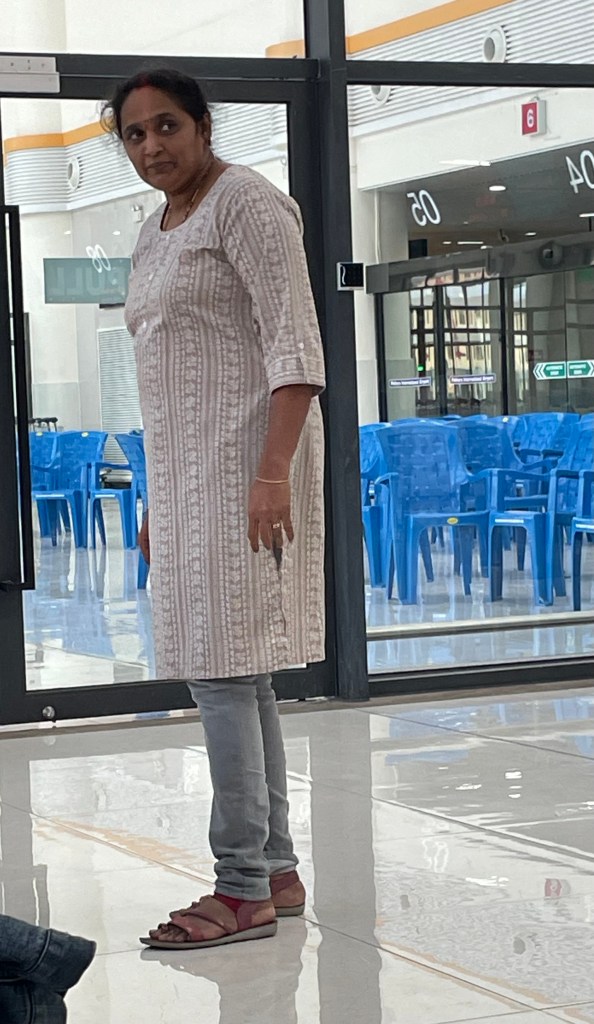
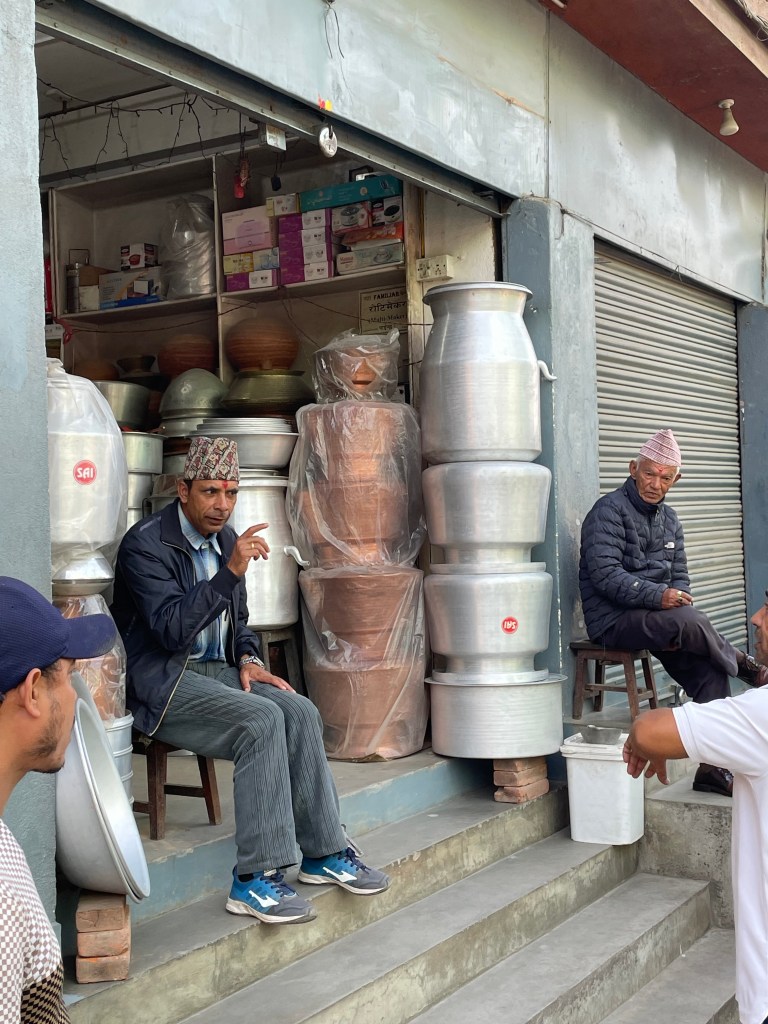
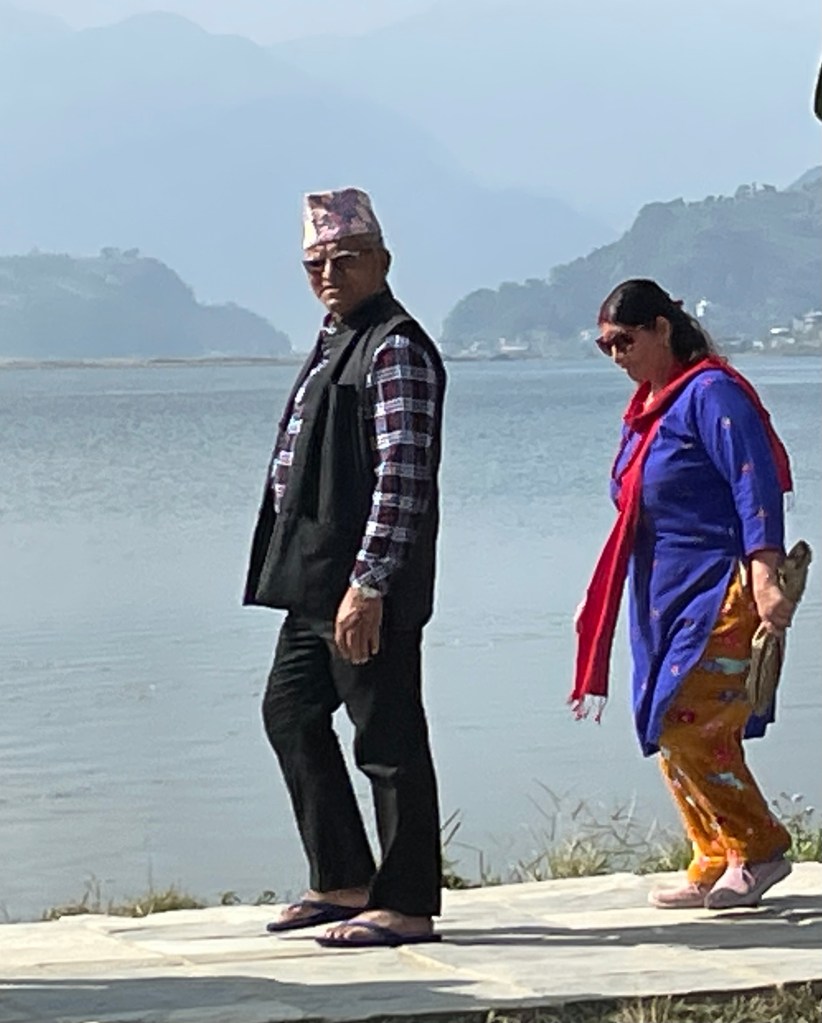
Although a large portion of the Nepali population in engaged in agriculture, the majority of their food comes from India. And almost everything else is imported too – cars, motorcycles, household items, furniture, etc. Cheap knock off western clothing is shipped from China, so most of the population wears it. The sari is the traditional woman’s dress but only a small percentage of the women I saw wore them. A few more wear the kameez and shalwar, occasionally with jeans instead of the matching cotton or silk trousers. It was fun to see kameez made out of a knit fabric for the winter. I was very surprised when I arrived to Kathmandu on a beautiful sunny 72 degree day – a wonderful respite from the heat of the past few countries, and so many people were wearing sweaters, sweatshirts and even down coats. My guide kept saying it was cold as he donned his blue jean jacket. The men sport woven hats in muted colors. The older gentleman saunter around in waist coats – as described by my guide, a sleeveless garment like a vest.

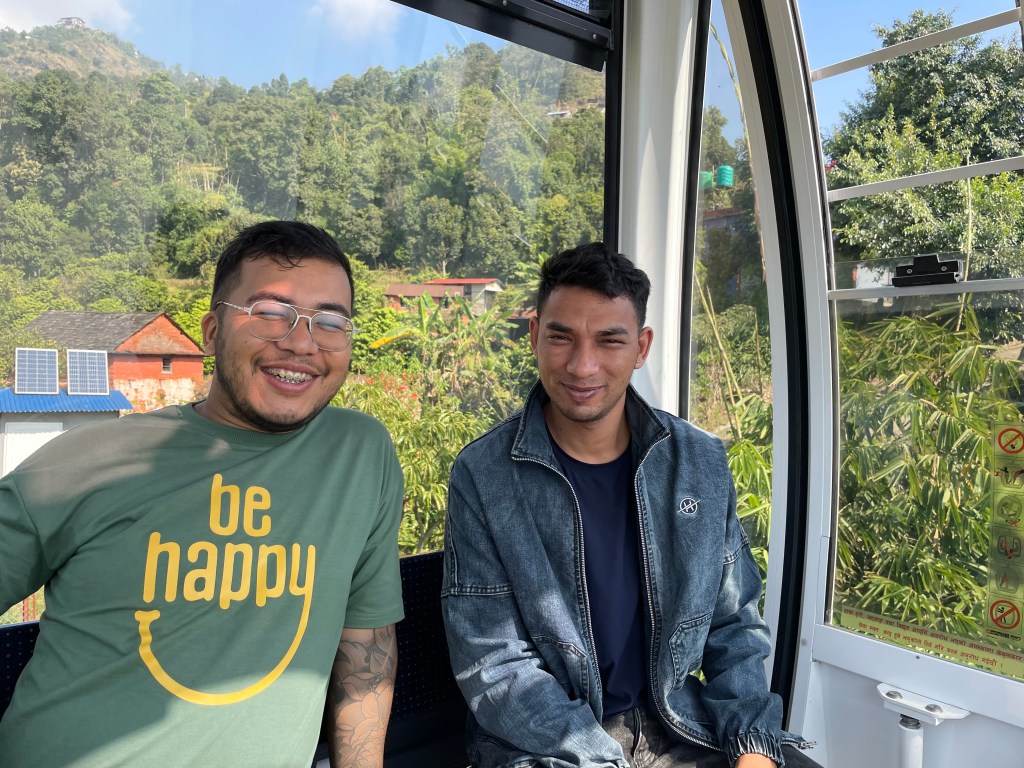
I get stopped on the street a lot – I guess I stick out in a crowd, especially since I’m 3 to 5 inches taller than everyone, usually by men. Most want to sell me something, either what they have in their hand, a ride in their rickshaw or to look in their shop near by. Looking is free they say. They are certainly helpful in the shops but not quite as adept at getting you to buy something as they are in India. Some want to show me around the city, everyone is a tour guide here, it’s a very lucrative business. Some profess they just want to talk and I do chat with them for a few minutes but it eventually turns into some kind of sales pitch. I appreciate their hustle, given the competition that’s here, it’s the only way they are going to succeed. I am a terrible negotiator when it comes to buying things, especially given that the prices are so low already but I do try, given that it’s expected. One night, I stepped in a pub for a drink and a nice gentlemen invited me to sit with him, which I did. He was a businessman from Bangladesh with several companies here, we had a lively and enjoyable conversation. The tour company operator, who I booked my UNESCO tour and Chitwan trip with encouraged me to go to Pokhara, as it was not originally on my itinerary, saying it was beautiful. He offered to personally show me around as he and his cousin were going there on holiday. They shared a lot about their lives and the scuttlebutt on Nepali politicians. We hiked, took a boat ride, and shopped – well they shopped. It was pleasant spending time with two locals on their time off.



Would I come back to Nepal? Most likely not, though if someone wanted me to come with them, I might, just to see how it’s changed as roads are built, lines put under ground, and more tourists come to explore it’s natural beauty.
Reading List:
Buddha’s Children by Samrat Upadhyay
Next up: Bhutan


 Where in the World is Debra Grimes?