“One learns most when one wanders the world.” – Tamuna Tsertsvadze
September 22-October 2, 2013
Where in the world is Uzbekistan? I have to admit when a nice Italian gentleman, who I met in a camp on the Serengeti, suggested I go to Uzbekistan, I had to look it up on a map. It’s a country slightly larger than California, tucked between many other ‘stans’ – which means country, south of Russia and north of Afghanistan and Iran in Central Asia. I was very glad my travel path was easily adapted to include a stop here. The history is fascinating, the architecture amazing, and the culture welcoming.
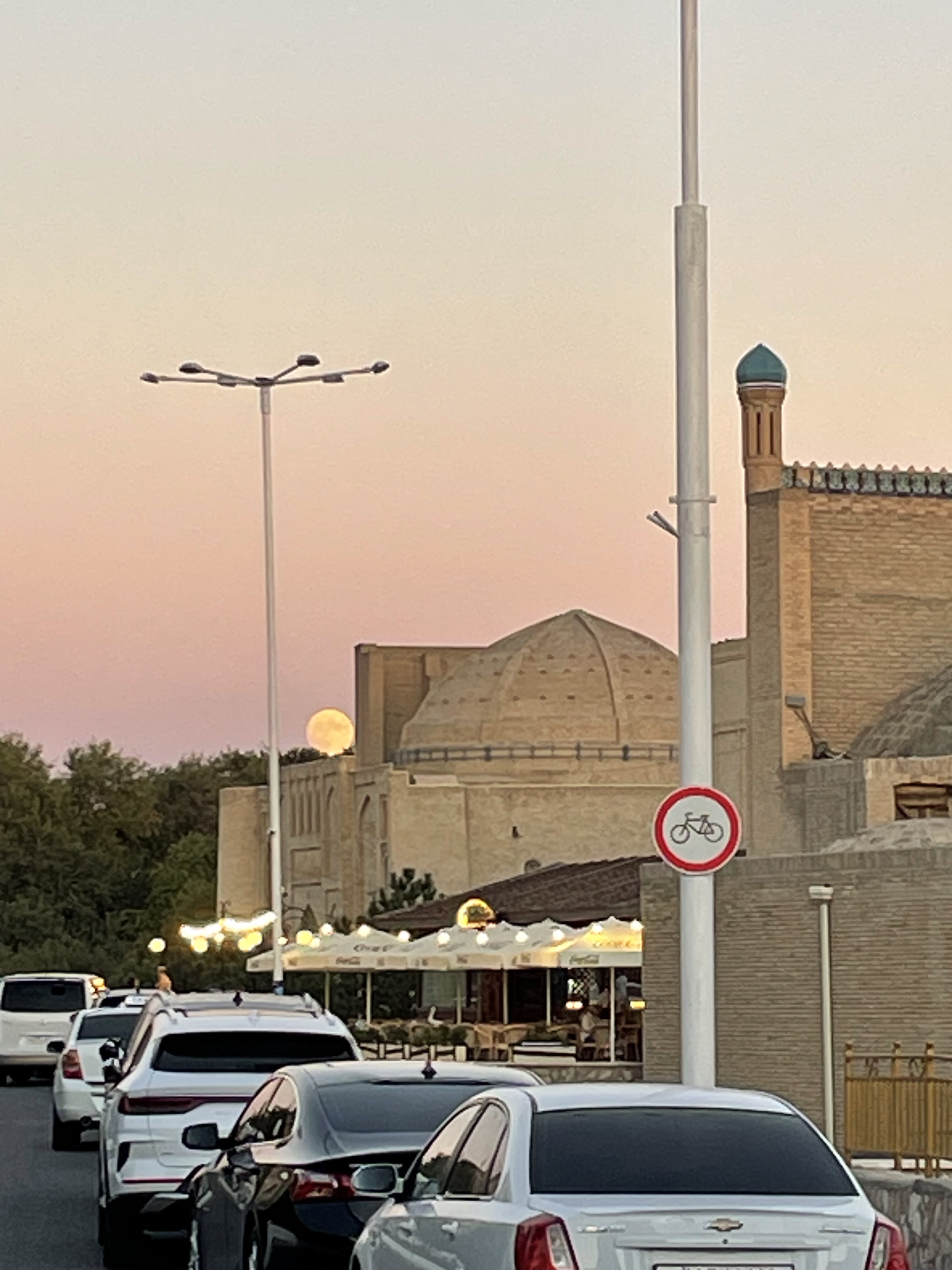
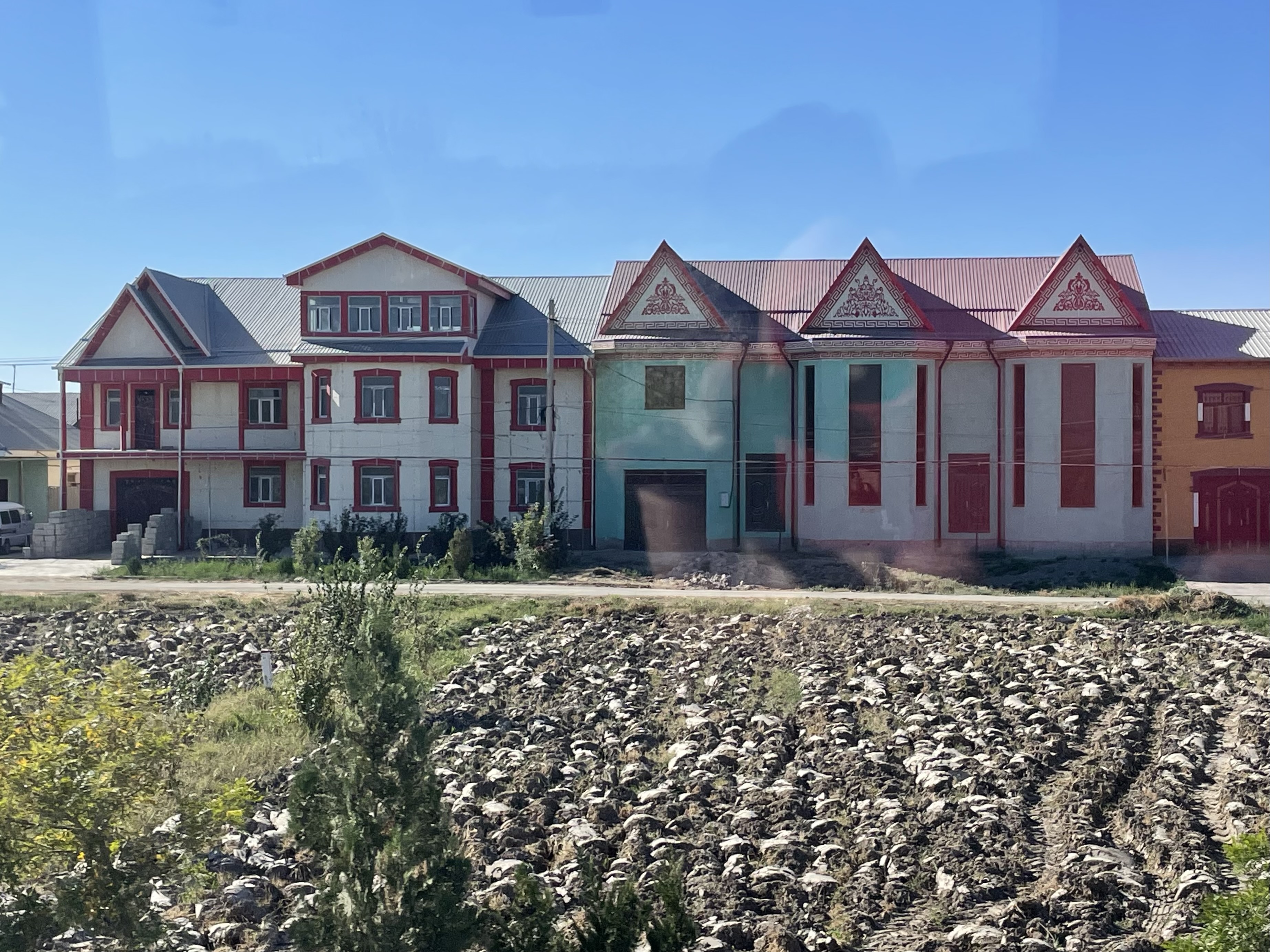
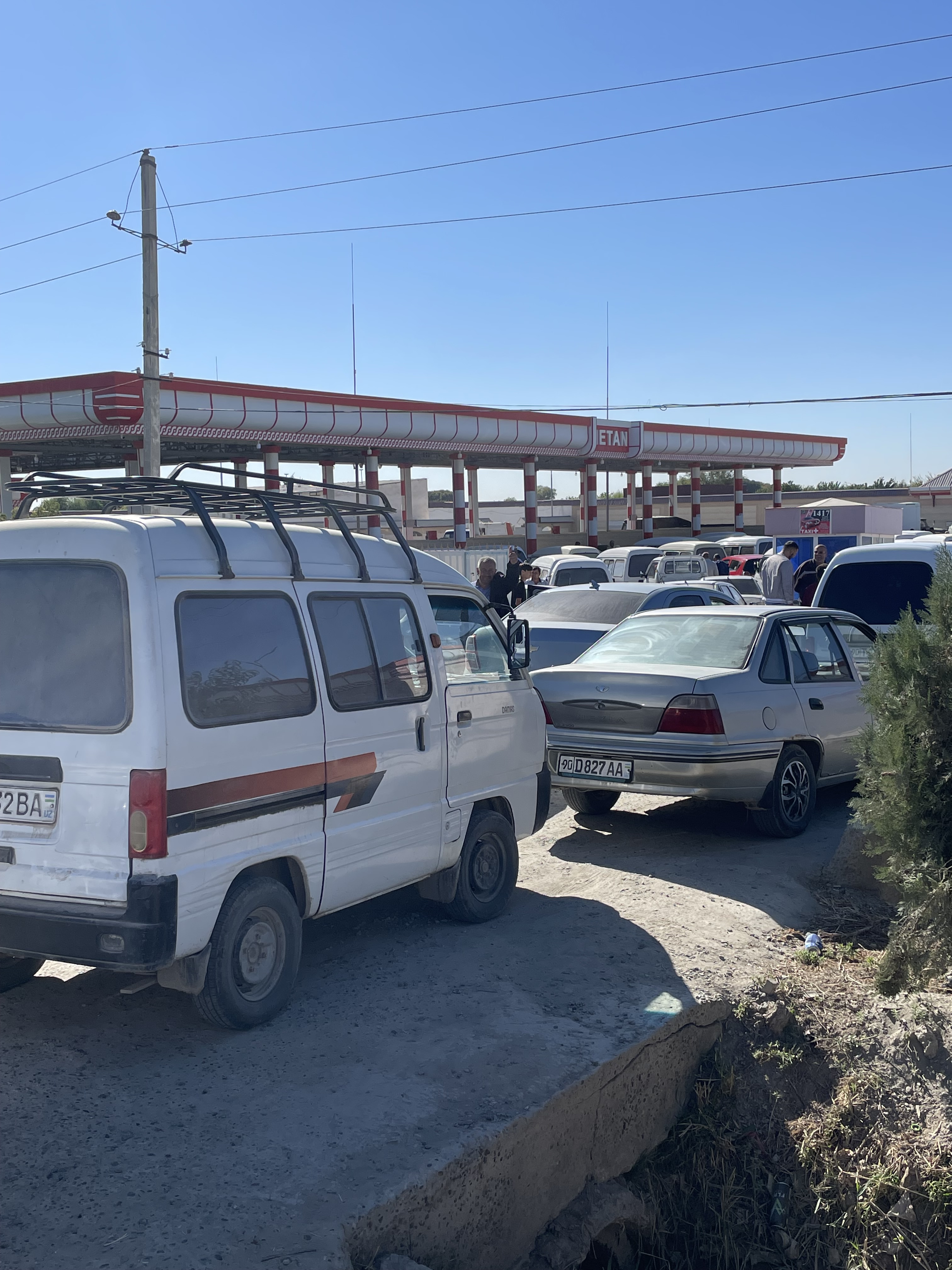

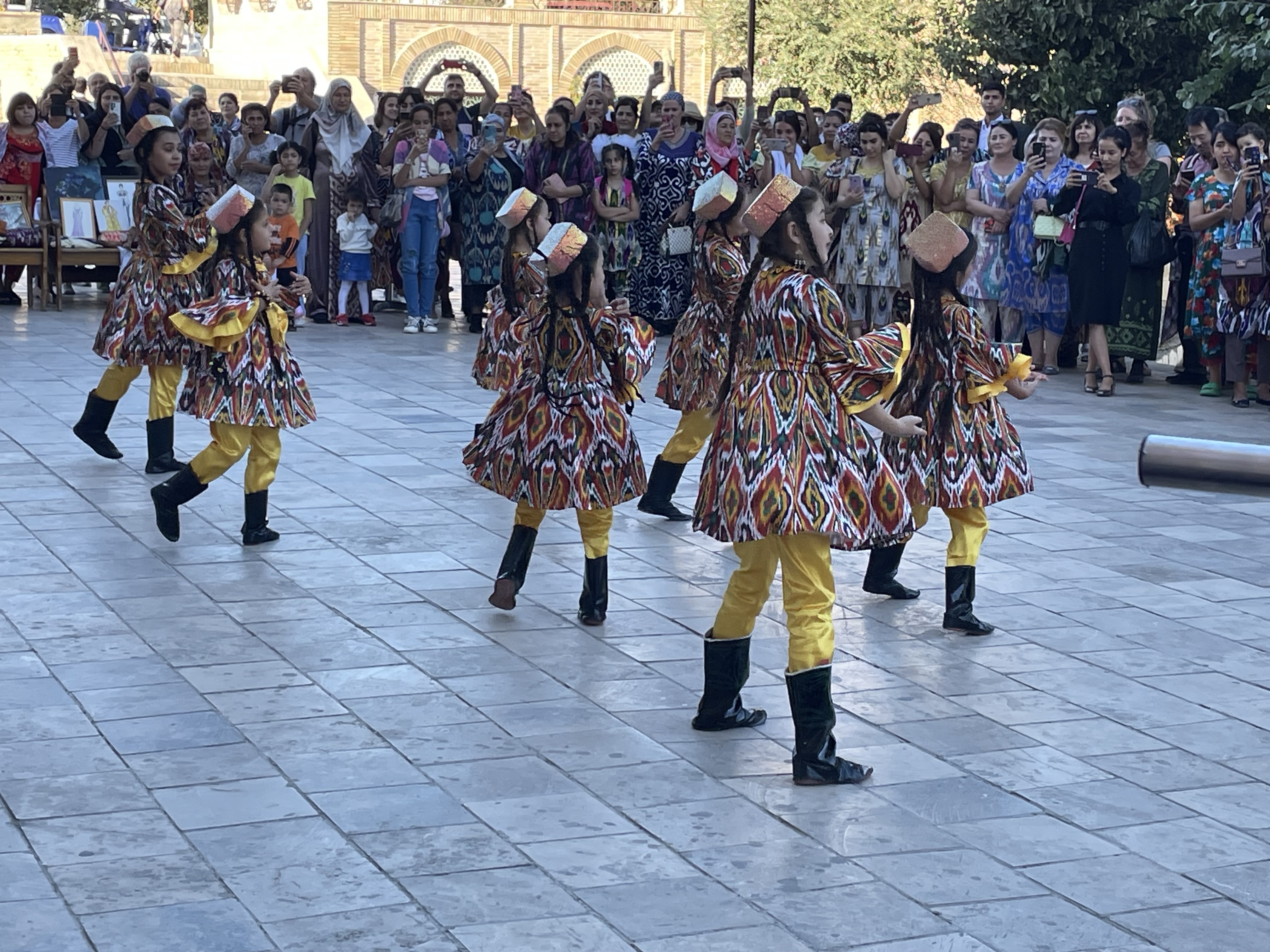

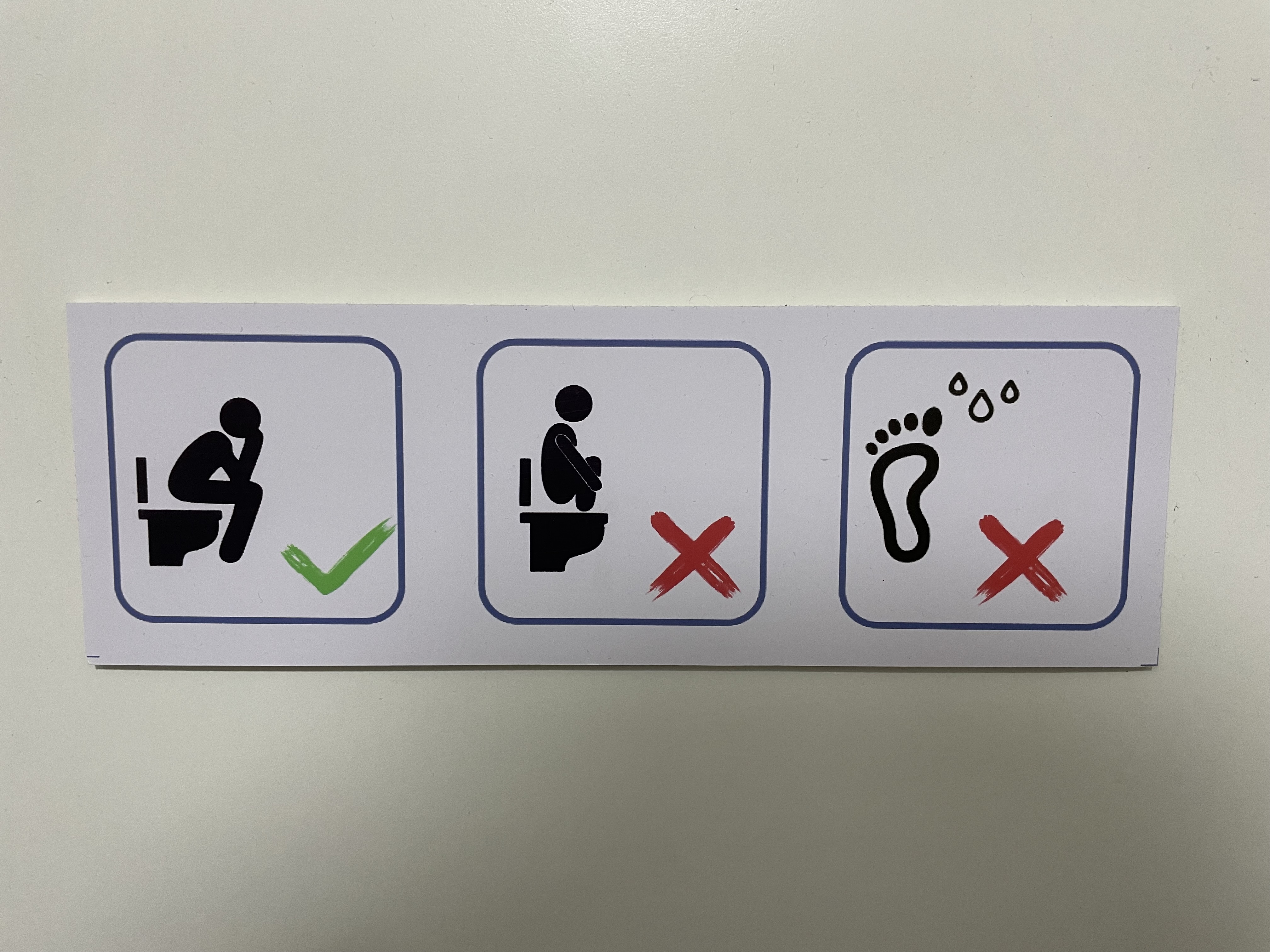
I joined a group tour here as I did not know what to expect or how easy it would be to get around. I’m glad I did, as this is the first country I’ve visited where most store and road signs did not have English translations under the language of the country, so getting around on my own may have been difficult. The universal symbols were present however. The menus were often challenging to decipher, so our guide spent a lot of time helping us select our meals, especially the vegetarians. There were quite a lot of pictures on the menus which did help. Travel was easy however, and I am sure if I had needed help, it would would have been happily given, as the local people are so friendly.

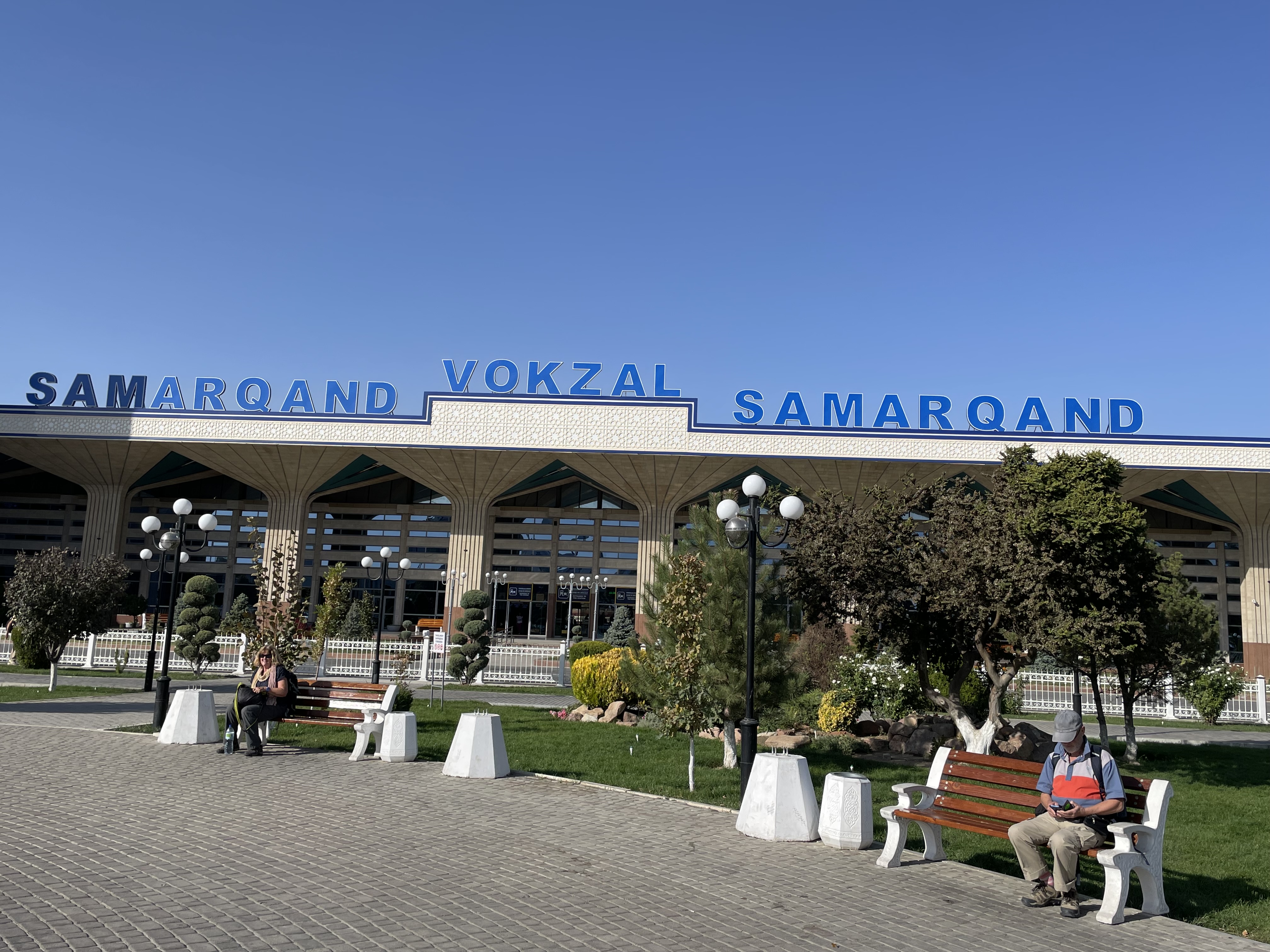
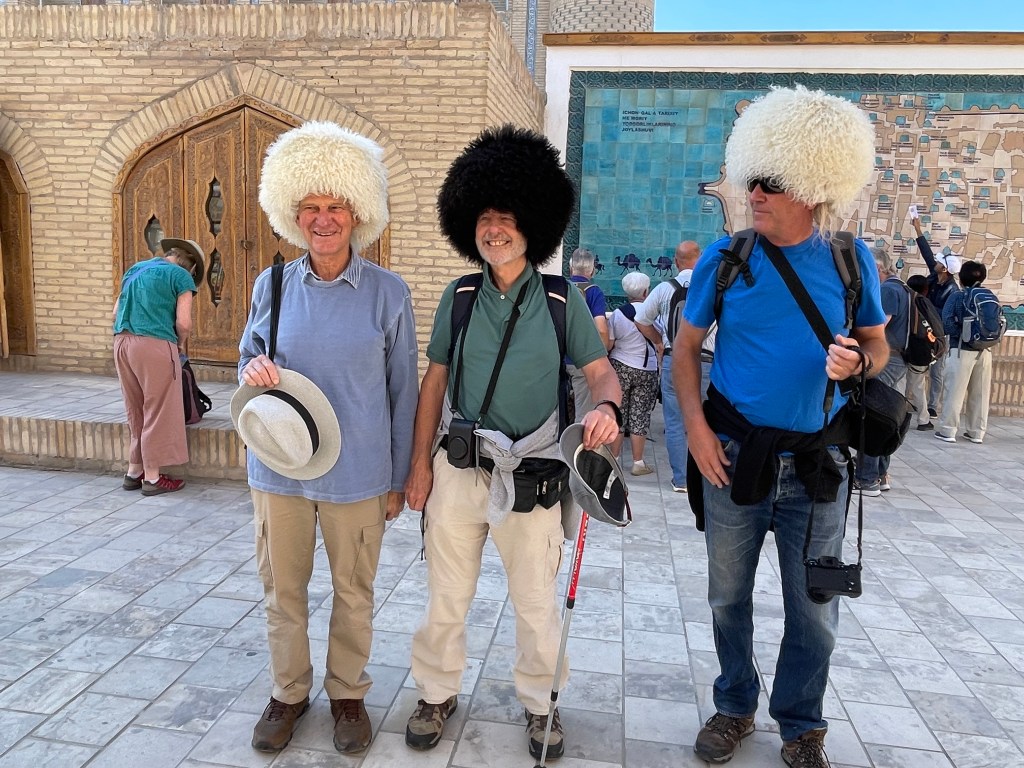
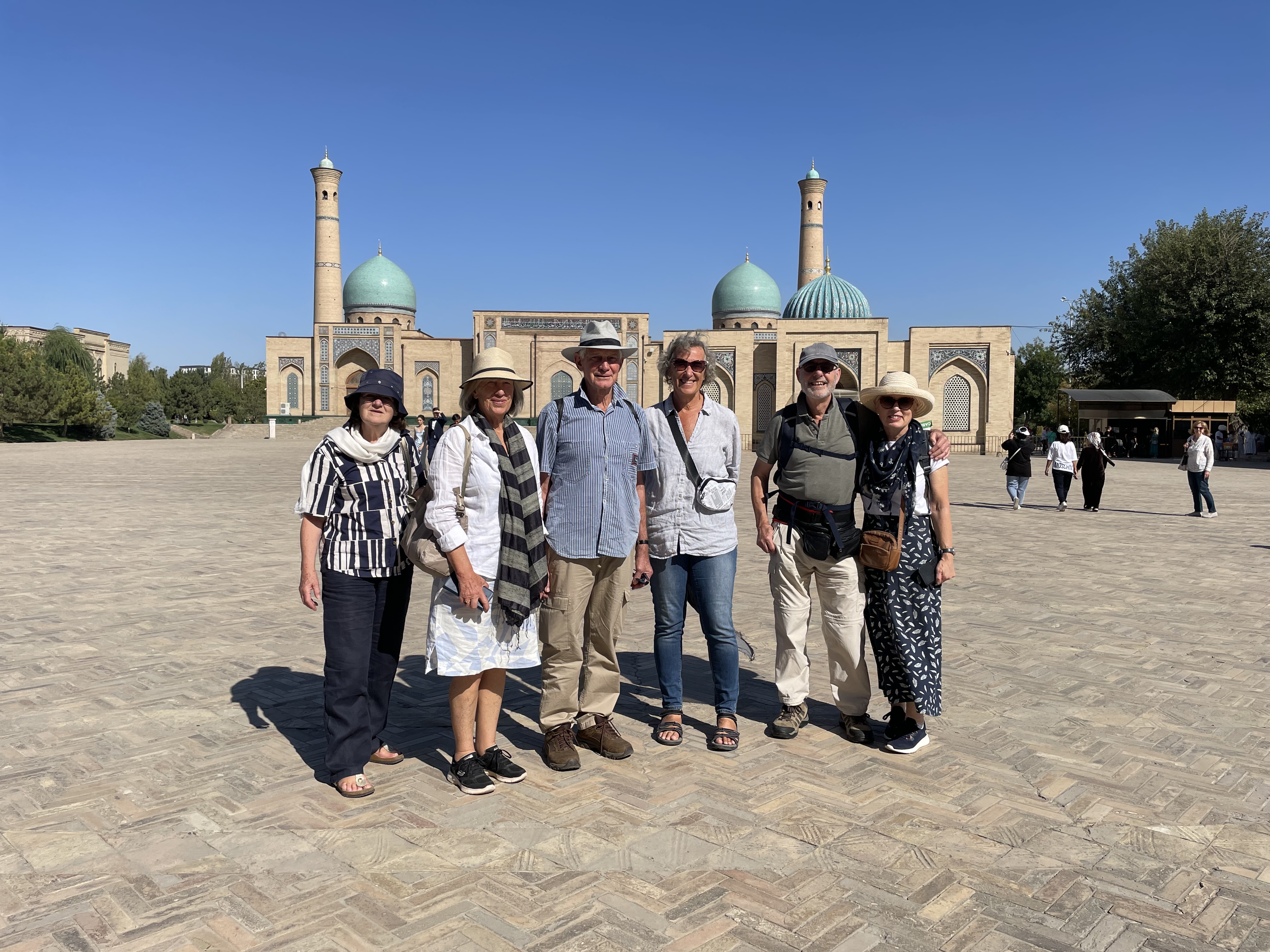
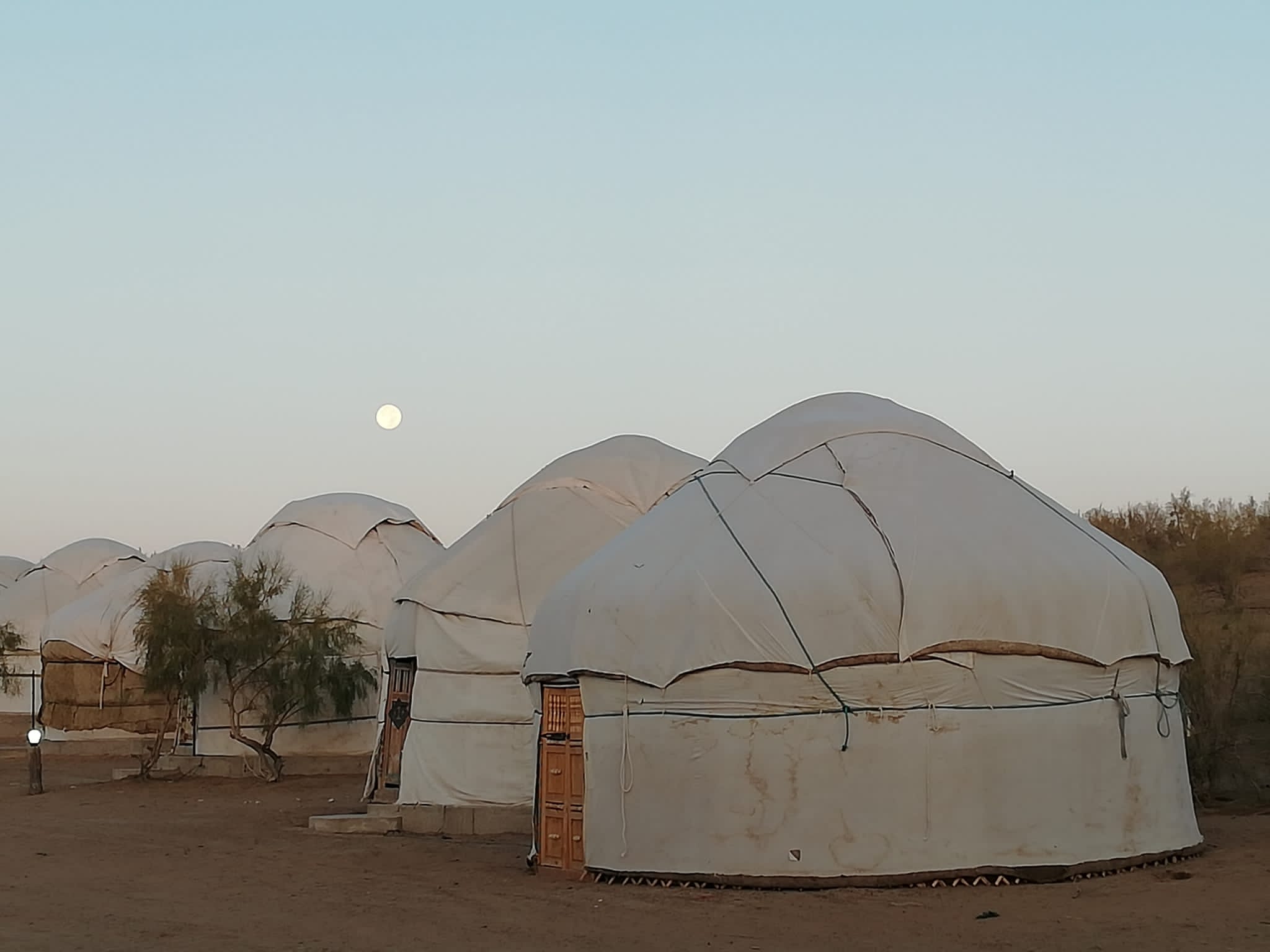
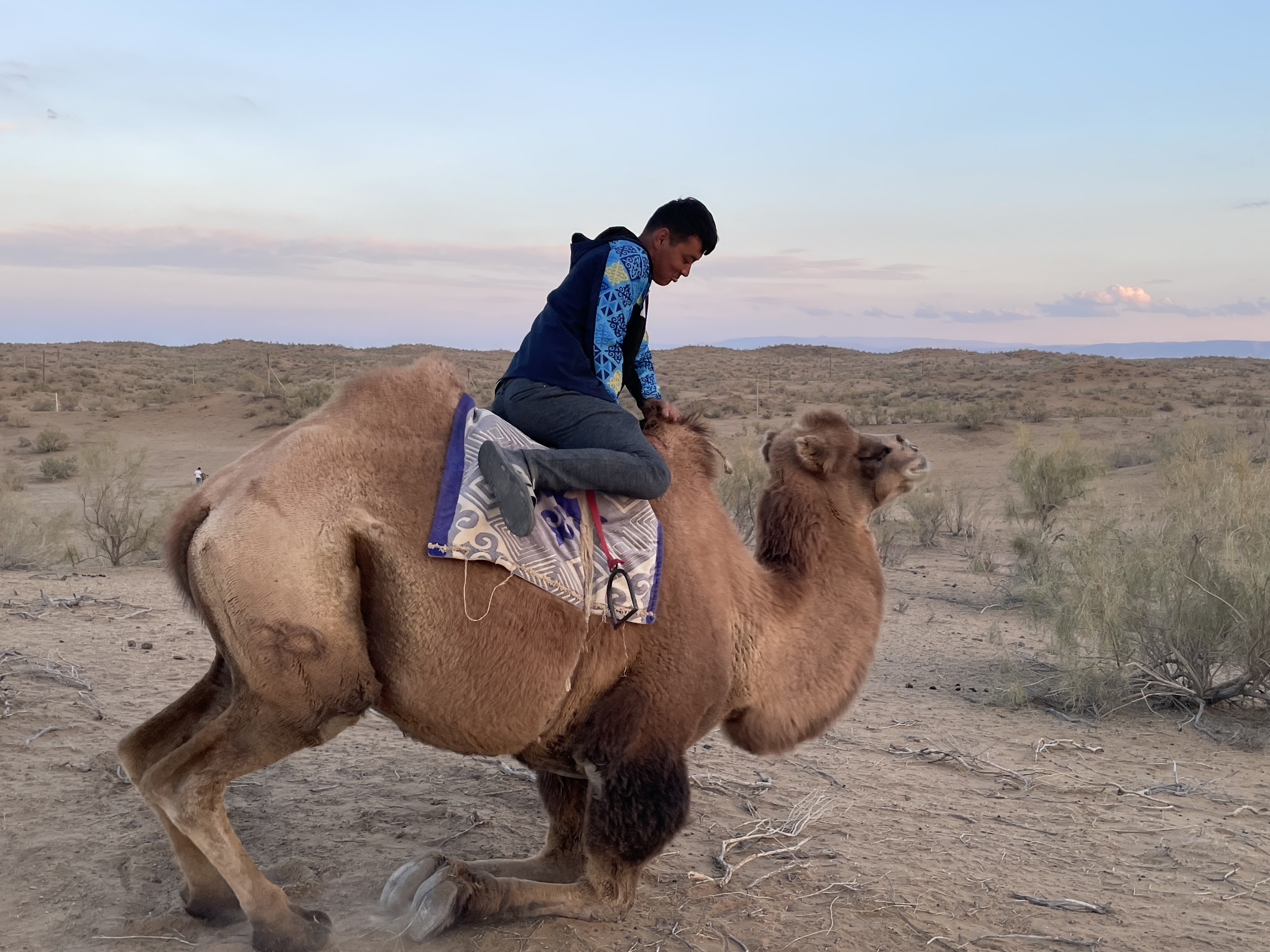
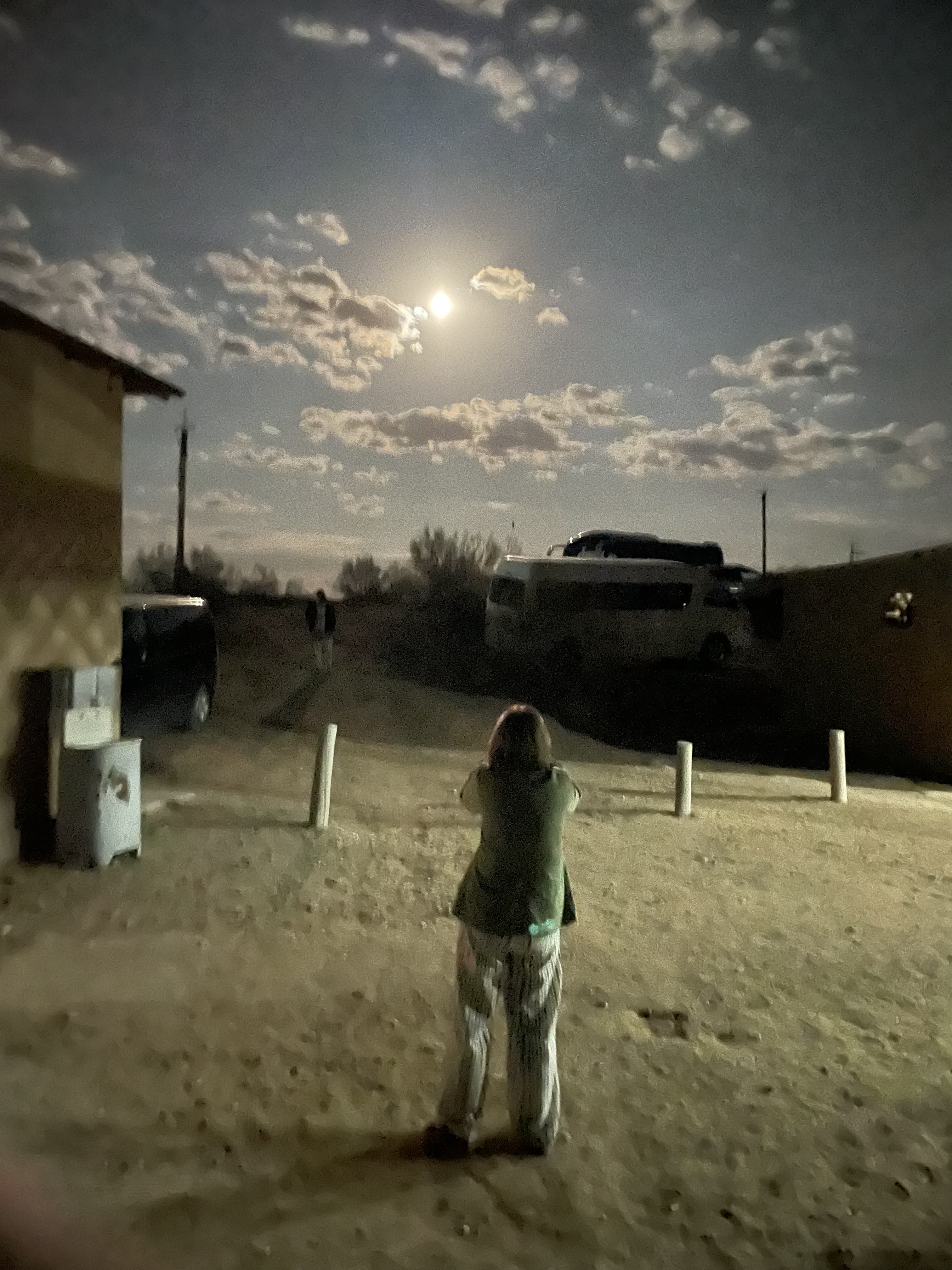
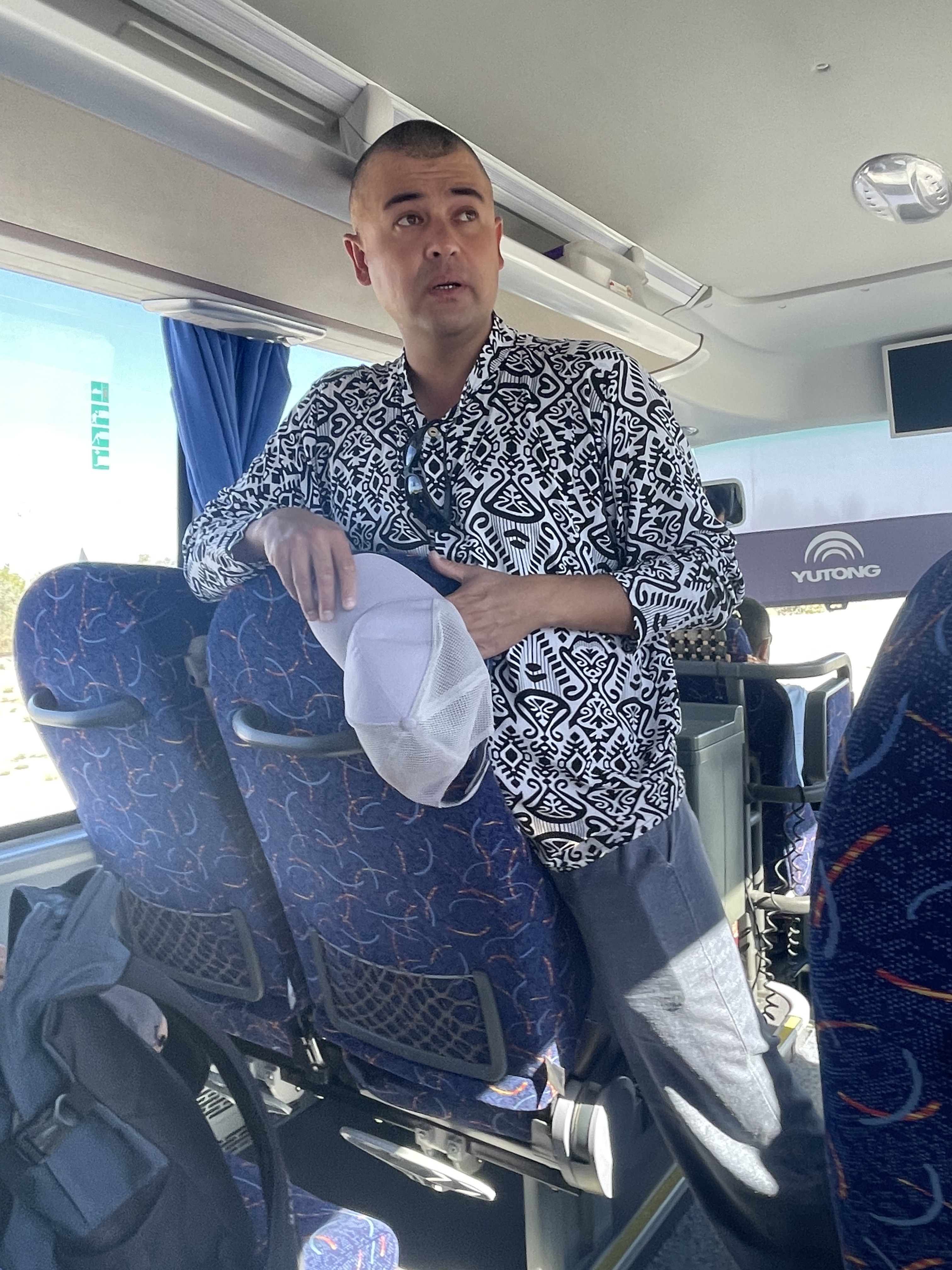
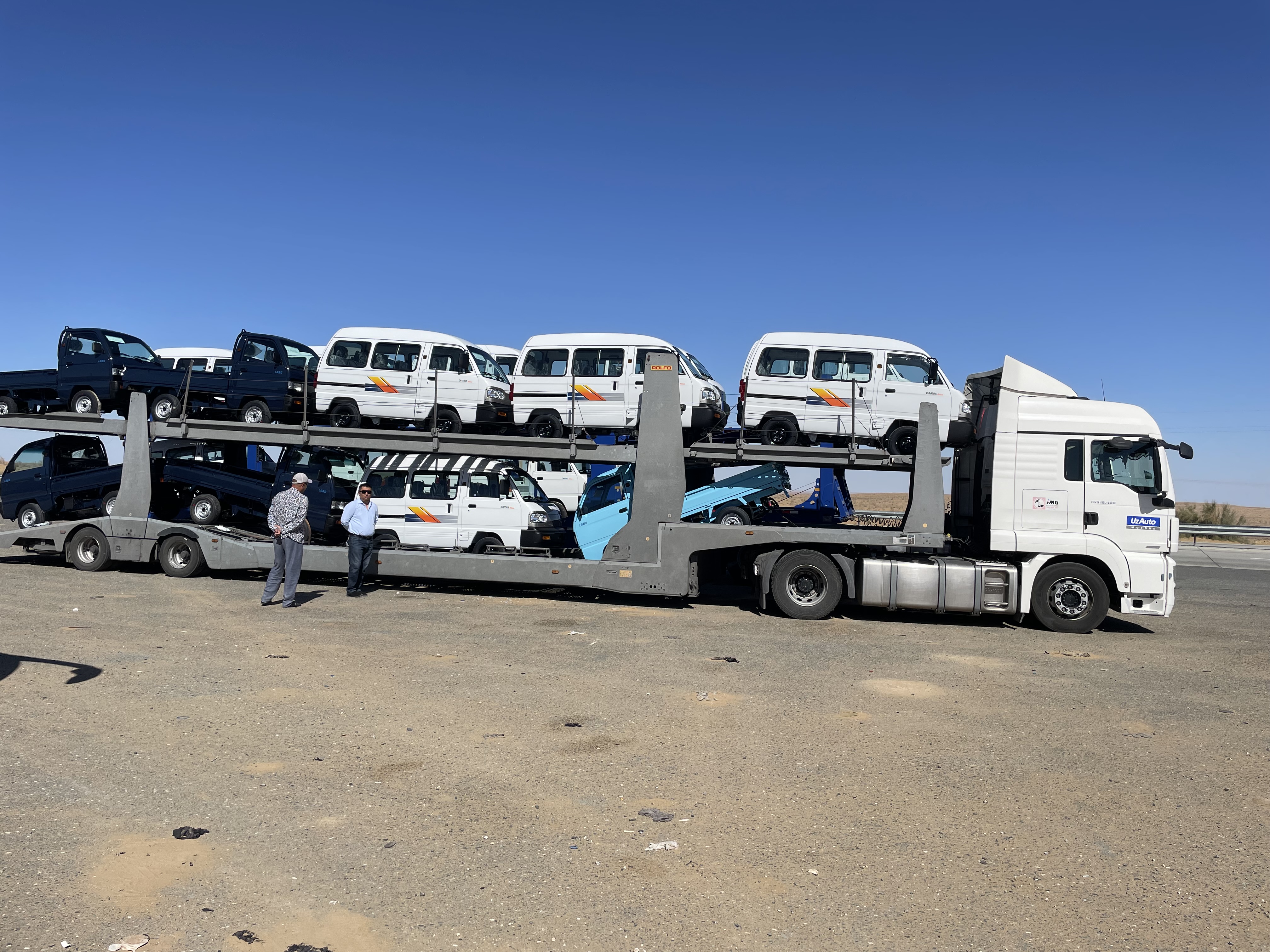
My tour group was wonderful, made up of Miles and Nicola from New Zealand, Katherine from Scotland, Brigitta from Switzerland, and Olwen, Guy, Kate, Nick and Gil from England, though Gil originally hailed from Australia. Ages ranged from late fifties to early seventies. Our guide, Shukhrat, was excellent, he loved sharing the history and culture of his country. On long bus trips, he would tell us stories about everyday life and Uzbek heroes. We visited four cities, Tashkent, Khiva, Bukhara, and Samarkand- with stops in-between, as well as spending a night in the desert in a yurt.
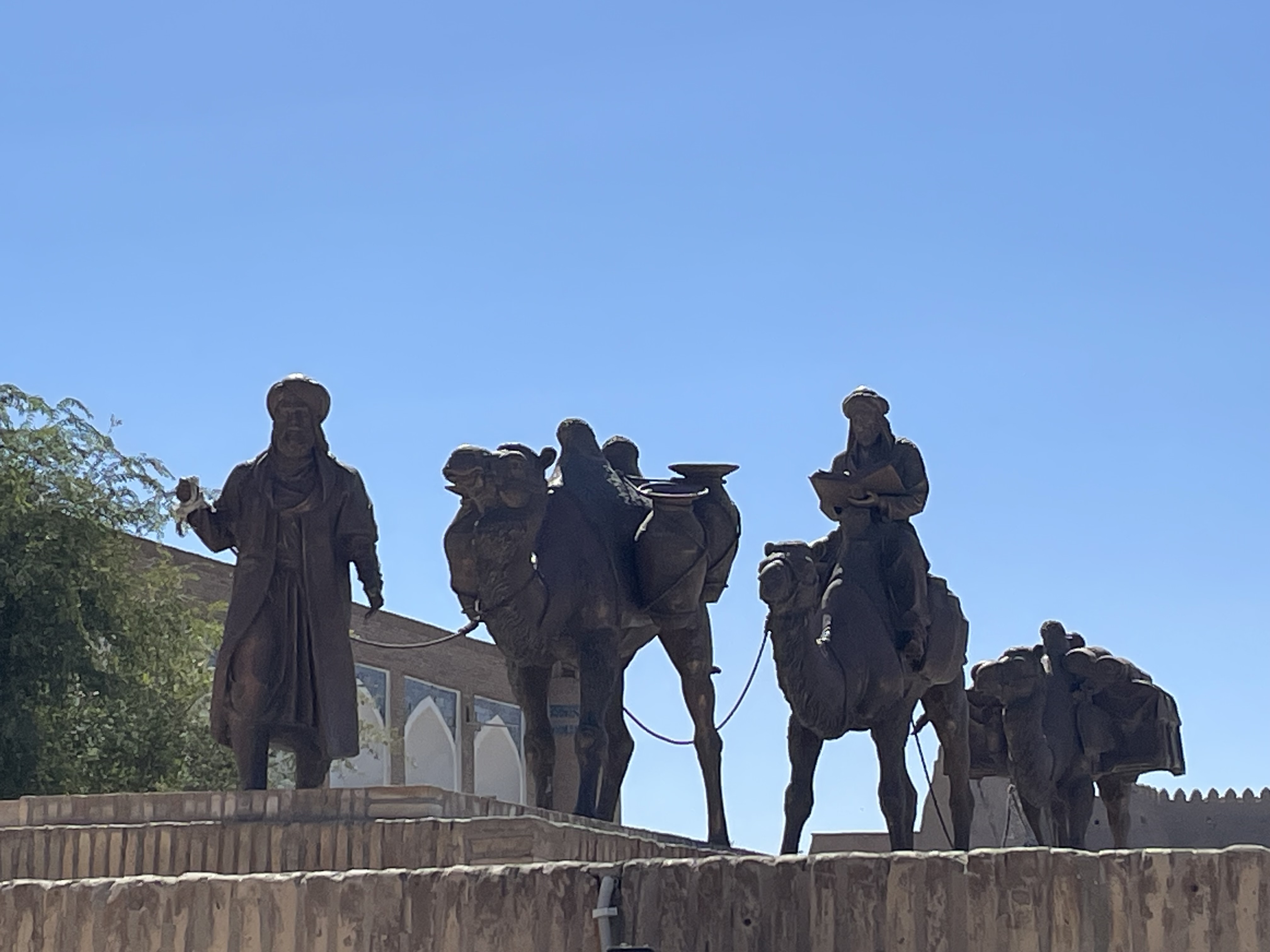
I really do confess my ignorance here. Of the seven ‘stans’ I was really only aware of Afghanistan and Pakistan, I may have heard another one or two mentioned but would not have been able to tell you that Uzbekistan existed before this trip, yet it played a major role in world history. I believe my world history class in high school pretty much covered European history, touching on Asia, Africa and the Middle East only when they were colonies of European countries. Uzbekistan was in the middle of the Silk Road – a major trading route for many centuries, one of it’s leaders, Emir Timur, created one of the largest empires in history in the 14th century, and his grandson was a renown astronomer. The four cities we visited were all major trading centers of the Silk Road, a place of refuge after crossing deserts and mountains. The old towns of Khiva, Bukhara and Samarkand are all Unesco World Heritage sites as well as Uzbeki sections of the Silk Road itself. It was suggested we think of these towns then, like Dubai is now, major business hubs.
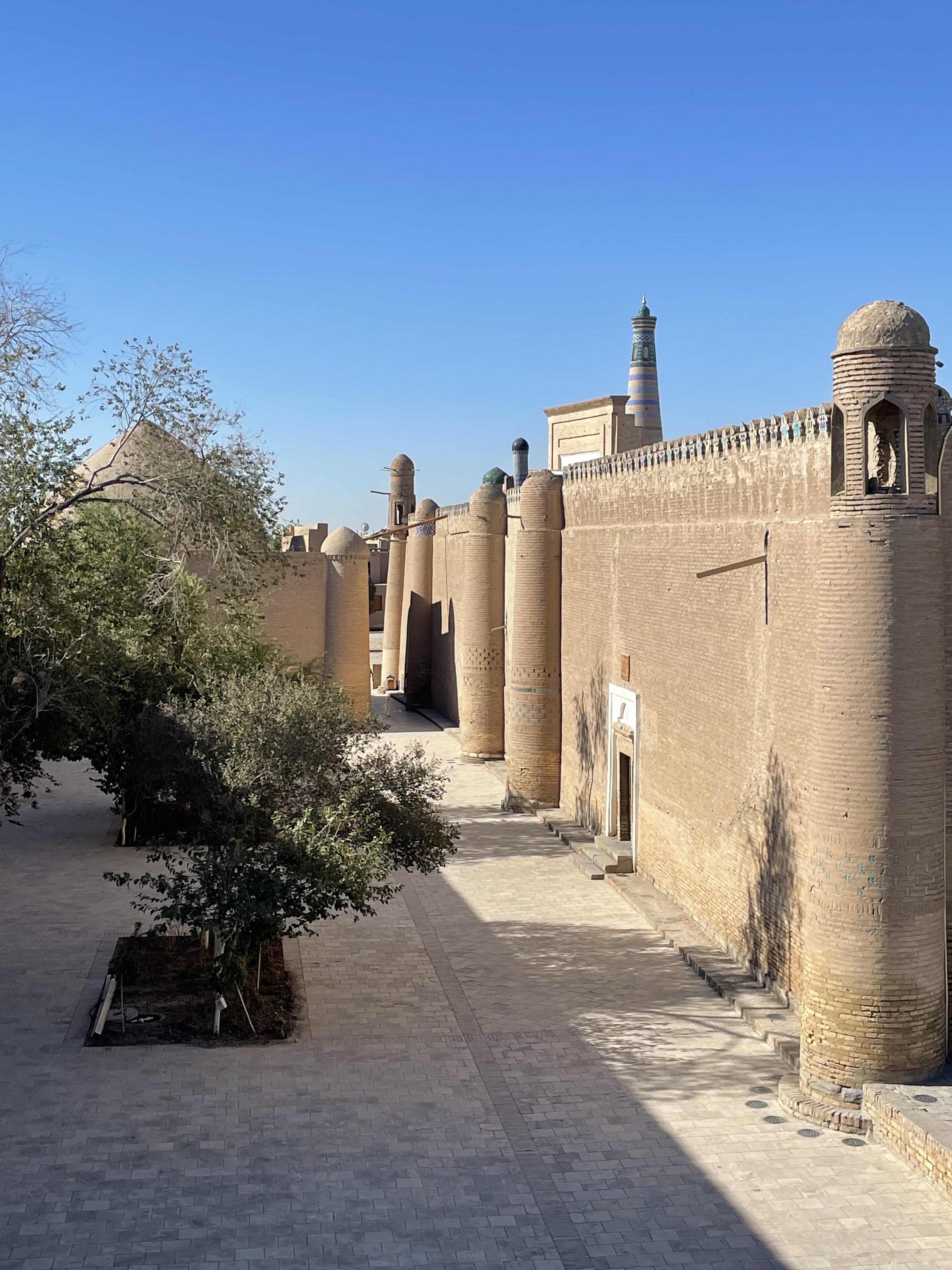
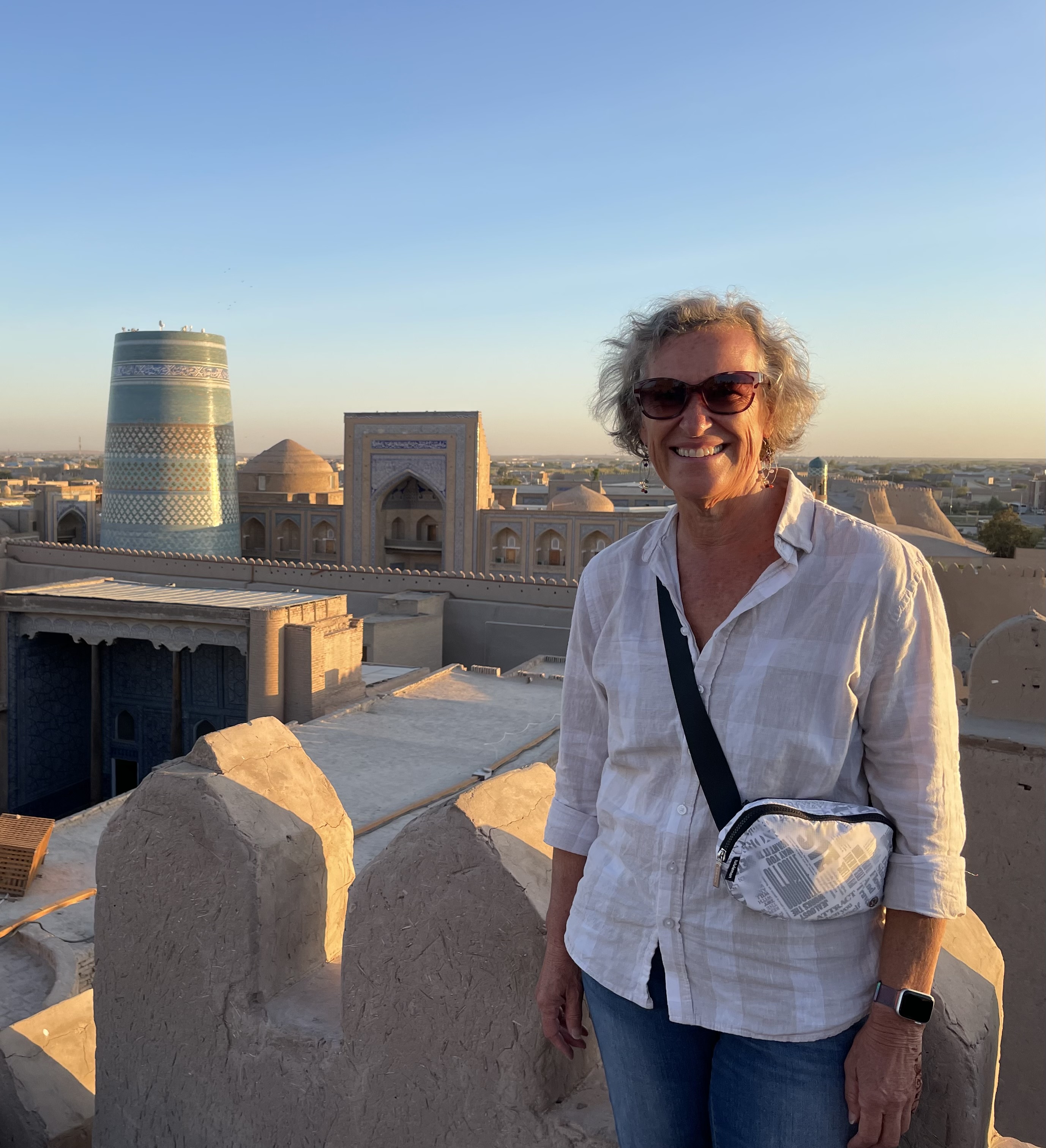
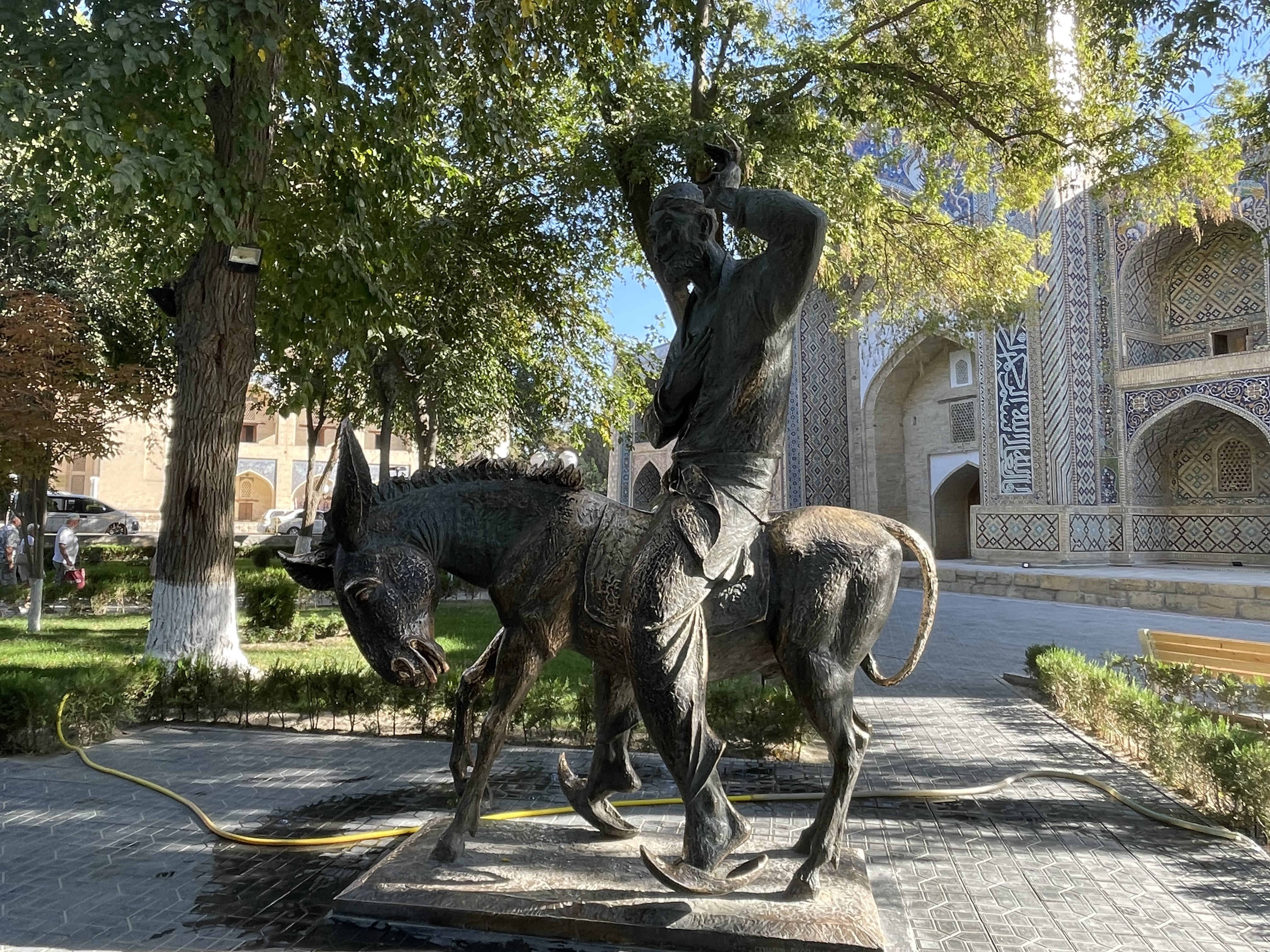
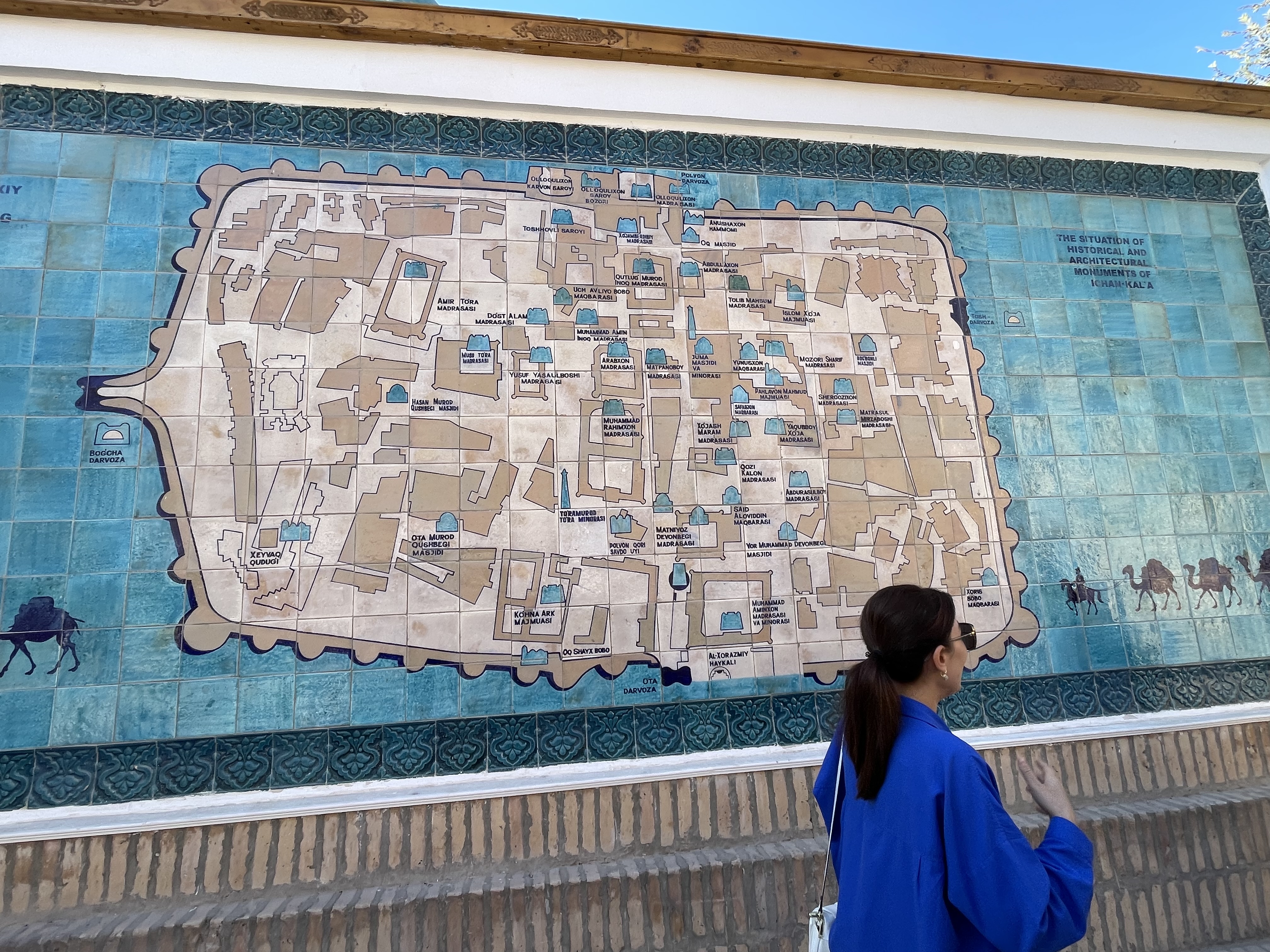
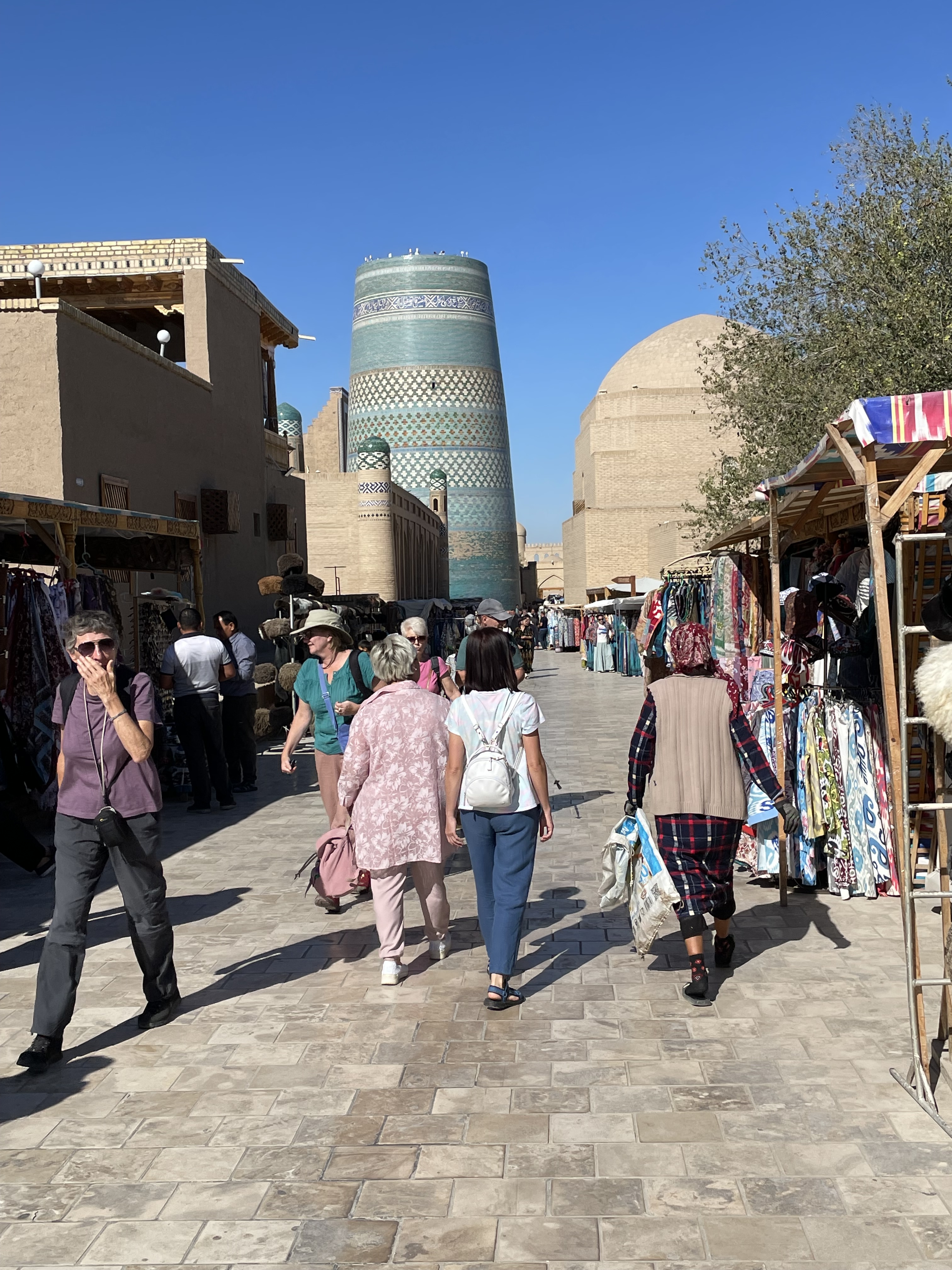
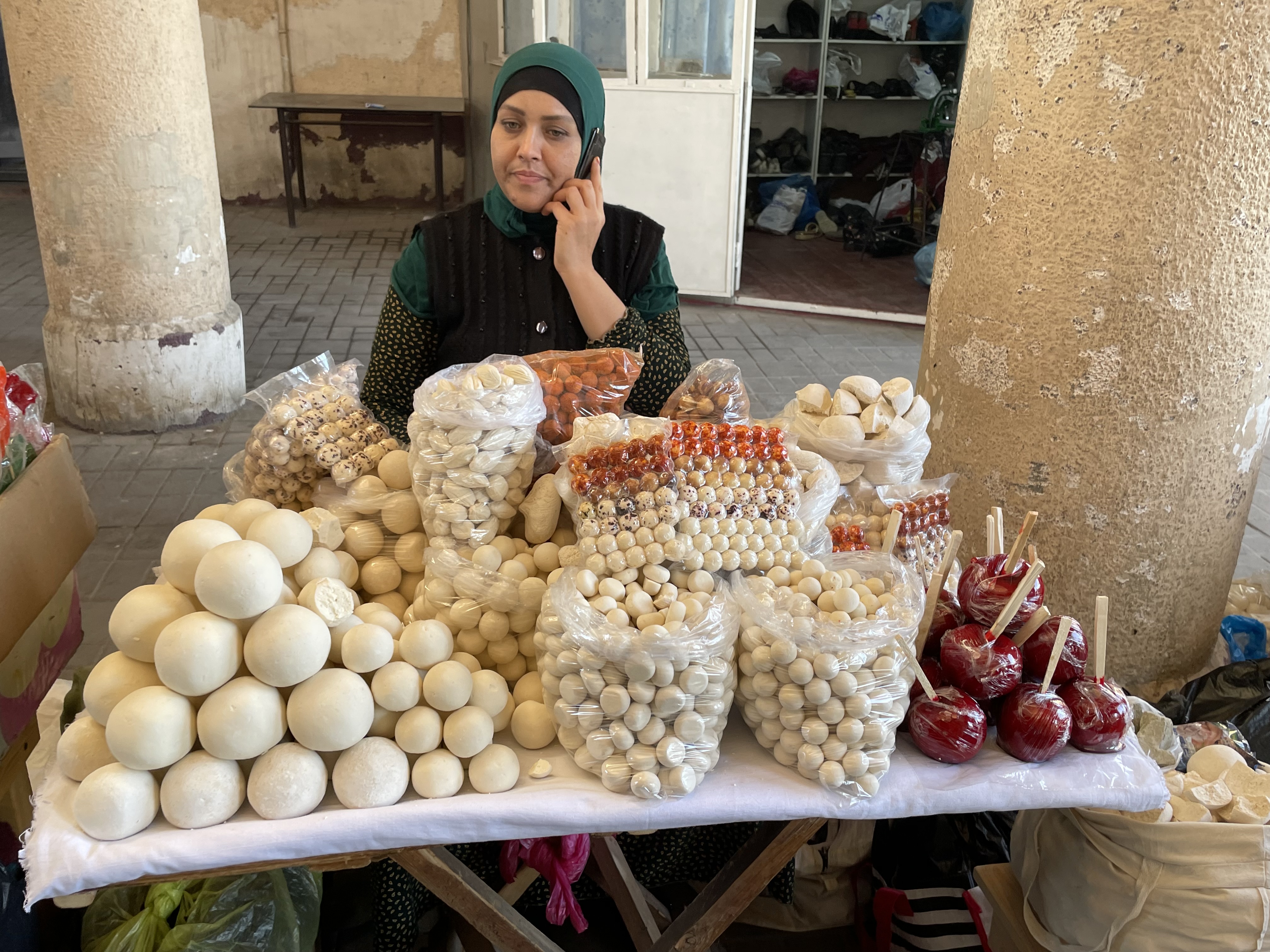
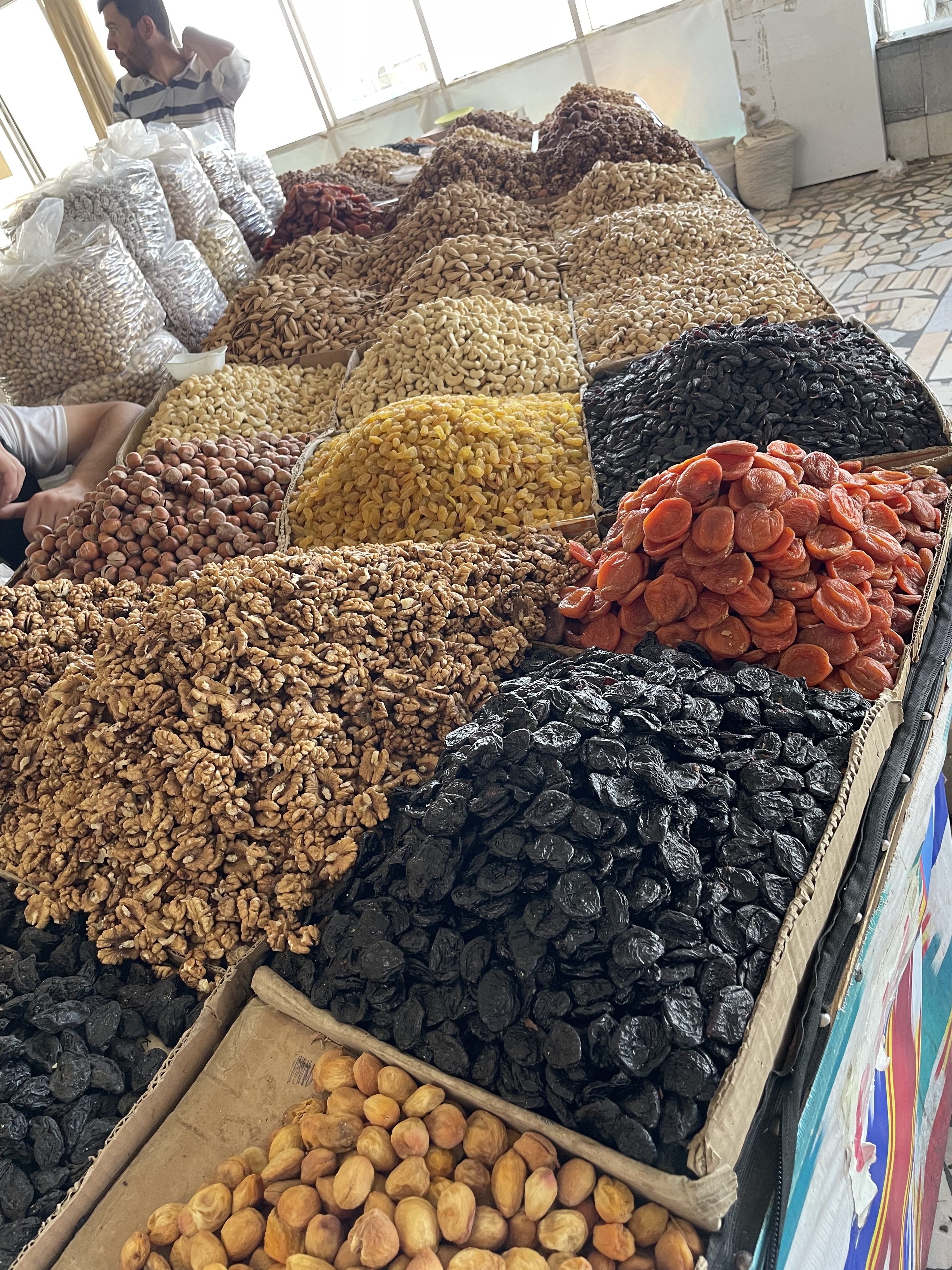

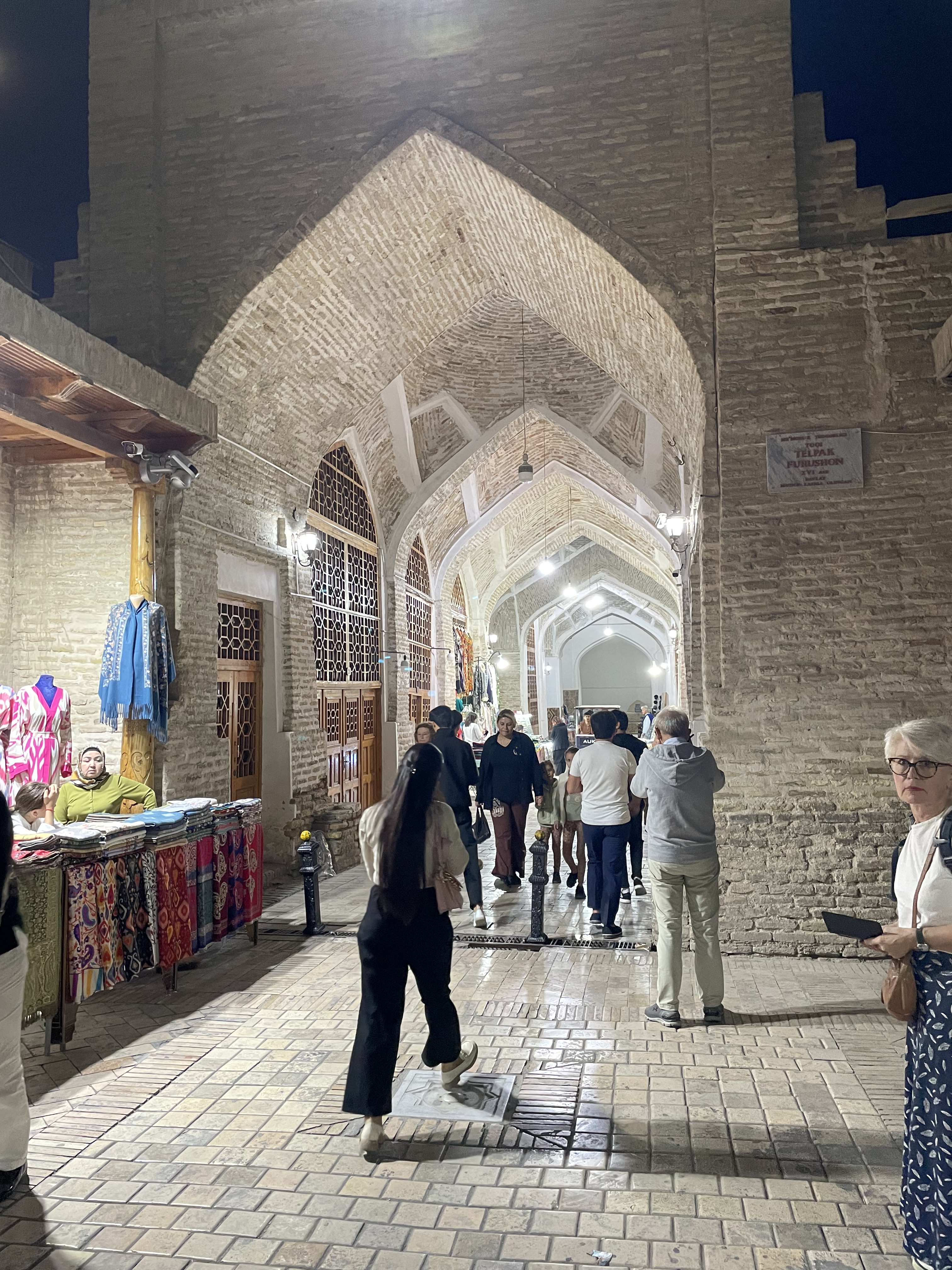
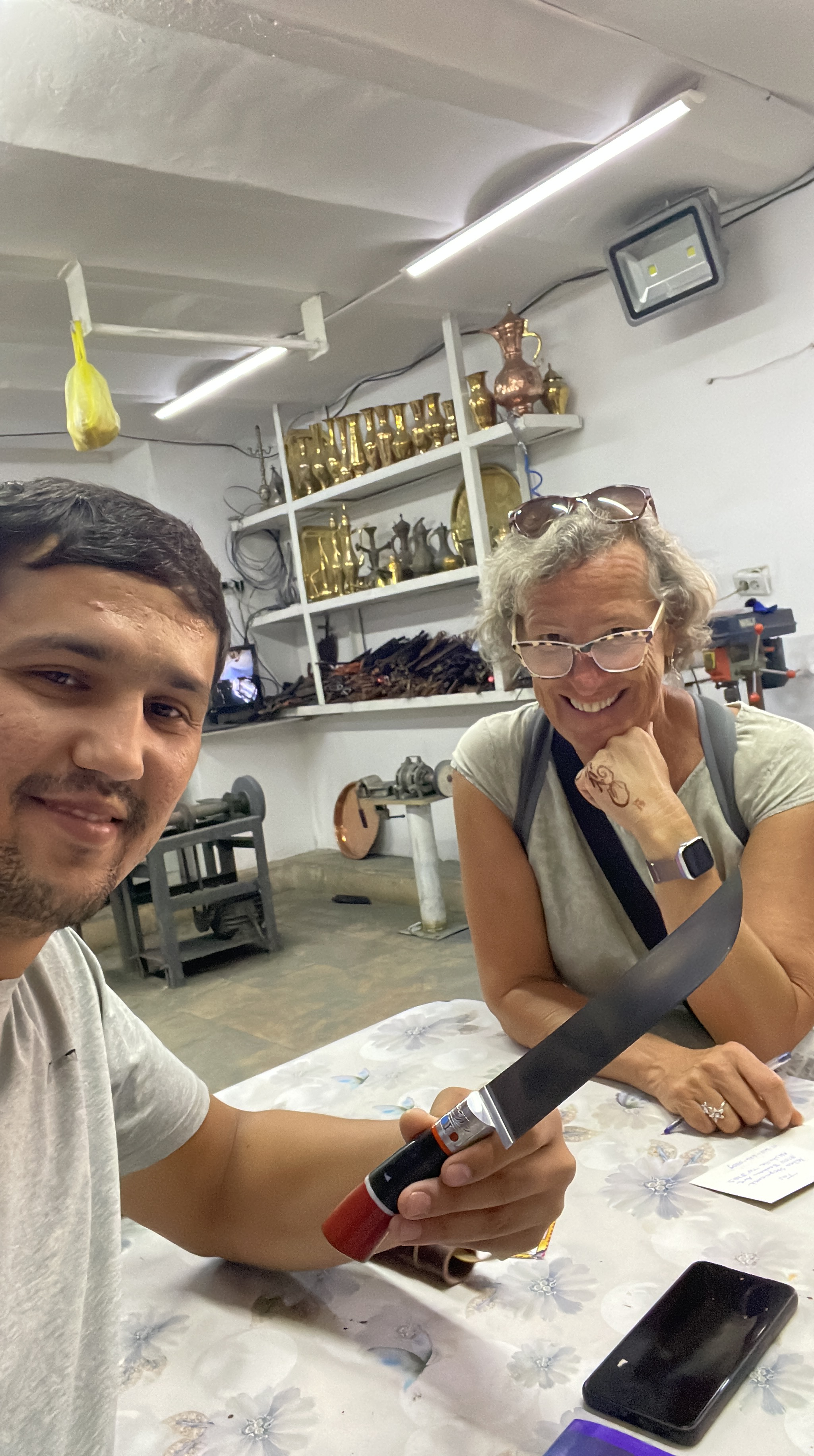
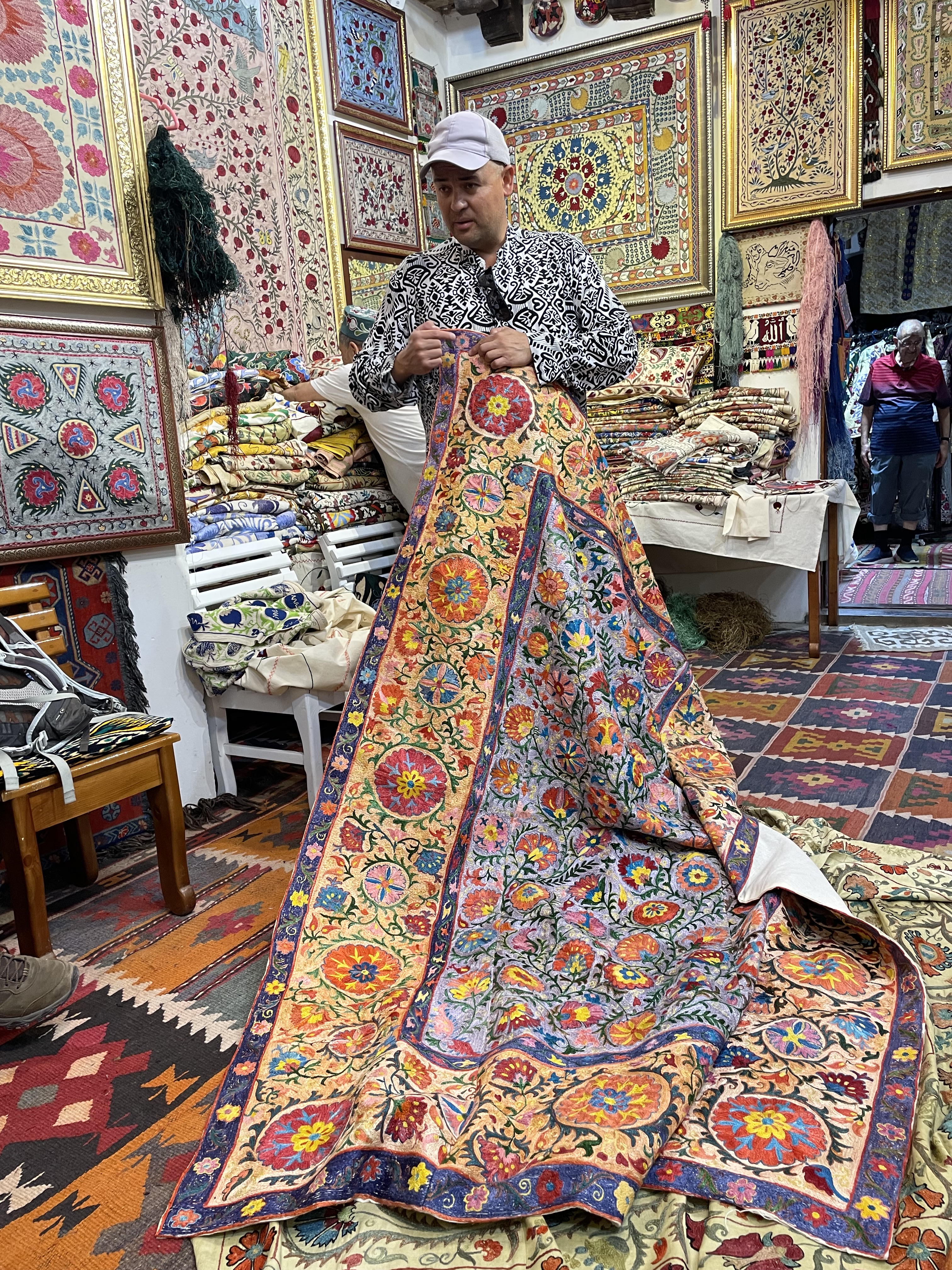
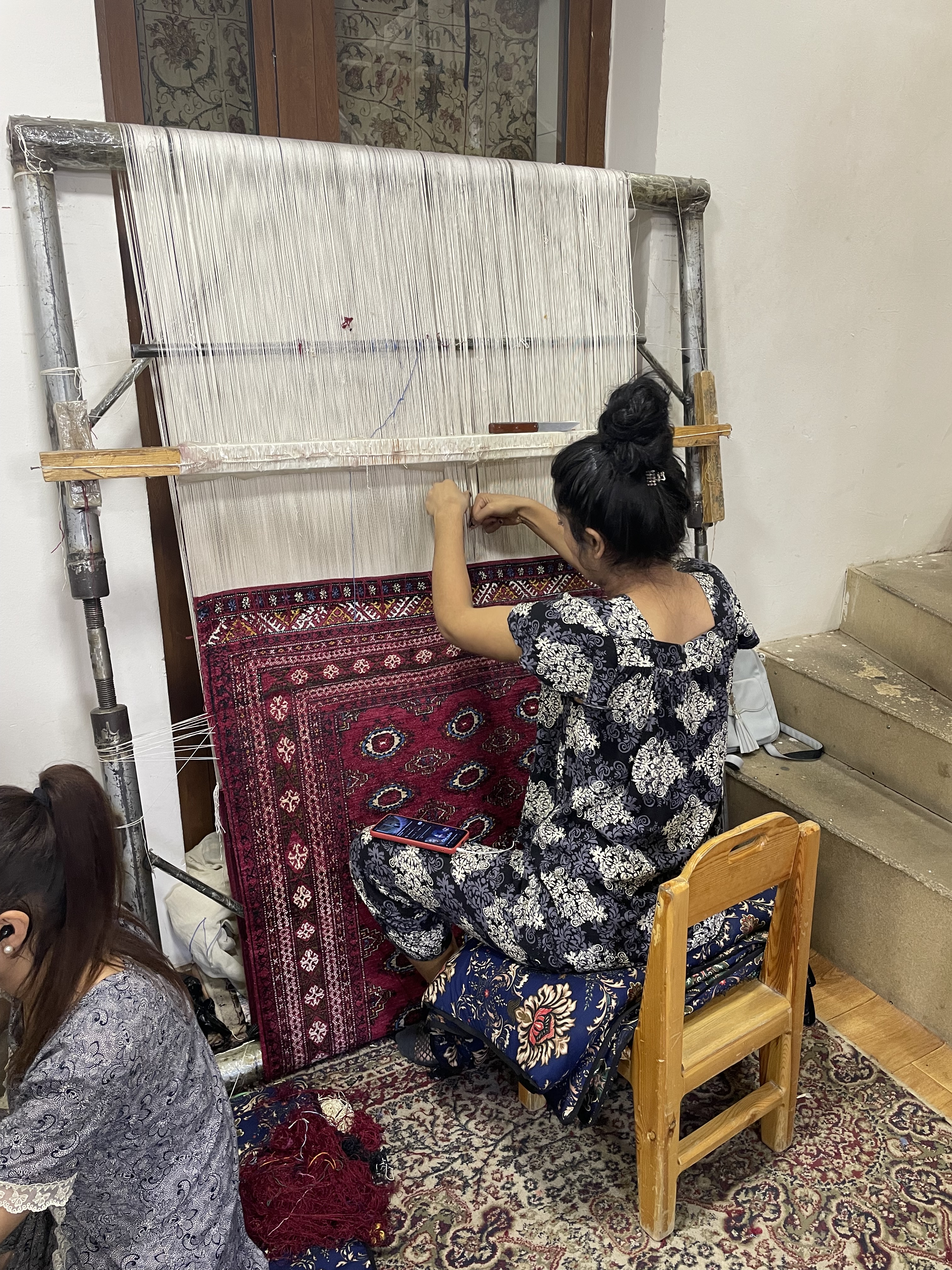
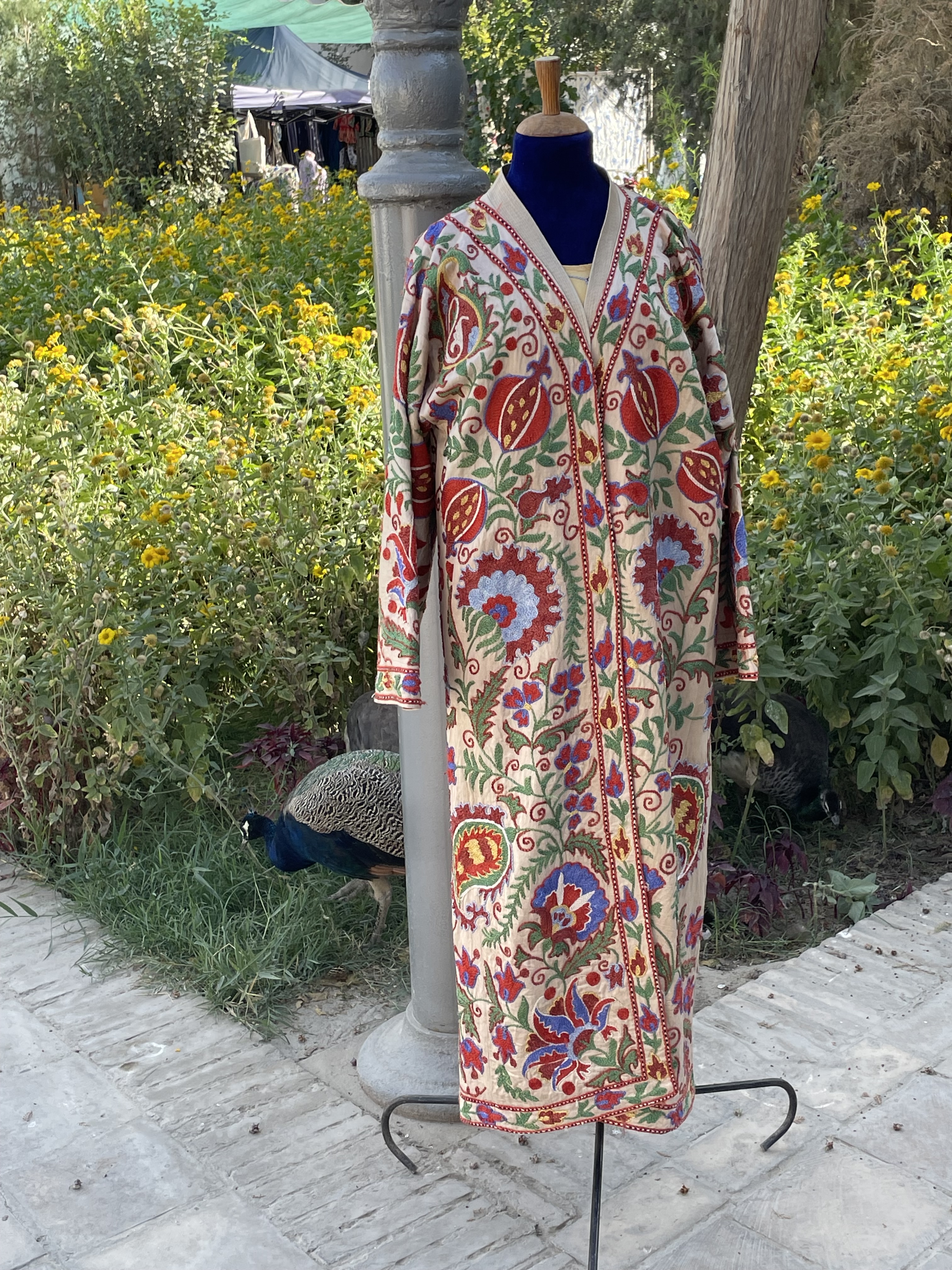
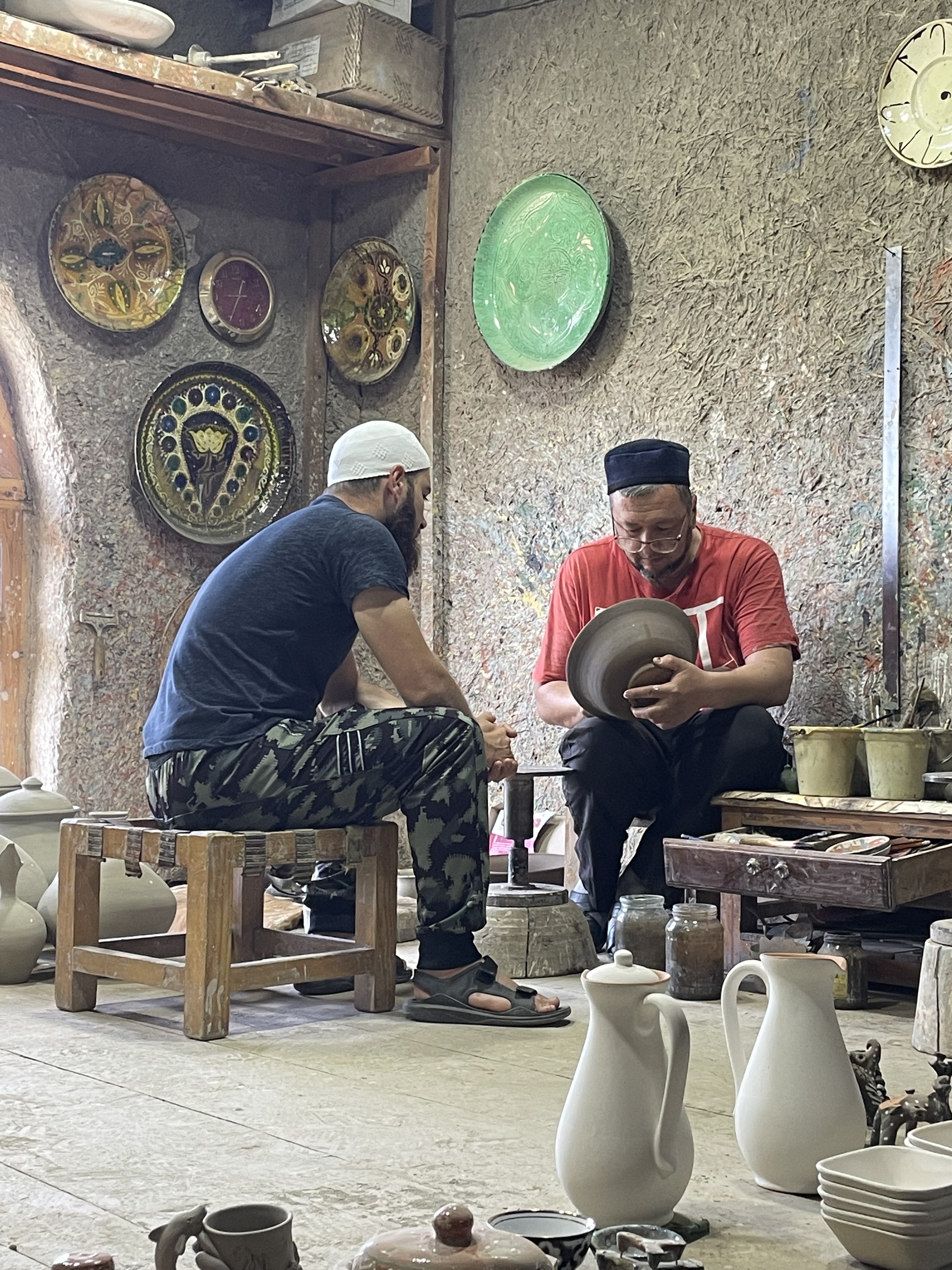
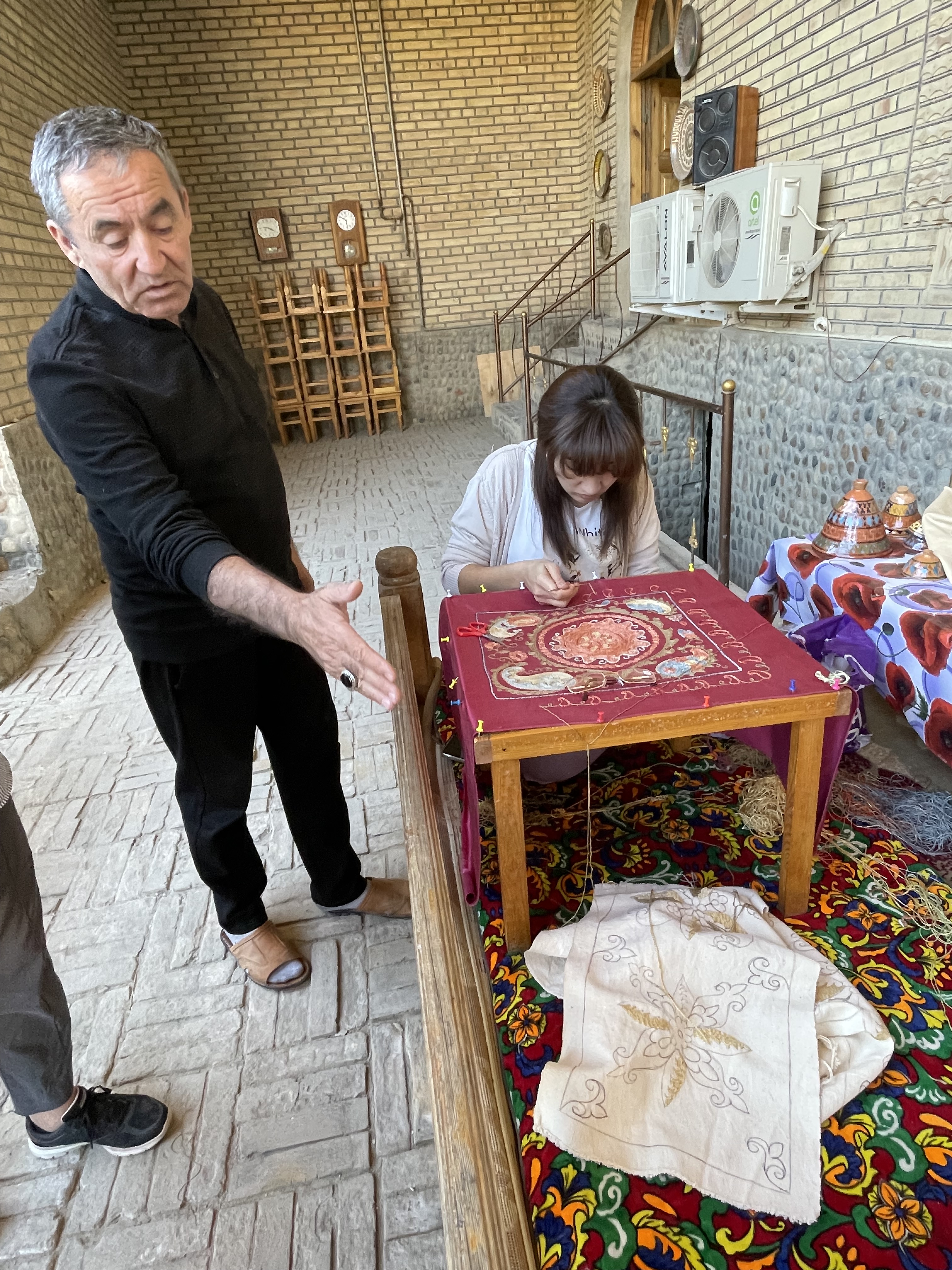
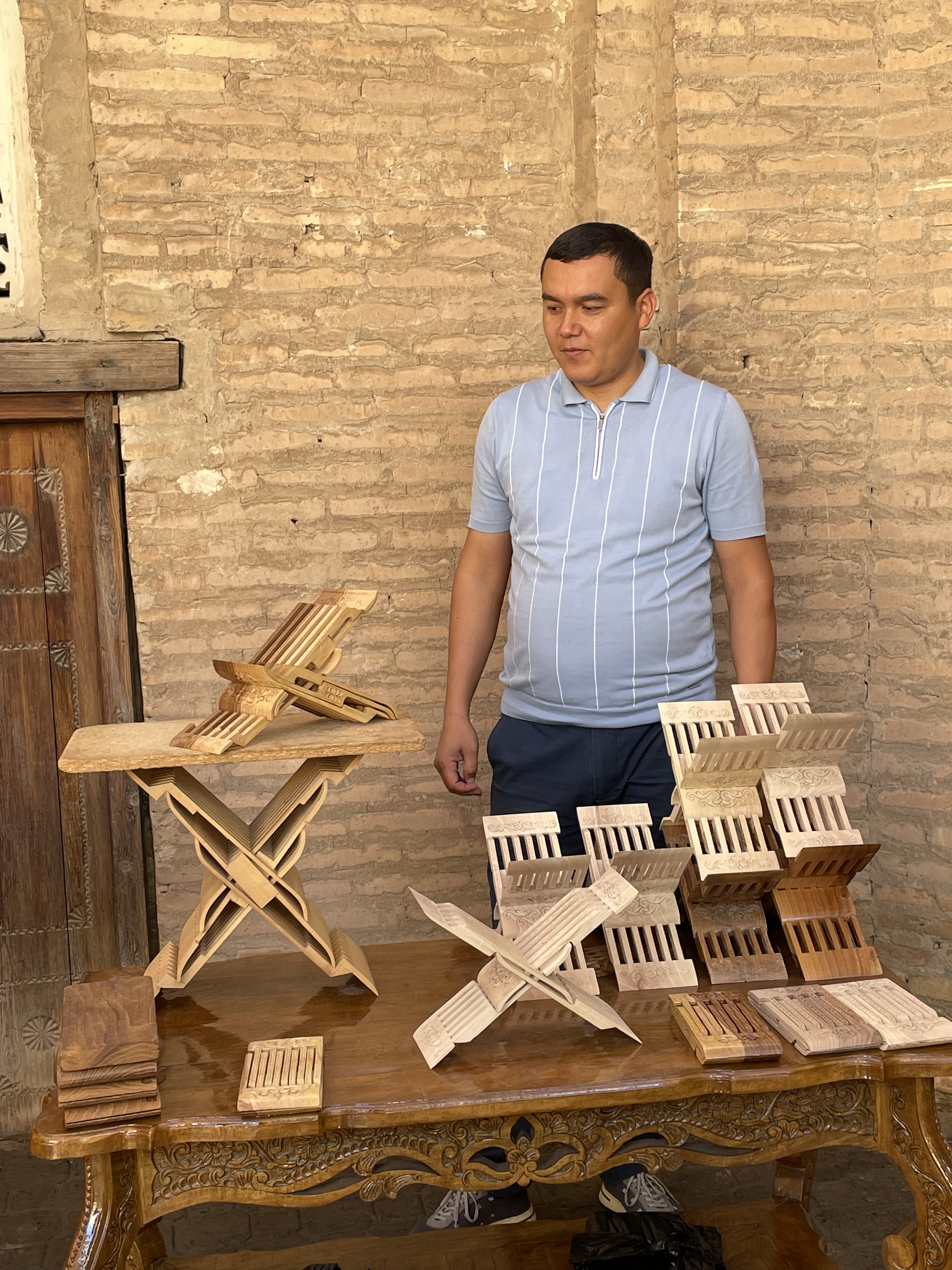
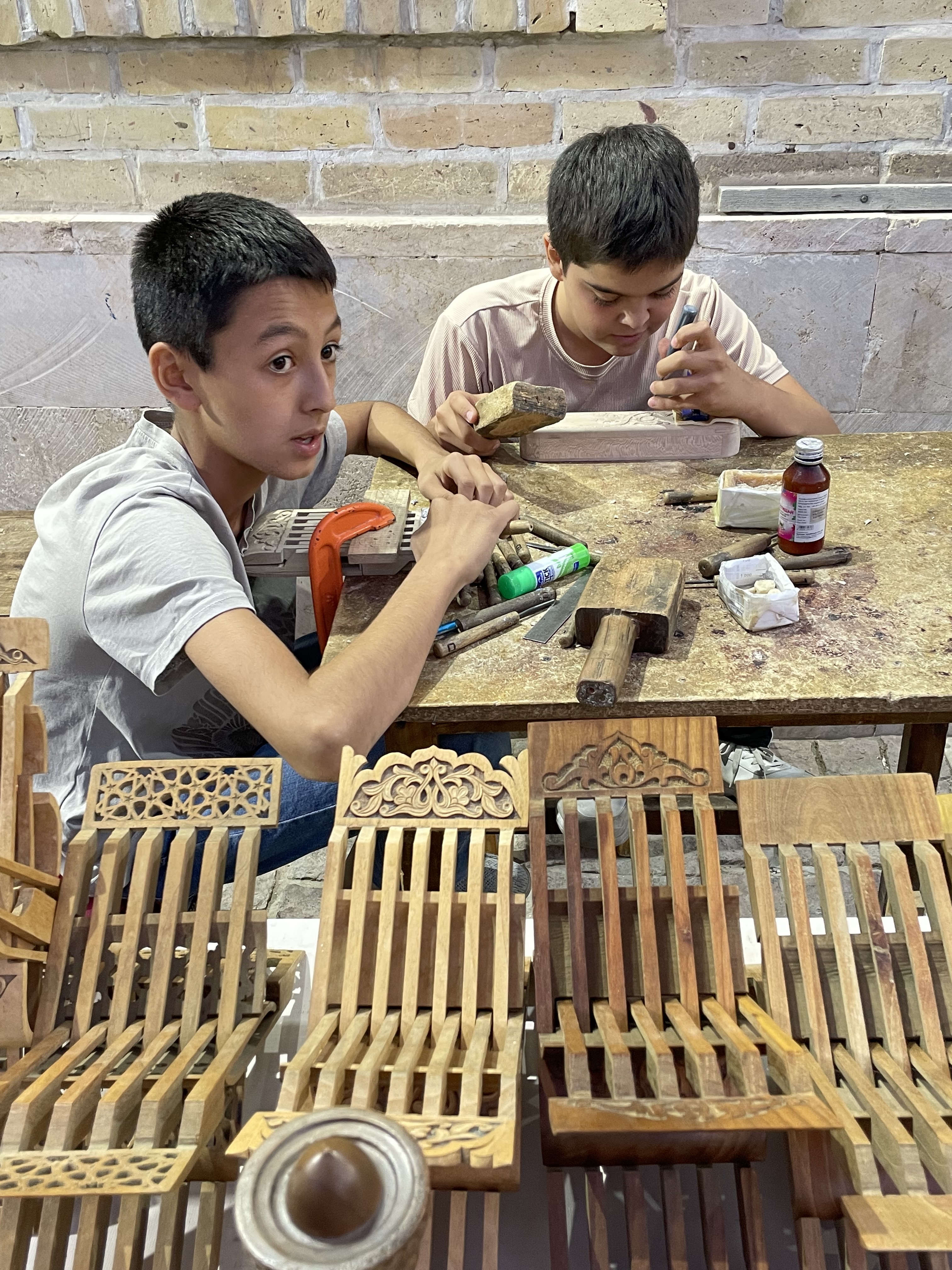
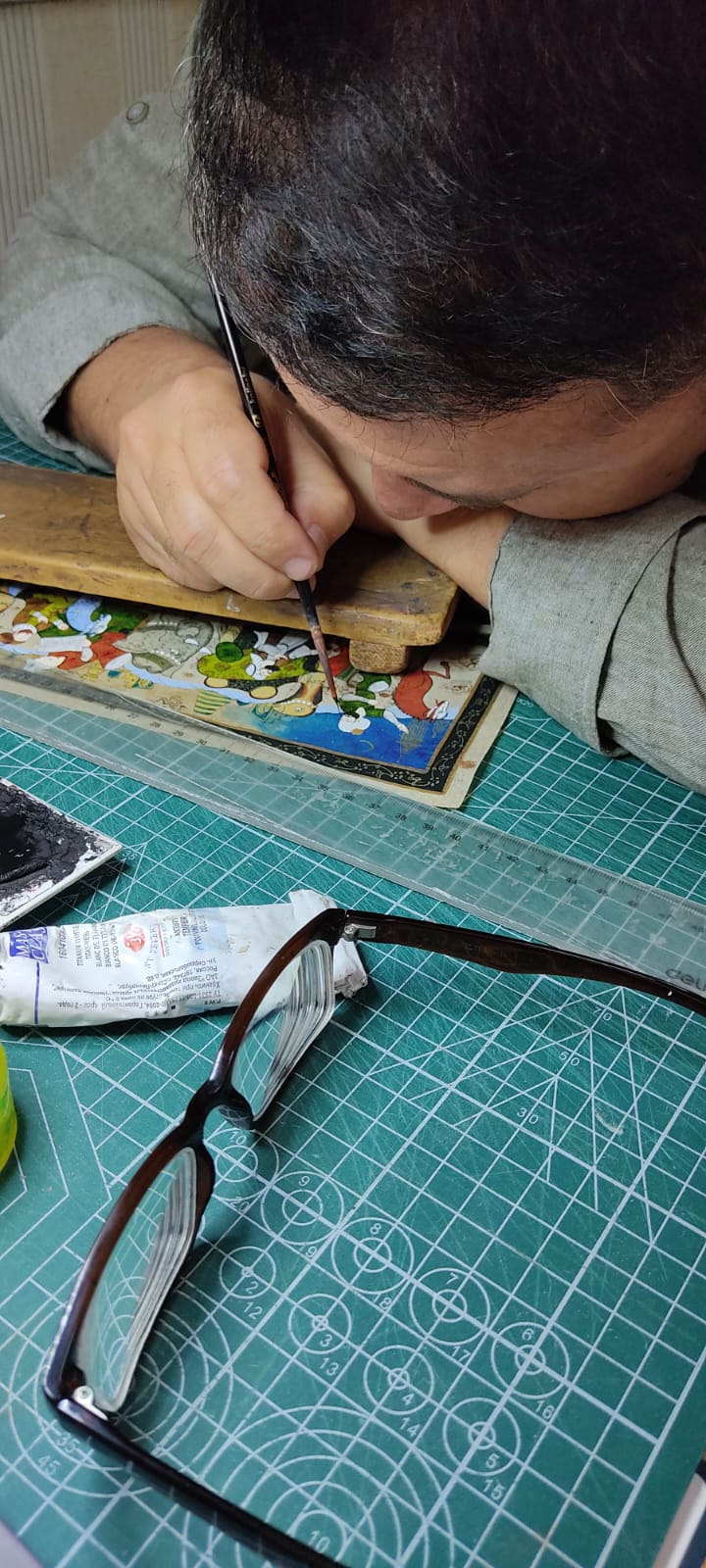
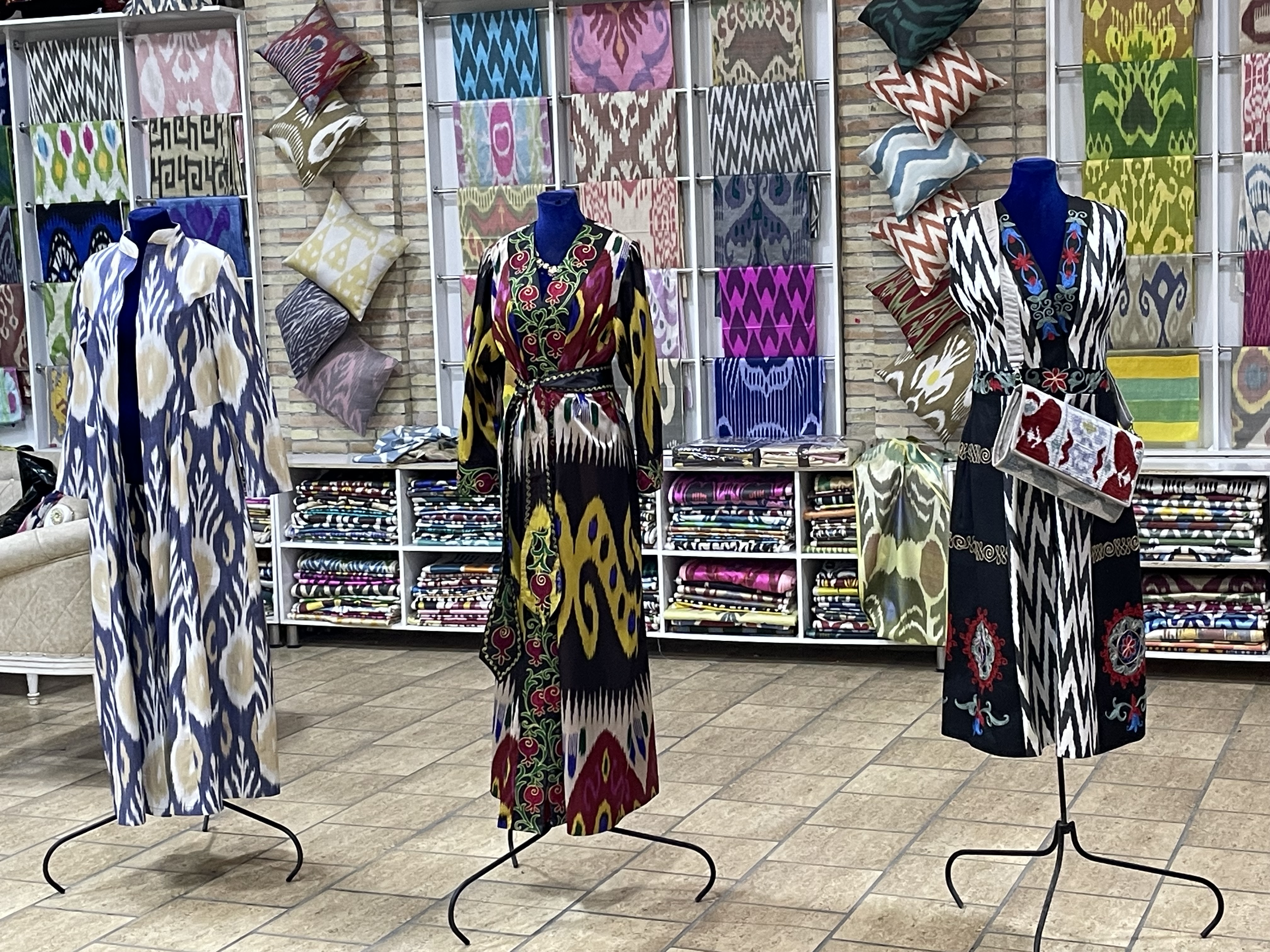
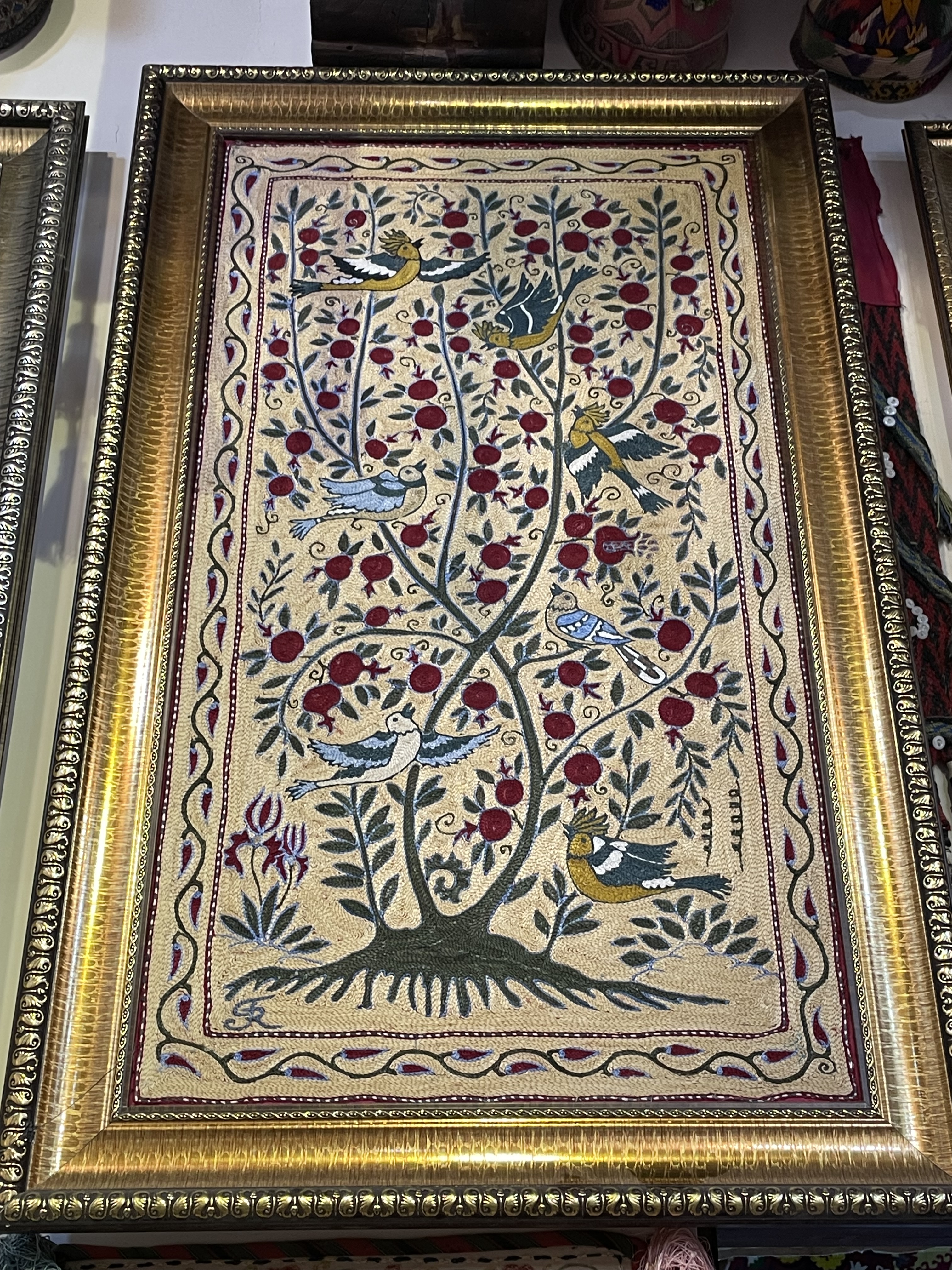
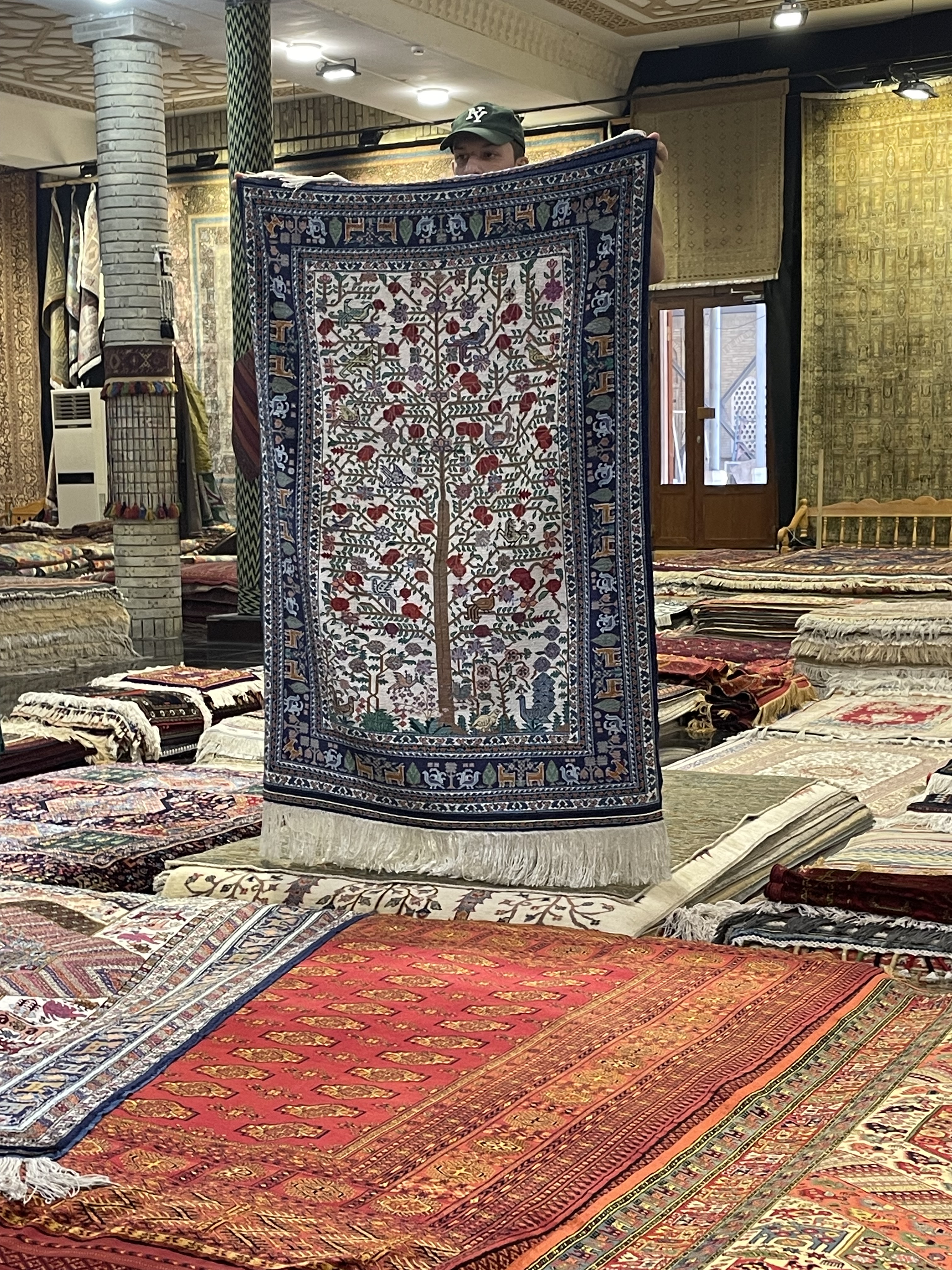
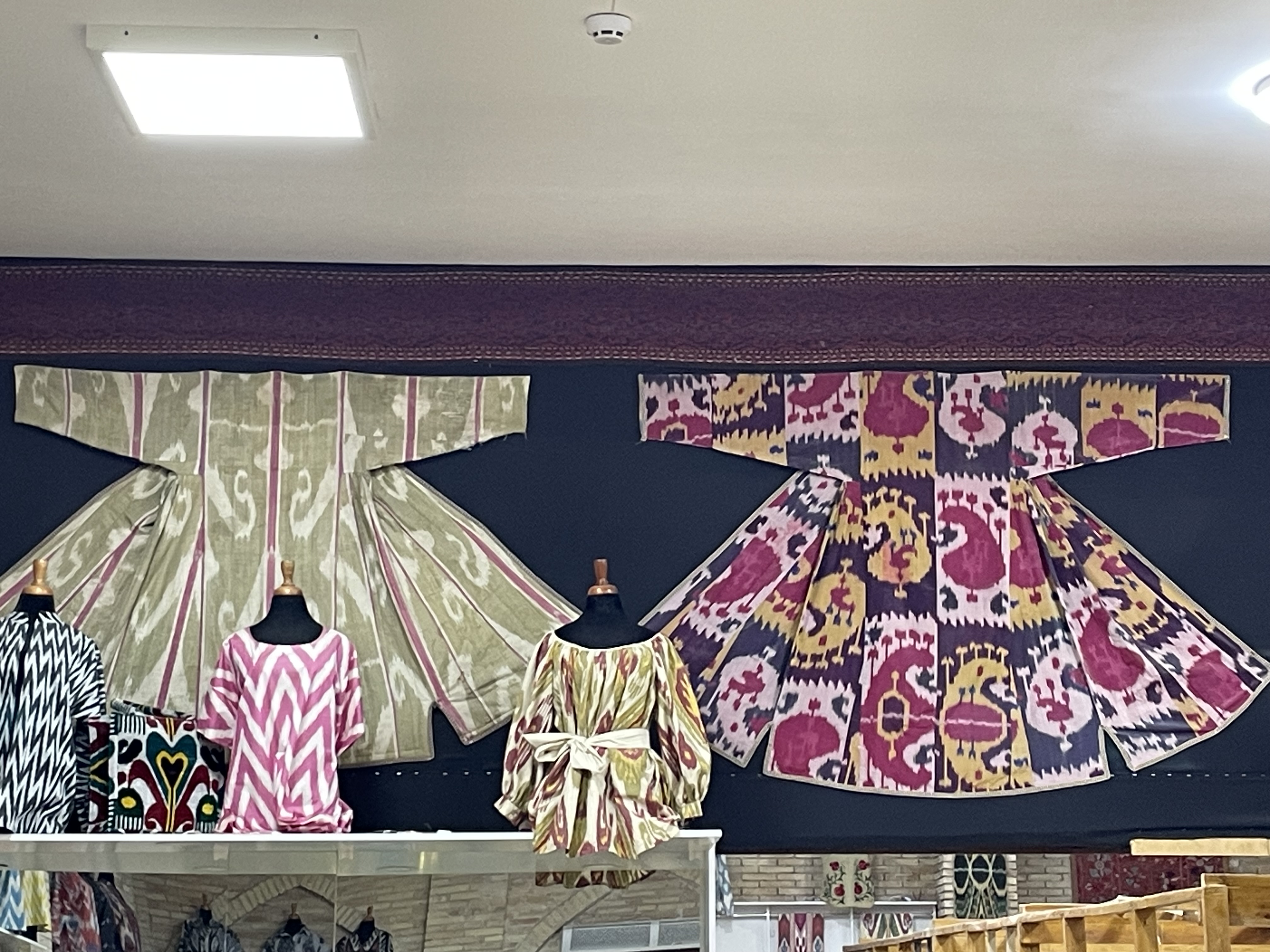
In some ways, the sites felt very touristy, as they were selling souvenirs everywhere, even in mausoleums. But it was also reminiscent of the past, when the Silk Road was active, as these places were trading centers and celebrated for their craftsmanship. The cities are filled with stores and workshops with handiwork of artisans, generations in the making. Many workshops are schools for new devotees to learn the crafts, more than a few starting from a very early age. Items for sale beyond the key chains and fridge magnets were: magnificent knives honed from titanium and Damascus steel; beautiful embroidered items such as wallhangings, pillow covers, tote bags, bedspreads called susani; splendid hand knotted silk and wool rugs; colorful ceramic tiles, platters, bowls, teapots, and cups; beautifully fashioned silk and cotton clothing; exquisite painted miniatures; and much more. I profess I bought more than one of these items and was tempted to make further purchases.
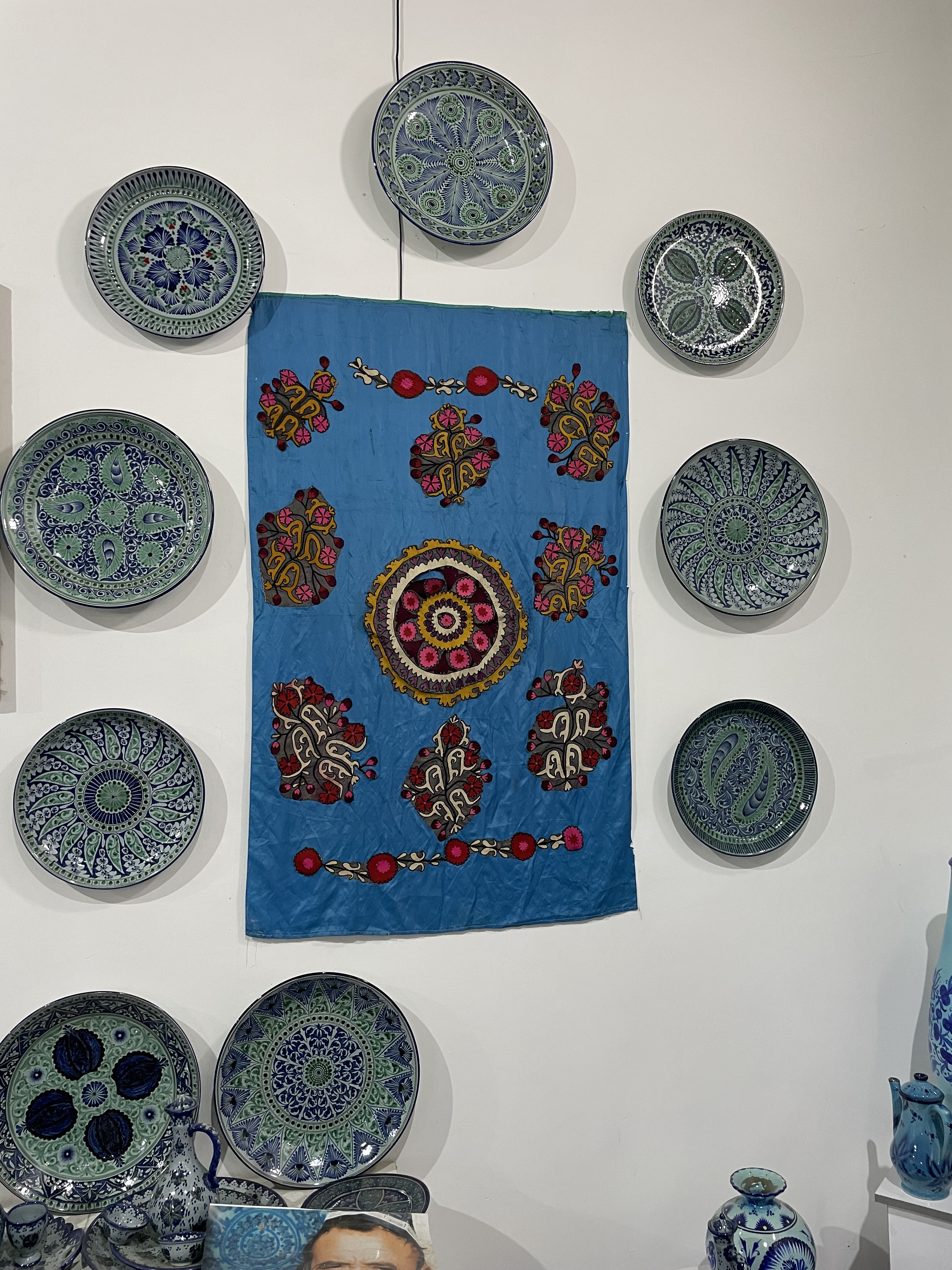
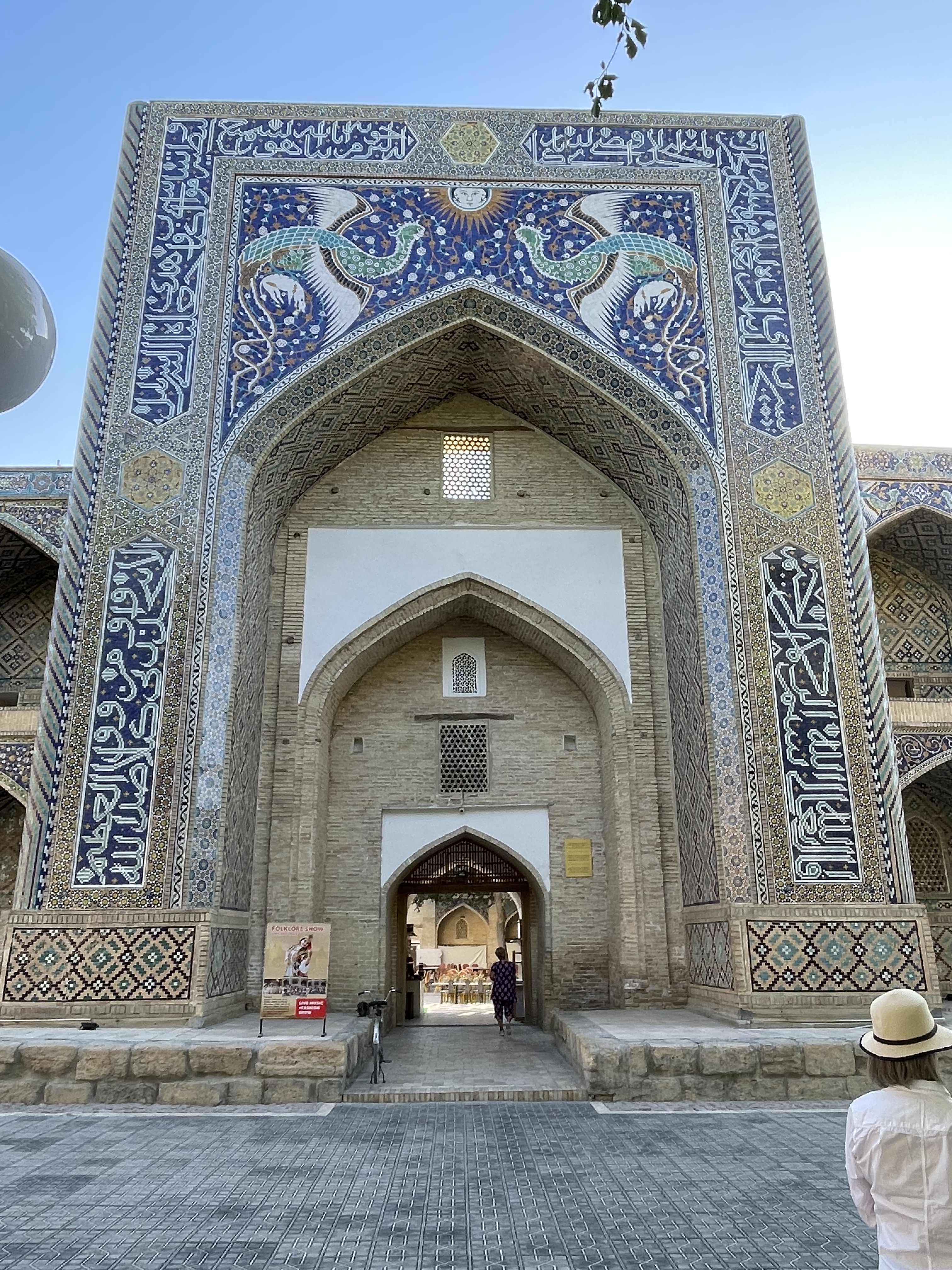
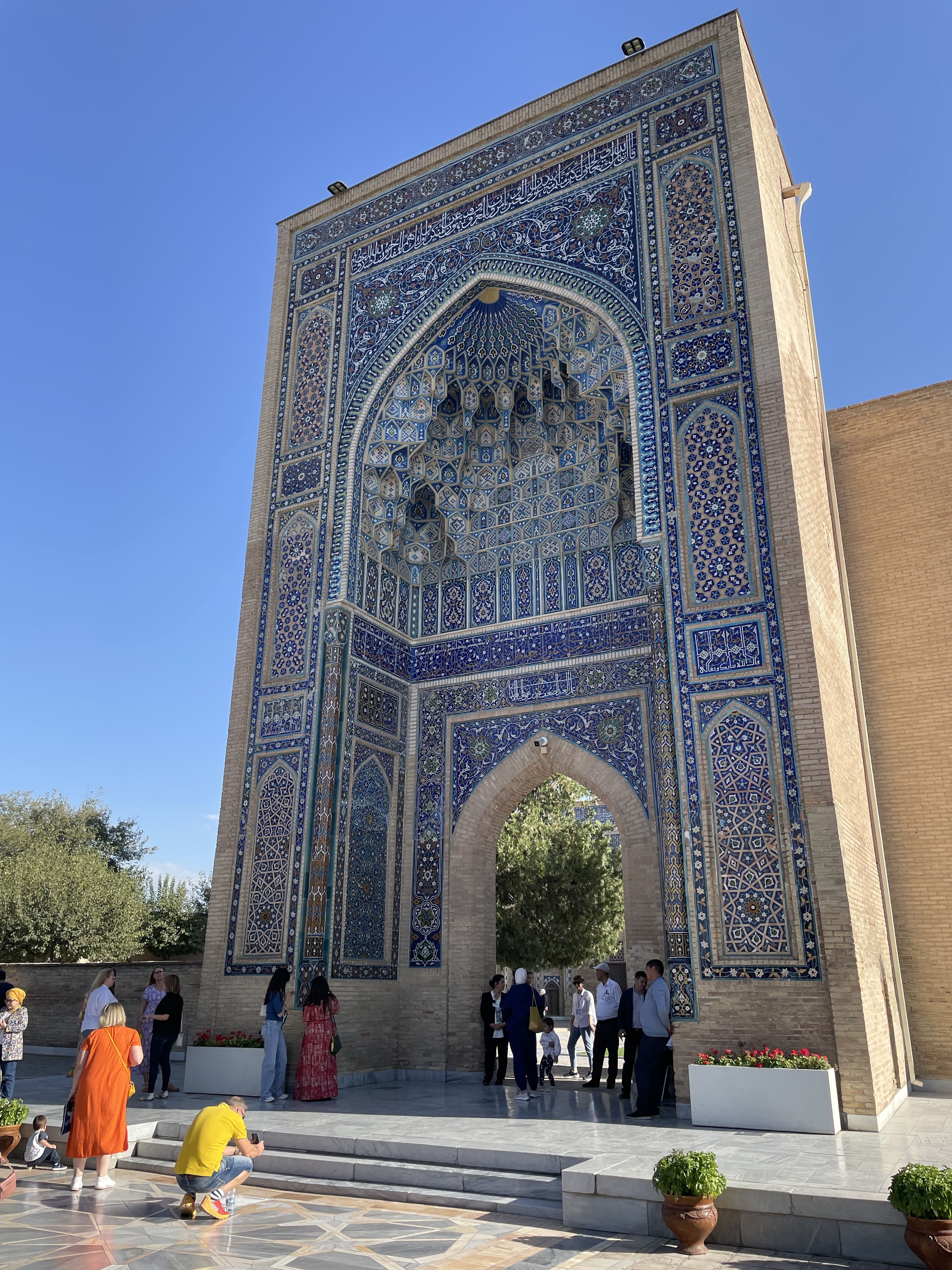
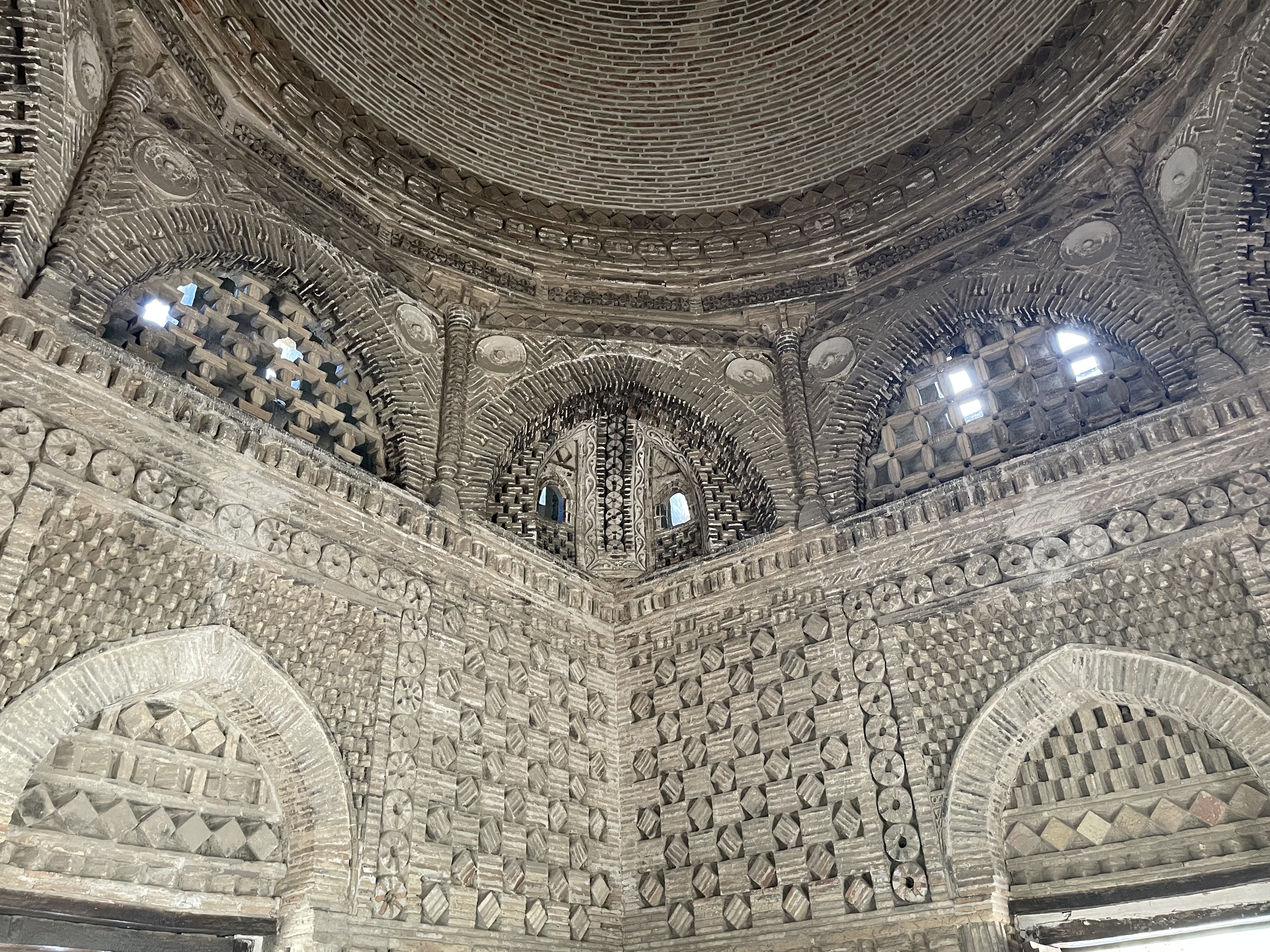
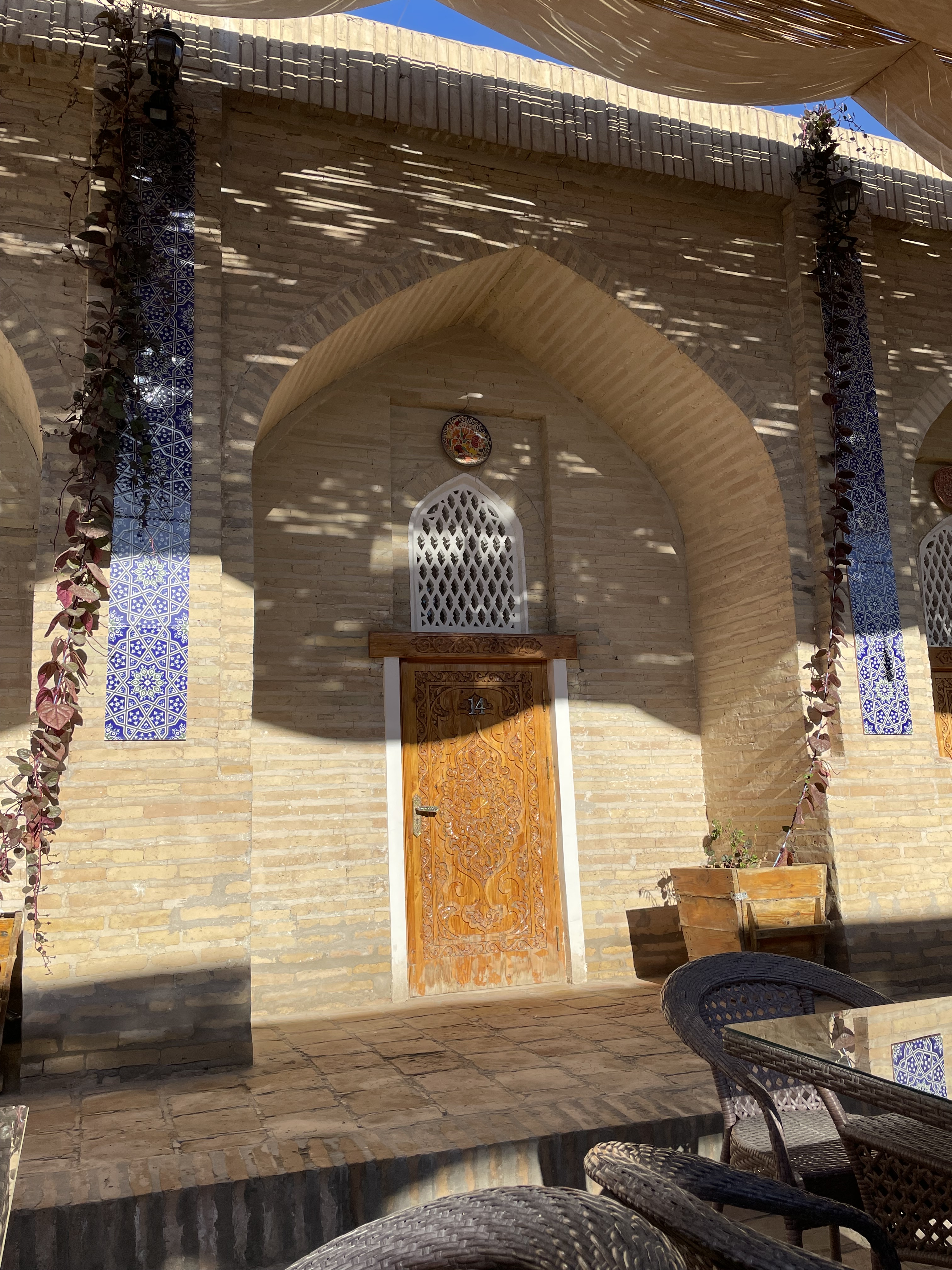
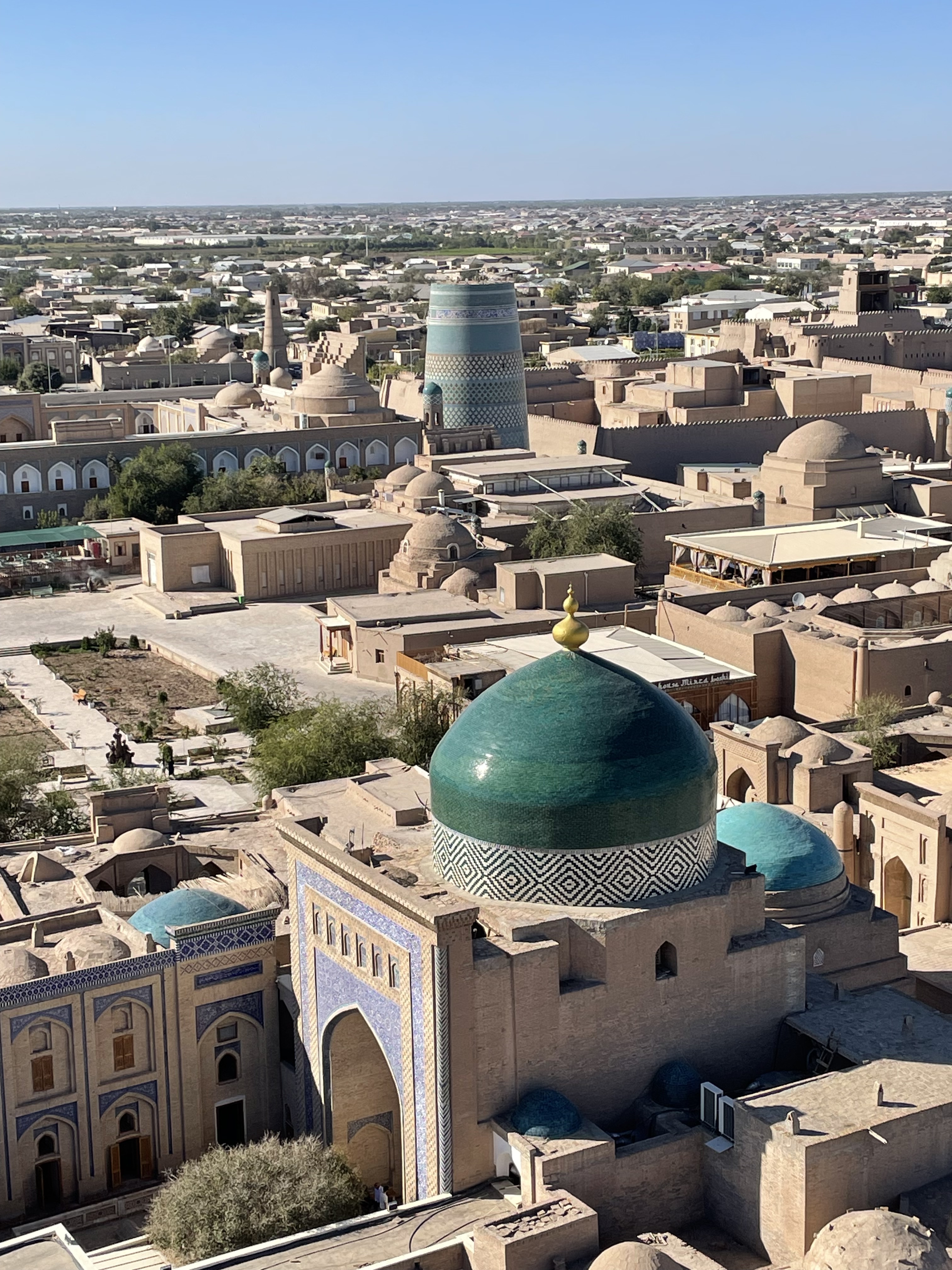
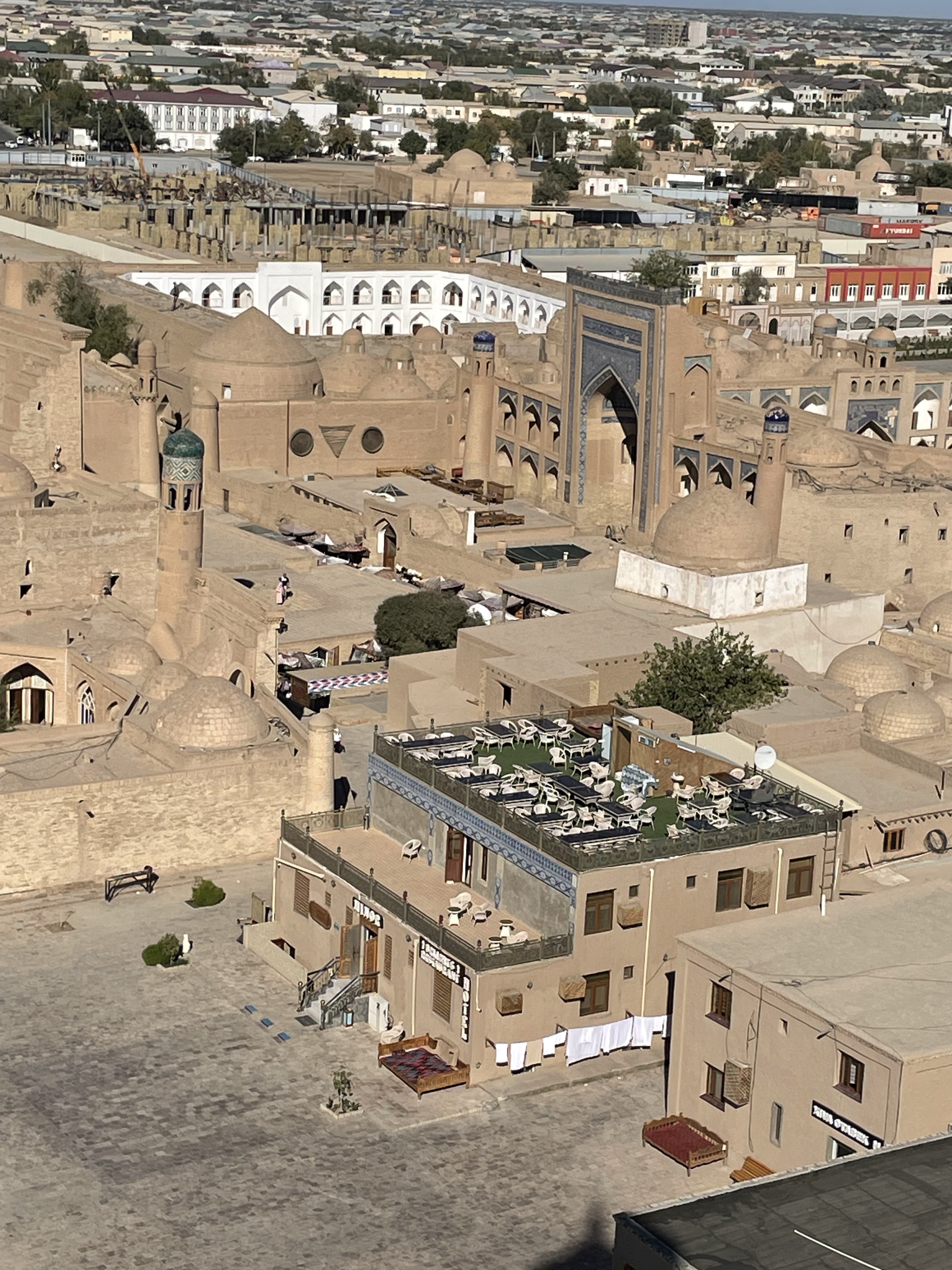
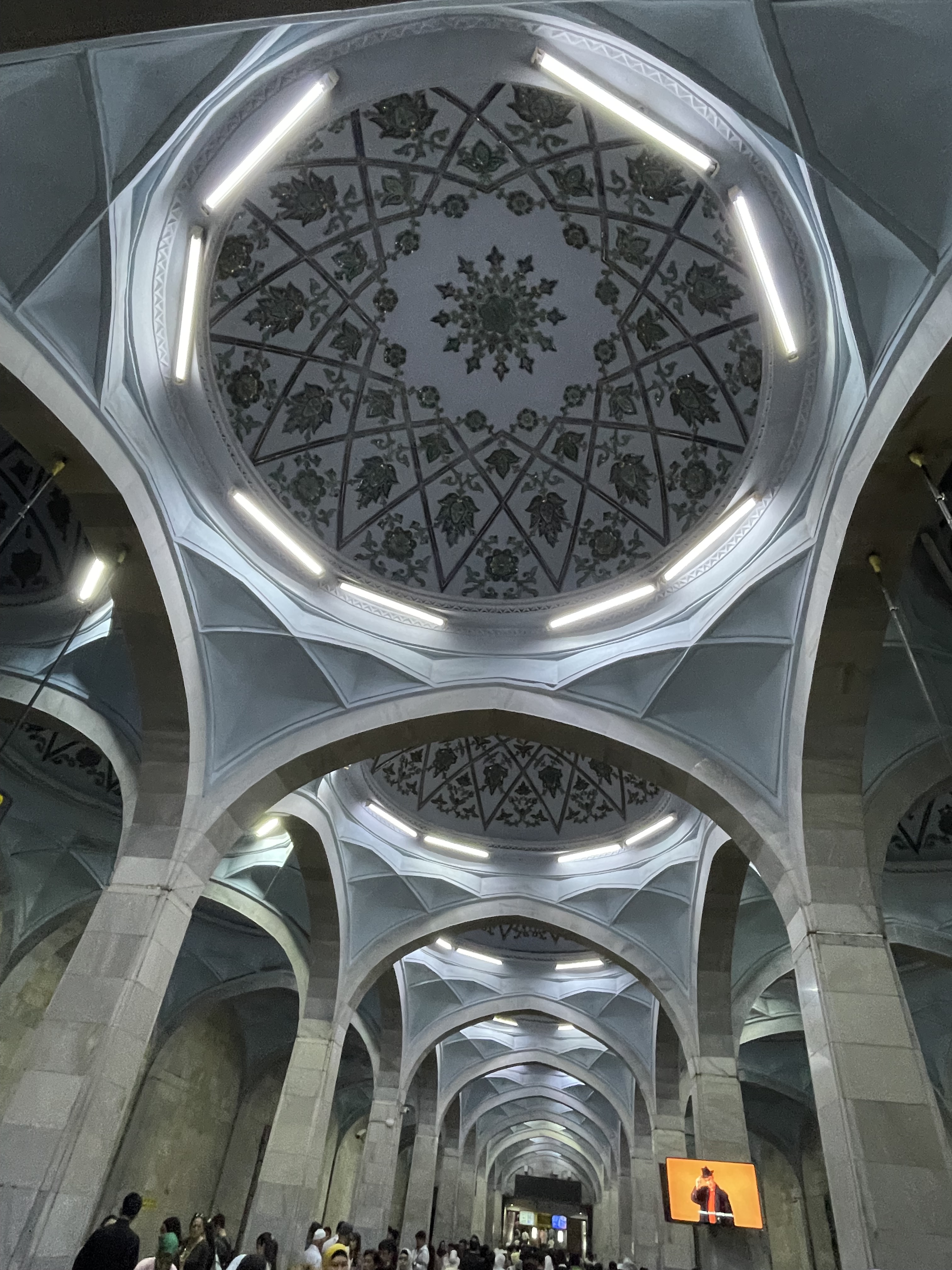
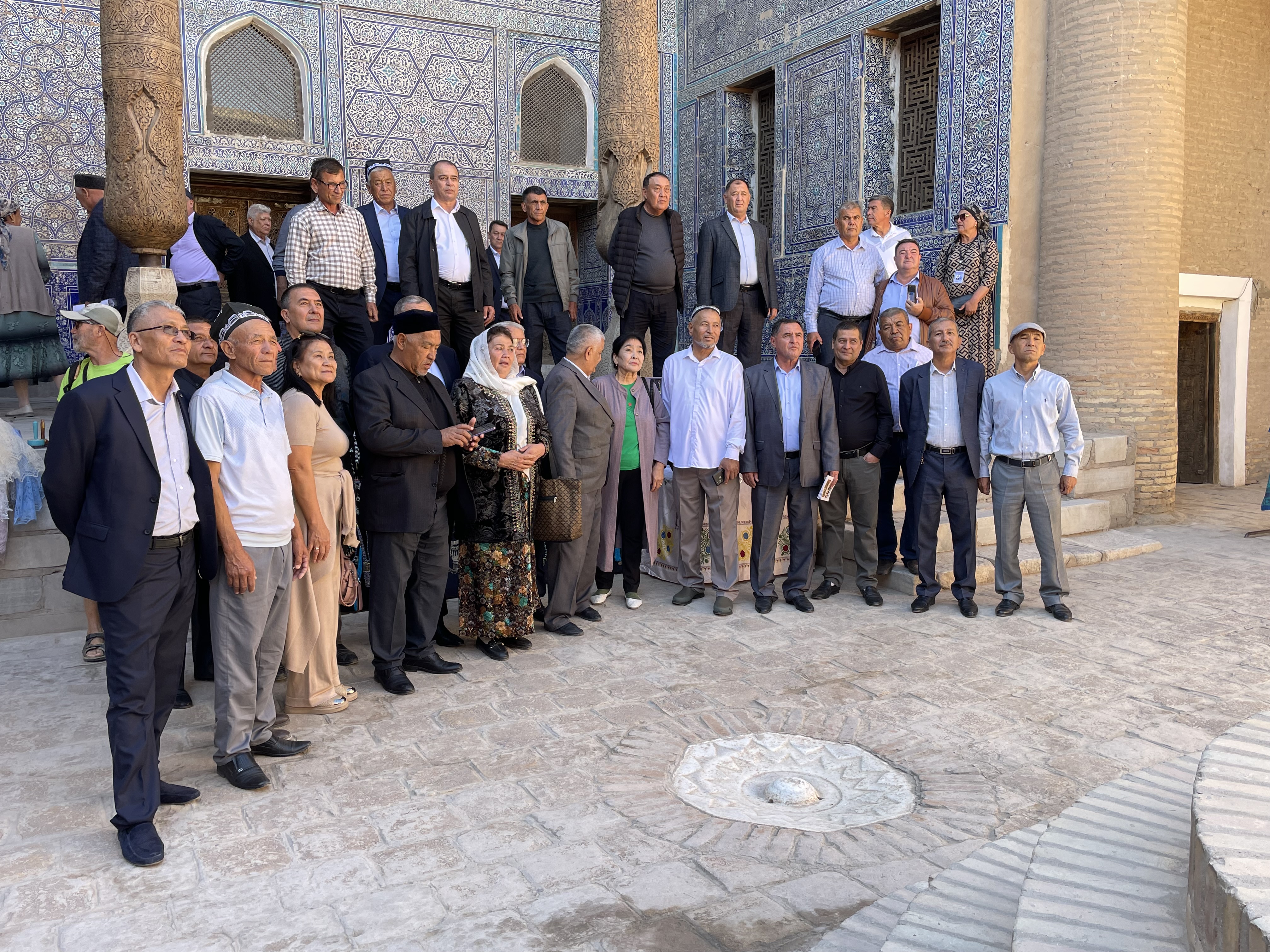
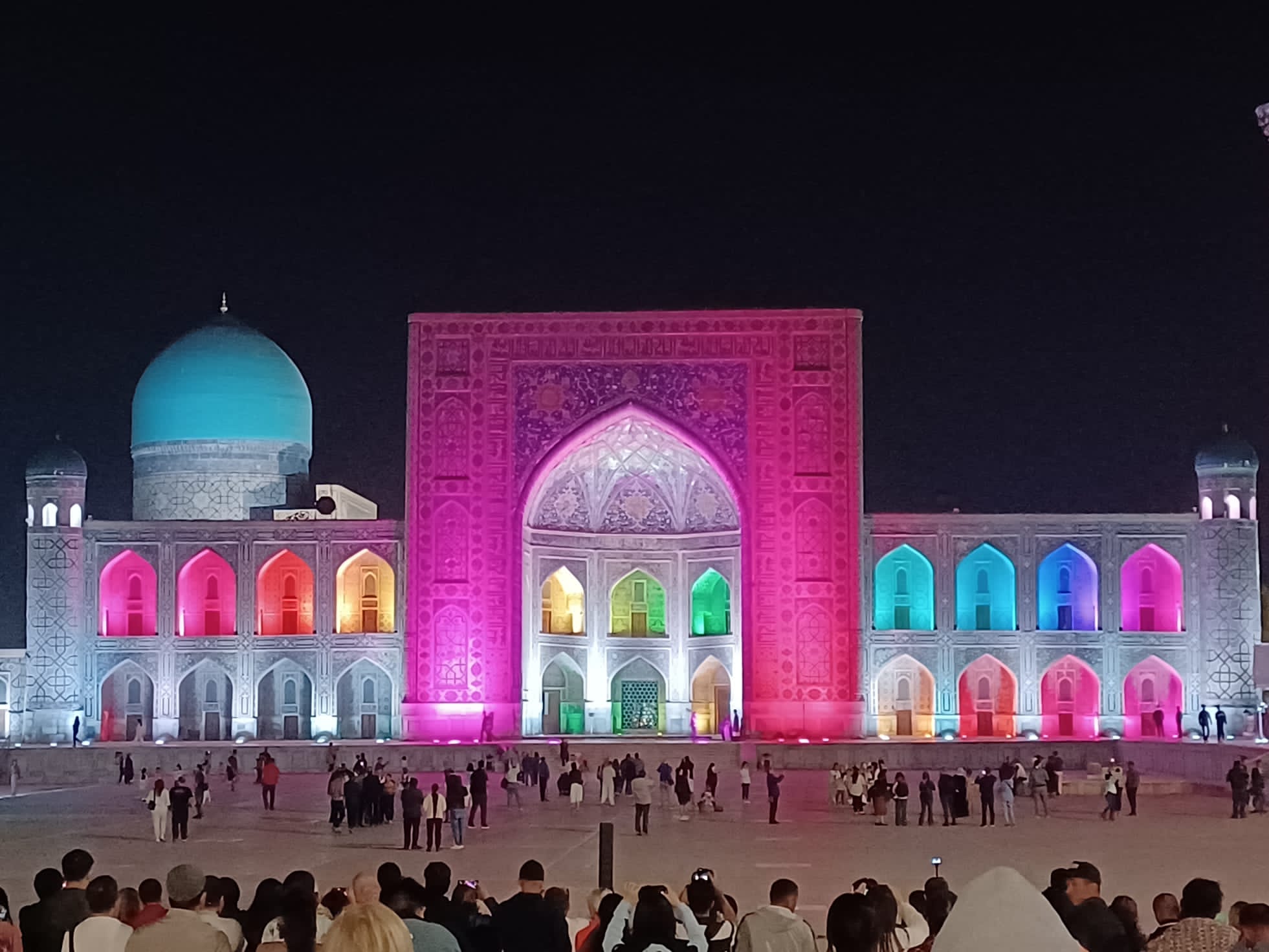
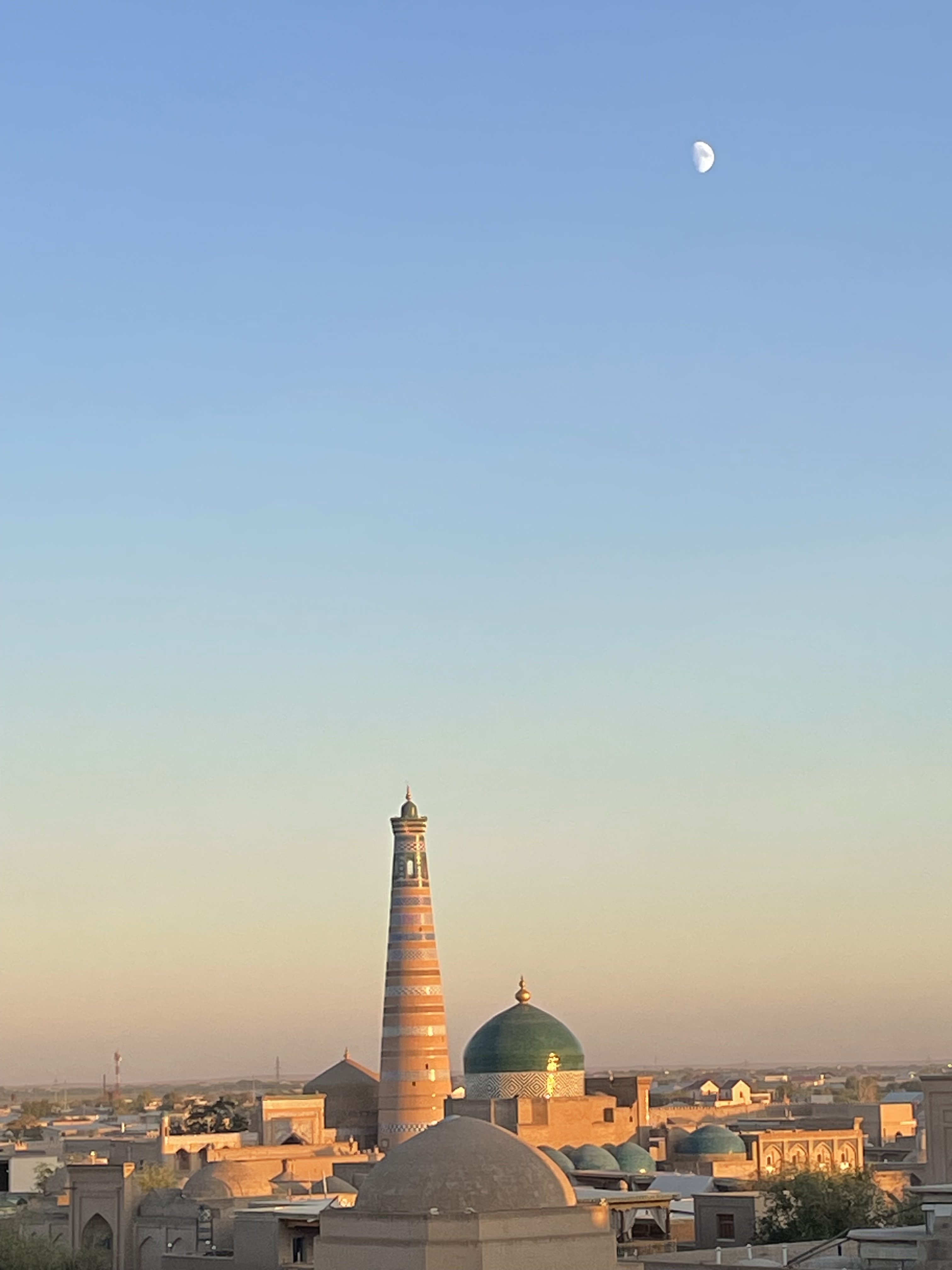
We visited more mosques, madrasas, palaces, mausoleums and caravansaries than I can count – some of them dating back to the 10th century, each of them stunning with their fabulous tile facades, decorated interiors, elaborate ceilings, and carved pillars and doors. The tiles come in thousands of designs incorporating stars, moons, flowers, geometric shapes, animals, etc in brilliant colors of cobalt blue, turquoise, white, yellow, green, gold and red. The large elaborate entryways are home to dozens of tile variations. The use of tile to decorate buildings is not limited to the historical sites but seen on buildings throughout the cities. Because of the climate here, the tiles need to be replaced every 15 to 20 years, providing the ceramic artisans a steady business. Two mausoleums from the 10th century were built modestly with just bricks, but the variation in the brick patterns was complex and delightful. One, was the first known time a round dome was built with square bricks. The aqua colored domes and minarets were enchanting, such a rich color, and seen throughout the country.
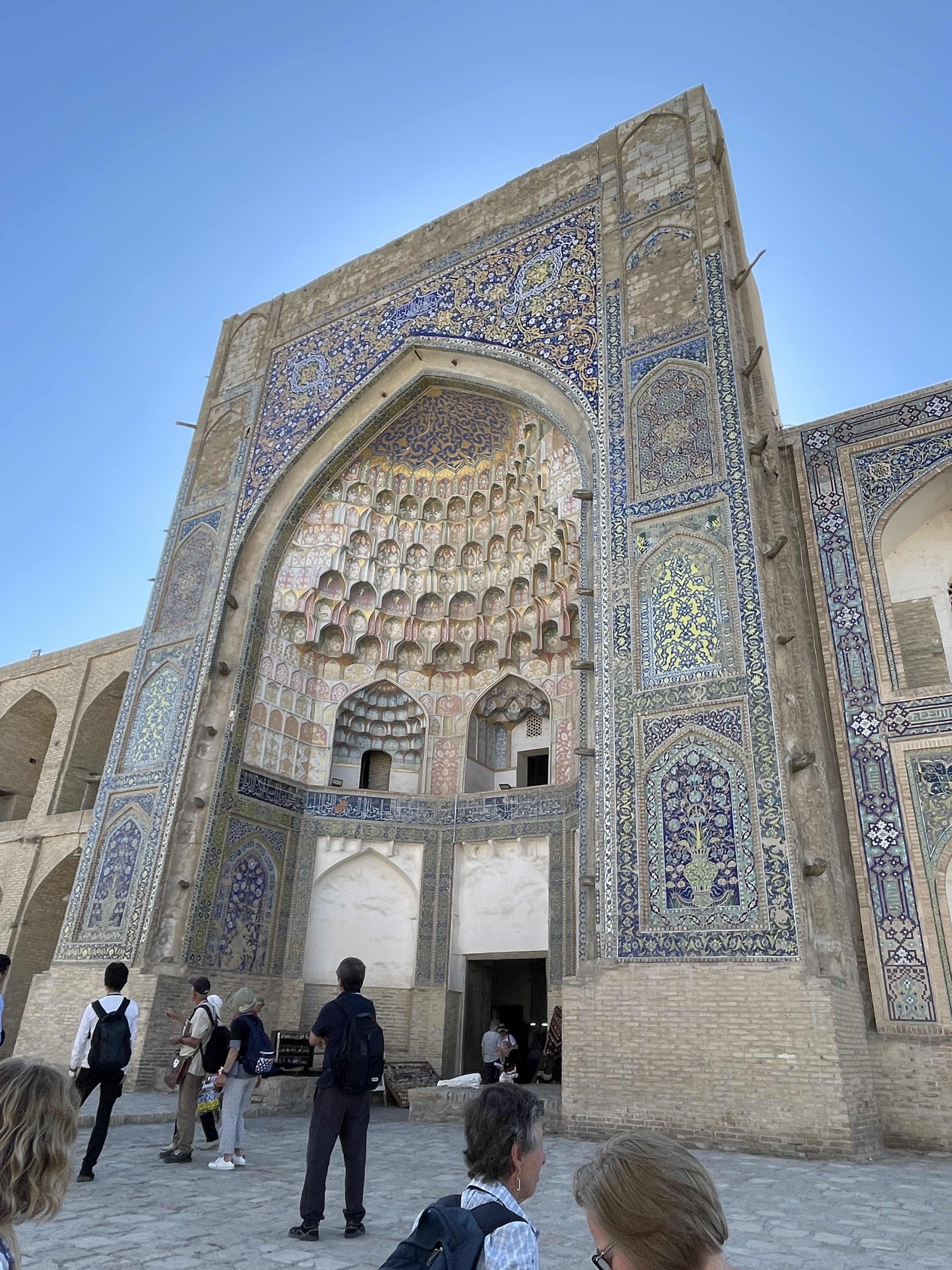
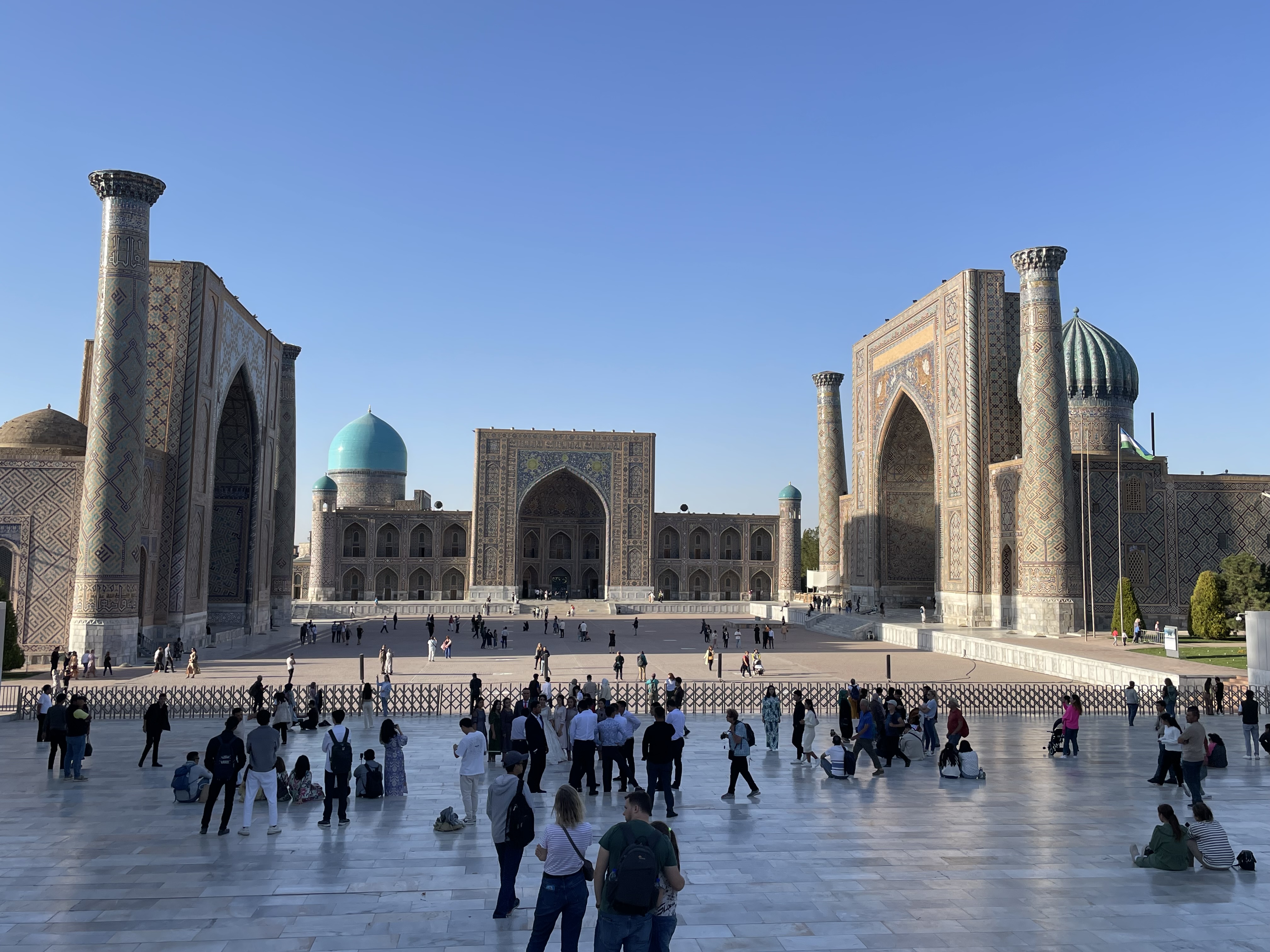
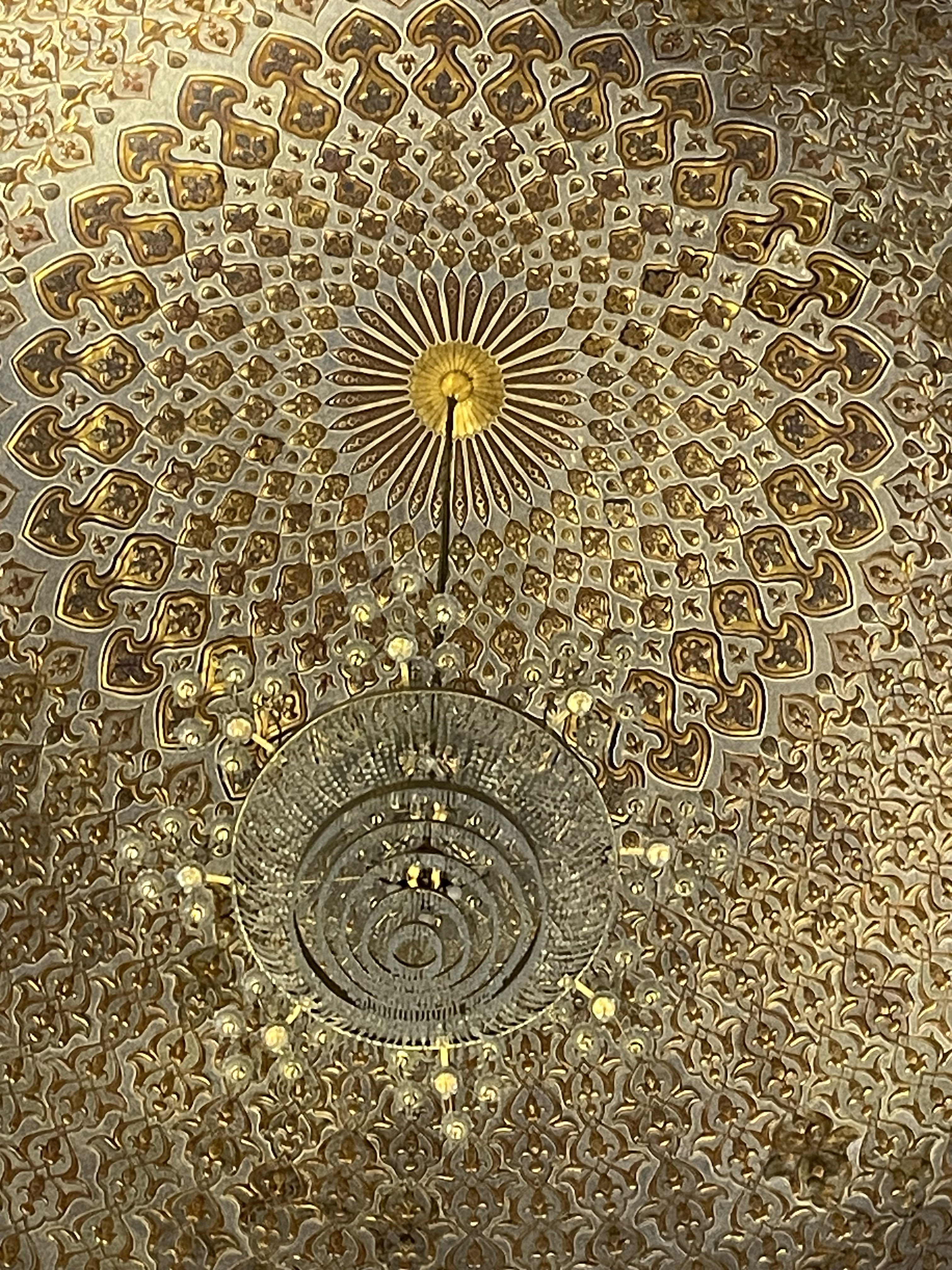
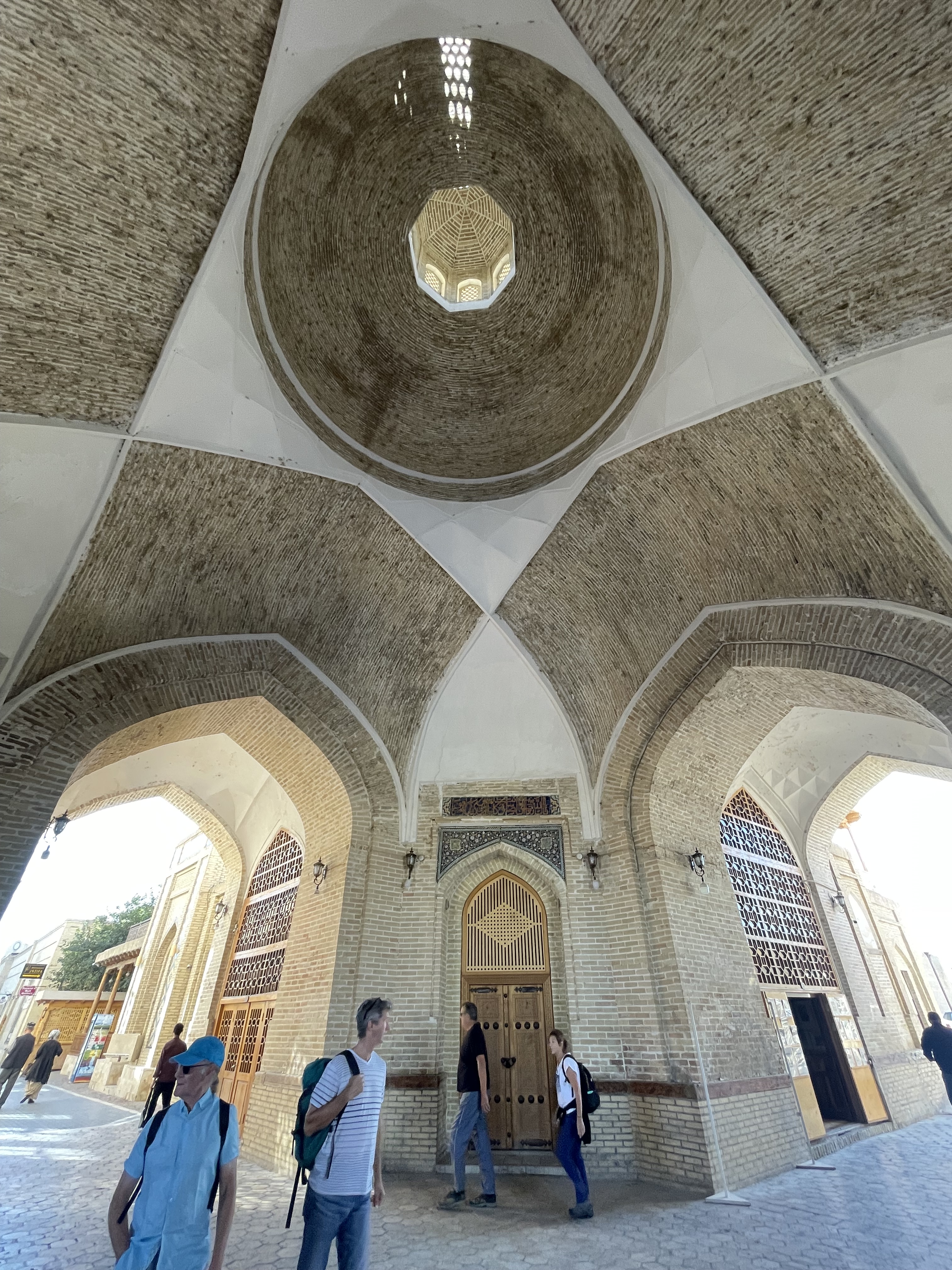
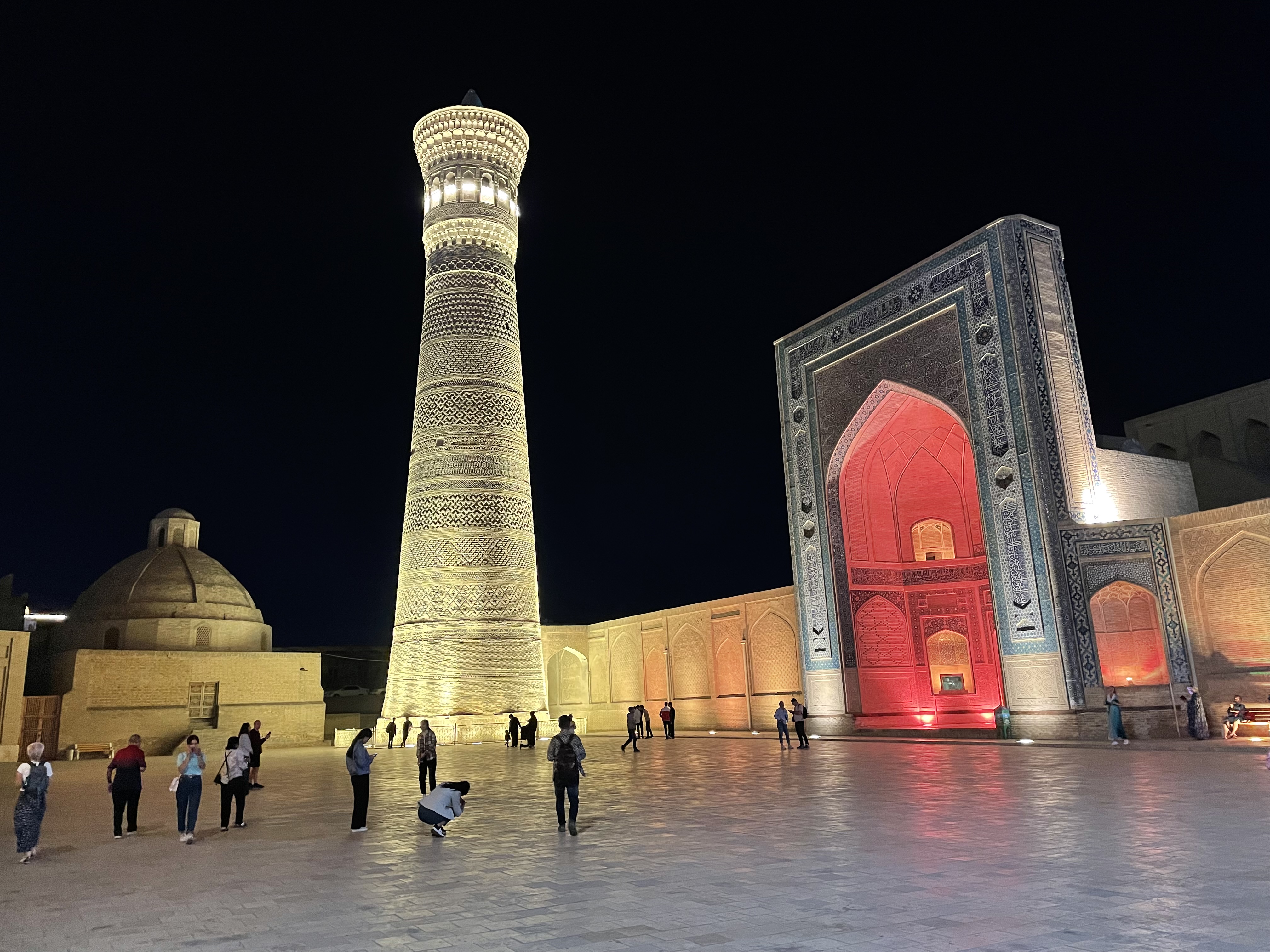
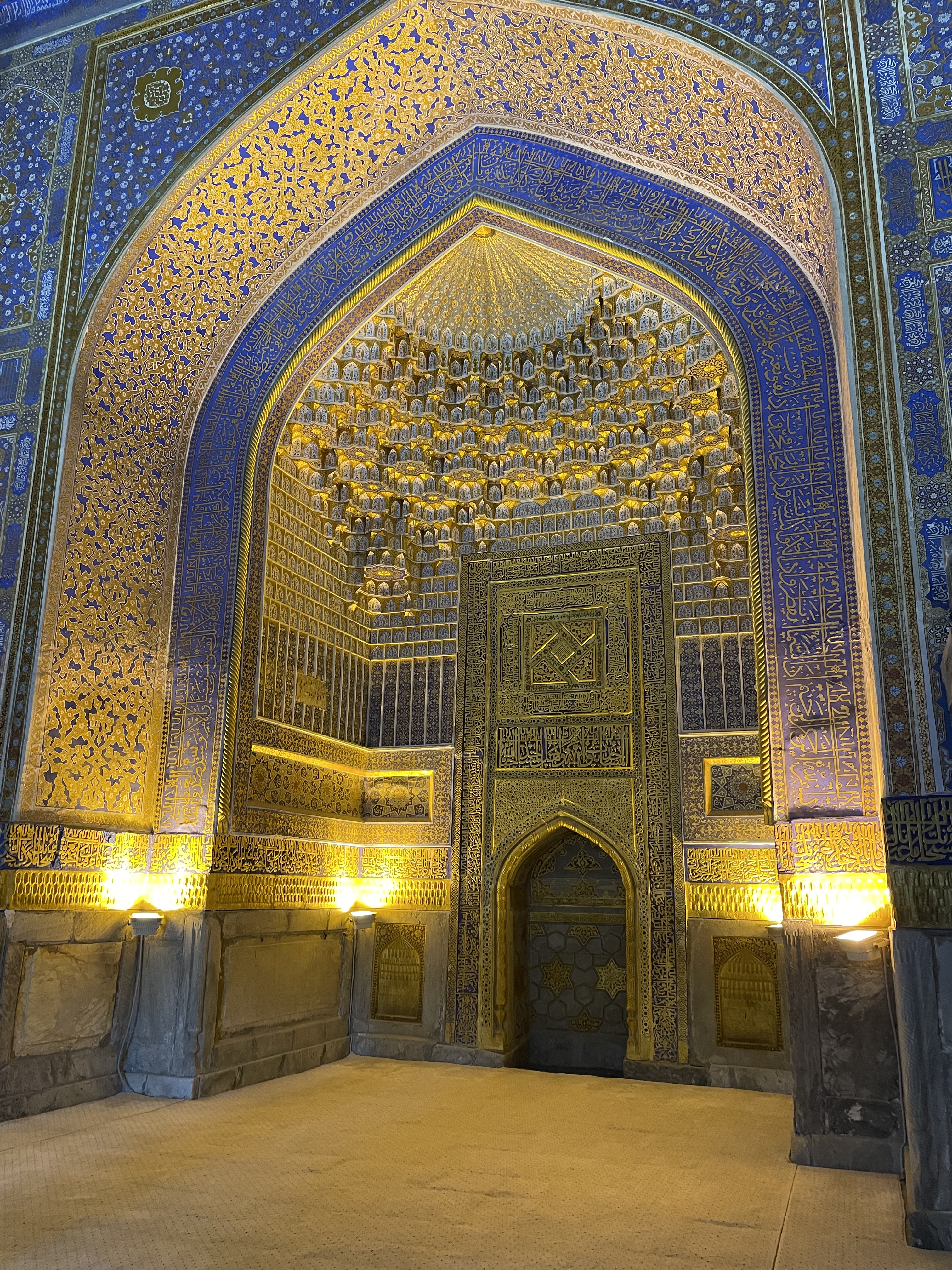
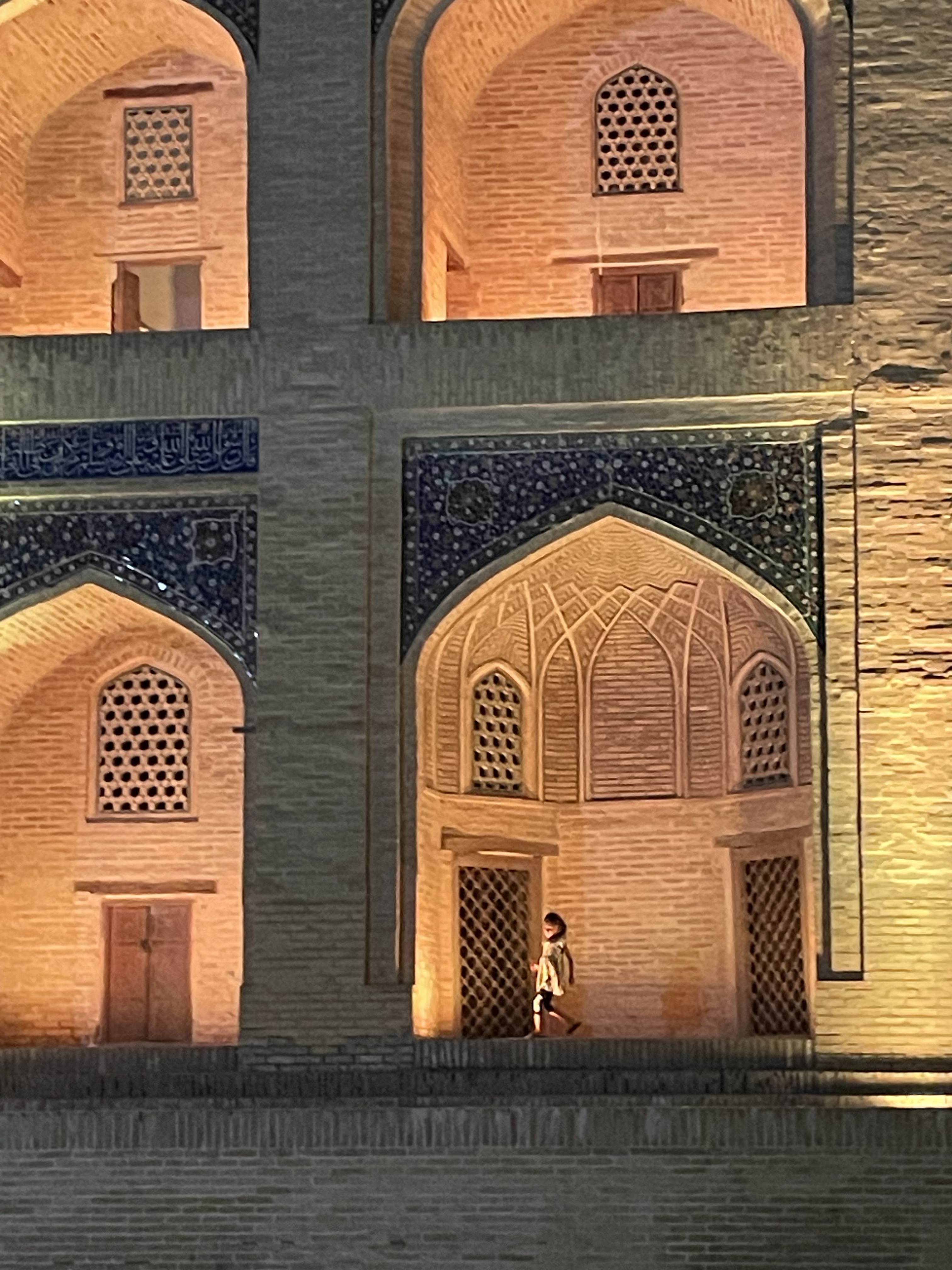
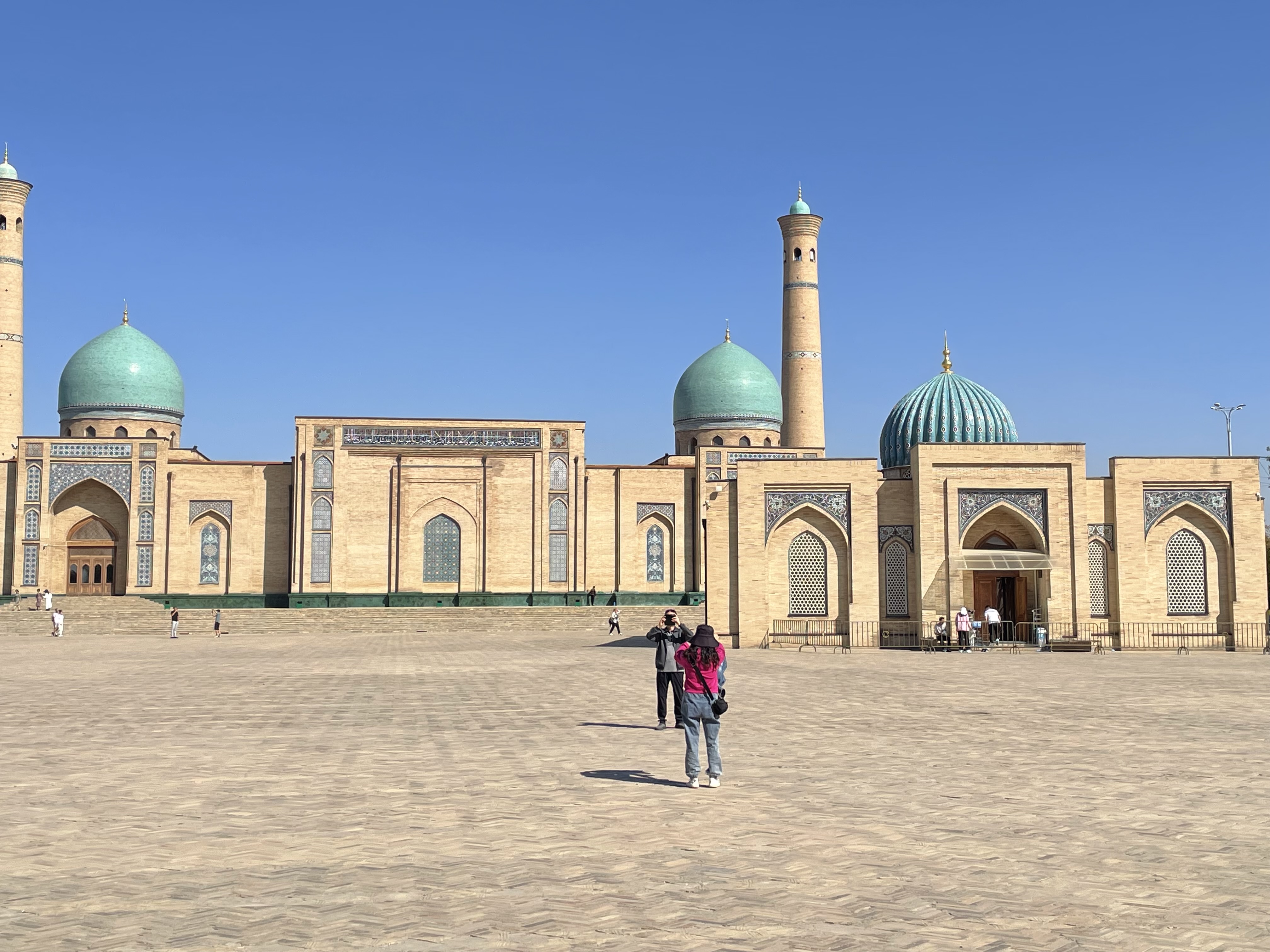
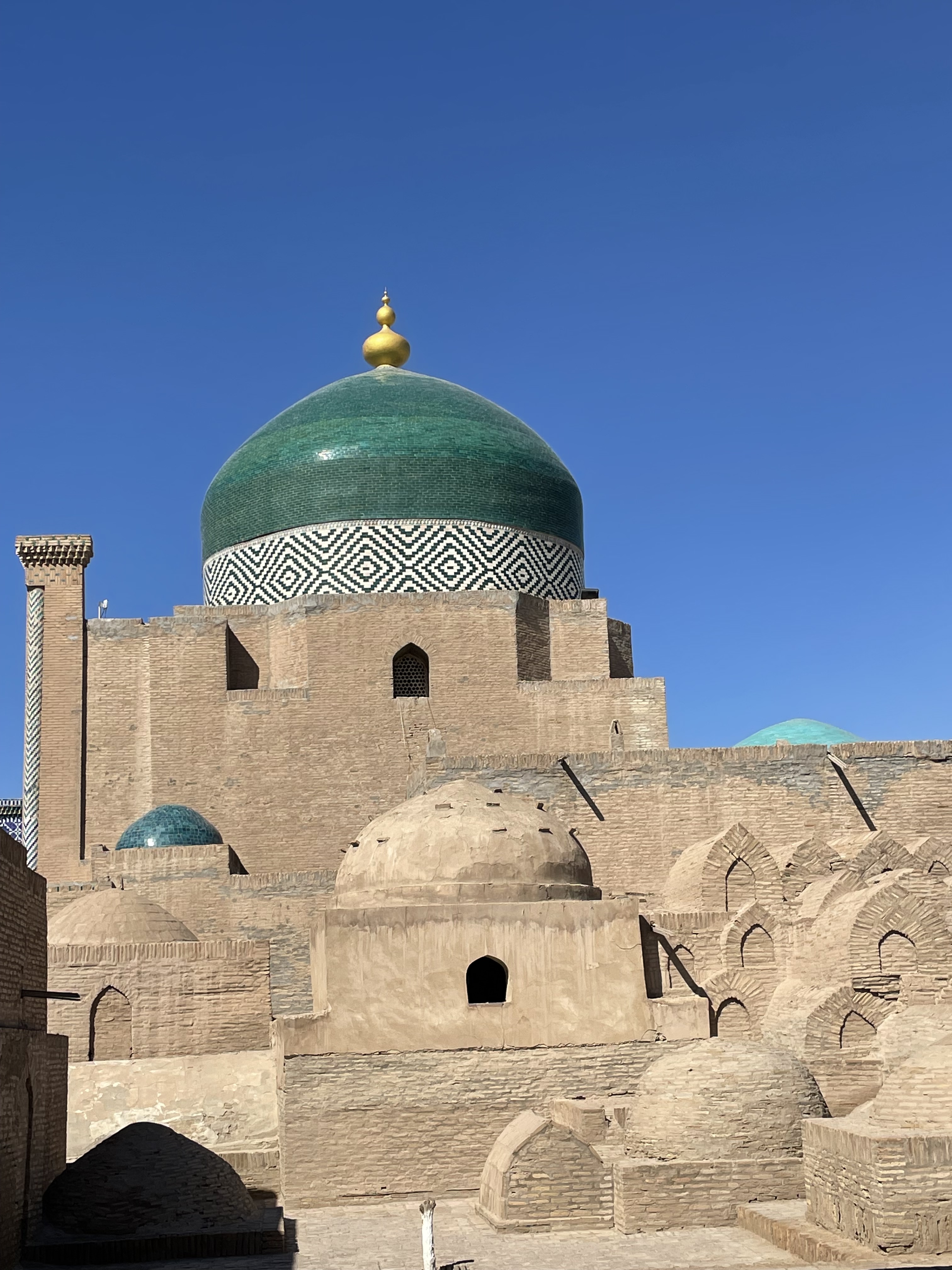
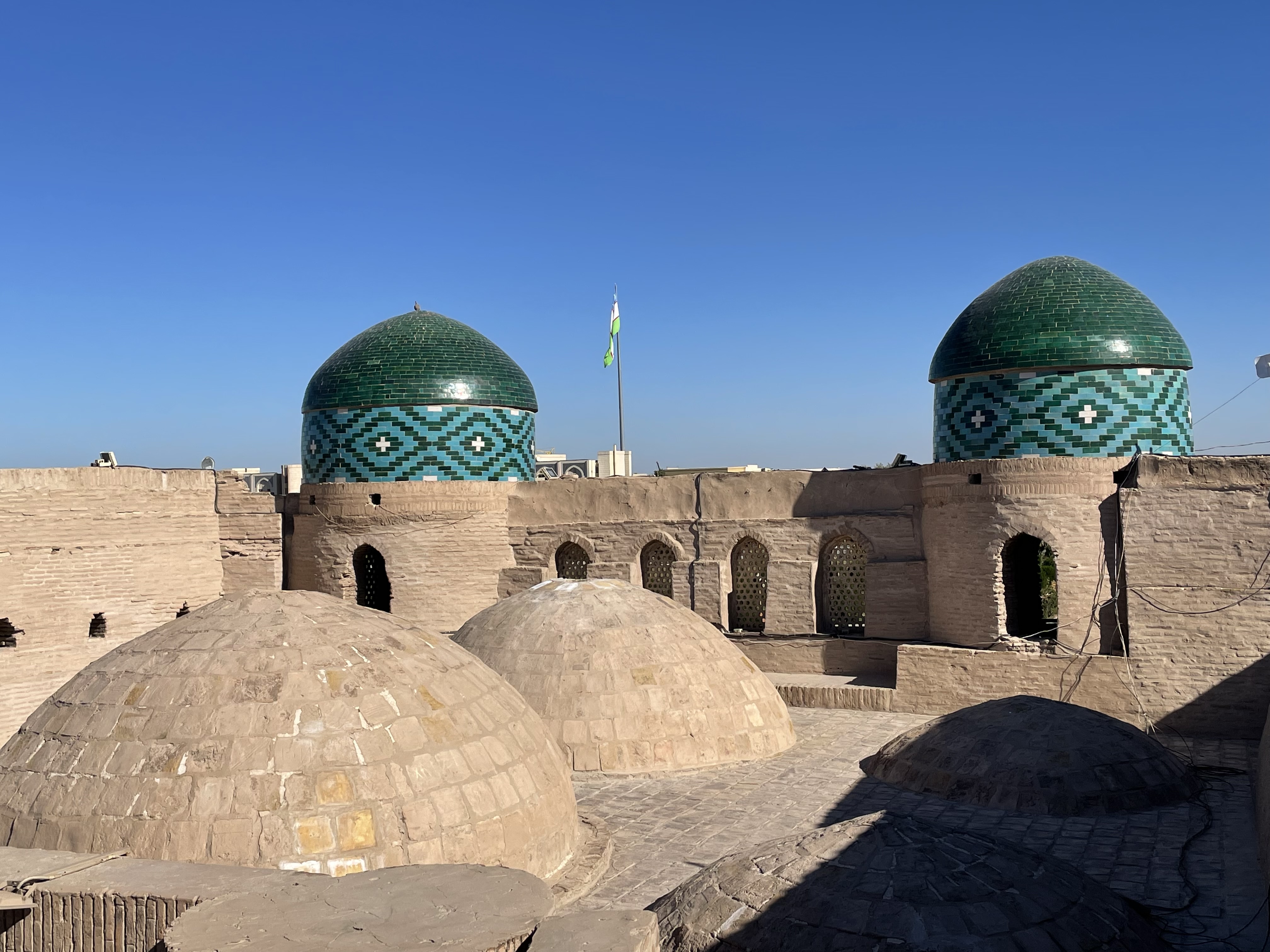
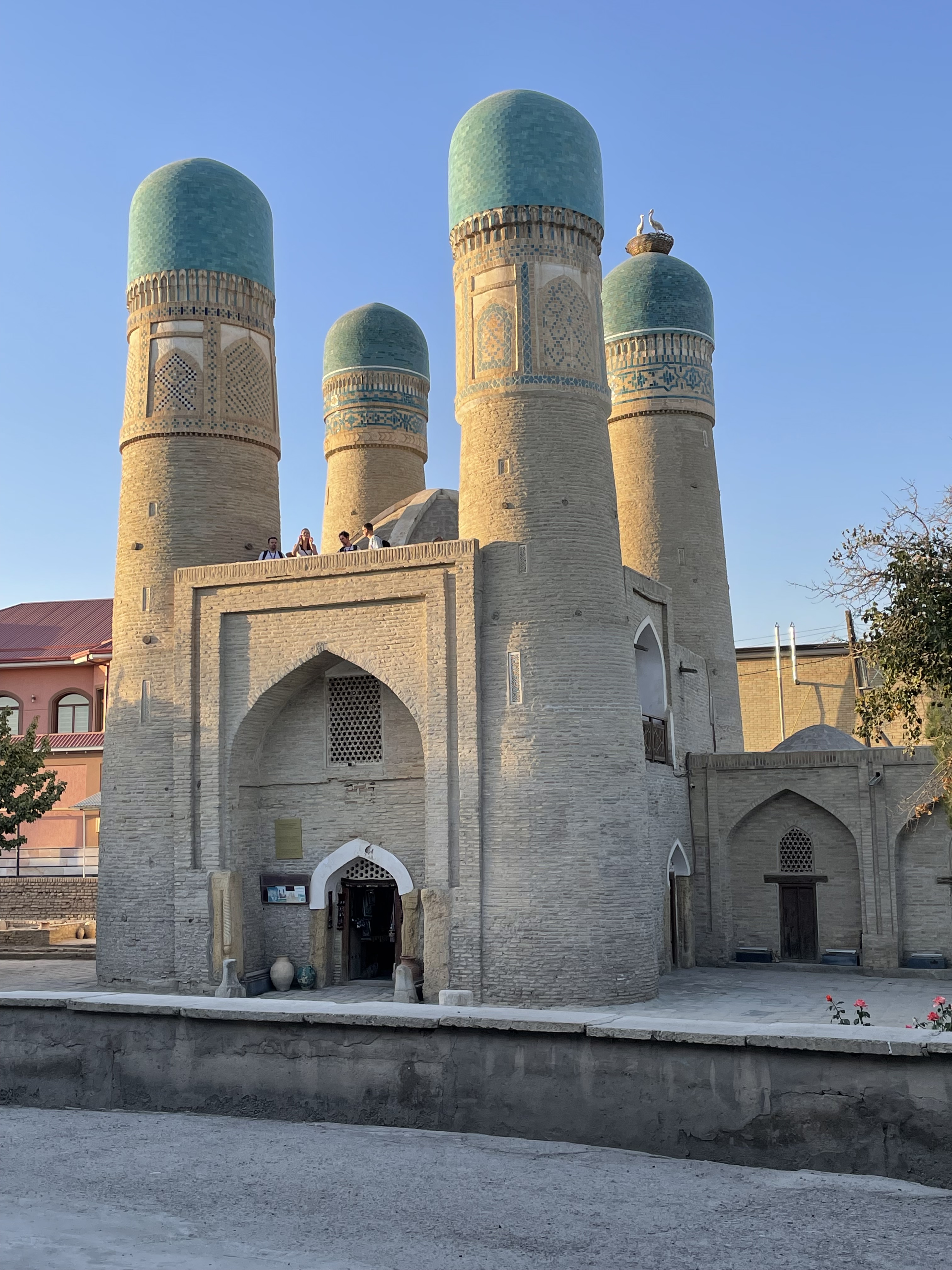
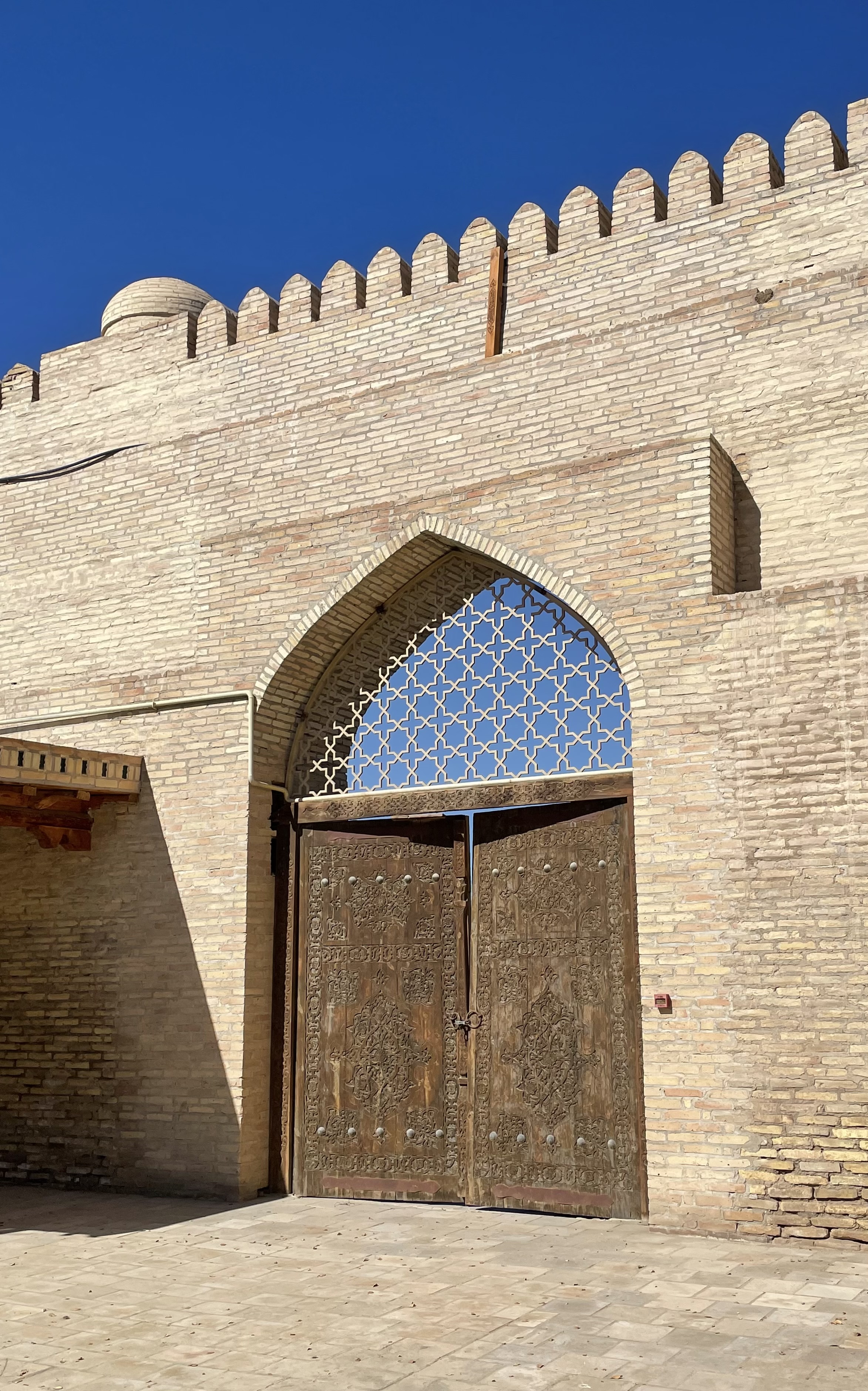
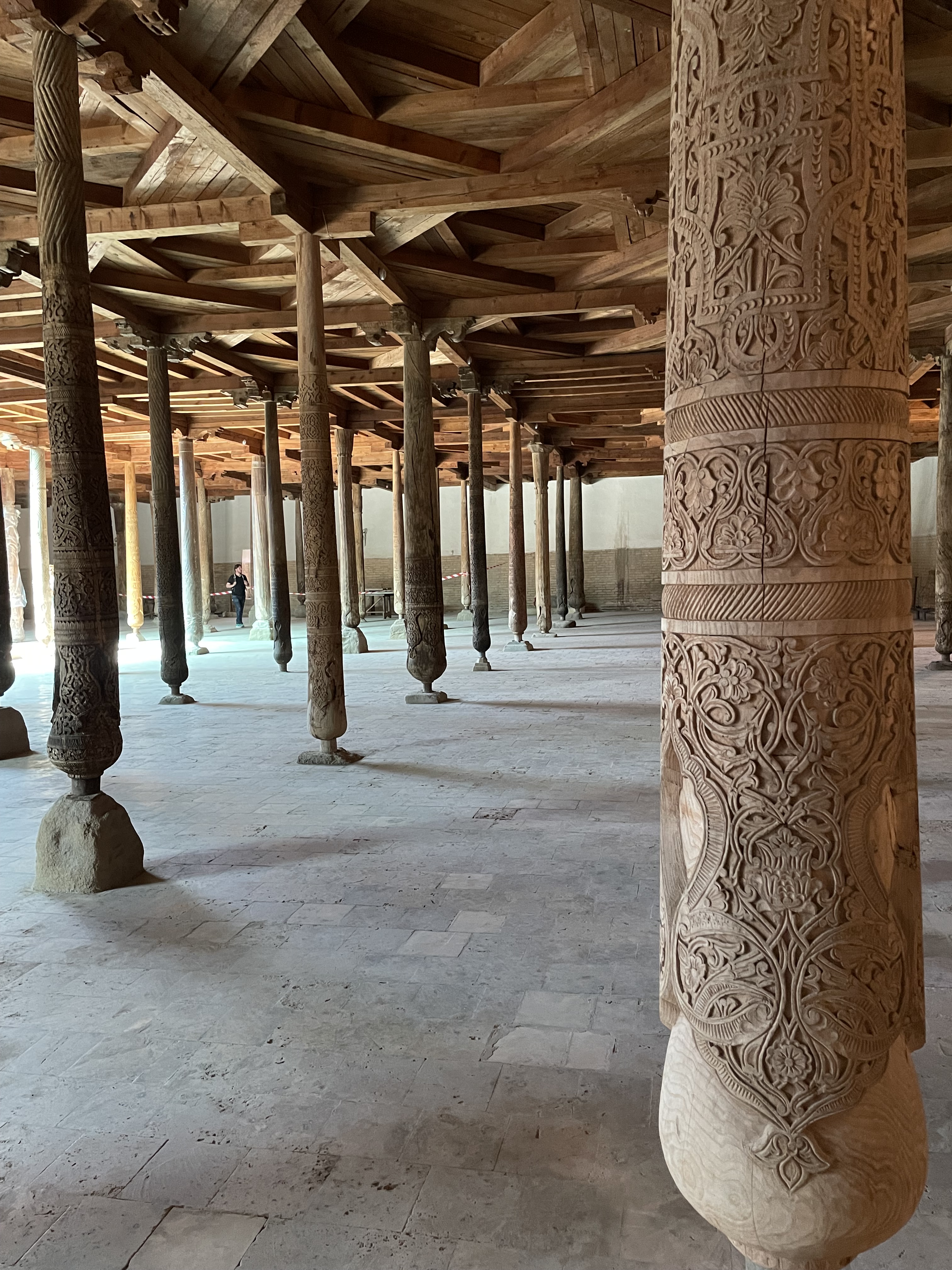
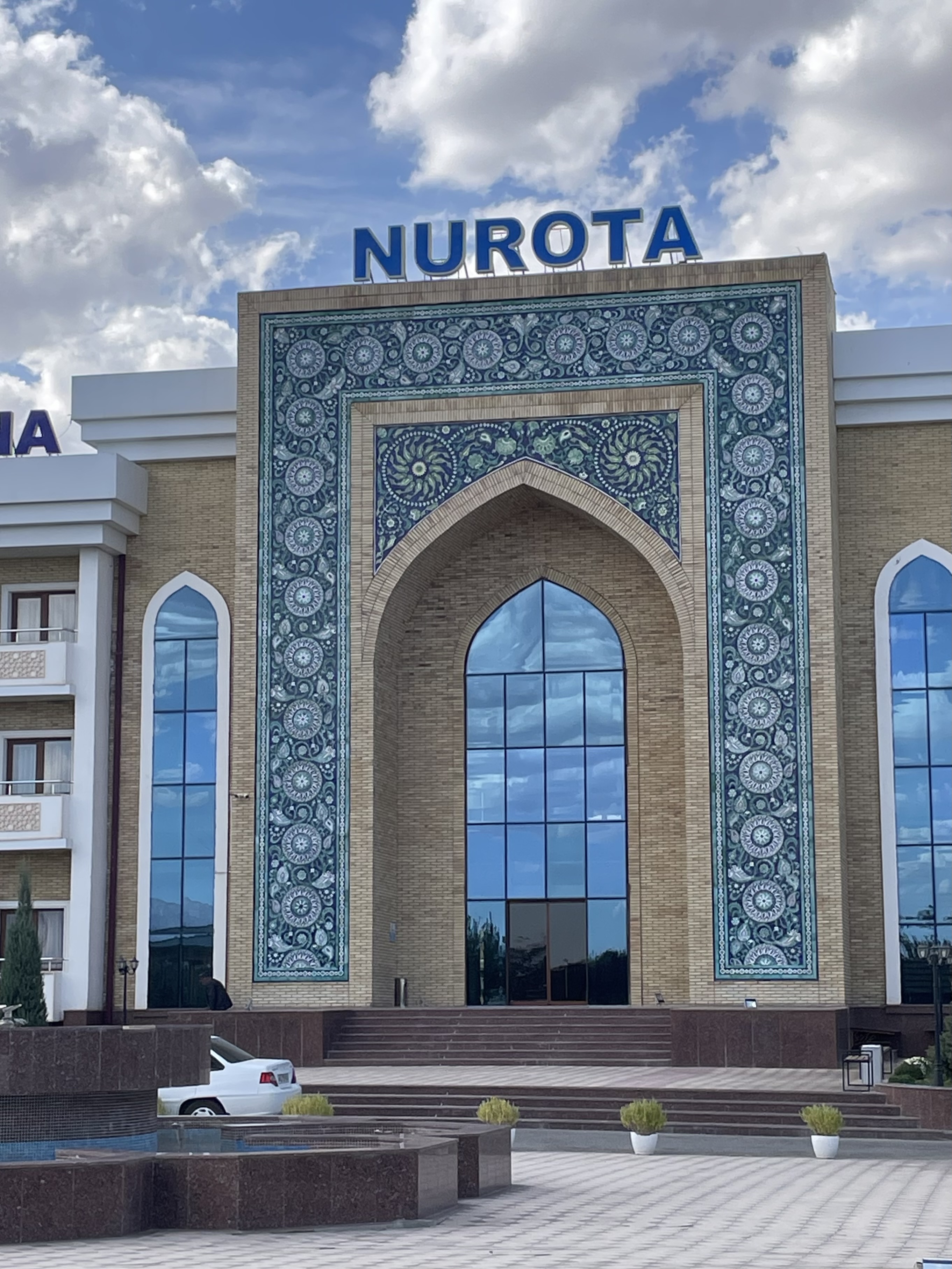
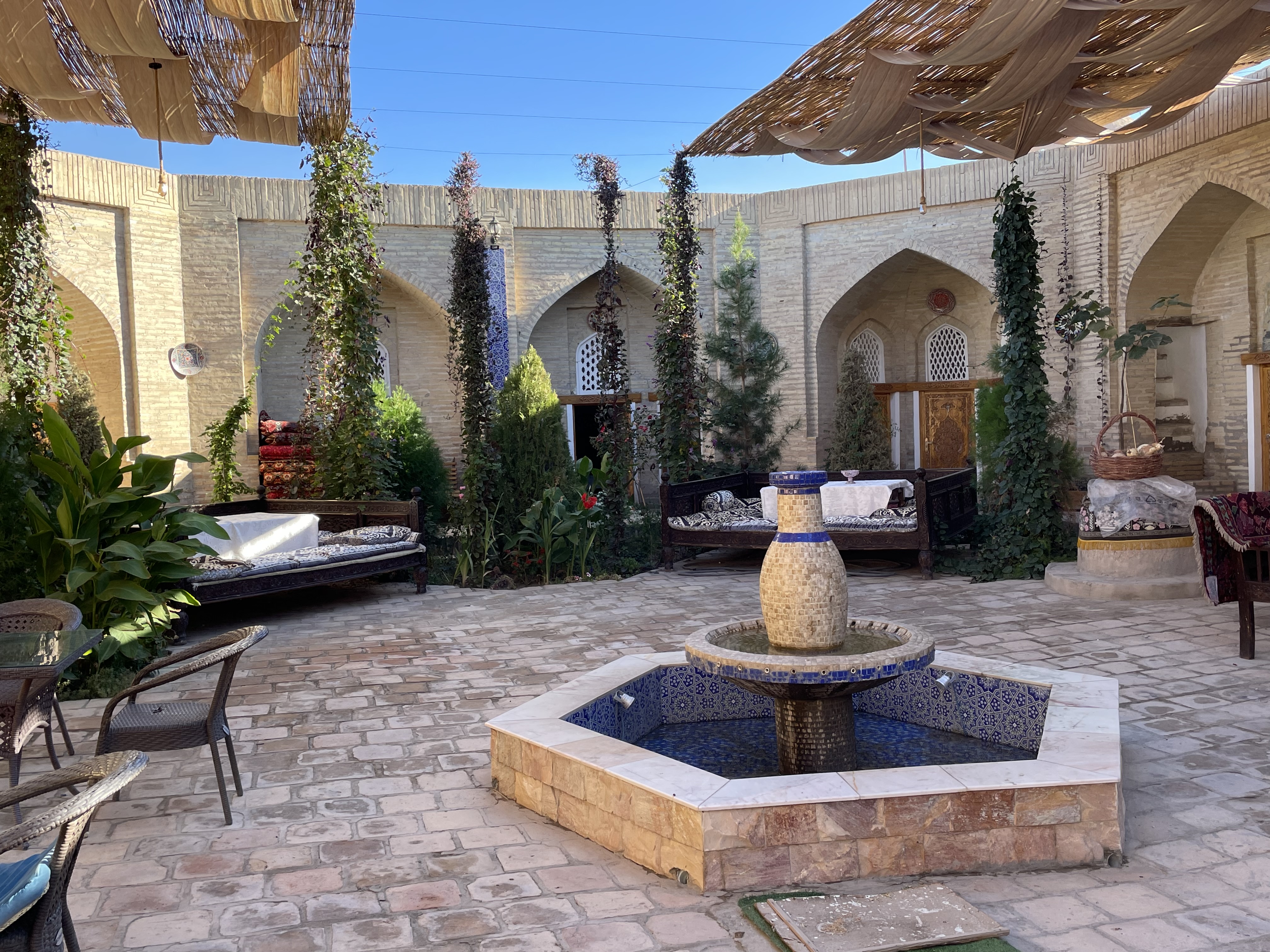
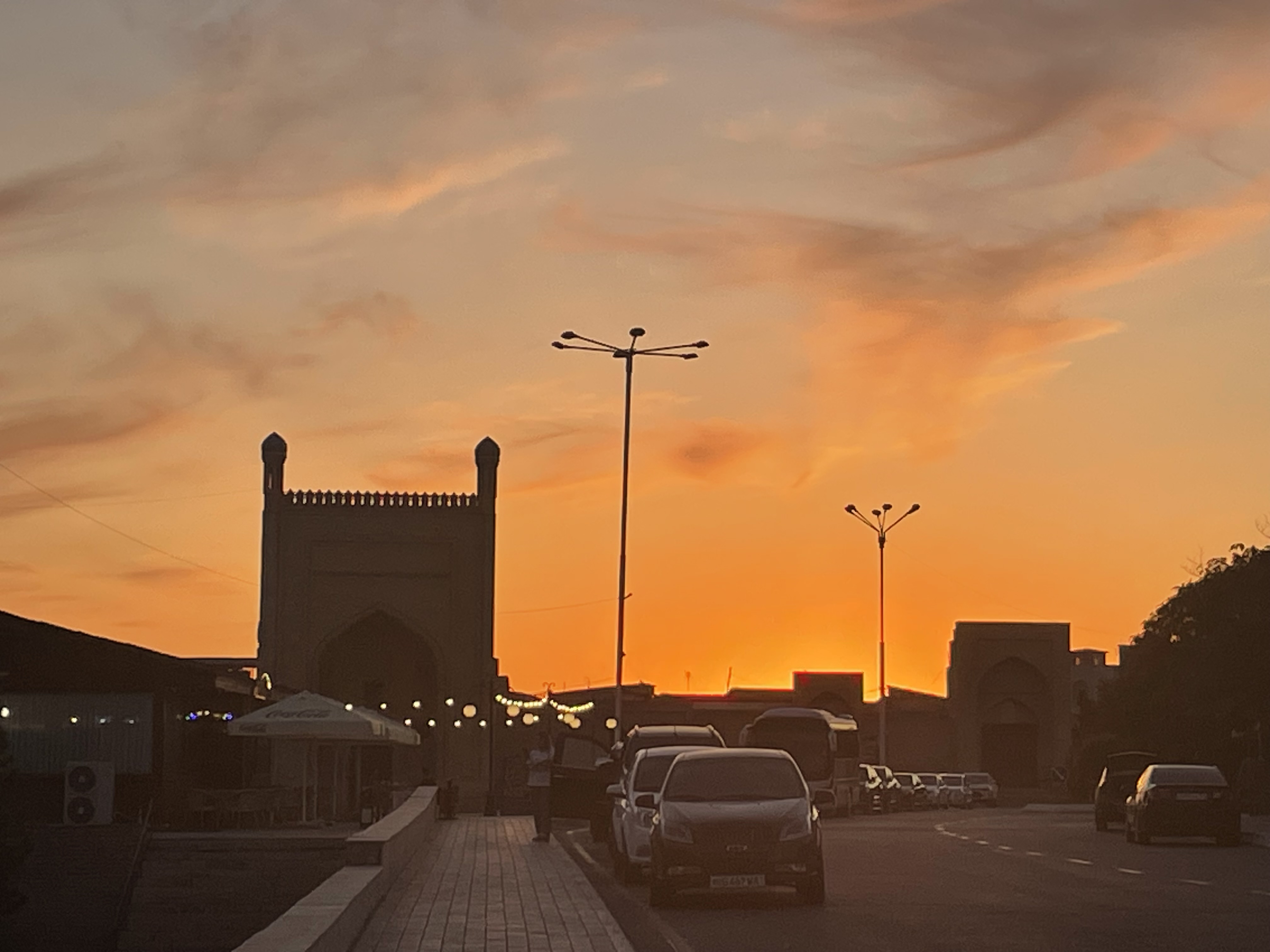
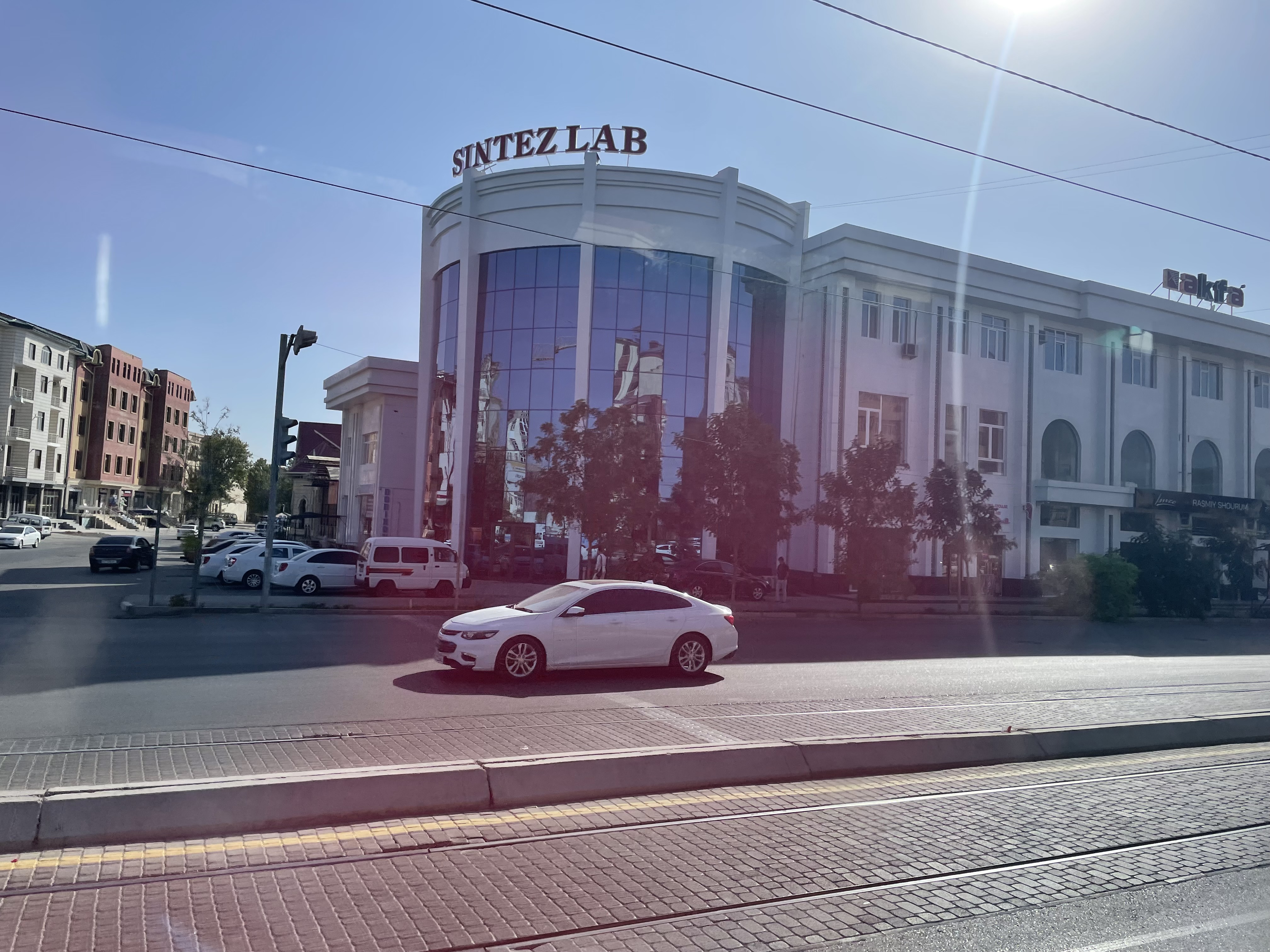
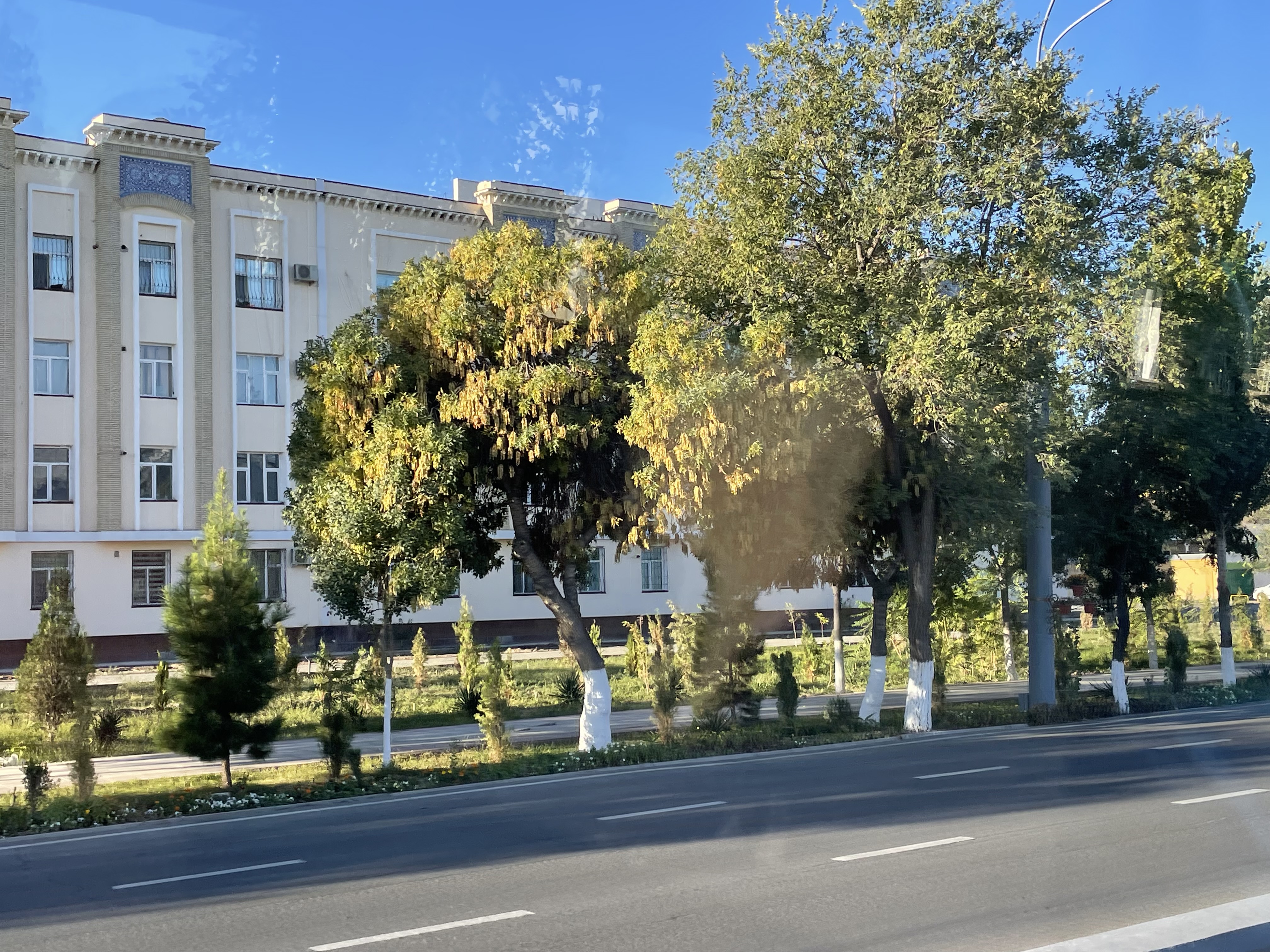
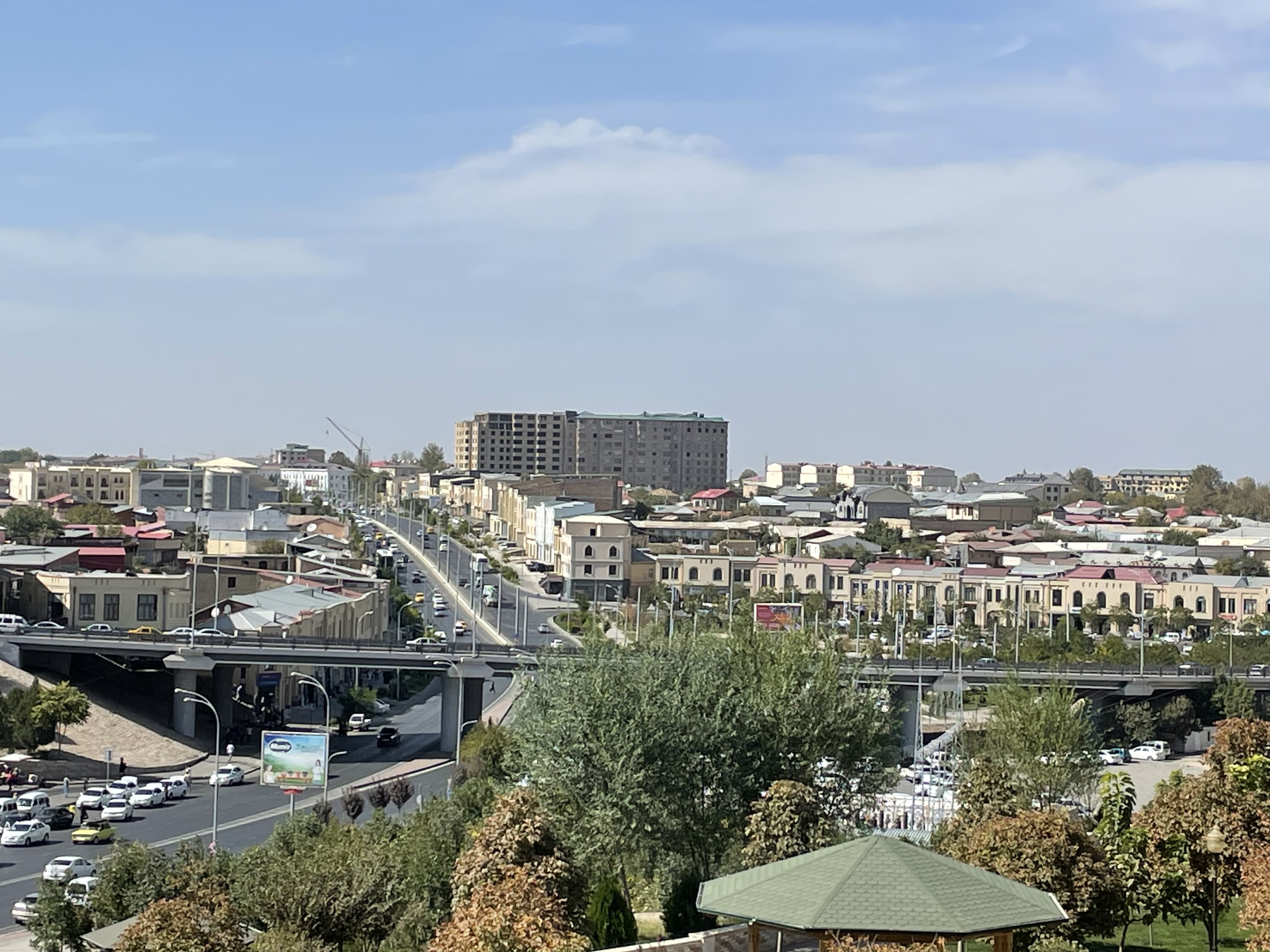
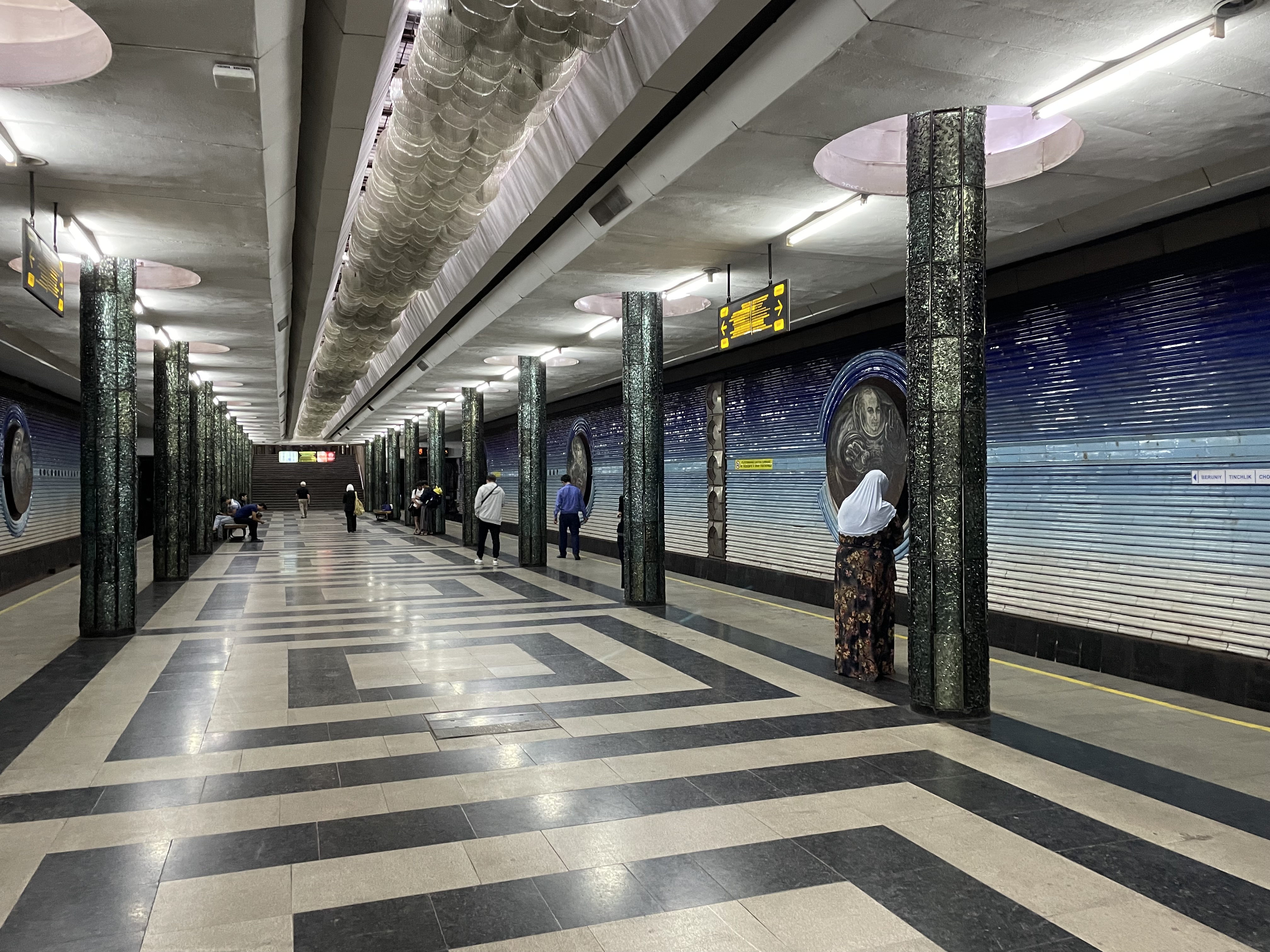
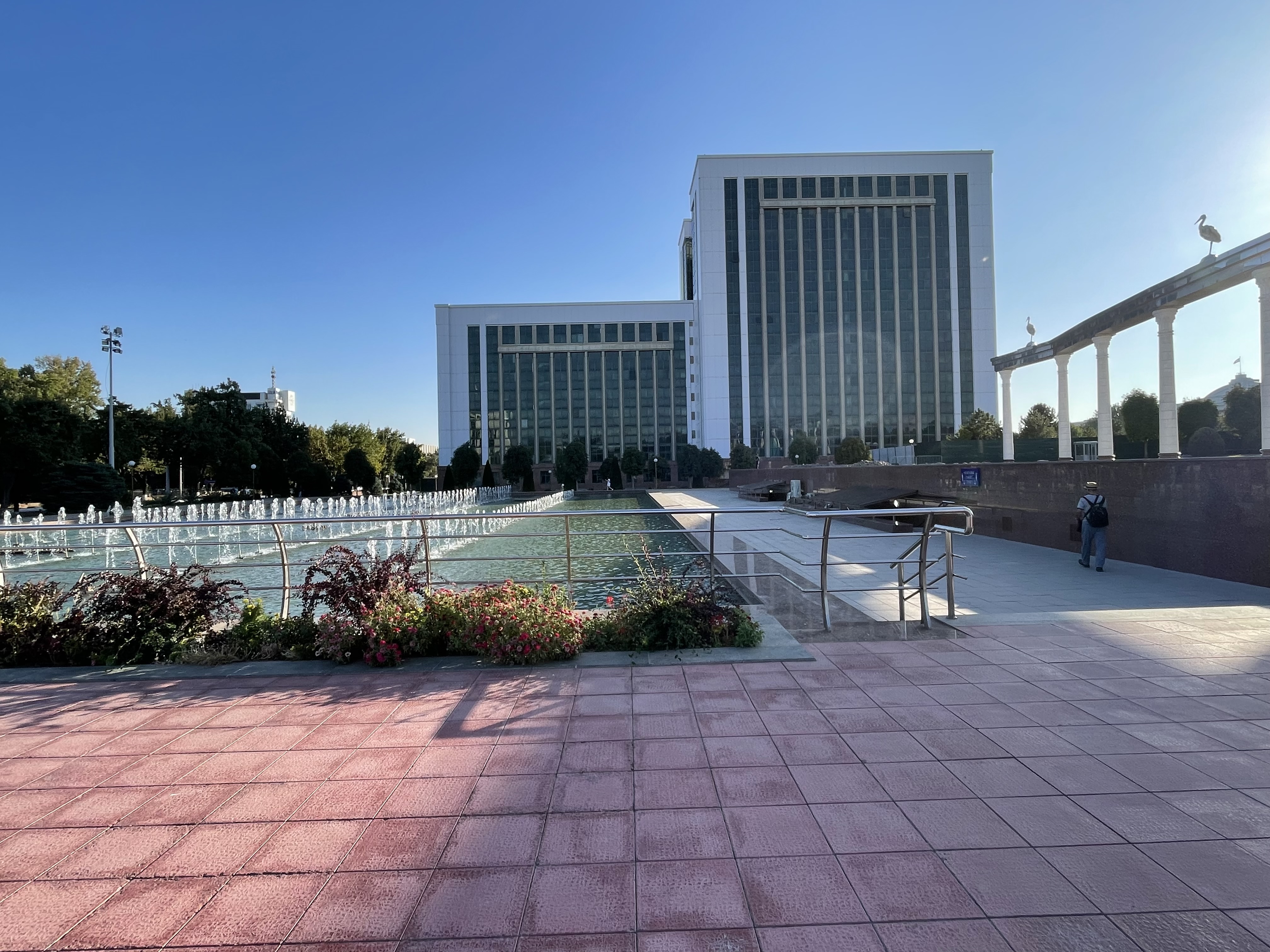
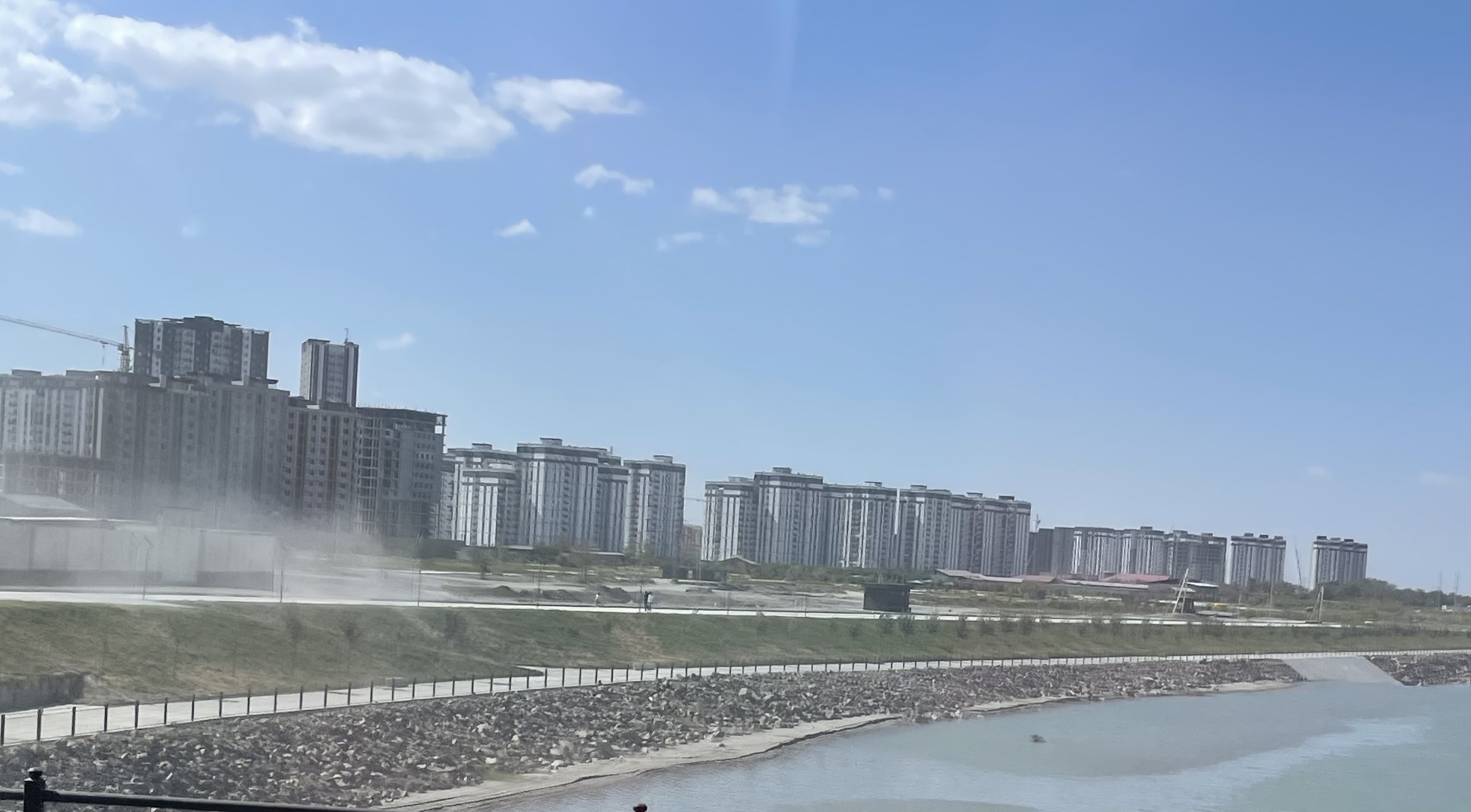
A madrasa is a school, built with a large entry way with gathering/lectures rooms on either side as you enter and then a big courtyard surrounded by small cells where the students stayed. We stayed in a madrasa turned hotel in Khiva, luckily ensuite baths had been added. The doors to most of the cells were very low – so we had to duck to enter our rooms – built that way because wood was expensive, it helped regulate the temperature inside, and you had to bow to the owner of the house as you entered. The old towns of Kiva and Bukhara are walled cities, the madrasas and caravansaries converted to hotels or artisan workshops and the mosques and palaces museums. Both were encircled by larger, modern towns. The sites in Tashkent and Samarkand were surrounded by the bustling modern metropolises they have become. All of the cities were filled with the things you would expect in any modern municipality- new high rises, residential areas, strips of shops, bus stops, subways, taxis, billboards, traffic lights, packed streets with beeping autos, people bustling to work and shops, as well as Soviet era apartment blocks and office buildings- they were part of the USSR for approximately 70 years.

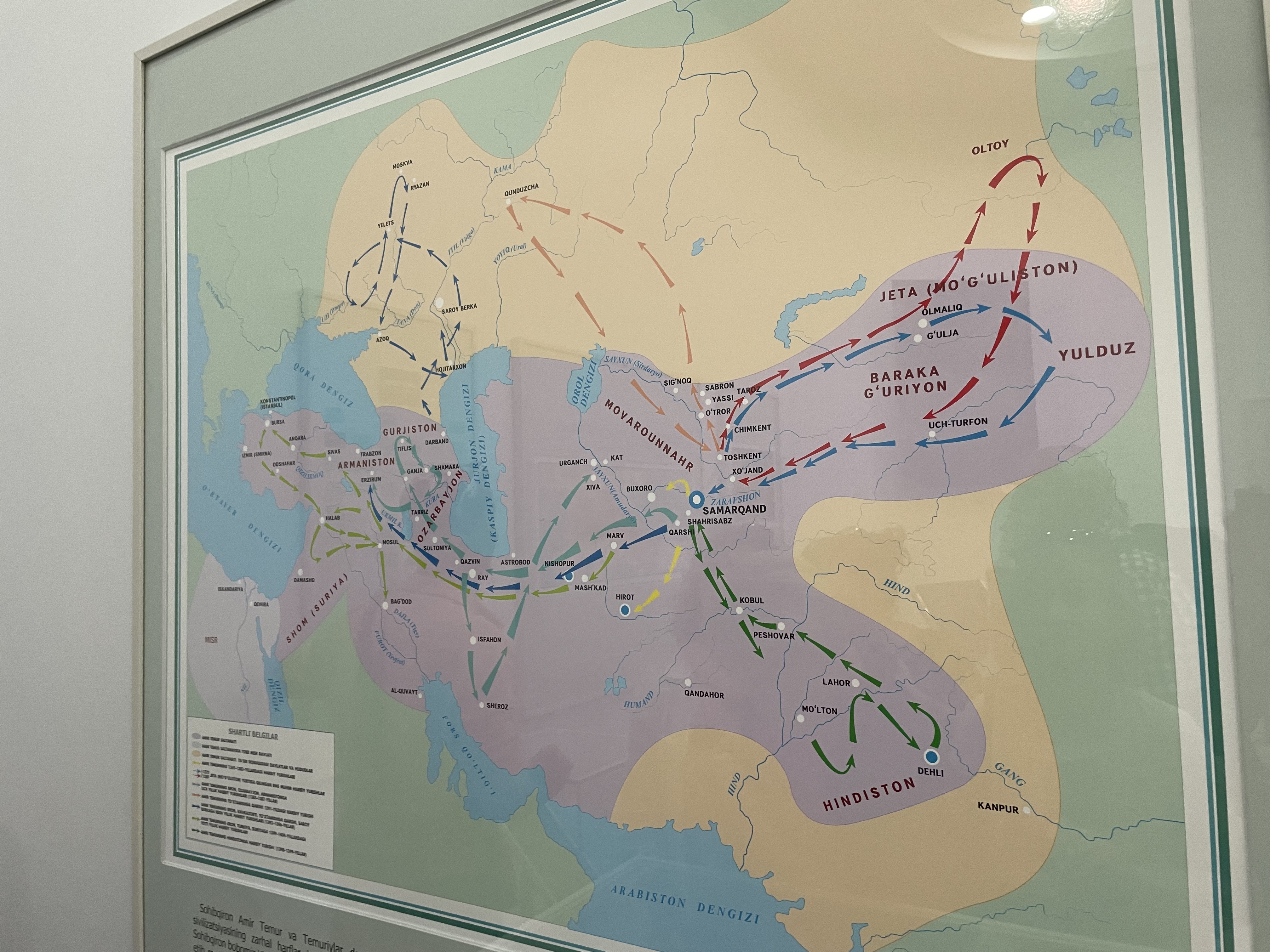
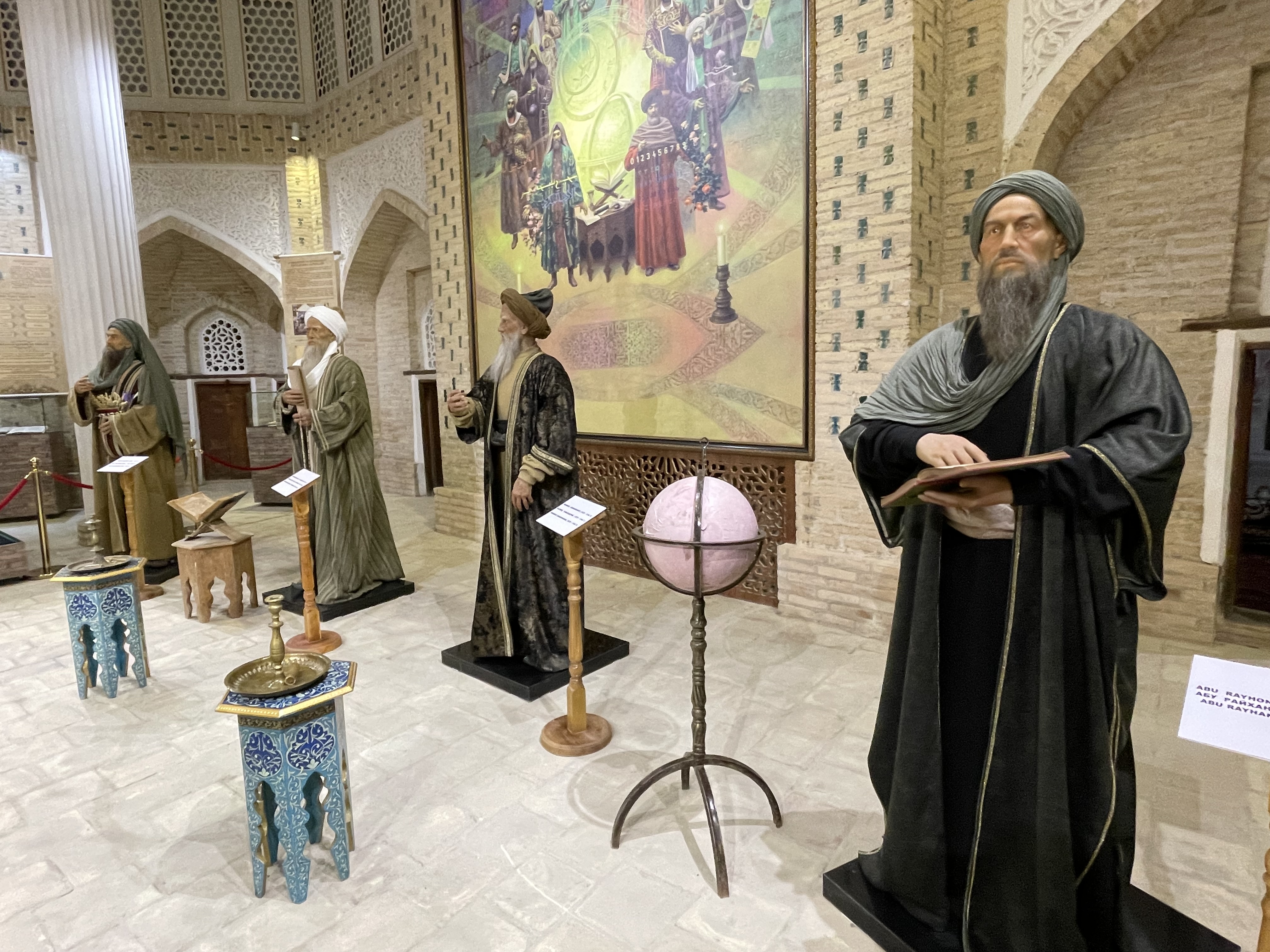
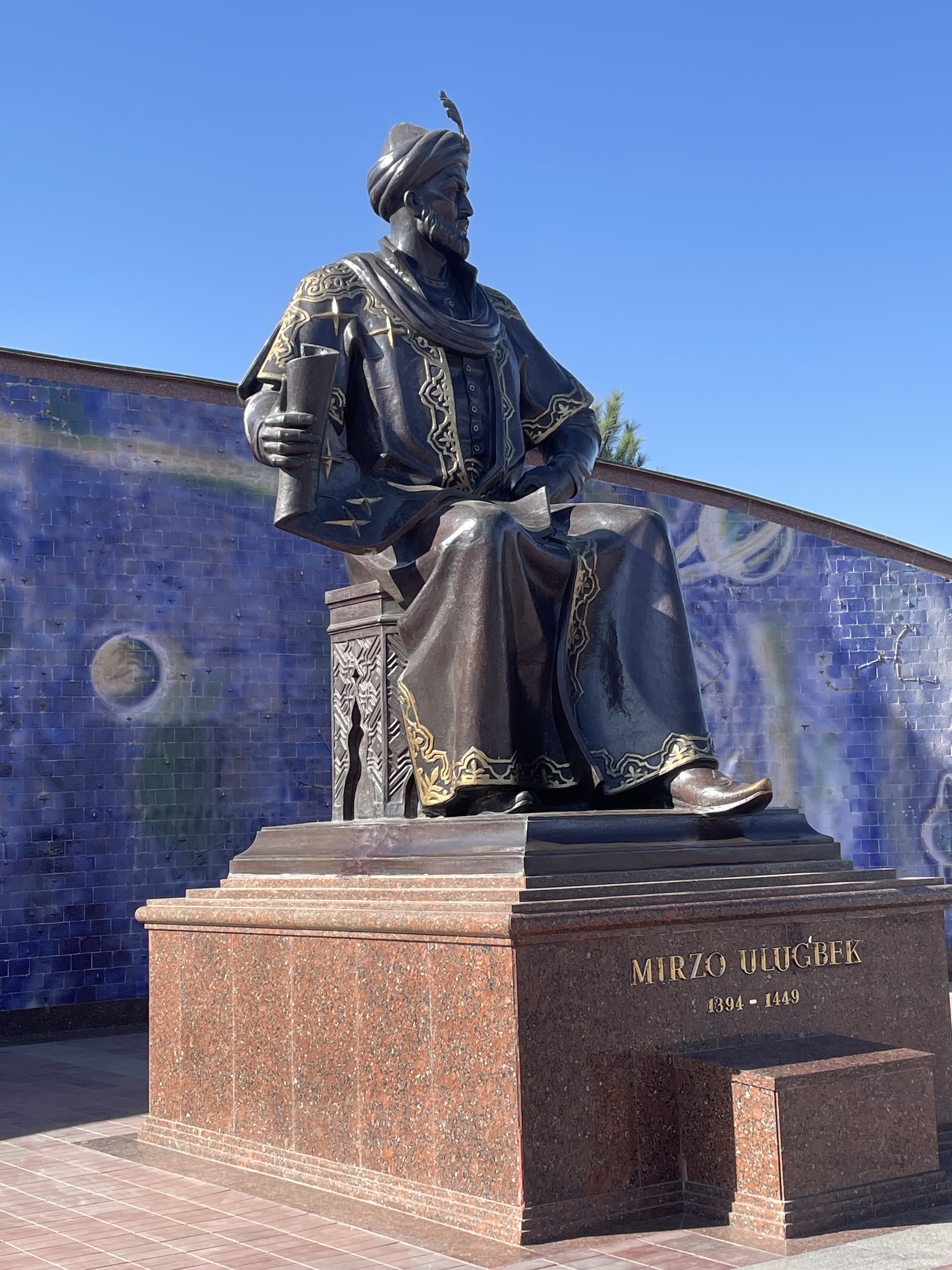
Emir Timur or Tamberlane – a despised nickname meaning Timur the lame, began his military career at 14. He led a band of his friends and pushed Mongols intruders from his home town. He didn’t stop there, but eventually subjugated countries across the region to create one of the largest empires in history. He was planning on going further and conquer China but was killed in action before he could. Life would have been very different today if he had been successful. He wanted to be highly educated but ruling and battles kept him from his studies. He did however bring numerous scientists, scholars and artisans to Uzbekistan, making it a center of learning in Central Asia. None of his four sons were able to succeed him, due to death, accidents or temperament. Instead his grandson, Ulugh Beg Mirza, the great astronomer, did. Not a strong ruler, much of the Timurid Empire was lost during his reign but the country flourished and was peaceful. Once, Uzbekistan was the richest area of Central Asia. They were settlers, not nomads, there was water here and sun – all ingredients for a prosperous society. Today they have 300 days of sunshine and our guide would be glad to share some with any country that needs it. It can get to 120 degrees F -50 C here and as cold as 10 below F – minus 23 C.
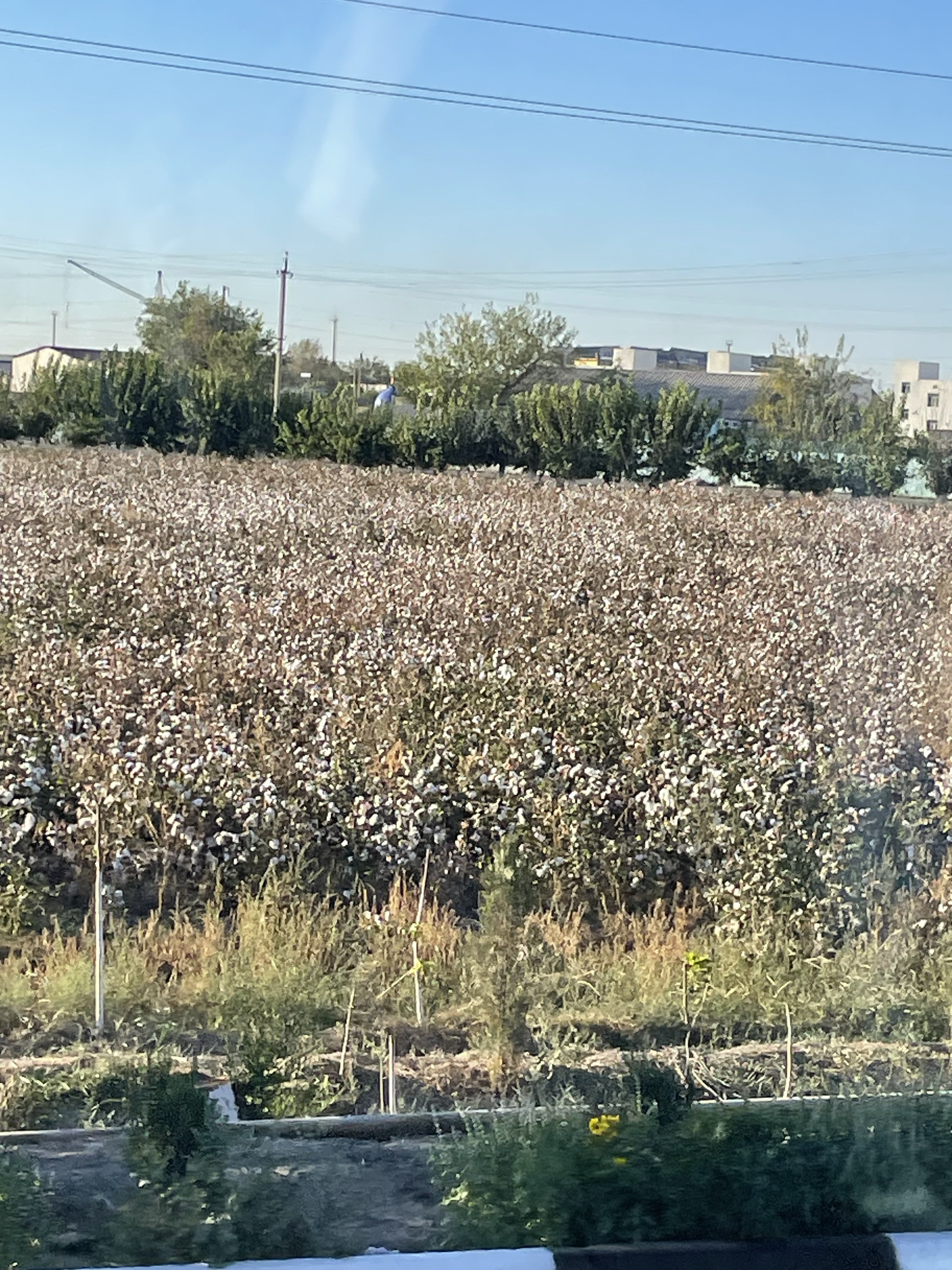
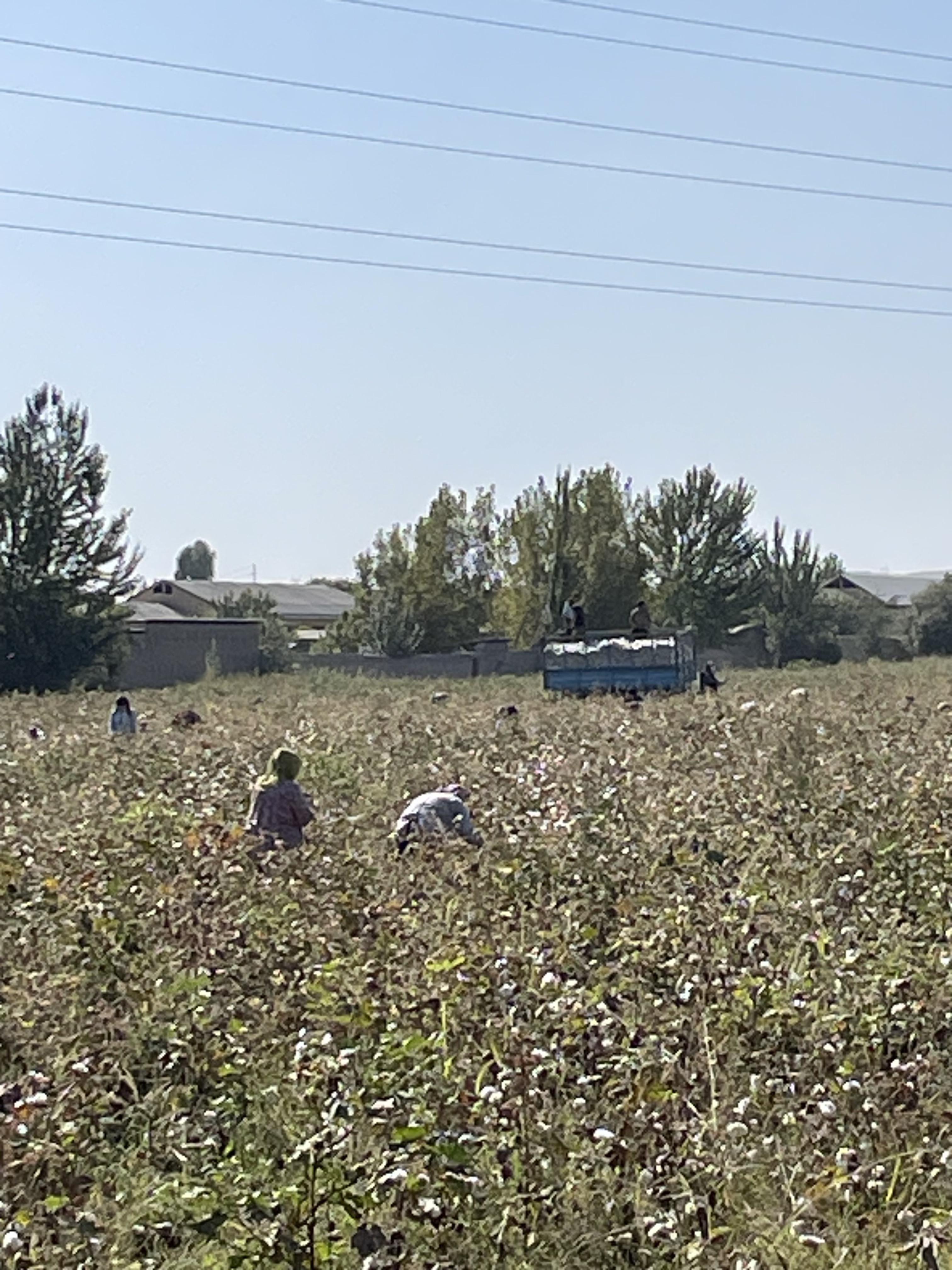
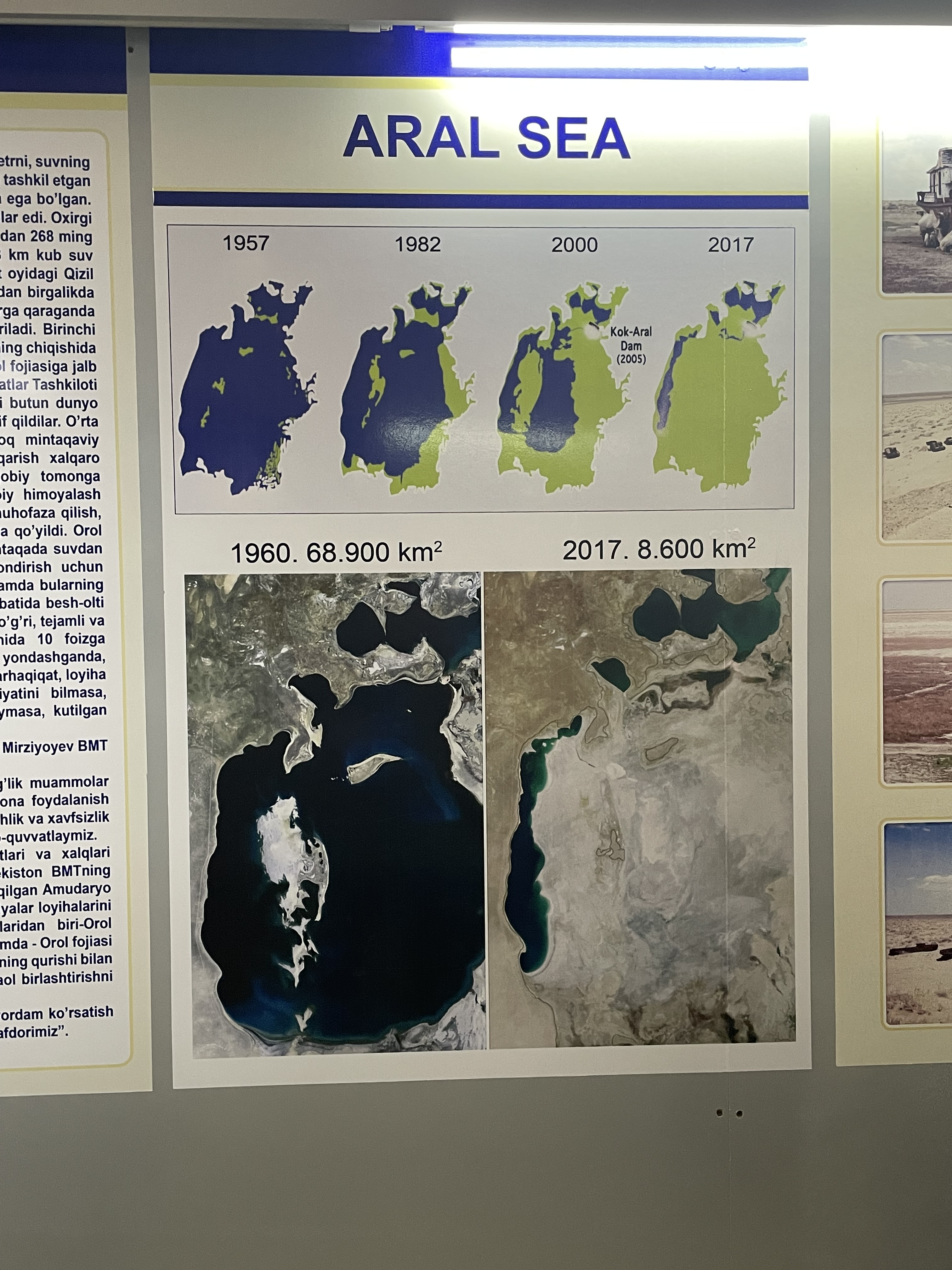
Once their economy was based on cotton, but they have been diversifying their crops for a while now, as cotton crops use a lot of water. The Aral Sea was a major source of water but has shrunk by 90% since the 1960’s. As it evaporates, it is putting a lot more salt in the air, causing more damage to the tiles on the mosques, madrasas and mausoleums. Both gold and uranium are mined in Uzbekistan. The dissolution of the USSR was 50/50 good to bad, said my taxi driver. Under Soviet rule, a lot of infrastructure was built – roads, water and electrical systems, hospitals, schools, etc. And everyone had a job but things were rationed and upward mobility and some freedoms were limited. Schools are free, compulsory and are considered good. Health care is also free though medication is not and that can be very expensive. The state owns all the land, so if they want to build something and your house is in the way, they move you to another location.
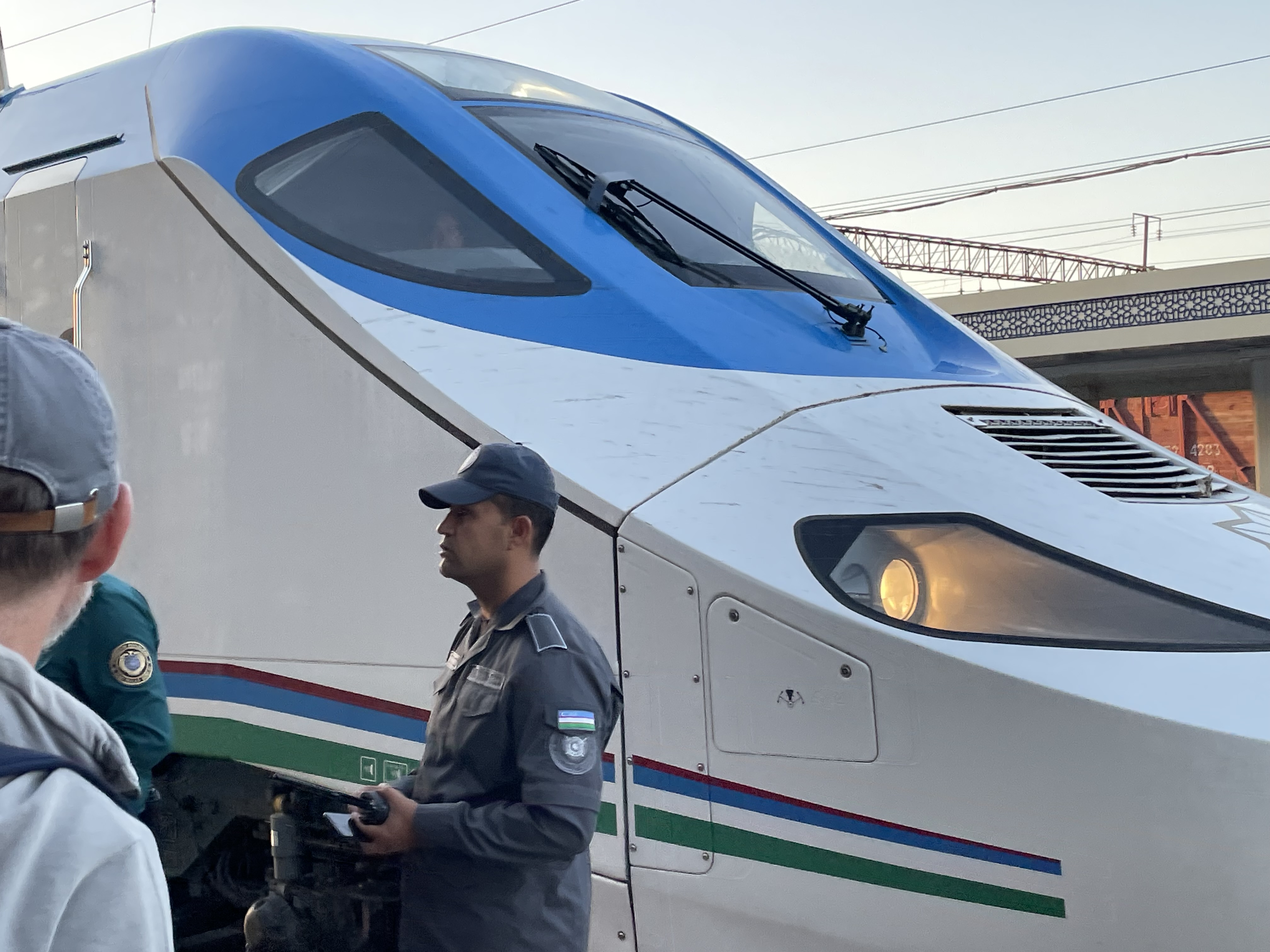
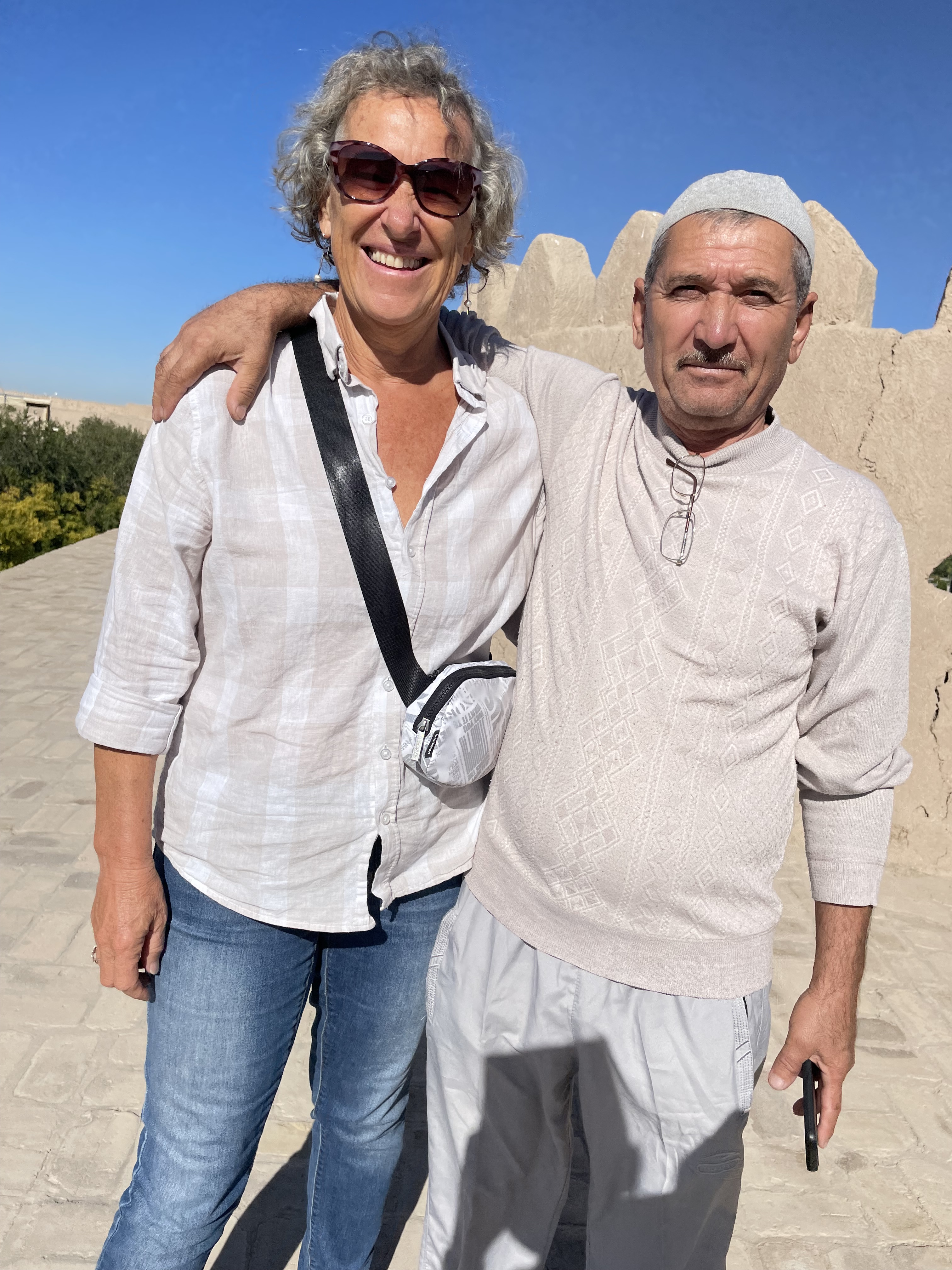
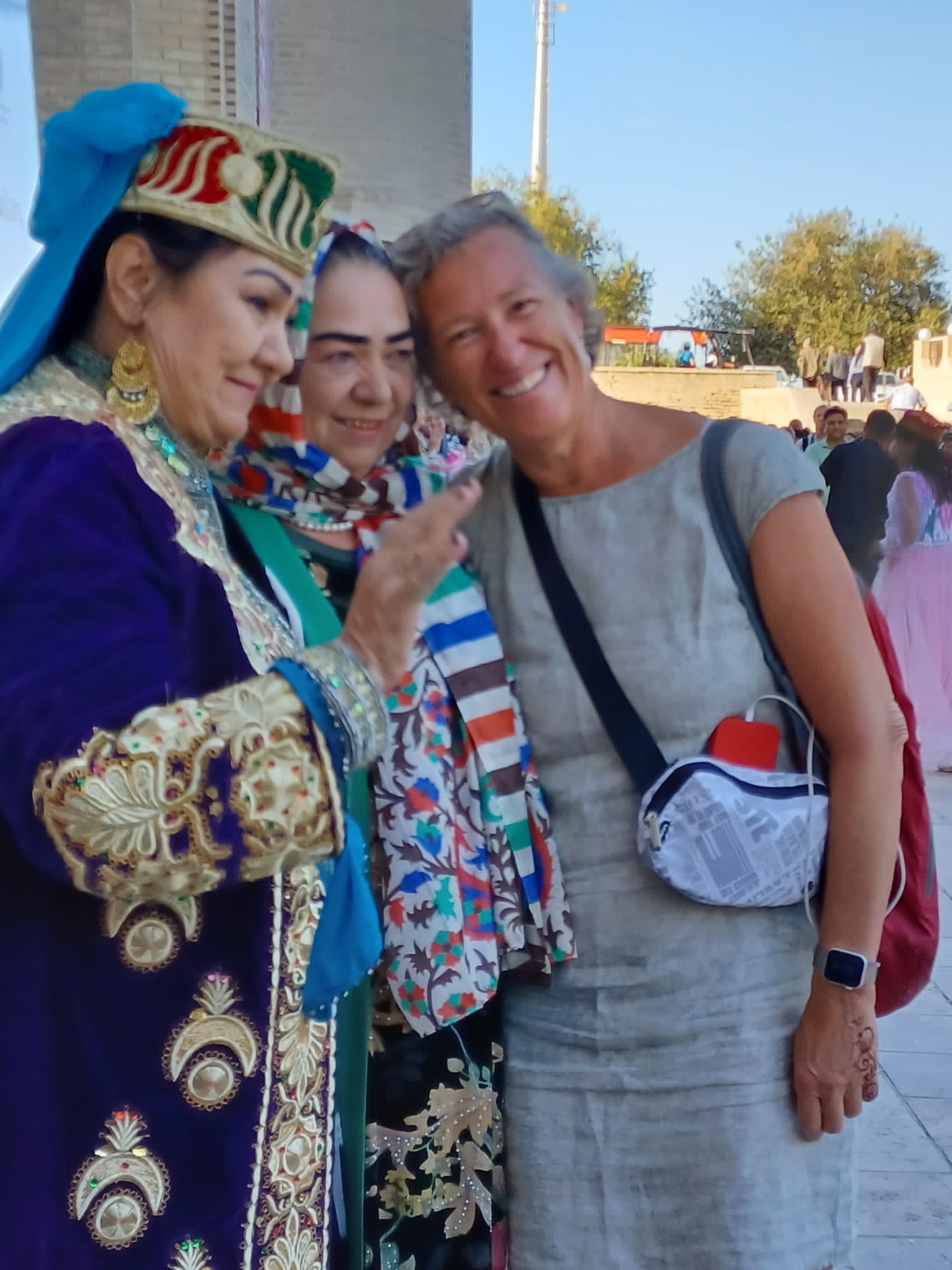
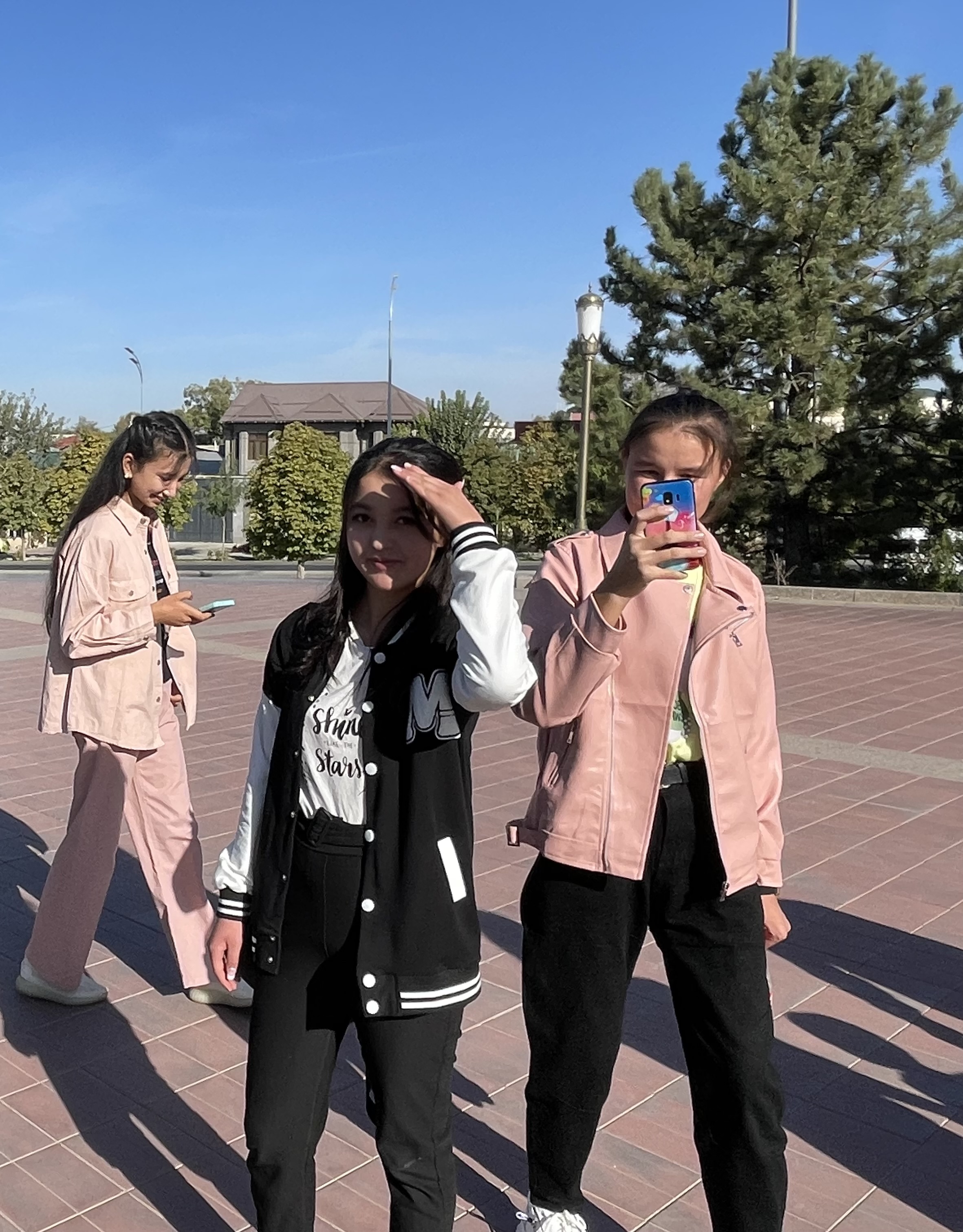
The people are very friendly, quick to say hello and smile. I was stopped several times by local people wanting to take their picture with me – two men on the fortress walls of Khiva, ladies at a celebration in Bukhara, high schools girls and a young family in Samarkand. Several also came up to talk to me to see where I was from and practice their English. One young girl, about 12, on our train from Samarkand to Tashkent, came up to talk, along with her father. While she chatted with me, he beamed at her ability to converse in English, while her mother took a video. It was very sweet. Here as in most of the places I have visited, the people would love to come to America. One thing I liked about being here was that the sites were filled with more local people than tourists – they were also visiting their national treasures. I guess many travelers haven’t discovered Uzbekistan yet. There is a variety of faces in the population, definitely impacted by their history. You see many with Mongolian features, as well as Persian, and Russian. The Uzbeks greet each other or say thank you my placing their right hand over their heart. I liked that a lot.
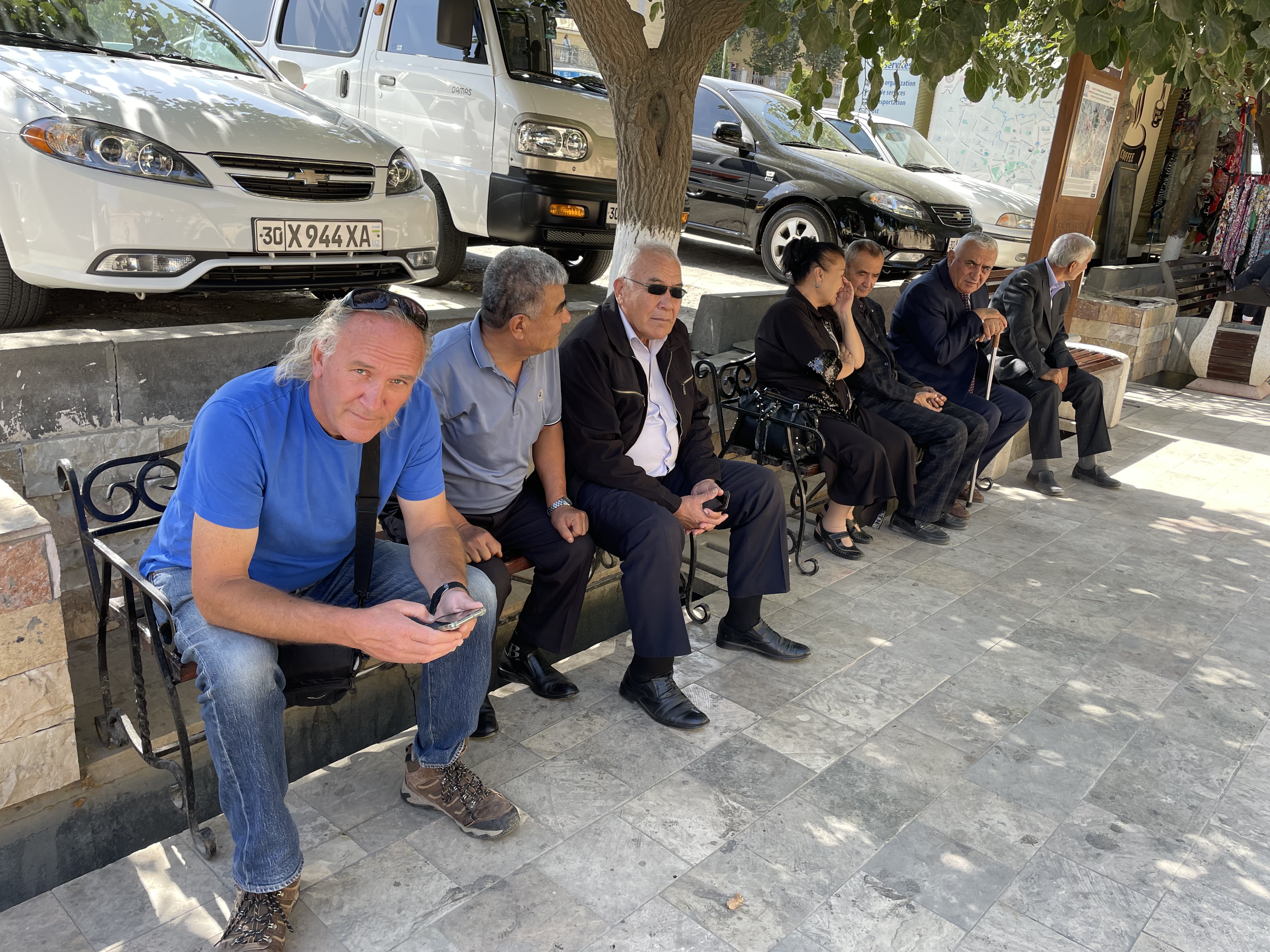
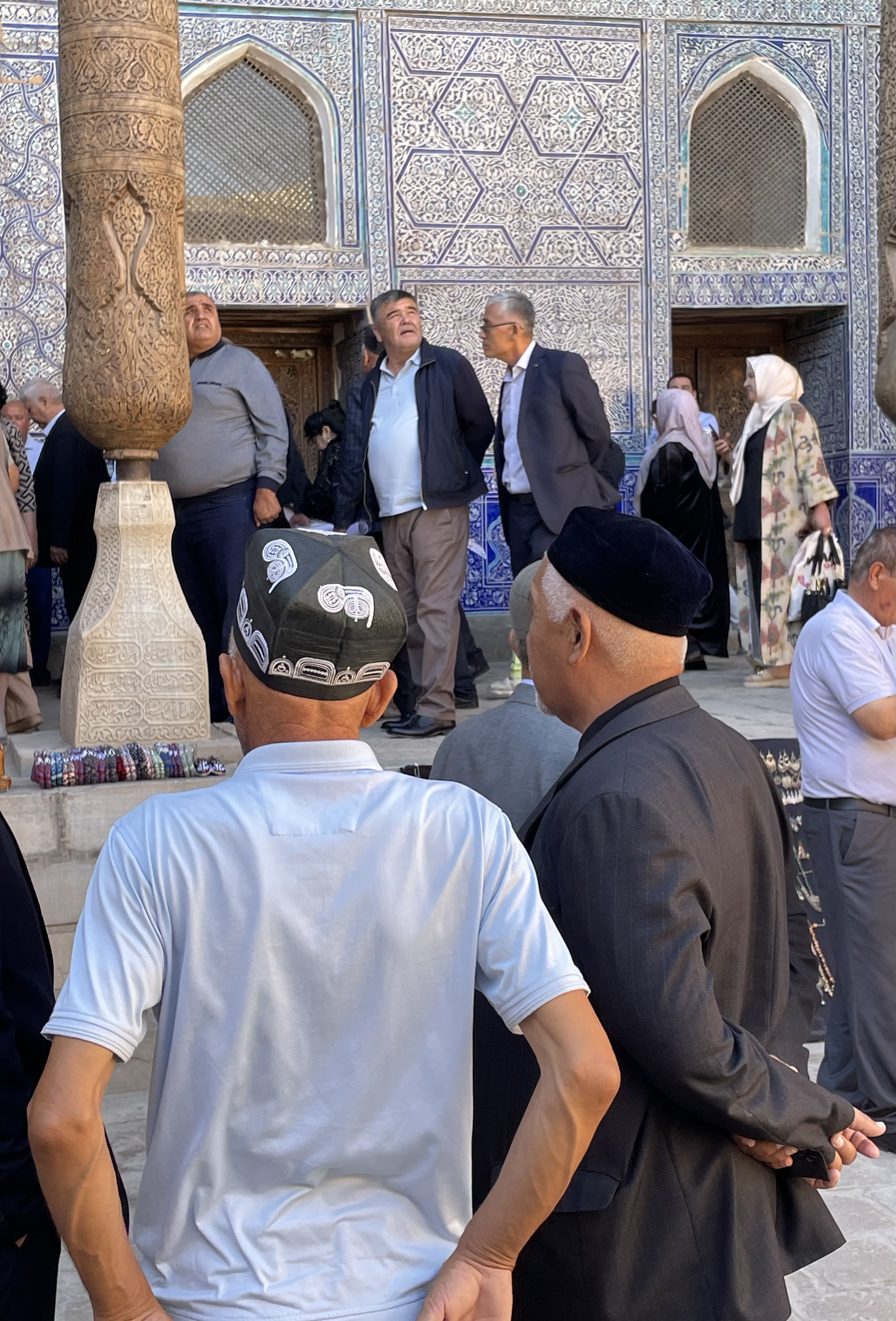
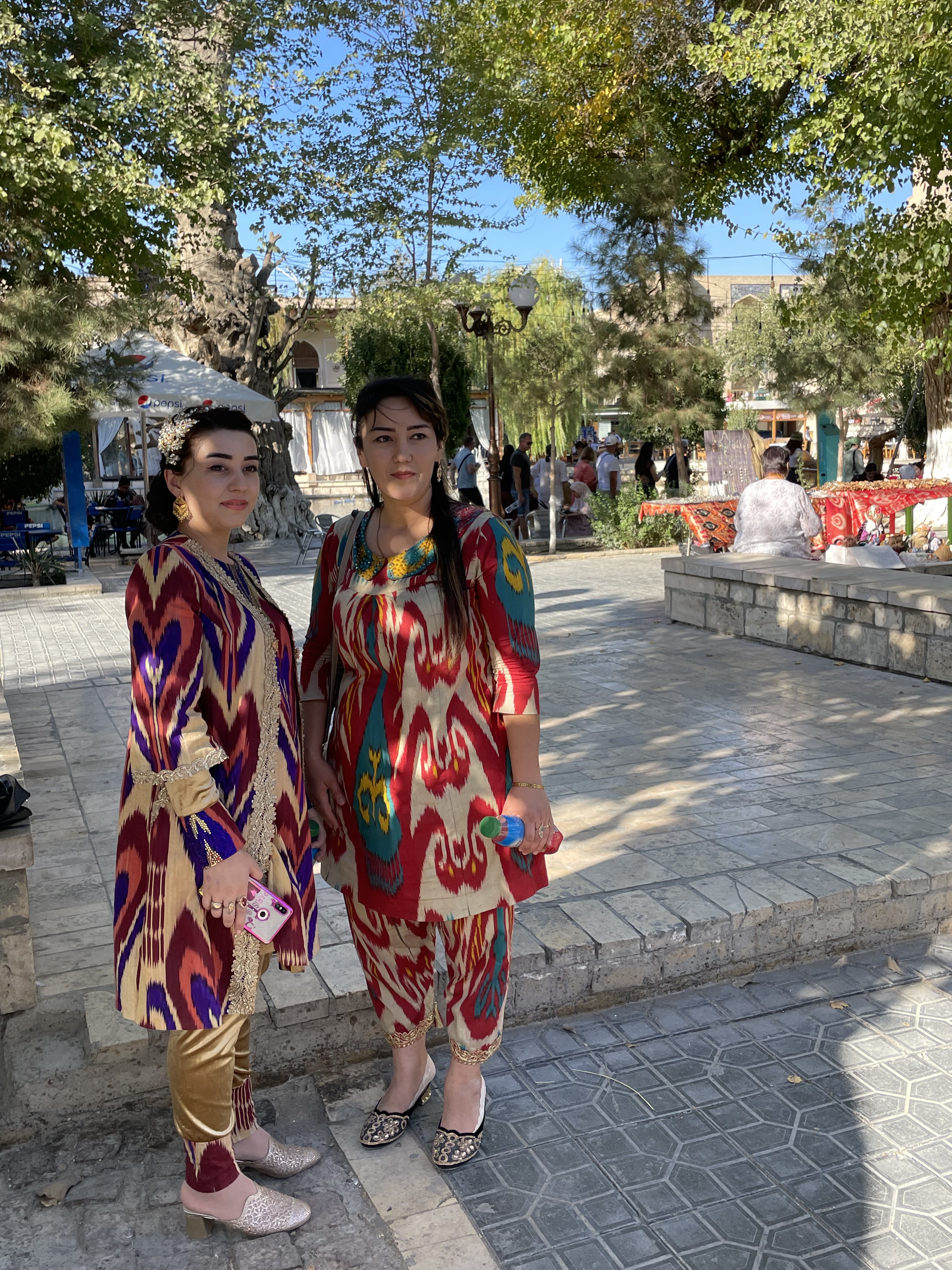
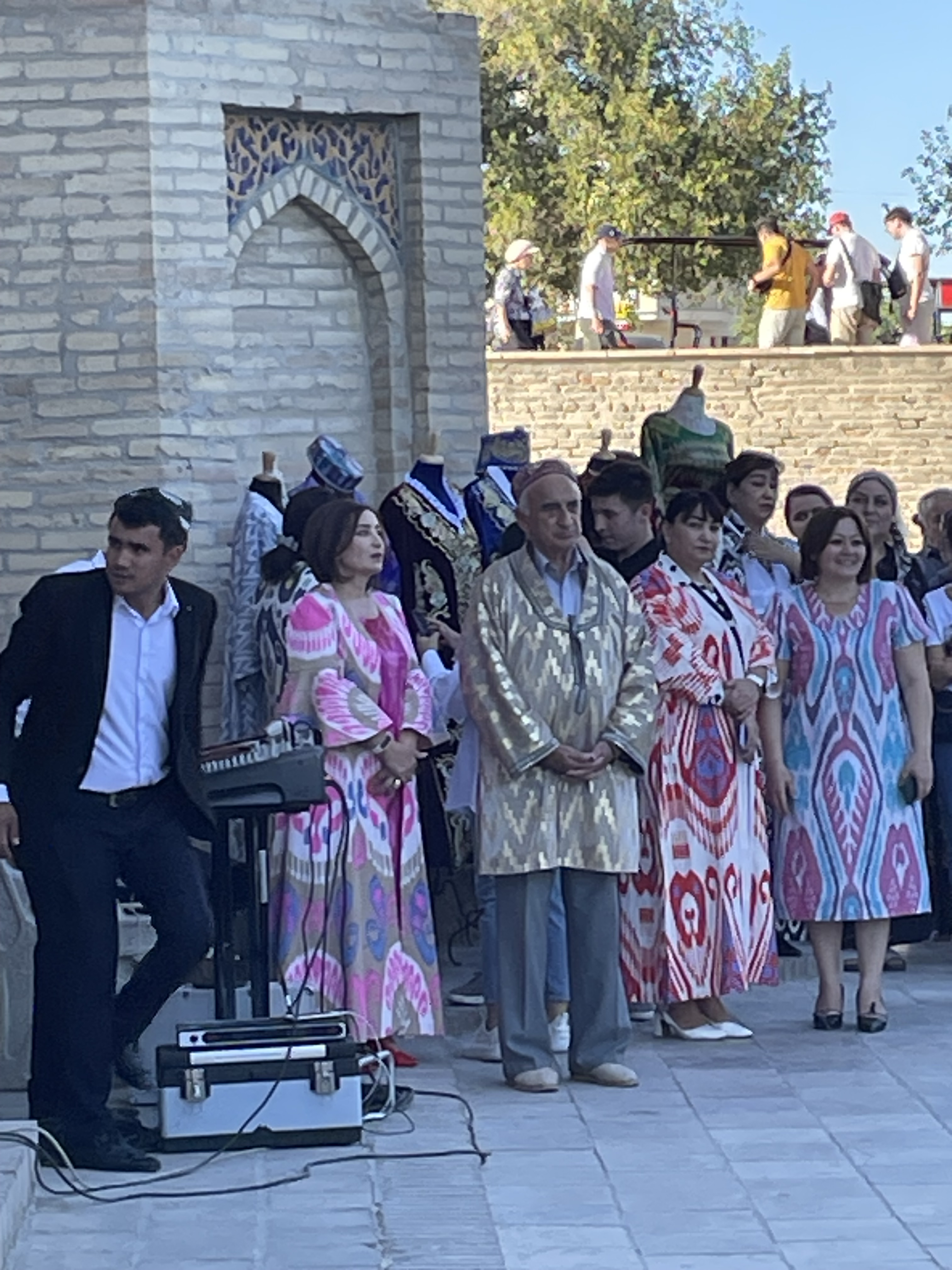
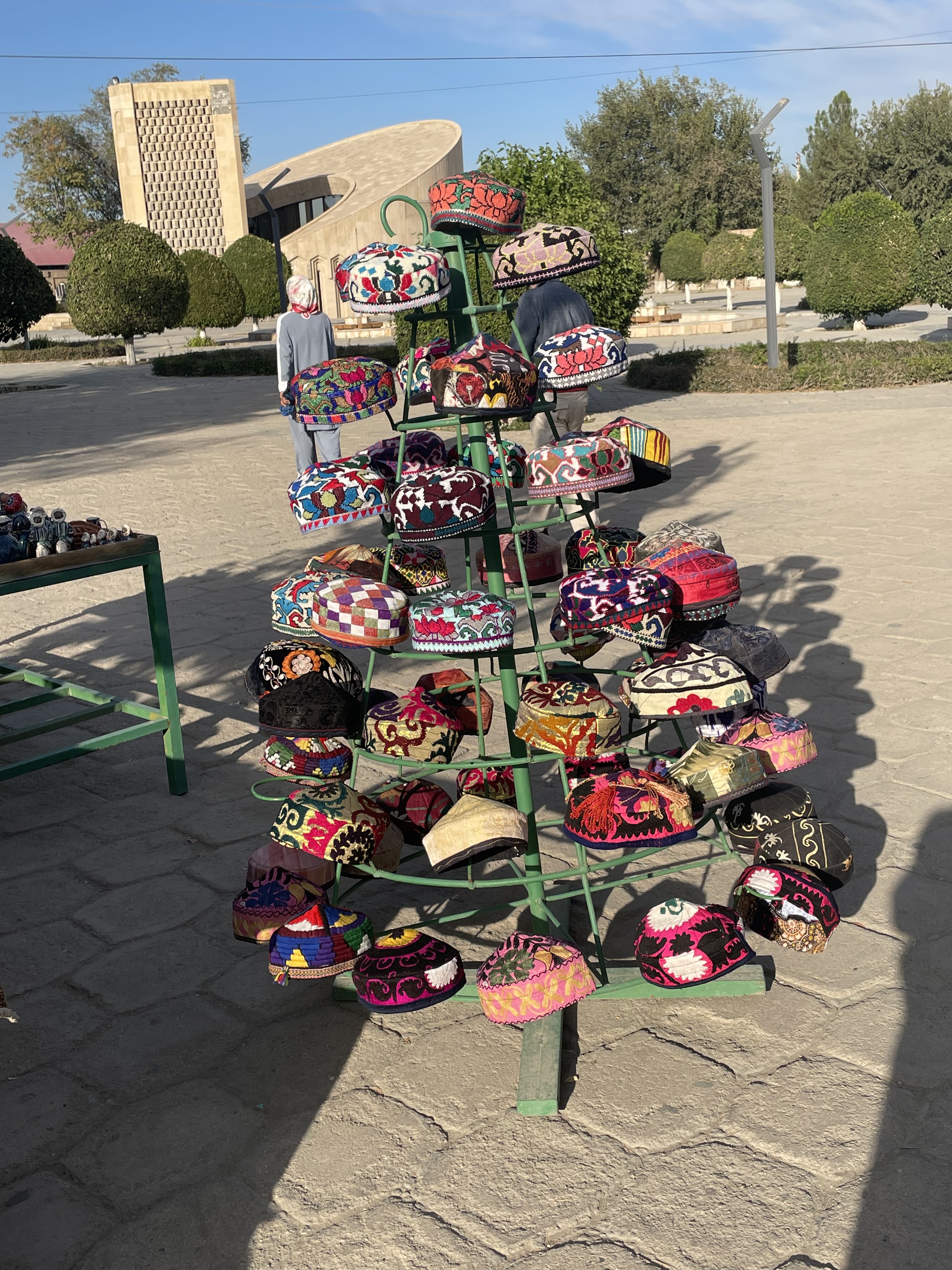
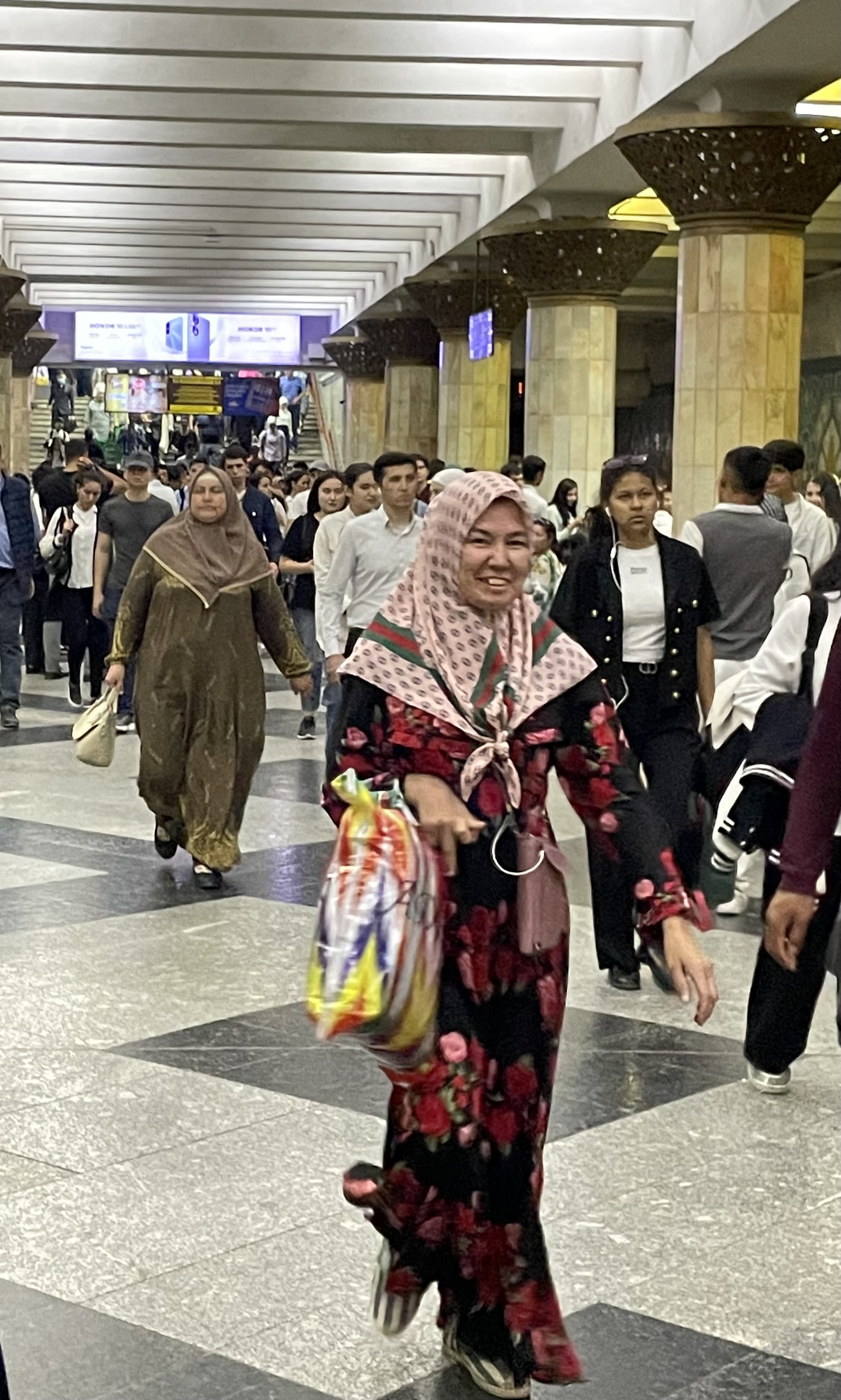
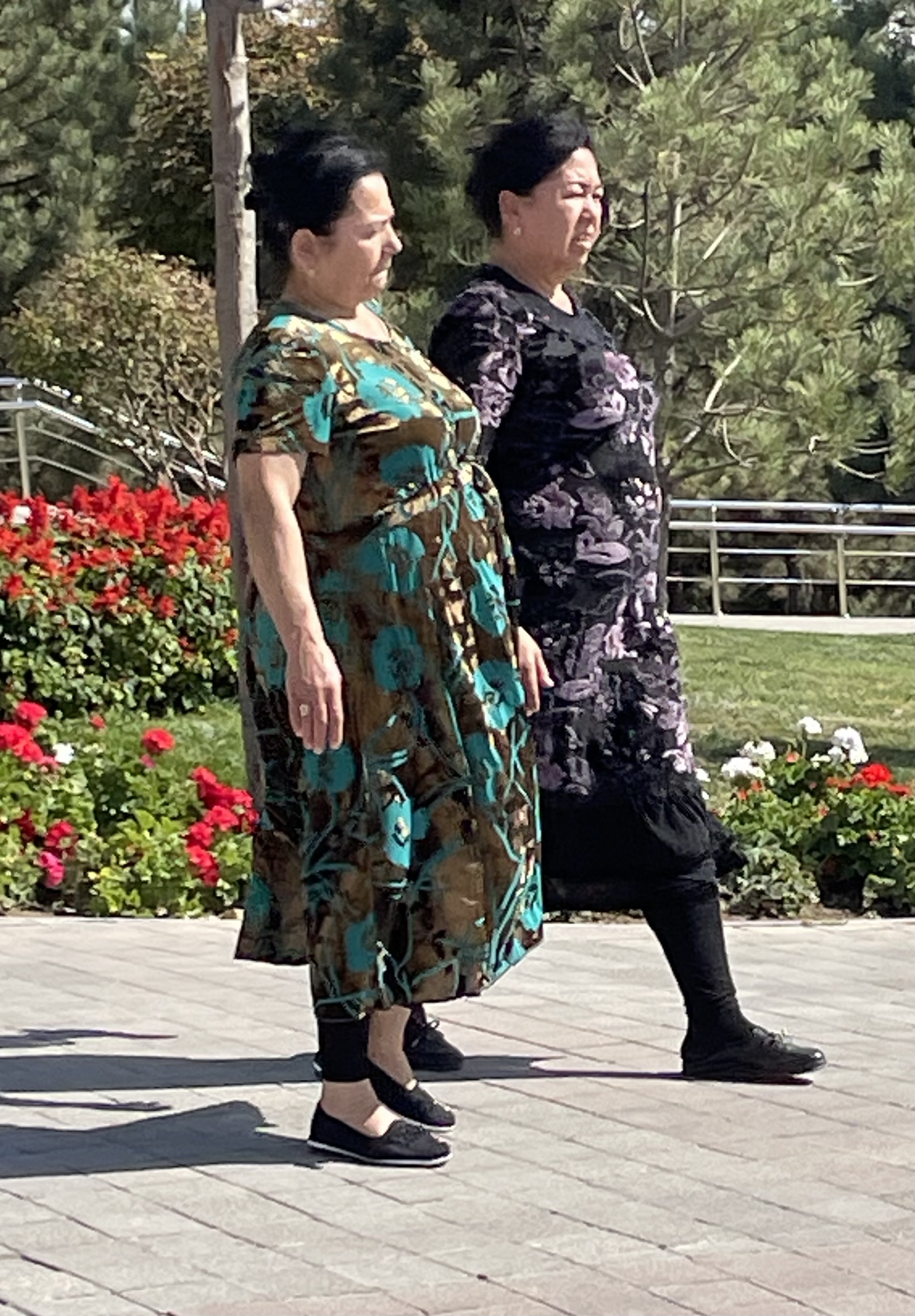
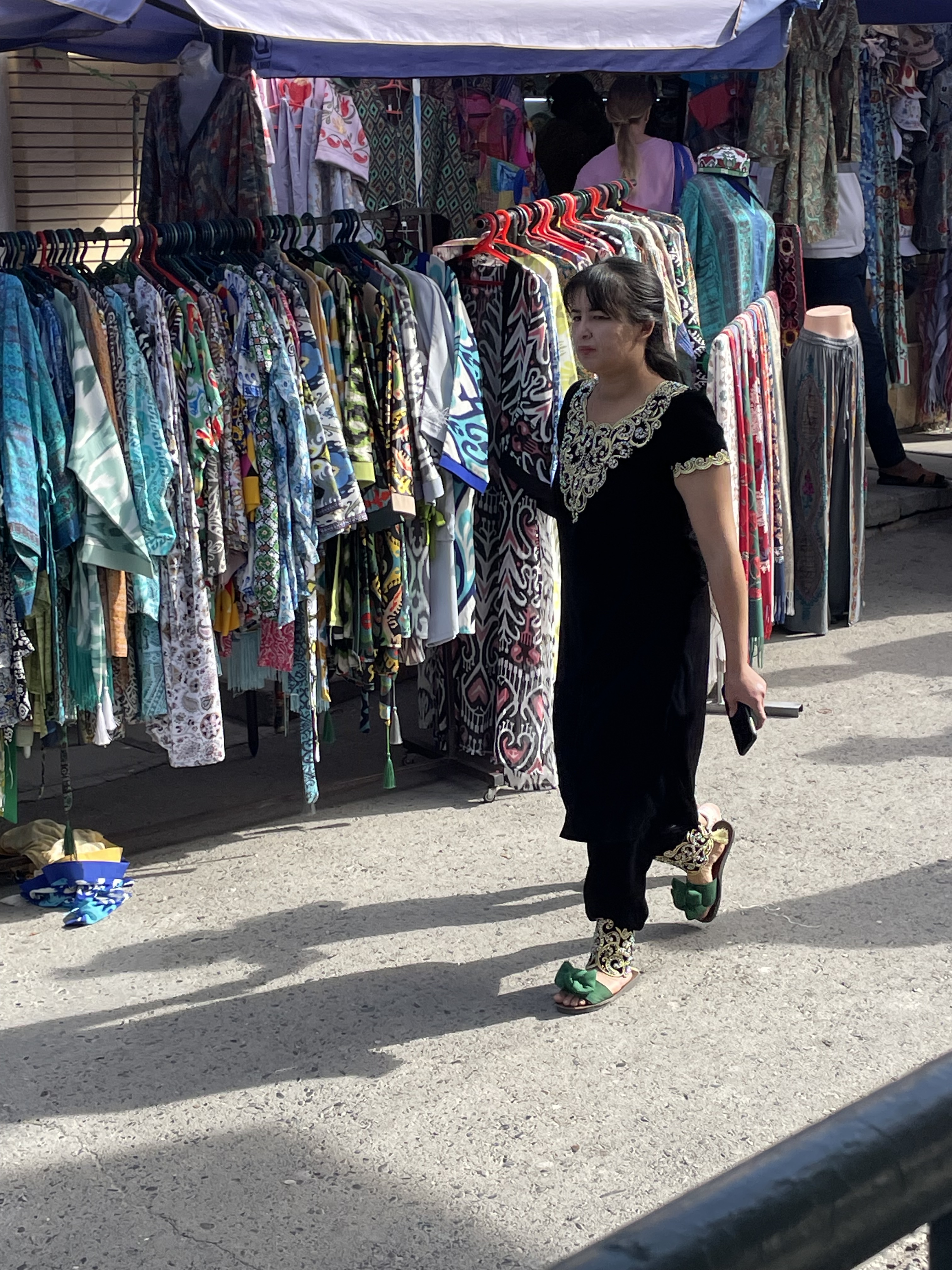
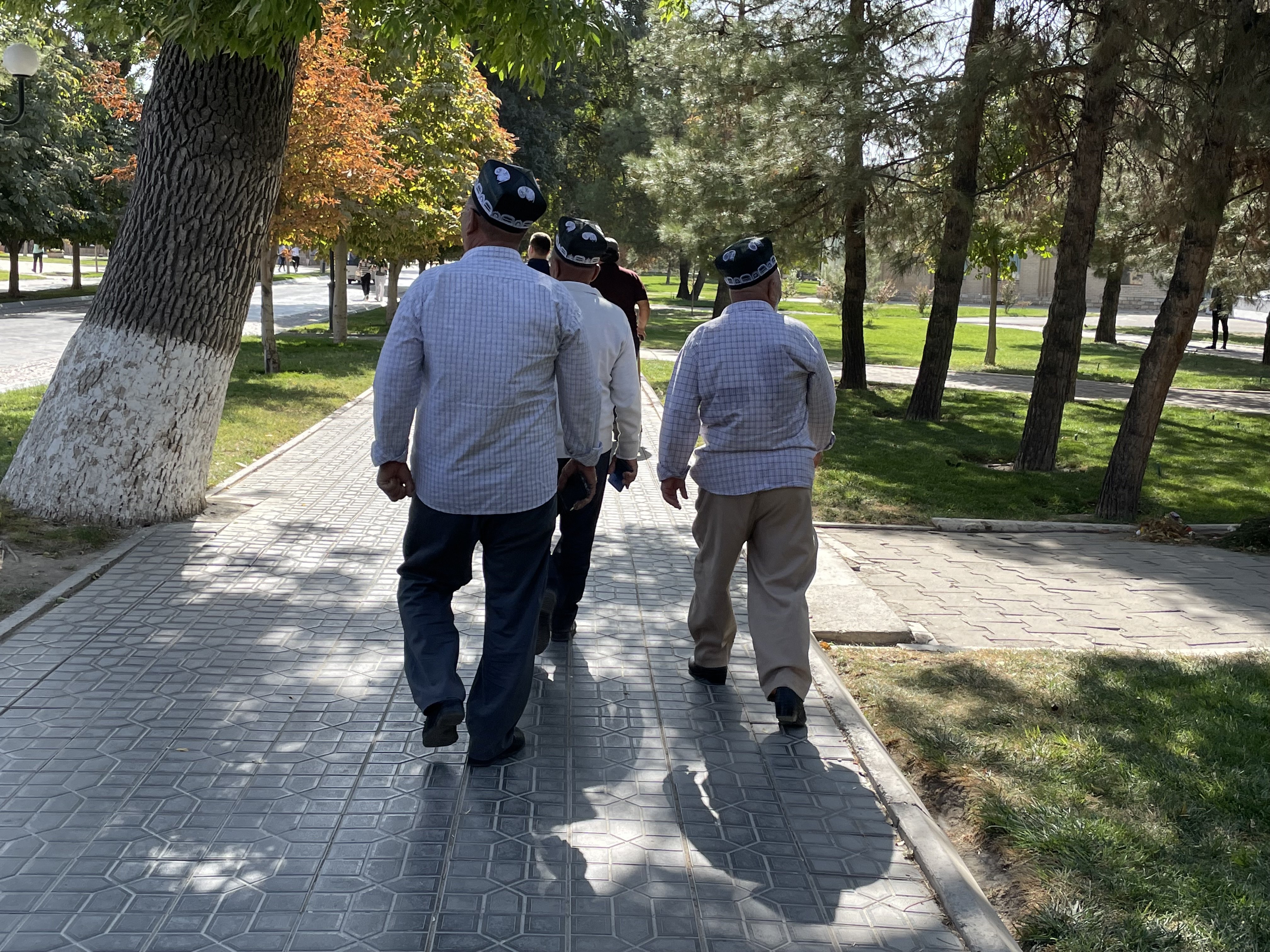
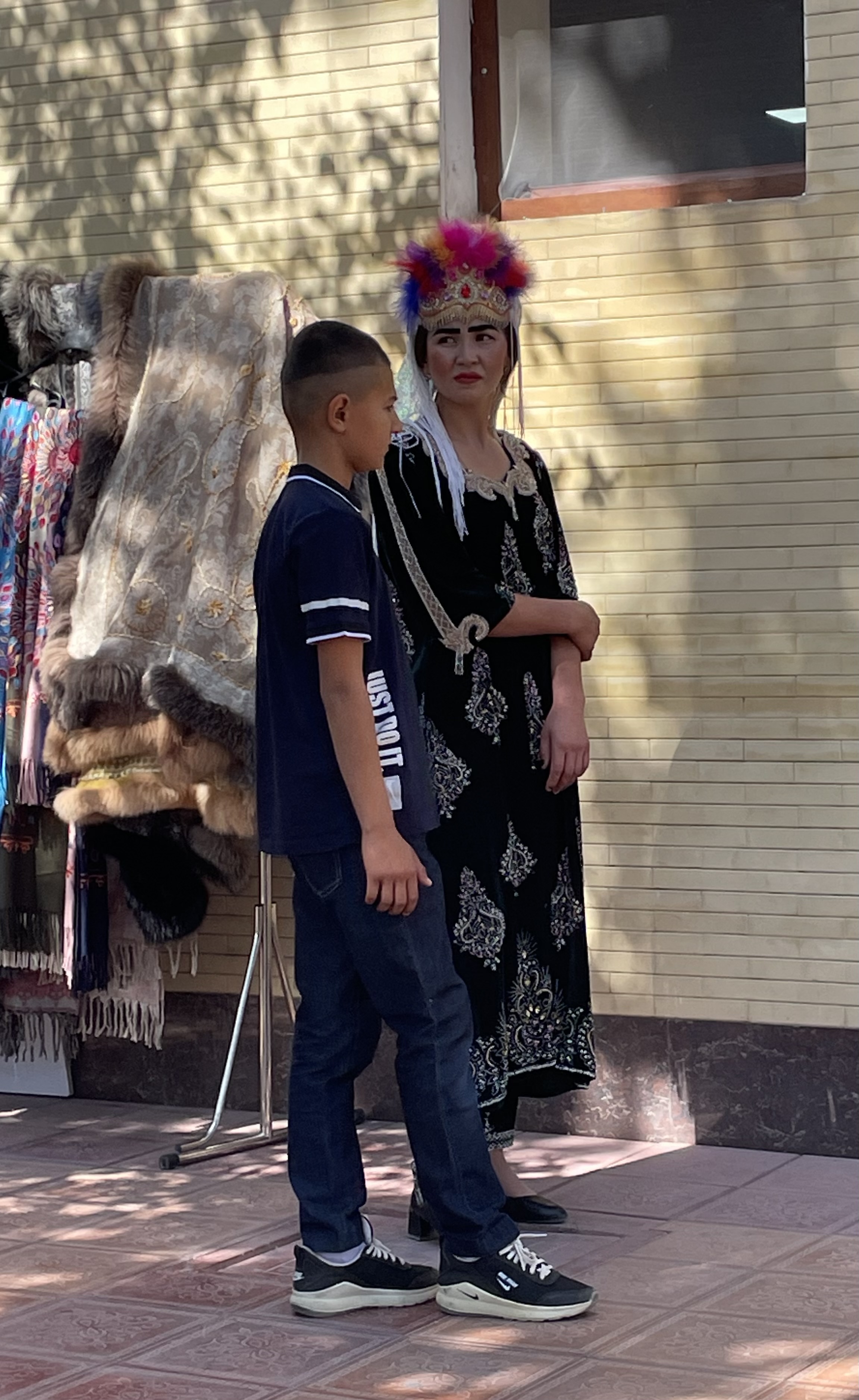
Uzbekistan is over 2600 years old. Once Zoroastrianism was the primary religion, but now the majority of its people are Muslim. However, it is a secular country which means the rules are much laxer here. Woman usually are wearing dresses that cover their knees or go to their ankles, some have their hair covered but much less than in Oman or Dubai. The dresses however have some bling! No drab black here. Velvet seems to be a popular fabric, but patterned with sparkles throughout. At first I just thought it must be some special occasion but no, women are wearing glittering robes everyday. Their traditional fabric is hard to describe, it’s multi-colored in a pattern sort of like a wood grain. The men are generally dressed in dark slacks with a collared shirt of some kind and a black embroidered skullcap. On the Silk Road, skullcaps were a way to tell where people came from as each region and country had their own version. Skullcaps are part of the traditional dress for the woman too but prettier. Of course, the younger generation are wearing more jeans.
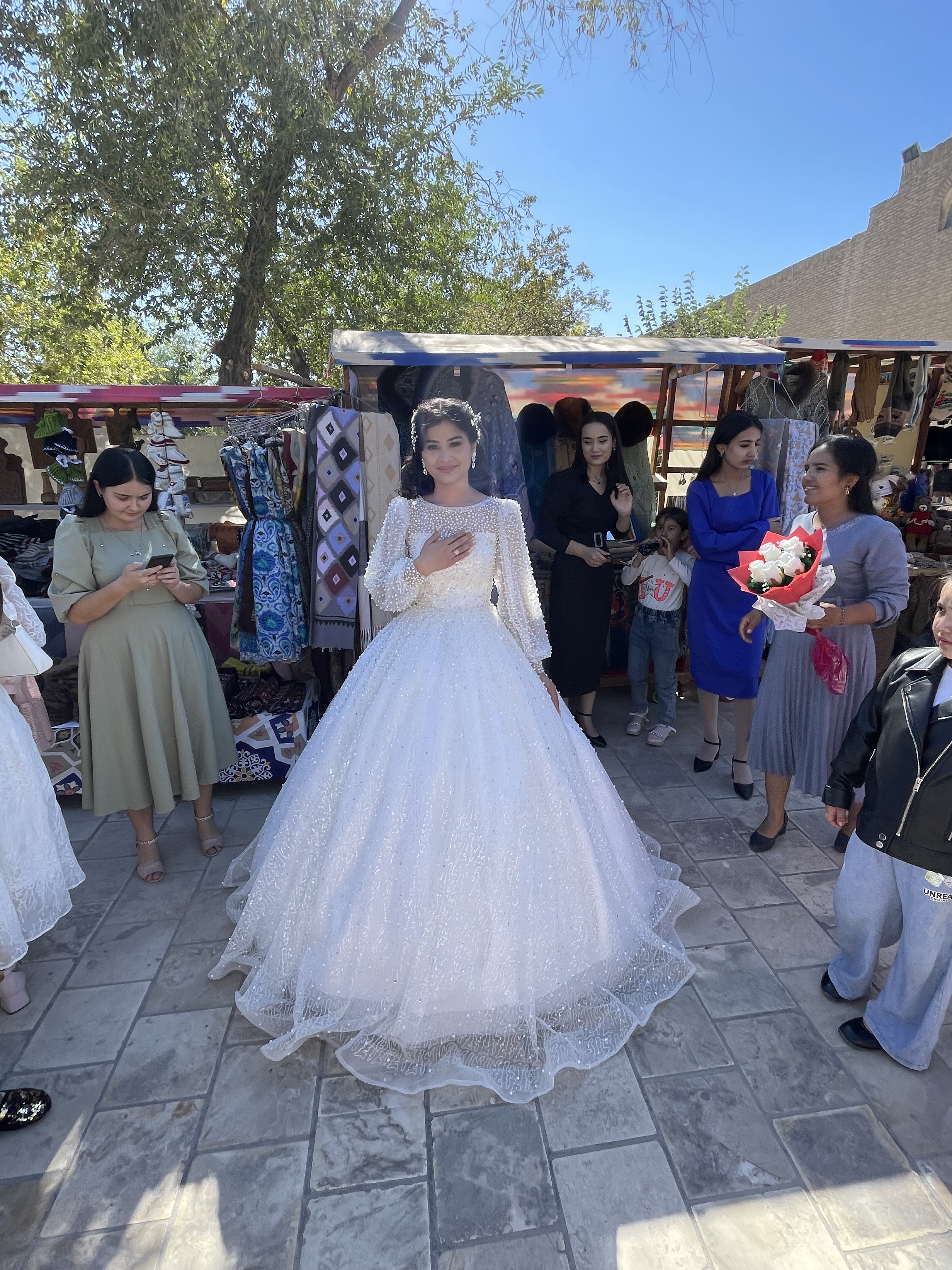
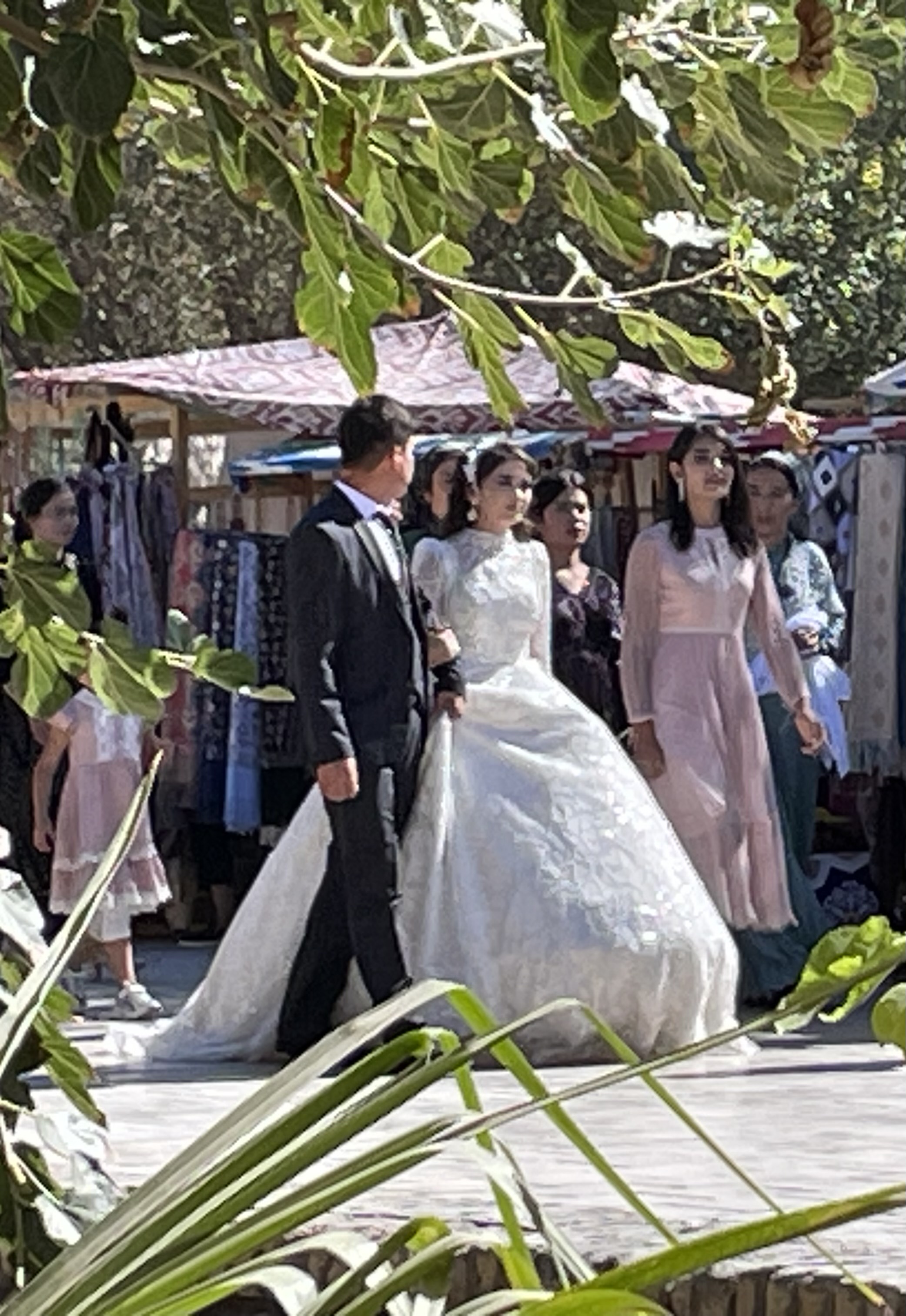
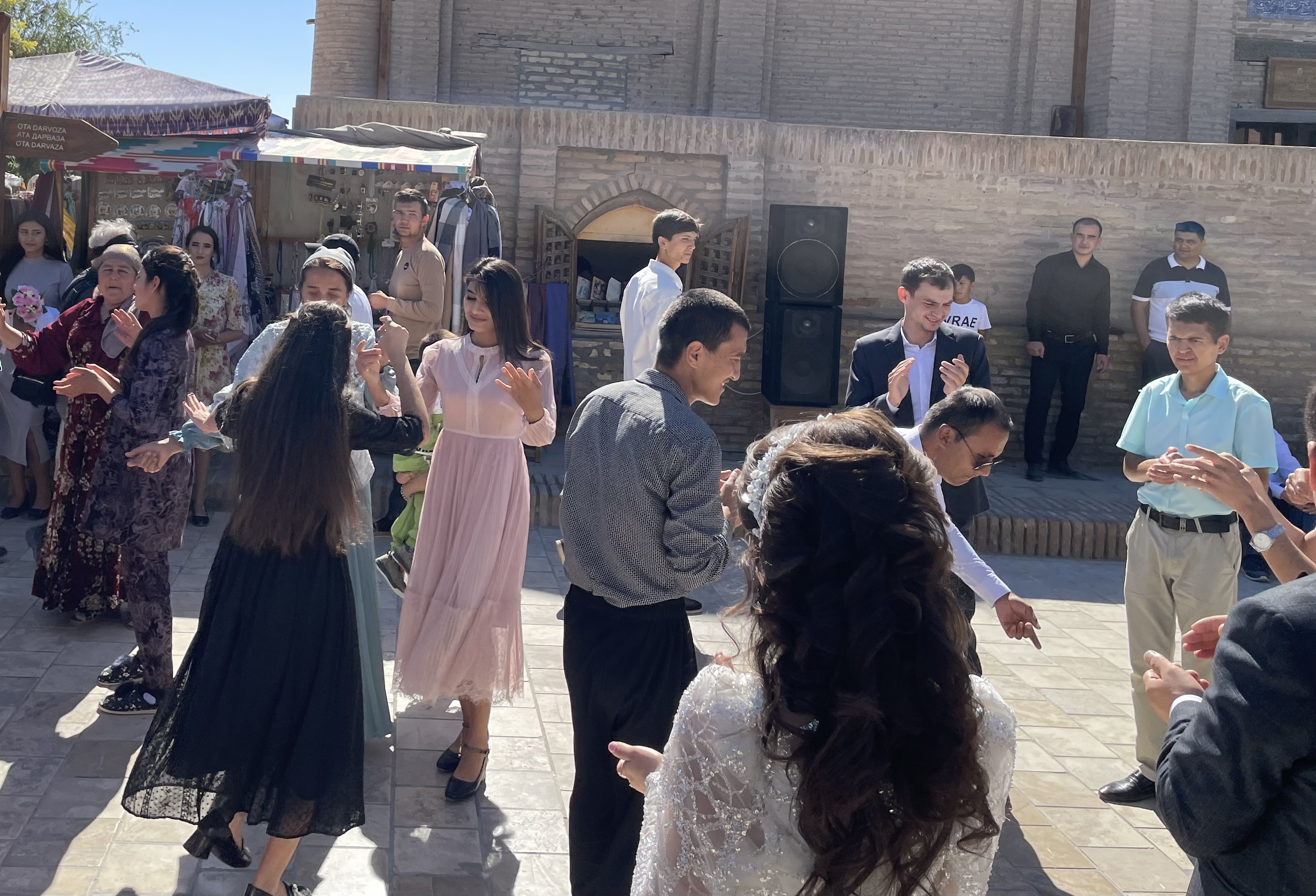
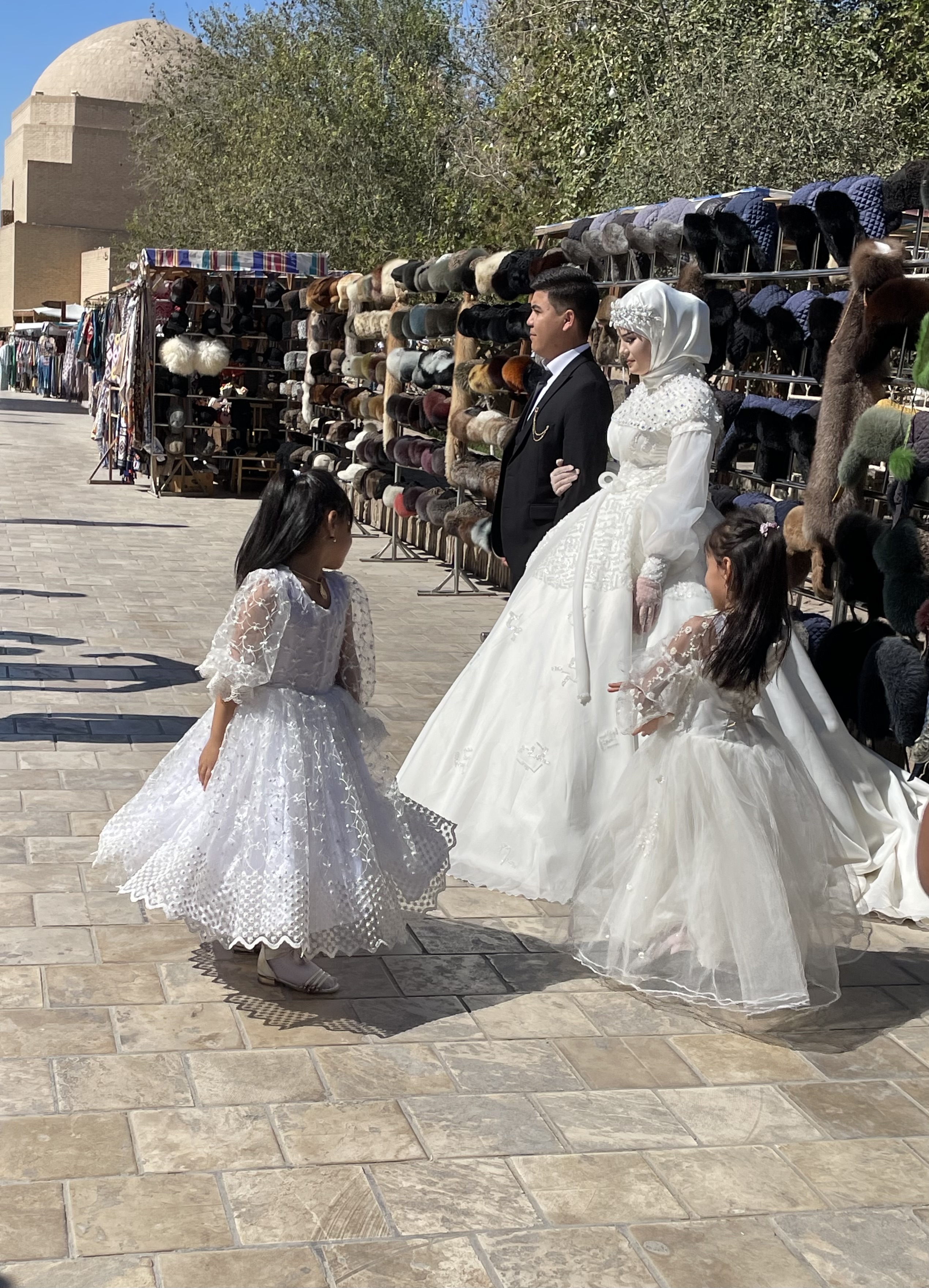
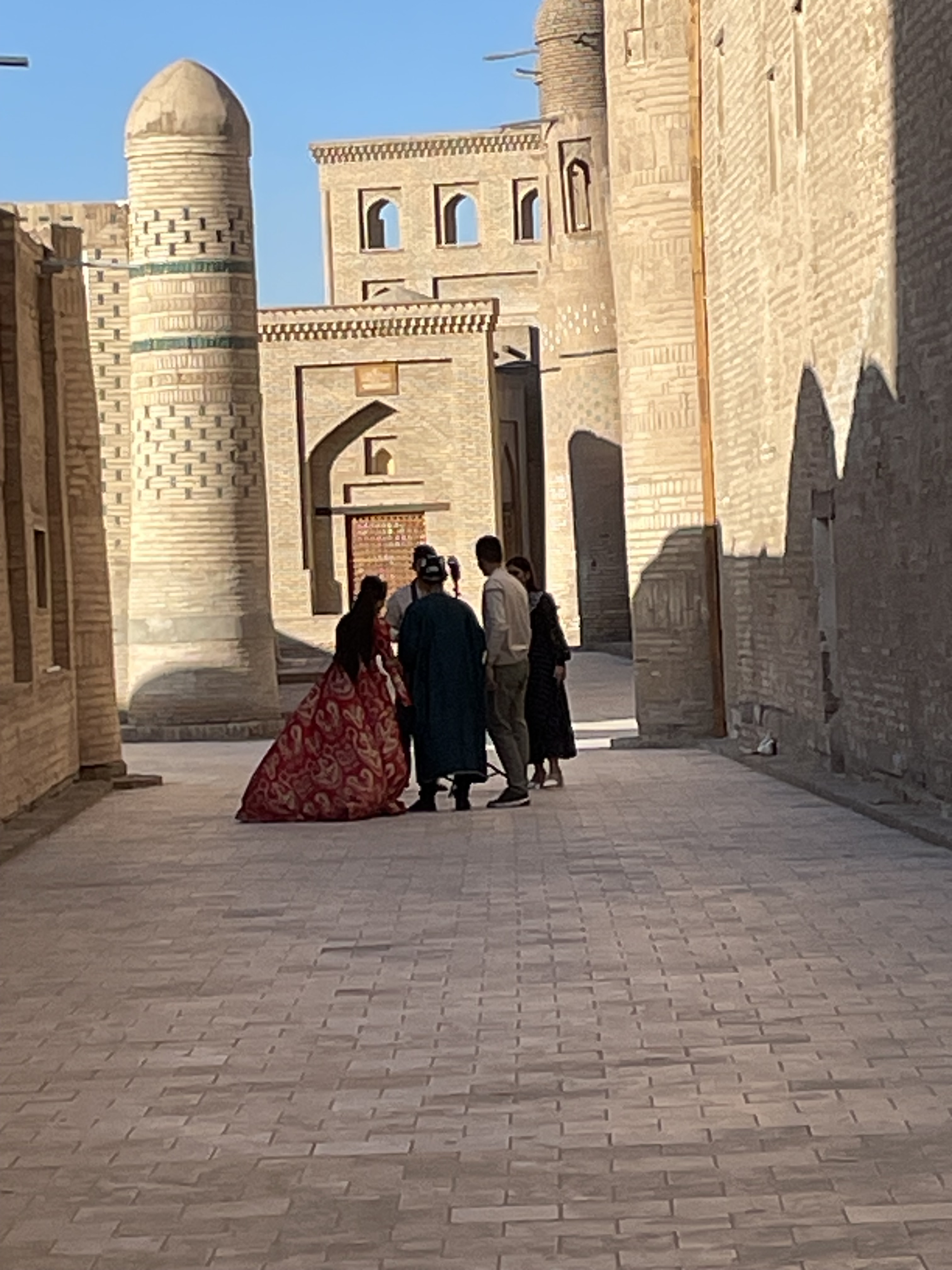
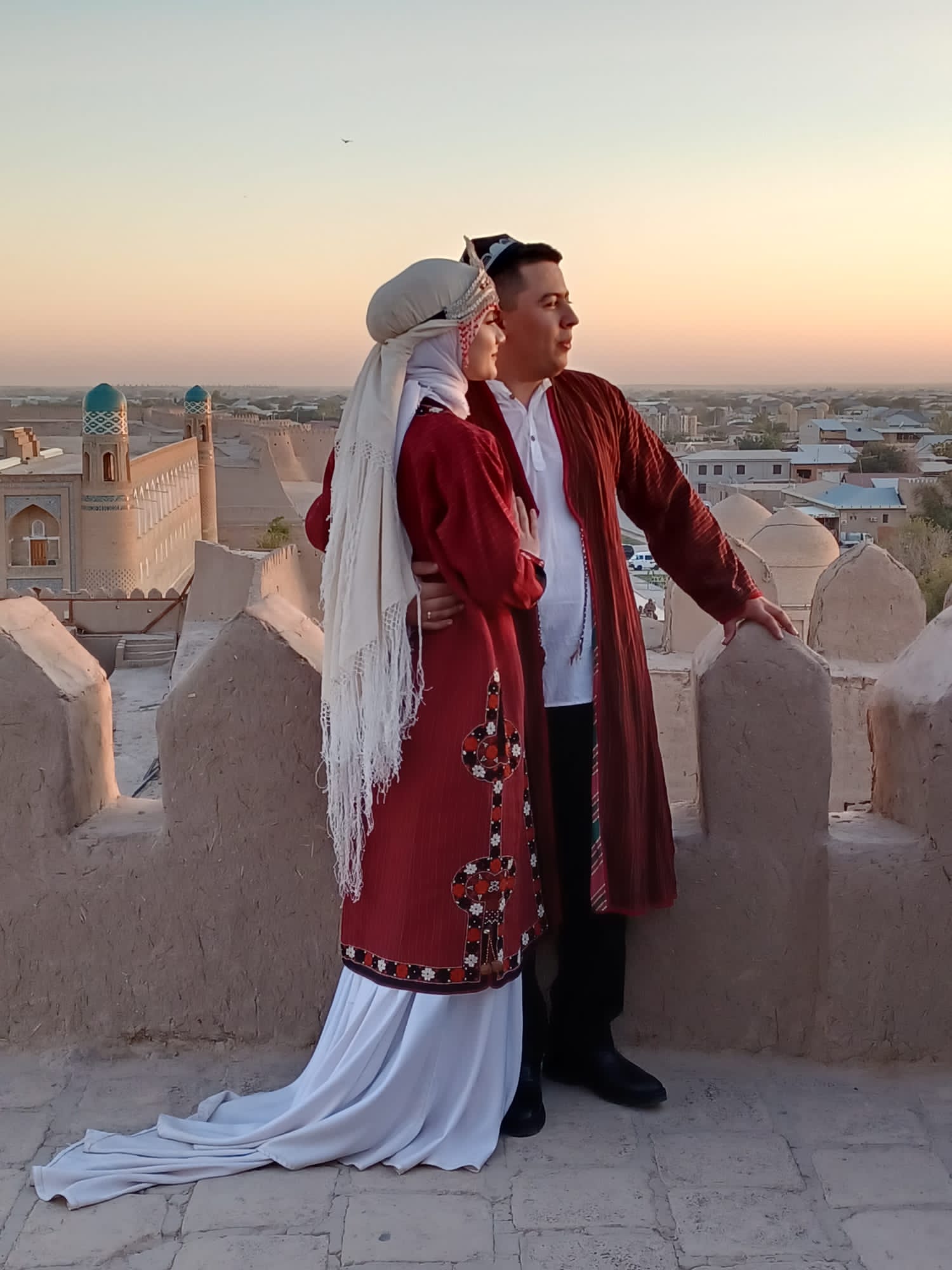
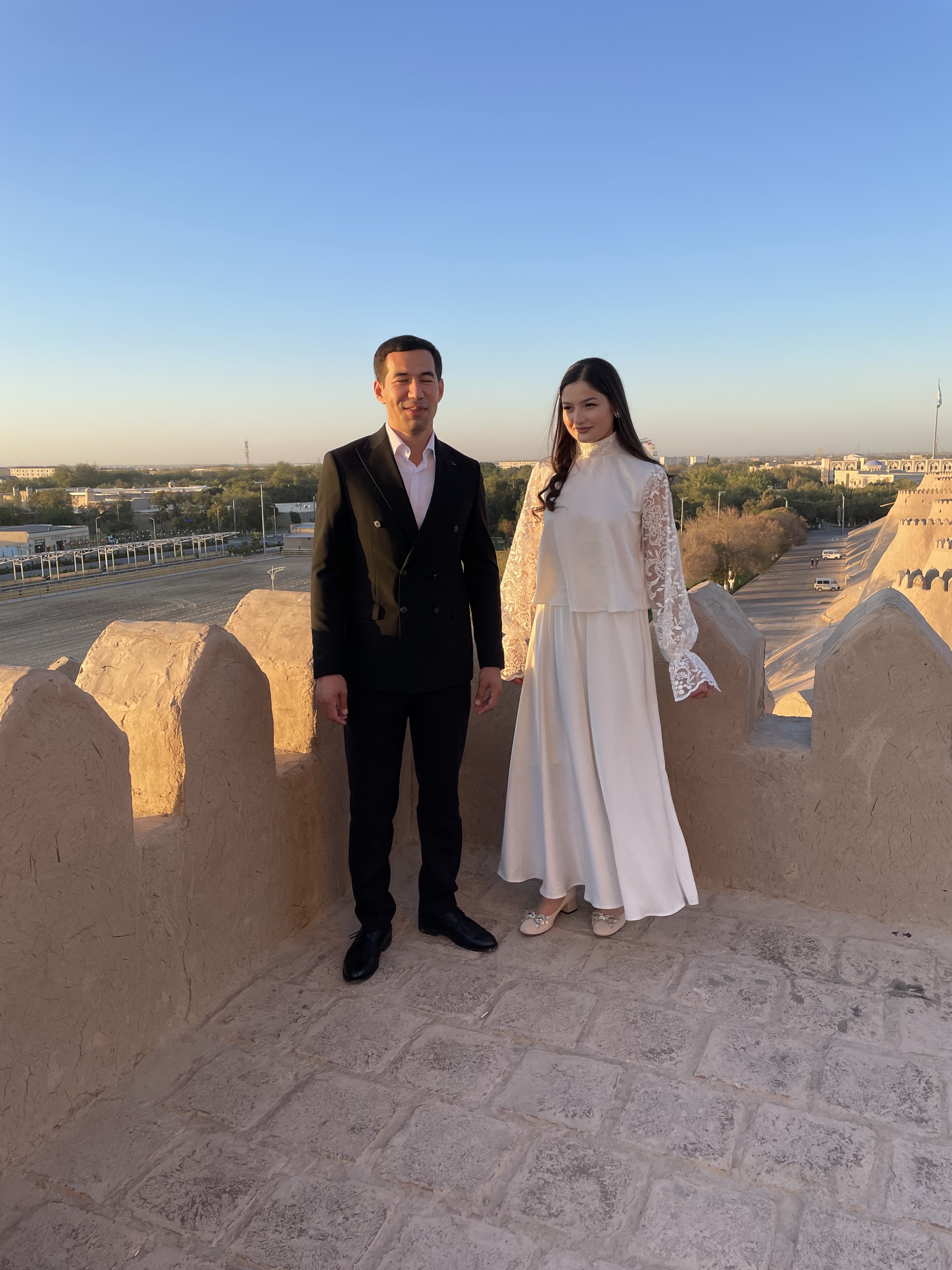
Uzbekistan has a population of 37 million with young people making up 60%. September is like May in the US, the best time to get married. One day in Bukhara, Guy and I were enjoying lunch and a beer in a small cafe near the main shopping street, when this procession came down the street towards us. The wedding dress the woman wore was a dead giveaway that this was a special occasion. The group stopped just in front of us, a boom box began playing loud music and the groomsmen gathered in a circle and began to dance for the bride and groom. Eventually they moved on, and then another group came, and another, all stopping to dance and take pictures. I think we saw 7 or 8 weddings, some in flowing white dresses, some in more traditional attire. We also saw couples around town getting their pictures taken in the matrimonial finery. Some of the women looked radiant, others not so much – there are still arranged marriages here. In Samarkand, we also saw several newly married women, dressed in velvet shifts, with pantaloons underneath and a headdress on.


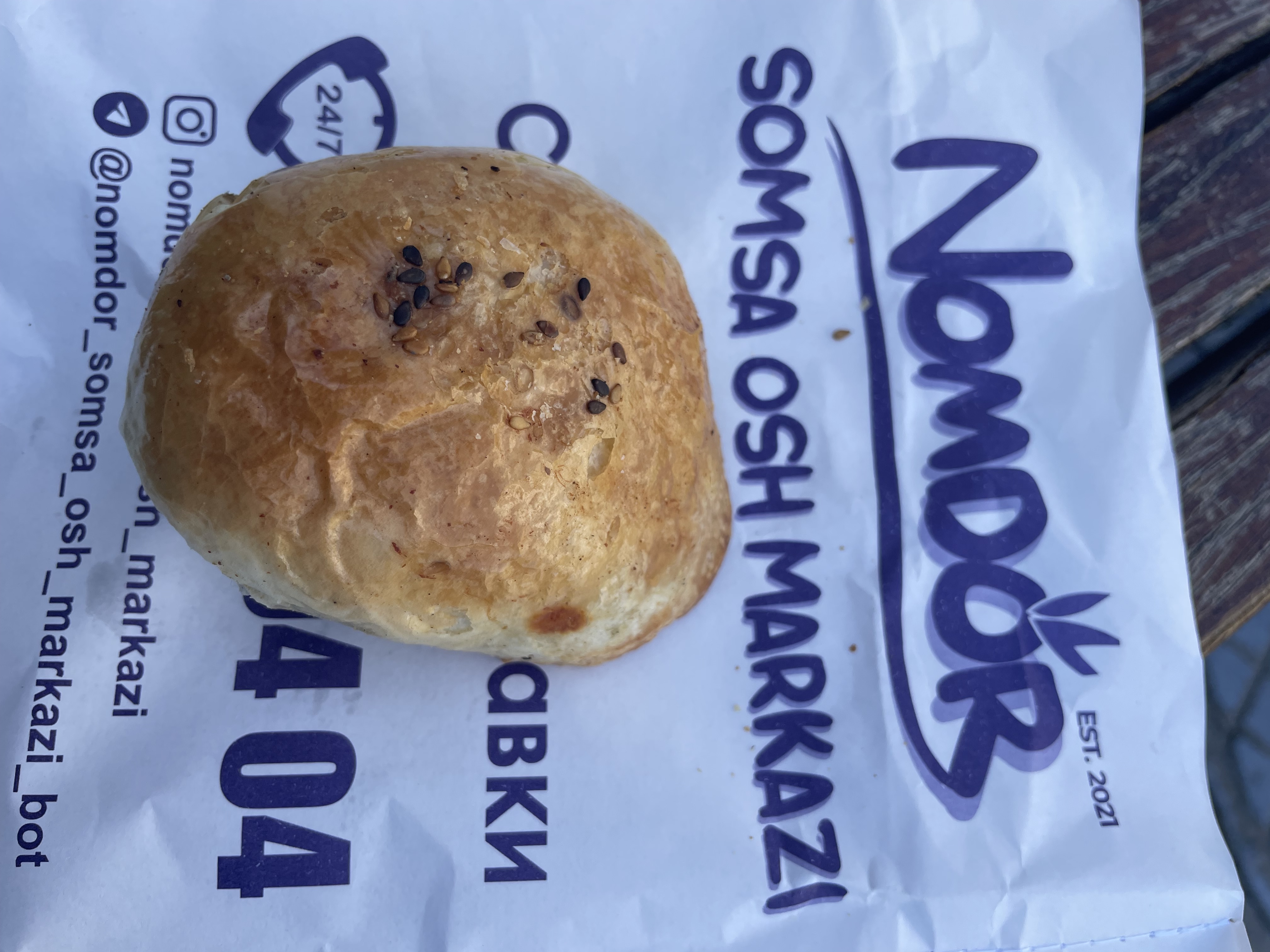
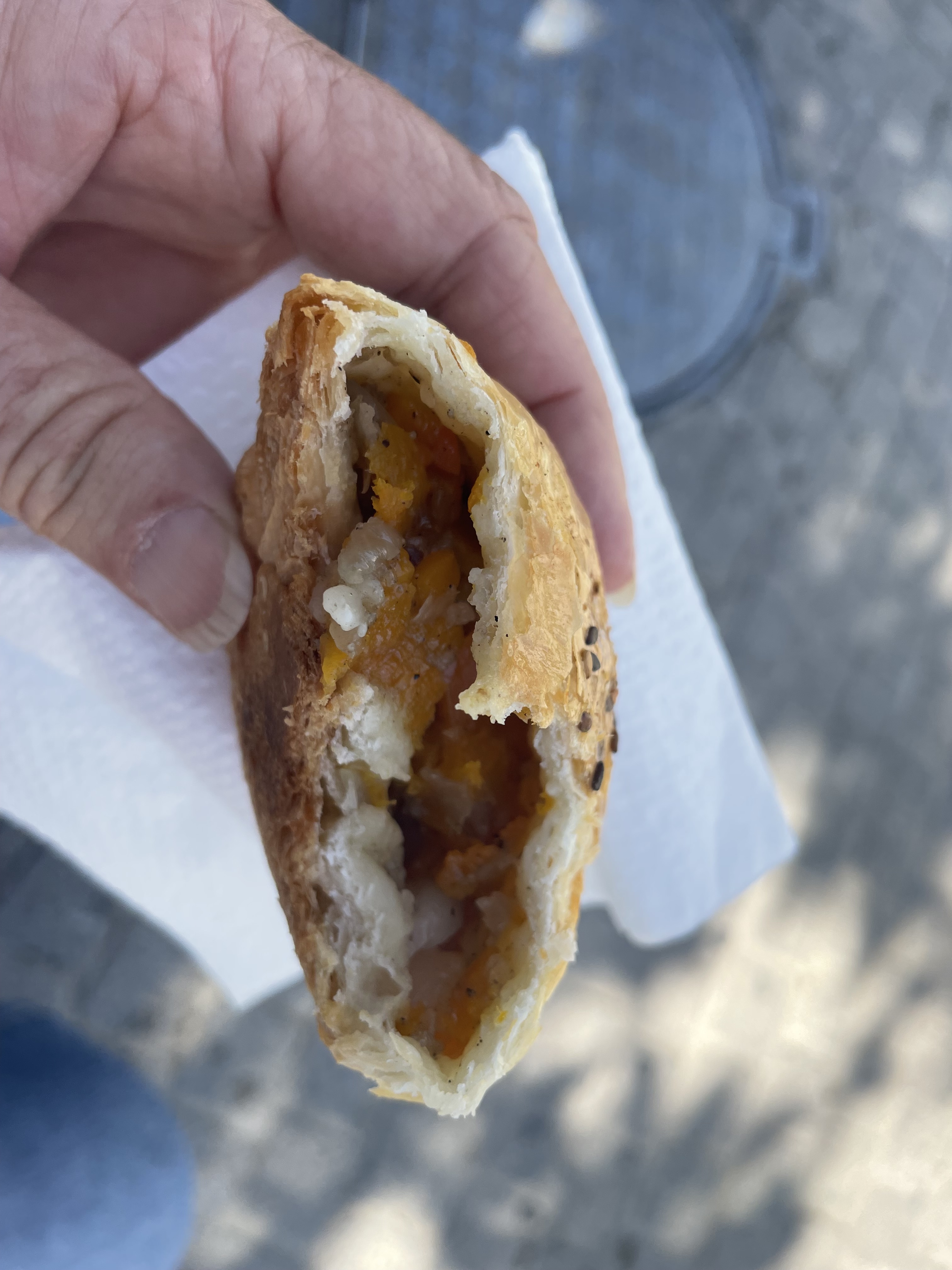
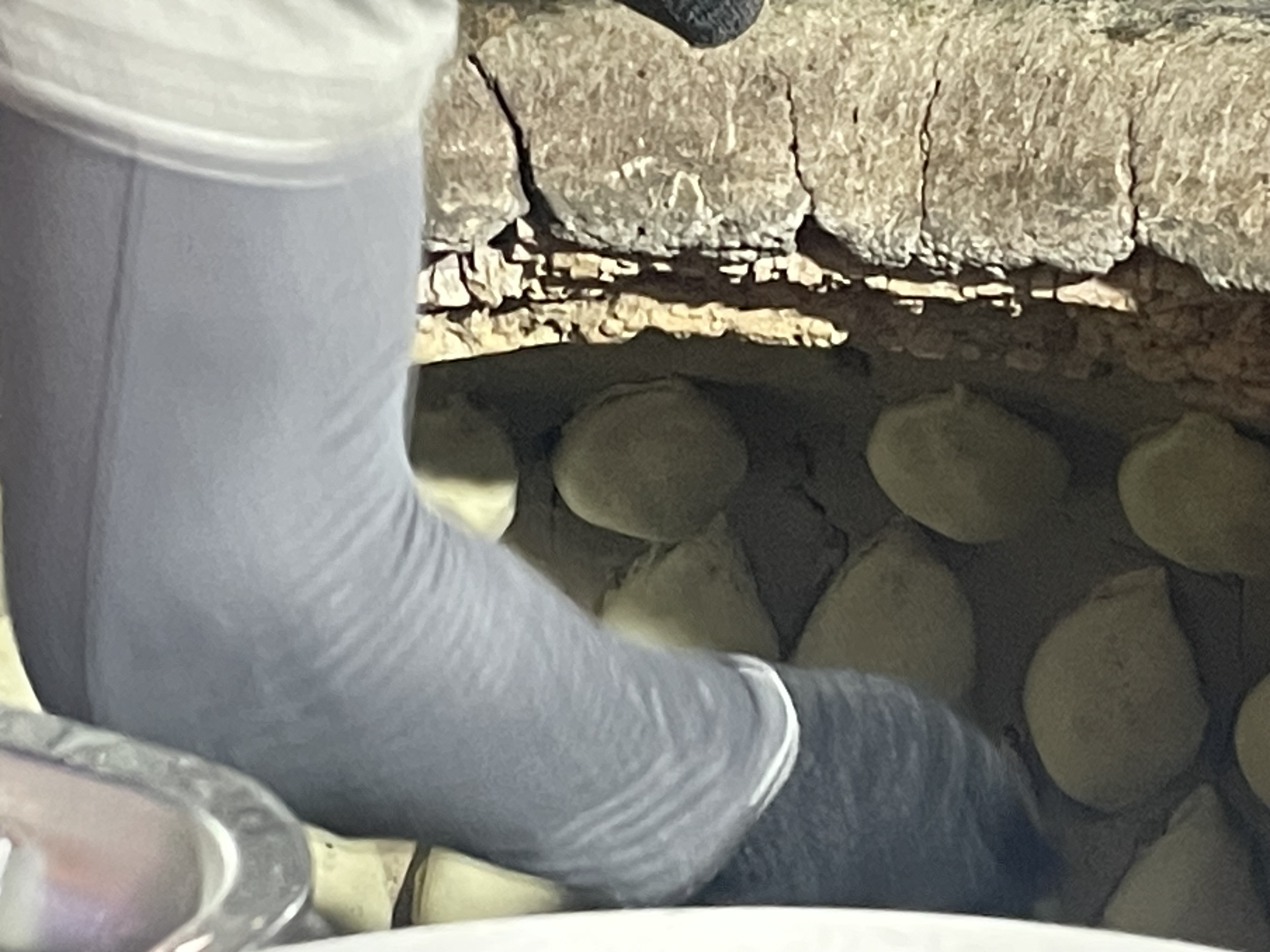
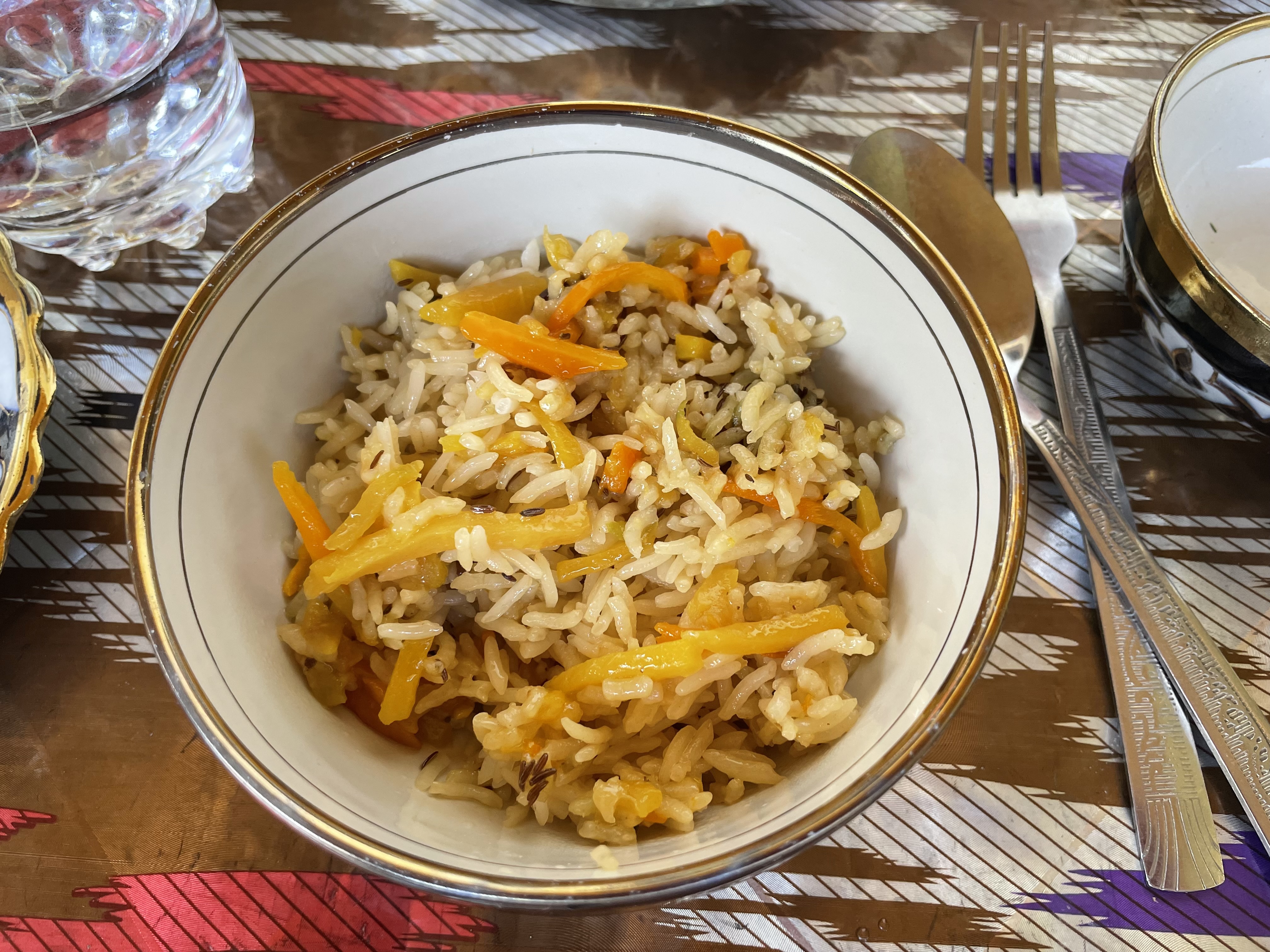
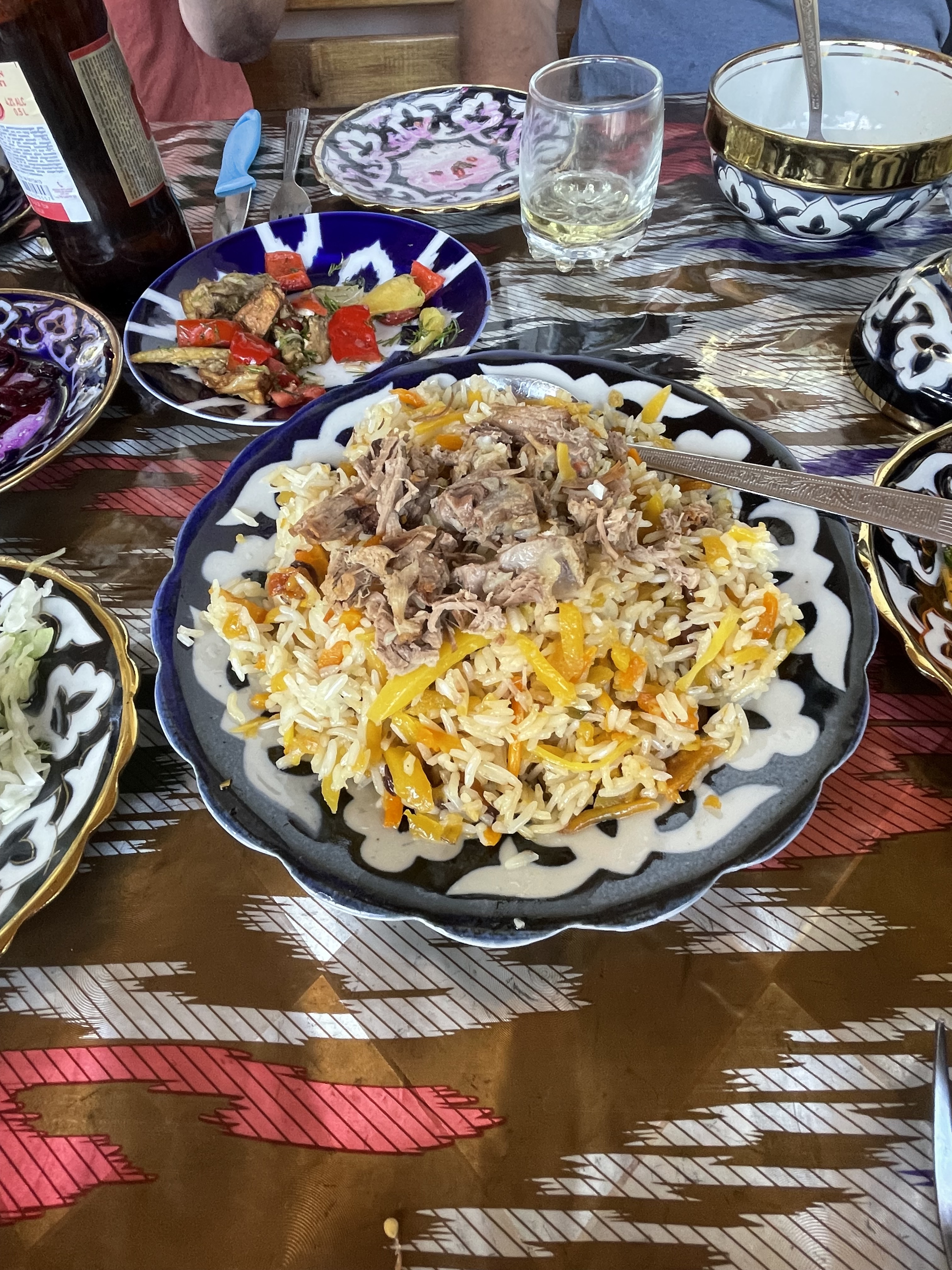
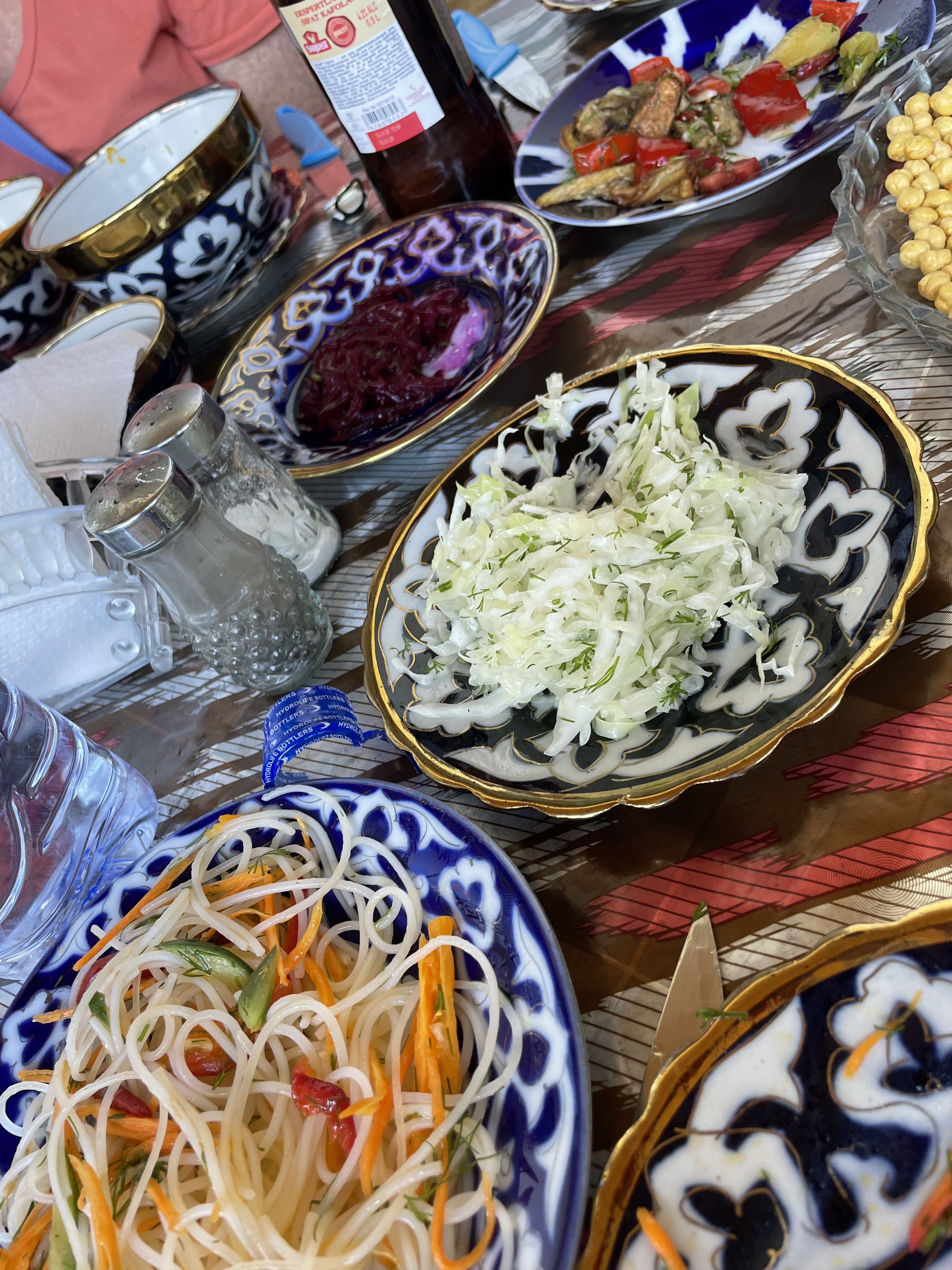
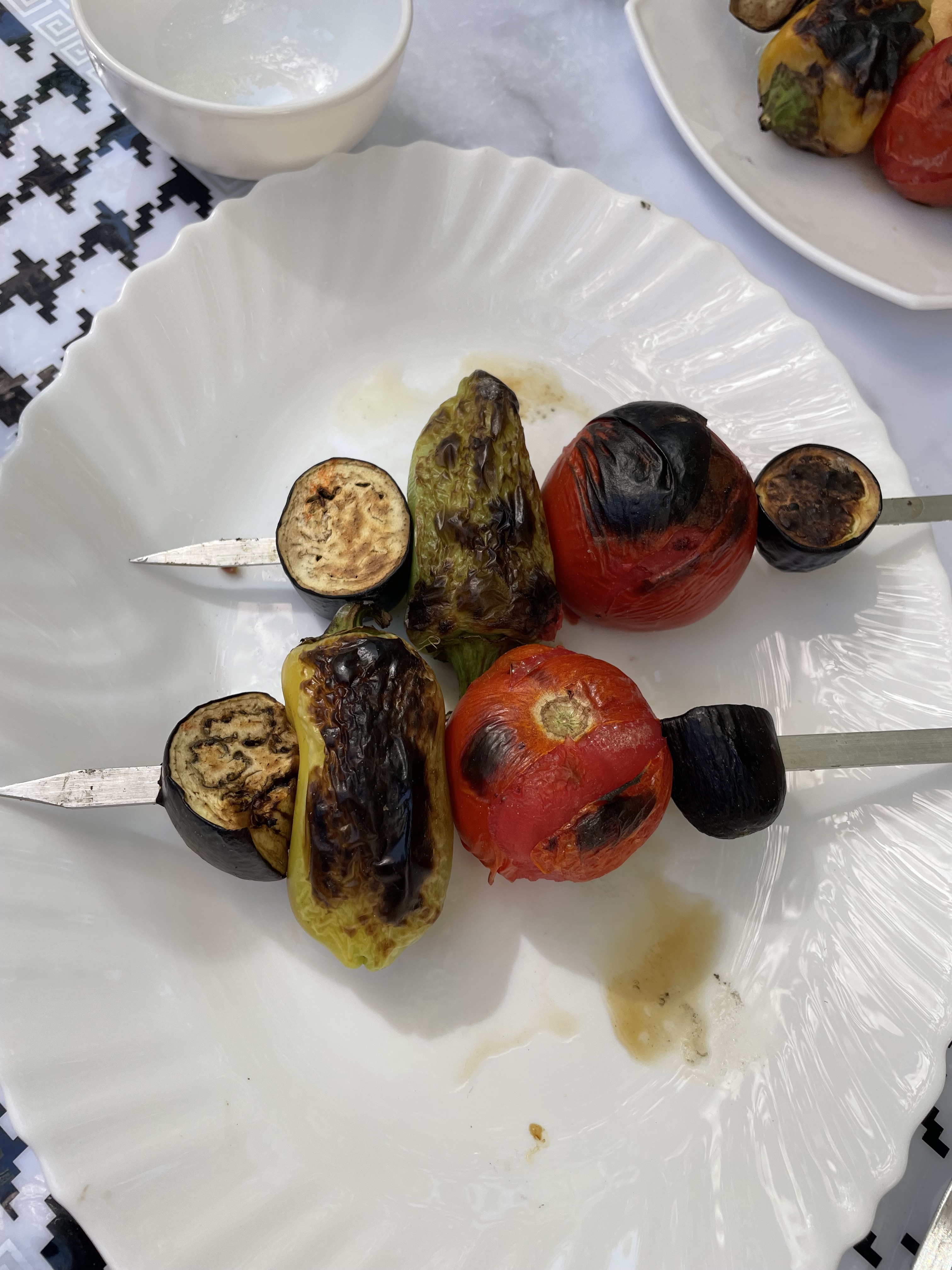
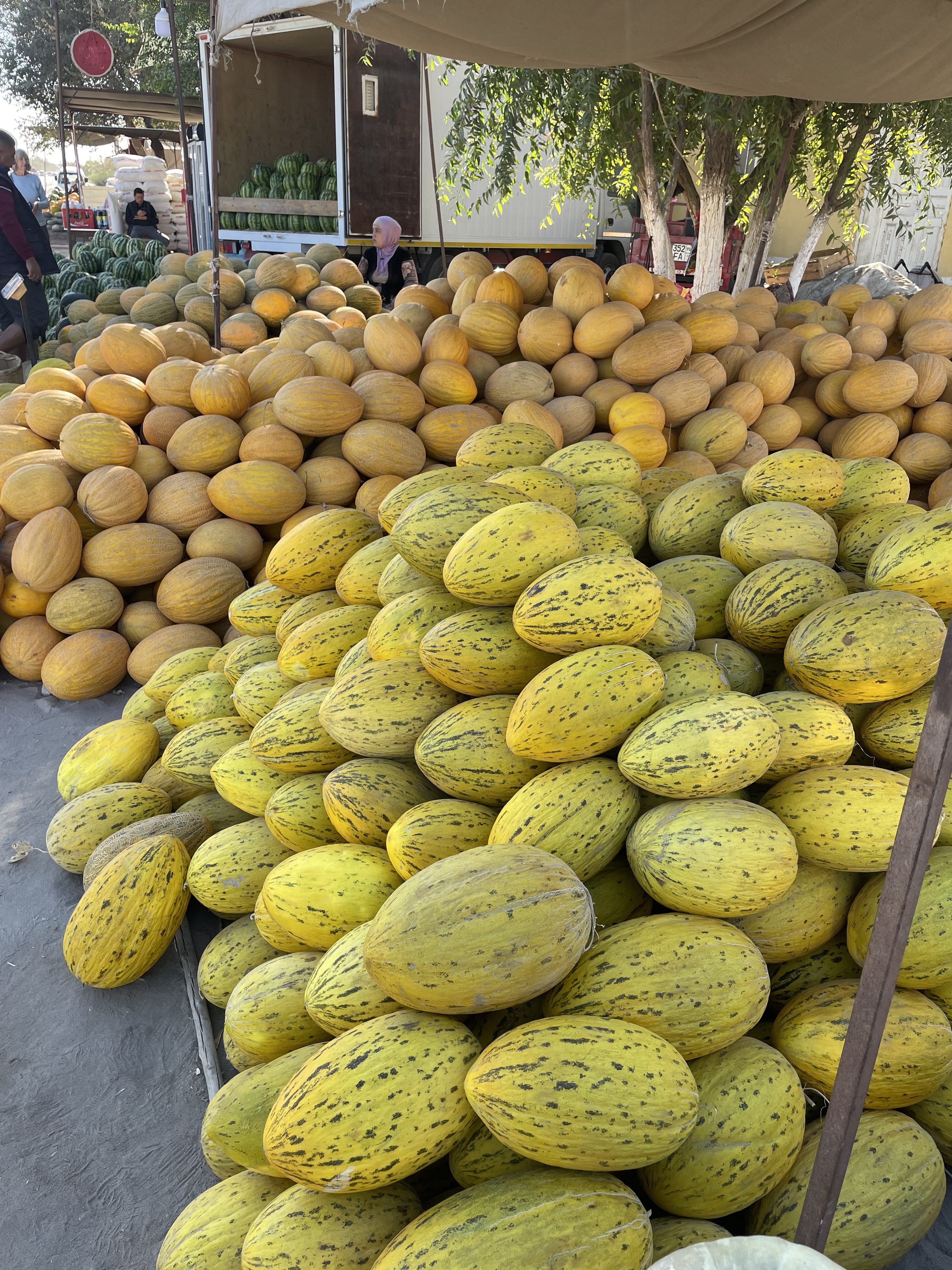
Although this is a very meat focused country, I was able to eat well. My first meal here was a pumpkin filled samsa which was delicious. They’re smaller than the size of my fist, baked in a tandoori oven and brimming with goodness – traditionally with meat but also pumpkin or cabbage. Kebabs were ubiquitous -lamb, beef, chicken, sometimes fish- though not often, mushrooms or vegetables-usually peppers, tomatoes and eggplant. Their national dish is plov. I loved the t-shirts with All You Need Is Plov written under images of the Fab Four with skullcaps on. I wish I had taken a picture. Plov is basically a seasoned rice pilaf but served with chucks of roasted beef or lamb on top. The vegetarian version is just as good. Dumplings are popular, filled with meat or pumpkin. We enjoyed a lot of salads – roasted eggplant and tomato, cucumber and tomato, shredded carrot or cabbage, beetroot, all of them very fresh and yummy. Soup is often served – creamy lentil seemed to be on most menus. Lagman is a regular restaurant offering, basically thick noodles cooked with meat and veggies, vegetarian version available occasionally. When we had dessert, which thankfully wasn’t often – I’m watching my waistline, it was fruit or an apple strudel. White melon, a variety I haven’t seen before is everywhere and very good, sweet but not with a big flavor like cantaloupe. And bread, bread is on every table, flat dense loaves which is served with a very soft white cheese. The breakfast buffets had some nice cookies on them, often shaped like a crescent moon, one of their state symbols.
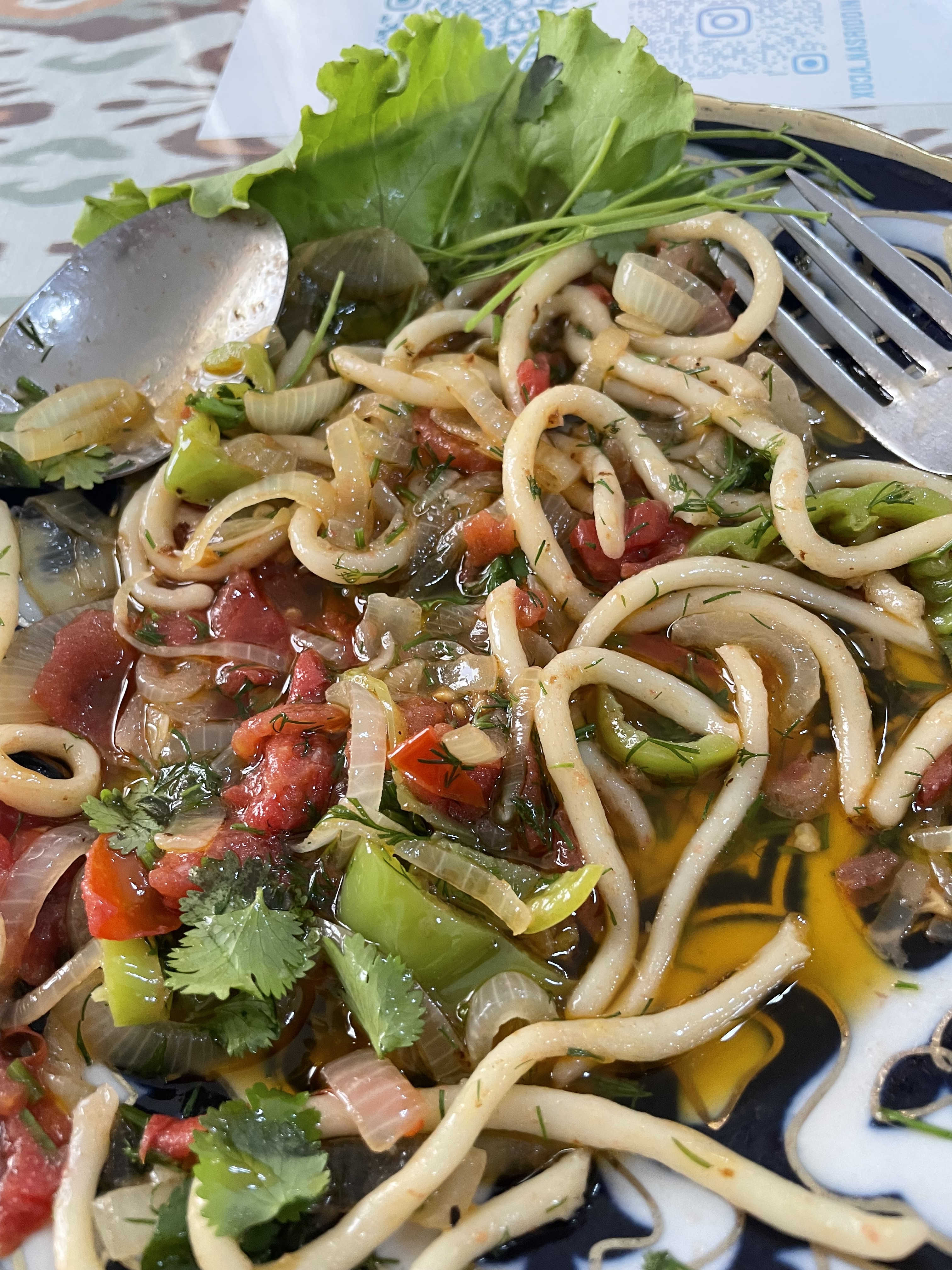
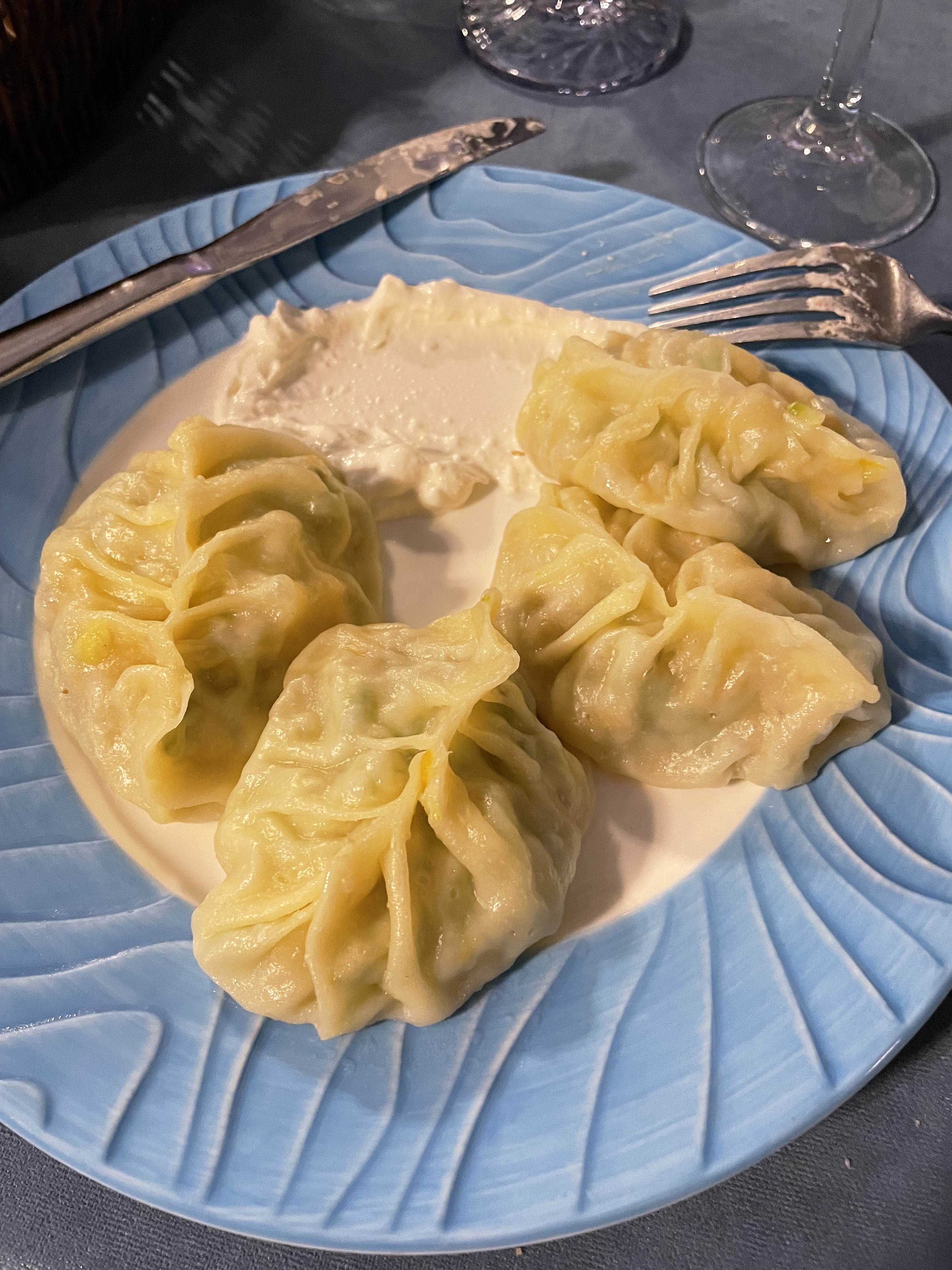
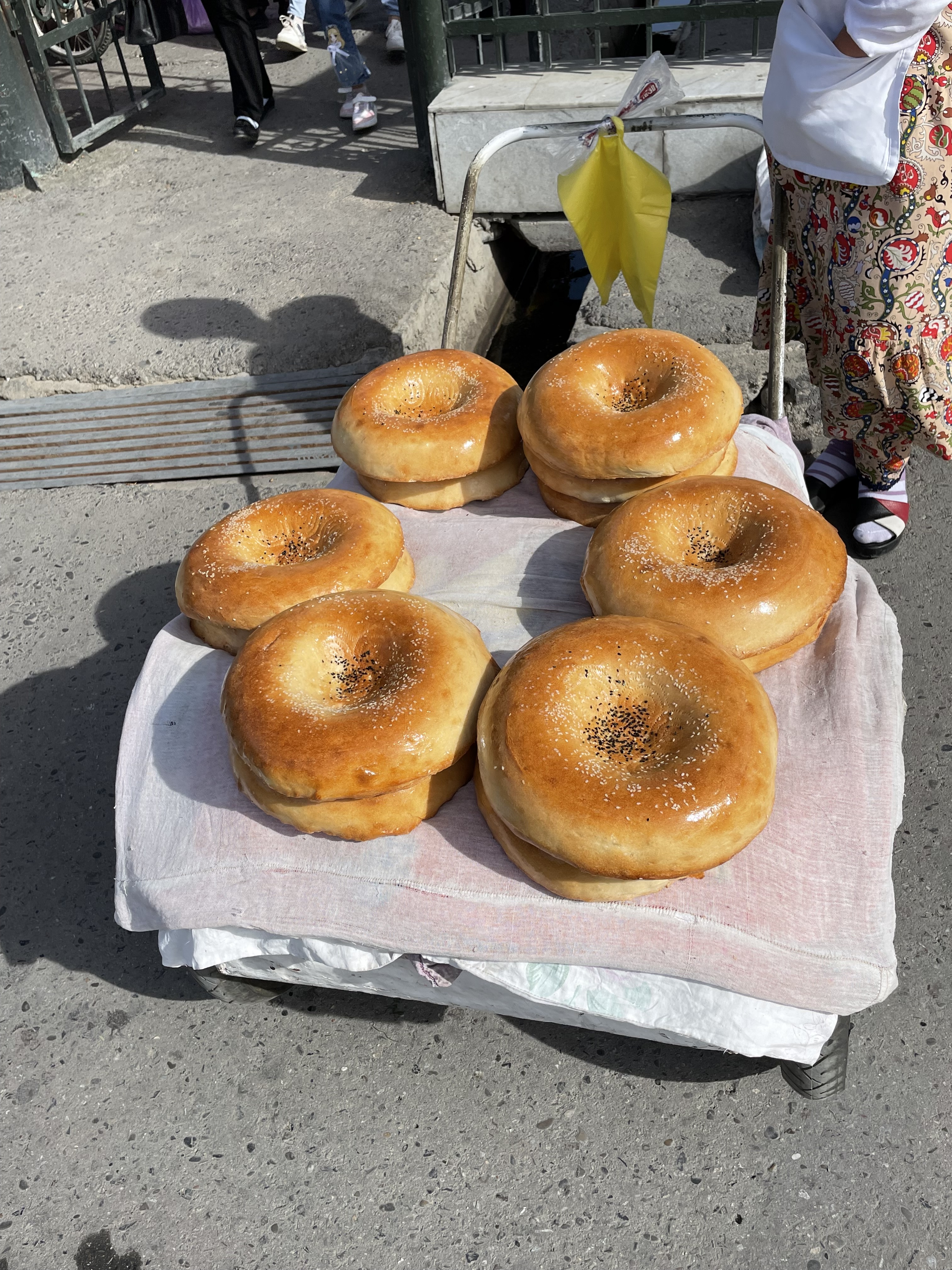

The first night we went out to dinner as a group, our bill came to almost 2,500,000 SOM. It’s hard to wrap your head around spending 150,000 on a meal but that’s just $12, which includes wine. You have to carry around wads of cash as most places don’t take credit cards especially with large groups. I was constantly hitting up the ATM machine. Books I read here were The Railway by Hamid Ismailov and The Tales of Hodja Nasreddin: Disturber of the Peace by Leonid Solovyov
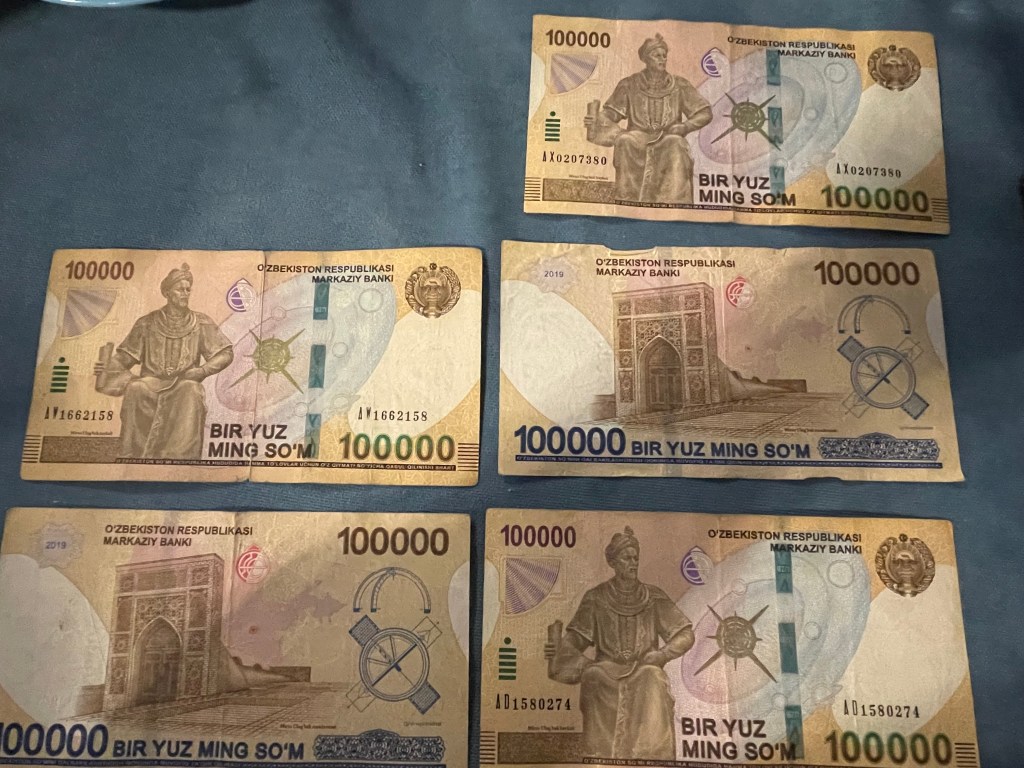
I enjoyed my time here immensely and will add other countries in Central Asia to my must visit list.
Next up-India (I’m there a month so it will be a while before my next post.)


 Where in the World is Debra Grimes?