“It’s so off the charts and off anybody’s radar screen, that place. It might as well be another planet. Just try to find someone who’s been to Madagascar. Nobody has been to Madagascar.” David Douglas
August 19-September 1, 2023
I normally write about what I see that is different or unique about a place, but before I do that, I want to note that everywhere I’ve gone there is an underlying likeness. In every country and city, there are children playing, friends holding hands, young men swaggering, beautiful girls sashaying, couples dating, marriages consummated, babies born, divorces decreed, and funeral services held. People go to work, school, church, the market and to visit family and friends. They cook, they clean, they break bread together, they laugh and smile, they cry and wail, they wonder and lament, and they talk about politics and the economy. The roads are filled with buses, cars and other vehicles. There is morning and evening rush hours and traffic jams. There is a busyness in peoples lives in their corner of the world and very few live beyond it.
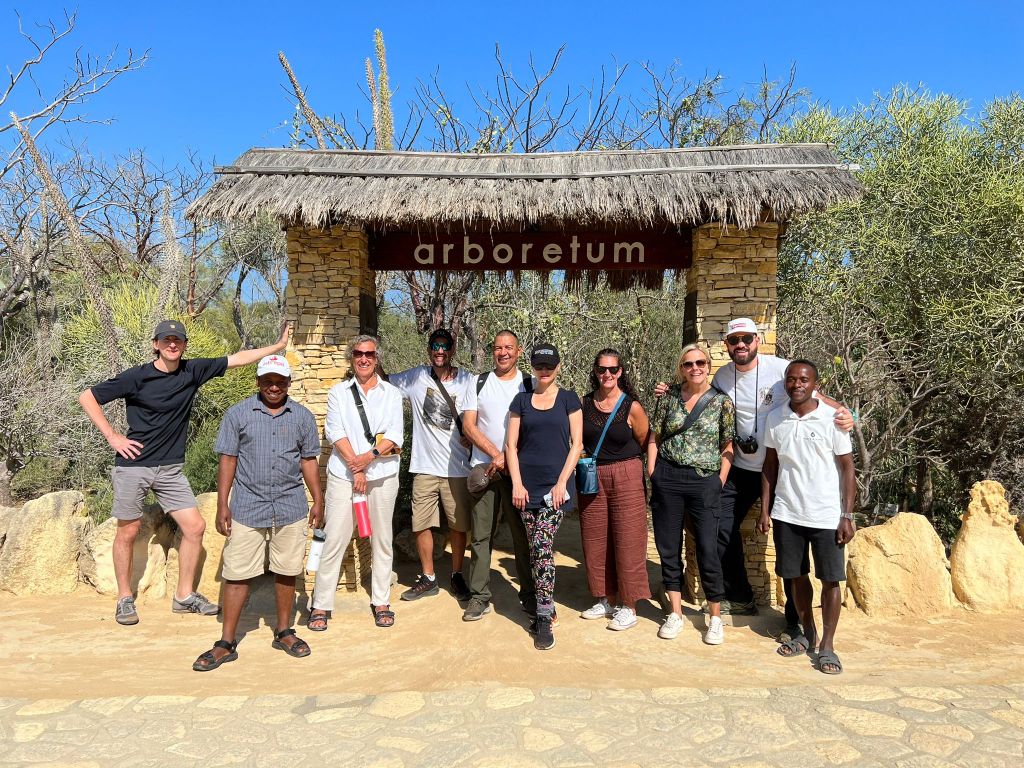
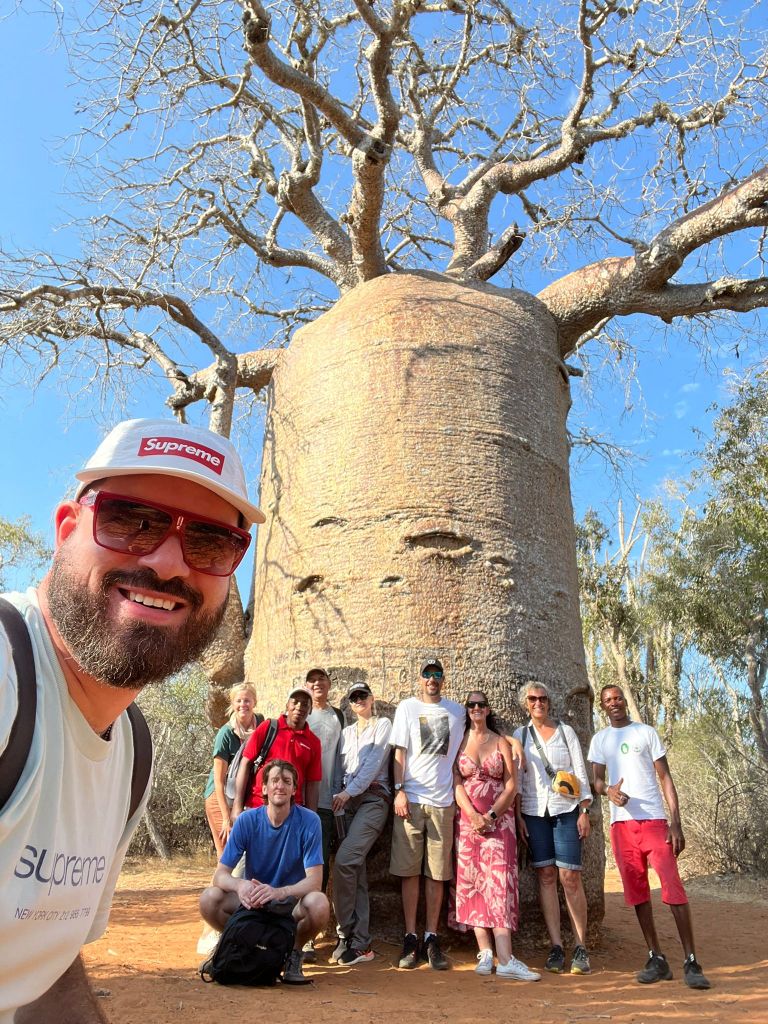
I saw all this and much more in Madagascar. I was so lucky to experience these last 14 days with a wonderful group of people including our guide from Intrepid, Barnabas. He is a warm, caring and knowledgeable man who kept our feet grounded in the realities of what surrounded us. There was Zios, a 6’4″ Greek man, living in Johannesburg via London and Dubai. His enthusiasm was infectious. Ani, a New Yorker born in Germany, captured the minutest details on her camera. Phil, originally from Scotland, now living in London, was quiet and calm, a perfect foil to Zois, his roommate. Pamela and Frank, Kiwis, living in Australia had the most interesting jobs in the mining industry, consummate travelers both. And Esra, originally from Turkey, living in Johannesburg with her husband Khoti, a very warm and gracious couple. It was a very supportive company and everyone rolled with the punches, considering the long days on our bus, over bumpy, windy and well-traveled roads.

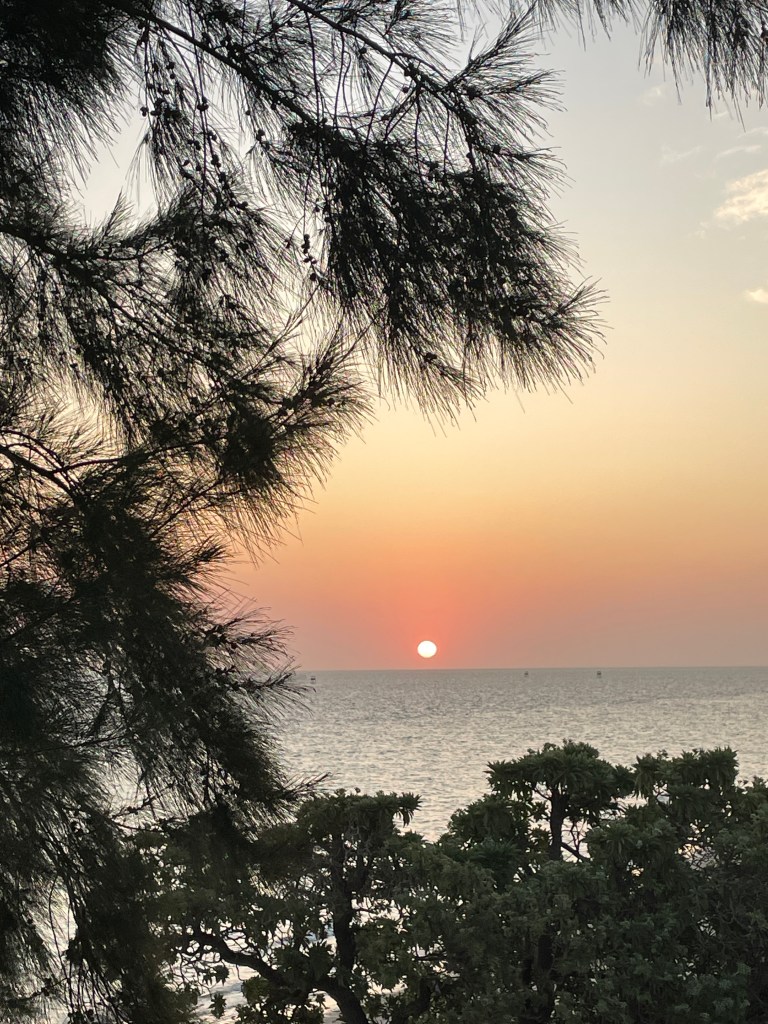
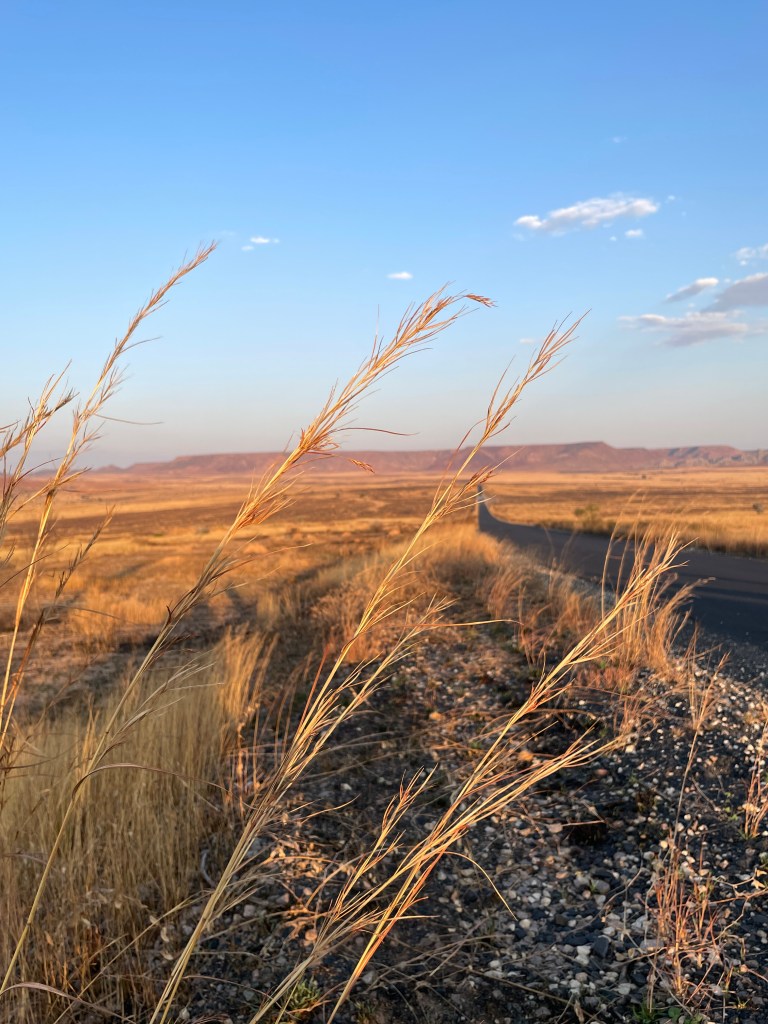
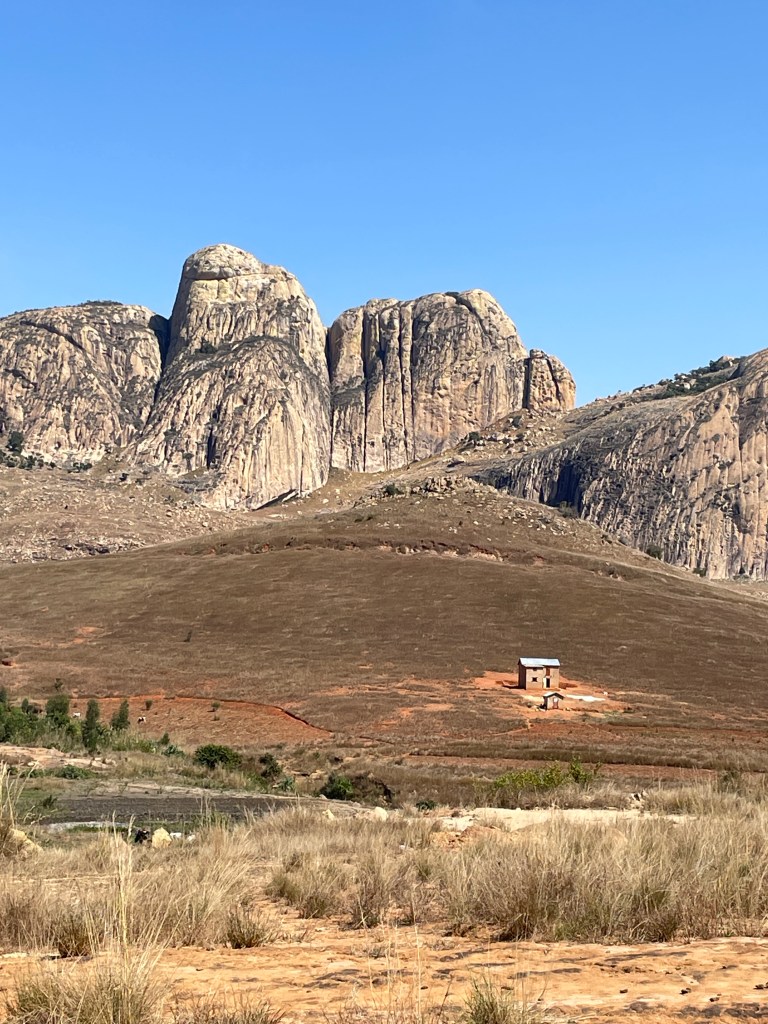
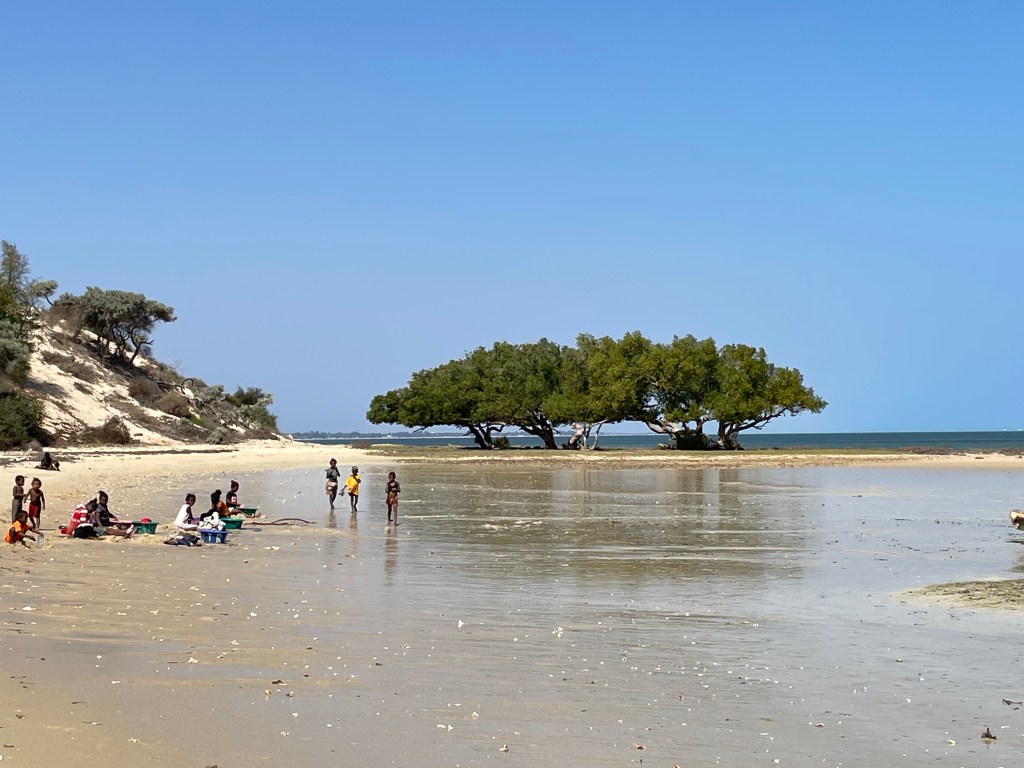
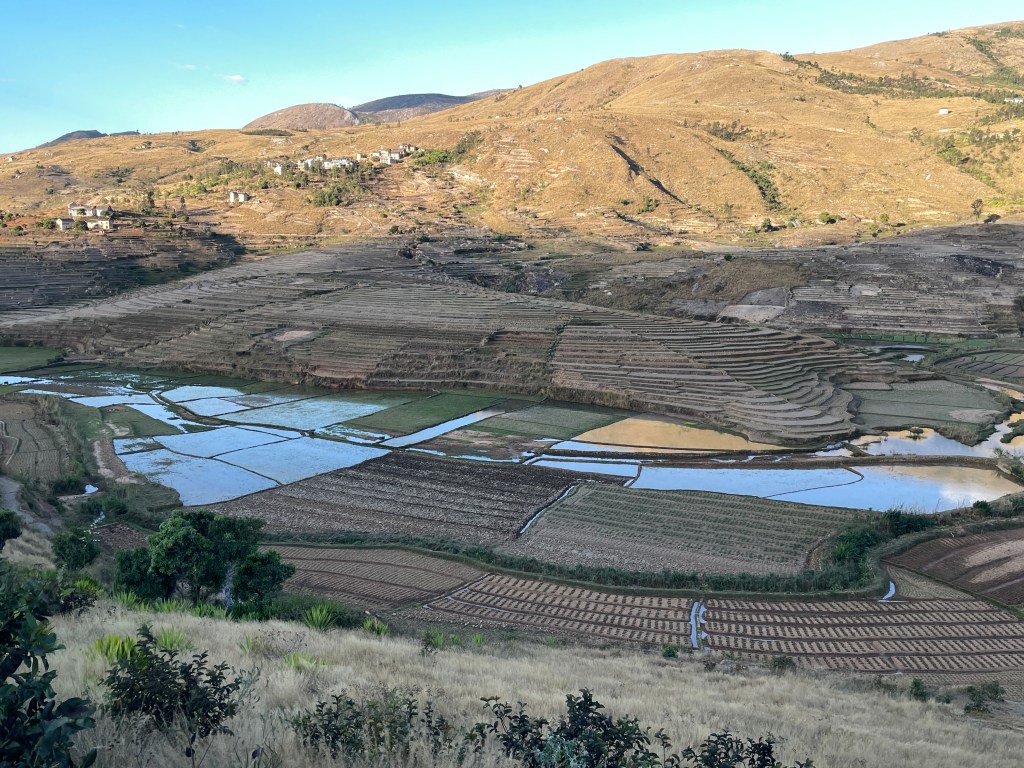
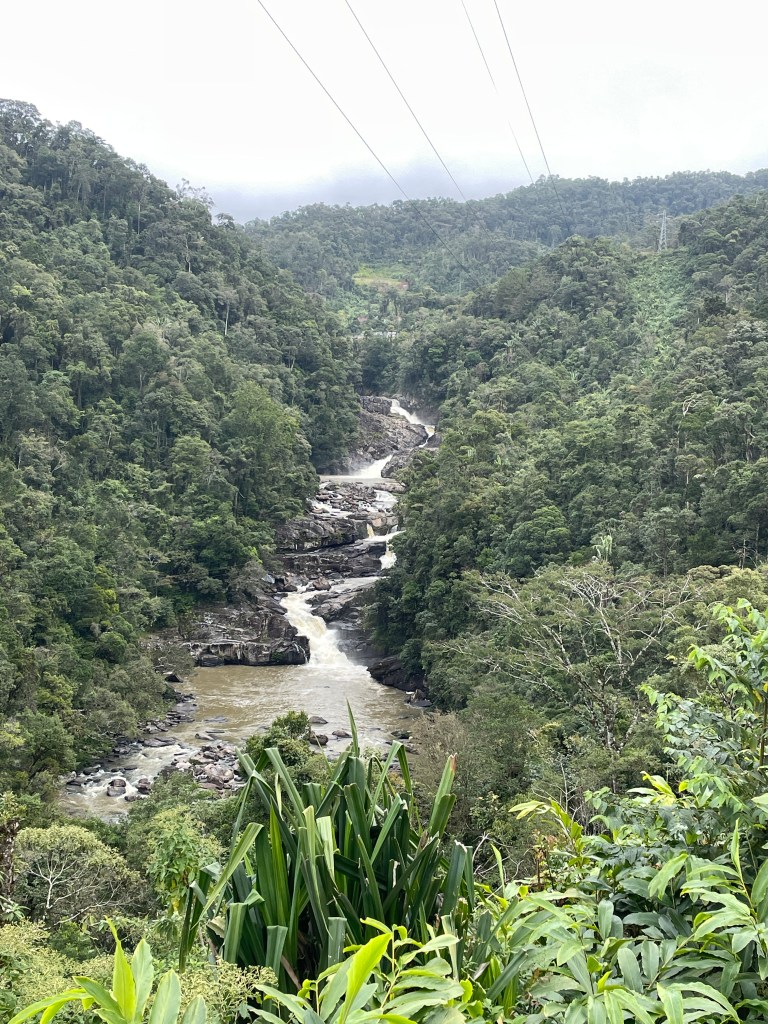
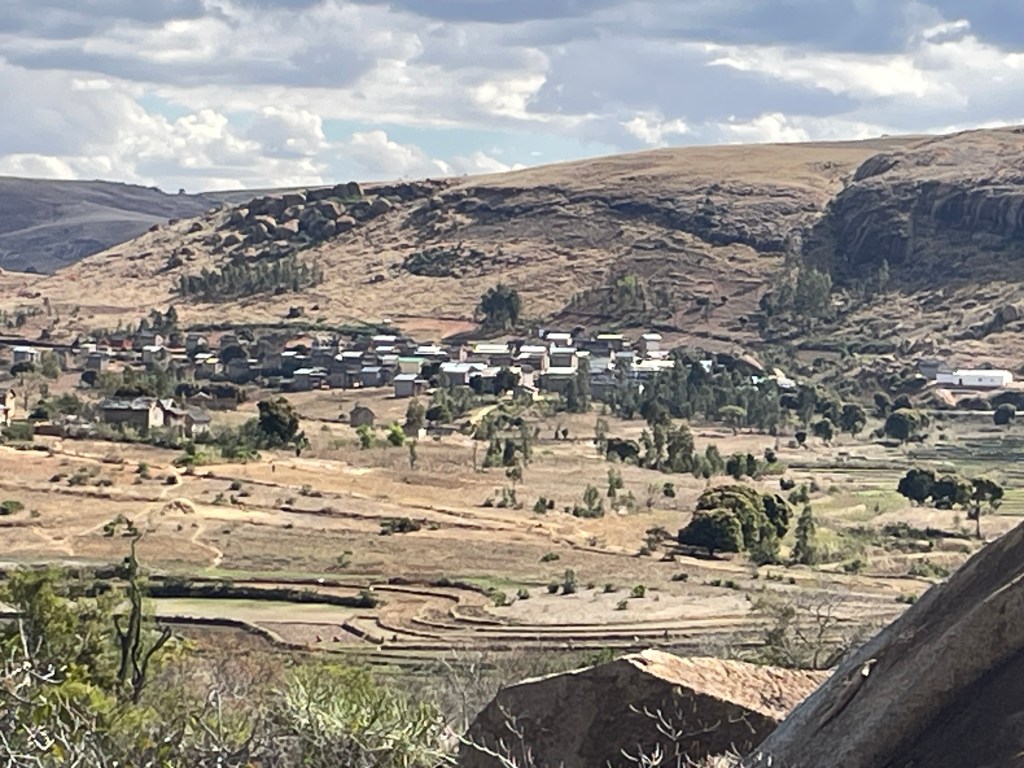
We traveled over 750 miles through rural and remote areas, villages, towns and the capital city of Antananarivo. Only about 20 percent of the 29 million people who live in Madagascar live in urban areas, the capital is home to 4 million people and another 1 million plus live in towns scattered across the country. Madagascar is the 4th largest island in the world and is slightly smaller than Texas. Its terrain is very diverse. We traveled from the seaside on its south western coast through savannas with amazing and beautiful out cropping of rocks and low mountain ridges, through rain forests high in the hills, and beautiful valleys filled with rice, cassava, beans, squash, corn, carrots, cabbage, and so much more, to the mid-eastern region. We hiked through the rain forests, through rice paddies and villages, through a wide savanna canyon with hidden oases, home to cold water pools, and along the beaches of the Indian Ocean. It is a beautiful country filled with exotic flowers, interesting animals, unique trees and amazing plants. There are zebu everywhere, a sign of wealth for the Malagasy people.

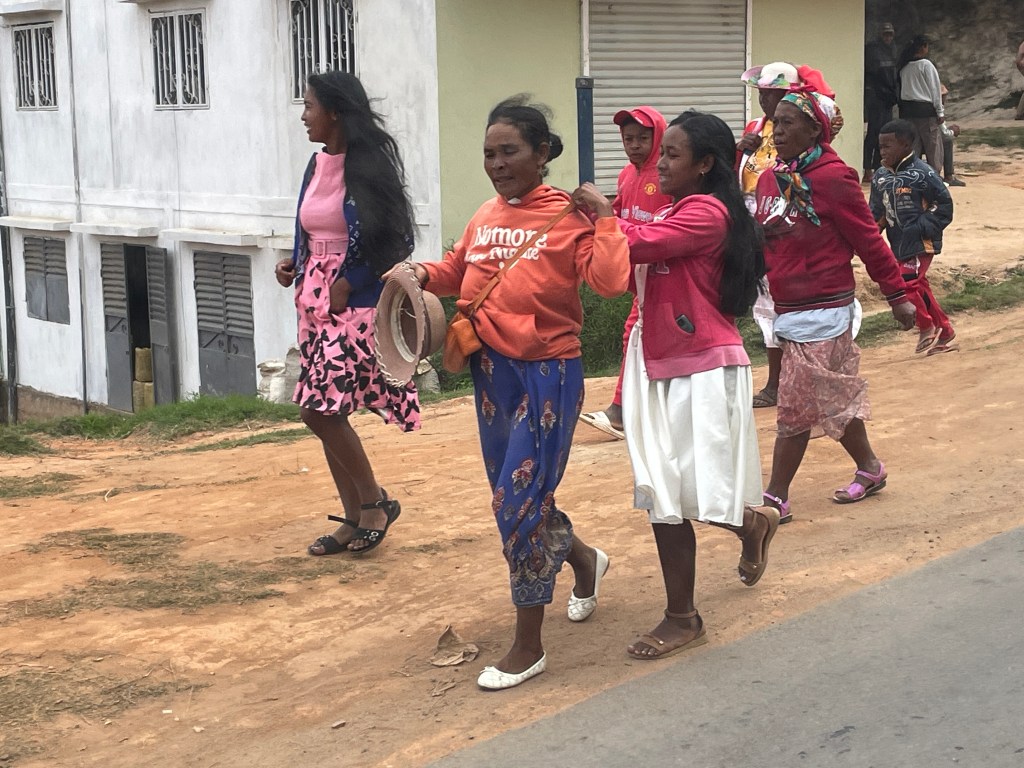
I was surprised when the first people I met from Madagascar at the Maputo airport looked like Polynesians – short, light skinned and long dark hair. And even more surprised when I arrived and the majority of the people were similar. A big swatch of Madagascar, including the capital, was settled by Malaysians and then later Indians joined them, so their slight builds and stature, and long straight hair evolved from that ancestry. The southern area was settled by Africans and the north by Arabs. So there is a mix throughout the country. Our guide, Barnabas was around 5 feet tall, a dwarf compared the the tall Europeans of our group.
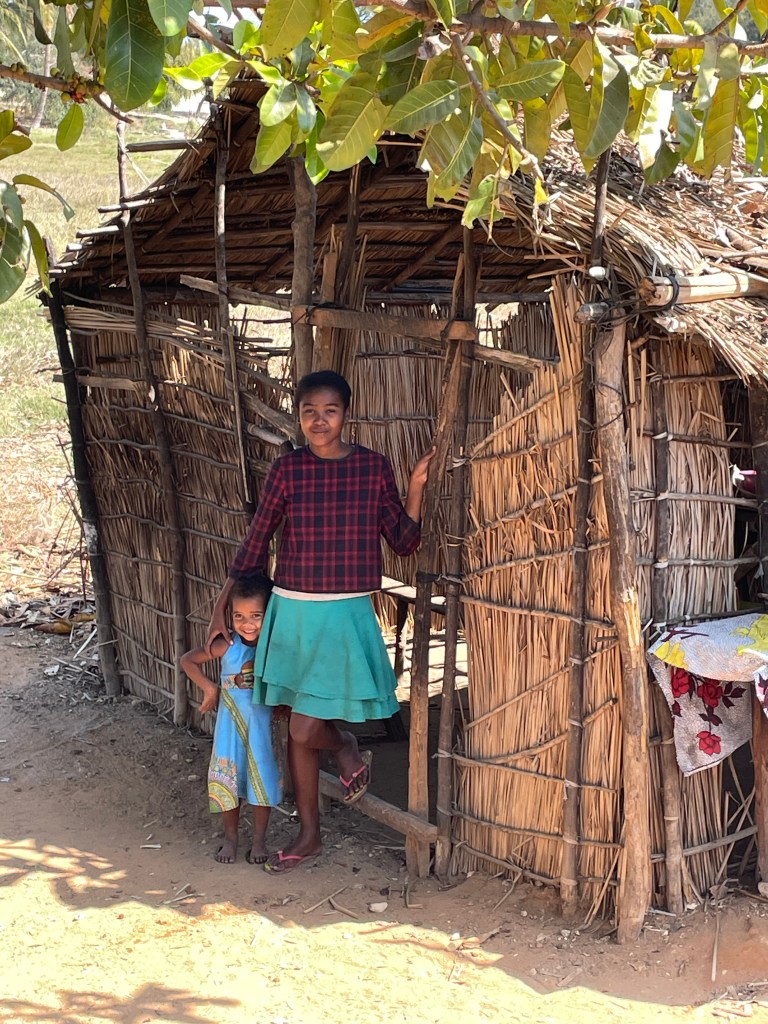
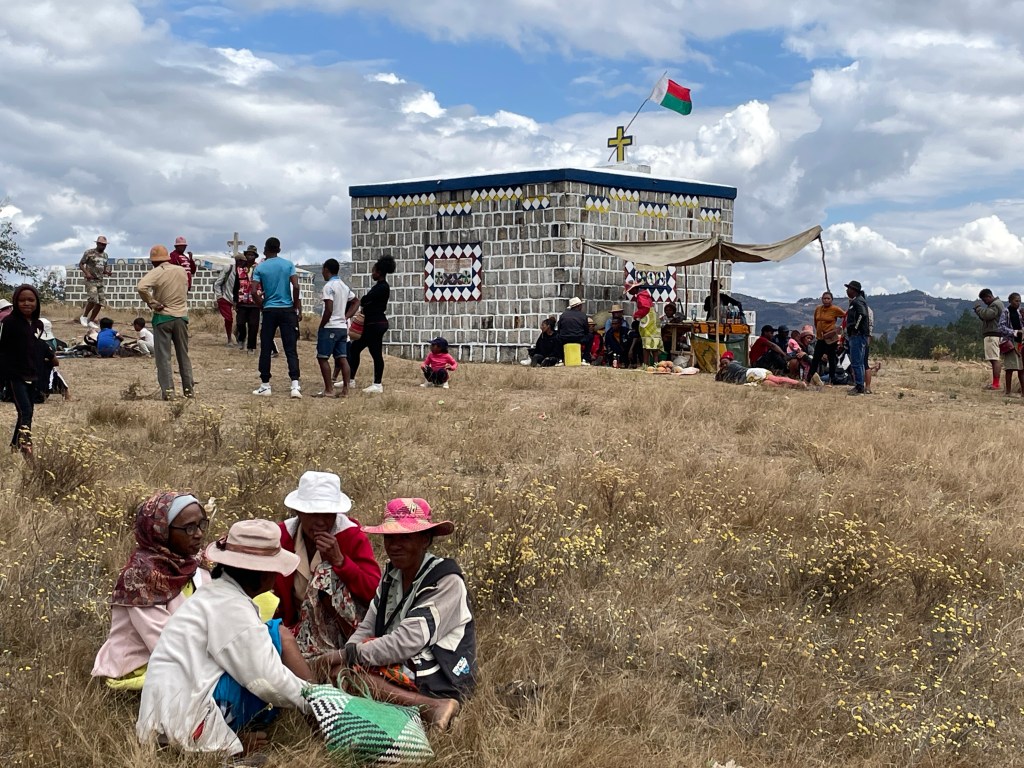
There are 18 tribes in Madagascar, each with its unique approach to living. One tribe, descended from the Masai, has only the most basic of homes instead their money is invested in zebu. The more zebu you have, the richer you are. Another believes that this life is not as important as the afterlife, so spends their wealth on their tombs. Big above ground mausoleums are brightly painted, often with their picture front and center. Another, invests in their houses. They may start with a basic two story structure with a thatched roof, but soon add a veranda and a deck, another wing or floor, or a tin roof, displaying their prosperity for all to see. Some of the tribes, don’t hold a funeral for a loved one right way, instead storing their remains in a cache of rocks until they have saved enough money to buy a zebu or two to feed the guests that come to honor the dead. Some only bury the bones, removing any flesh or sinew that remains before putting them into the tomb, others wrap the bodies in a shroud for burial. Some have individuals tombs as mentioned above and others family tombs. They turn the bones every seven years, gathering together for a feast and remembrance. We stopped by a bone turning, where there were hundreds of people. Men were chopping up zebu on blankets on the ground, people were talking in groups, there were tents with items for sale and tables for guests to pay their respects, leaving rice and money for the family. A great crowd was gathered around a party of men dressed in red suits with top hats and white sashes and women in long flouncy dresses, who sang and told stories


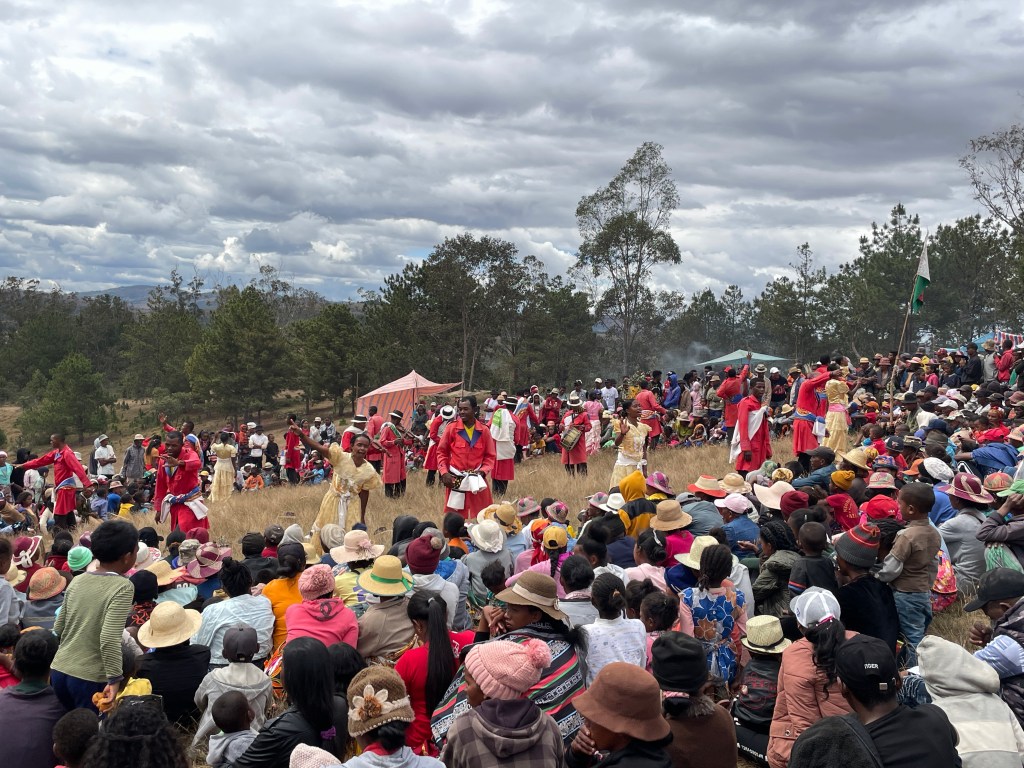
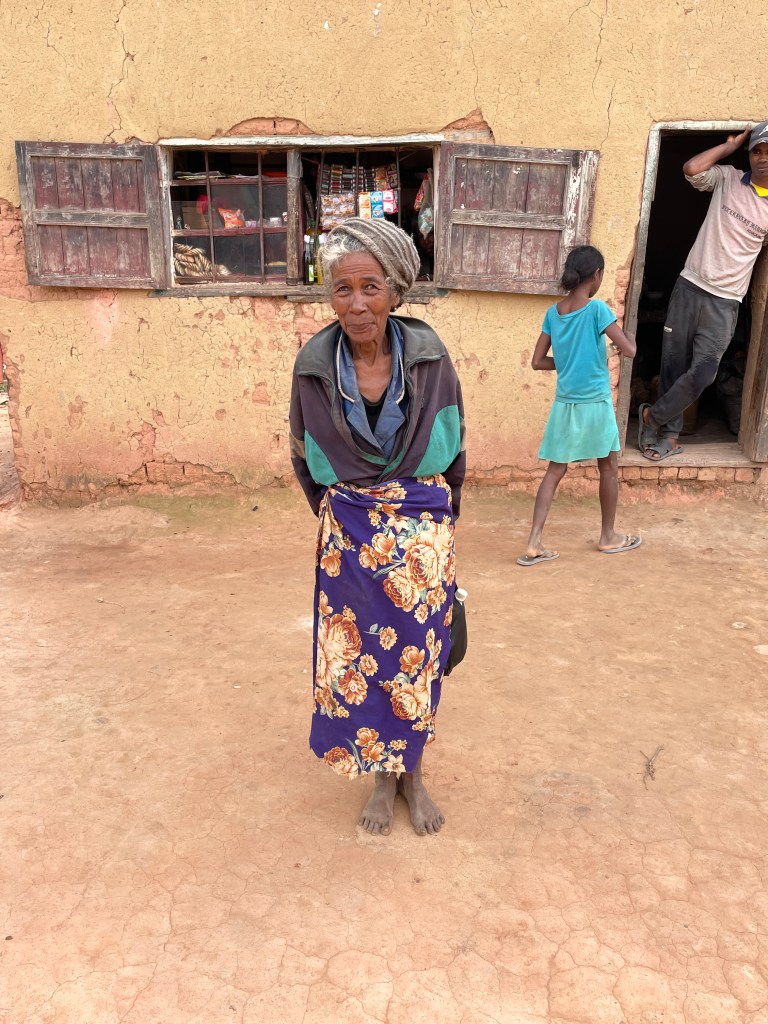
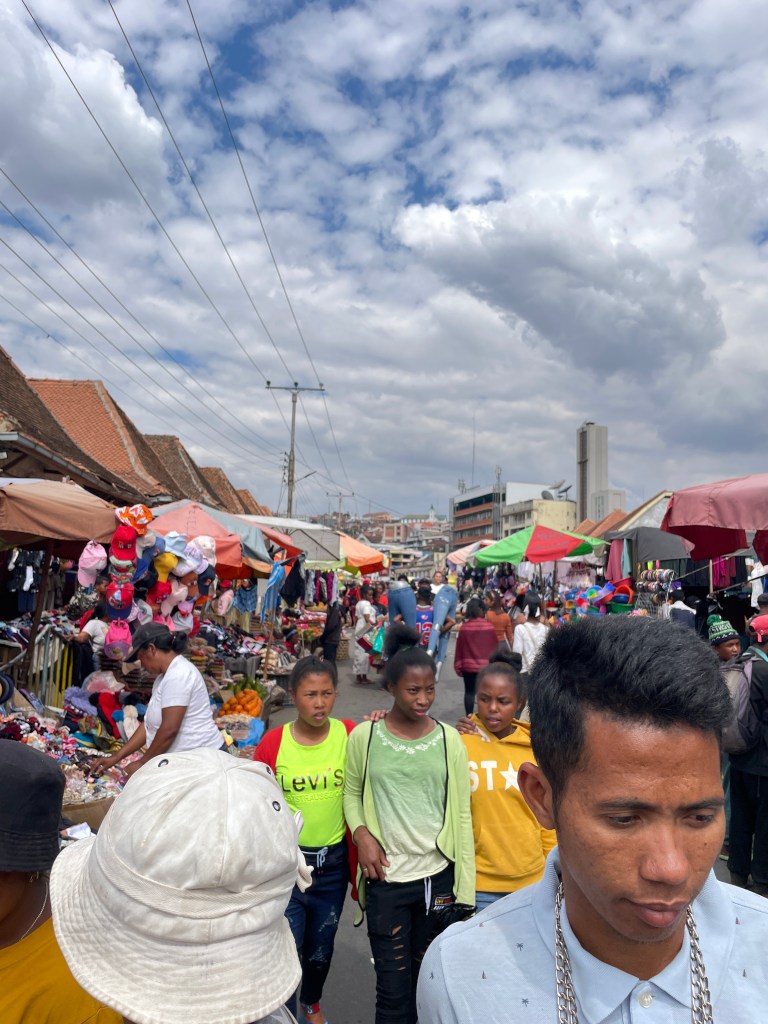
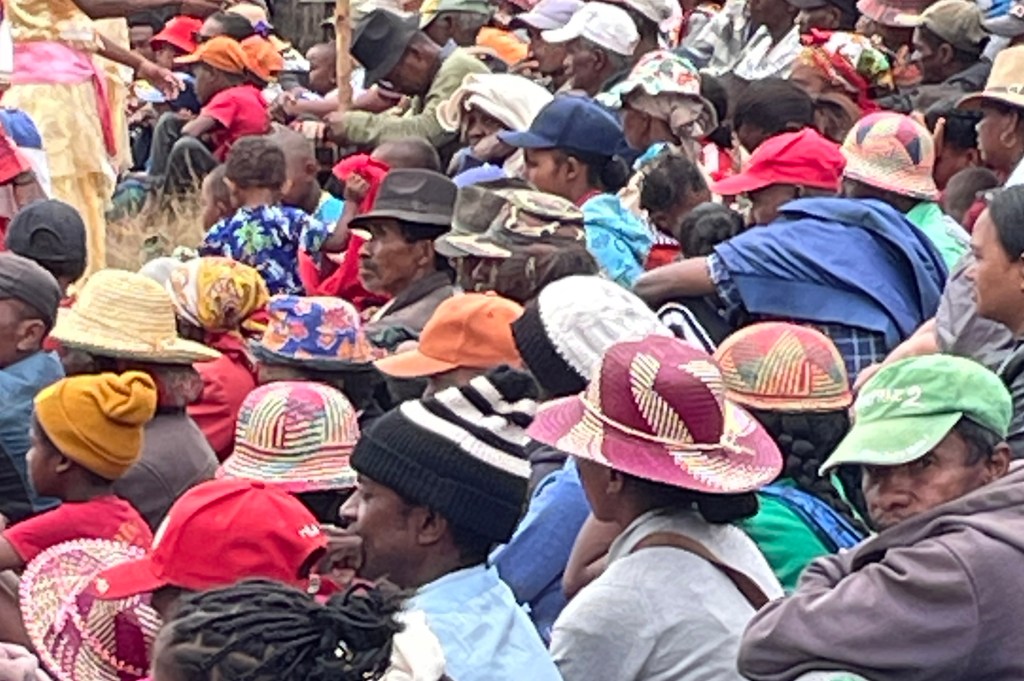
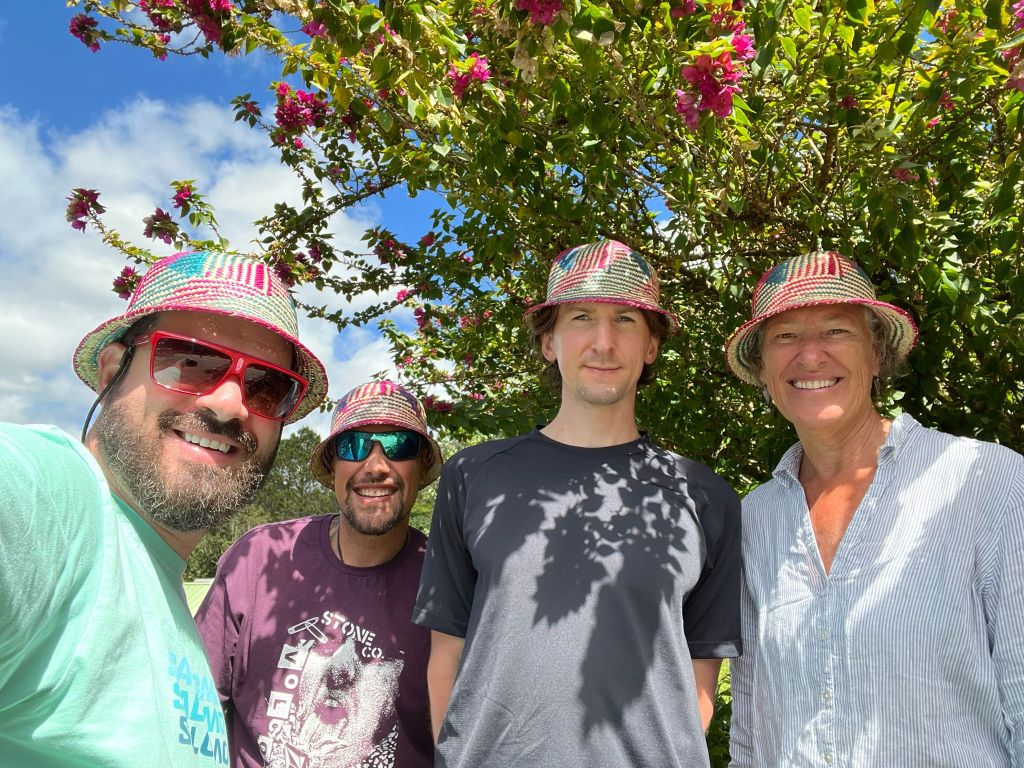
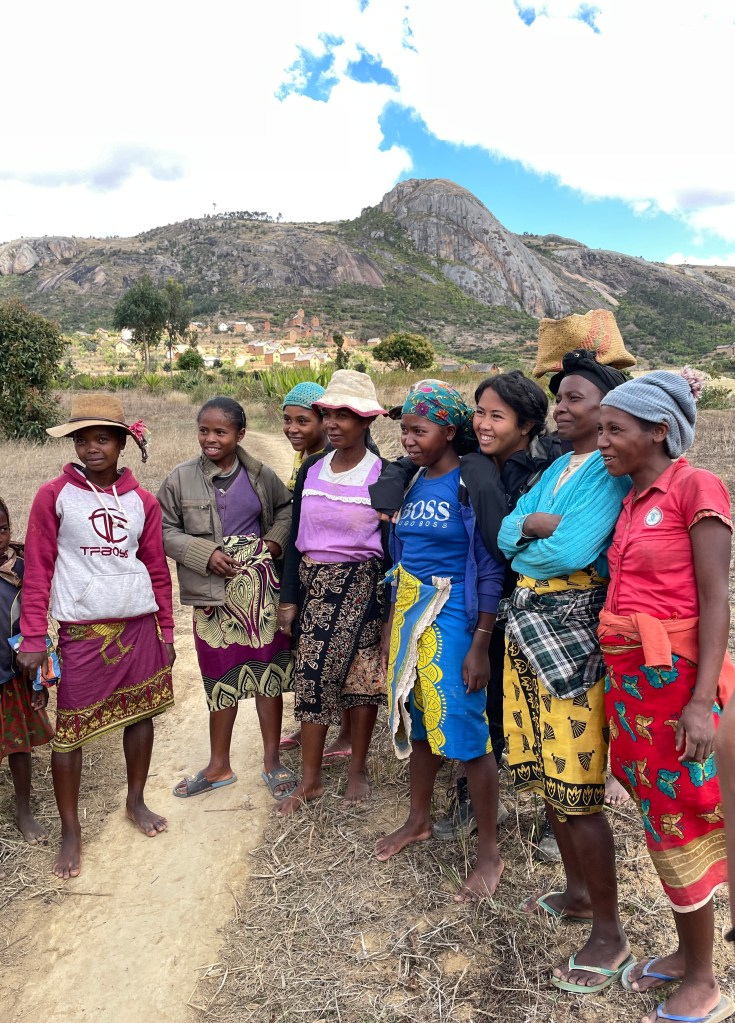
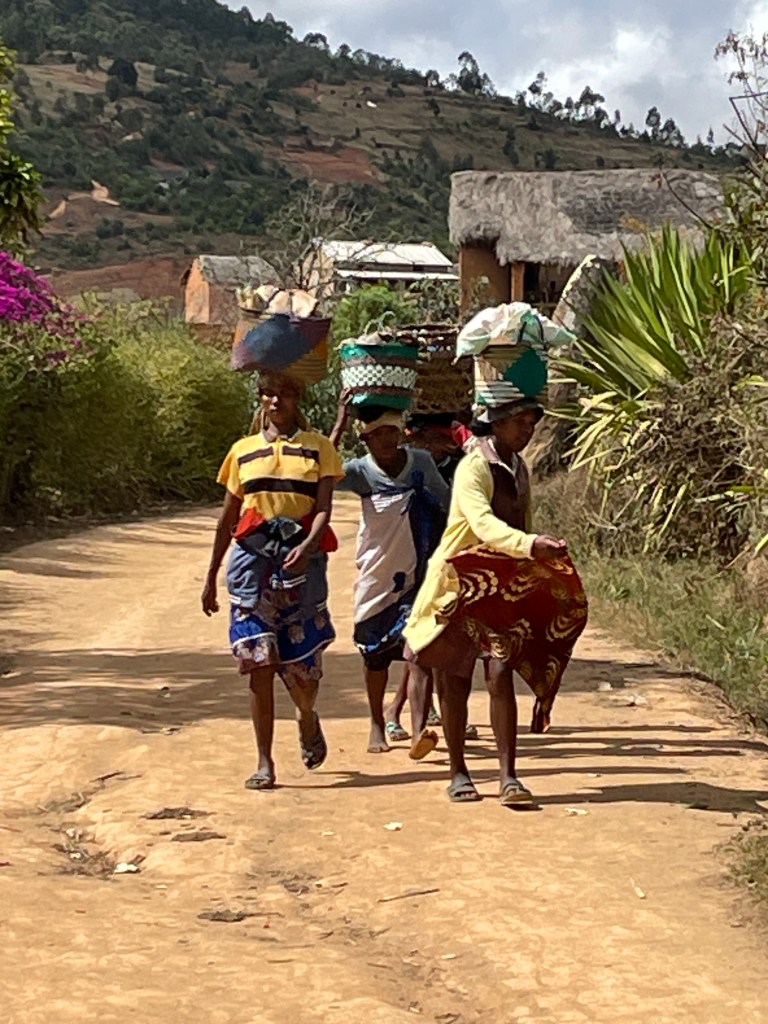
In Antananarivo, most people are dressed in western clothing. In the country side, western wear is still everywhere but it is added to the traditional lamba, a large piece of cloth used to swaddle a baby, as a dress or sarong, as a cape or jacket and as a shroud at the end of life. Traditionally, lambas were made of silk, cotton and even grasses. Now, there are a large variety of colors and patterns especially with today’s fabric, some are very expensive. Hats are everywhere in Madagascar, especially in the valleys. There are traditional straw hats – bright, multi-colored and shaped somewhat like a pith helmet, straw hats with various sized brims with bows and ribbons for the ladies, ball caps, bucket hats, stocking hats, and Panama hats, etc.

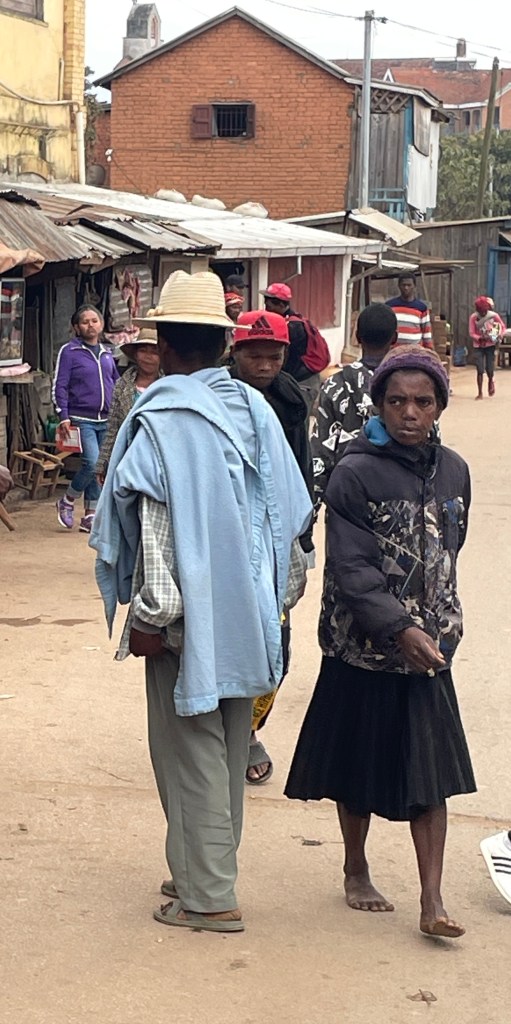
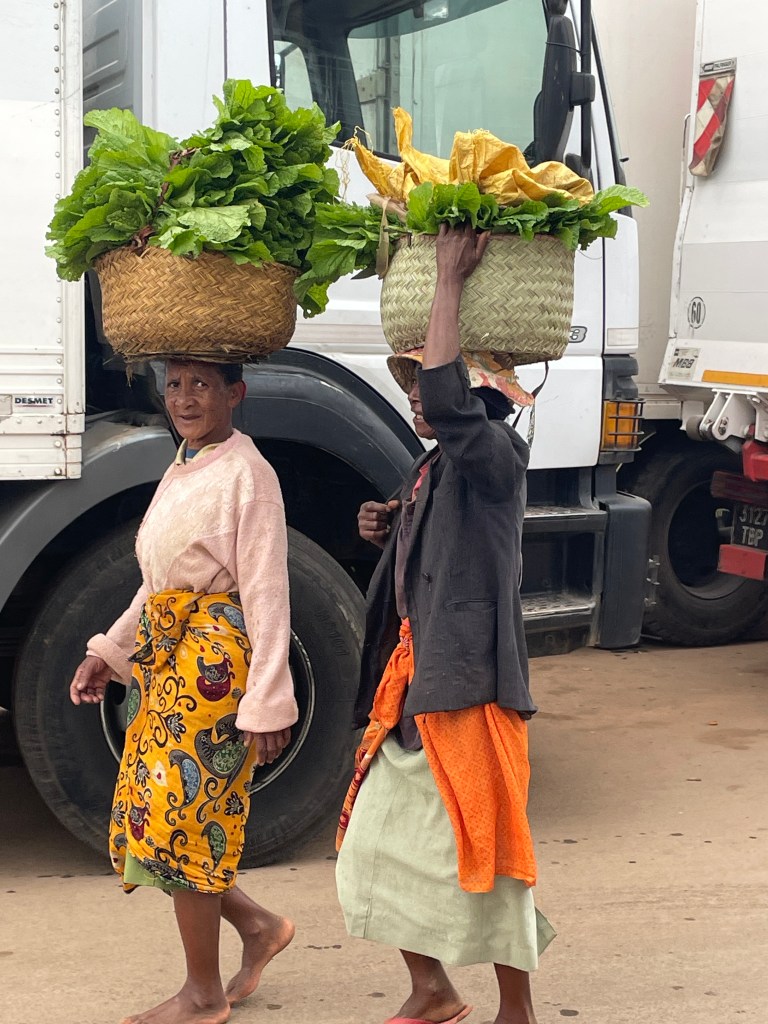
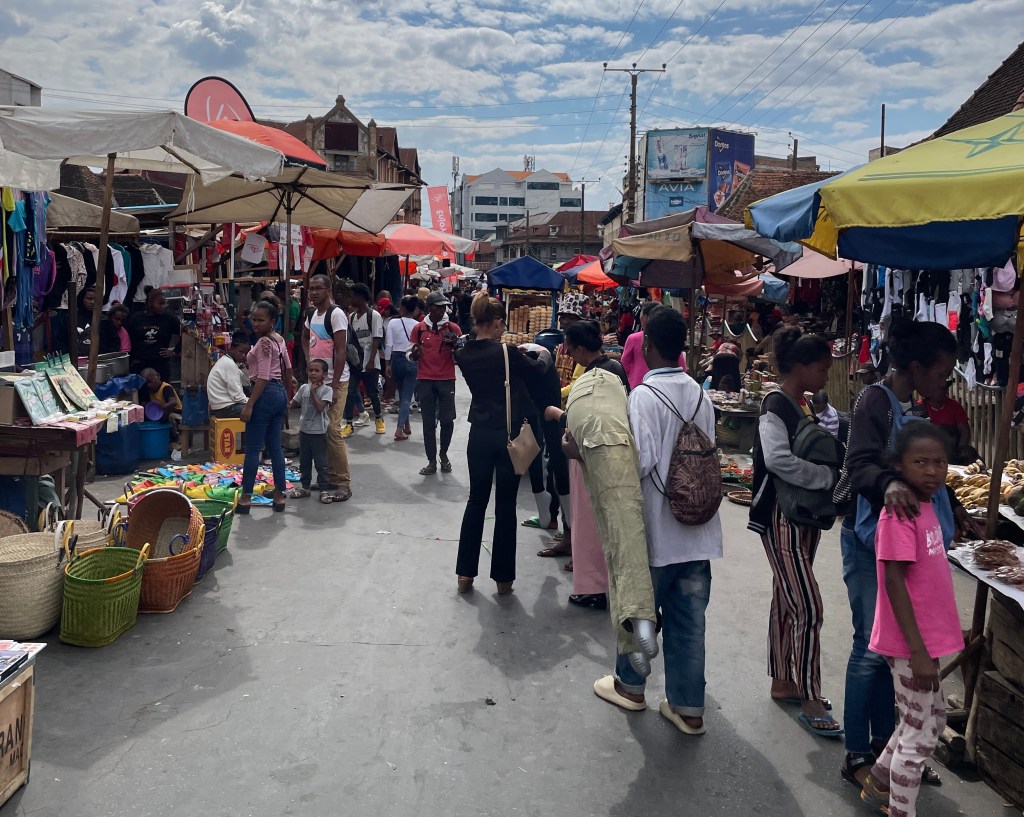
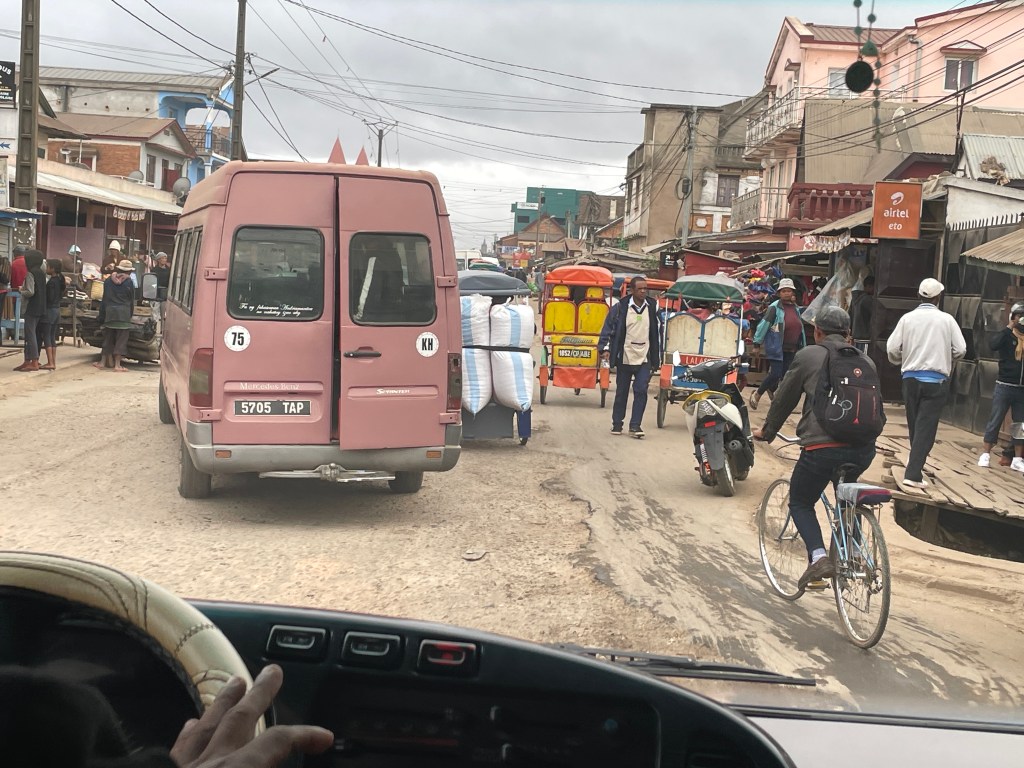
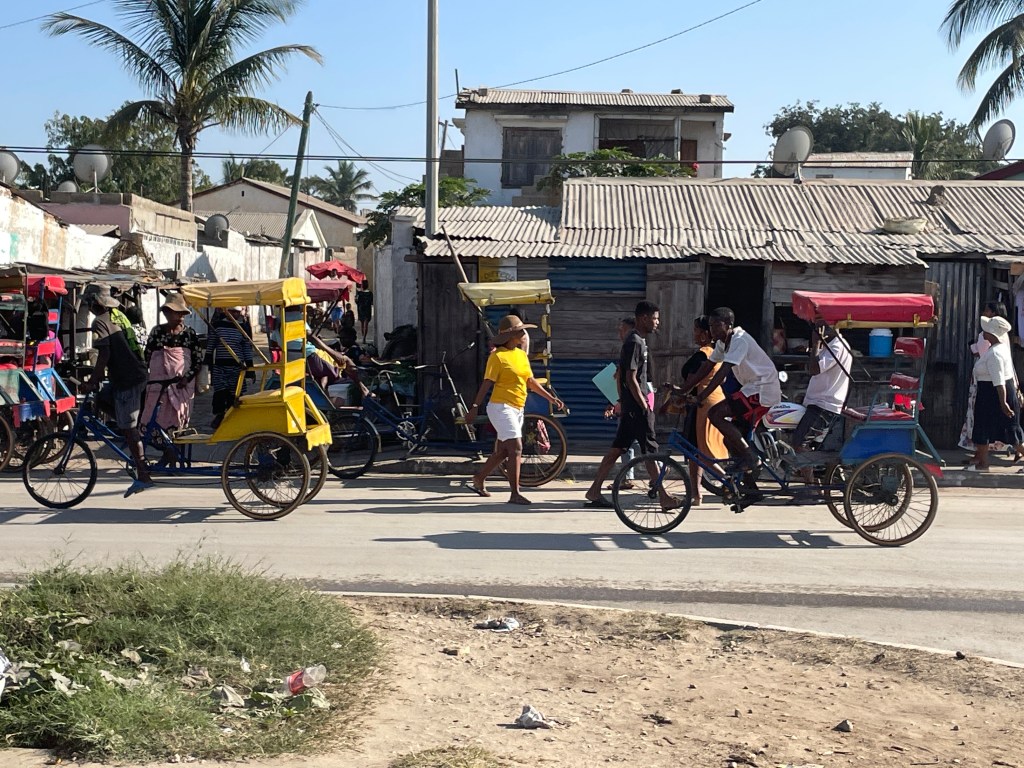
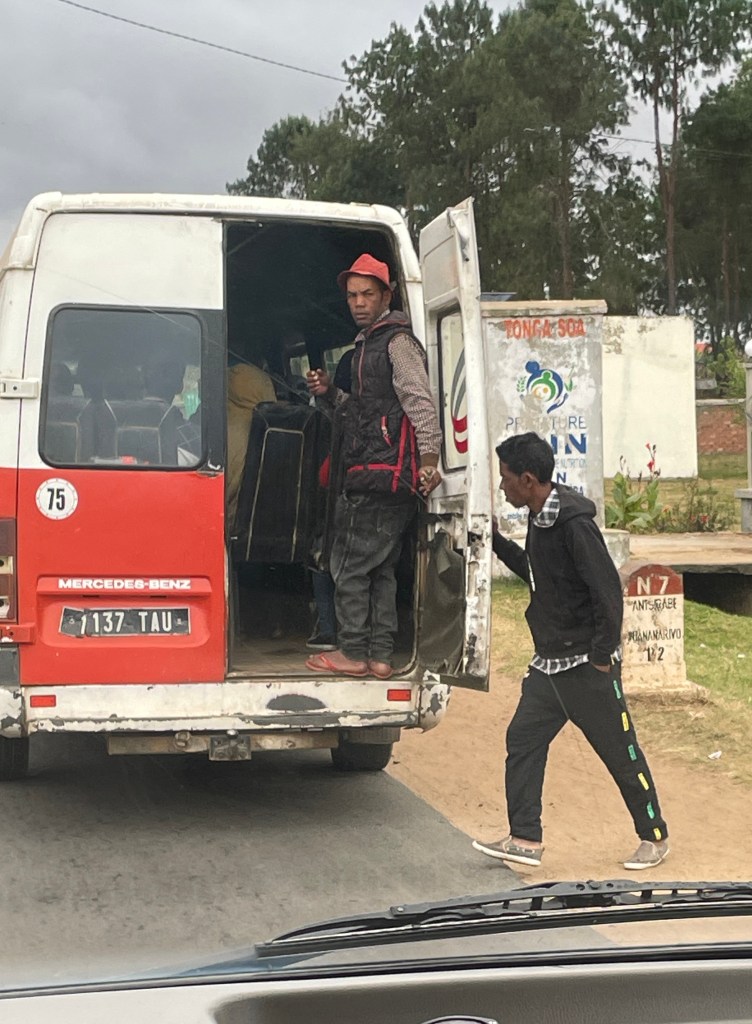
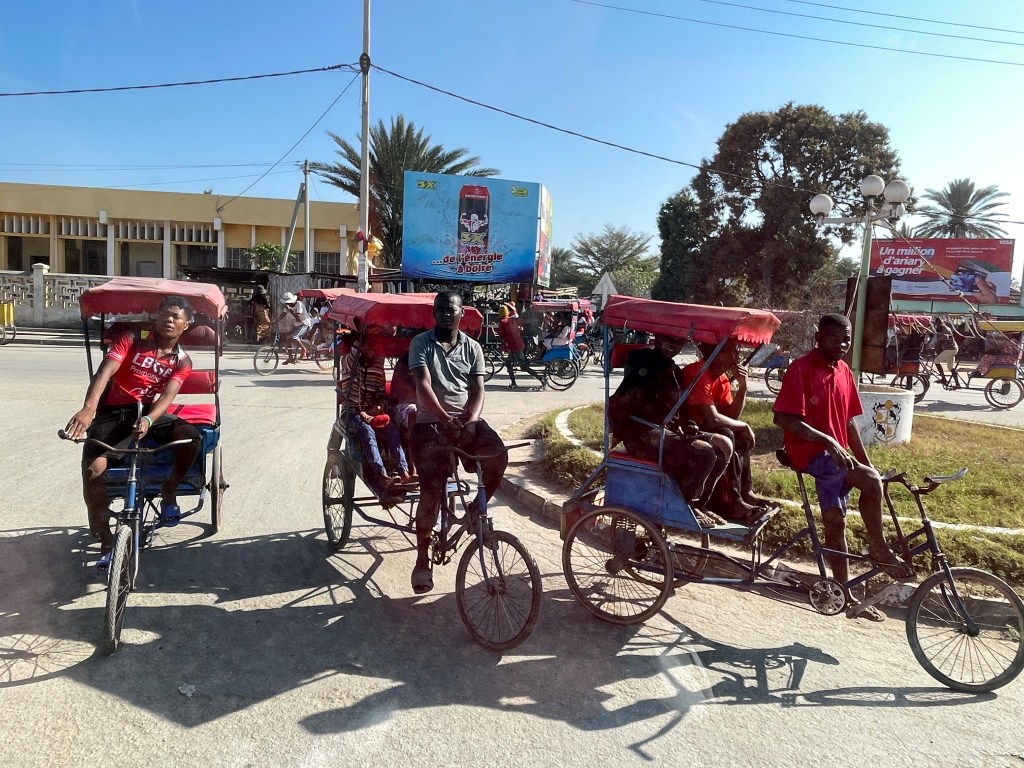
There are only a few major paved roads here and for the most part they are in poor condition, lots of pot holes and broken pavement, so our drive took much longer than it would, say in the States or Australia. Our bus drivers was constantly breaking to go gently through or around some sort of bump in the road. The town and cities are built right up to the road with shops and restaurants thronged with people, especially during the early morning and as the workday ends, creating another hazard as we drove. I found the variety of things for sale in these small business along the highway fascinating, not just the take away foods and brightly colored produce, but bicycle parts, hardware, cell phones, baskets, hats, school supplies, clothing – really anything you would need. And the types of vehicles that are on the road are endless it seems, minibus taxis, man powered tuk tuks, bicycles tuk tuks, zebu pulled carts, human pulled carts, etc. There was liveliness and energy here, filled with social interactions you don’t see in my hometown or any other town I’ve lived in, a true sense of community where people talked and laughed and hung out with their besties.
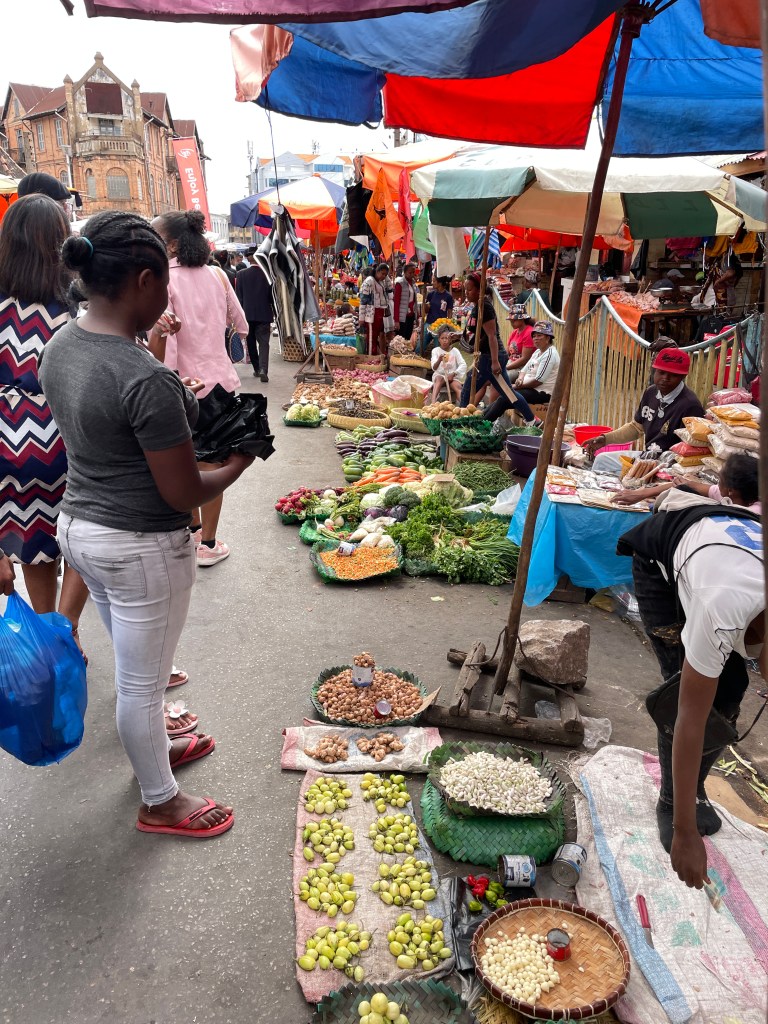
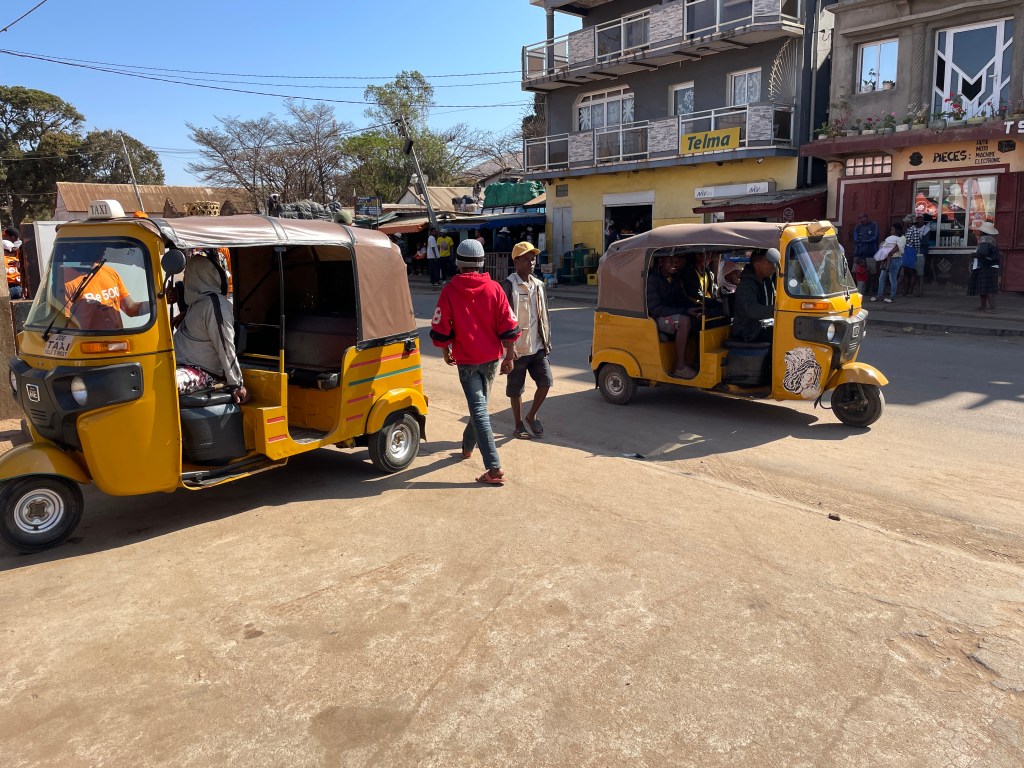

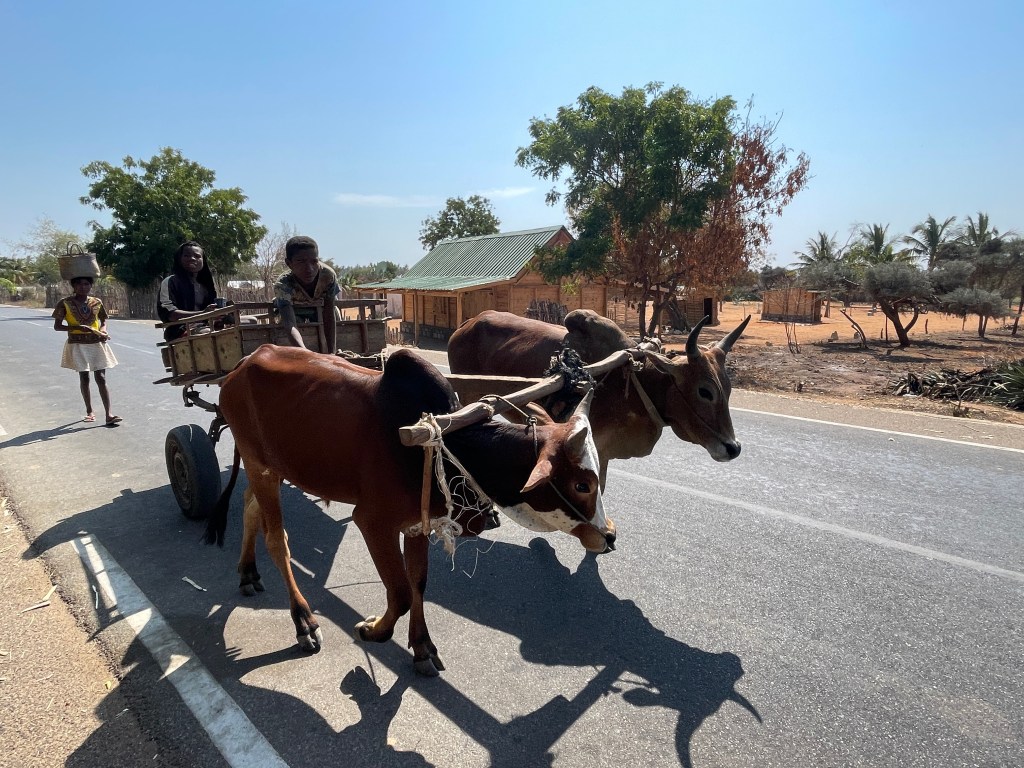
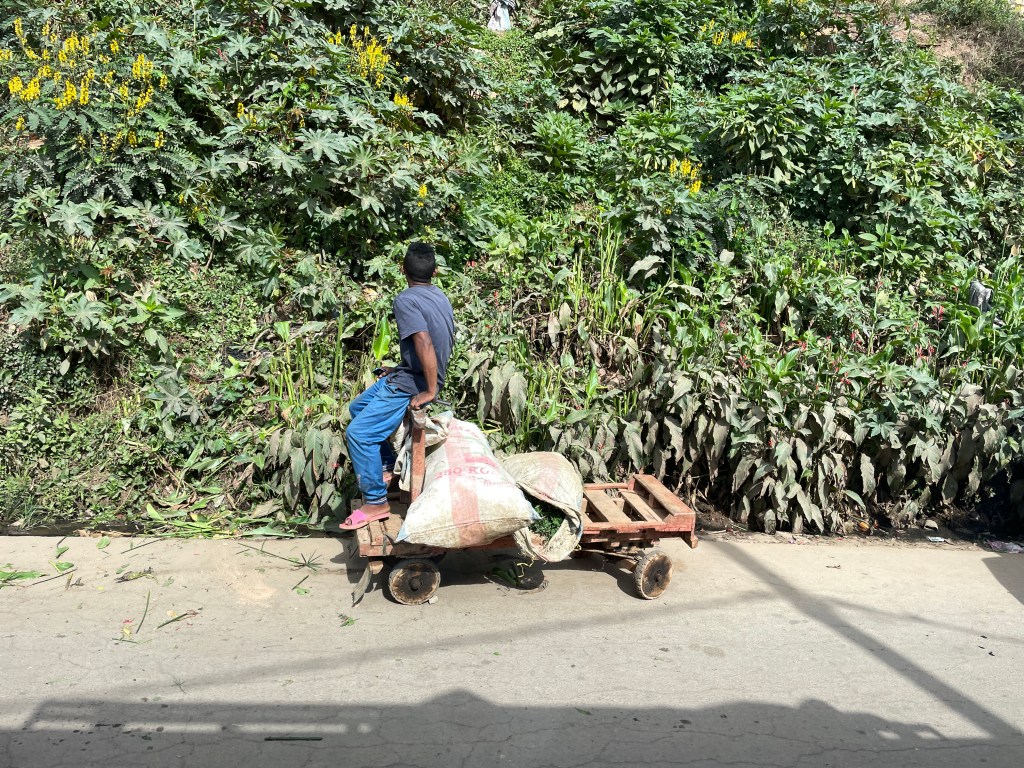
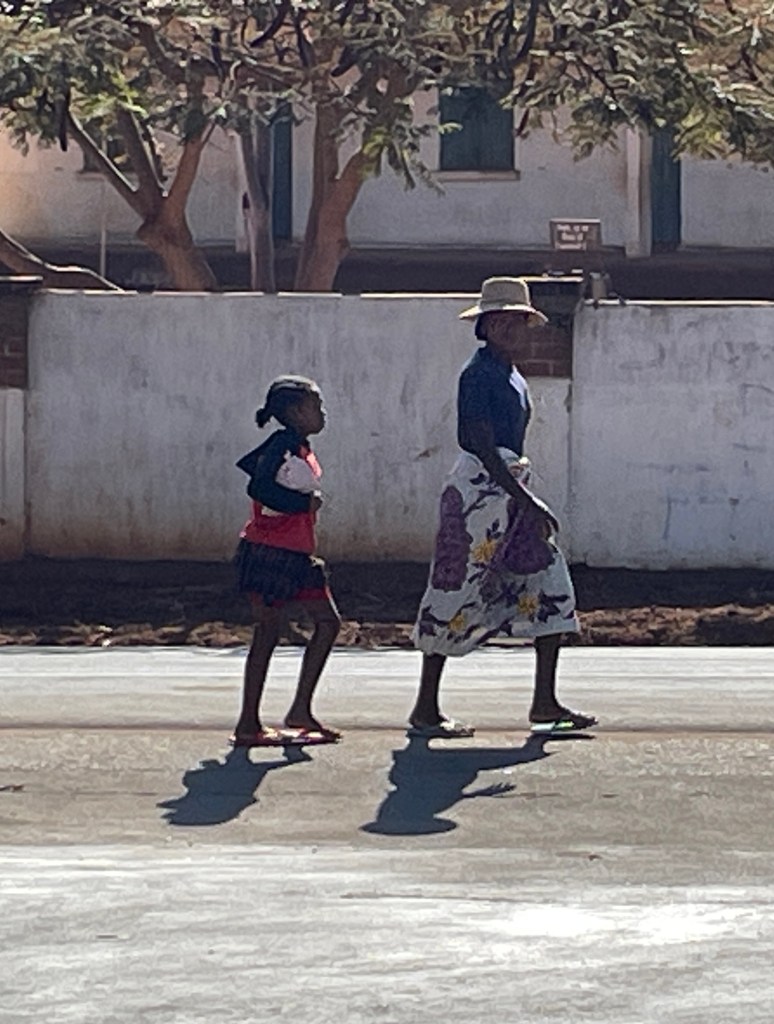
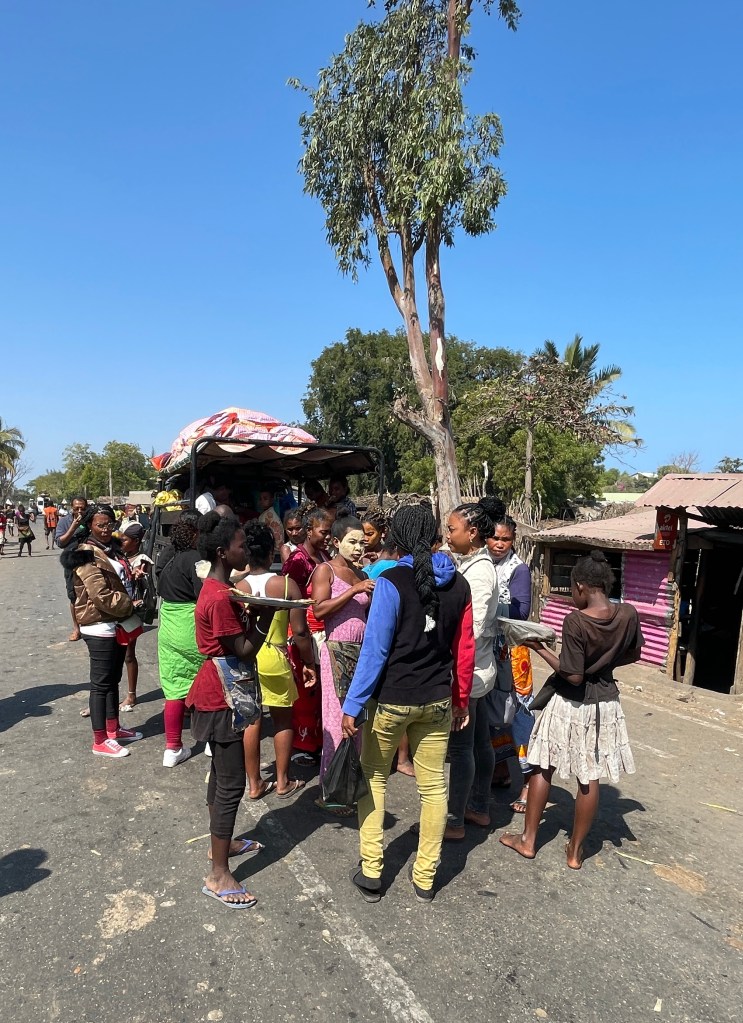
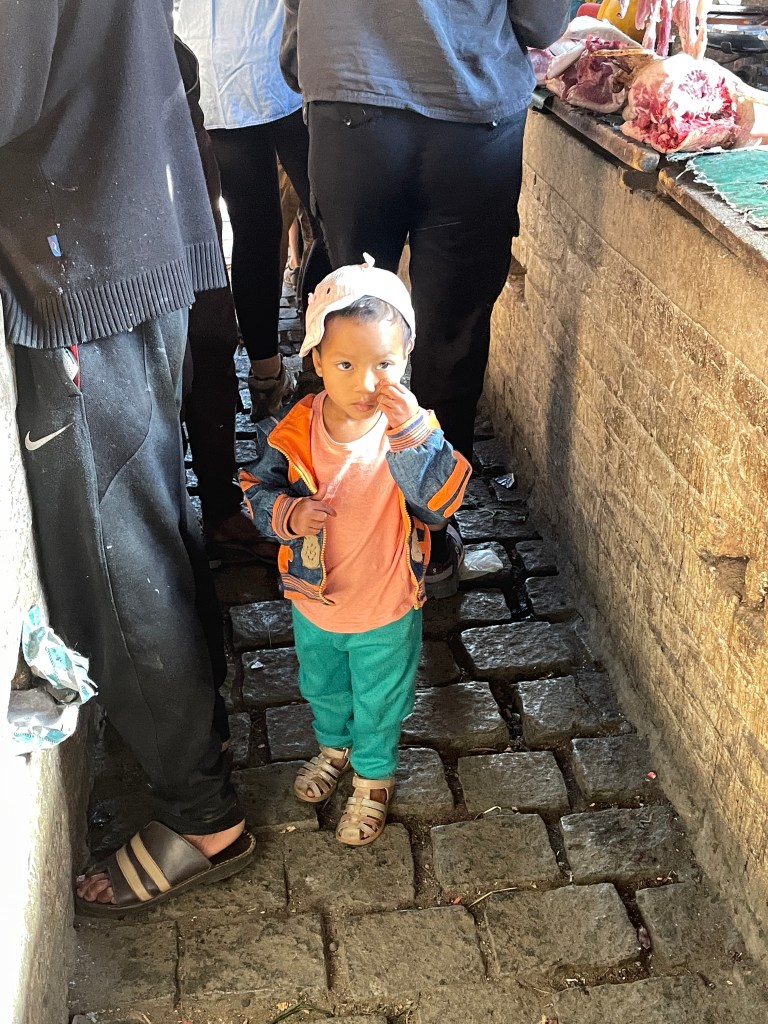
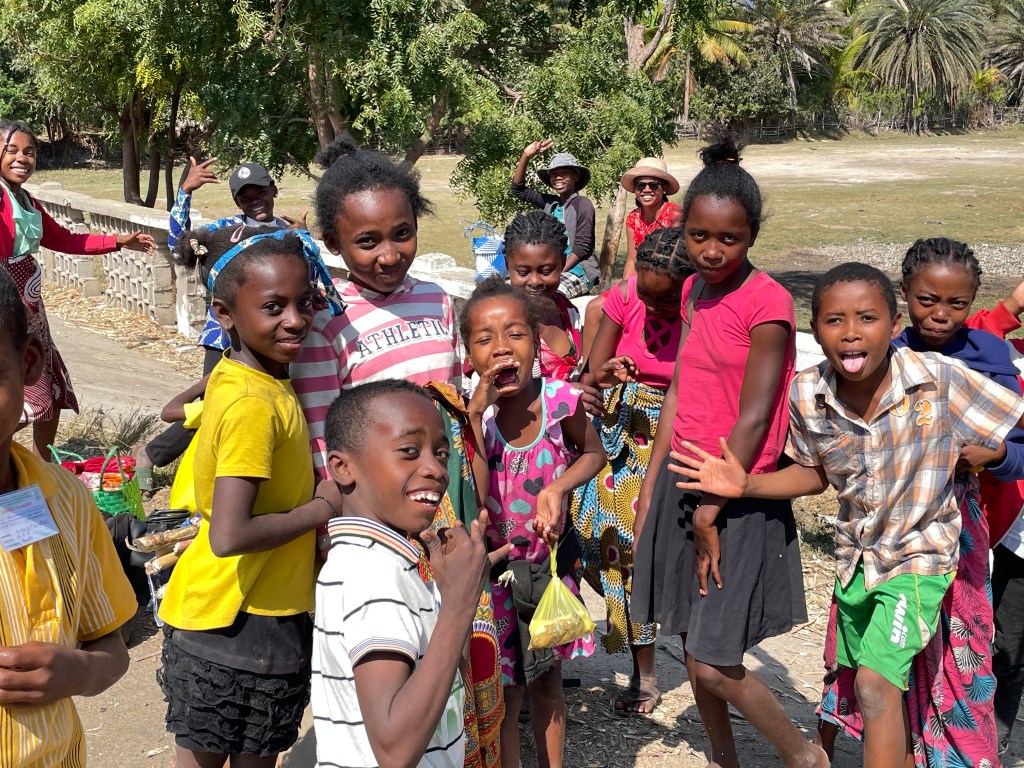
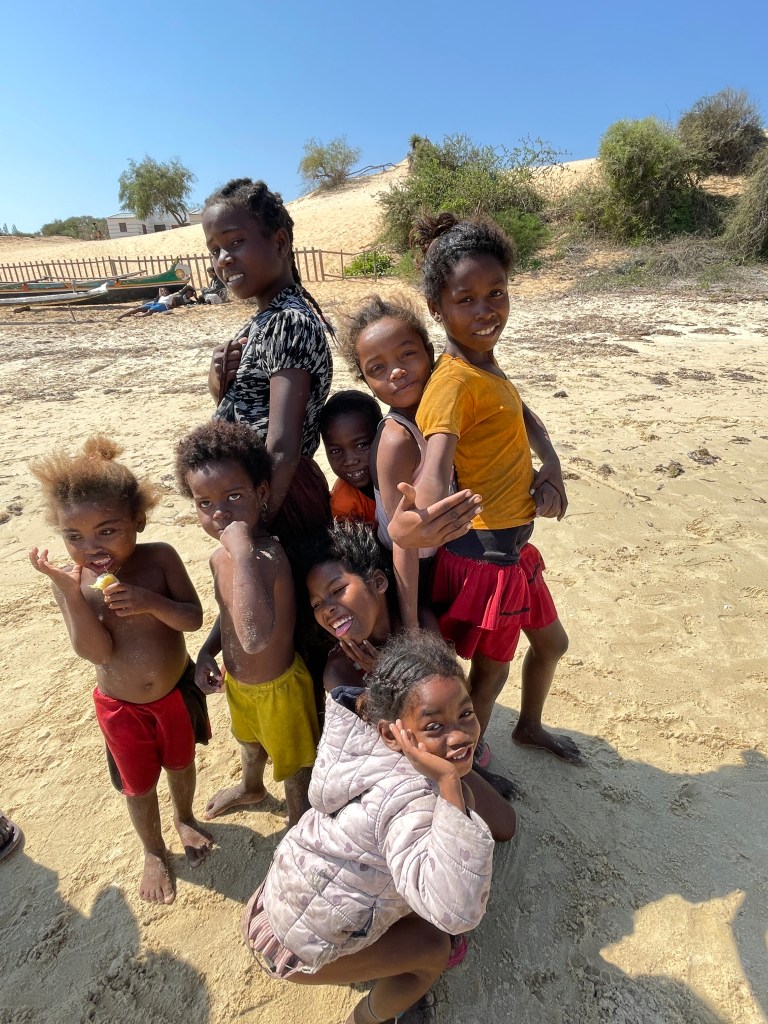
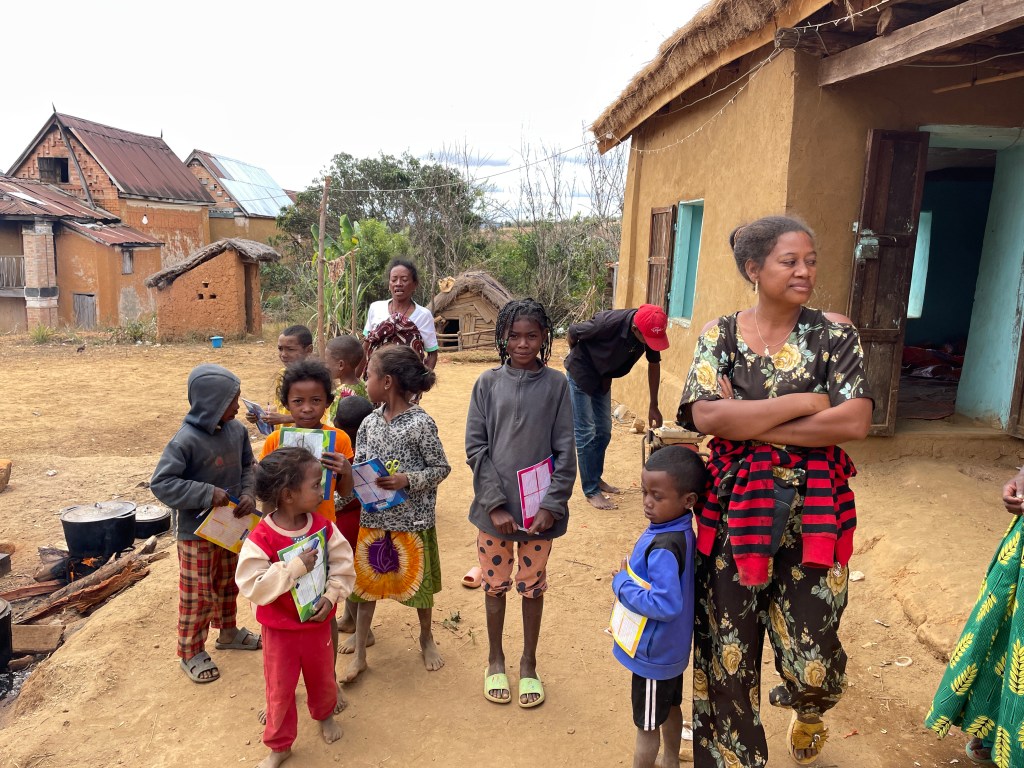
We walked through the countryside, marveling at the farms they built through manual labor. Fields and fields of produce and acres and acres of rice paddies. Rice is the main part of their diet but they’re not able to grow enough and have to import 200,000 tons each year. Through the countryside and along the beach, children followed us everywhere. We’d start off with one or two and then they multiplied until at times we had several dozen. They’d ask our names and tell us theirs, laugh at our antics, and ask for anything that was loose around our person – hat, water bottle, hair tie, jewelry, etc. And how they loved to see their pictures when I showed it to them. In the capital they’ve taught the kids to sell some items like post cards, and magnets, etc instead of begging. And they along with many adults thronged us, asking us to buy vanilla, t-shirts, lambas, carvings, silk scarfs, etc. The Malagasy people have an average income of $2/day so many have much less than that. While the woman work, children as young as 5 or 6 carry their younger siblings on the back, responsible for their care. You can see the poverty in their ripped and dirty clothing. But they’re quick to smile and wave hello.
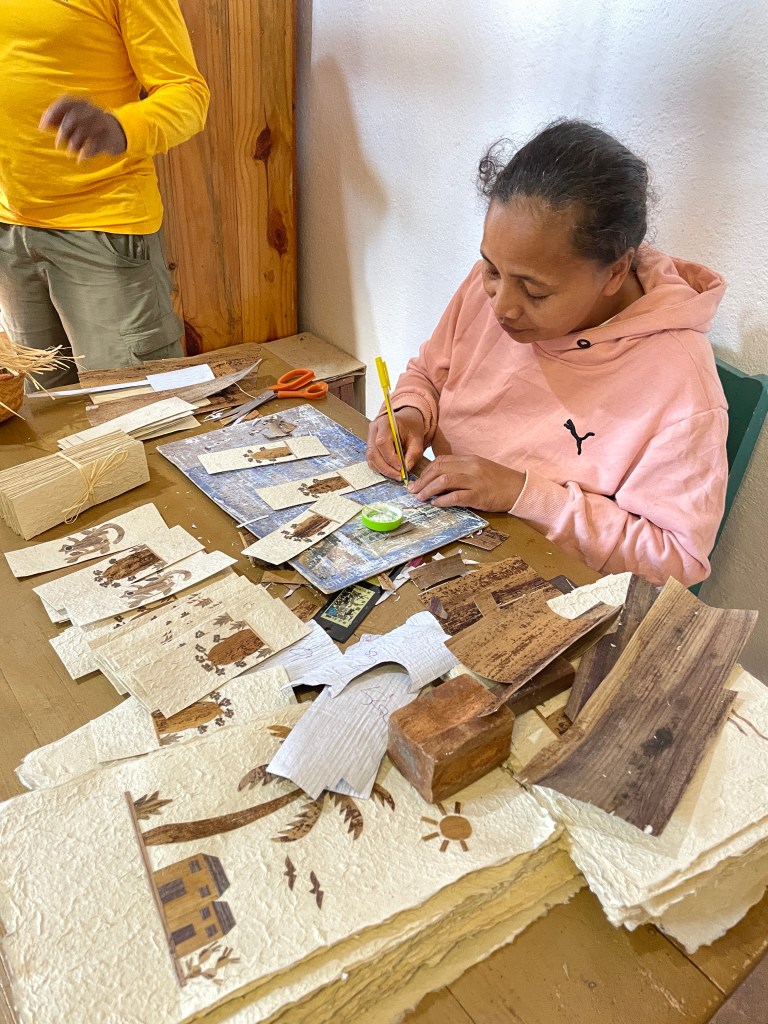
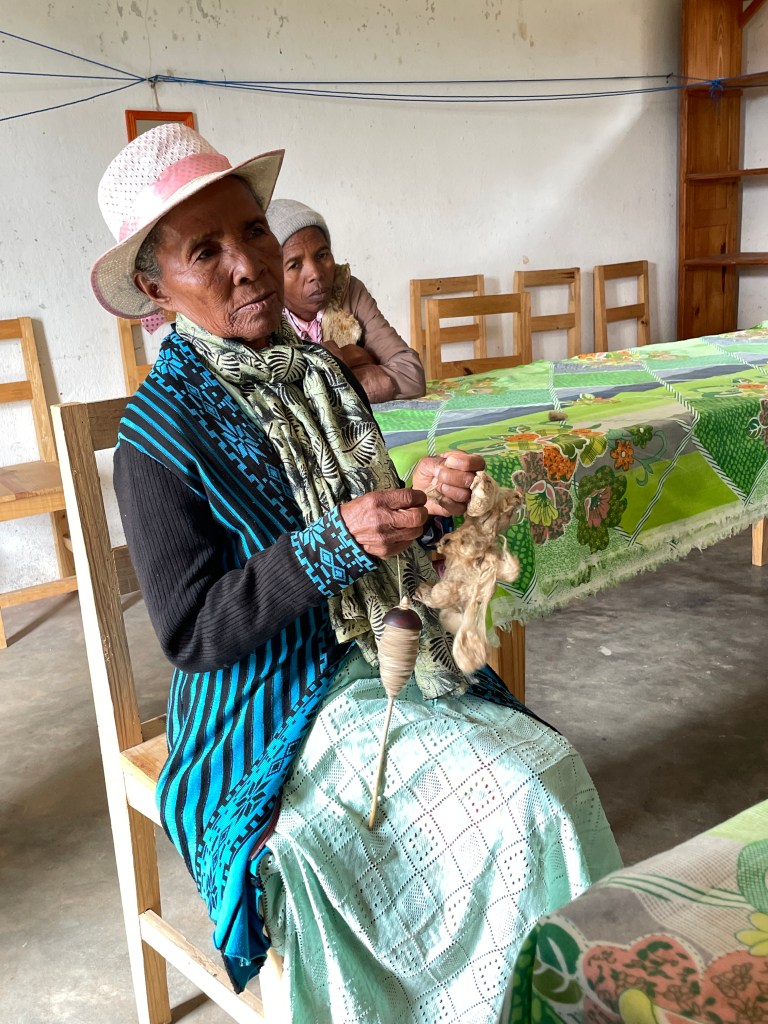
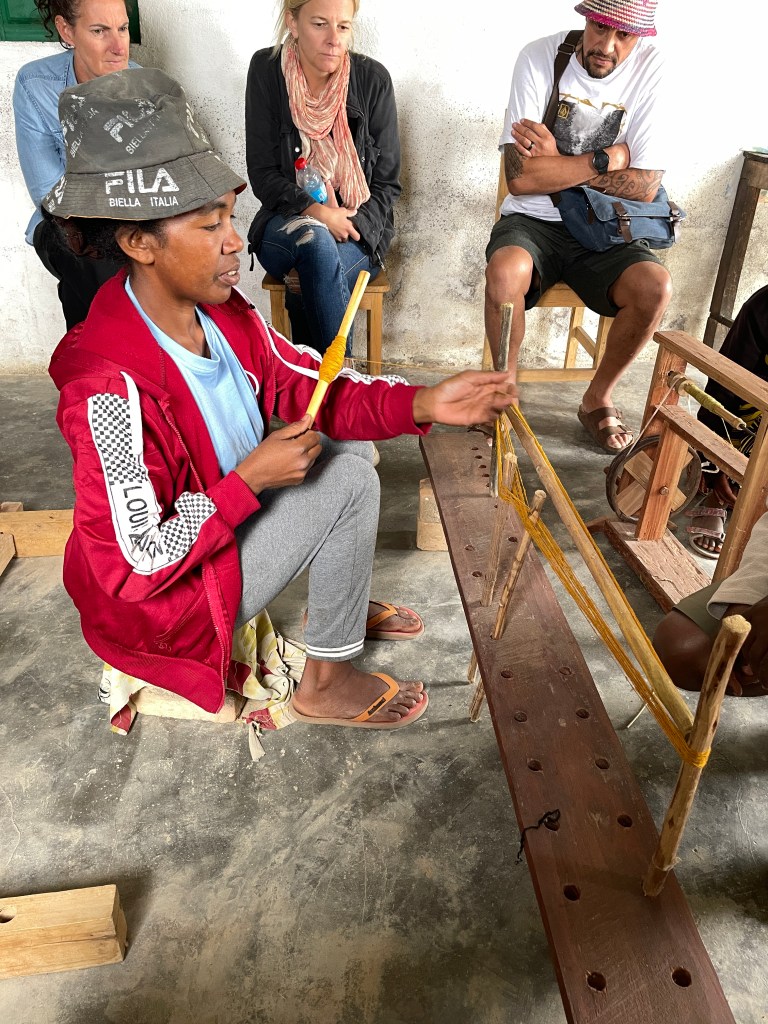
We enjoyed seeing the local artisans working at their crafts – wood carvers creating baobabs, lemurs, geckos, masks, and more; silk makers and weavers looming scarfs and shawls; straw plaiters making hats, mats, trivets, poufs, baskets and handbags; and paper makers crafting cards, envelopes, wall hanging, and gift bags from the bark of a tree. The work was all beautiful. It was interesting that many of the towns grew up around one industry – one with the wood carvers; one that specialized in recycling aluminum into pots and pans, utensils and trinkets; one that sold locals wines and rhum; one that sold precious gems – sapphires the most common; one with universities; as examples. About 20 percent of their population has finished high school and only 1% graduate from college. And even for that 1% jobs are hard to come by. Families normally stayed on the farm. When a son married they gave him a piece of land and built a house. Having a lot of children was a solid retirement plan but after many generations there is less and less land to distribute, some pieces too meager to maintain even a small family. It used to be a newly married couples wish to have seven boys and seven girls but now the average family size is closer to seven. But even that many puts a strain on the families and the land.

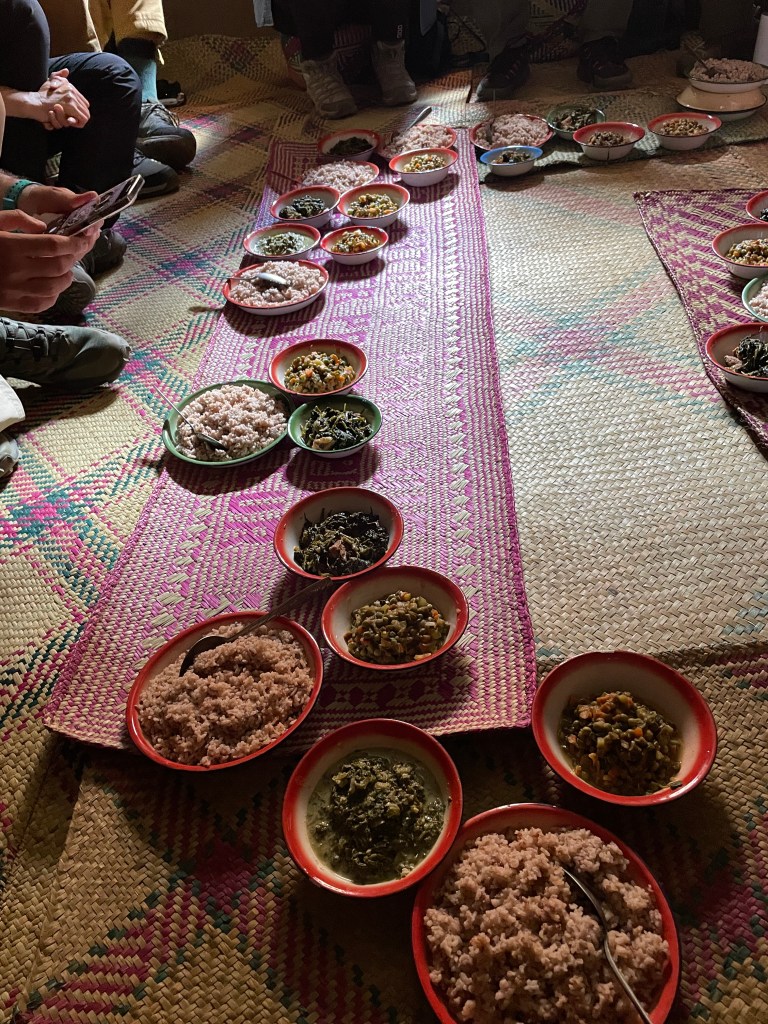
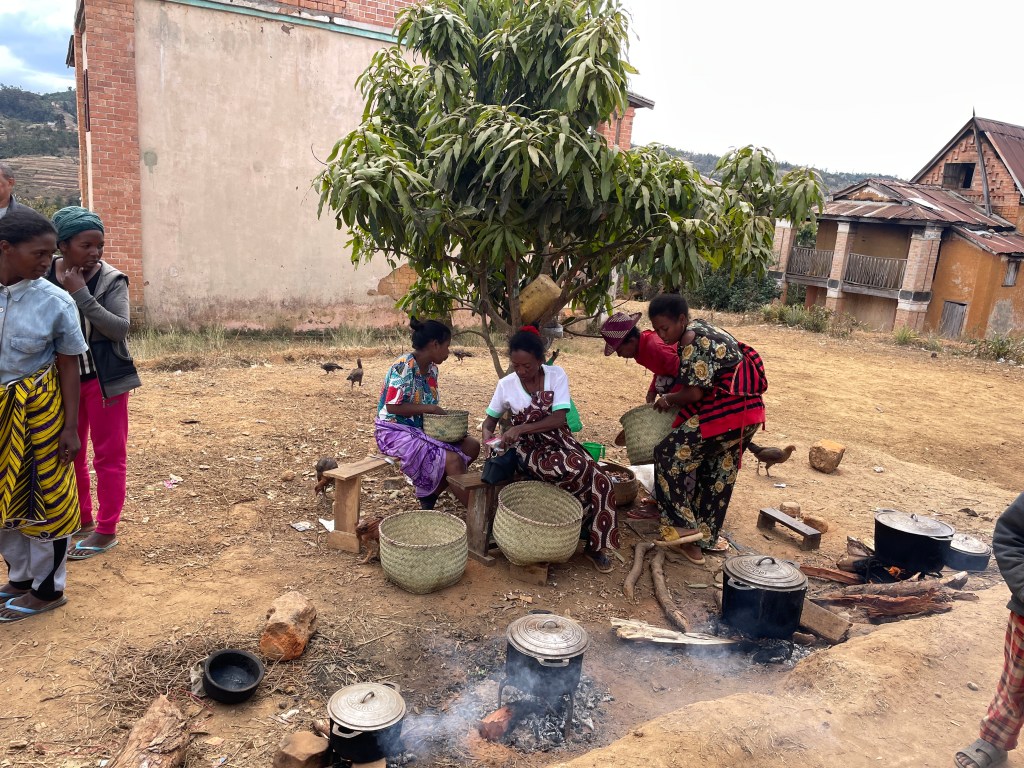
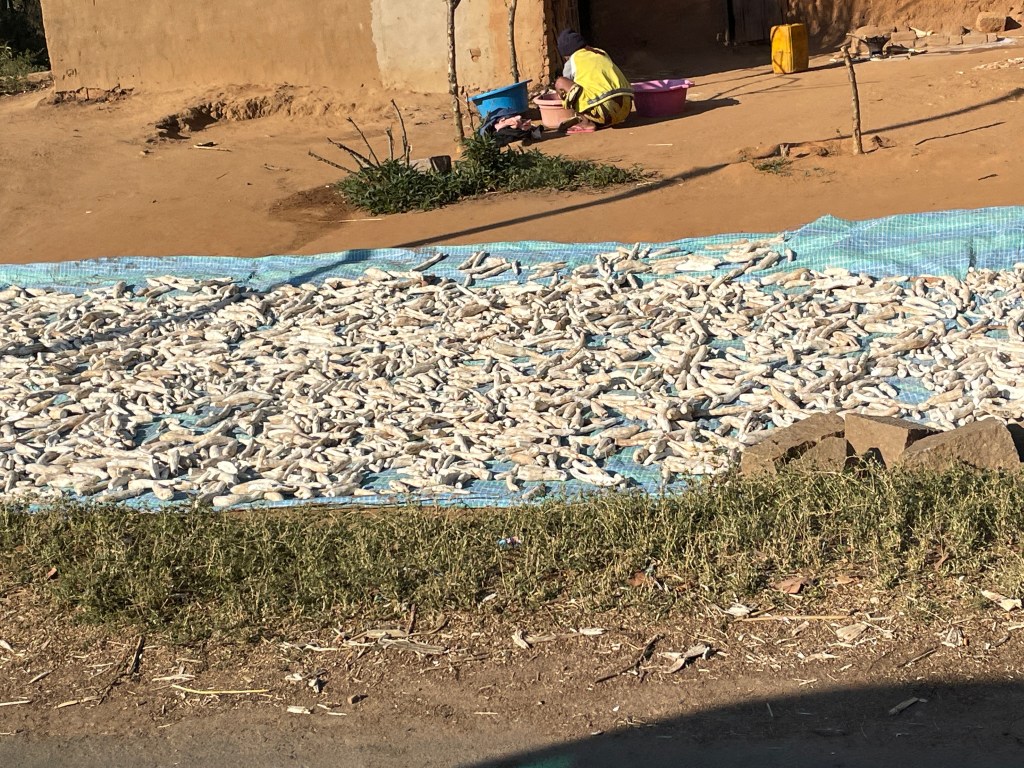
Twice we were served lunch in village homes and treated royally with traditional foods. Always rice, served with various dishes such as a medley of green beans and carrots, cassava, white beans, carrot salad, zebu meat, omelet, French fries, vegetable soup, or vegetable stew. Rice water was offered as the beverage. Our guide was quick to point out, this was a feast for the Malagasy, who usually ate rice three times a day with some vegetables, on rare occasions getting meat and eggs. If rice wasn’t available they had cassava – a starchy tuber similar to potatoes. In the towns and villages, they sold fry bread, a small sweet cake that looked and tasted kind of like a pancake, samosas, noodles tossed with vegetables and near the ocean, grilled fish. And always fruit, especially for breakfast or dessert- bananas, pineapple, tangerines, mandarins or a fruit salad. On our hikes, porters often cooked at the picnic areas and you could buy a wonderful lunch with a fresh vegetable salad, skewered meat or fish, noodles with veggies or zebu, drinks and fruit. Needless to say, we ate well
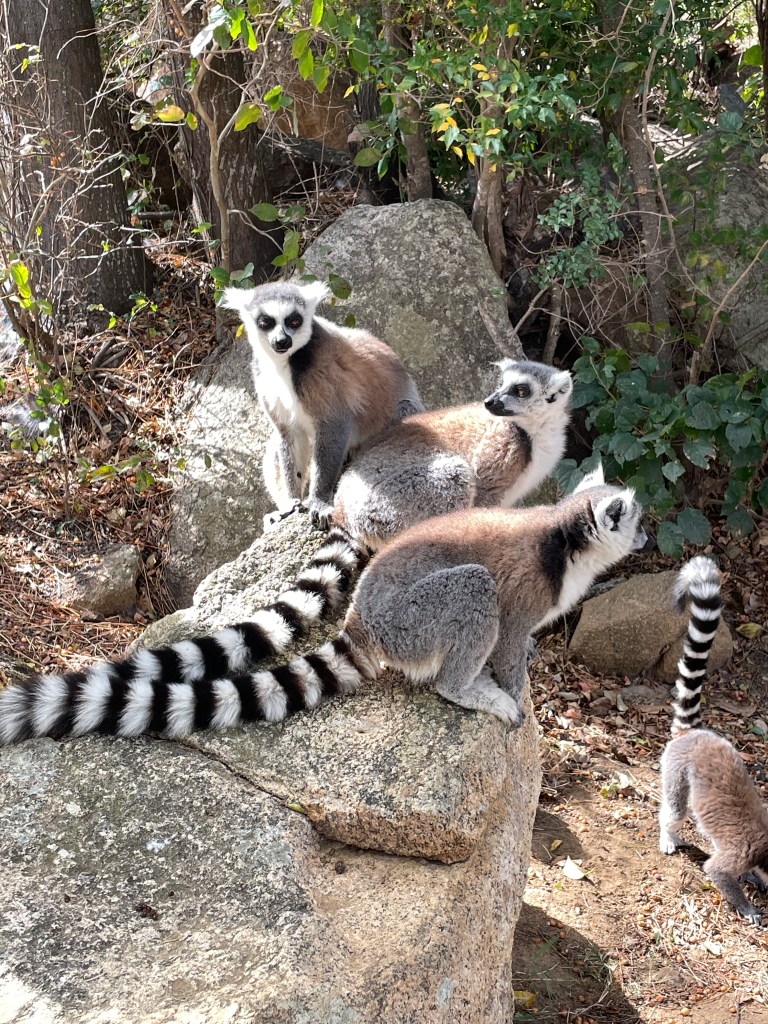
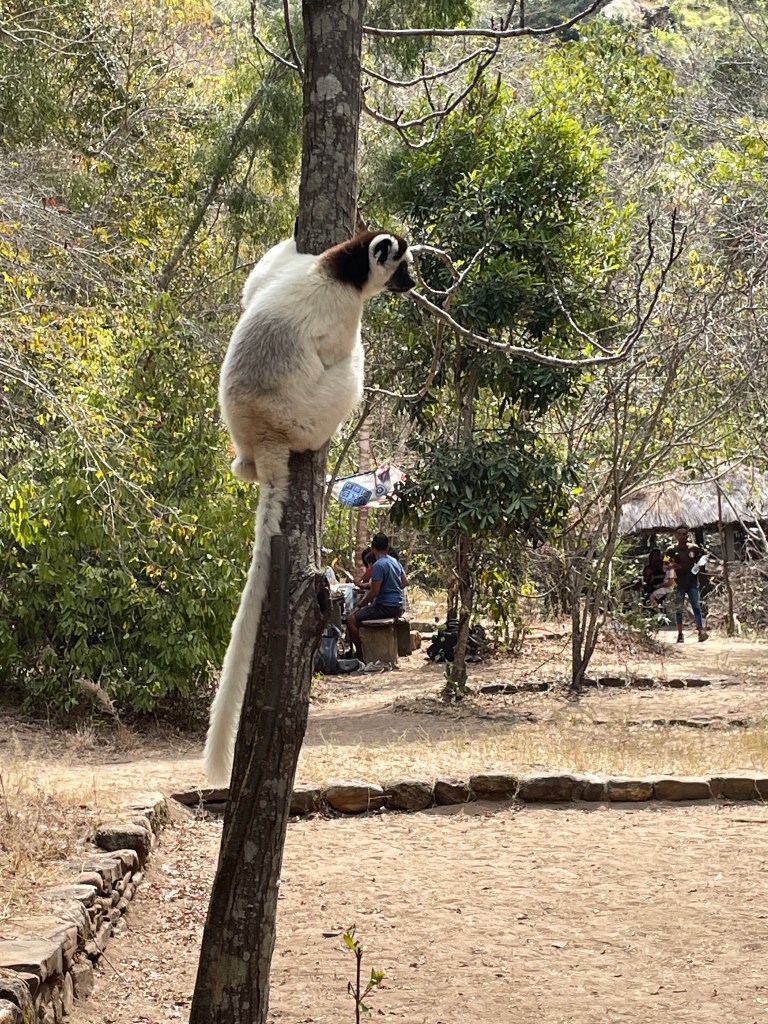
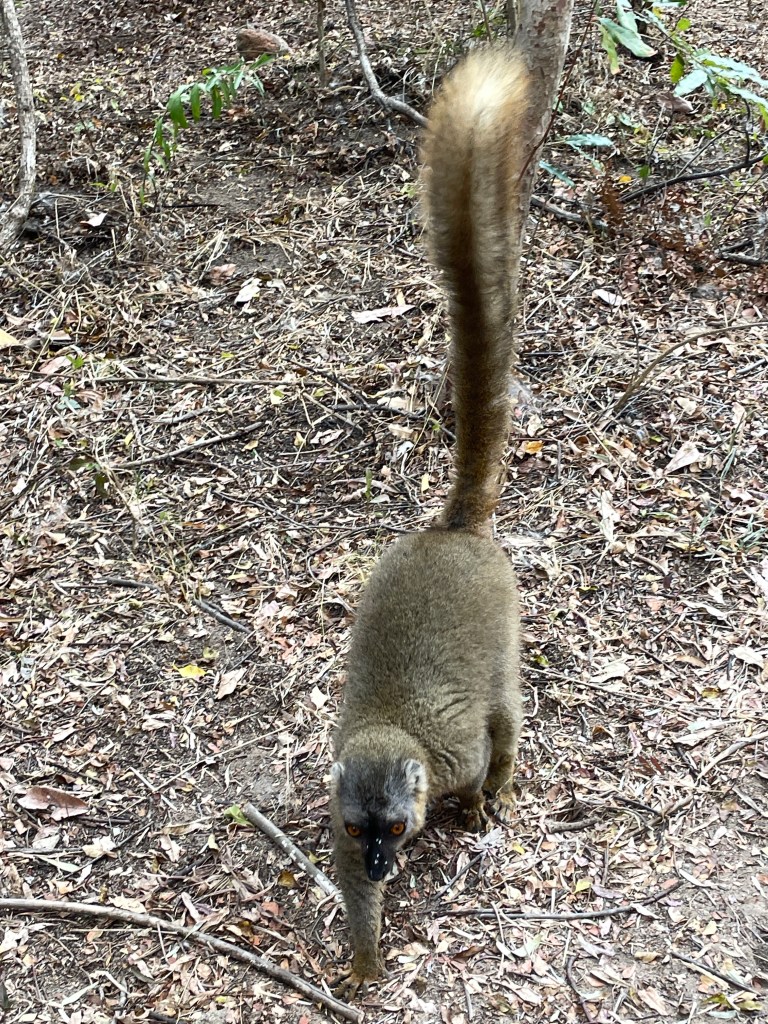
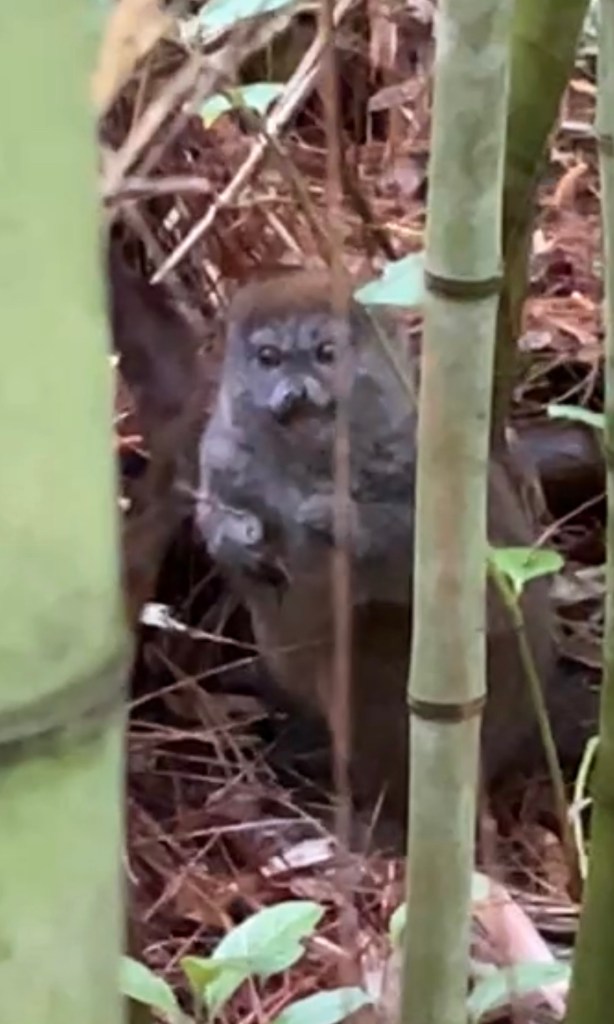
People come to Madagascar to see the flora and fauna and we saw a lot of very interesting things. The lemurs of course! This is the only place on earth where you can see them in the wild. And what fun and cute creatures they are. We hiked through savannas and rain forests and saw 8 or 9 different varieties of the 100+ types, many of which are nocturnal. They jumped from tree to tree, some carrying their babies on their bellies. One, usually the dominant female, would lead and the rest would follow across the tree tops. Their long tails, when they had one, which most do, helping them maintain their balance. They called to one another, some very loudly, and we heard the replies from across the forest. They hugged, cleaned and petted each other when not eating the fruit, bamboo or leaves that is their diet. A few came down into the clearing where we were having our lunch, hoping for a handout. Lemurs come in a variety of sizes, from as small as a mouse to as large as a 3 or 4 year old. Some have ringed tails, some are black and white, some with golden fur, some plain brown, all with furry little round ears. They were generally oblivious to our presence as we followed them off trail thru the jungle.


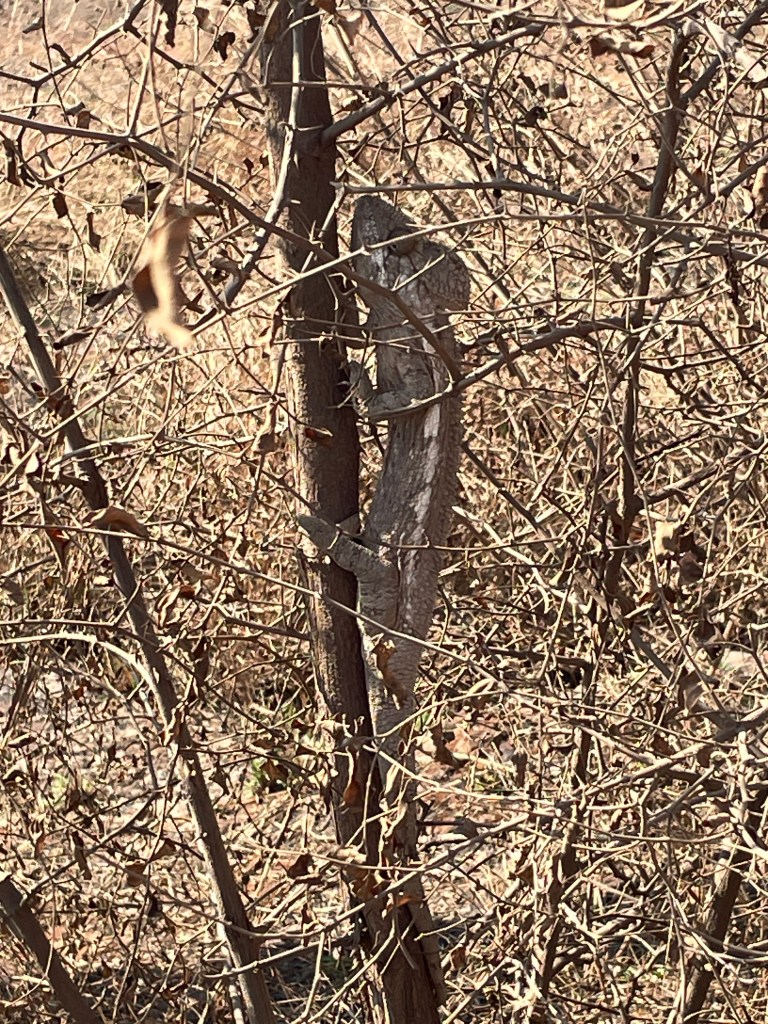
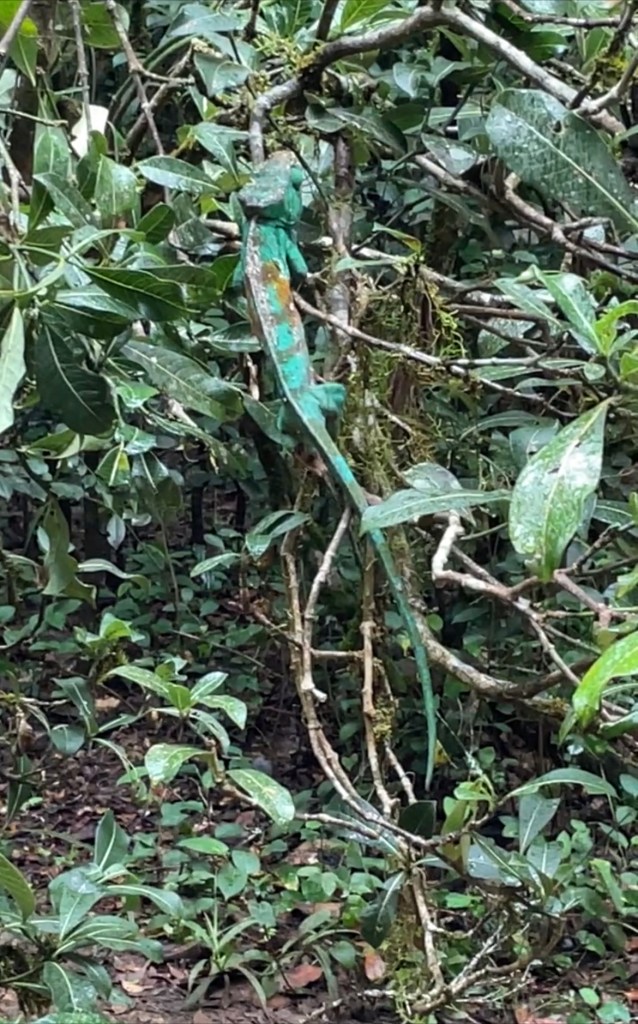
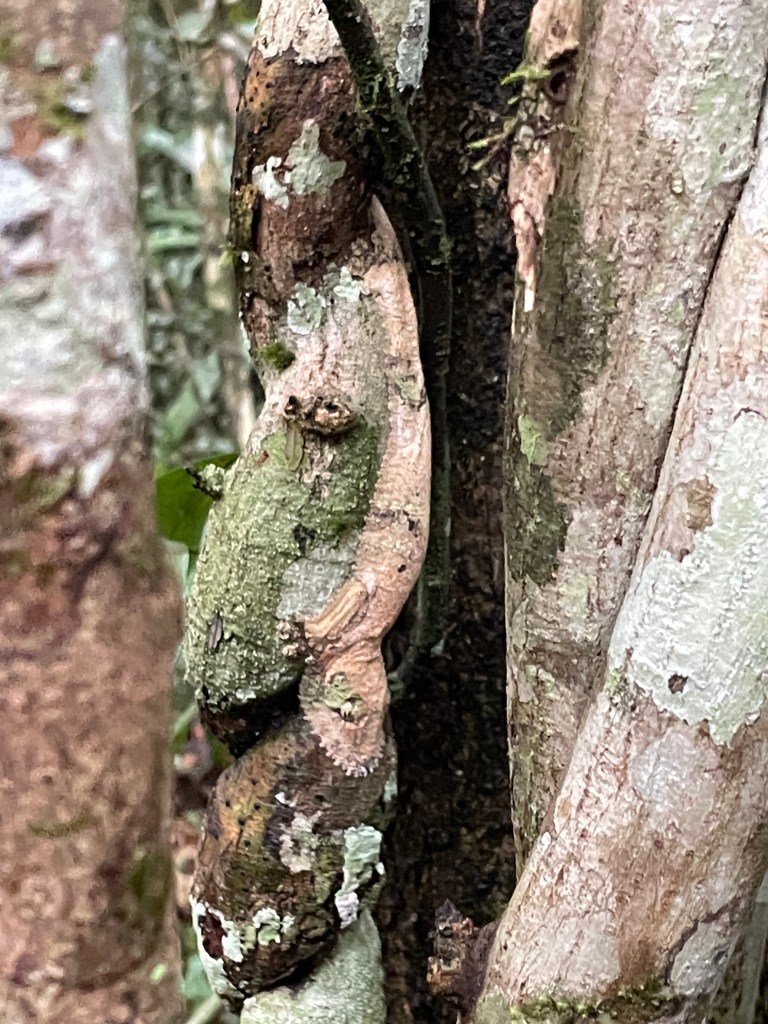
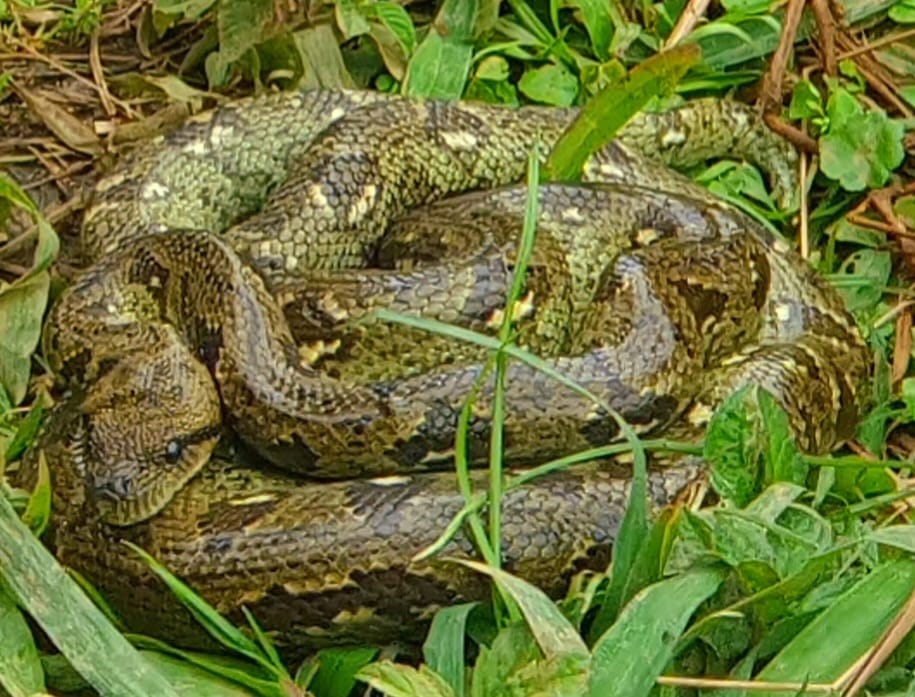
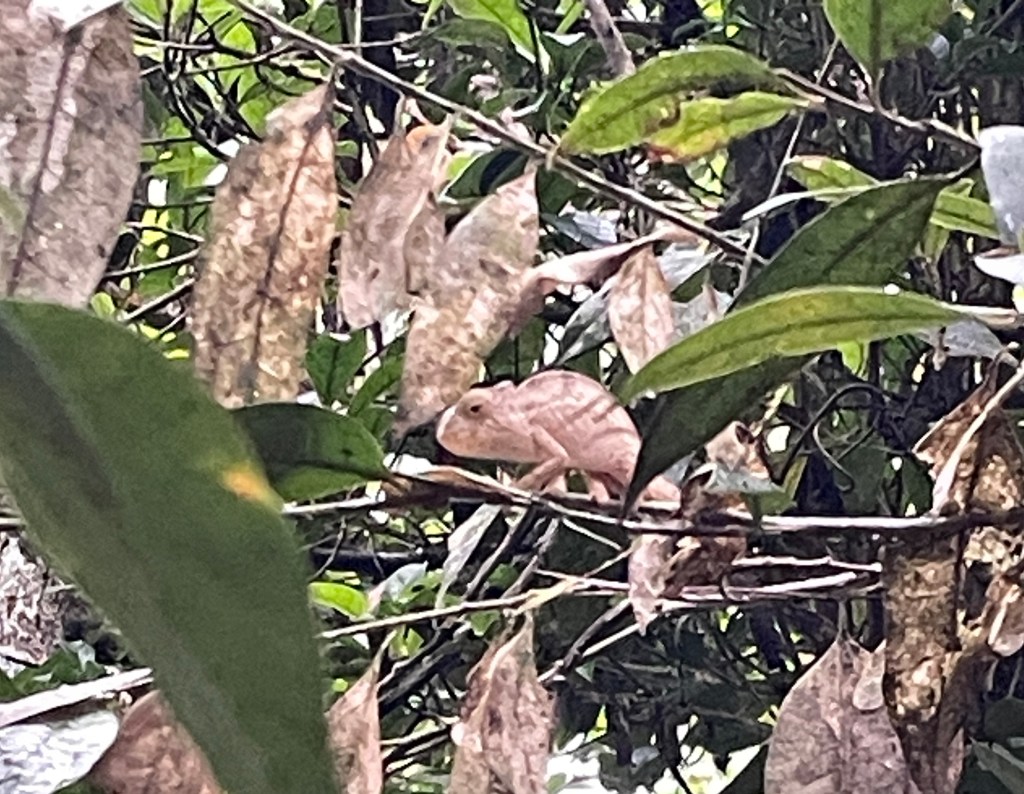
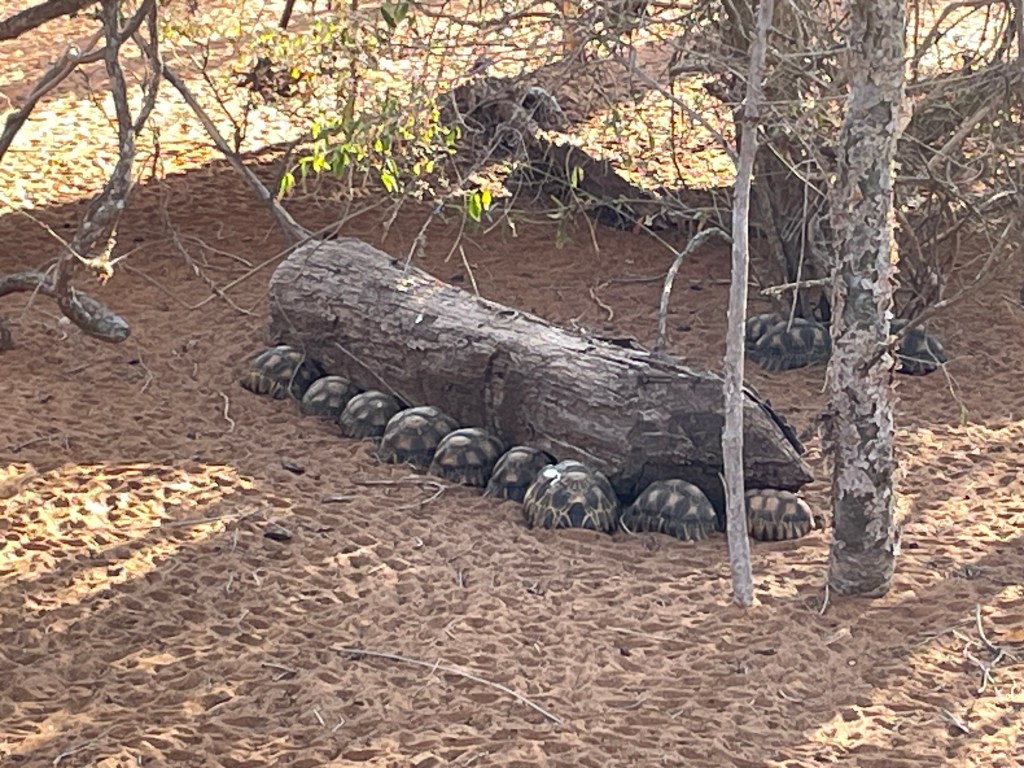
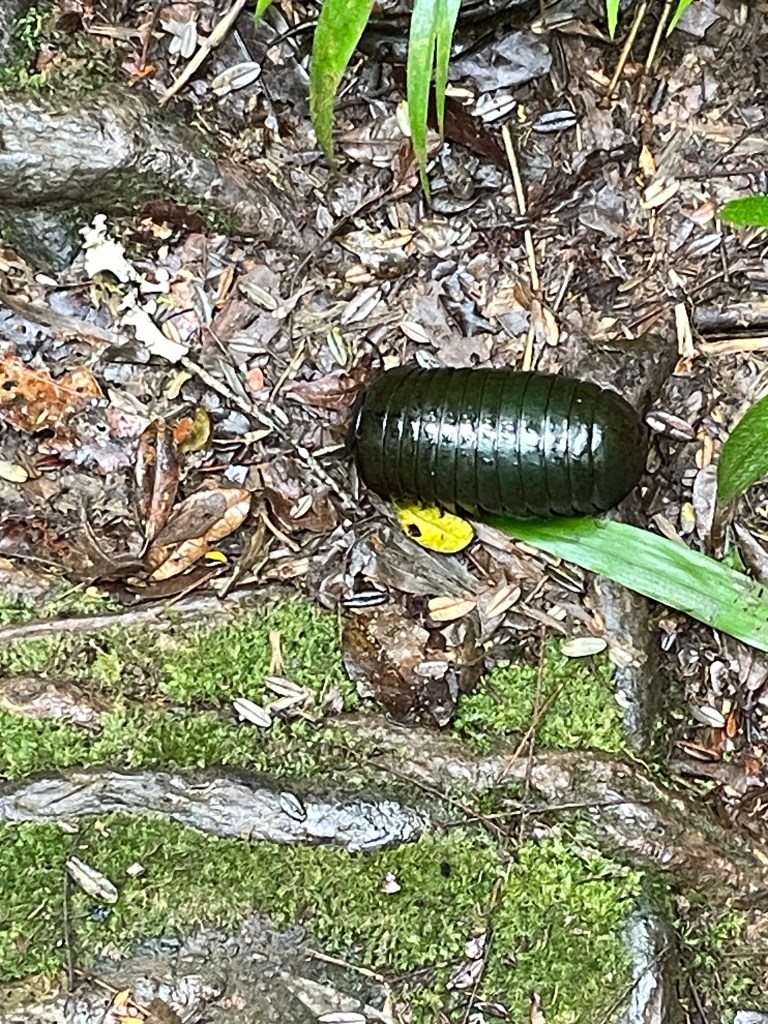
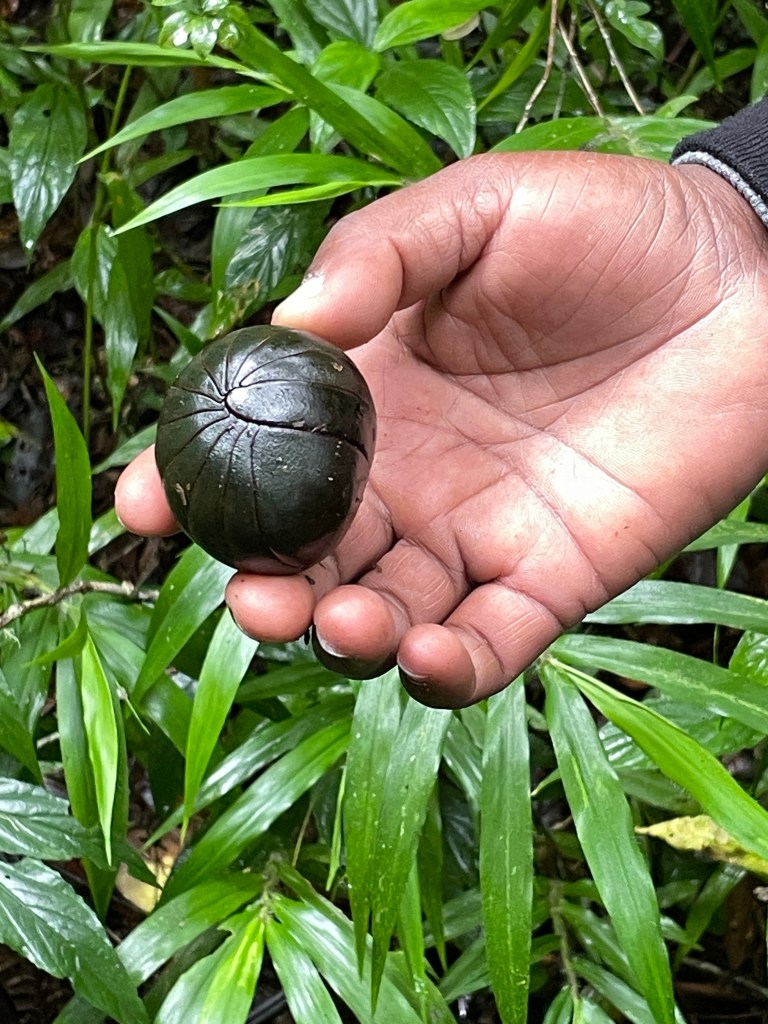
I didn’t know that chameleons and geckos were so cool. I’m not always sure how our guides spotted the lizards, as they blended in so well with their surroundings. In fact, if I hadn’t been able to blow up one of my pictures to see the eyes of one gecko, I would have told you that is was not there, that the guide was lying to us. We watched one chameleon change his color as he moved through the trees. Small ones, big ones, green ones, brown ones – so many varieties. One of the most interesting insects was a giraffe necked weevil – a tiny, bright red bug with a neck up to twice the length of his body. And a millipede over an inch wide and about 4 inches long, which curled up into tight little ball when the guide picked it up. And to Zios’ great excitement, we saw two boa constrictors who emerged recently from hibernation. We also saw thousands of tortoises rescued from poachers or families who collected them as pets.
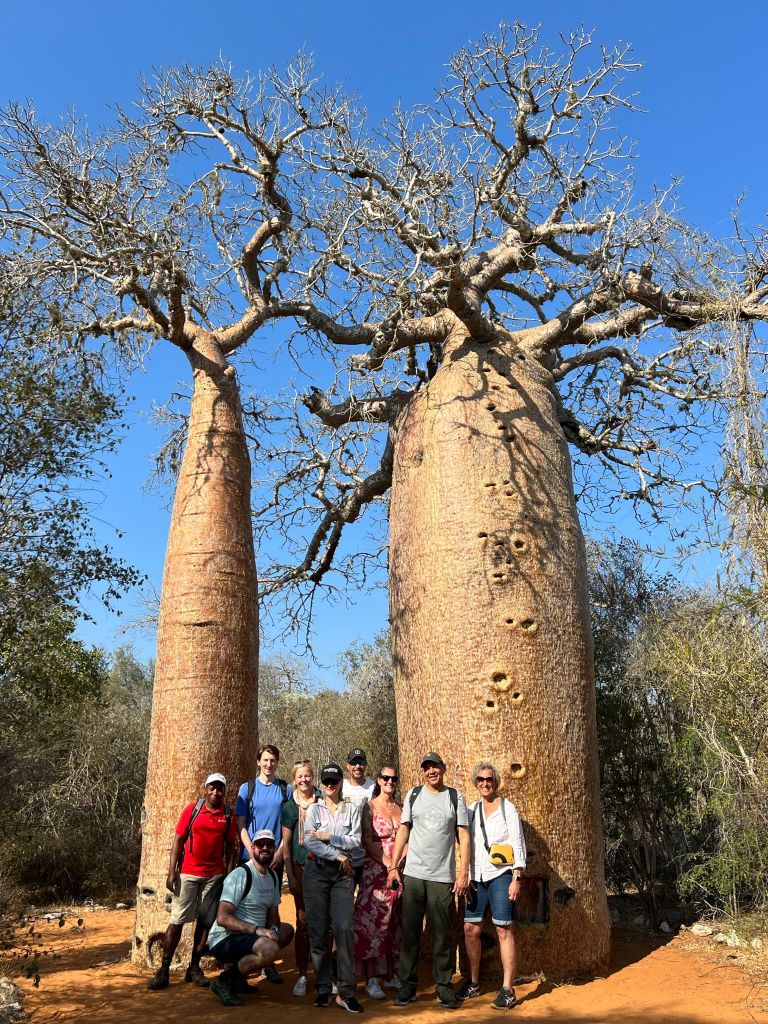
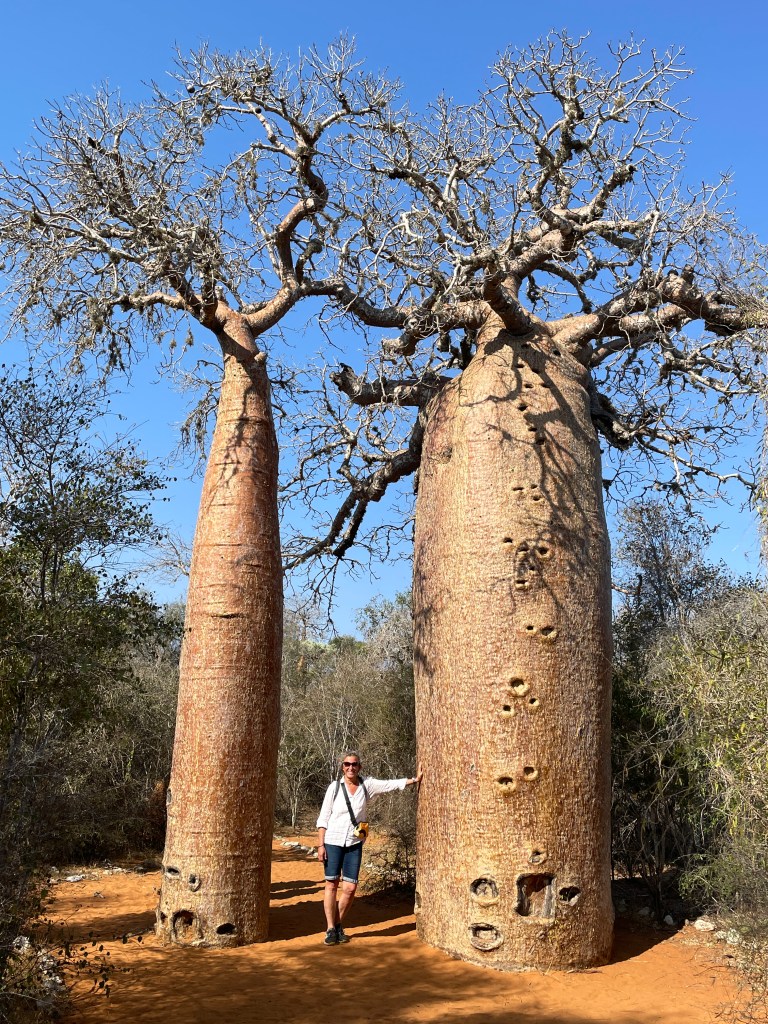
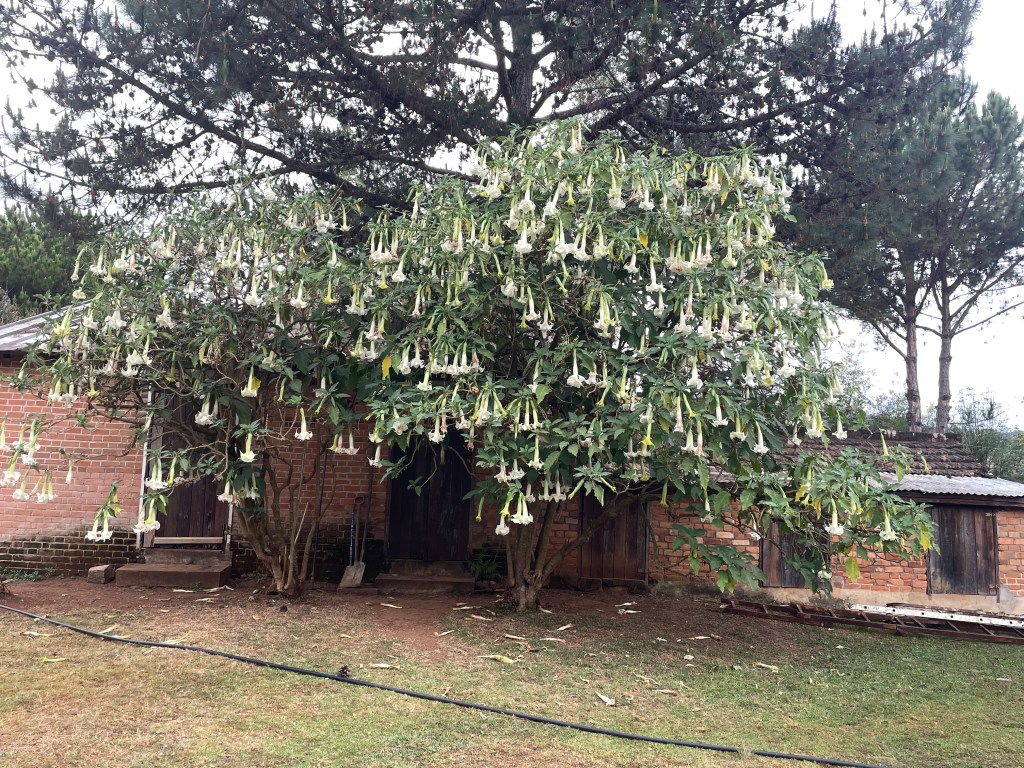
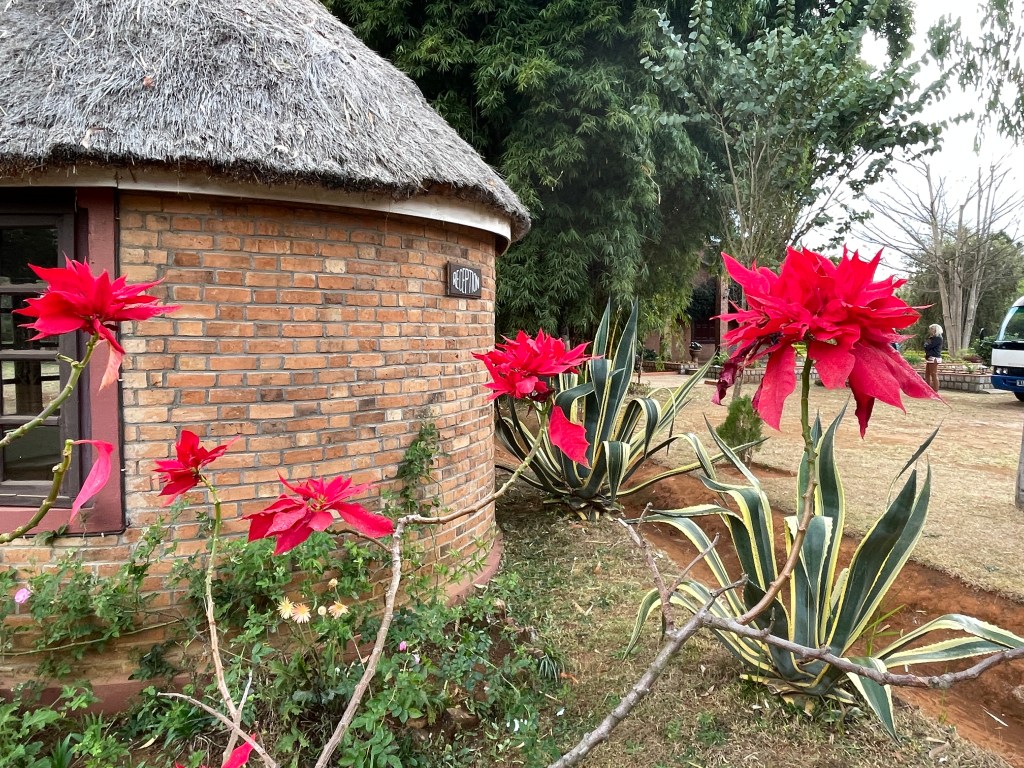
We saw baobabs that were 700, 800, 900 and even 1,300 years old. I didn’t know there were different varieties. At two different reserves, our guides showed us dozens of plants used for medicinal purposes – for stomach aches, tooth aches, diabetes, high blood pressure, arthritis, back pain and the list goes on. In the rain forest palm trees had leaves over 10 feet tall and plants that towered over our heads. And the flowers, even in mid-winter, were fabulous, from tiny orchids hidden in the rain forest to big trumpet flowers lining the roads. There was a profusion of color as we drove and hiked – red, purple, pink, yellow, white, and orange amidst all the green.


I know I have not included everything I saw and did but this is getting mighty long so you’ll just have to visit here yourself. I went to Madagascar on a whim, thinking at first to spend 3-4 days there. As I researched, I found that there was no way to get around such a large area or see much of anything in that time so I opted for this 14 day tour and it exceeded my expectations, bush toilets and all.
Next up – Cape Town, South Africa


 Where in the World is Debra Grimes?