If you believe in something and put it in your mind and heart, it can be realized. – Eliud Kipchoge
August 1-6, 2023
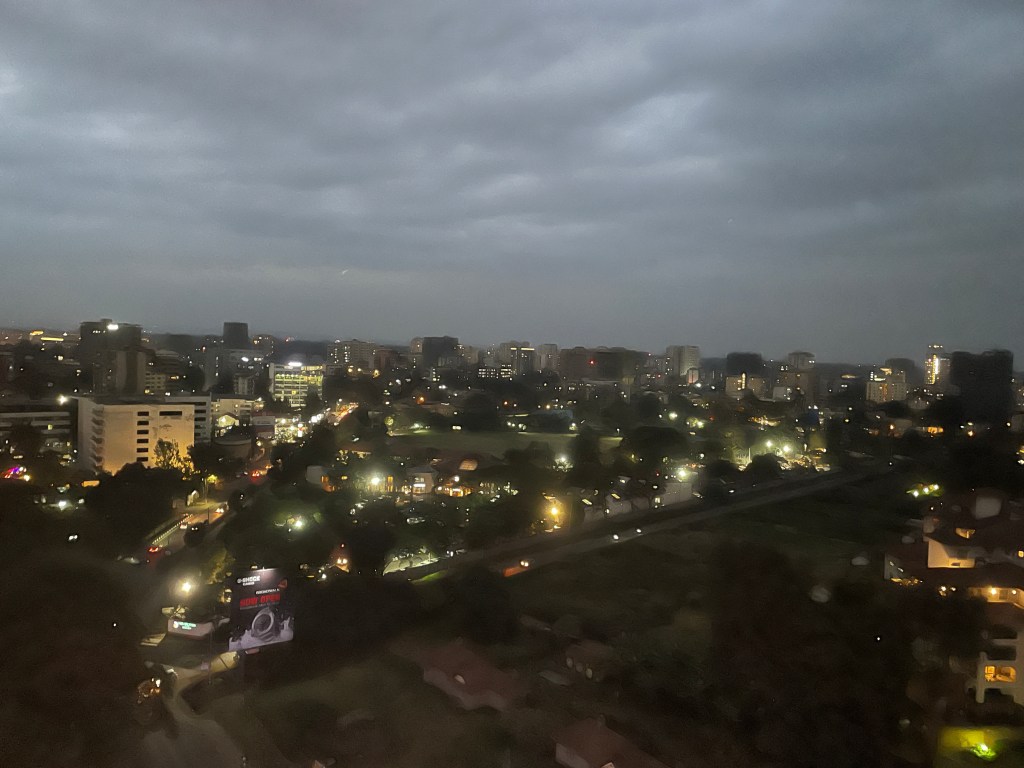
I considered my five days in Nairobi as rest days between the go go go of organized tours. It’s time to do laundry, planning for the next phase of my journey, contact friends and family, take care of any personal business, and sleep in occasionally. I went to the mall one day to replace my sweatshirt as its zipper has broken and hopefully find an inexpensive pair of binoculars – no luck. My home base here is a beautiful new apartment, in a building called a residency. There is a night club on the top floor, a workout room, pool and restaurant on the fifth floor and on the other side of the complex a grocery store, a food court – Mexican, Chinese and Indian food as well as a coffee shop and a waffle and crepe maker, a bank, a hair salon, a jewelry store and a medical clinic. Coming soon is another nicer restaurant, a home goods store, and other shops not yet identified. The unit is cleaned everyday and I am provided with bottled water, coffee and tea. It’s pretty sweet.
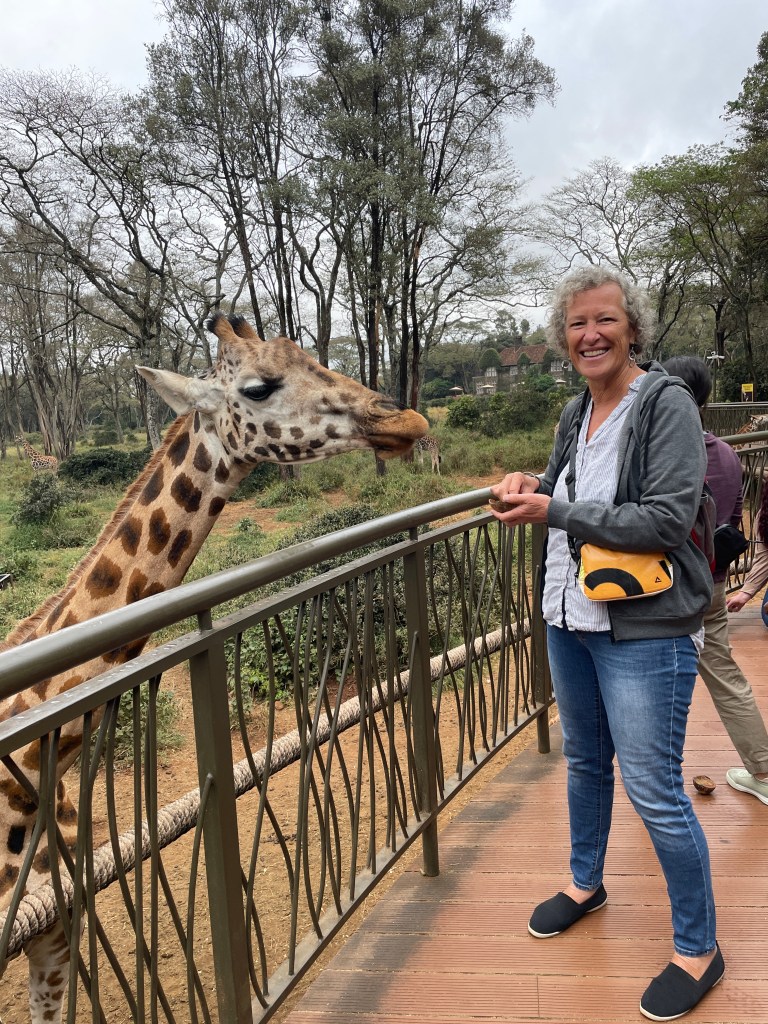
I do venture out however. In my travels, I am reading a book from the countries I am visiting, either set there or written by author from that country. One of my books for Africa was Out of Africa by Karen Blixen, so I of course had to visit her home at the base of the Ngong Hills. I visited a giraffe sanctuary where I had the opportunity to feed them. Their long purple tongues reach out for the little snacks we are handed to give to them. They only let you pet them if you’re providing them treats. They’re super cute. How can you not love that face?

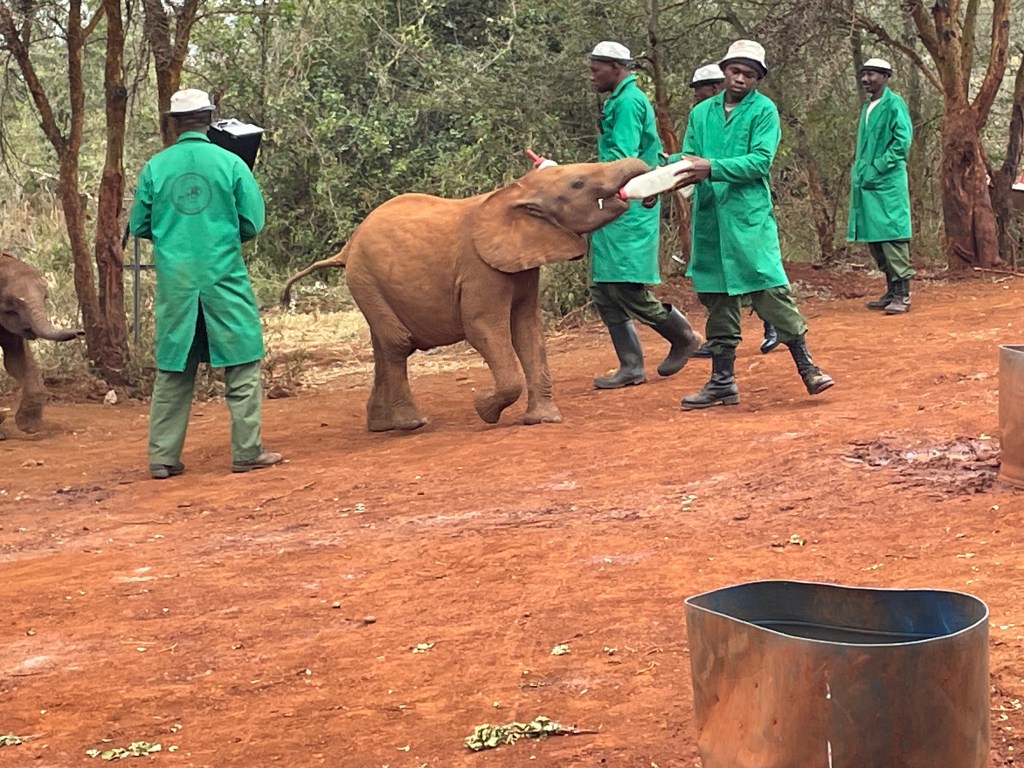
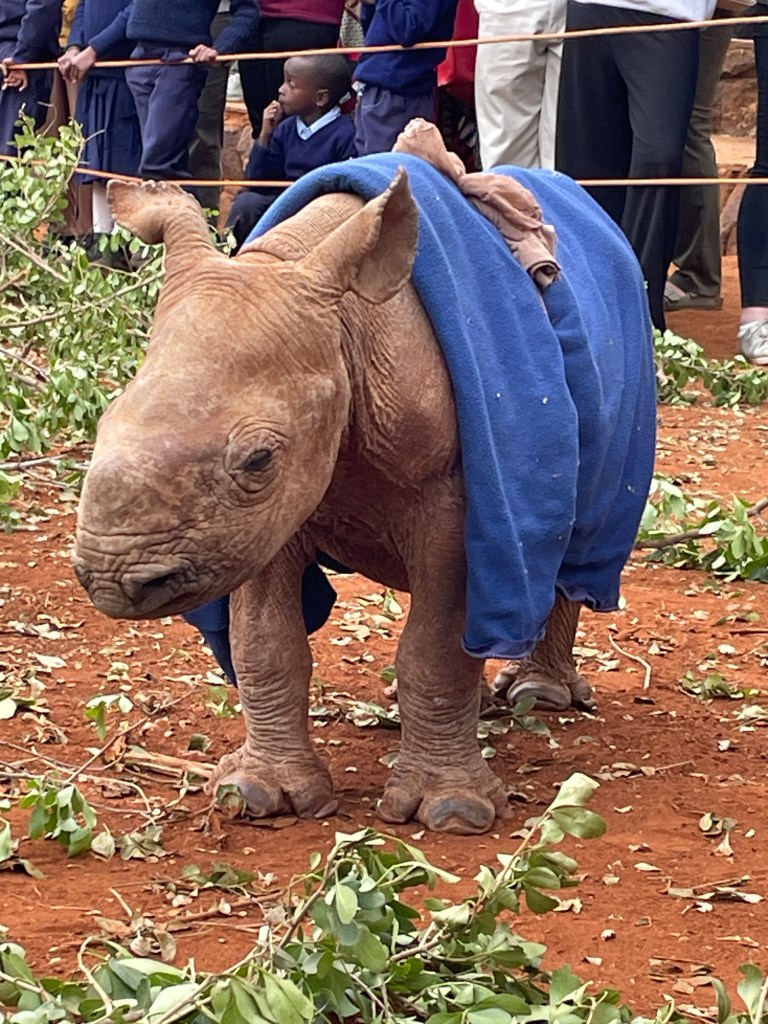
I also went to an elephant orphanage where we saw several dozen baby elephants ranging in age from 7 months to 4 years. What fun! They ran to their keepers when they were released and each was fed a big bottle of infant formula. Cow’s milk is too rich and it’s not easy to milk a wild elephant. After their drink, they played together, stripped the leaves and bark off branches laid on the ground for their enjoyment, and dusted themselves with the fine red clay. They came very close to the ropes that separated us from them, so we got to pet them – they have pretty rough skin so it’s definitely not the same as petting a soft dog or cat. Elephants are normally nursed until they’re 4 so once they turn four and can eat enough on their own, they are put back into the wild and monitored to ensure their success. And there was one adorable little rhino. A hyena ate his tail, poor little fella.

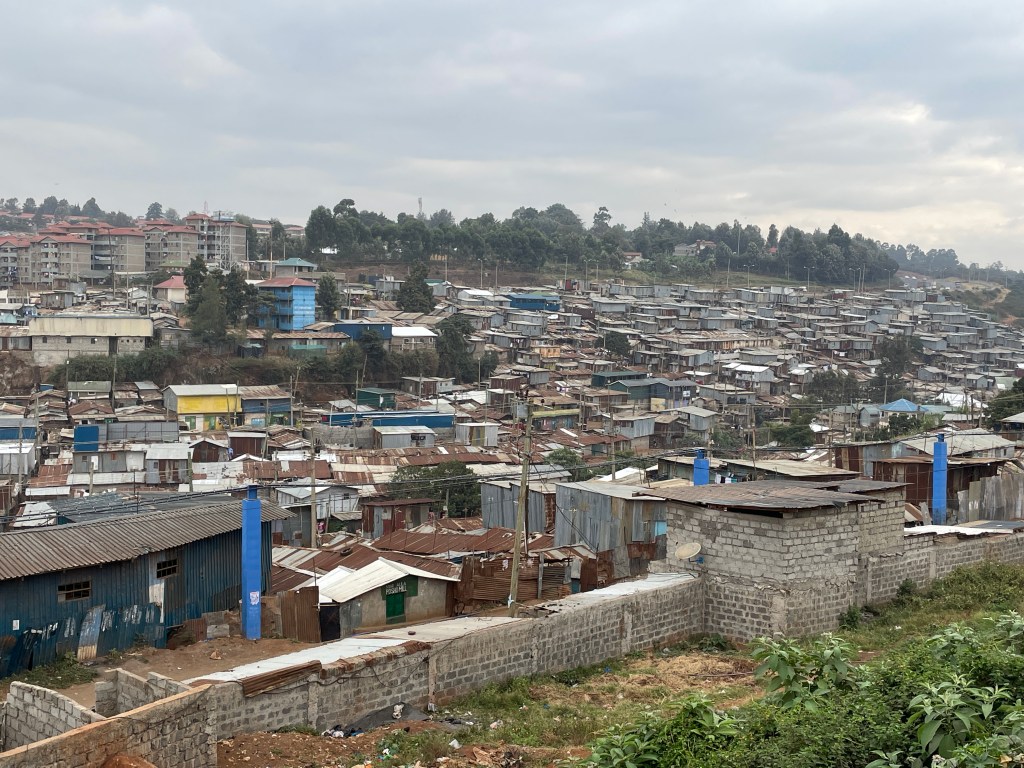
I also visited the 3rd largest slum in the world, India claims the first and Brazil the second. Almost 1.5 million people live there. It’s called chocolate city. Daniel, who was born, raised and still lives there showed me around. These tours are ways for him to support himself and a program he has started, Okolea MTAA Foundation. It’s purpose is to teach some of the children in the community skills that may provide jobs for them in the future. Right now they are taught painting, dancing and bead work, which are utilized in the tourist industry. I was amazed on how people go beyond surviving in circumstances like this. I saw a thriving commercial district which provided jobs; children attending school, laughing and playing; and neighbors and friends talking, shaking hands, slapping backs, and smiling. There seemed to be more neighborly interactions in my short time there than I’ve seen in any other neighborhood I visited. They have figured out a way to provide toilet facilities in a place with no running water and boot leg electricity to their homes. Obviously, it is not a horrible living situation and they are struggling, no matter how industrious they are. It’s overwhelming and made me feel helpless, as no amount of donation I can give will have any real impact. It’s hard to understand with all the wealth in the world, that places like this can exist.

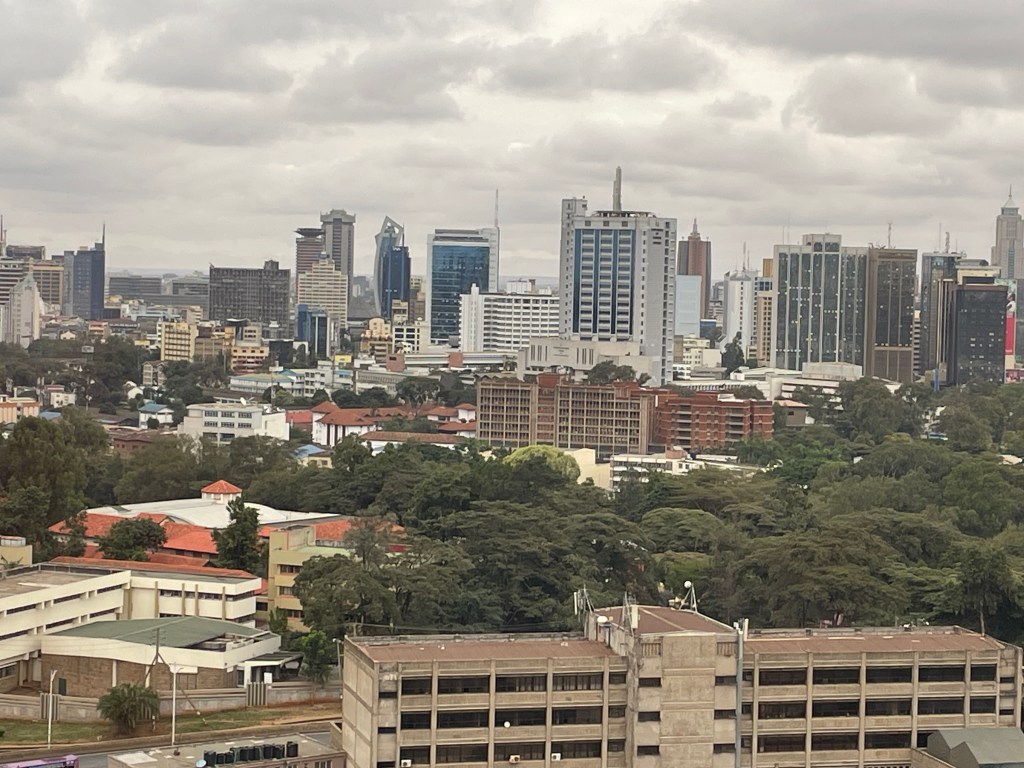
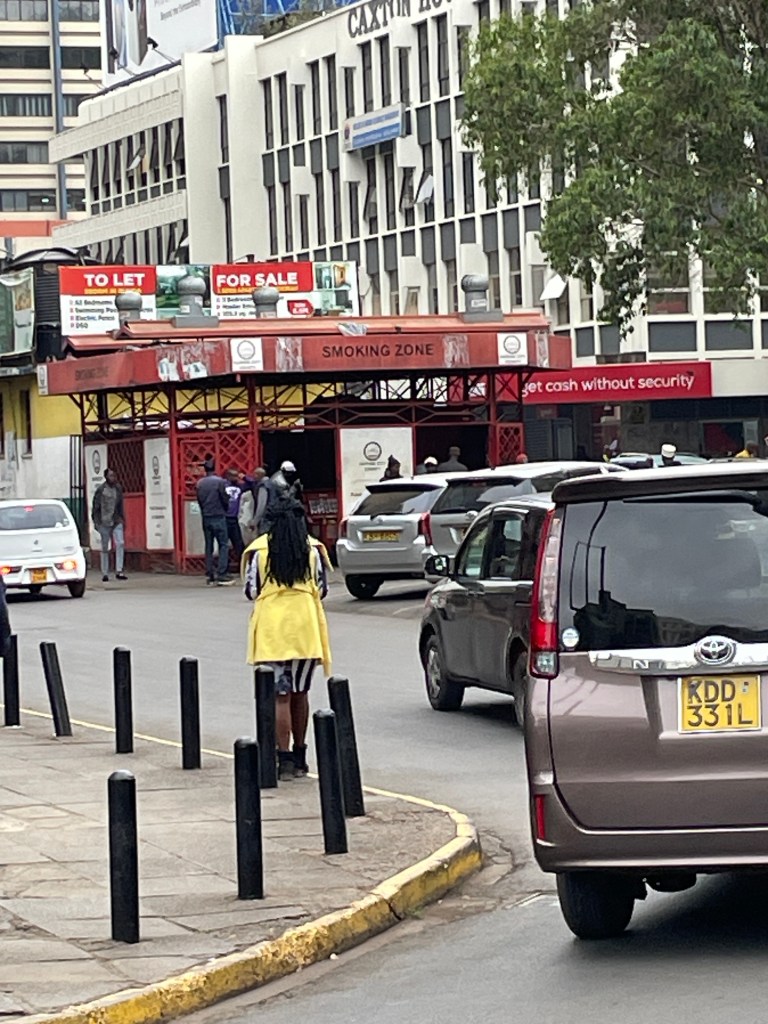
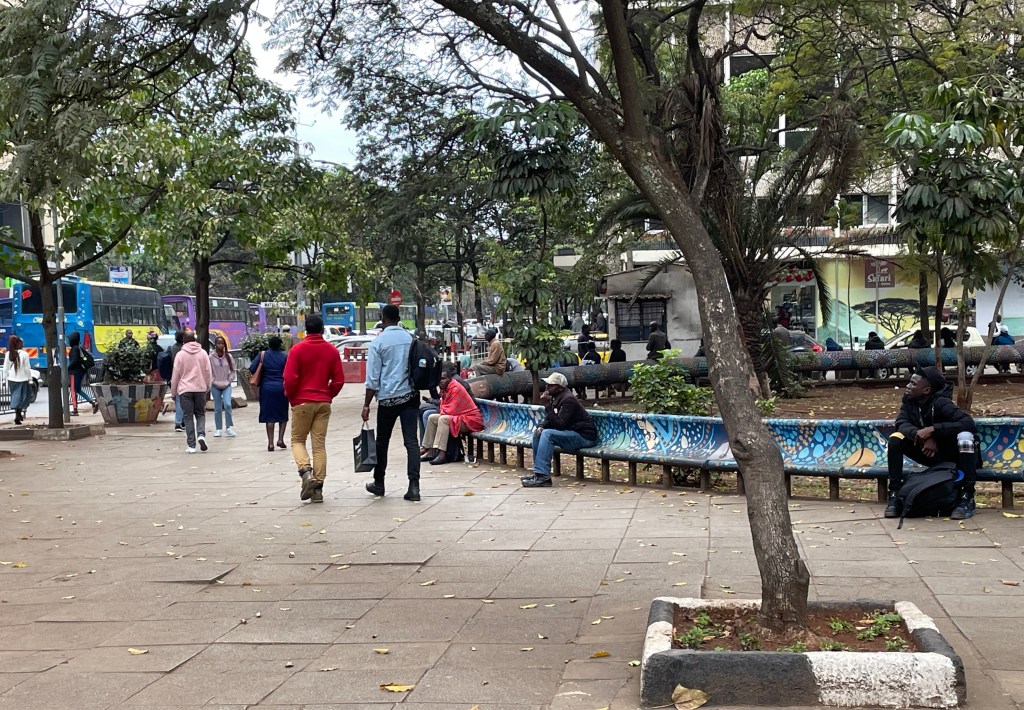
I did a walking tour in the Nairobi central business area with Kennedy. I think the most unusual thing about it is that there is no housing there. It is filled with government and office buildings, and restaurants and shops that support the workers. There is no smoking allowed in the business district either, workers have to go to a special zone if they want to smoke. And 8 million people work there! Eight million people have to commute to the area everyday. Traffic is a nightmare! I would never drive here. Cars hardly stay in a lane as they merge, let other people in, cross several lanes of traffic, make turns etc. all the while motorcycles are speeding through. It is a solid mass of cars, buses and motorcycles. Many of the workers get to their job by bus – called matatu’s. These are 14 passenger buses the line up at various areas around town and the business district. Outside the vehicles are hawkers, yelling where the buses are going and hustling them to ride their bus. One by one people find a bus, get on and wait until the bus is full. If you’re the last on the bus you’re golden, the first – not so much, who knows how long you have to wait until the bus leaves. Some buses are a little bigger and more expensive but have wi-fi on board and a TV. You can catch the latest football match or get on-line and play your games, continue working, or write some emails.


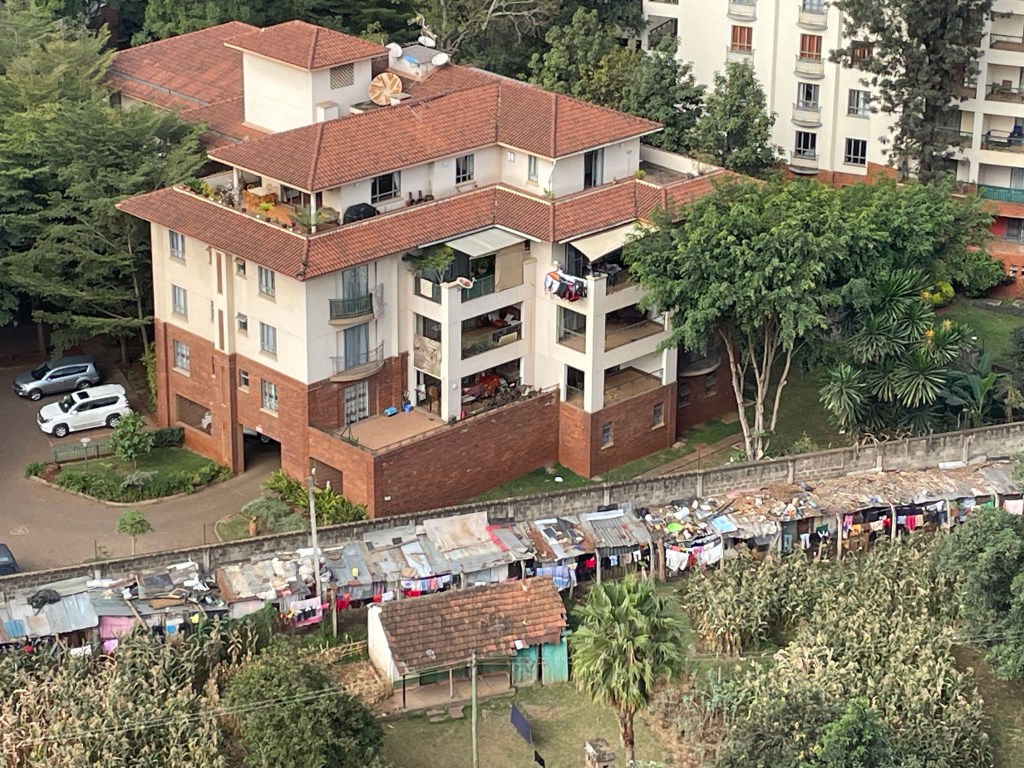
Kenya gained its independence from Britain in 1963 and they recently elected their fifth president. Our guide said it was too early to tell how the new guy was doing. I had mixed reviews about the state of the country. My guide suggested that the last couple of presidents have done a good job of improving the lives of Kenyans, including free compulsory education for primary and secondary schools and improved the roads. When I asked my Uber drivers what they liked about their city, they said nothing. The congestion is terrible, the schools are bad and private schools expensive, it’s not safe and it’s dirty. I expect, there is some truth in both opinions. In 2017, Kenya banned all single use plastic bags which has had a positive impact on the amount of pollution. Single use plastic bottles are not allowed in the parks or forests either. Driving through Nairobi was interesting. First off, I had to take Uber or a taxi everywhere, as there really is no place to walk to and I was discouraged from doing so. This is a car centric city not at all like New York, DC or even Nashville where neighborhoods are walkable to restaurants and shops. And I was supposedly in a very nice neighborhood. It’s a huge city and growing fast. It’s a city of contrasts. Riding along you would see rickety shops set up in front of nice apartment or condo buildings. Outside the fence of course. Almost every house and apartment complex in the neighborhoods I went through had gates, fences, sometimes guards, and often concertina wire on top the fences. They advertise so many new luxury apartments- like the one I’m staying in, but have one of the biggest slums in the world.

English and Swahili are the official languages here and everyone speaks English well. I talk about this not because I think everyone I meet should speak my language but so many countries boast that English is taught in schools but yet many don’t speak it well or at all. But then again, I learned French in school and my French is abysmal. Here, more than in Uganda, I have noted that I am the only or one of the few white people or mazunga, around. In Uganda, I was on daily tours with other tourists, mostly white. And on the tours I have taken here, my friends for the day have been from Switzerland, Ireland, Australia, Canada, Italy and Germany. But I haven’t taken that many tours, mostly going places on my own. It hasn’t been a problem, I feel pretty comfortable and everyone has been very warm and friendly, responding to my smile and jambo-hello in Swahili, in kind. It’s just an awareness.
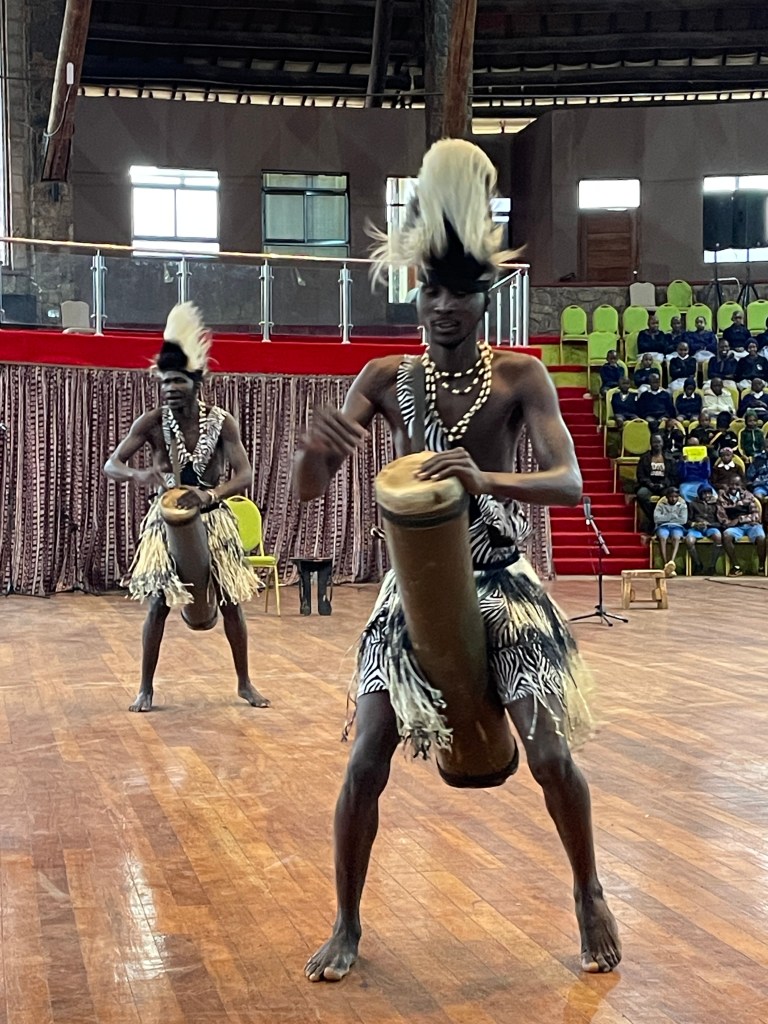
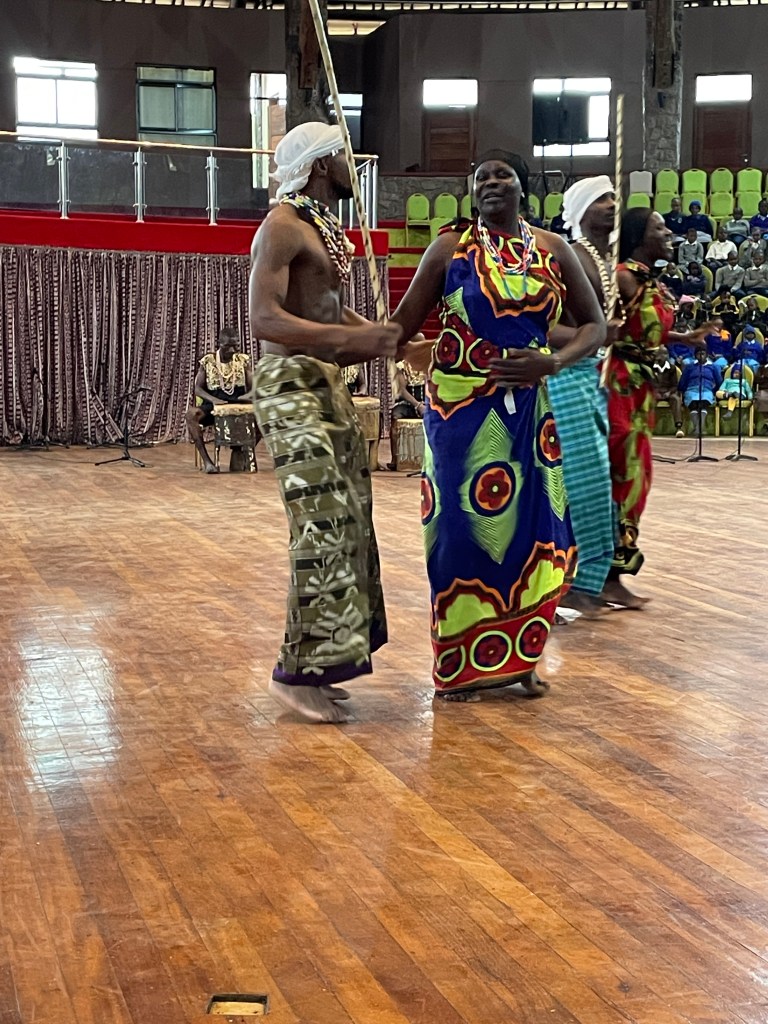
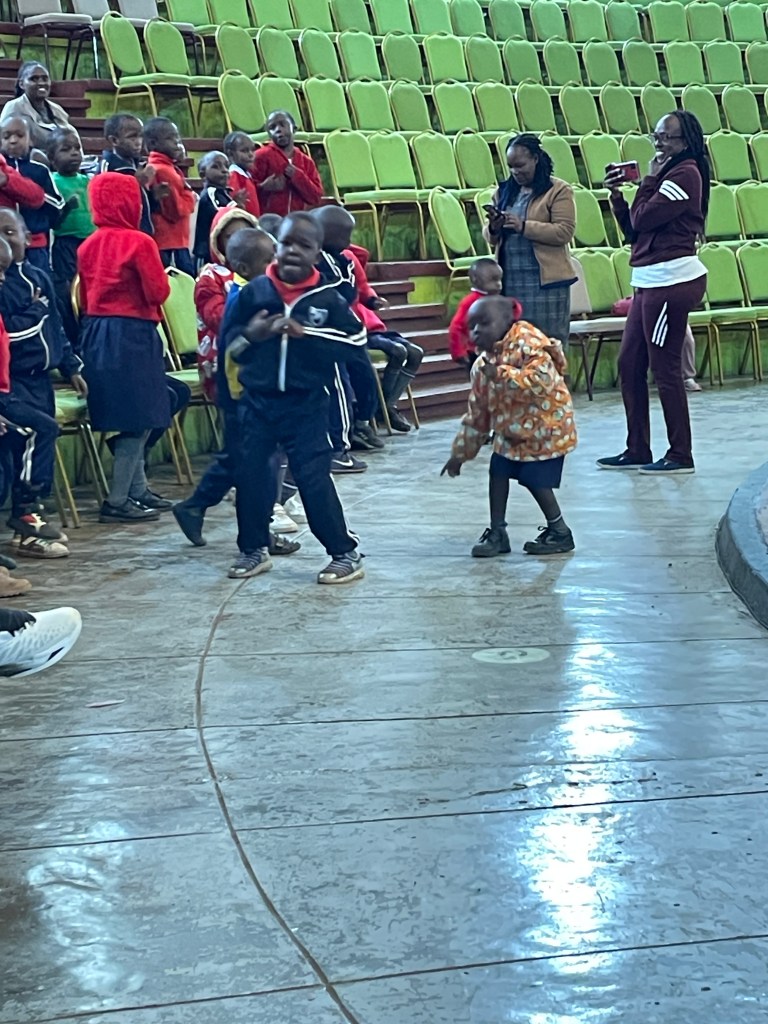
I’ve only had one meal of traditional Kenyan food. A really nice rice -very flavorful like Jasmine rice, sautéed vegetables, lentils, pork and chicken, chapati and a green mashed potato dish with fresh corn in it called irio -it was good, was served. Otherwise it’s been Mexican, Chinese, seafood and Italian, including leftovers since I had a kitchen to reheat them in. There is a big Indian influence here, Indians having arrived before the British, hence the chapati and many curries you find.
It’s been cool here or cold if you ask a local, mid 50’s at night and mid to hi 60’s during the day. And overcast, which makes it feel cooler – typical winter weather. It’s nice respite after the heat in Greece. A lot of people commented when I talked about my trip, that three weeks is enough to be gone and then they’re ready to go home to their own beds. So far, I’m doing fine and am still looking forward to the next adventure. It helps to text and get texts from family and friends, have conversations via FaceTime now and again, scroll through Facebook and Instagram, and keep up with the news from home and the US. Vote for Freddie!

Next – Tanzania
Correction – The hills I climbed in Uganda were not 2300 ft above sea level but 2300 meters, which is over 7500 ft. Quite a difference.


 Where in the World is Debra Grimes?