“Travel makes one modest. You see what a tiny place you occupy in the world.” ― Gustave Flaubert
July 28-31, 2023
Everywhere I went in Uganda, I received a warm Your Are Welcome, which is a wonderful way to be greeted. When I arrived at each of the lodges where I stayed, I was given a glass of fresh squeezed juice, much appreciated after the bumpy and dusty journeys. My time in Uganda was spent either driving through the countryside or in one of the national parks experiencing some exciting animal encounters. No city life for me here.
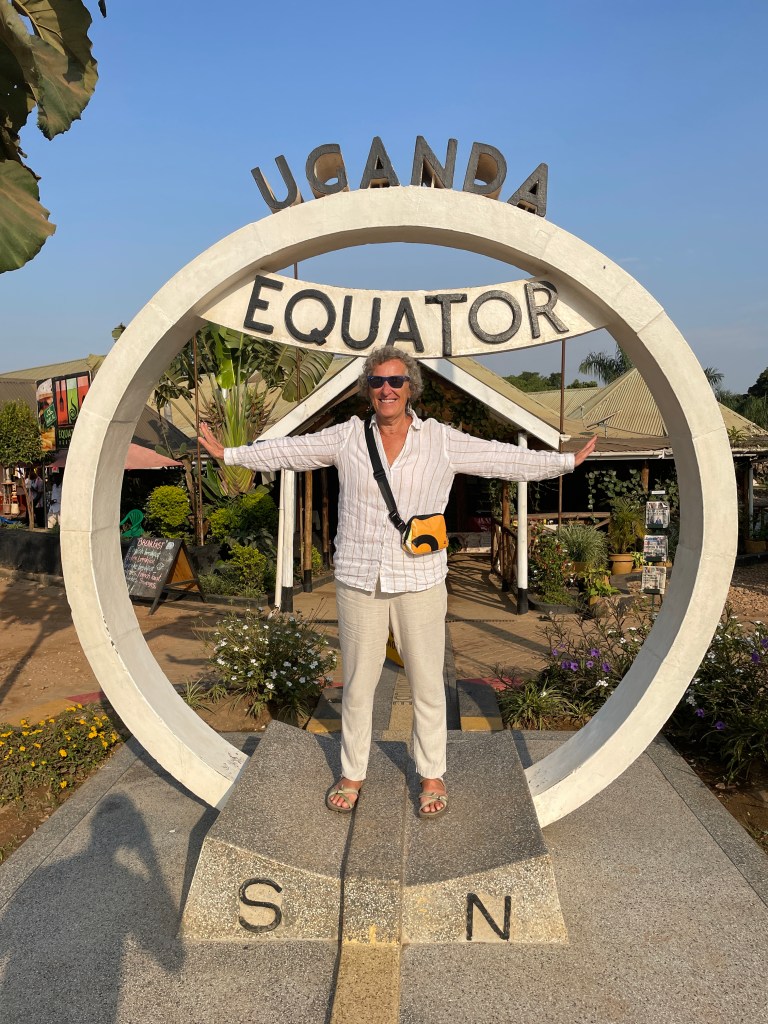
The first day I was driven from Entebbe to the Bwindi Impenetrable Forest, a nine or ten hour drive. What a rush! So much going on along side and on the roads. I am sure my description will not do it justice. First, on the edges of the roads scattered here and there are small flocks of cows and goats. Some are tethered, some are wandering the streets, one black bleater was stuck on a small strip of concrete between 4 lanes of traffic during rush hour, and some are prodded along by herders. The shepherds range in age from 6 to 86, all with a stick or rope in one hand and many times a cell phone in the other. They are dressed in baggy sport shorts and t-shirts to blue jeans and a button down.
Then come the pedestrians. It does matter how far you are away from a town or city, someone is walking along the road – school children in their pink, red, blue, yellow, green or teal uniforms; men and women going to work; men, women and children carrying items on their heads – bundles of sticks, water jugs, produce, etc, taking them into town to be sold or home after shopping; sellers of freshly caught tilapia, produce, and any number of things, especially at the police check points; and many whose destinations or purpose was unclear as they ambled along. As you come near a town the crowd grows, especially on Sunday when they’re headed to church. There are no sidewalks.


As there are not a lot of cars except tourist vehicles, they look at them with curiosity but when you smile and wave, they break into big smiles and wave back. The children may even do a dance.
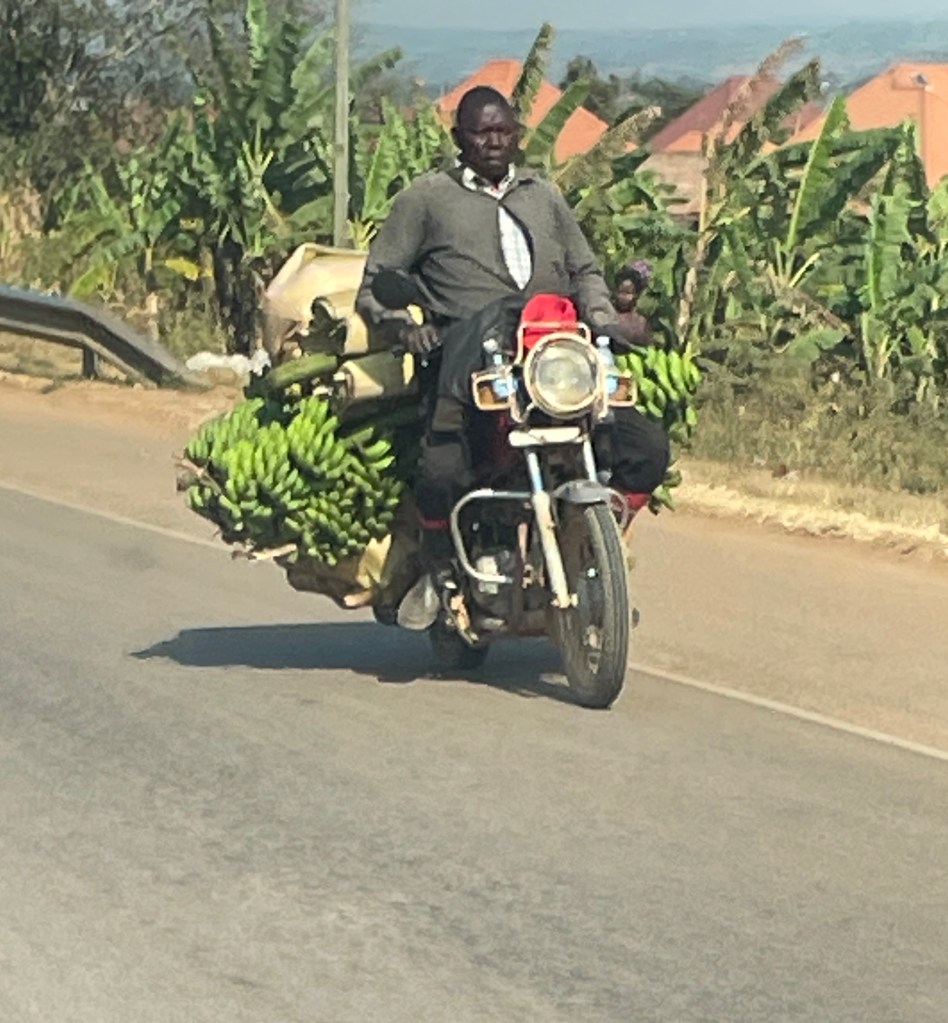
There is a three foot wide lane, usually on one side of the road that may be used by the walkers but it is also full of bicycles and motorcycles which seem to have the right of way. The bikes and cycles are both used for transportation as well as conveyances for items to be sold and purchased. Motorcycles, can be taxis – I was offered several rides as I walked through Entebbe. They may carry 2 people or sometimes 3 or 4. The bikes and cycles are beasts of burden, carrying 3 and sometimes 4 branches of bananas which can weigh several hundred pounds. And the country is hilly, so often people are pushing their bikes up the slopes as no one could pedal uphill with that weight. Or they’re toting 4 or 5 twenty liter jugs of water, which again is close to 200 pounds. Any thing else you an dream of are loaded on those wheels.


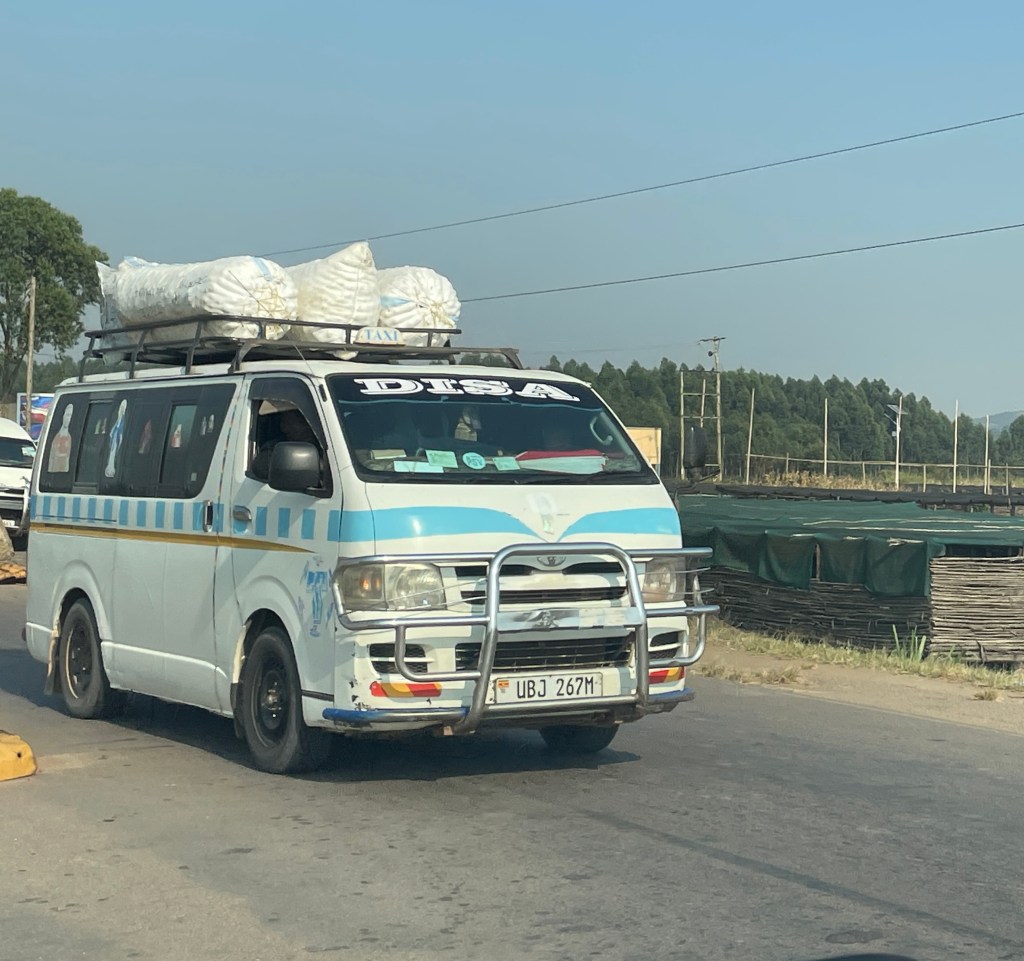
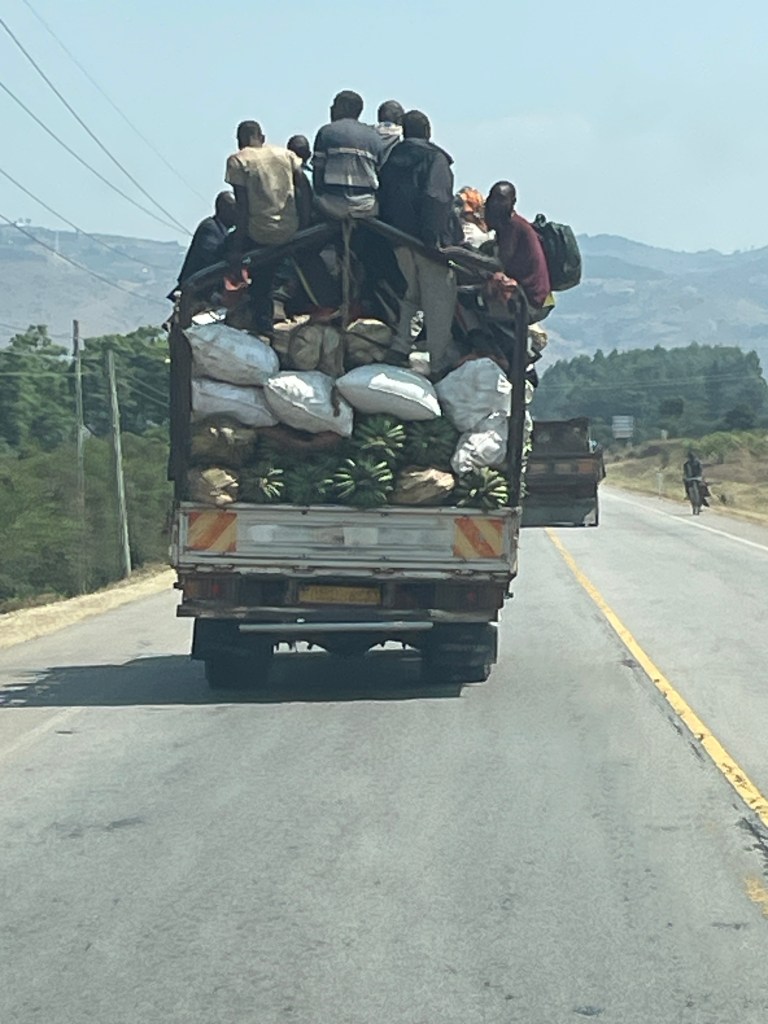
Then come the boda bodas. Basically privately owned city buses, really mini-vans. Stick our your hand and they will stop for you and your stuff if you have any. They stop quite often, especially when in town. They’re usually fully loaded with people and products on the rack on top. Add to that the small trucks that go from town to town picking up produce, livestock, lumber, gravel – really anything the villagers are selling. They have sides about 4 feet high and then an open metal structure another 5 feet and over the top. If they’re not filled completely with bananas, they might have cows or goats on the bottom, produce piled above that, maybe a tire or two and then 6 to twelve people sitting on the sides or the top. There are also larger trucks, little smaller than a semi that also picks up items but these are to be sold in the larger cities or other countries. And then there are the tourist vehicles – jeeps and vans, and a few cars thrown in for fun.

All that is going on with no posted speed limits, though my guide assures me there is one. He goes pretty fast though. There are usually two lanes, sometimes three but you don’t really have to worry about what lane you’re in unless someone is coming toward you- at least it seems that way. And they drive on the wrong side of the street as they were once a British colony. To keep people from going too fast, there are a lot of speed bumps. A row of two or three smalls ones close together to alert you you’re entering a more populated area, and then bigger humps as you go through the city center. Needless to say, it makes for a bumpy ride!


Only the main streets are paved, the rest are red clay roads full of potholes and ruts as well as the requisite speed bumps. My guide let me know that I was getting an African massage at no extra charge. And because it was dry, they were very dusty. I at least could roll up my window. I felt sorry for all the walkers, especially those dressed in their finest.
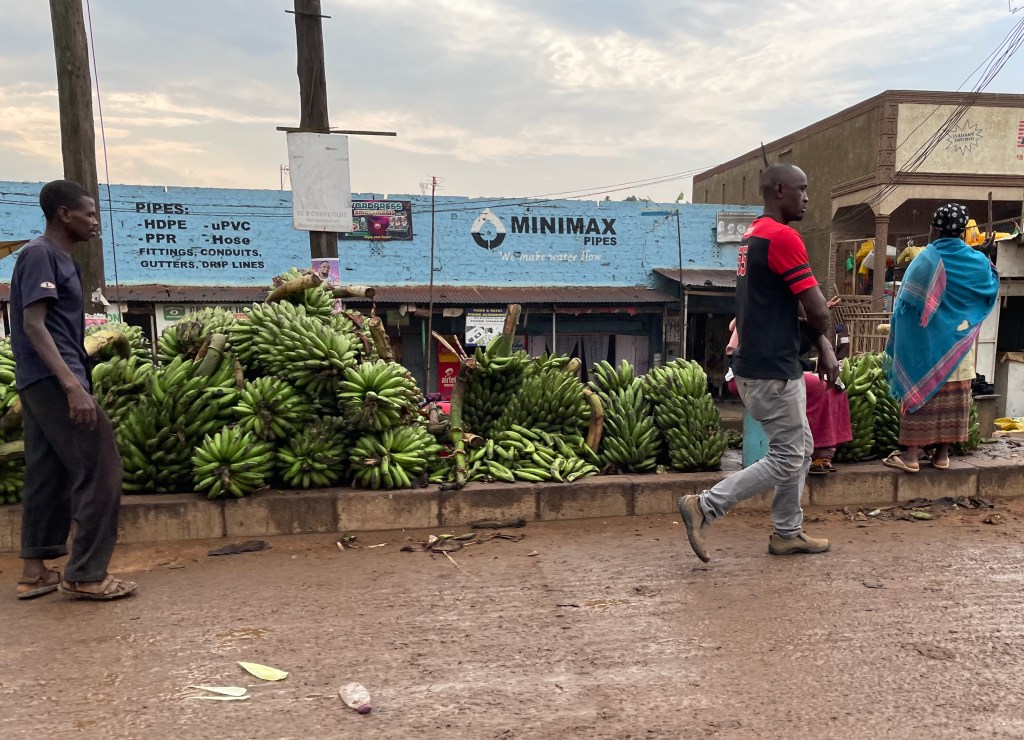
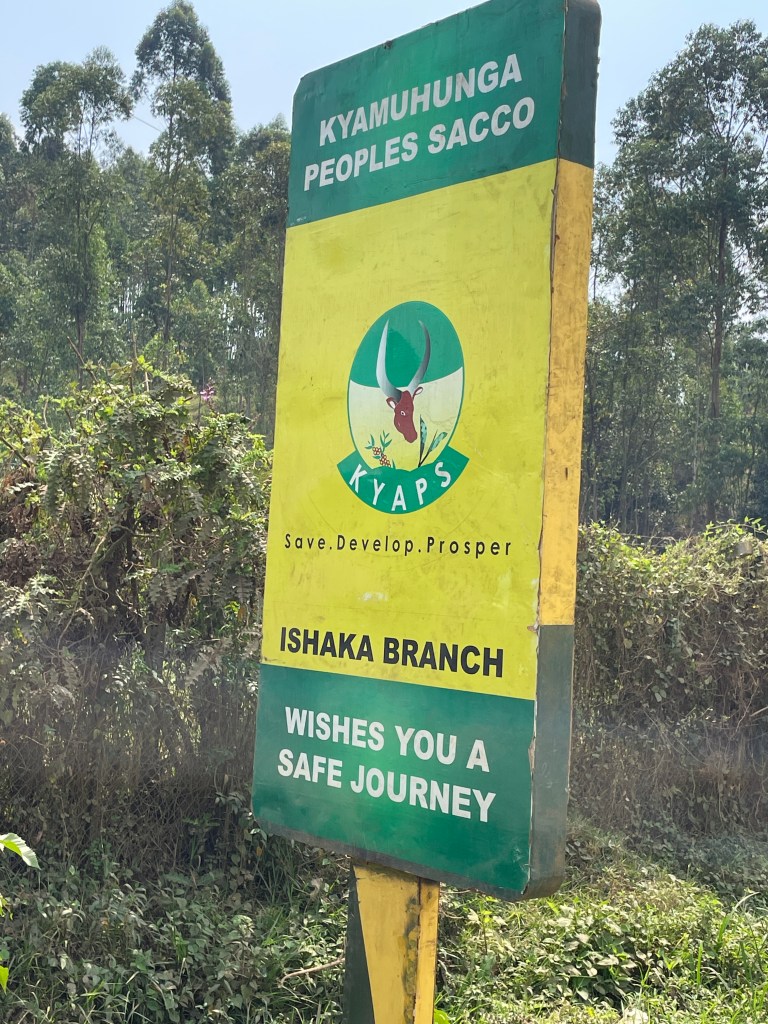
Each village or town we passed through had a row of shops lining both sides of the road. There were produce stands, bananas – so so many little green bananas, hand carved bed frames, metal bed frames, mattresses, plastic items, water cisterns, clothing, food markets, cell phone stores, lumber, and on and on. Some towns just bustled with activity, other were more sleepy. The shops varied from three story glass fronted buildings-rare, to small mud huts, to rows of three or four doors in adobe like buildings – some painted bright colors. At congested stops, vendors of soft drinks, meat on a stick, bananas, chapati, etc would rush up to the boda bodas and sell their wares through the windows. A lot of things disappeared inside so it must have been. good business.
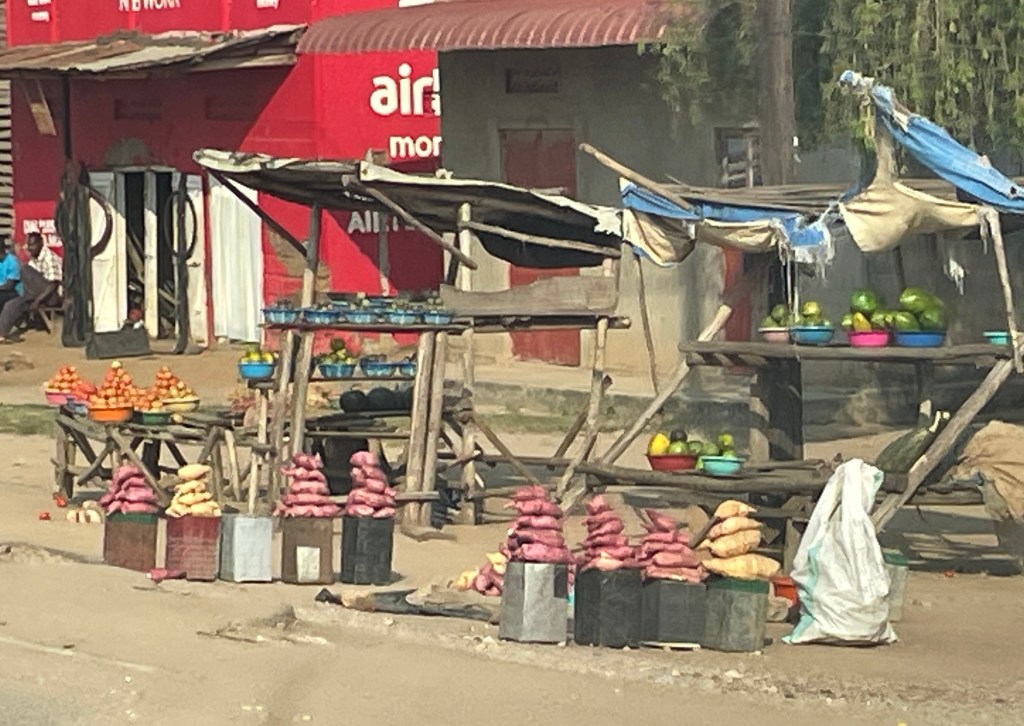
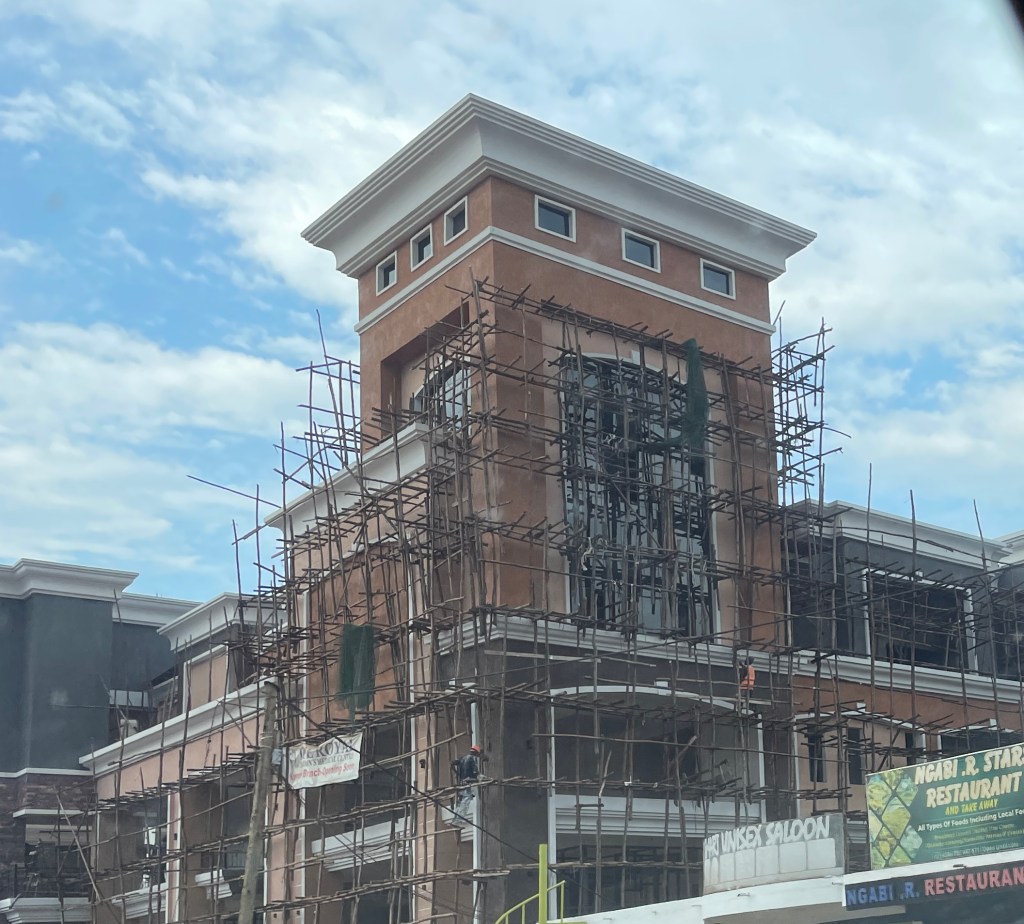
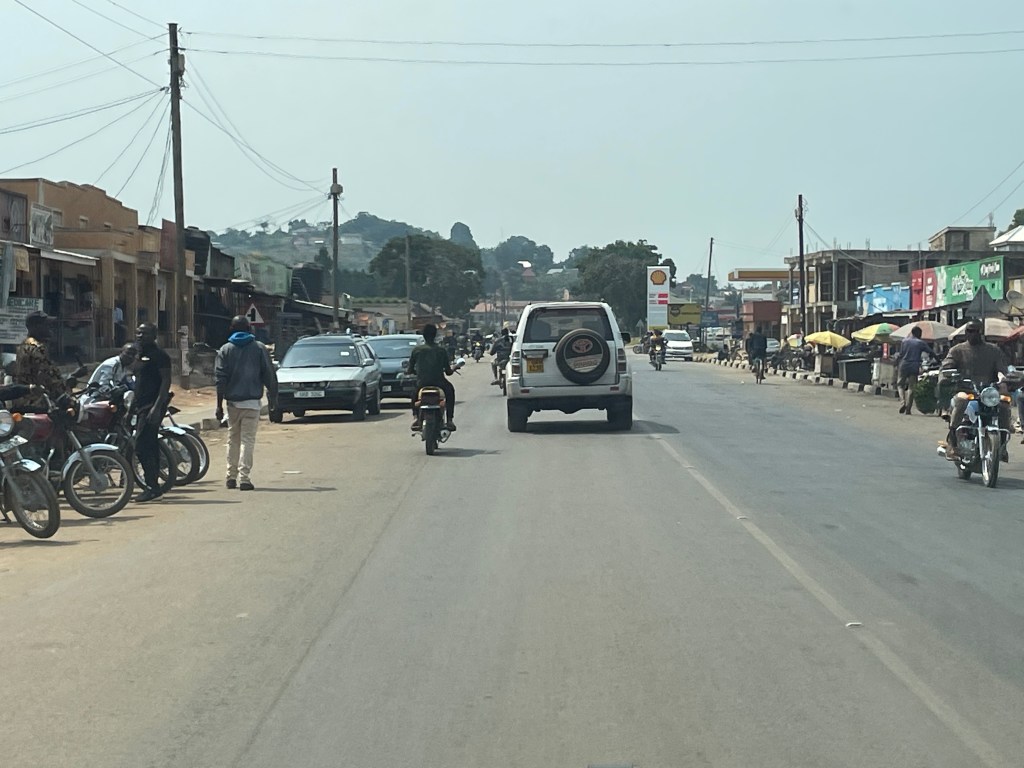
I know I came to Uganda to trek with the gorillas and I will get to them, but the drive and what I learned about the country was just so fascinating, I had to share this first. I will get to the animals though so hold on.
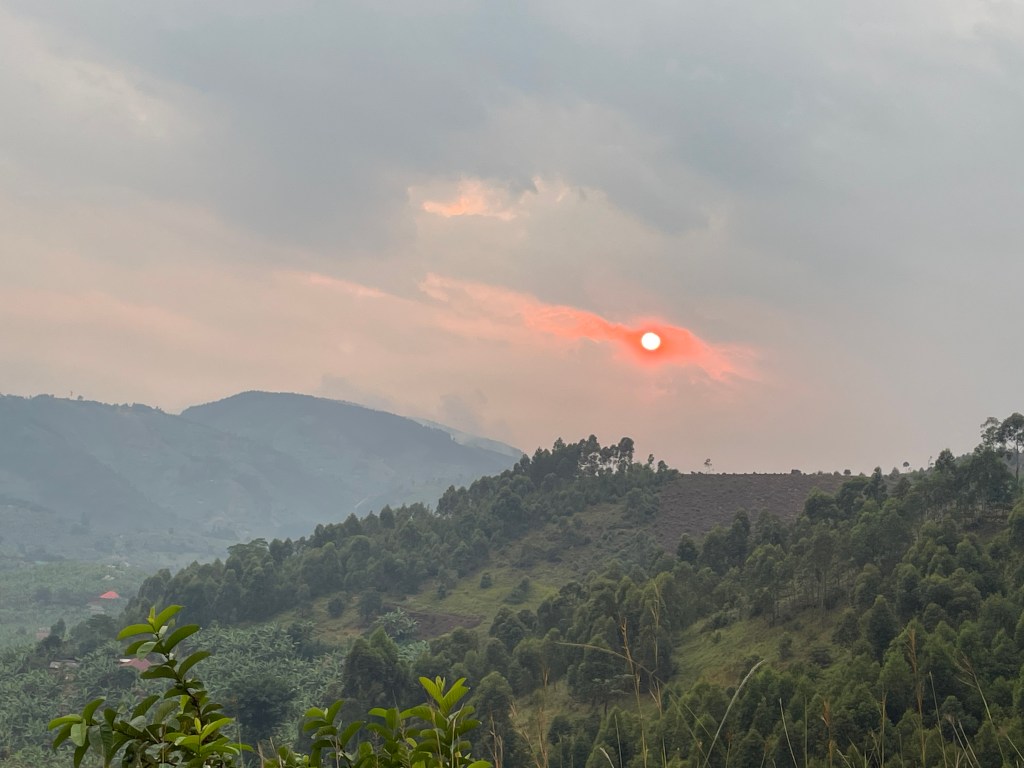
Derrick, my guide, said that Uganda pretty much produces what it needs as far as food stuff and if the green fields and hillsides I saw are any indication I believe it. Some of the items were grown on immensely steep hills – it really is amazing. There are banana trees everywhere. They grow 3 different kinds. One, is the green banana which they cook and mash and can be served at every meal. I was told it was a good source of starch. And I saw big bundles of those everywhere. I didn’t really like it, it’s not that it was bad, just bland and starchy. Then there are little yellow bananas, these are sweet. I liked them a lot, much more than I like the bananas at home, and ate them most days for breakfast. I was really happy they were packed in my lunch when I hiked in to see the gorillas, as they gave me much needed energy. Then there is the longer yellow banana, which I only had once cut in pieces and fried for breakfast.

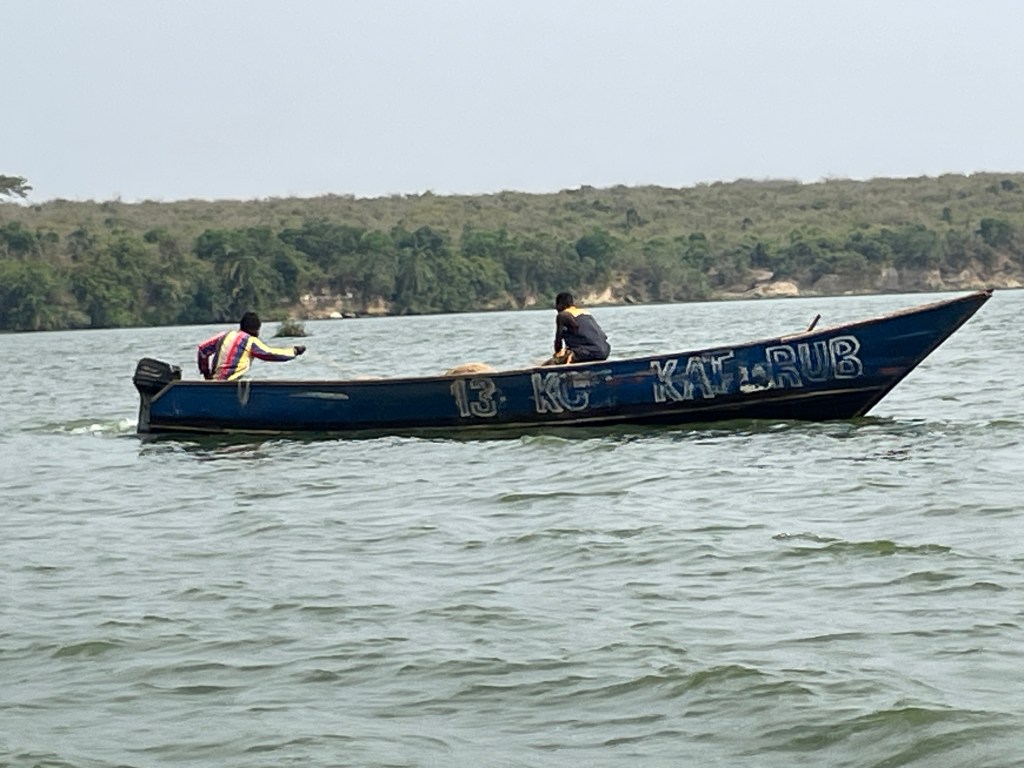
There are some beautiful tea farms, green as far as the eye can see. Fields of sweet potatoes, cabbage, tomatoes, carrots, onions, watermelon, sugar cane, cassava, millet, squash and pumpkins, and more. There are also coffee, fruit and avocado trees. And did you know that loofah is a vegetable? I may have known that and forget, because I was surprised when I heard it. They fish for tilapia in their rivers and lakes. We saw men holding up a stringers of the large, fresh specimens, selling them along the road side. It is served in lots of different ways-grilled, kabobs, whole, filleted, and in many types of sauces, in every restaurant and lodge. It seemed bigger and better than the fish at home. And of course those cows and goats provide milk and meat. Goat stew is another popular menu item.

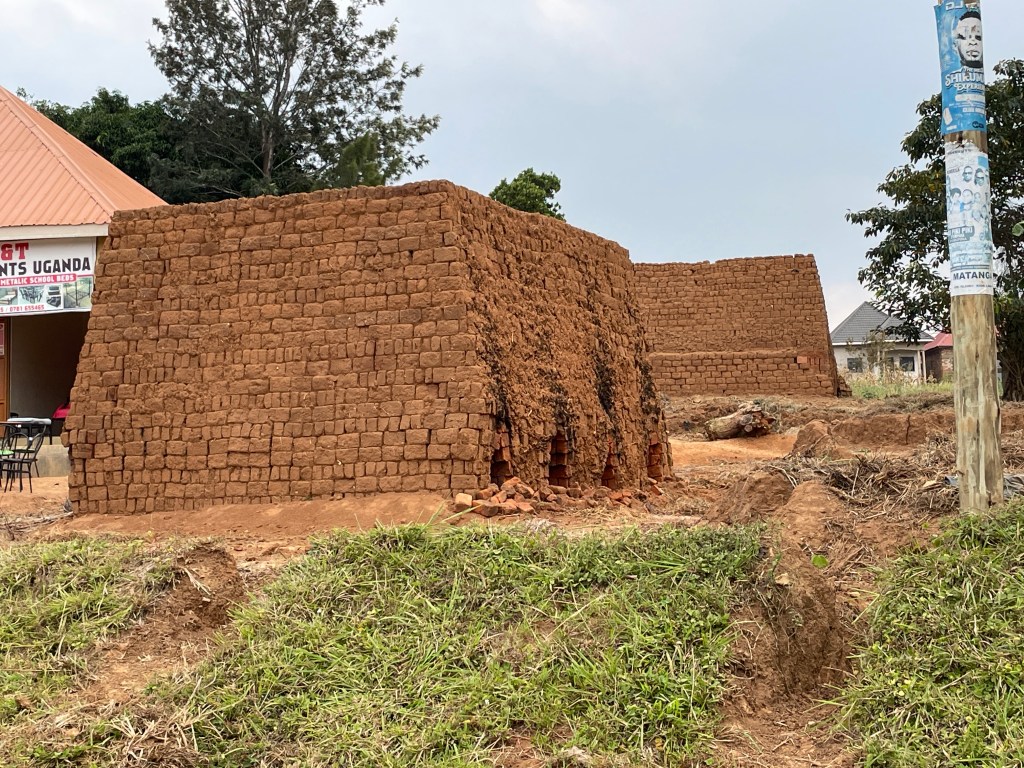
Life in the villages is hard, filled with physical labor. They do everything by hand, there were no tractors or plows to be seen. Other than picking their produce and getting it to market on their heads, bikes or motorcycles, they also pick tea by hand. They make bricks. You see them digging the clay soil up and forming bricks, laying them in the sun to dry, then building a tower like structures with holes through the bottom where they light fires to harden the bricks, then once they’re hard, they load them into trucks to be taken to the city or construction sites. There are quarries off the beaten path where women sit in the sun all day and break off chunks of rocks then pound them down to gravel size pieces with a hammer. Then they bag them up and get them to the highway to wait for someone to come and buy them. The same goes for lumber and thatching material, which you see laid in piles along side the road. Everyone respects their claim in the quarry, their piles by the road, etc. Laundry is done by hand and cooking over a fire after collecting firewood along side the roads. They have to go to community wells or cisterns to collect their water, carrying it home in 20 liter jugs. I am sure there are lots of houses with electricity and running water, they were just not front and center on my drive.

Derrick believed they were all working hard at their professions and should be respected. I agree as I don’t think I could do it. He also said that opportunities were hard to come by and people were very happy for any job they had. Many struggled and saved to send their children to private school to get a good education, hoping they would have a better life. One of the servers at a lodge I was staying at, moved his family to another town so his children could go to a good school. He wasn’t able to see them often. But right now there are not enough opportunities for all the young people who have or are graduating from their universities. Derrick has a degree in electrical engineering but has been unable to find a job in the field so he re-educated as a guide. If an opportunity arose, he would switch in an instant. If you’ve read the recent interesting article in the New York Times about the global shift in demographics, you know it’s going to have a major impact on the currently rich countries. China and Europe’s populations are aging and they don’t have the new young workers to support their retirement systems. Africa has lots of young workers but no opportunity. How do we connect the two? But immigration is a sticky subject, I’ll guess we’ll see what happens.
All in all, my impression of the people of Uganda is that they are proud, hardworking, warm and happy. The want and need more opportunities. Tourism provides that, so come and visit.
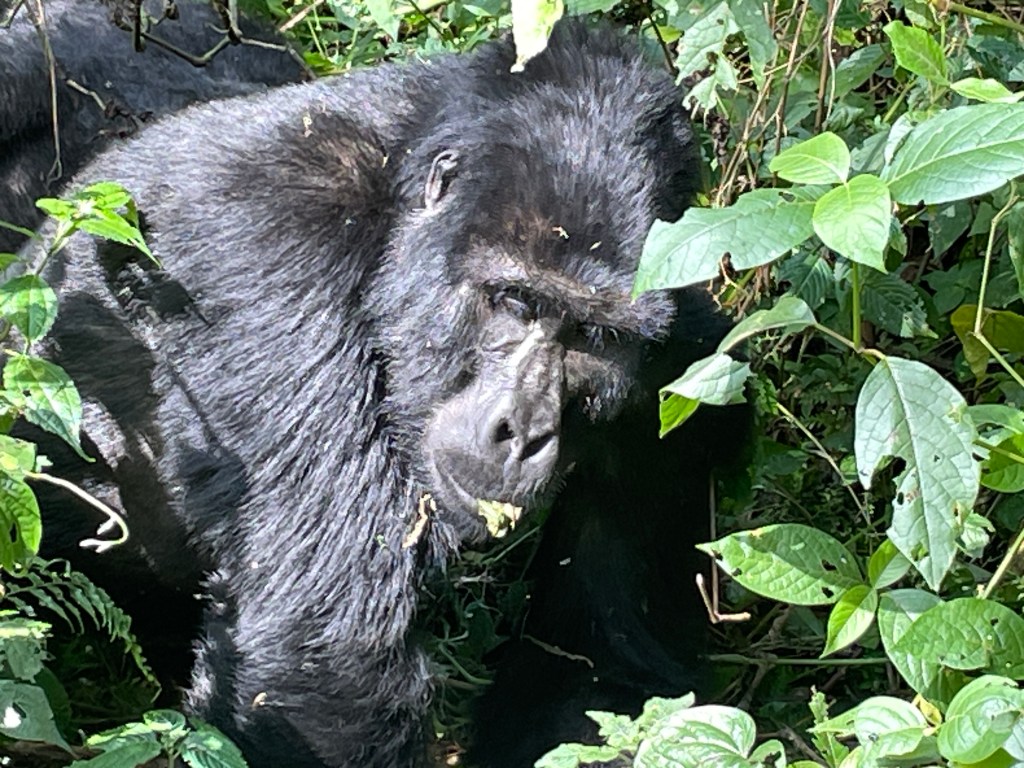
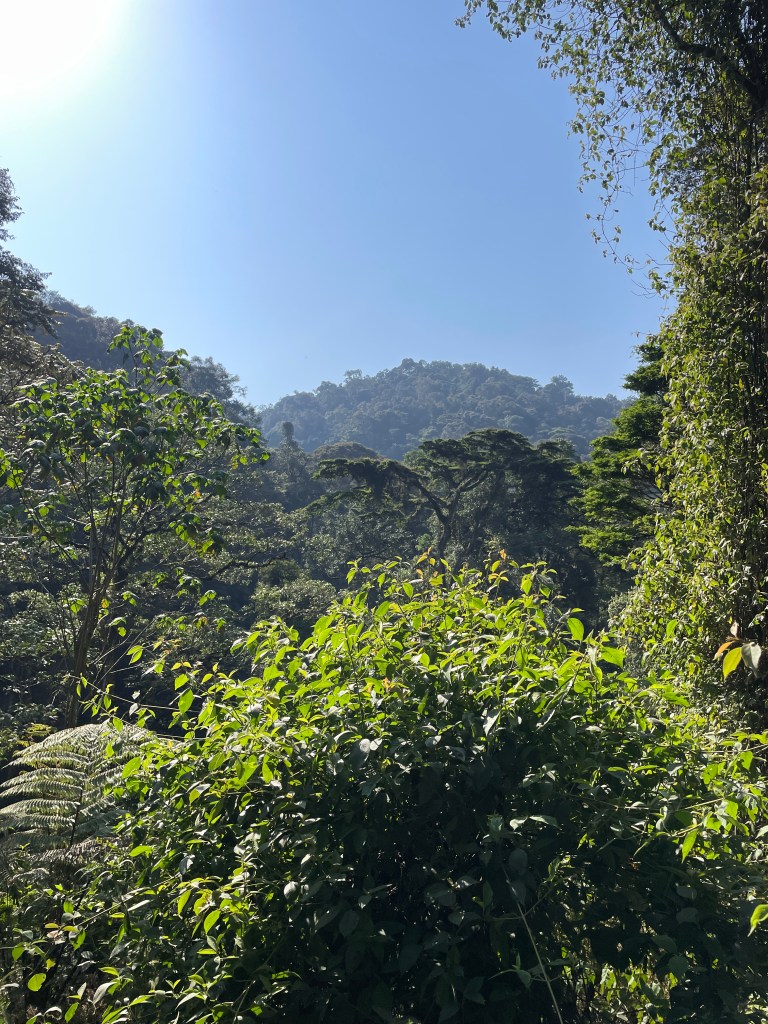
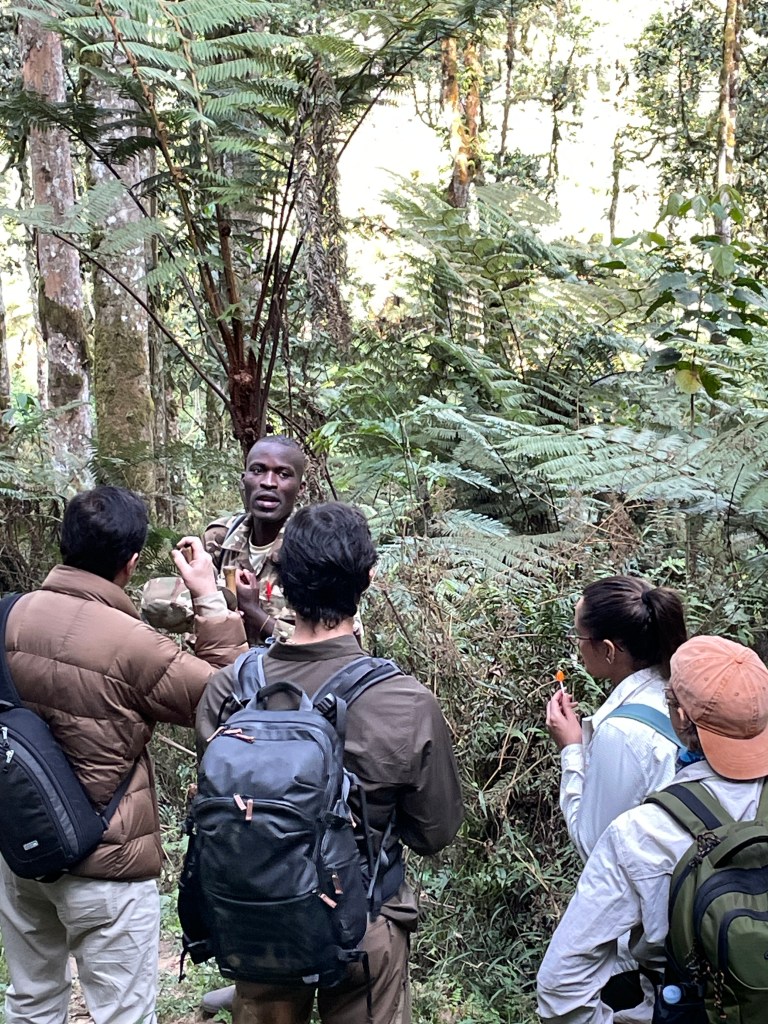
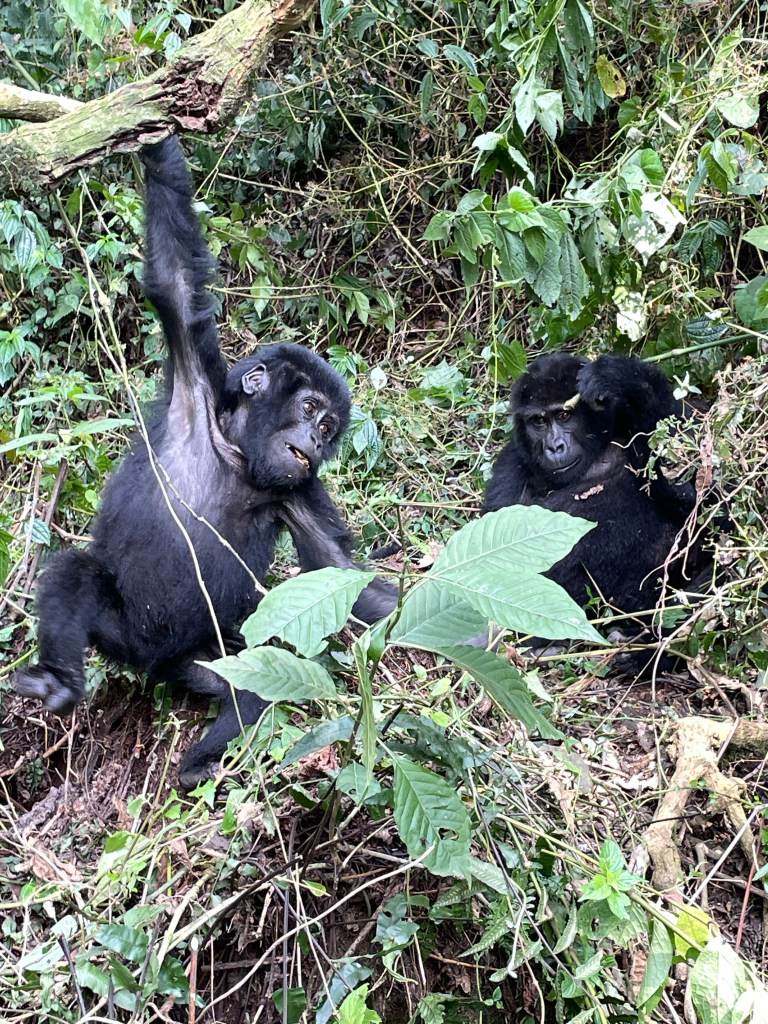
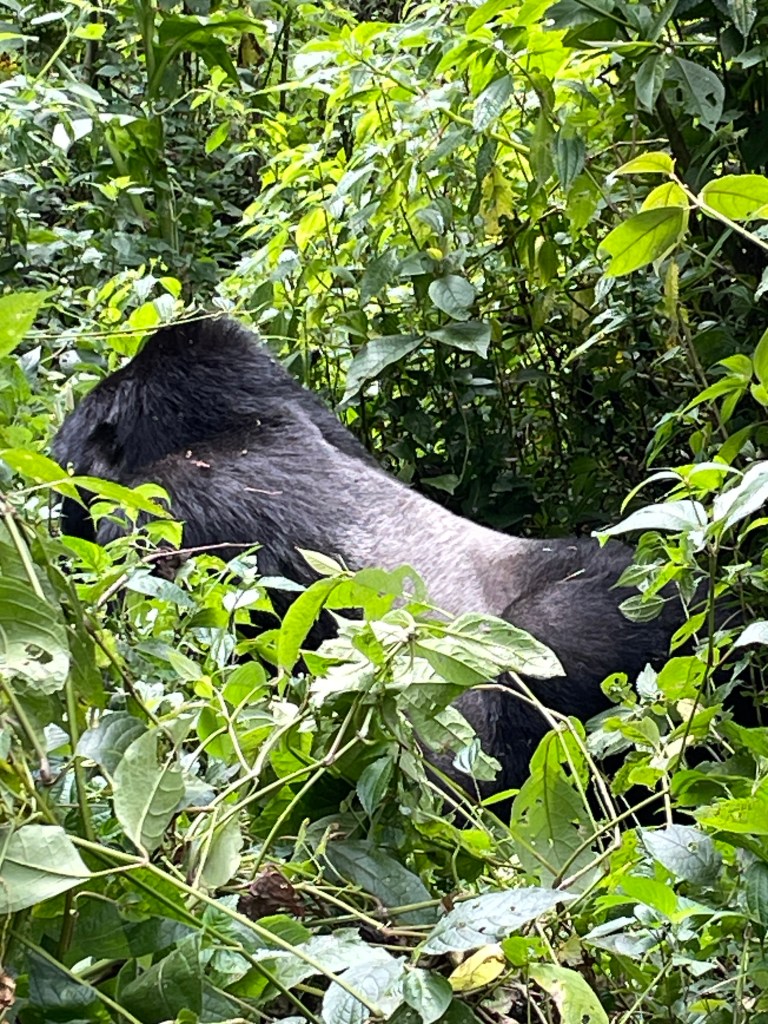
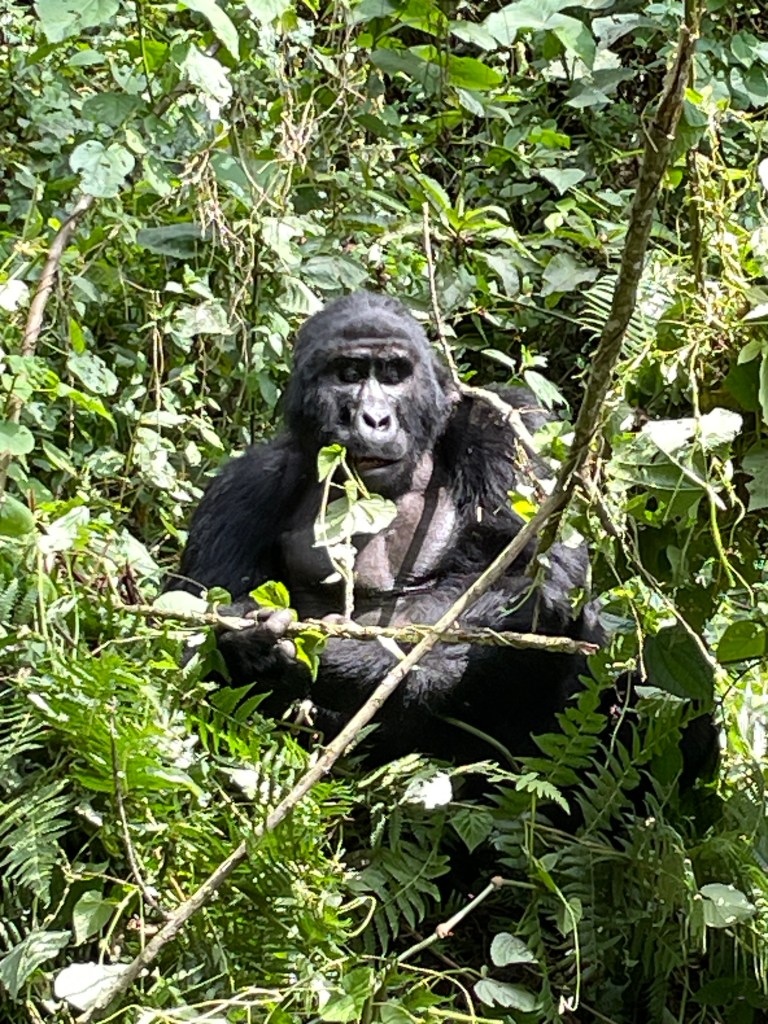
So now for the animal experiences. Hiking to see the gorillas was difficult and fabulous. Ten of us from around the world did the trek- one young lady from South Korea, a family from Mexico, 5 people from a worldwide ecology/biology convention in Kigali – 2 from the US, 1 from Mexico and 2 from Peru. I also did other tours with two women from Brazil and two men from Italy who were from that conference. The path down was steep and slippery due to do the dry silty soil and then we got off the main trail there were vines to catch your feet and trip you, trees with spiked bark you needed to avoid, slanted paths where it was difficult to maintain your footing, and places you just couldn’t see where your foot was going- into a hole or on solid ground. I fell at least 4 times and other reported doing the same. I didn’t feel too bad as I was the oldest in the group by double or more. The trackers and porters were generous with their helping hands and encouragement of the ‘mama’ of the group. And of course we had to hike back up that steep trail at 2300 feet above sea level. I couldn’t believe that the porters carried one women down and back up on a chair! But it was worth it. We found a troop of gorillas and was able to watch them for an hour or so, moving around to see different members. We enjoyed seeing one scamper up a tree, watched a baby swing from a branch with its mother close by, and observed a silver back munching his lunch as he gazed at us nonchalantly. Not many people get this opportunity.

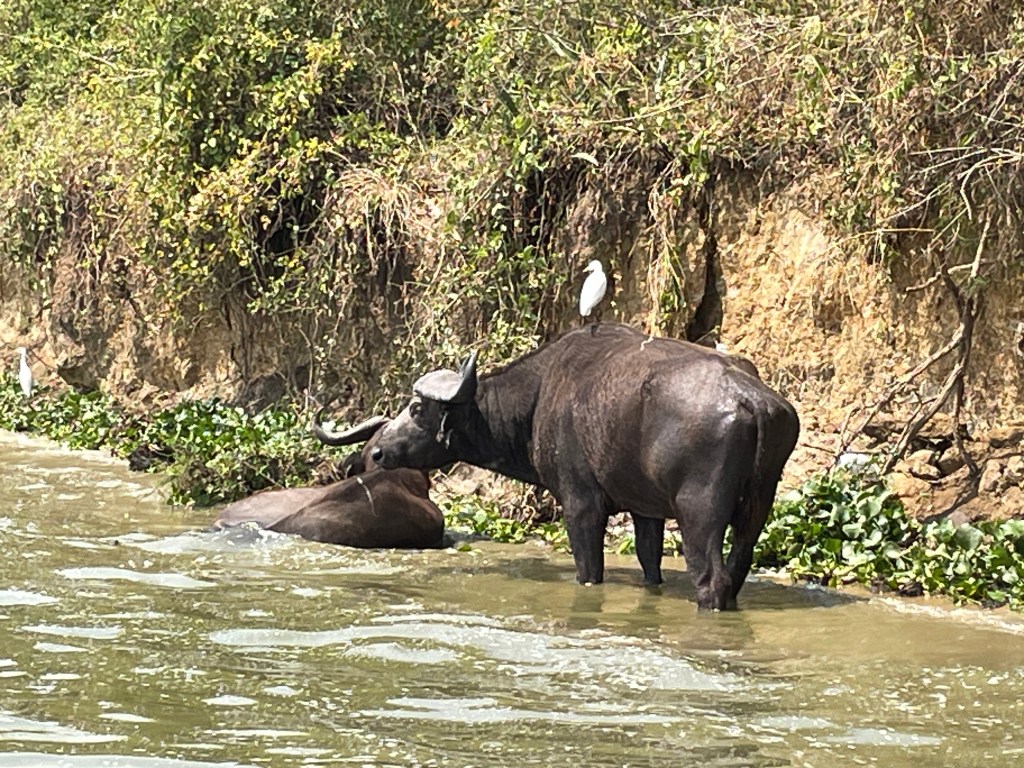
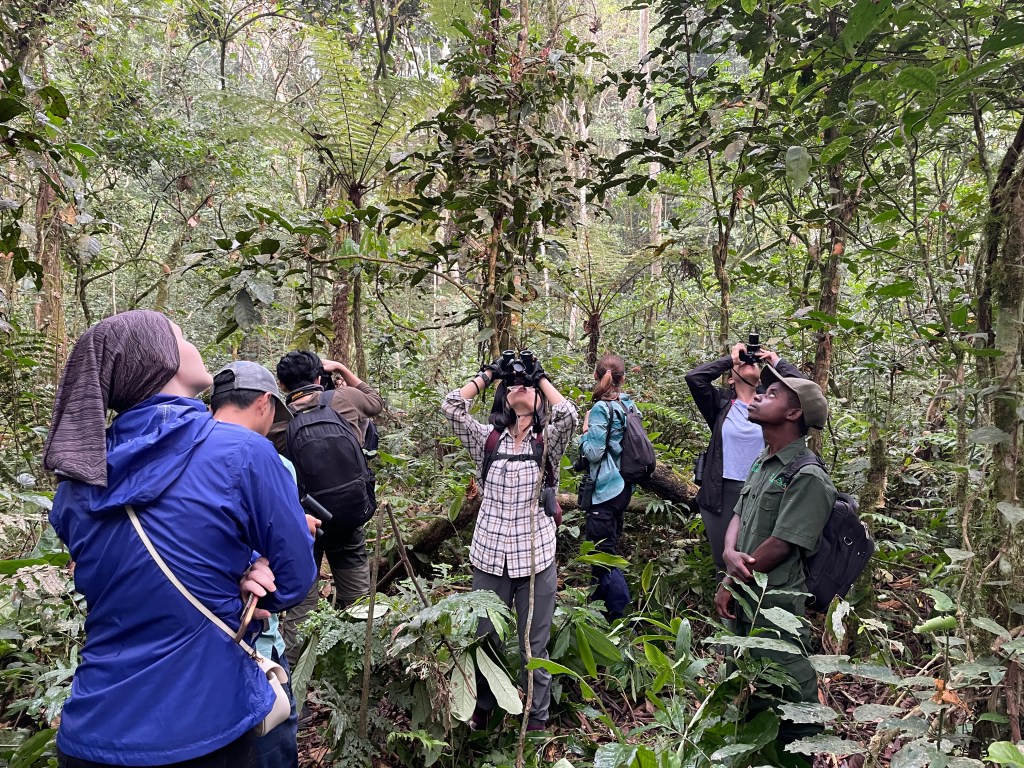
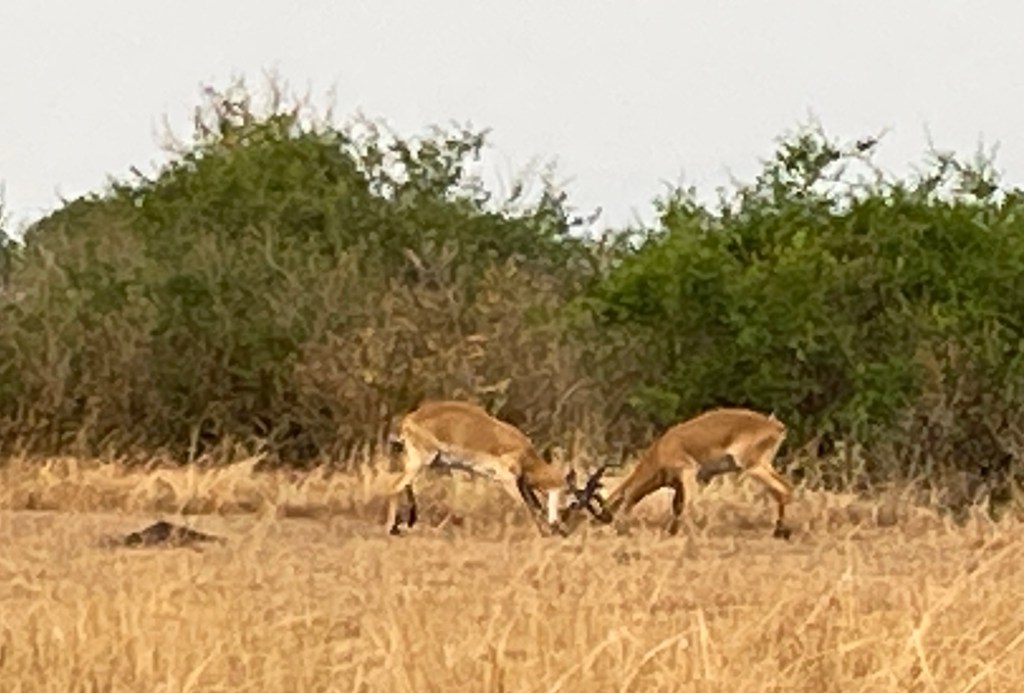
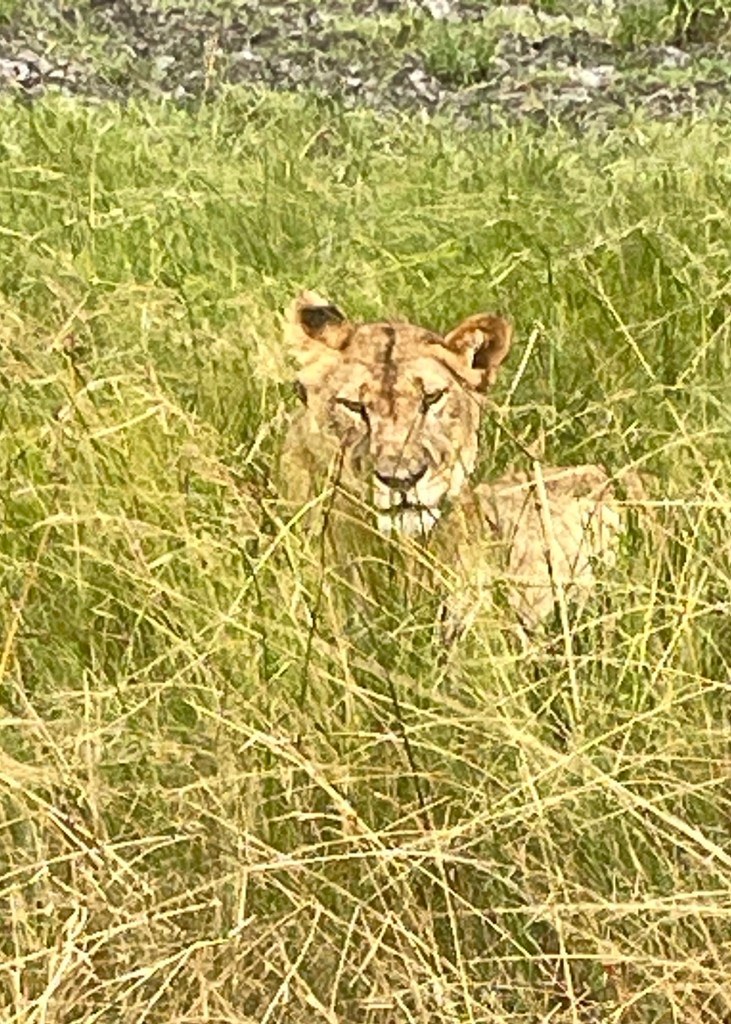
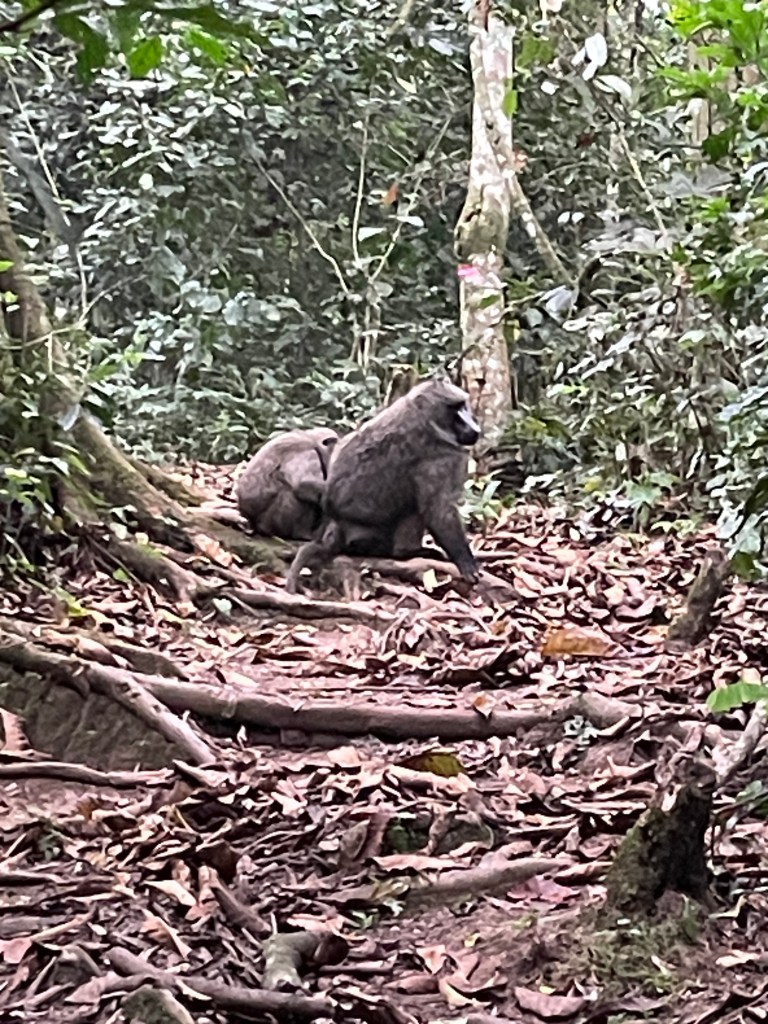
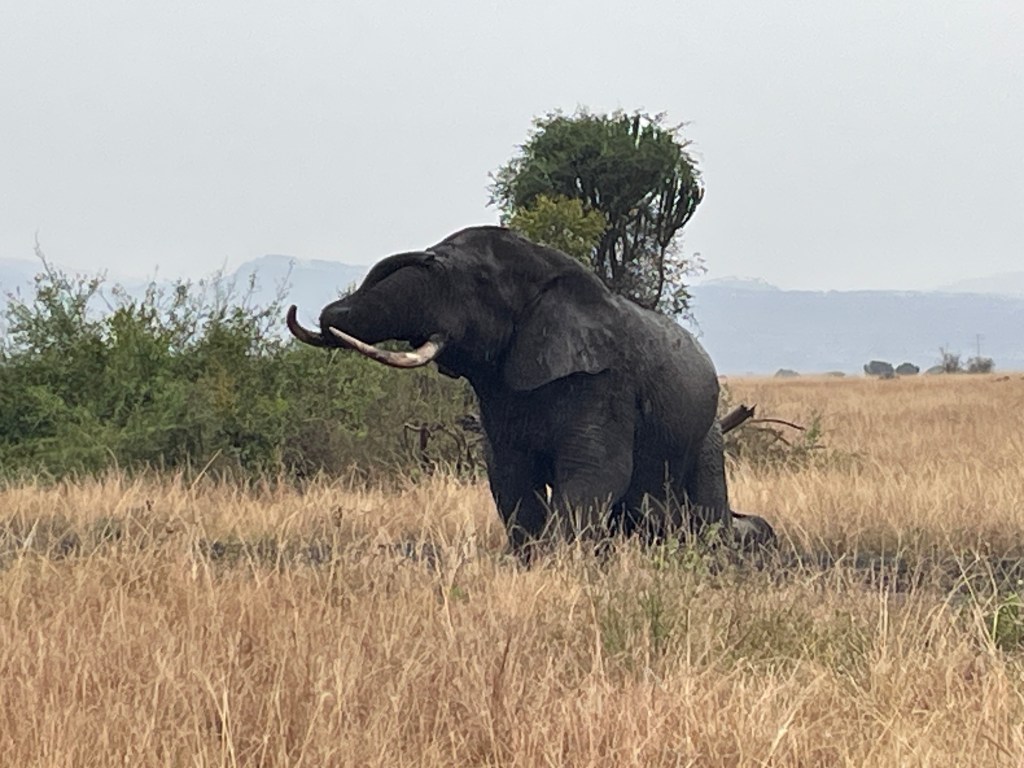
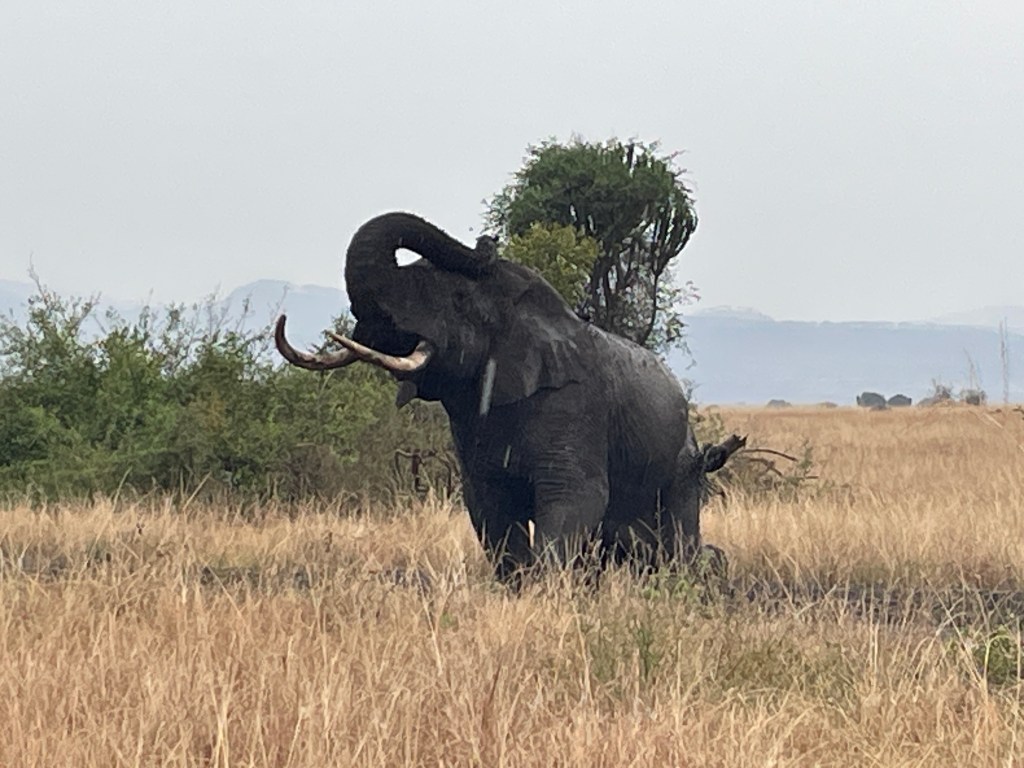
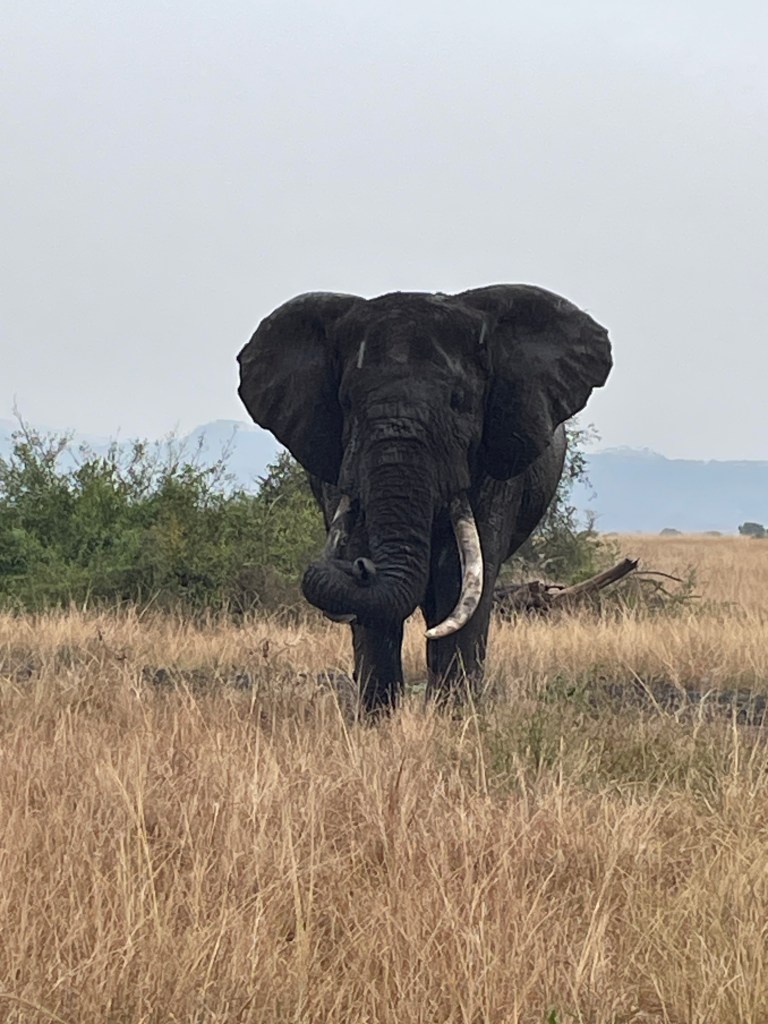
I went on a boat cruise on the Kazinga Channel, a night drive in Queen Elizabeth National Park, and chimpanzee trek as well. I saw water buffalo, a bunch of hippos, elephants, hundreds of kob-a type of antelope, water buck, two female lions lying in wait on the savannah, African fish eagles – almost as big as a bald eagle, also with a white head, a monitor lizard, and crocodiles. There were babies to watch in each of the herds; kobs- the Ugandan national symbol, fighting; and a young male elephant that bowed to me. He was alone and headed toward us when he stopped and got to his knees, then stood up and raised his trunk in the air, and finally just stopped and stared at me. I’m not sure what that was about, but I’m pretty sure he recognized me as the queen of the savannah. We saw a lot of chimps up in the tree tops – one even peed for our amusement, as they munched on figs, but really only saw them in silhouettes when they moved. But then one came down to a particularly large bunch of fruit and posed for pictures. It was incredible to see them all in their natural habitats.

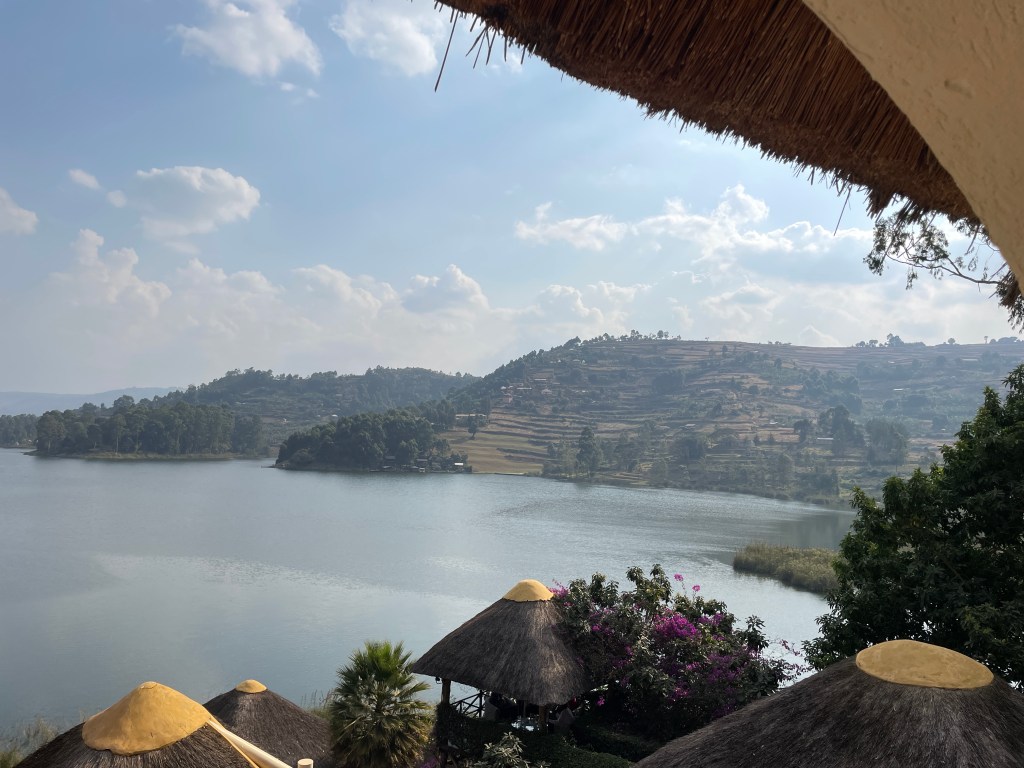
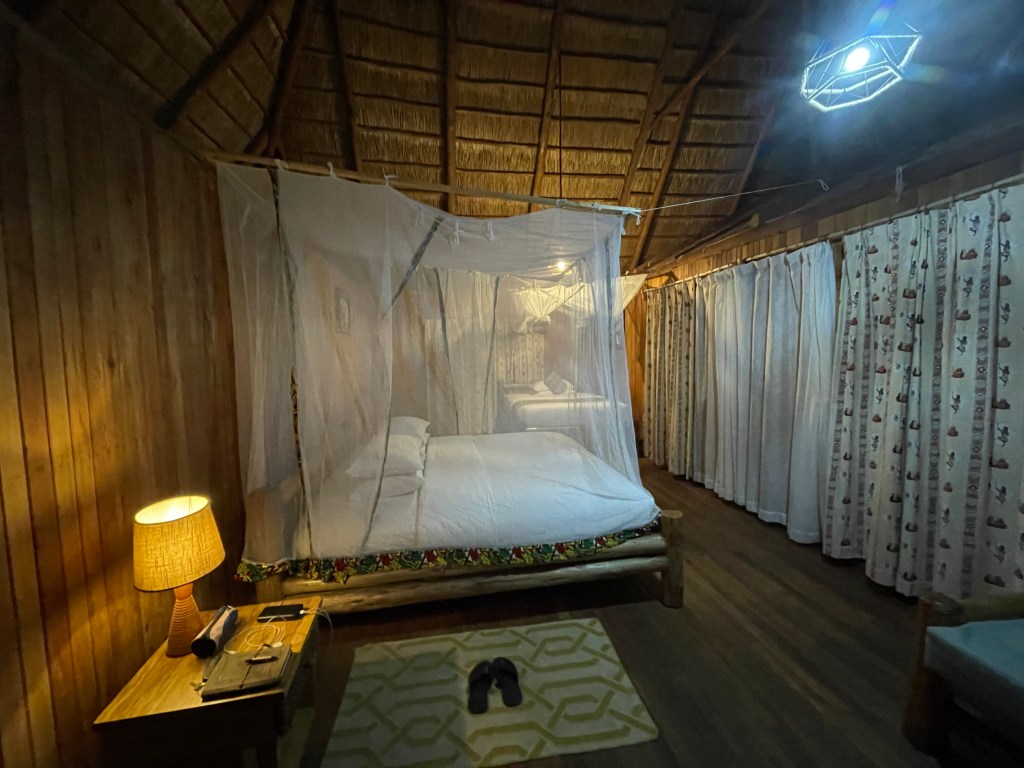
I enjoyed the beautiful lodges I stayed at, especially the Birdnest Lodge on Lake Bunyonyi and the Elephant Hab near Queen Elizabeth National Park. It was my first time to sleep under mosquito netting.
Next – Nairobi, Kenya


 Where in the World is Debra Grimes?