“A mind that is stretched by a new experience can never go back to its old dimensions.” – Oliver Wendell Holmes
July 15-25, 2023
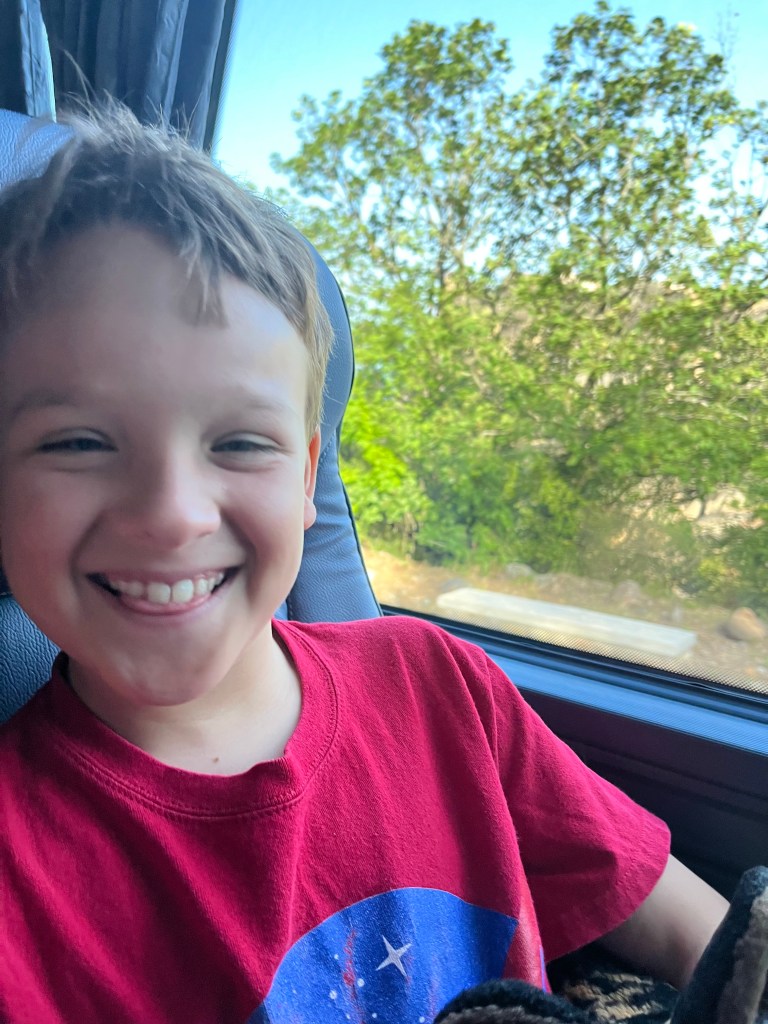
The first thing I have to say about Greece is – it was HOT, extremely hot, over 100 degrees hot. Anytime we caught even a little bit of breeze, we were very grateful. My daughter, Jane and grandson, Arthur met me here – his first international trip, and it was wonderful to be with them. We joined 44 other people on our tour, mostly from the US but also from Australia and South Africa. To Arthur’s delight there was another 10 year old in the group, Asher from Houston TX.
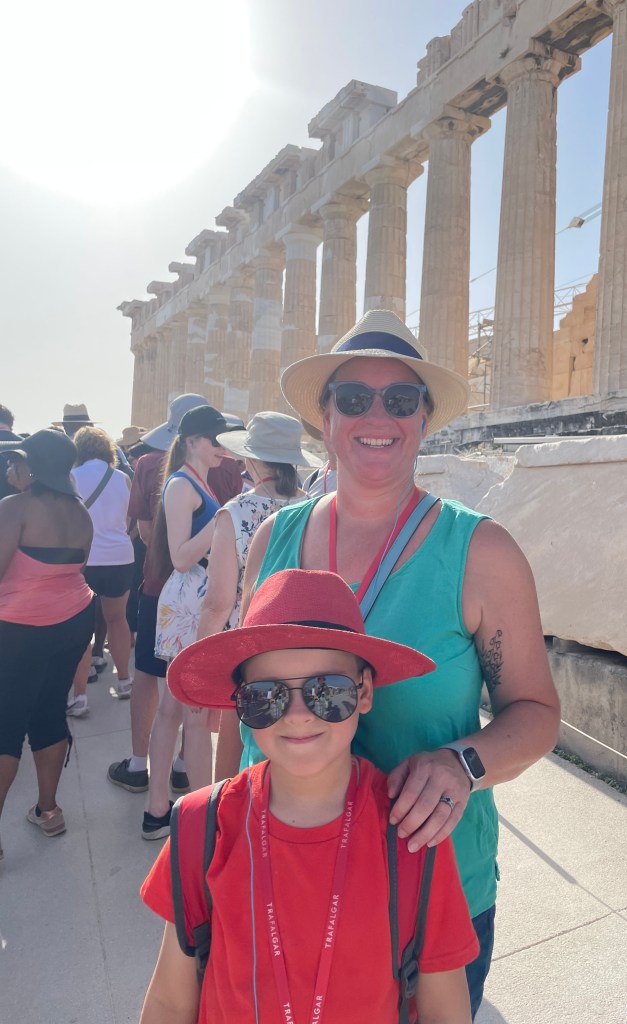
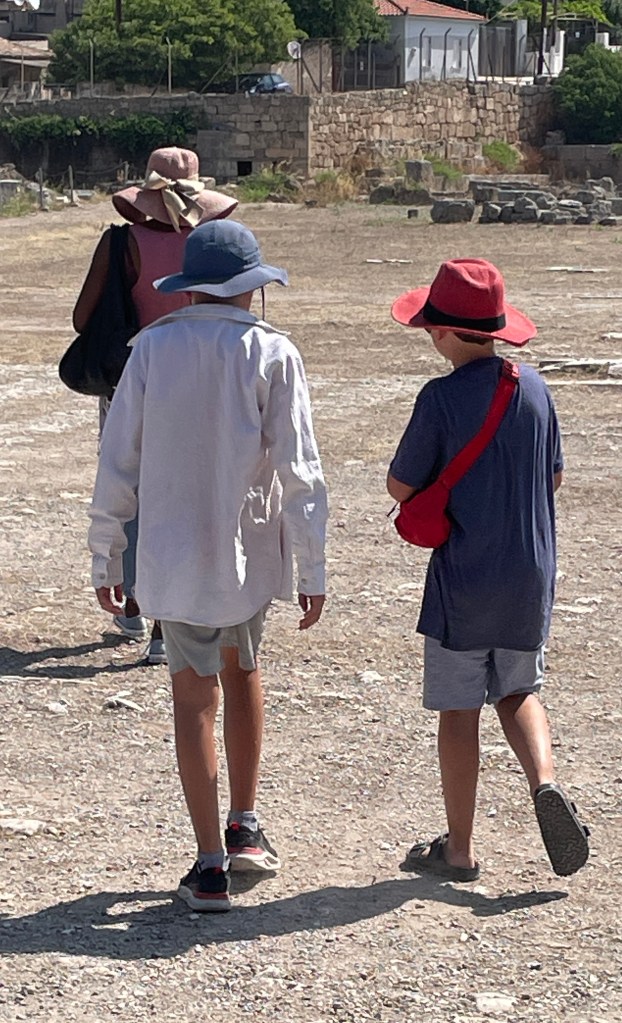
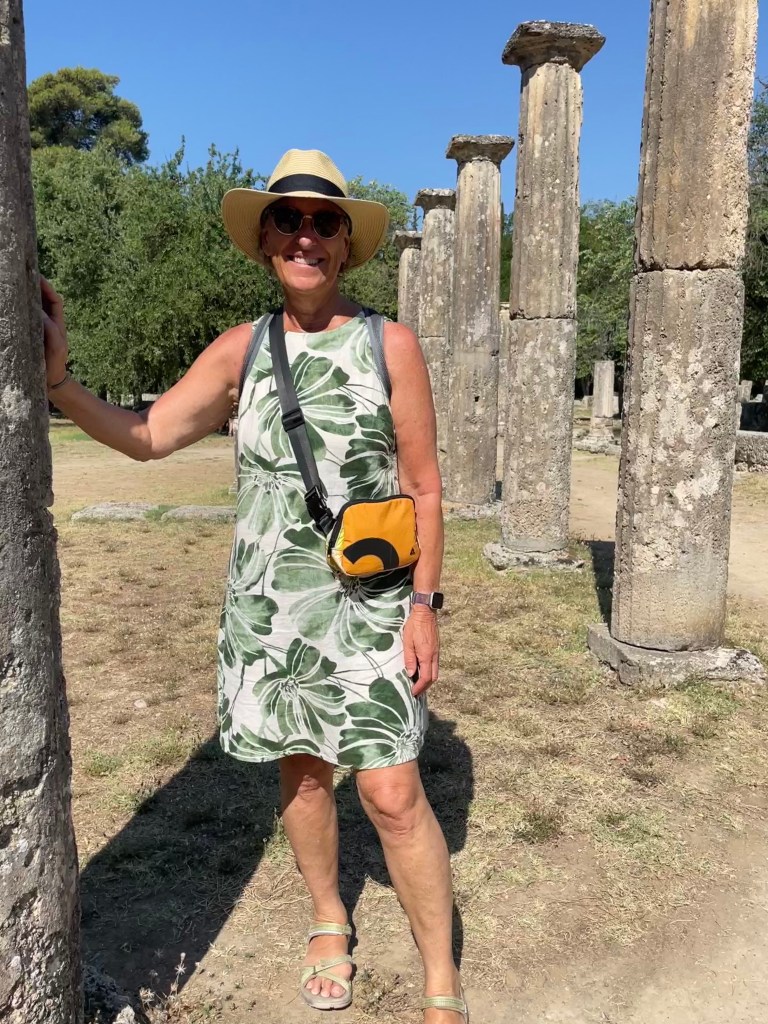
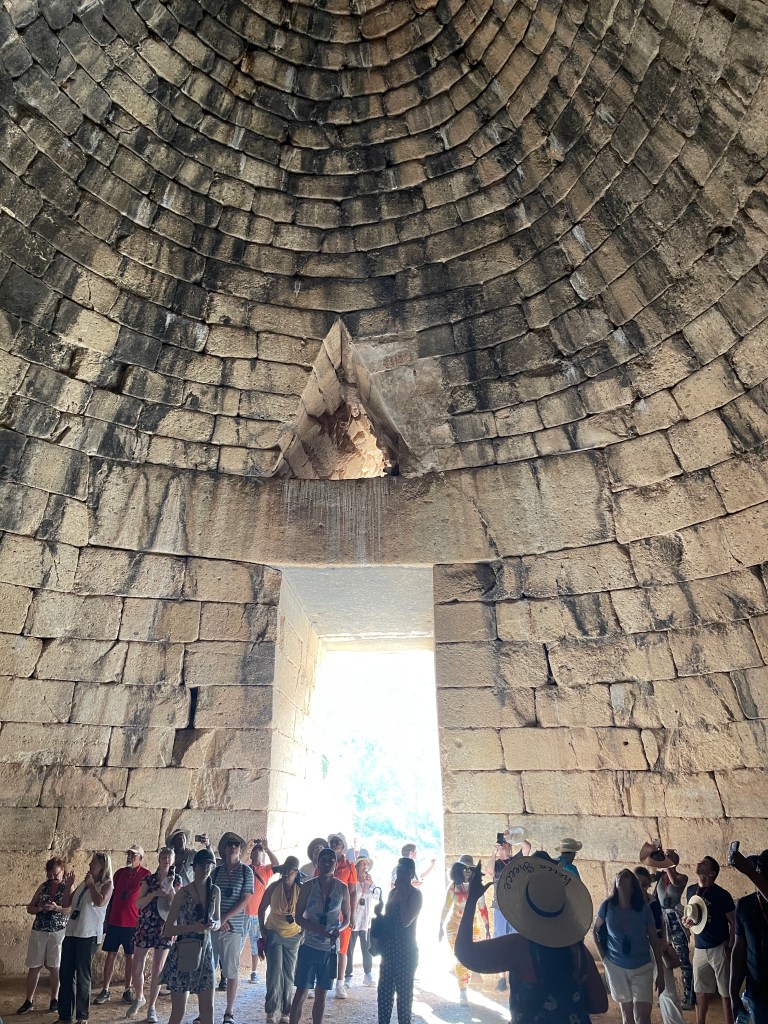
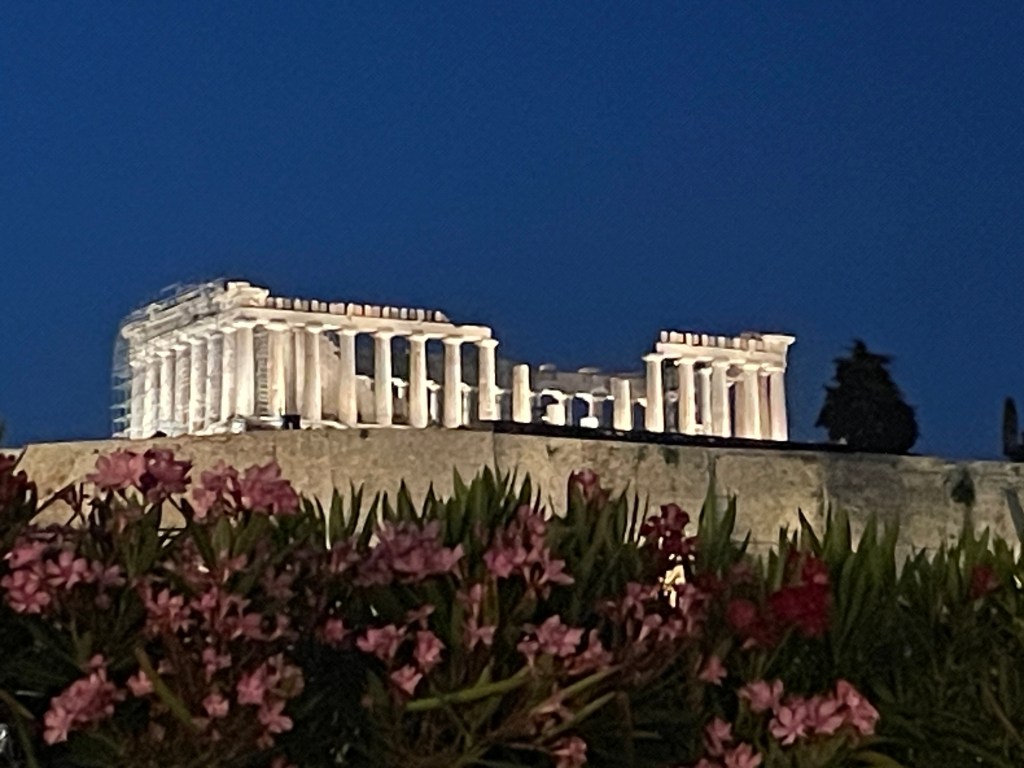
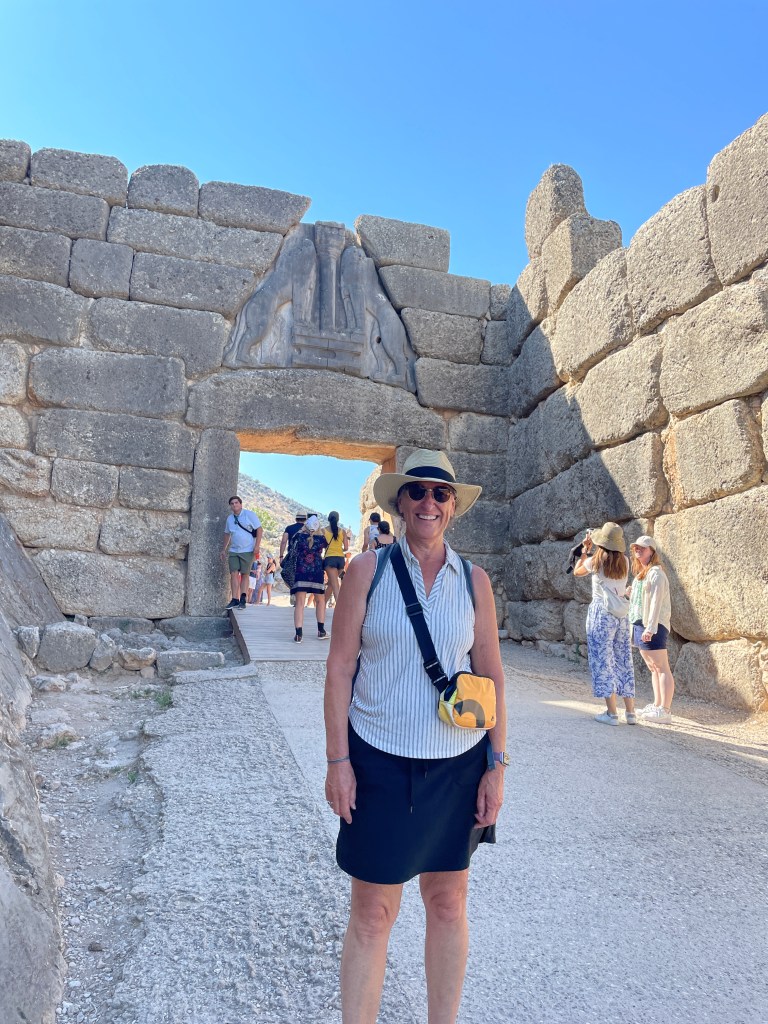
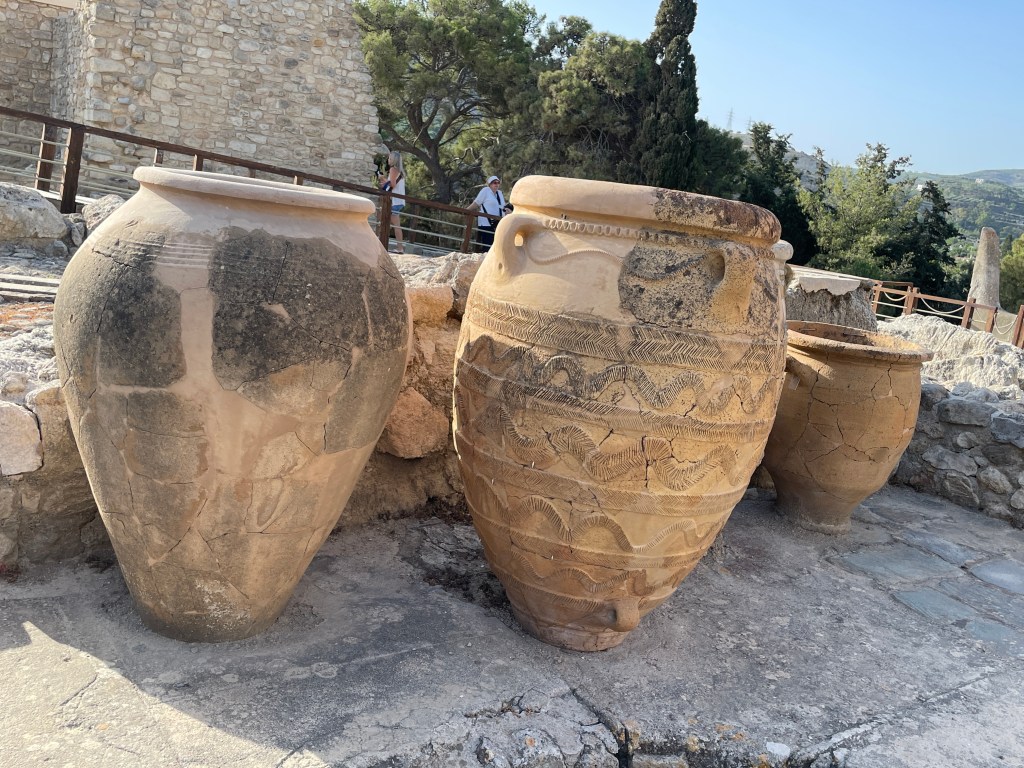
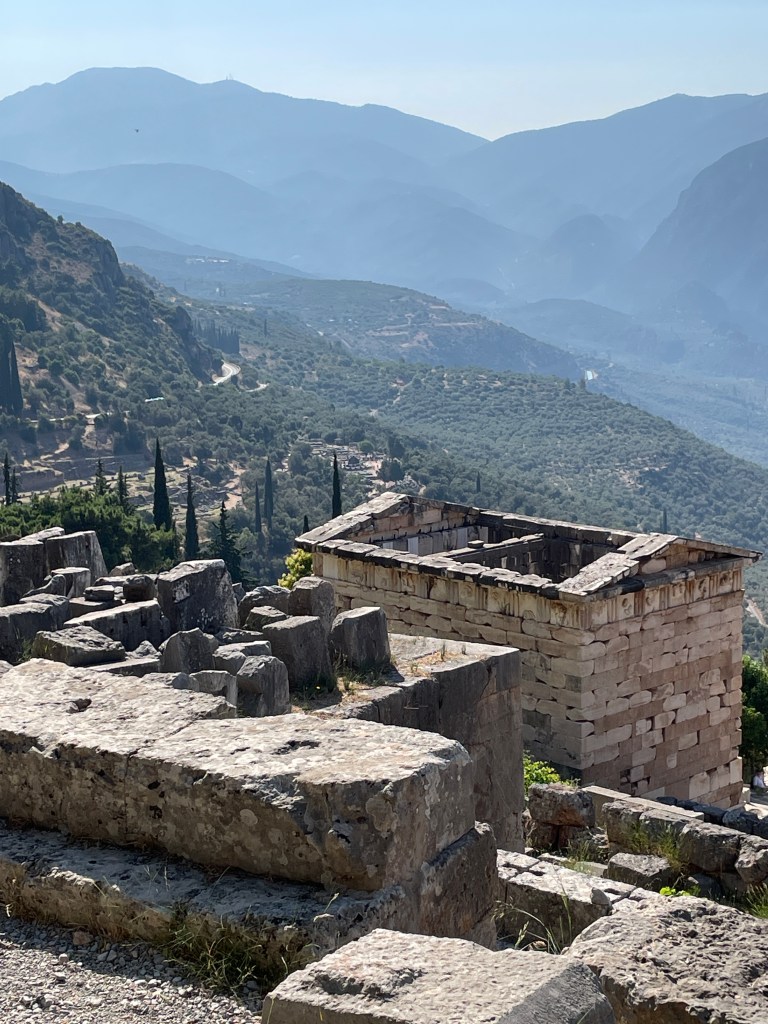
We spent most of our time visiting ruins in Athens, Corinth, Mycenae, Olympia, Delphi, Ephesus – in Turkey, and Knossos on Crete. The ruins dating from 1700 BC to 1100 AC were really amazing. The building techniques were incredible. Just the fact that some of them are still standing after thousands of years, is something to be admired. They built 25,000 and 35,000 seat stadiums where everyone could hear the speakers due to the way they were constructed. No amplification necessary. One beehive tomb, built for Agamemnon’s father, had an archway stone that weighed as much as 10 tour buses. How do you move something so big without machinery? They have only begun to excavate the immense number of the ruins throughout the country. In Athens, you can be walking a long a street, go in a shop or taking the stairs to breakfast in your hotel and there will be a ruin, encased by glass. Our local guides brought the ancient Grecian ways to life through their stores and the artifacts they showed us. We found it all fascinating.
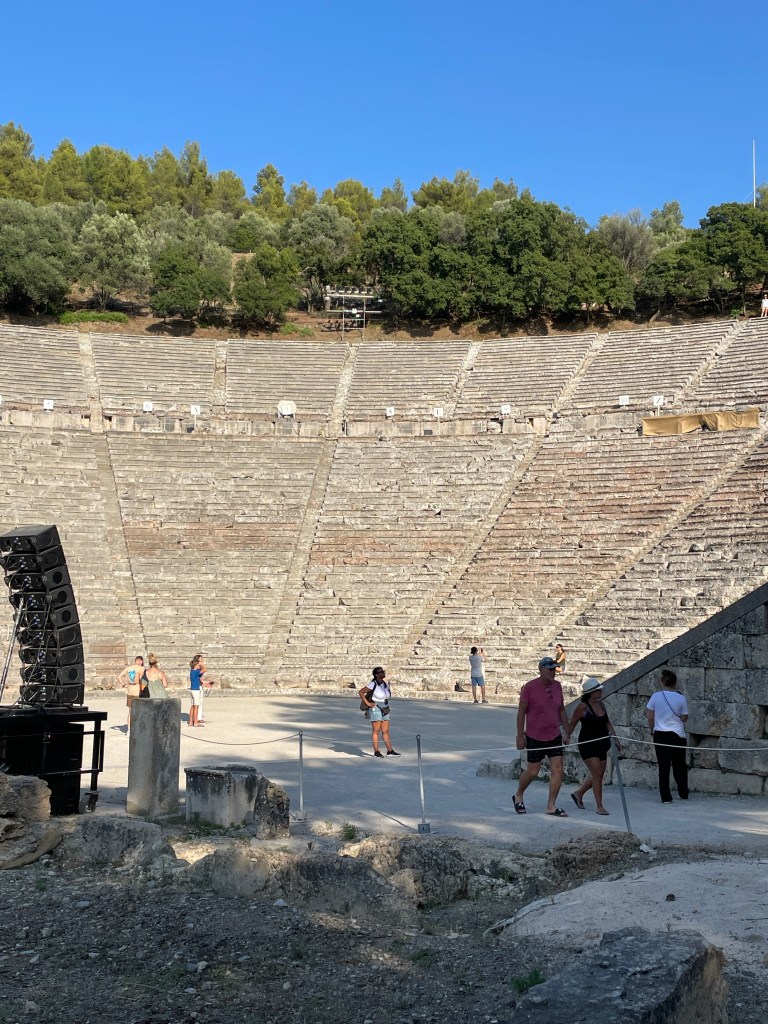
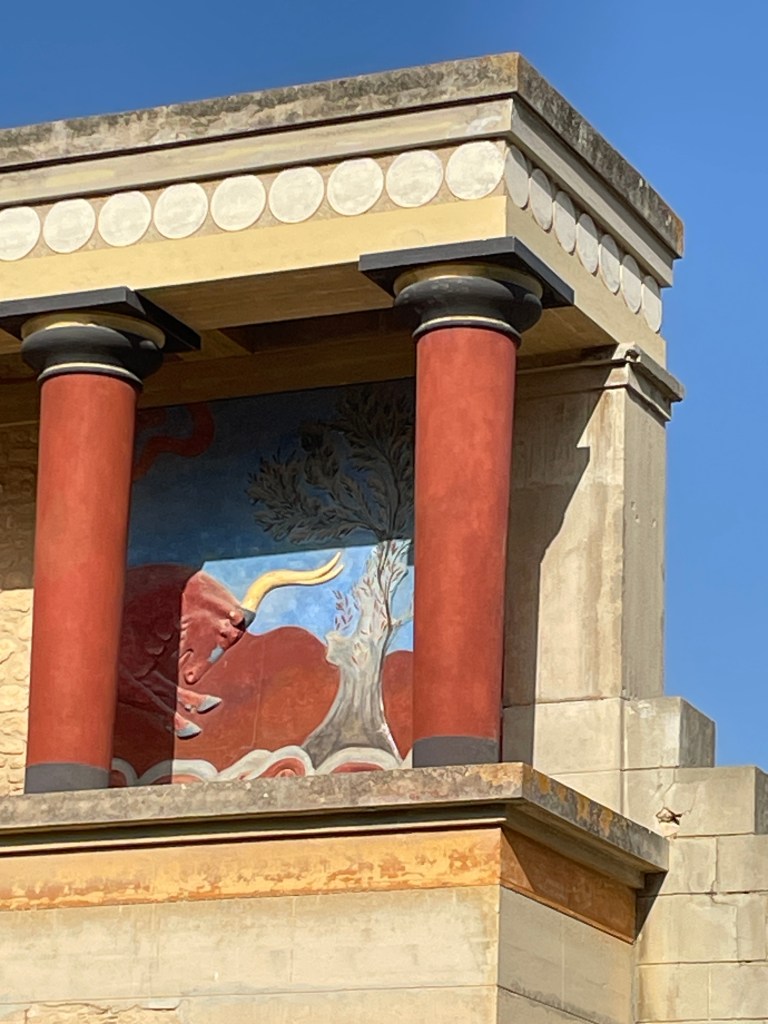
In Knossos and Ephesus they had running water, indoor toilets, a sewer system, and aqueducts centuries before the Europeans. Many of the structures -libraries, temples, etc. were destroyed or repurposed when the Christians came. The temples and tombs were also looted by locals and foreigners, so many of the statues and artifacts have been lost or are in foreign museums. Many structures were also destroyed or buried by floods and earthquakes. In some cases only those natural disasters preserved some of the artifacts that are here today. Like the destruction of the buildings, knowledge -such as believing the world was round, was eradicated. The Minoan language was also lost, written as early as 2000 BC. If they ever crack the code to the runes, who knows what we might learn.

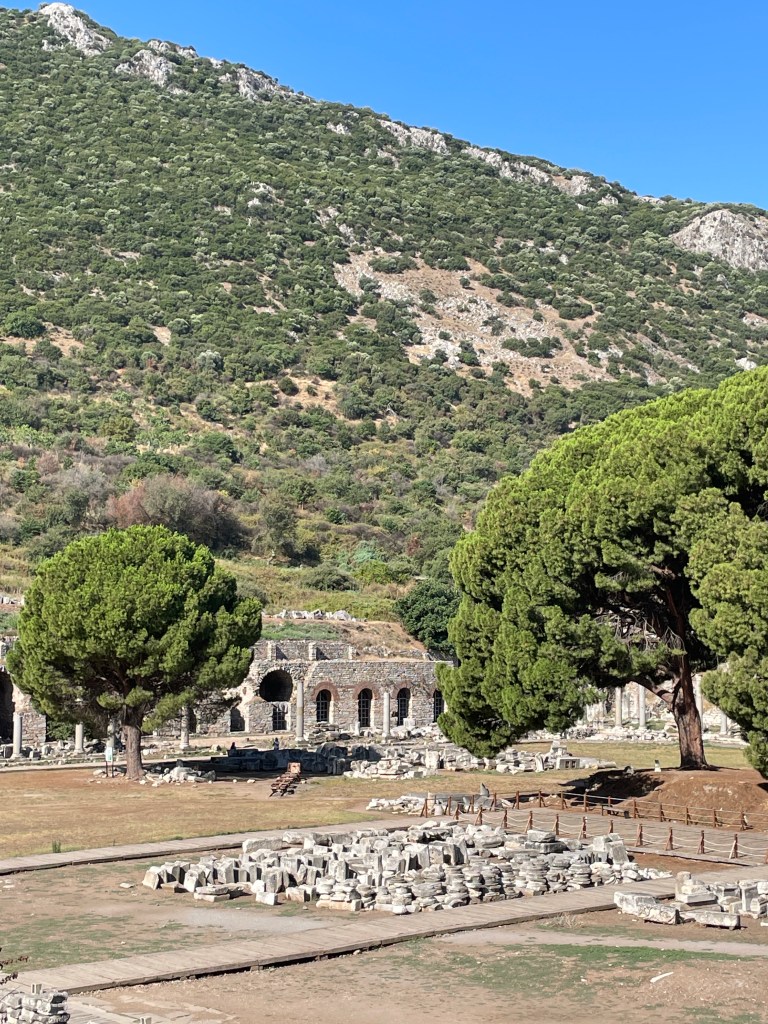
Both at Olympia, where the first Olympic Games were held, and Delphi, where additional games were held, they emphasized a strong body, but that was not enough to be a competitor or a good Greek. You also needed to be educated and be a responsible citizen. Beliefs I can get behind. The games were originally started to promote peace among the city states that existed before Greece became a unified country. The games, held every four years, were conducted naked in the hot July sun. Only men competed. Although, there were separate game for woman at another time. If you won one of the 13 contests, you not only got an olive leaf wreath around your head but also free food for the rest of your life. You became a hero, a demigod. There were no silver or bronze medals – there was just one winner.
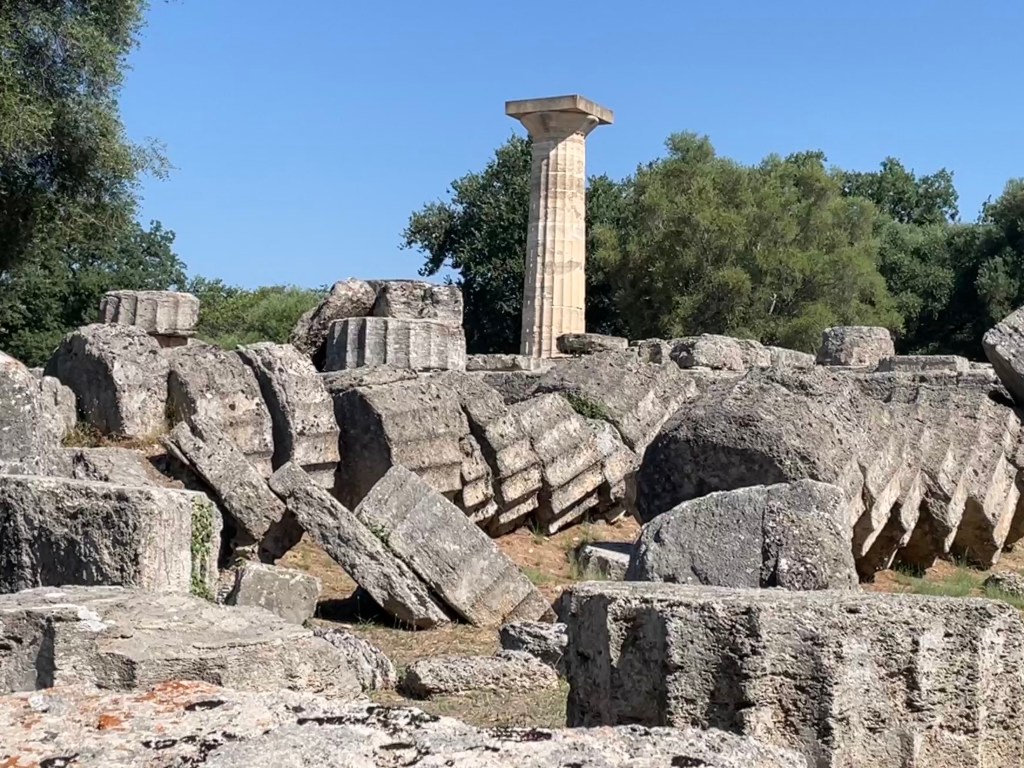
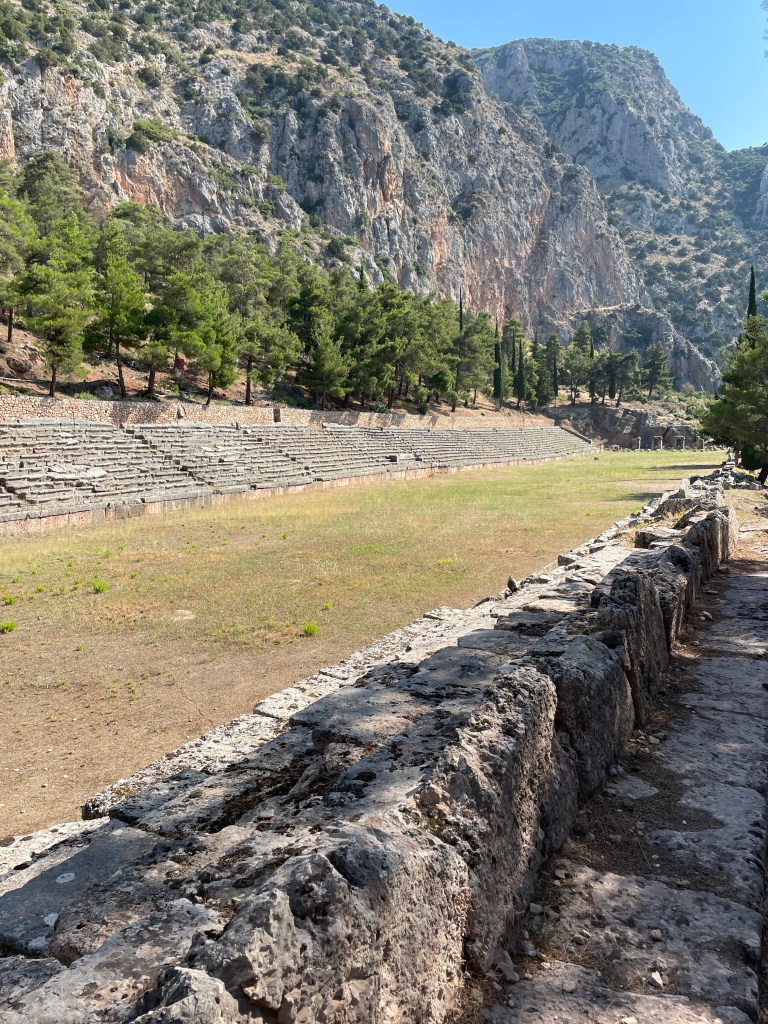
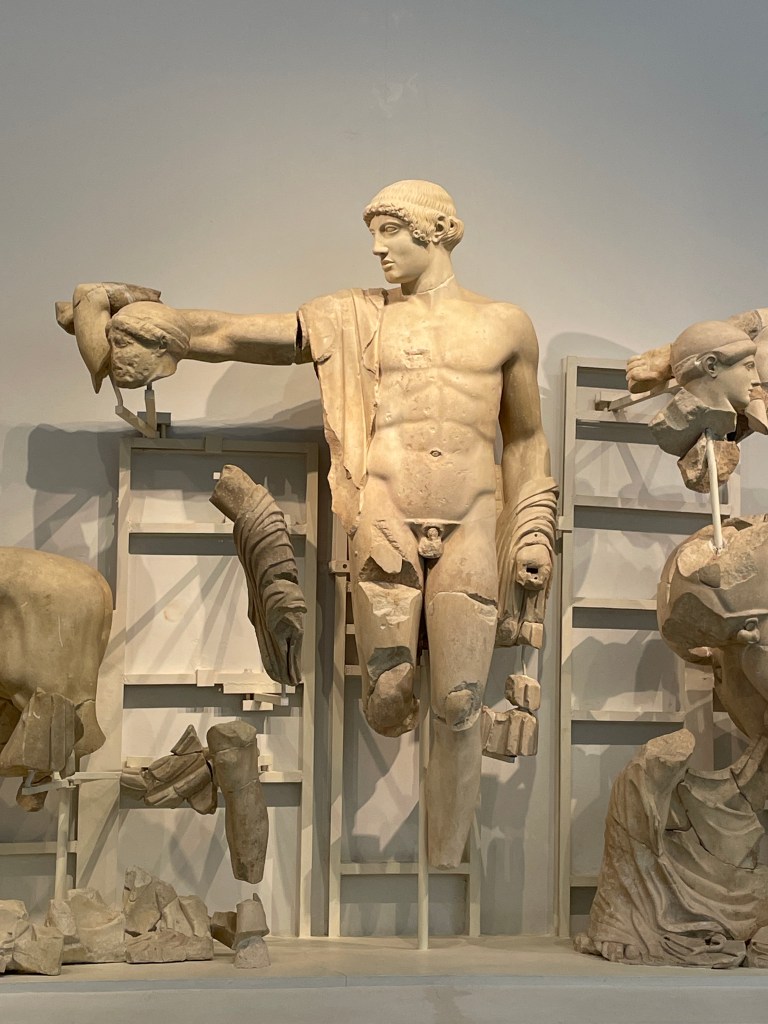
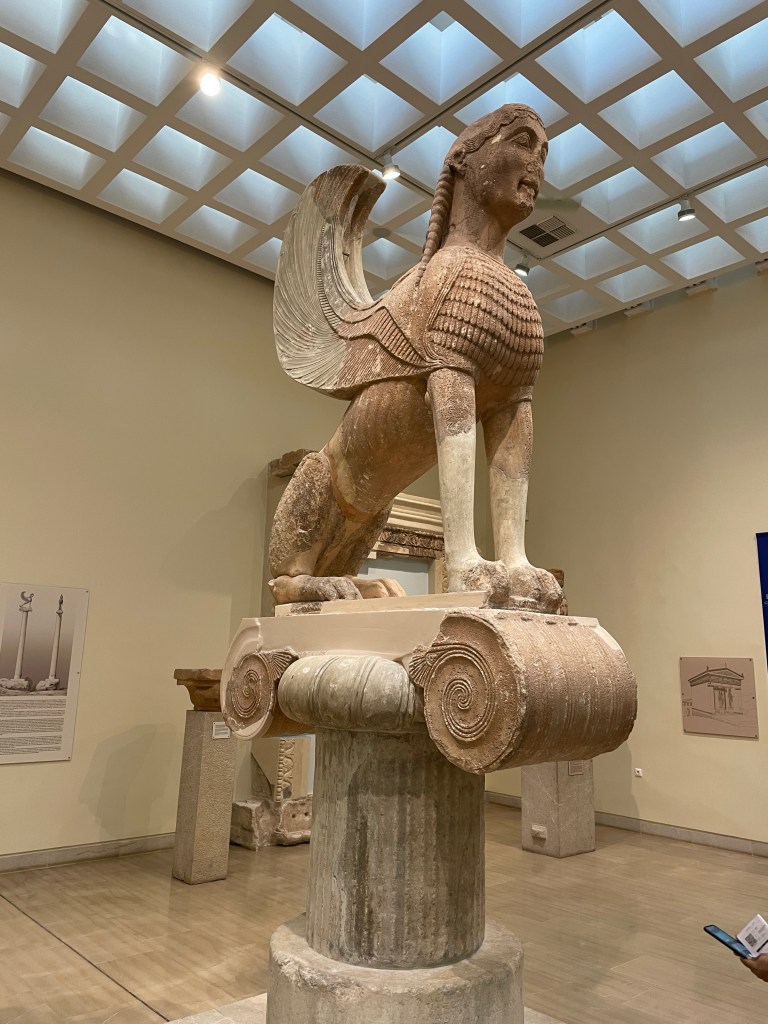
It was interesting how the people were manipulated in different ways due to their superstitions. The Oracle of Delphi is a great example. The Oracle ‘existed’ for about 700 years. A local woman was selected as the Oracle and she was basically drugged either by gases emitting from under the temple or by brewed laurel leaves. They when she mumbled some words, the priest interpreted them for the petitioners, who paid for the message from the gods. You could bribe the priest to give you a favorable reading if you had the money. The reading were always very vague, open to interpretation. At Olympia, there was a large statue of Zeus made of Ivory and gold. In front of it, the priests placed a large bowl of olive oil so the sun reflected on the statue causing people to believe the god was moving or watching them. It reinforced their belief in and fear of the gods.

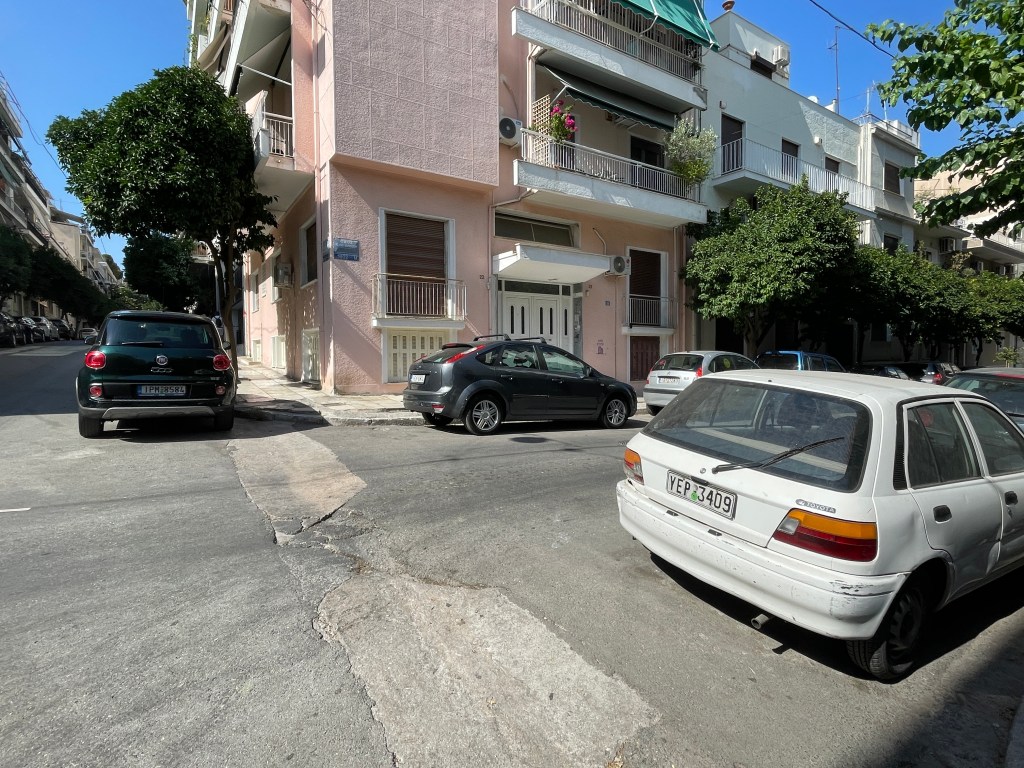
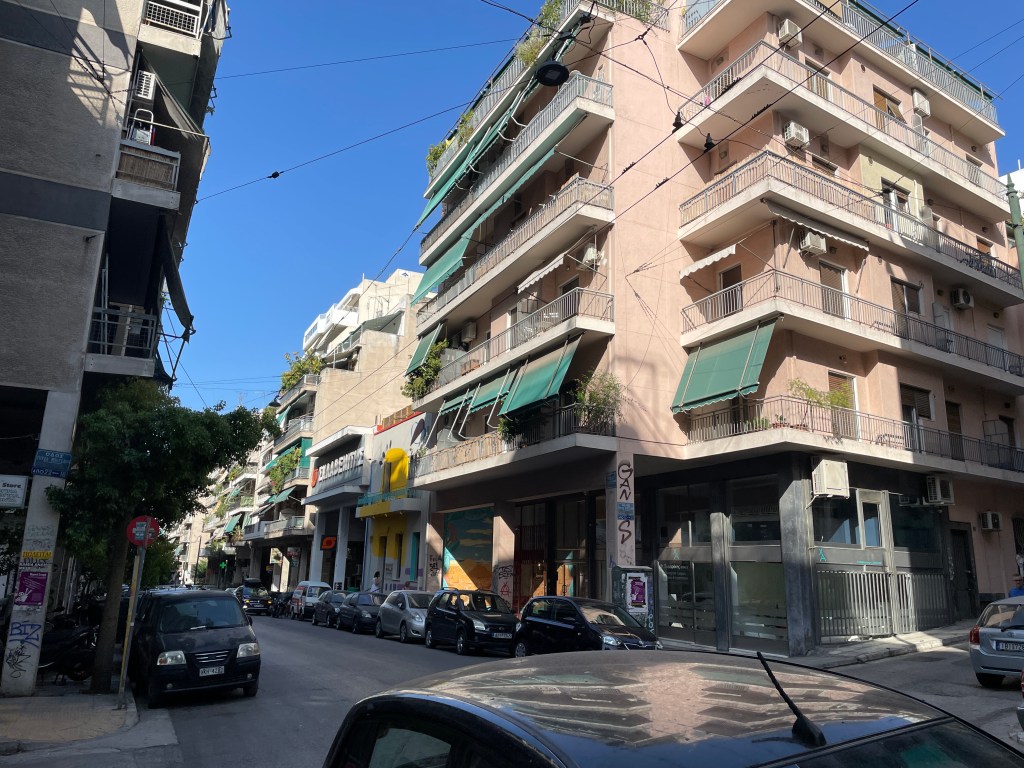
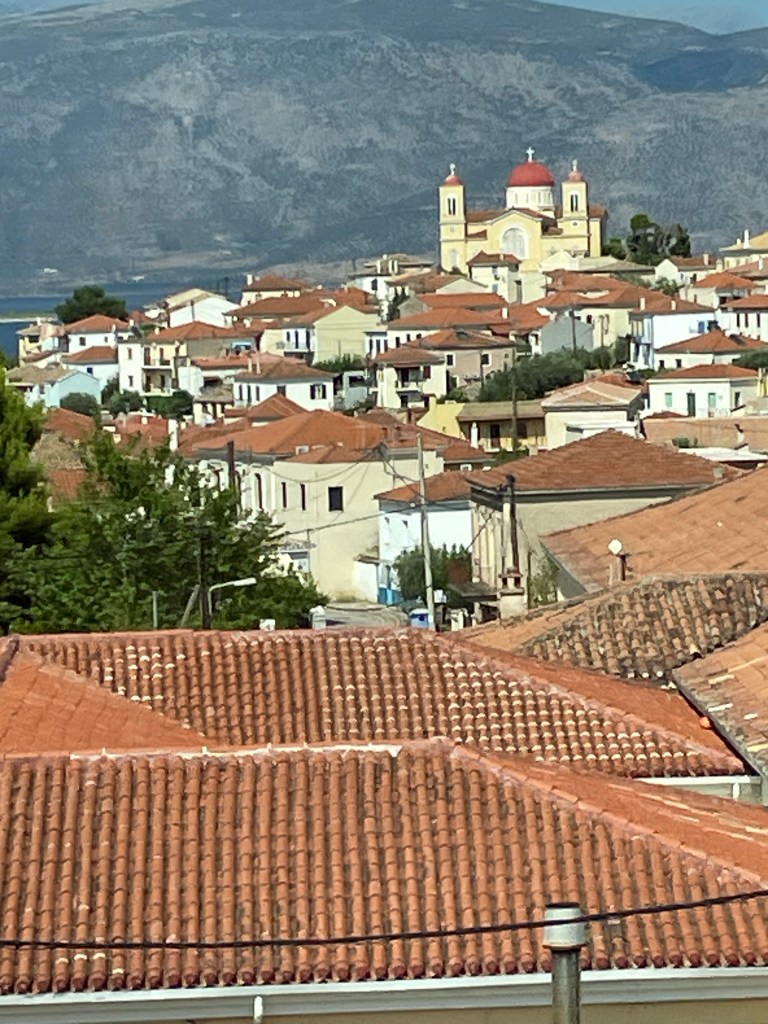
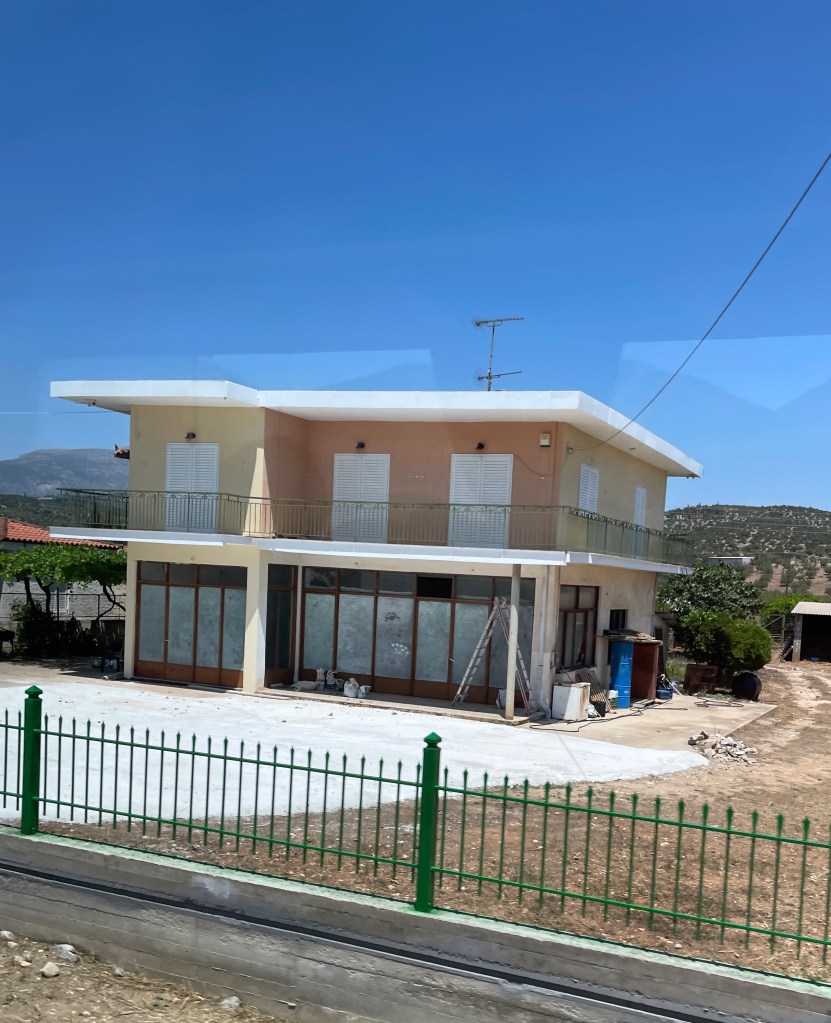
The architecture in Athens and throughout much of Greece is pretty boring, concrete blocks built in the 1960’s and later. They’ve preserved their ancient history but not much in between. Currently in Athens no building is higher than around seven stories so that the Acropolis can be seen for all directions. Their first skyscraper is being built however, hopefully far enough away from the city center not to obstruct the view. Of course the white building on Santorini and Mykonos are pretty, especially the few with their blue roofs but they are more an exception. Other seaside towns on the mainland also have mostly white building clustering around a bay but with the red tiles roofs. Because the building in Athens were mostly built in the 60’s and 70’s there is no parking so the streets are very crowded. Cars park everywhere – in front of cross walks, driveways – when you find one, and diagonally on the narrow streets. We shut our eyes many times as the bus driver maneuvered through the city, The tour leader shared stories of travelers getting off a bus and lifting cars out the of the way so their coach could get through.
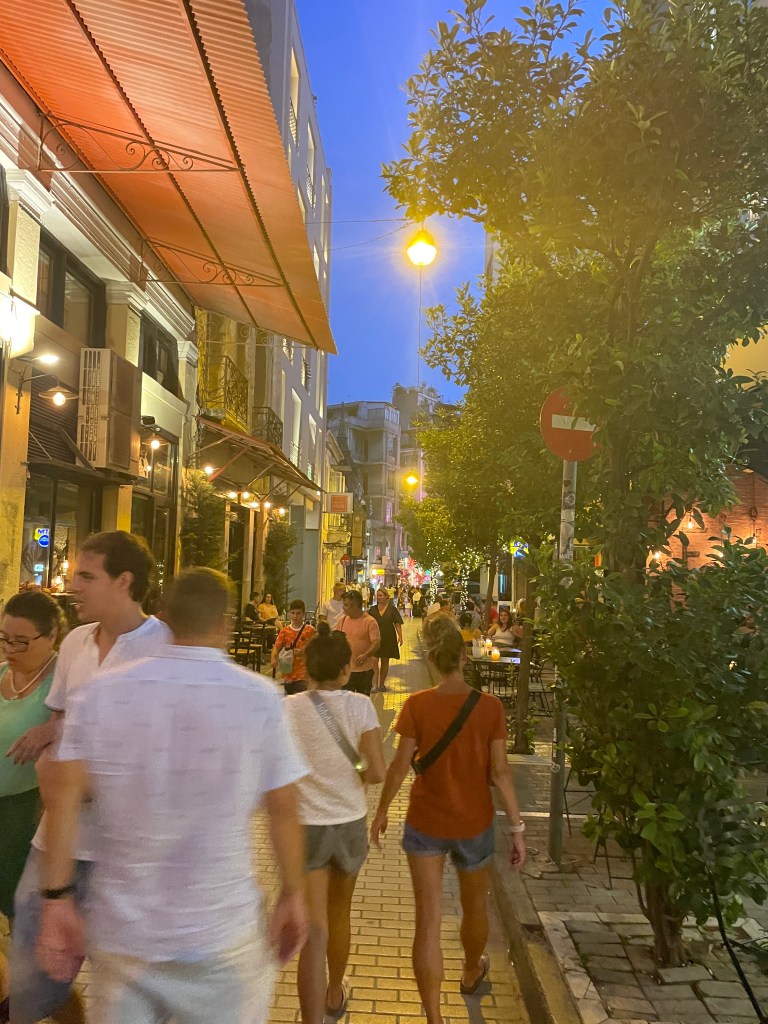
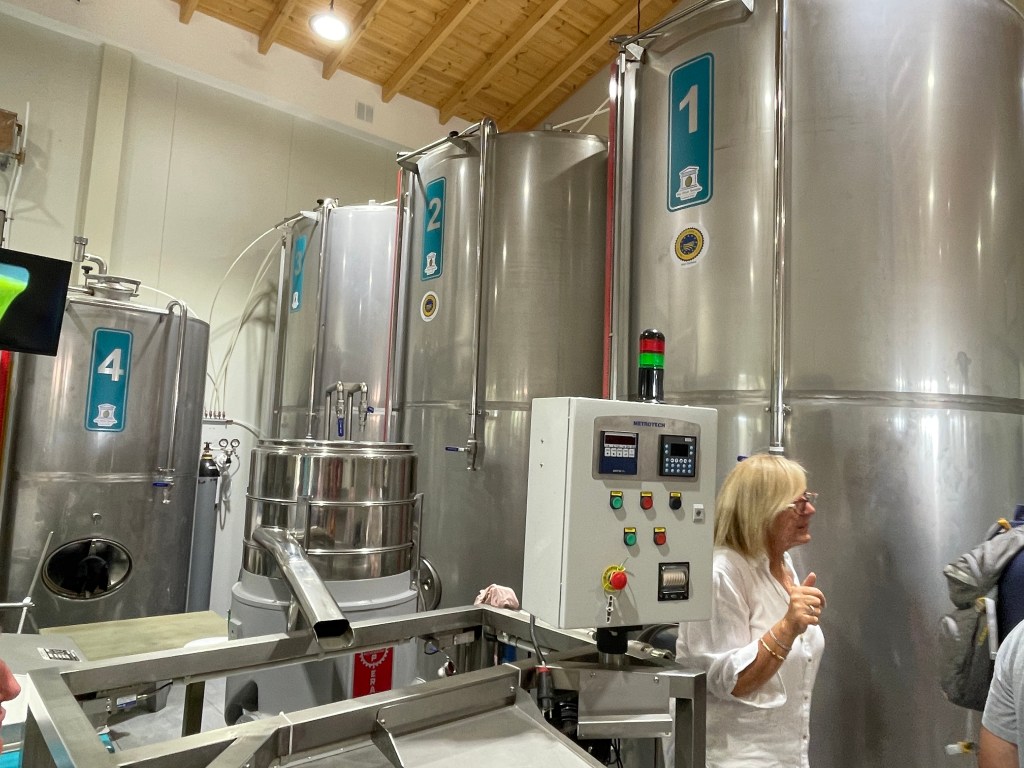
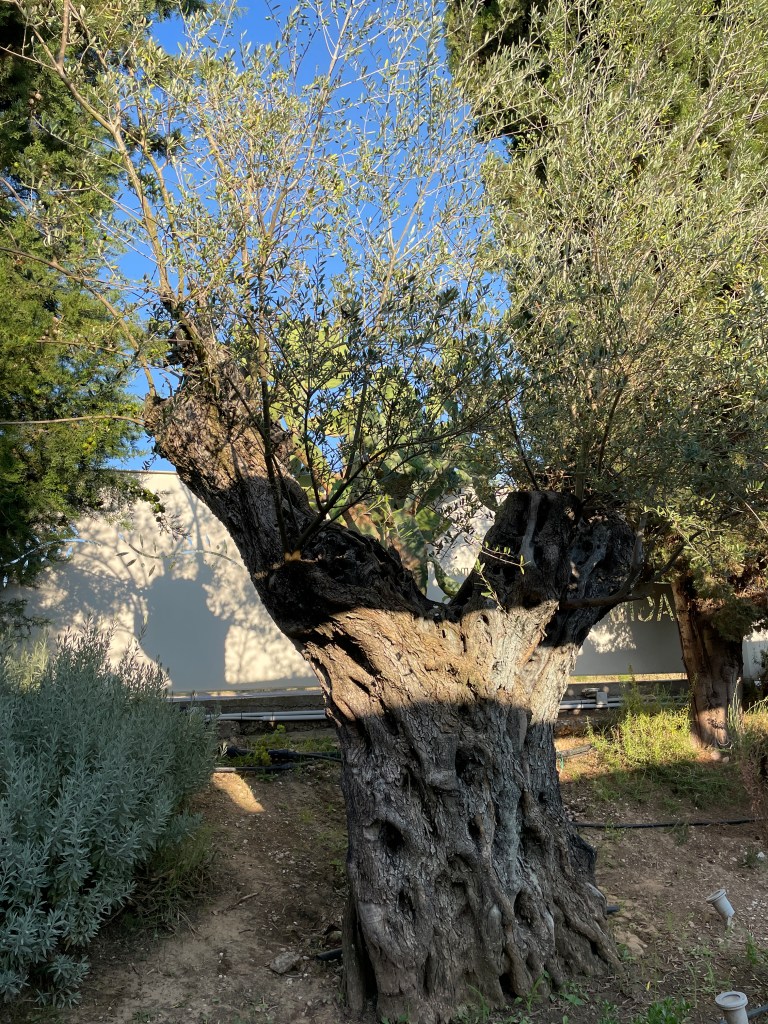
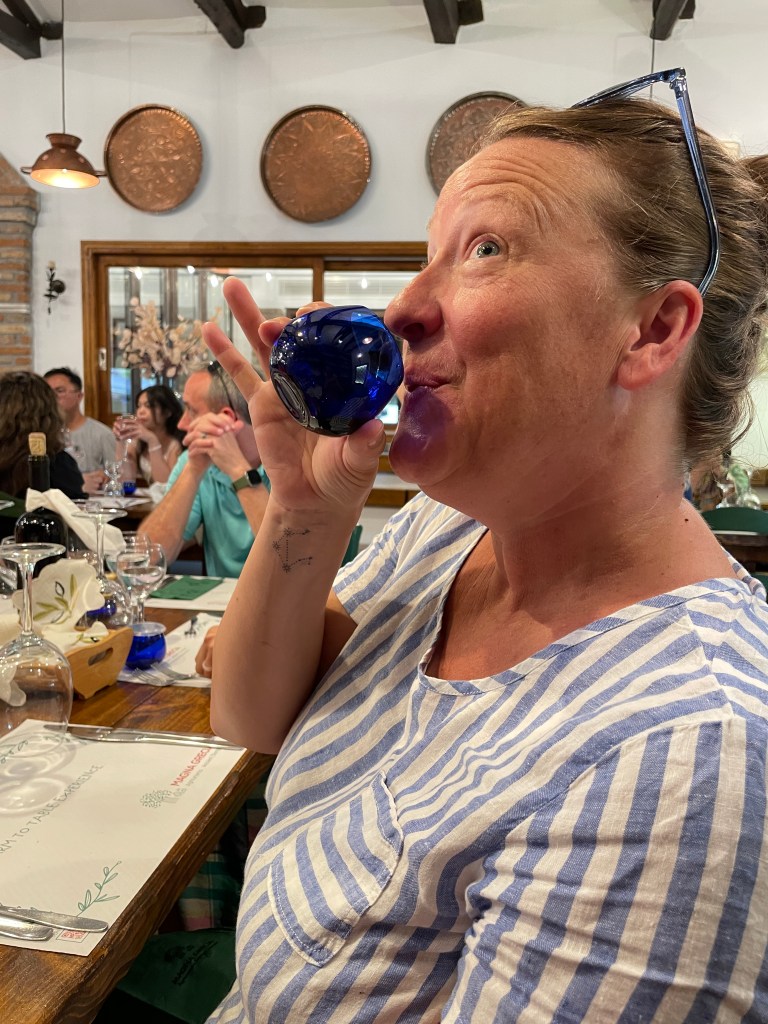
Along the streets in Athens are lemon trees, full off fruit for the picking. And there are olives trees every where. It wasn’t unusual to go by groves with thousands of trees. An olive tree was Athena’s gift to the city which is why it is named after her. Greece is the third largest olive producing country though they consume the most. And their olive oil is mostly sold to Italy, where it is packaged and sold as Italian oil. It is said that Greece has the best oil but Italy has the best marketing. We went to a small artisanal olive farm one night and saw how award winning extra-virgin oil was produced. The owner said if you ever see just olive oil -not virgin or extra virgin, in the store -do not buy it! It is the worse olive oil available, processed with chemicals and with a very low smoke point. We tasted the oil as we would taste wine, a small sip, swirled around the mouth and then swallowed. We also tasted flavored oils on small chunks of bread. I prefer the bread method.

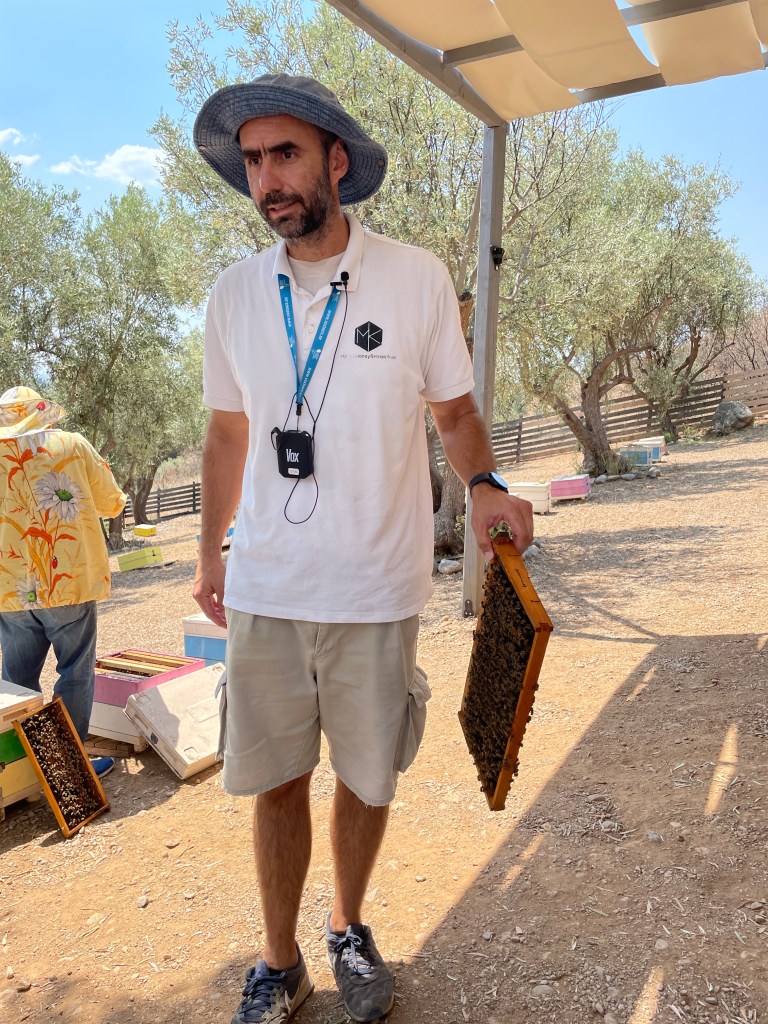
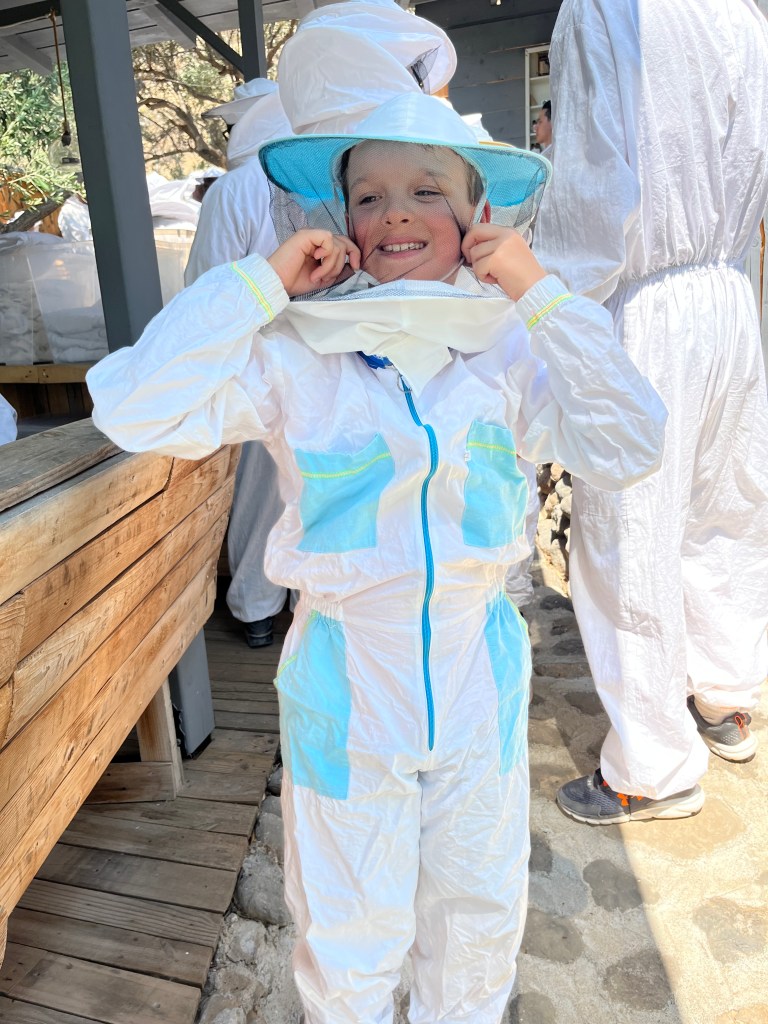
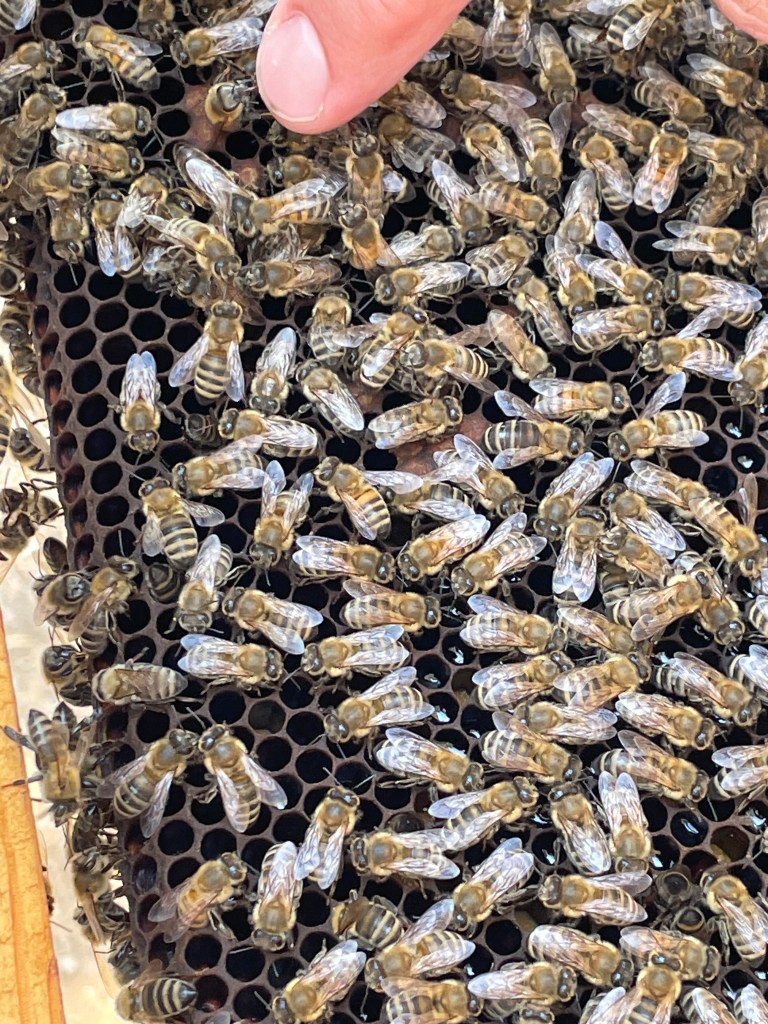
We also went to a bee farm or is it a honey farm? We even got suited up with the white jumpsuit and head covering. Wow, that was fascinating. If you ever get a chance to go I highly recommend it. The way the hives work and the bees communicate is amazing. The main message – stop using pesticides and insecticides if you want affordable food in the future. Eighty percent of our food comes from pollination and we’re killing our bees and other pollinators at an alarming rate. Sow more native flowering plants and reduce the amount of your yard planted in grass.
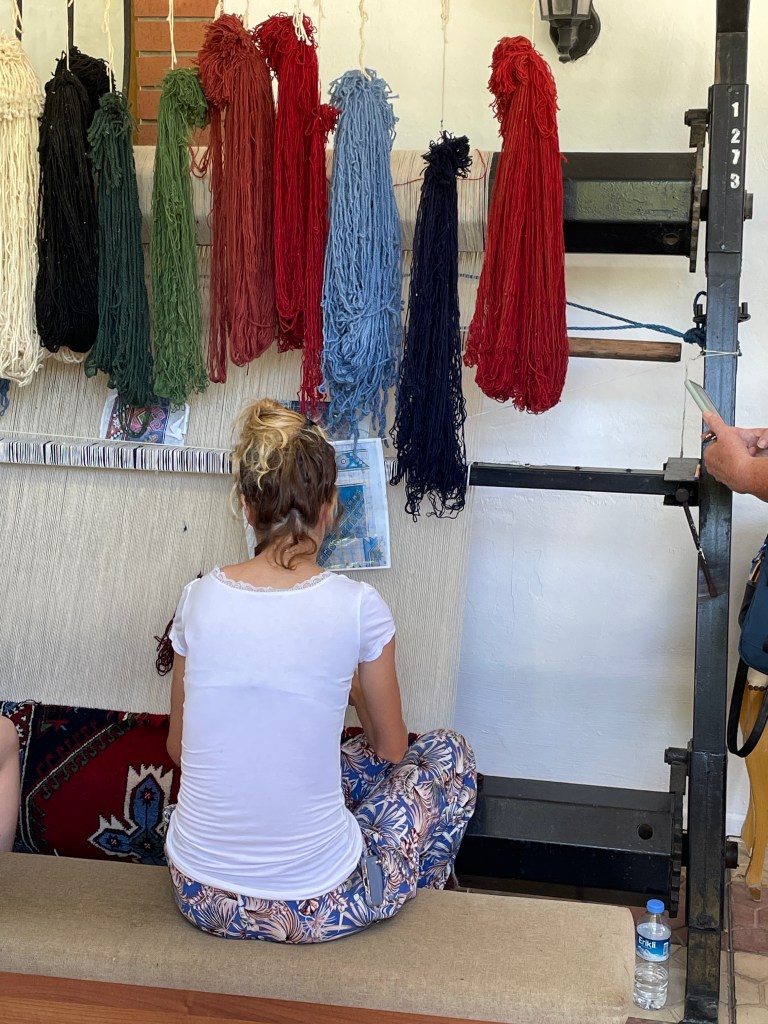
In Turkey, we went to a carpet cooperative. Turkish rugs were something that was always made in the home, most houses had a loom. Rugs were traditionally a woman’s dowery, passed down for generations. But like many ancient crafts, the younger generation has no time or interest in learning it. So the Turkish government is providing free eduction to anyone who wants to learn. It took a while to get the elders to share their designs and techniques but the number of weavers are growing again. Their rugs are hand knotted carpets, the more knots per square foot and the more colors in the design the higher the price. Some rugs take 3 or more women years to weave, others 3 to 6 months. They were beautiful, changing colors depending on how you looked at them. So many colors and designs. I was tempted but without a specific house to furnish, I couldn’t decide what I wanted. Also, I had already bought a rug in Athens.
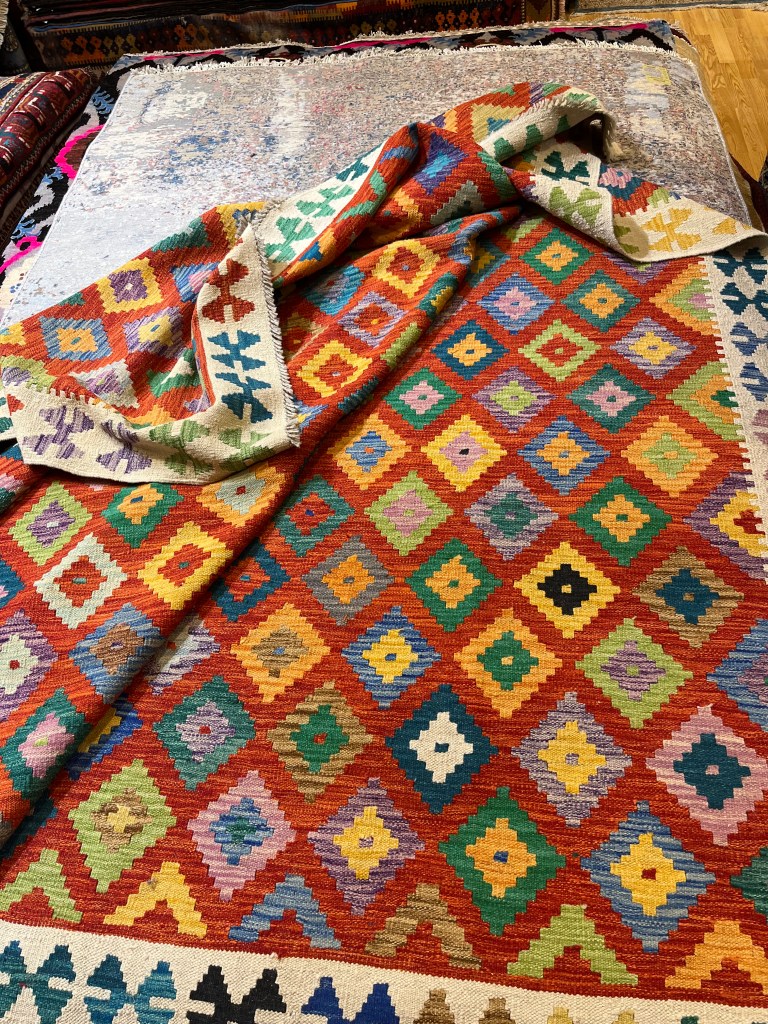
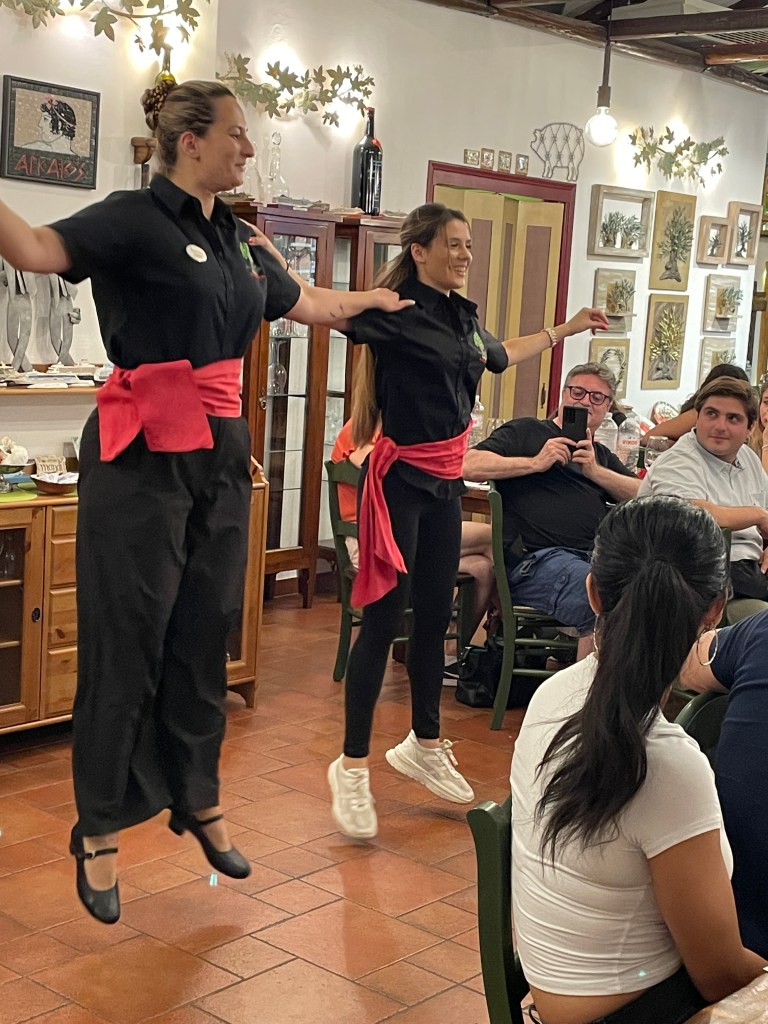
Arthur’s grandfather, Ray, gave him a chunk of change for his trip and when Arthur has money in his pocket, he wants to spend it. So I actually thank Ray, otherwise we would never had been able to shop as much as we did. We spend a lot of time in the Plaka in Athens – the old town shopping and dining district. We also enjoyed the shops in Nafplio, a small cute seaside city and Mykonos, on elf Greece’s many islands. We sampled all the traditional cuisine – gyros, souvlaki. Moussaka, eggplant dishes (me), stuffed vine leaves, spinach and cheese pie, tzatziki ,calamari, sea bream, orange cake and of course baklava. They often brought out a plate of watermelon at the end of the meal, so sweet and refreshing. At some of our restaurants we got so much food I thought I’d burst and I didn’t even eat everything. Many of the restaurants provided us with ouzo, mastika or grappa to taste. They also entertained us with Greek music and lively Greek dances.

Overall it was a wonderful eleven days. Arthur especially liked the cruise where he said he was living his best life – sleeping in a bunk bed, all the foods he likes, drinks at his elbow anytime he wanted one, and freedom to roam. The tour was exhausting, however – early mornings, late nights, lots of walking in the heat. Arthur and Jane are happy to go home to their own beds and routines. But I will miss them both very much. We’ve had a few low key days here at the end so I’m ready for my next adventure.

Next up – Uganda
Instead of Uganda, I have ended up in Istanbul, Turkey. It seems the internet is not always correct and you cannot buy a visa at the Entebbe airport but need one to enter the country. Hopefully mine will arrive today and I won’t have to reschedule too many things or if not, I’ll just enjoy Istanbul for a while.


 Where in the World is Debra Grimes?