TRAVEL BECAUSE LIFE IS SHORT, AND THE WORLD IS HUGE. – ANONYMOUS
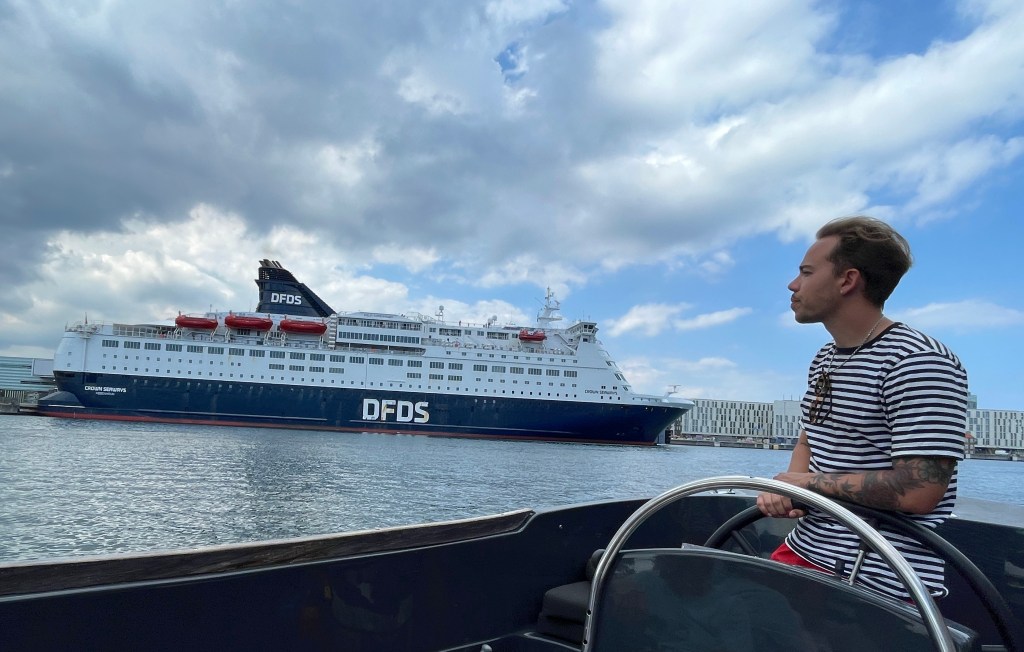
We arrived in Oslo by an overnight ferry, a mini cruise ship experience with on-board dining and entertainment, a pool and hot tubs, and shopping with a Lego and a tax-free store. A few little observations about Scandinavia before jump in. I realized I take my smoke free environment at home for granted and was unhappily surprised to find people smoking next to me while I was enjoying a meal or a drink. Outside only but with our beautiful weather we’ve been having, that’s where I want to be. Also, I often see children as young as 5 or 6 walking the streets, riding their bikes or playing with no adults nearby. In the US, the parents hover over their offspring sometimes even into their first jobs.
Warning this is a long entry as we’ve stayed in Norway for 6 days. Which I am excited about. I was told growing up we were Norwegian only to find through DNA, that I’m 28% Germanic, 21% Swedish and Danish, 28% English, Welsh, Irish and Scottish, and 11% Norwegian. No wonder everyone I see in Scandinavia seems familiar.
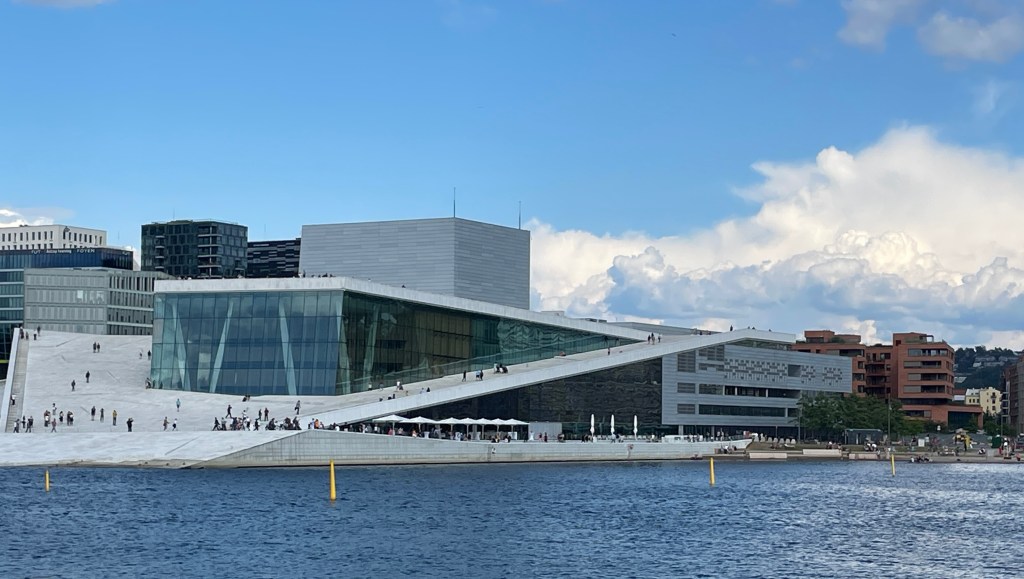
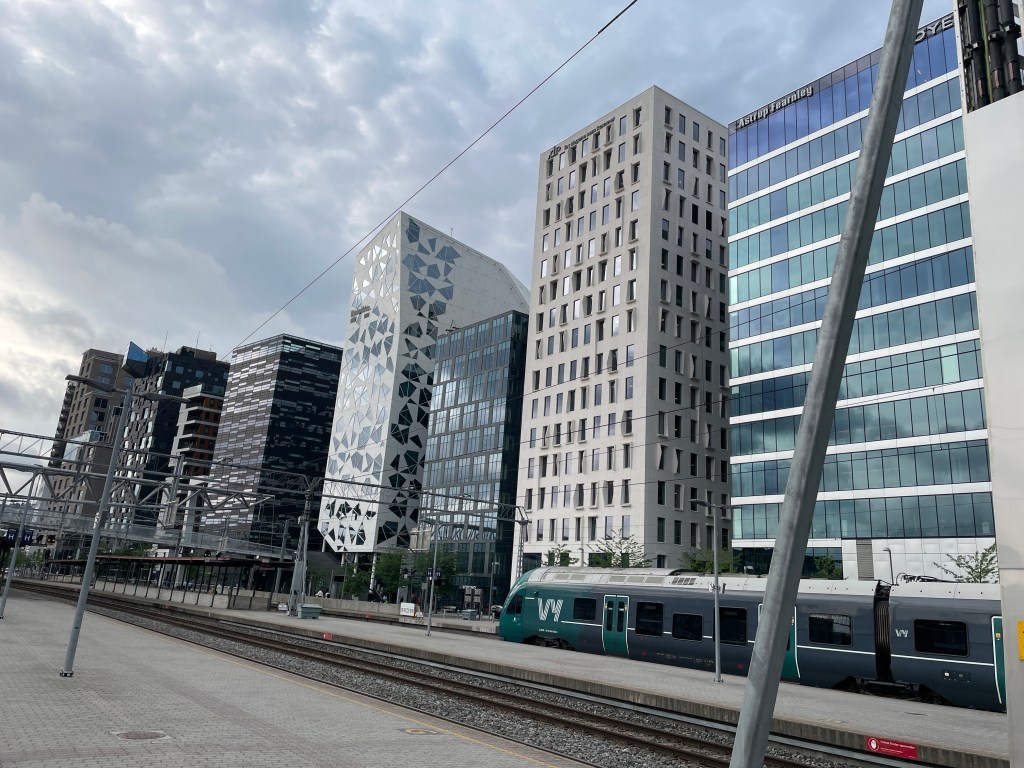
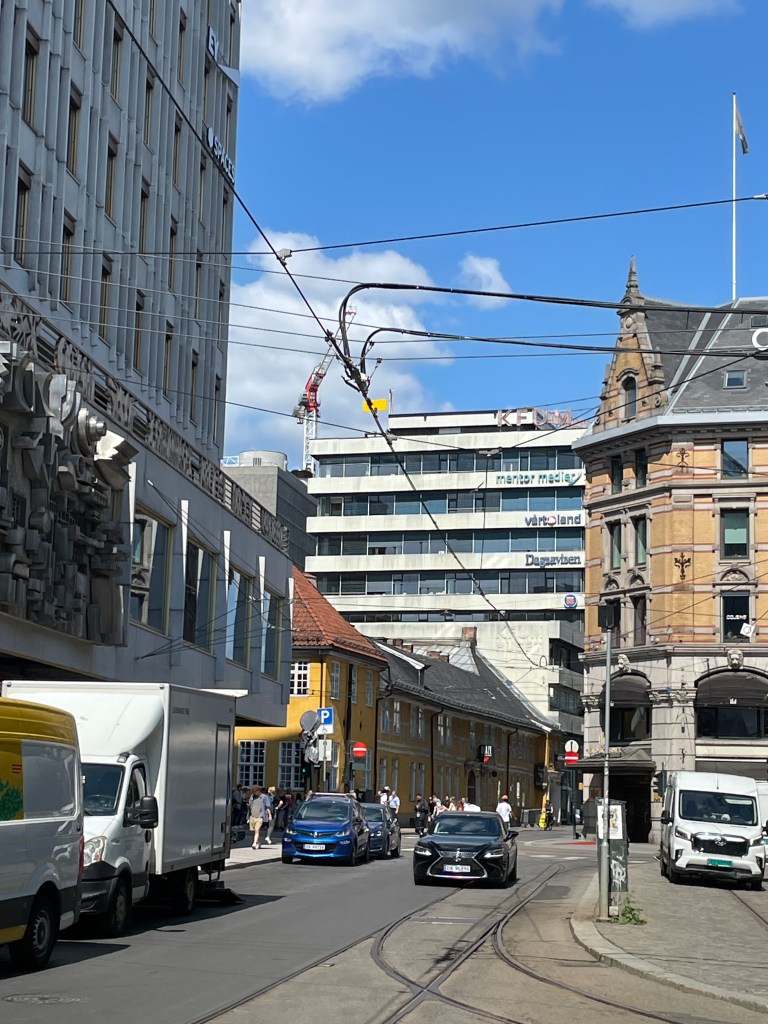
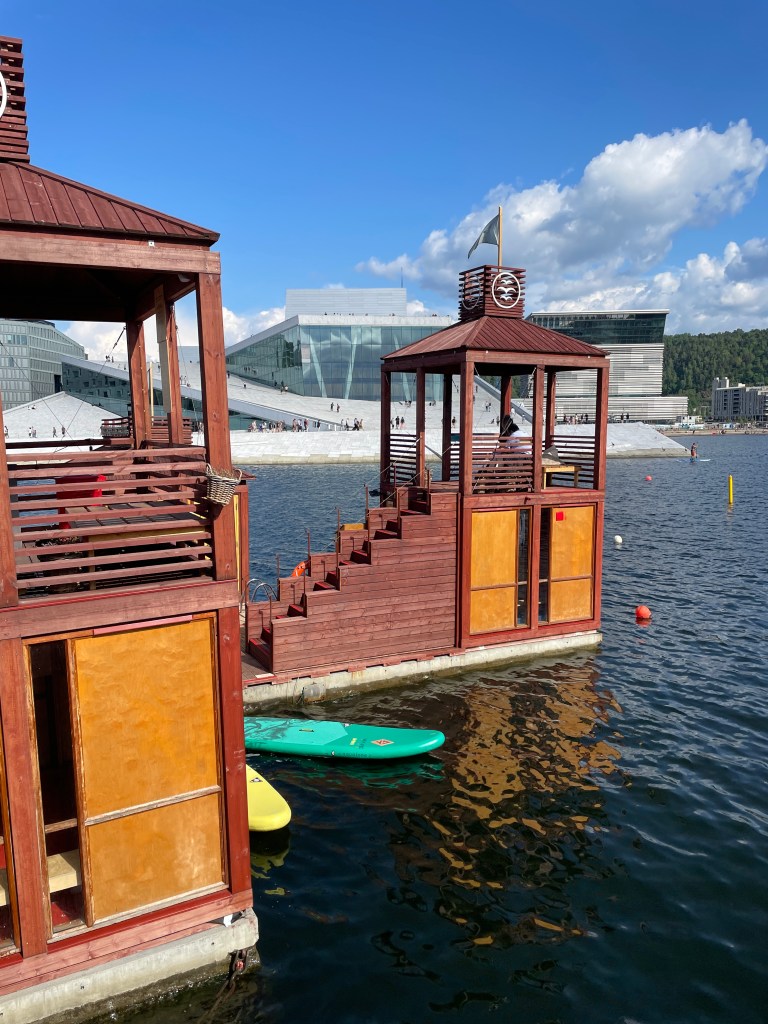
Oslo, a city of just over one million people is a wonderful combination of old and new. As you enter the harbor you see the amazing opera house which sparked development along the water. They relocated the shipping industry that was there further down the coast and built a mixed-use modern high rise neighborhood. To further enhance the area, they moved a major thoroughfare underground, eliminating 120,000 cars a day from driving through the city. Twenty thousand people work there with no parking lots – either they live nearby or take public transit to work. We stayed in this area at the Thon Opera Hotel. In the other direction, is the old town. Here you can see architecture that spans 4 centuries. The main street, Carl Johan, which runs from the train station to the royal palace, takes you by restaurants, shops, the university, the national theater, the Grand Hotel – where the Nobel Peace winners stay, and is lined with trees and flowers.
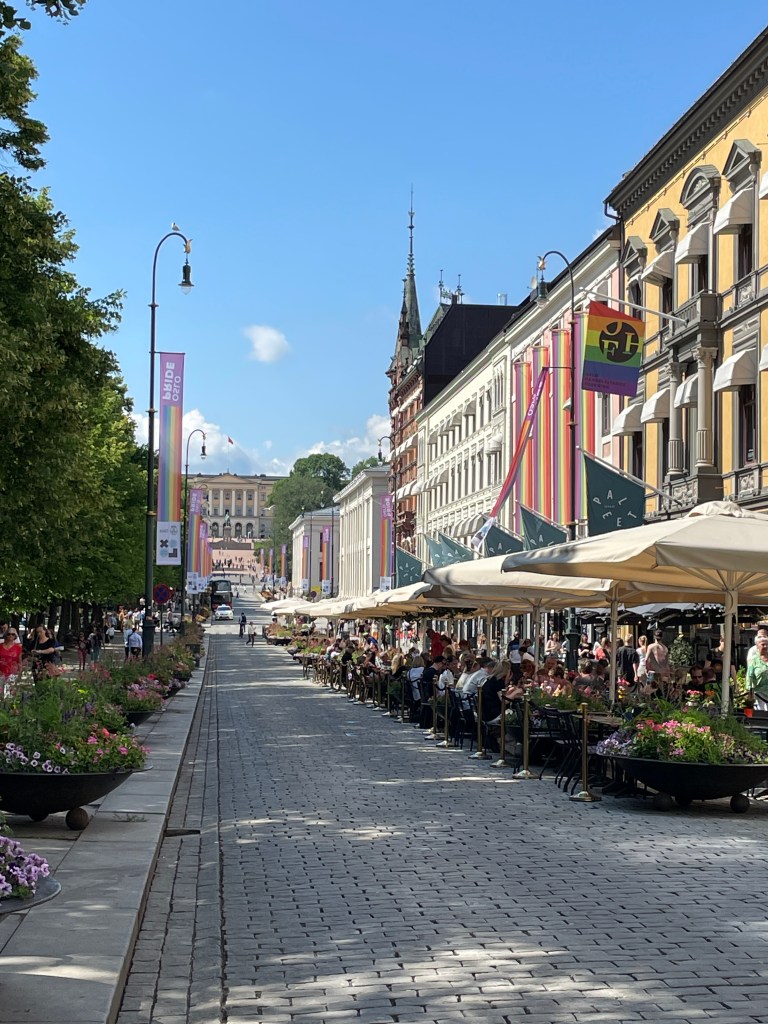
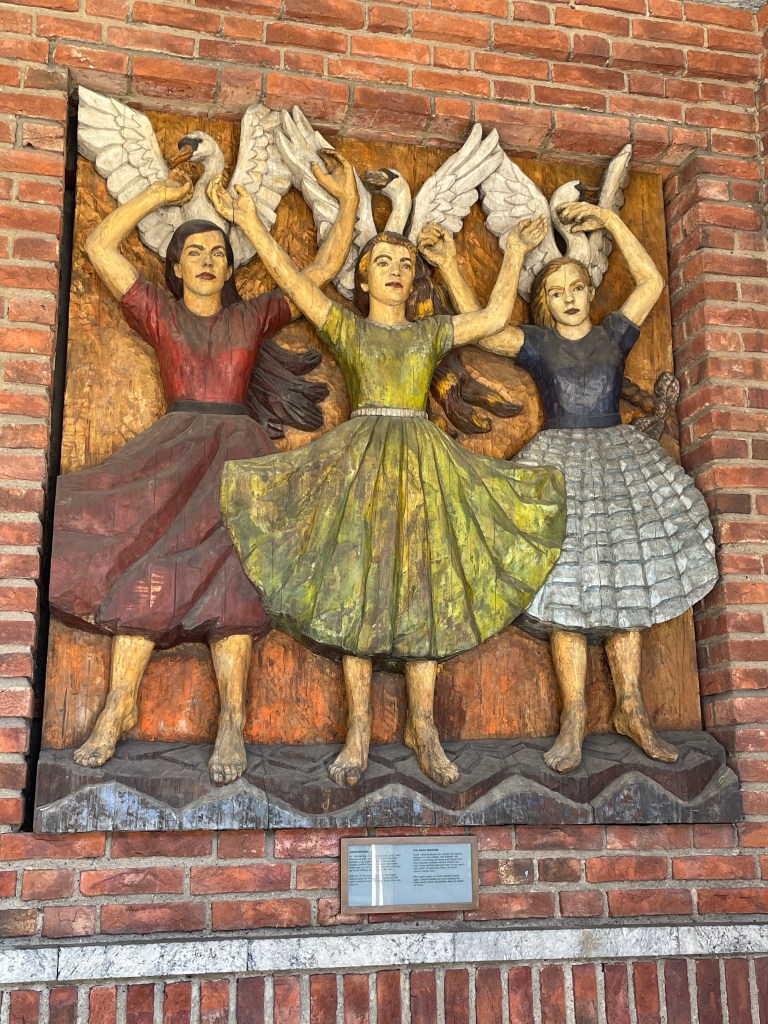
We enjoyed the Oslo Pass which provides access to a large number of museums, free transit, and discounts at restaurants. There were too many sites to see. We took a tram to a sculpture park with more than 200 sculptures by Gustave Vigeland, then back to the City Hall – where the Nobel Peace Prize ceremony is held, a ferry to the Folk Museum, The Fram Museum and the Kon Tiki Museum. The last 3 are all on an island with at least two other museums which I didn’t have time to see. The Fram museum houses the ship used in polar expeditions in the late 1800’s and early 1900’s to Greenland, the North Pole and the South Pole. Very interesting to walk through the ship the men lived for three to four years. The Fram and the Kon Tiki are both examples of the Norwegian desire to explore and venture forth from their shores as their viking ancestors did.

One morning I headed to the laundromat, walking a little over a mile through a nice residential neighborhood beyond the royal palace. No cash or cards are used, all the transactions are app based. When I arrived around 8 am, which is early in Scandinavia, the streets were quiet and I was the second person in the establishment. The first was a couple from New Jersey. It took at little figuring out how to use the machines but I eventually emptied by backpack into the washer and got it started. I chatted a little with my compatriots then reached into my backpack for my journal, which I brought along to write in while I was waiting, only to find it missing. I quickly realized I had put it in the washer. Luckily I got it out before too much damage was done but I had to wait three days for it to dry out before I could write in it again. The place quickly filled up with everyone struggling to make sense of the app and the machines. I tried to help when I could. One woman did discover that you could change the language on the machines, which would have been helpful to know when I started.
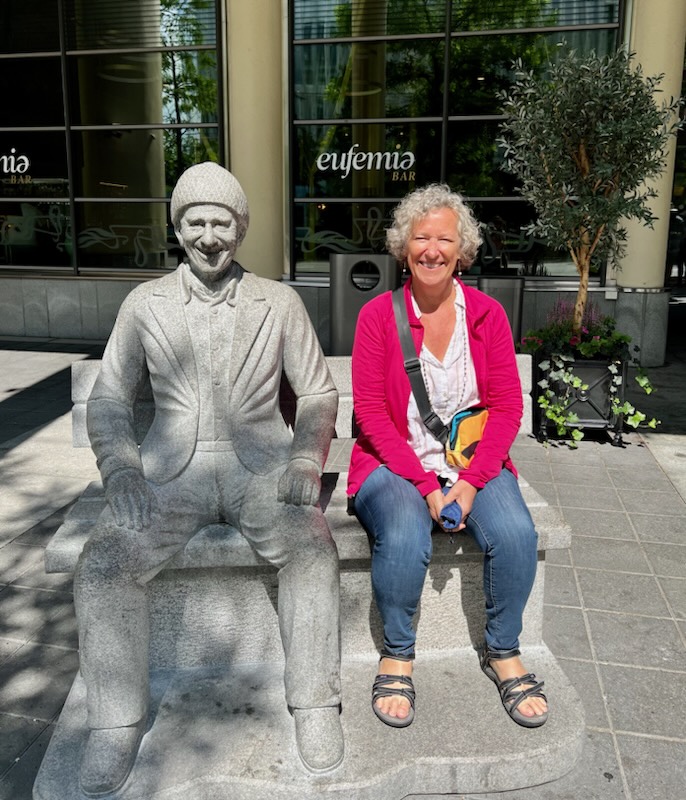
Here like in Copenhagen, there is swimming in the harbor and saunas line the piers to enjoy after your dip in the cold water. Outside of hotel there was a statue of a very happy man, who we found out owned the hotel and was one of the richest men in Norway. Olav Thon died without any children and gave his personal wealth and his share in his real estate empire to a charity trust. He lived until he was 100 and always wore his signature red knit cap.
Norway got its independence in 1905, having been ruled by Sweden or Denmark for centuries. At the time the people decided they wanted a monarch even though they had no royal family, so they went in search of one. They invited an idle Danish prince, Carl, to become their king. Mainly because they wanted his wife, Maud, who had strong ties to England, an important relationship to have then. They also had a son assuring that there would be a line of succession. Carl changed is name to Haakon, a Norwegian name, to endear himself to the people. He also changed the crown prince’s name from Alexander to Olav.
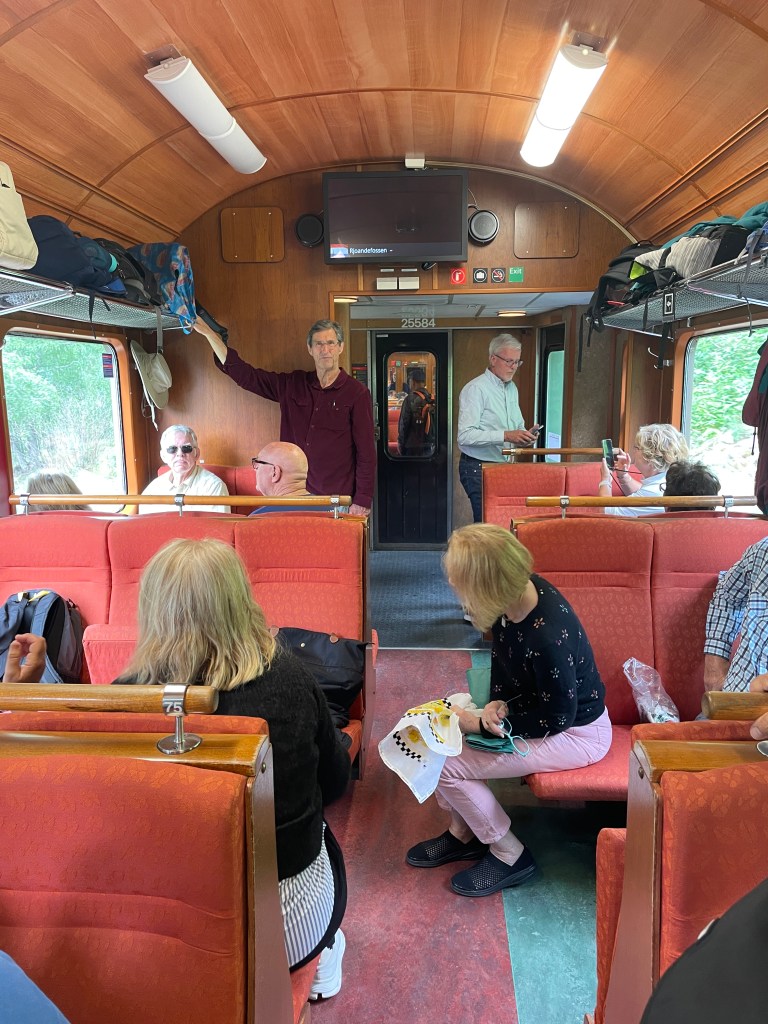
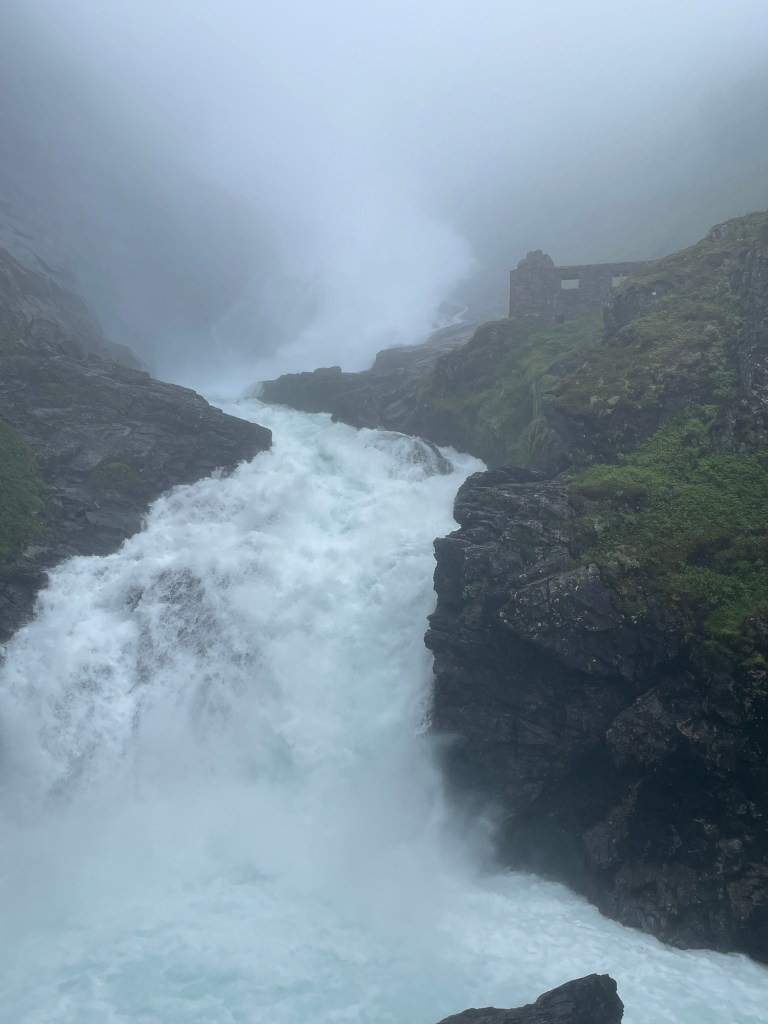
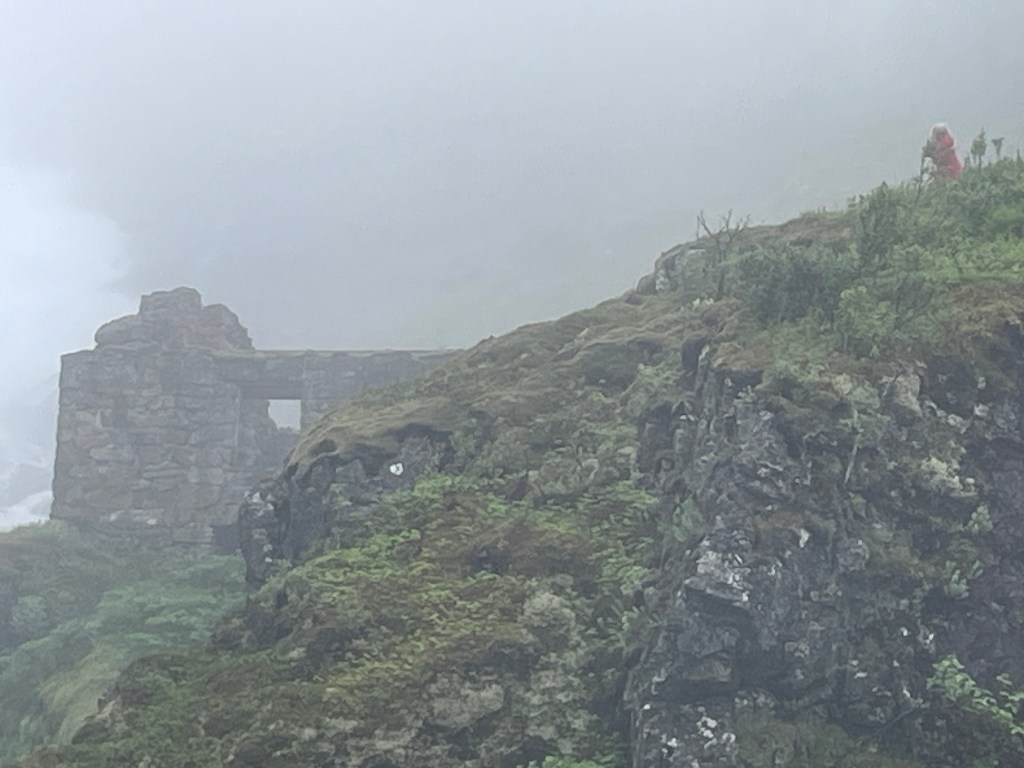
Our trip from Oslo to Balestrand was completed on two trains and a ferry. The train ride from Oslo to Myrdal is considered one of the most beautiful in the world. The scenery was spectacular with dozens of waterfalls, rushing rivers, a lush green countryside dotted with farms, small villages and churches, snow capped mountains, and high cliffs. It’s easy to see how they country is powered by nature, 92% which comes from hydropower and another 6% by other renewable sources. The train stopped twice, once for us to take pictures of a glacier, another along side a powerful waterfall, Kjosfossen. At the waterfall, music began to play and a woman in a red dress and long blonde hair appeared on the foggy mountain side and began to dance. She would then disappear and reappear in another place. It was quite fun to watch. She is the Huldra, an elusive forest spirit from Norse mythology. According to local folklore, she lures men into the woods to seduce them.
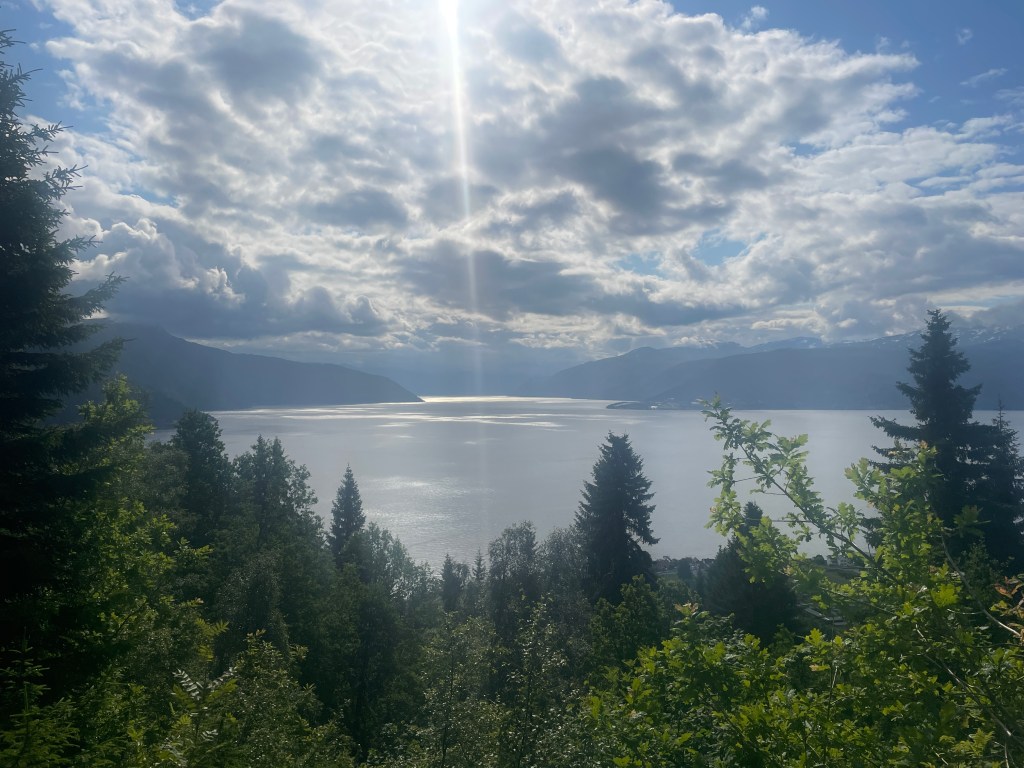
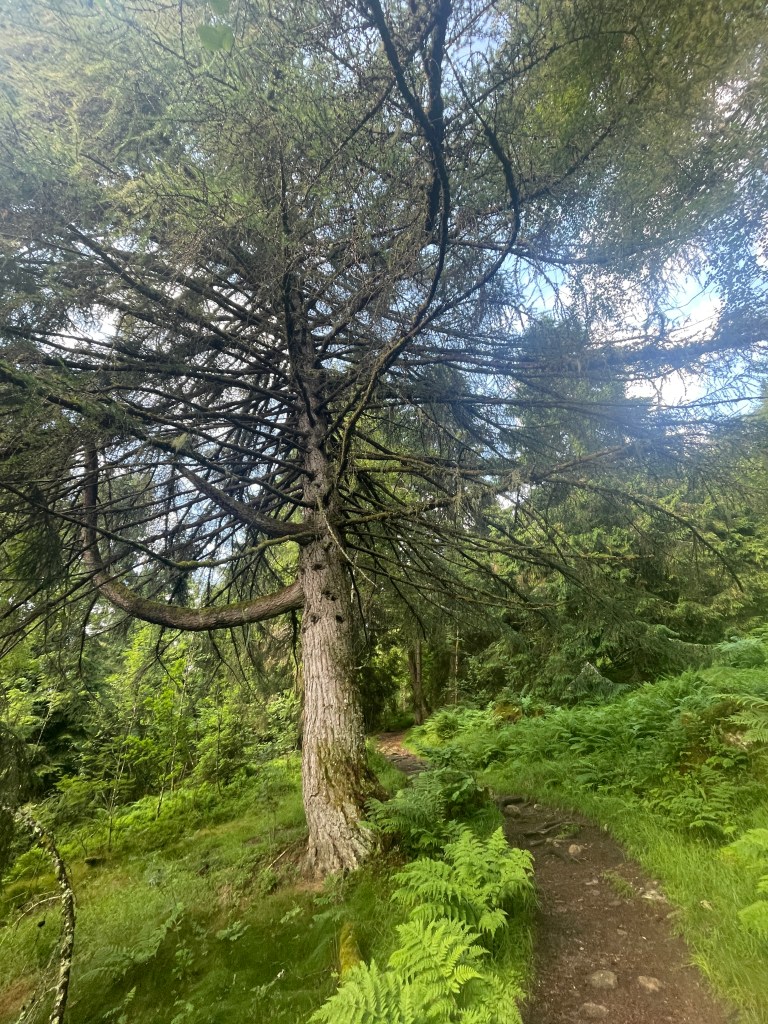
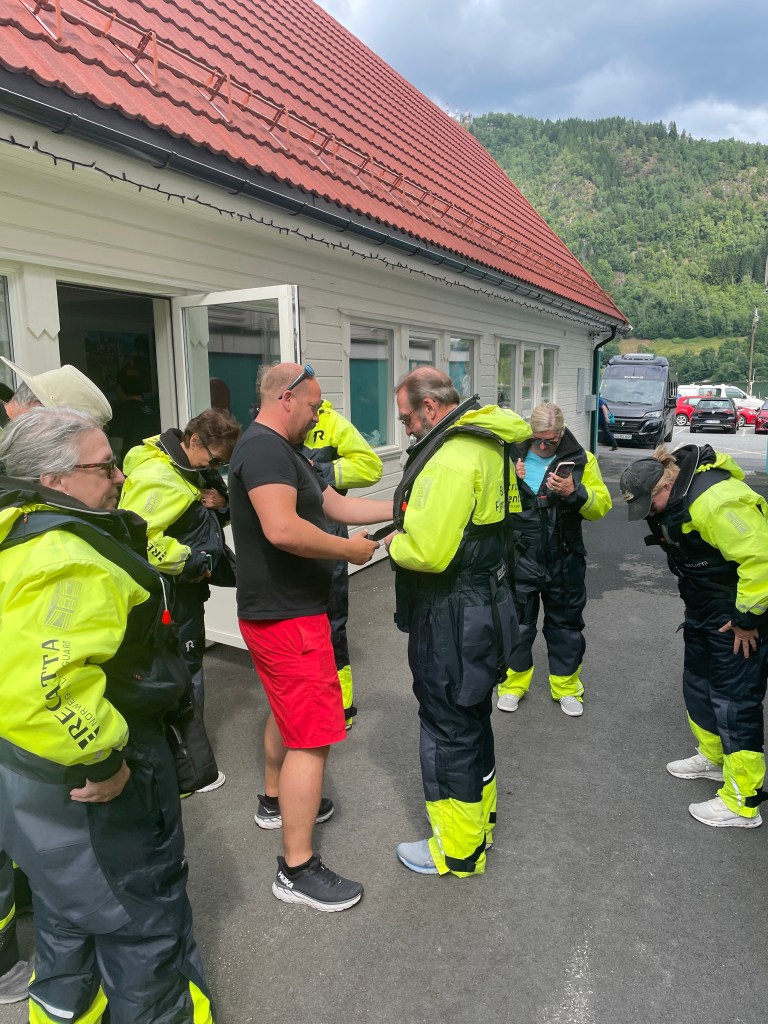
The Sognefjorden, where Balestrand is located was just stunning, drawing visitors from all over to paint and photograph the mountains. I spent one morning hiking and was rewarded with spectacular views. I really appreciated my friends back home who challenged me on our weekly hikes, keeping this old lady in shape, as I climbed 1500 feet. It was wonderful to do some forest bathing after all our city tours. We also did a rib boat tour of the fjord. It was an exhilarating experience speeding from shore to shore for unique views of the glacier, waterfall, farms and chalets. It’s surprising how many calories you can burn sitting straddle on a seat as you bounce up and down on the waves. Balestrand is home to St. Olaf’s church, the inspiration for the chapel in Elsa‘s coronation scene in the Disney film Frozen. The Kviknes Hotel where we stayed, was built in 1872 though our rooms were in the 1960’s addition with great views of the fjord.
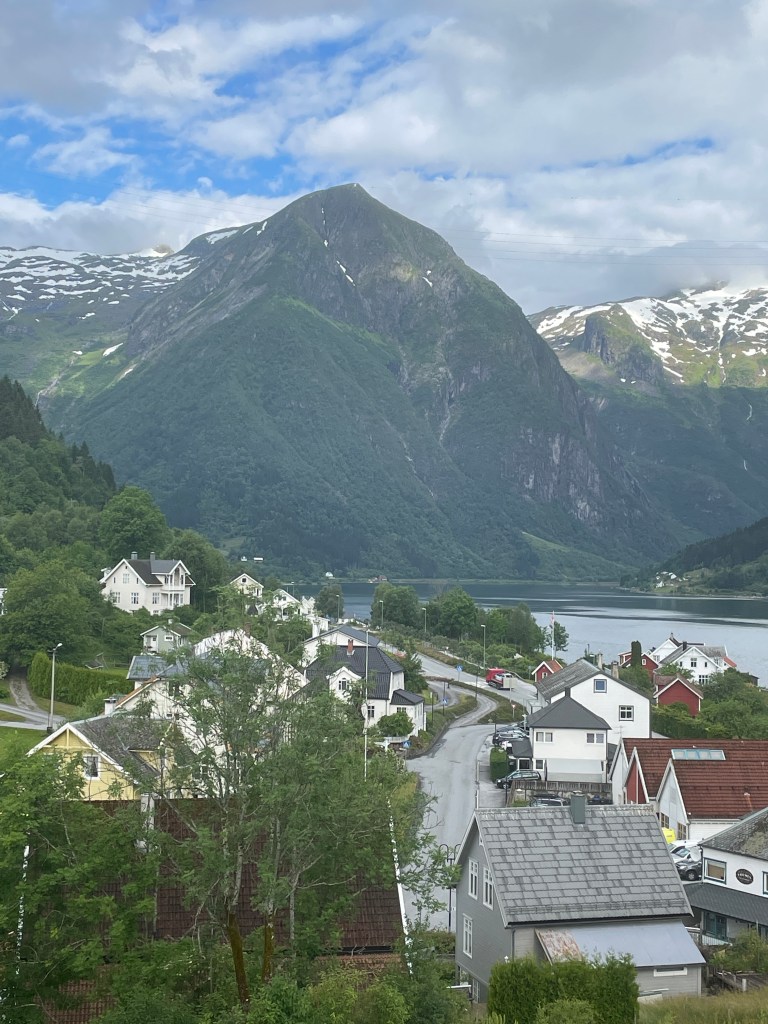
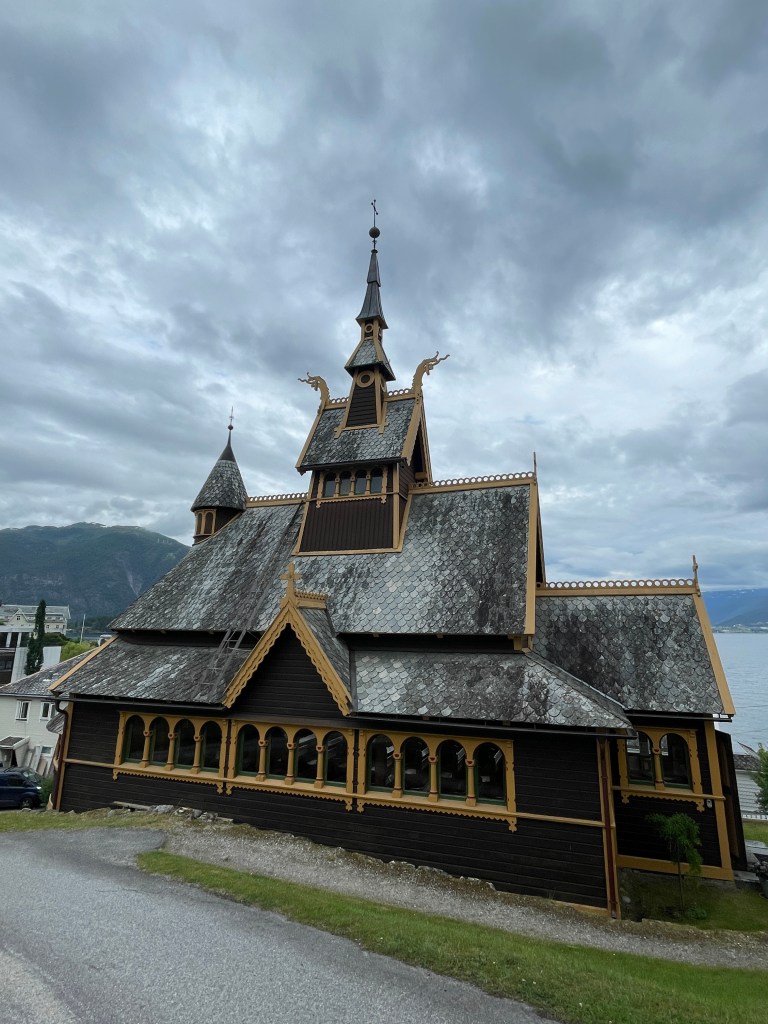
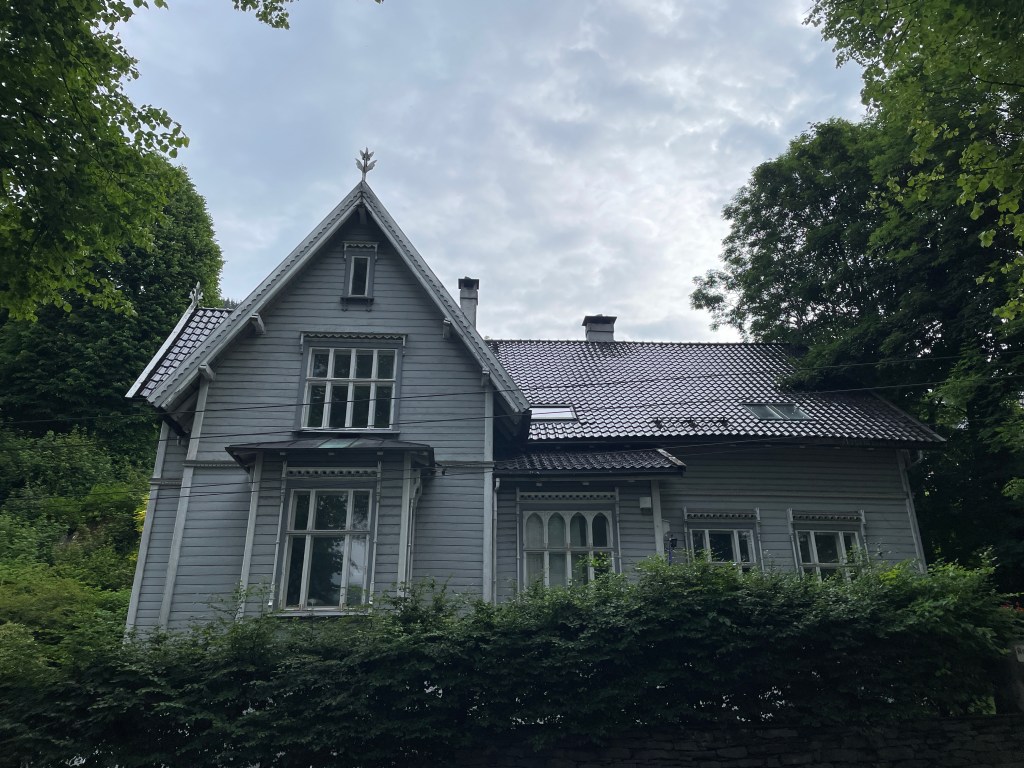
The houses in most of Norway were built of wood, not surprising given their abundance of timber. I thought I it interesting that their roofs were tile. Sometimes, red brick tiles like the ones you expect to see in Spain and the US southwest, other times tiles painted black – almost enamel looking, and often slate tiles that looked like fish scales. I liked those the most, a nod to the water they lived by. We learned that in the past, the color of your house indicated your class – white was used by the wealthy, red by the lower class, with yellow thrown in for variety I guess. Today, if you have an older home, you keep the paint color for historical integrity.

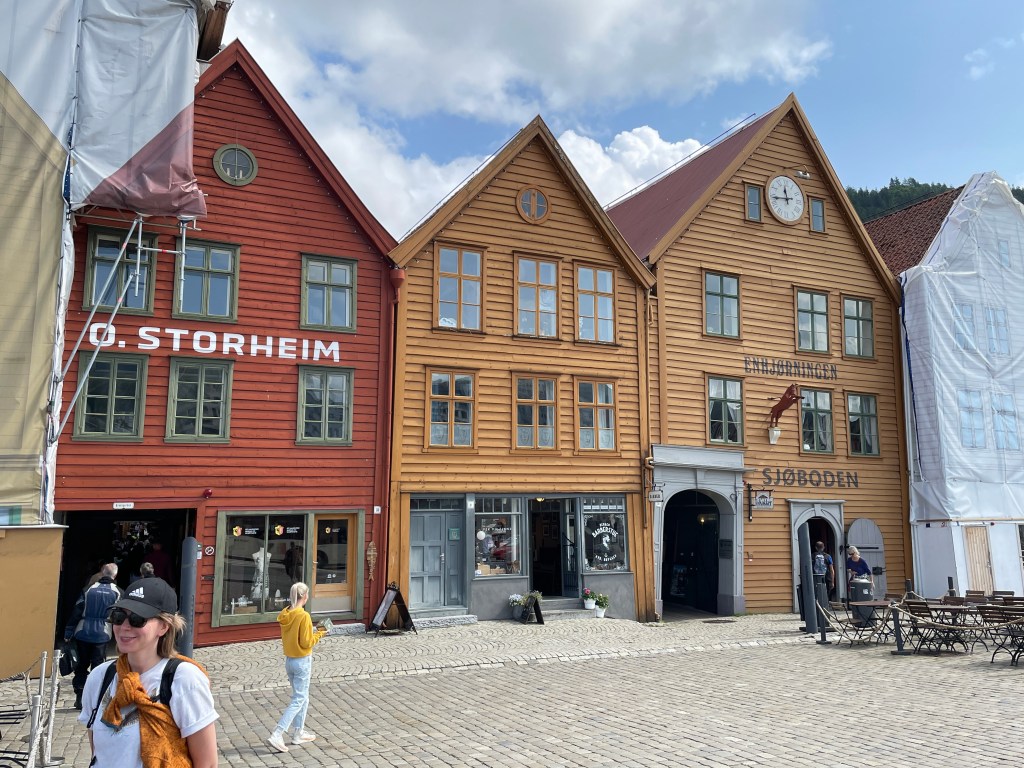
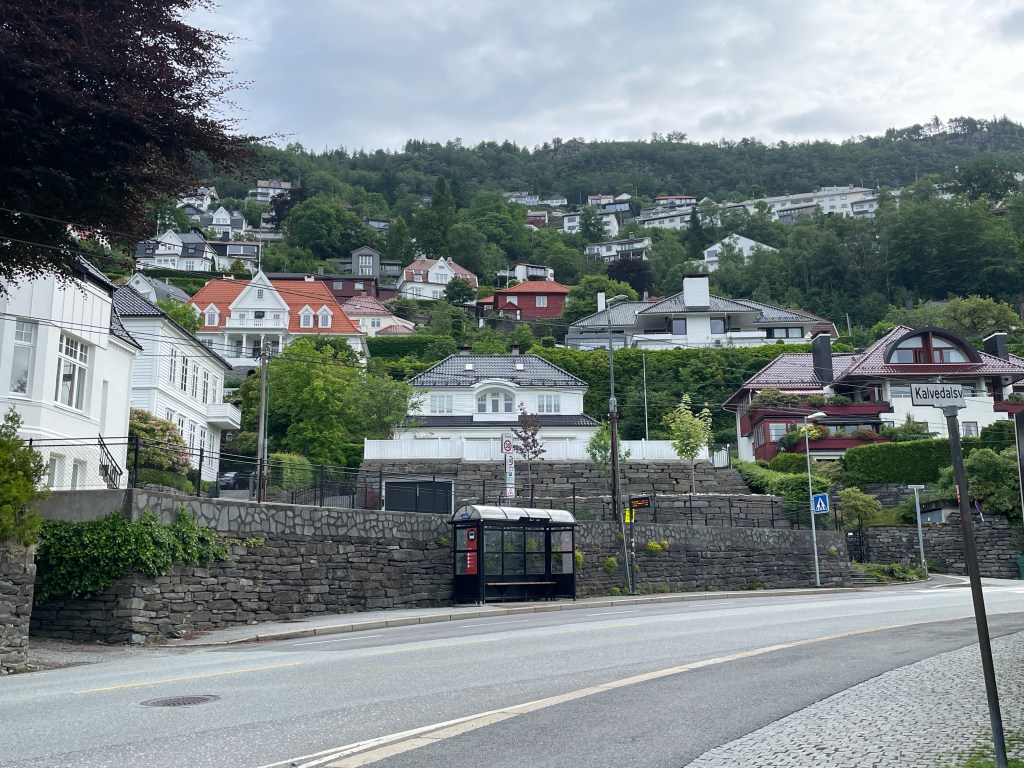
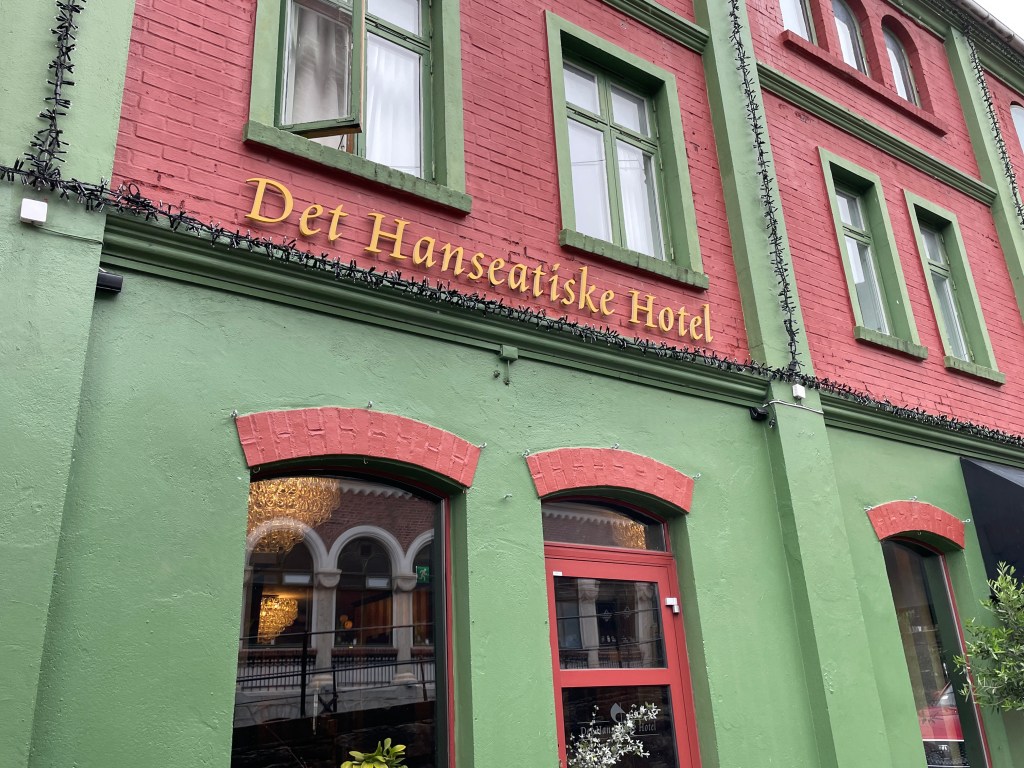
We took another ferry to Bergen, enjoying the beautiful fjord for a few hours longer. Bergen, once the capital of Norway, is now a town of about 80,000 people. Located on a finger of a fjord, the city clusters about the harbor and neighborhoods grow up the steep mountain sides. It was and still is a town the relies upon water. The harbor is lined by fish shops and restaurants on one side and Bryggen, a historical Hanseatic settlement that focused on trade, on the other. Our hotel, Det Hanseatiske Hotel, is on the edge of this UNESCO Heritage site. Originally built in the early 1300’s most of the building have burned down at onetime or another and rebuilt. Our hotel was last rebuilt in the 1700’s. Like all of the buildings in the area- long, narrow structures filled with shops, hotels, bars, and restaurants, the walls and floors are slanted, with a warren of rooms the stretch its length. Our room is in the attic, a garret, updated with a nice bath and electricity.
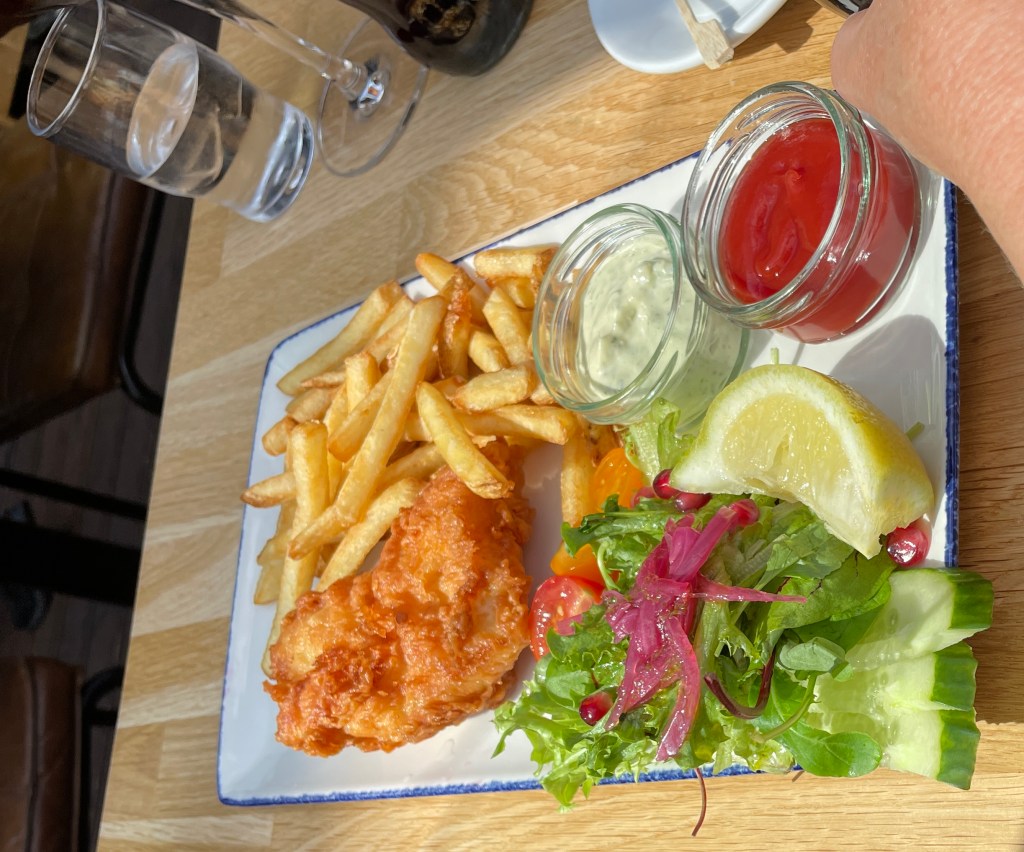
Fish and seafood soups are as popular here as they were in Oslo and Balestrand, warm, filling, and tasty, served with some nice hearty bread. Fish and chips continue to appear on all the menus. Reindeer has been popping up more often though I don’t think anyone in our group has tried it. And although there is a lot of different seafood on the menu, salmon in its many forms is ubiquitous. Akvavit is sampled of course. And a new item is brown cheese, made from the whey of goat milk with cow’s milk added, which somehow caramelizes it. Not necessarily the most appealing color, it is quite good and really superb made into ice cream, which we had at the To Kokker restaurant. I of course had to try the traditional cinnamon bun and tasted the recommended apple cake when Katherine ordered it. I liked the cake the best, lots of cinnamon.
If you’re still with me, I’ll tell you a little about the Hanseatic League. It was a guild of merchants who were each given a license to be the sole trader for one item- a type of fish, timber, etc. They were housed in the timber structures along the harbor, each building holding ten businesses. Each building had its own set of rules, one scribe or bookkeeper who kept everyone’s books which were open to all, one stone kitchen where the only fire or candles were allowed, and a school room or assembly hall. The league was celibate. You started out in an apprenticeship which lasted 6, I would say very hard, years. They did the lowest types of manual labor, were locked into a cupboard of sorts to sleep sitting up along side their peers, with no heat even in the coldest winter nights. Their earnings only enough to feed themselves and replace their clothing. For fun they were tied up and thrown in the fjord and when they tried to wiggles onto shore, they were beaten. They were educated though and at the end of their 6 years they became journeymen and their lives improved greatly. Their wages increased to the point that after a couple years they could buy one of the businesses or go back home and marry. There were Hanseatic Societies around Europe, though the one in Bryggen lasted the longest, just over 400 years.


 Where in the World is Debra Grimes?